1. Search Result
Search Result
Results for "

neuronal PC12 cells

" in MedChemExpress (MCE) Product Catalog:

16

Inhibitors & Agonists

1

Fluorescent Dyes

1

Biochemical Assay Reagents

3

Peptides

7

Natural
Products

Cat. No. Product Name Target Research Areas Chemical Structure
  • HY-B0927

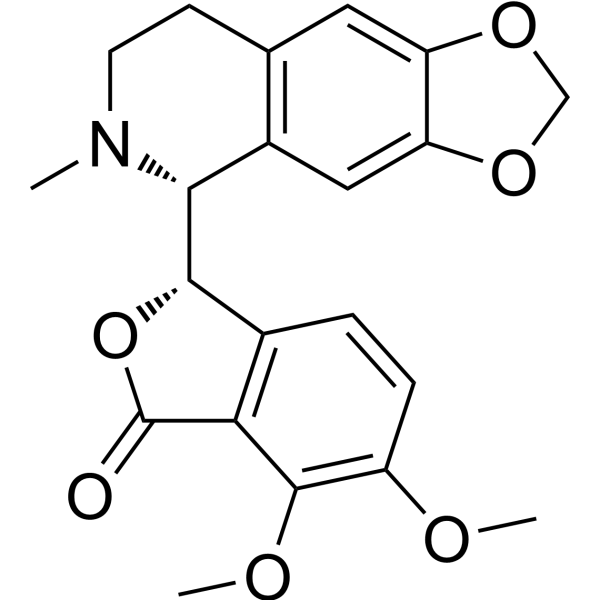
    (-)-β-Hydrastine; (1R,9S)-β-Hydrastine

    Tyrosine Hydroxylase Dopamine Receptor OAT Neurological Disease
    Hydrastine ((-)-β-Hydrastine; (1R,9S)-β-Hydrastine) is a selective competitive inhibitor of tyrosine hydroxylase (TH), inhibiting dopamine biosynthesis (IC50=20.7 μM, PC12 cells). Hydrastine also inhibits the organic cation transporter OCT1 (IC50=6.6 μM). Hydrastine may cause neuronal toxicity through mitochondrial dysfunction rather than oxidative stress damage, and can aggravate cell apoptosis when combined with L-DOPA. Hydrastine can be used to study Parkinson's disease-related dopaminergic neuronal damage .
    Hydrastine
  • HY-N11229

    Caffeic acid butyl ester

    Drug Derivative Neurological Disease
    Butyl caffeate (Caffeic acid butyl ester) is a caffeic acid derivative with antioxidant activity and lipophilicity (DPPH IC50 = 14.1 μM). Butyl caffeate protects neuronal PC12 cells against oxidative stress. Butyl caffeate can be used for oxidative stress related and neurodegenerative diseases research .
    Butyl caffeate
  • HY-N5021

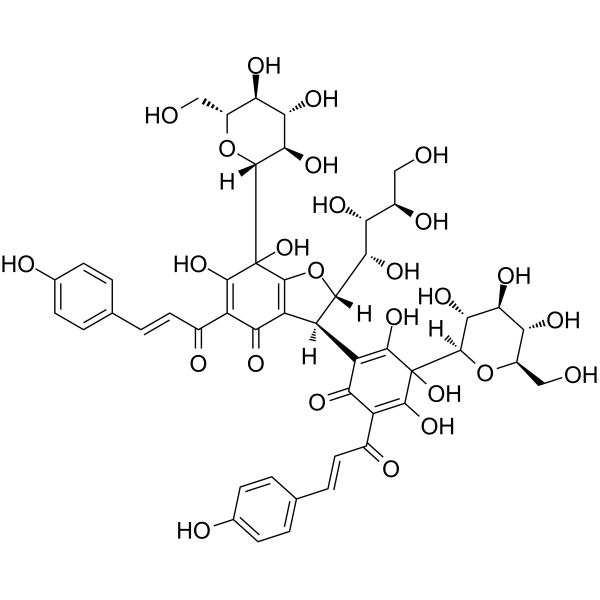
    AHSYB

    Others Neurological Disease
    Anhydrosafflor yellow B (AHSYB) is a quinochalcone C-glycoside isolated from Carthamus tinctorius. Anhydrosafflor yellow B inhibits ADP-induced platelet aggregation, exhibits significant anti-oxidative effects in vitro, and possesses certain activity against H2O2-induced cytotoxicity in cultured PC12 cells and primary neuronal cells .
    Anhydrosafflor yellow B
  • HY-159059

    c-Myc Bcl-2 Family Eukaryotic Initiation Factor (eIF) Survivin β-catenin MMP Interleukin Related Cardiovascular Disease Neurological Disease Inflammation/Immunology Cancer
    Ganoderma Lucidum/Reishi Extract is a Ganoderma lucidum extract. Ganoderma Lucidum/Reishi Extract reduces the expression of c-Myc, BCL-2, BCL-XL, TERT, PDGFB, eIF4G, Survivin, β-catenin, and eIF4E. Ganoderma Lucidum/Reishi Extract downregulates the gene expression of MMP-9. Ganoderma Lucidum/Reishi Extract upregulates the expression of IL8. Ganoderma Lucidum/Reishi Extract is applicable to the research of inflammatory breast cancer. Ganoderma Lucidum is used in the research of various diseases, such as allergy, arthritis, hypertension, neurasthenia, inflammation, and cancer .
    Ganoderma Lucidum/Reishi Extract
  • HY-P10998

    TET Protein Neurological Disease
    Tet1 peptide is a peptide that specifically binds to neurons. Tet1 peptide binds to GT1B ganglioside and trisialoganglioside clostridial toxin receptor on the surface of neuronal cells, and can be used in peptide conjugation and drug delivery research .
    Tet1 peptide
  • HY-125172

    Polyglutamine Aggregation inhibitor III

    Huntingtin Others
    C2-8 is an inhibitor of polyglutamine (polyQ) aggregation (IC50s=25 and 0.05 μM for recombinant HDQ51 and in PC12 cells, respectively). It also inhibits polyQ aggregation in organotypic hippocampal slice cultures isolated from R6/2 transgenic mice and reduces neurodegeneration in a dose-dependent manner in a Drosophila model of Huntington's disease. C2-8 (100 and 200 mg/kg) reduces huntingtin aggregate size, reduces neuronal atrophy, and improves motor performance in a rotarod test in the R6/2 transgenic mouse model of Huntington's disease.
    PolyQ aggregation inhibitor C2-8
  • HY-P11082

    Endogenous Metabolite Neurological Disease
    APGW-amide is a neuropeptide. APGW-amide controls the growth of imposex structures and promotes growth in Haliotis asinina. APGW-amide inhibits Achatina neurons and modulates neuronal currents induced by neuroactive compounds. APGW-amide induces a rapid increase in [Ca 2+]i in Fura-2/AM-loaded PC12 cells. APGW-amide is useful for research on the nervous system .
    APGW-amide
  • HY-P5754B

    Apoptosis Neurological Disease
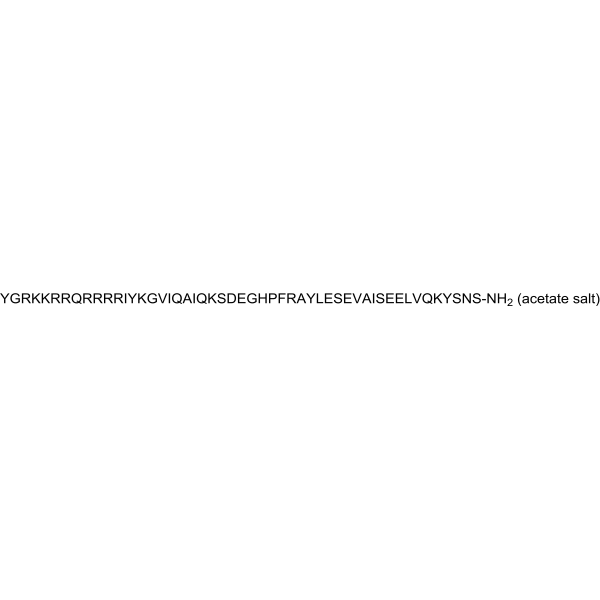
    TAT-NEP1-40 acetate is a therapeutic candidate for axonal regeneration and functional recovery after stroke. TAT-NEP1-40 acetate can protect PC12 cells against oxygen and glucose deprivation (OGD) and promote neurite outgrowth. TAT-NEP1-40 acetate protects the brain against ischemia/reperfusion injury through inhibition of neuronal apoptosis. TAT-NEP1-40 acetate can be efficiently delivered into the rat brains .
    TAT-NEP1-40 acetate
  • HY-N4192

    Others Cardiovascular Disease Cancer
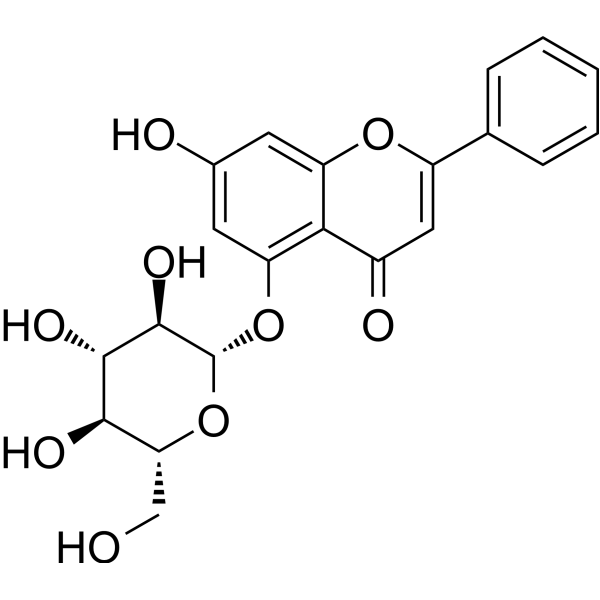
    Toringin, a bioflavonoid, is isolated from the bark of Docyniopsis tschonoski. Toringin progressively decreases not only the cis-effect of the expanded CTG repeats but cytotoxicity as well. Exposure to isosakuranetin, Toringin rescues PC12 neuronal cells. Flavonoids are efficacious for ameliorating the RNA gain of function caused by expanded CTG repeats, and have various biological activities and beneficial actions against cancers, coronary heart disease, among other pathologies .
    Toringin
  • HY-B0927R

    (-)-β-Hydrastine (Standard); (1R,9S)-β-Hydrastine (Standard)

    Reference Standards Tyrosine Hydroxylase Dopamine Receptor OAT Others
    Hydrastine (Standard) is the analytical standard of Hydrastine (HY-B0927). This product is intended for research and analytical applications. Hydrastine ((-)-β-Hydrastine; (1R,9S)-β-Hydrastine) is a selective competitive inhibitor of tyrosine hydroxylase (TH), inhibiting dopamine biosynthesis (IC50=20.7 μM, PC12 cells). Hydrastine also inhibits the organic cation transporter OCT1 (IC50=6.6 μM). Hydrastine may cause neuronal toxicity through mitochondrial dysfunction rather than oxidative stress damage, and can aggravate cell apoptosis when combined with L-DOPA. Hydrastine can be used to study Parkinson's disease-related dopaminergic neuronal damage .
    Hydrastine (Standard)
  • HY-17638A

    DSP-3235 (sebacate); KGA-3235 (sebacate); GSK-1614235 (sebacate)

    SGLT Neurological Disease
    Mizagliflozin sebacate (DSP-3235 sebacate) is a sodium-glucose cotransporter inhibitor with activity in improving vascular cognitive impairment caused by small vessel disease. Mizagliflozin sebacate improves blood flow and reverses vascular cognitive impairment by inhibiting neuronal SGLT1 activity. Mizagliflozin sebacate also showed the ability to increase the survival rate of IL-1β-treated PC12HS cells. Mizagliflozin sebacate promotes improvements in spatial learning and memory caused by small vessel disease in mouse models .
    Mizagliflozin (sebacate)
  • HY-N19681

    Endogenous Metabolite Neurological Disease
    3-(2,6-Dihydroxyphenyl)-4-hydroxy-6-methylisobenzofuran-1(3H)-one is a polyketide compound found in the mangrove endophytic fungus Phomopsis sp. xy21. 3-(2,6-Dihydroxyphenyl)-4-hydroxy-6-methylisobenzofuran-1(3H)-one shows neuroprotective activity against Corticosterone (HY-B1618)-induced injury in neuronal cells .
    3-(2,6-Dihydroxyphenyl)-4-hydroxy-6-methylisobenzofuran-1(3H)-one
  • HY-D3226

    Fluorescent Dye Neurological Disease
    Zinc (II) probe-1 (Compound DNP) is a dual-color Fluorescent probe that can simultaneously monitor Zn 2+ and H +. Upon interaction with Zn 2+, Zinc (II) probe-1 produces bright blue fluorescence (excitation wavelength: 405 nm; blue channel wavelength: 420-500 nm). Upon interaction with H +, Zinc (II) probe-1 exhibits red fluorescence (excitation wavelength: 561 nm; red channel emission wavelength: 630-730 nm). Zinc (II) probe-1 can be used in studies related to depression .
    Zinc(II) probe-1
  • HY-179037

    Necroptosis Reactive Oxygen Species (ROS) Mitochondrial Metabolism Neurological Disease
    NecroX-2 is a potent inhibitor of caspase-independent necrosis. NecroX-2 exhibits antioxidant activity by scavenging DPPH radicals and peroxynitrite. NecroX-2 inhibits t-BHP-induced mitochondrial ROS/RNS generation, and protects t-BHP and Doxorubicin (HY-15142A)-induced cell death in vitro. NecroX-2 can be used for research on neurological diseases .
    NecroX-2
  • HY-N15191

    Reactive Oxygen Species (ROS) Inflammation/Immunology
    Pinoquercetin is a 13C-methylated flavonol and antioxidant. Pinoquercetin scavenges DPPH free radicals. Pinoquercetin can be used for research of oxidative damage .
    Pinoquercetin
  • HY-182068

    iGluR Cardiovascular Disease Neurological Disease
    NFI23 is a GluN2B-NMDAR inhibitor with an IC50 of 1.31 μM and a Ki of 5.98 nM against GluN2B-NMDAR. NFI23 can cross the blood-brain barrier. NFI23 binds to the ifenprodil binding site of GluN2B-NMDAR, reduces NMDA-induced Ca 2+ influx and reactive oxygen species (ROS) production, maintains mitochondrial membrane potential, inhibits neuronal apoptosis, and restores the expression of p-ERK1/2. NFI23 exerts neuroprotective effects against NMDA-induced cytotoxicity and in the rat middle cerebral artery occlusion (MCAO) model. NFI23 can be used for the research of ischemic stroke .
    NFI23

Inquiry Online

Your information is safe with us. * Required Fields.

Salutation


Country or Region *

Applicant Name *


Organization Name *

Department *


Email Address *


Product Name *

Cat. No.


Requested quantity *

Phone Number *


Remarks

Inquiry Online

Inquiry Information

Product Name:
Cat. No.:
Quantity:
MCE Japan Authorized Agent:

