1. Search Result
Search Result
Results for "

rat spinal cord

" in MedChemExpress (MCE) Product Catalog:

19

Inhibitors & Agonists

6

Peptides

4

Natural
Products

Cat. No. Product Name Target Research Areas Chemical Structure
  • HY-N0194
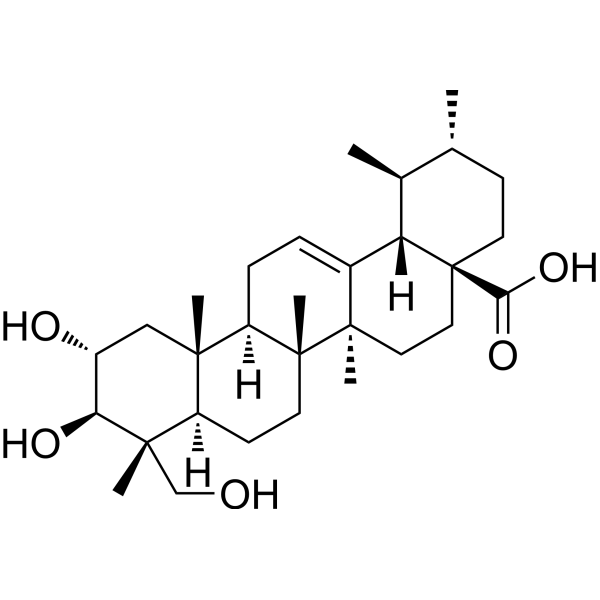
    Asiatic acid
    4 Publications Verification

    Apoptosis Parasite Inflammation/Immunology Cancer
    Asiatic acid, a pentacyclic triterpene found in Centella asiatica (Centella asiatica), has anticancer activity. Asiatic acid induces apoptosis in melanoma cells and has barrier protective effects on human aortic endothelial cells (HAEC). Asiatic acid also has anti-inflammatory activity and inhibits tumor necrosis factor (TNF)-α-induced endothelial barrier dysfunction. Asiatic acid also inhibits NLRP3 inflammasome activation and NF-κB pathway, effectively inhibits inflammation in rats, and has neuroprotective effects in rat spinal cord injury (SCI) model .
    Asiatic acid
  • HY-P1010
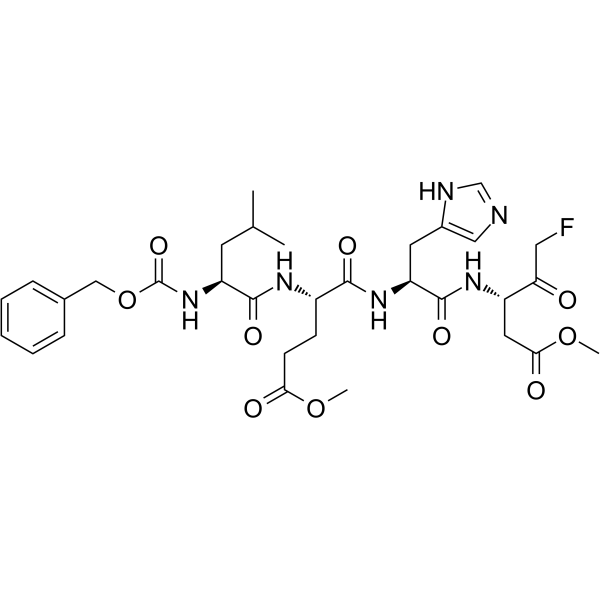
    Z-LEHD-FMK
    10+ Cited Publications

    Caspase Apoptosis Neurological Disease Cancer
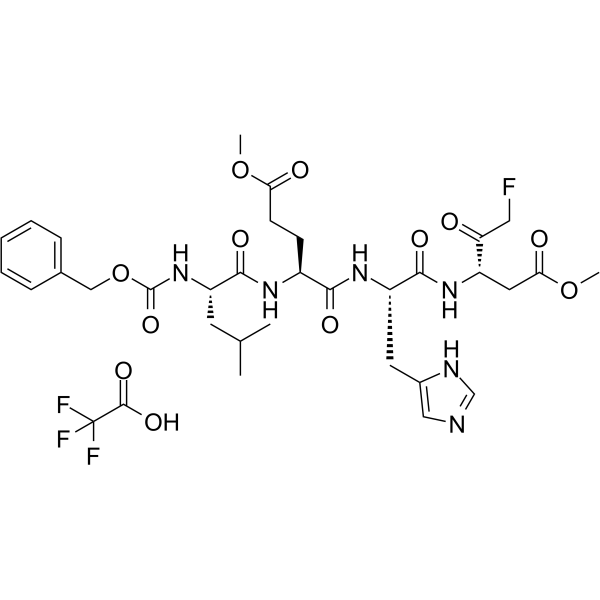
    Z-LEHD-FMK is a selective and irreversible inhibitor of caspase-9, protects against lethal reperfusion injury and attenuates apoptosis. Z-LEHD-FMK exhibits the neuroprotective effect in a rat model of spinal cord trauma .
    Z-LEHD-FMK
  • HY-P1248

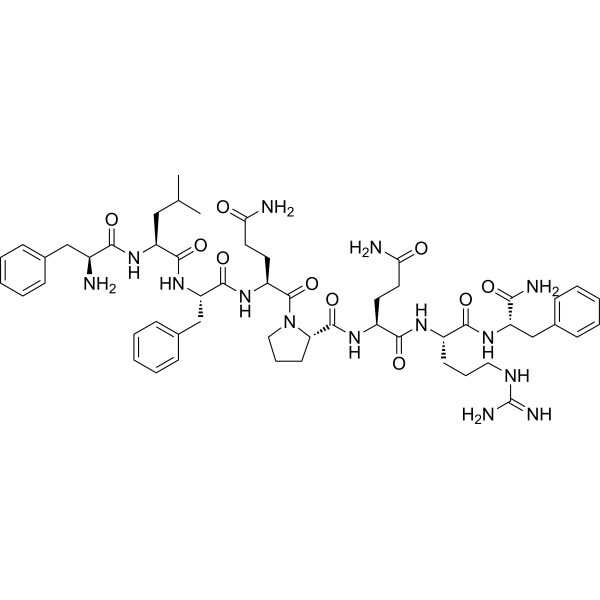
    NPFF

    Neuropeptide FF Receptor Cardiovascular Disease Neurological Disease
    Neuropeptide FF (NPFF), an octapeptide belonging to the RF-amide family of peptides, is a NPFF1 and NPFF2 receptors agonist with Ki values of 2.82 nM and 0.21 nM, respectively. Neuropeptide FF induces abstinence syndrome, exerts antiopioid and analgesic effects, releases via calcium-dependent mechanisms from rat spinal cord, regulates memory, autonomic function, and neuroendocrine function, modulates pain and opioid antinociception, reduces food intake, stimulates water intake, alters cardiovascular parameters, and shows differential activity in hypothalamic paraventricular nucleus neurons. Neuropeptide FF is present in mammalian central nervous system and periphery, with NPFF-immunoreactivity increases in rat cerebrospinal fluid during opiate tolerance, and its NPFF gene and NPFF-R2 gene are up-regulated in rat spinal cord and dorsal root ganglia during peripheral inflammation. Neuropeptide FF can be used for the research of opioid tolerance, morphine-induced analgesia, abstinence syndrome, pain, hypertension, nociception, inflammatory pain, and neuropathic pain .
    Neuropeptide FF
  • HY-171844

    iGluR Neurological Disease Inflammation/Immunology
    CX1739 is an orally active, blood-brain barrier permeable, low-efficacy AMPA-glutamate receptor (AMPAR) potentiator. CX1739 enhances excitatory neurotransmission by potentiating glutamate-induced excitatory currents and promoting in vivo long-term potentiation. CX1739 eliminates amphetamine-induced locomotor activity, reverses opioid-, pentobarbital- and ethanol-induced respiratory depression, and exerts pro-cognitive effects in animals. CX1739 impairs motor function recovery and increases the risk of post-injury complications. CX1739 can be used in research related to attention-deficit/hyperactivity disorder, dementia, respiratory depression and spinal cord injury .
    CX1739
  • HY-101241

    mGluR Neurological Disease
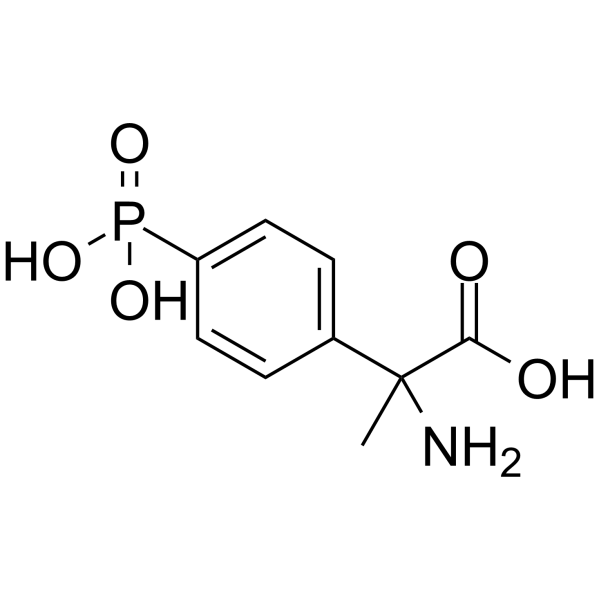
    MPPG is a potent and selective L-AP4-sensitive receptor antagonist with an kD value of 9.2 μM, being tested on the neonatal rat spinal cord .
    MPPG
  • HY-N0194R

    Reference Standards Apoptosis Parasite Inflammation/Immunology Cancer
    Asiatic acid (Standard) is the analytical standard of Asiatic acid. This product is intended for research and analytical applications. Asiatic acid, a pentacyclic triterpene found in Centella asiatica (Centella asiatica), has anticancer activity. Asiatic acid induces apoptosis in melanoma cells and has barrier protective effects on human aortic endothelial cells (HAEC). Asiatic acid also has anti-inflammatory activity and inhibits tumor necrosis factor (TNF)-α-induced endothelial barrier dysfunction. Asiatic acid also inhibits NLRP3 inflammasome activation and NF-κB pathway, effectively inhibits inflammation in rats, and has neuroprotective effects in rat spinal cord injury (SCI) model .
    Asiatic acid (Standard)
  • HY-P5152

    Sodium Channel Neurological Disease
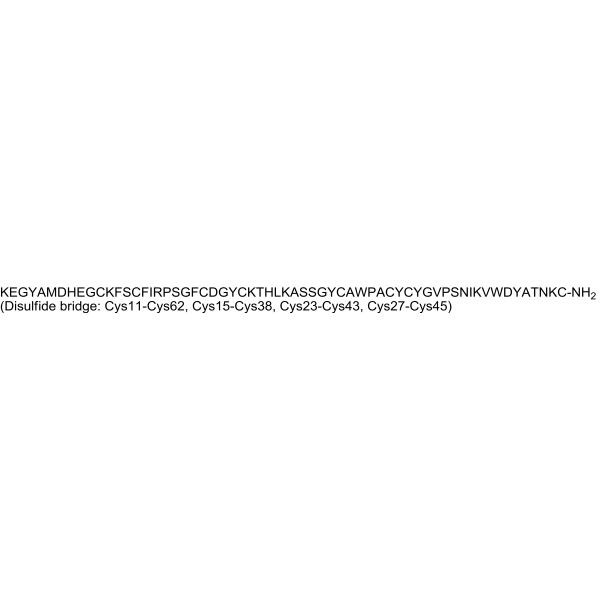
    Scorpion toxin Tf2 is a selective human voltage-gated sodium channel Nav1.3 (hNav1.3) activator. Scorpion toxin Tf2 selectively shifts the channel's activation voltage to more negative values, enabling channel opening at resting membrane potentials. Scorpion toxin Tf2 can be used for the research of epilepsy, nociception (after spinal cord injury) .
    Scorpion toxin Tf2
  • HY-P1010A

    Caspase Apoptosis Neurological Disease Cancer
    Z-LEHD-FMK TFA is a selective and irreversible inhibitor of caspase-9, protects against lethal reperfusion injury and attenuates apoptosis. Z-LEHD-FMK TFA exhibits the neuroprotective effect in a rat model of spinal cord trauma .
    Z-LEHD-FMK TFA
  • HY-103283

    GRP(18-27) (porcine)

    Biochemical Assay Reagents Neurological Disease
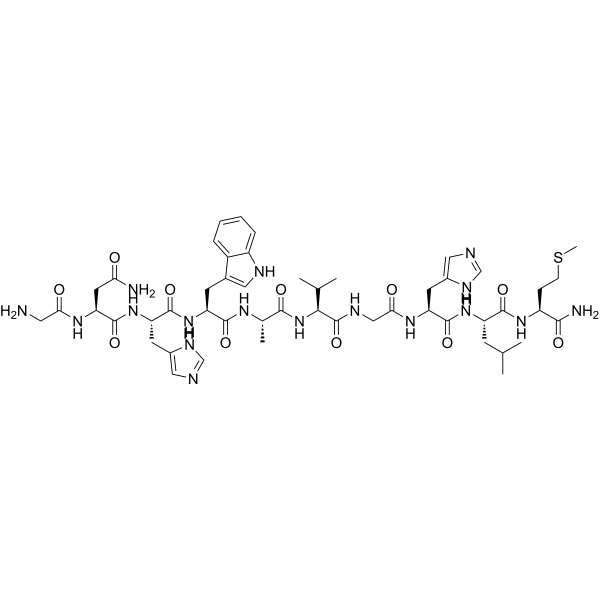
    Neuromedin C porcine (GRP, 18-27, porcine) is a bombesin-like neuropeptide that can be obtained from porcine spinal cord. Neuromedin C porcine exhibits a potent contractile activity on rat uterus in the characteristic manner of bombesin. Neuromedin C porcine has research potential for neurological-related diseases .
    Neuromedin C (porcine)
  • HY-122215

    N-696

    Adrenergic Receptor Endocrinology
    Tilisolol hydrochloride (N-696) is a non-selective β-adrenergic antagonist with vasodilatory and hypotensive activities. Tilisolol hydrochloride exerts its effects in canine coronary arteries by opening ATP-sensitive K+ channels. Tilisolol hydrochloride exhibits concentration-dependent relaxation in KCl-precontracted rat thoracic aorta. Tilisolol hydrochloride reduces diastolic blood pressure in a dose-dependent manner and slightly increases heart rate in spinal cord stimulated rats .
    Tilisolol hydrochloride
  • HY-147681

    FGFR Neurological Disease
    SUN13837 is an orally active, blood-brain barrier permeable FGFR modulator and neuroprotective agent. SUN13837 mimics the activity of basic fibroblast growth factor, stimulates intracellular tyrosine phosphorylation of FGFR and signal transduction in neuronal cells, induces neurite outgrowth, and inhibits glutamate-induced neuronal death. SUN13837 can be used in research related to acute cervical spinal cord injury and severe spinal cord injury .
    SUN13837
  • HY-N8693

    COX Amyloid-β Sirtuin Reactive Oxygen Species (ROS) Apoptosis SARS-CoV Infection Neurological Disease
    Withanoside IV is an orally active, blood-brain barrier-permeable withanolide derivative. Withanoside IV specifically binds to the Sudlow I site of HSA, induces secondary structural changes in HSA, and forms stable HSA complexes. Withanoside IV inhibits the enzymatic activity of COX-2. Withanoside IV induces axonal regeneration, peripheral nervous system myelination and increased axonal density in spinal cord tissue, reduces reactive gliosis-related changes, and improves hindlimb motor function. Withanoside IV binds to amyloid-β 1-42 to inhibit its aggregation, induces neurite outgrowth and synapse reconstruction, repairs damaged axons and dendrites, enhances mitochondrial biogenesis, exerts neuroprotective effects via the BDNF and SIRT1 signaling pathways, reduces ROS production and neuronal apoptosis, and ameliorates memory deficits. Withanoside IV inhibits the activity of the SARS-CoV-2 main protease. Withanoside IV can be used in research related to spinal cord injury, Alzheimer's disease, and coronavirus disease 2019 (COVID-19) .
    Withanoside IV
  • HY-107605

    iGluR Neurological Disease
    UBP296 is a potent and selective antagonist of GLUK5-containing kainate receptor in the spinal cord. UBP296 reversibly blocks ATPA-induced depressions of synaptic transmission, and affects AMPA receptor-mediated synaptic transmission directly in rat hippocampal slices .
    UBP296
  • HY-171037

    PGBx

    Mitochondrial Metabolism Neurological Disease
    Prostaglandin Bx (PGBx) is an oligomer of PGB1 and 15-keto-PGB, which exhibits mitochondrial protective efficacy. Prostaglandin Bx promotes the neurological recovery in rabbits ischemic spinal cord injury model, and maintains the integrity of the gastric mucosa through inhibition of gastric acid secretion in rat gastric ulcer model .
    Prostaglandin Bx
  • HY-130349

    L-656,748

    GABA Receptor Infection
    Emamectin B1a (L-656,748) is a semisynthetic derivative of avermectin B1a that binds to GABA receptors (Ki=17.6 nM in rat brain membranes) and enhances GABA responses. Emamectin B1a acitivates GABAA receptors α1β1γ2, α1β2γ2, and α1β3γ2 with IC50s of 57, 210, and 49.8 nM, respectively. Emamectin B1a also binds to glycine receptors, inhibiting glycine receptors with an IC50=218 nM in rat spinal cord. Emamectin B1a (1.067 ng/mL) caused 90% mortality of S. exigua larvae in foliar spray bioassays and topical application, making it more toxic than avermectin B1.
    Emamectin B1a
  • HY-P1336A

    Deltorphin 1 TFA; Deltorphin C TFA; [D-Ala2] Deltorphin I TFA

    Opioid Receptor Neurological Disease
    Deltorphin I TFA (Deltorphin 1 TFA; Deltorphin C TFA; [D-Ala2] Deltorphin I TFA) is a high-affinity, selective δ-opioid receptor agonist that targets the δ1 and δ2 opioid receptor subtypes. Deltorphin I TFA produces analgesic effects in the rat spinal cord. Deltorphin I TFA increases the pain threshold in rats. Deltorphin I TFA can be used in studies related to nociception (acute pain) .
    Deltorphin I TFA
  • HY-110268

    CXCR Inflammation/Immunology
    NVP CXCR2 20 is a selective CXCR2 inhibitor with analgesic and antinociceptive activities. NVP CXCR2 20 selectively blocks CXCR2 signaling and attenuates mechanical and thermal hypersensitivity in rat chronic constriction injury (CCI) models. NVP CXCR2 20 inhibits CXCL3-induced hypersensitivity in naive mice and reduces elevated CXCL3 protein levels in the spinal cord and dorsal root ganglia (DRG) of CCI-exposed rats. NVP CXCR2 20 can be used for the research of neuropathic pain and chronic obstructive pulmonary disease (COPD) .
    NVP CXCR2 20
  • HY-113203A

    Endogenous Metabolite Neurological Disease
    Putreanine dihydrochloride is an alkaline diamino monocarboxylic acid amino acid that exists exclusively in the central nervous system of mammals and birds. Putreanine dihydrochloride reaches its highest concentration in the caudal region of the brain. Putreanine dihydrochloride appears in the brain tissue of rats 2 weeks after birth, and its concentration gradually increases to adult levels over several months .
    Putreanine dihydrochloride
  • HY-N18471

    5,7-DHP

    Monoamine Oxidase 5-HT Receptor Cardiovascular Disease Neurological Disease
    5,7-Dihydroxytryptamine (5,7-DHP) is an autofluorescent (λex≈365 nm), selective neurotoxin and a transport substrate for MAO-A and 5-HT. 5,7-Dihydroxytryptamine can specifically target and damage central and peripheral 5-HTergic neurons, while affecting 5-HT-related pathways and neurotransmitter balance. 5,7-Dihydroxytryptamine can be used to establish 5-HTergic neuron injury models for studies on neural development, neurodegenerative diseases, as well as mechanisms related to platelet function and retinal neurons .
    5,7-Dihydroxytryptamine

Inquiry Online

Your information is safe with us. * Required Fields.

Salutation


Country or Region *

Applicant Name *


Organization Name *

Department *


Email Address *


Product Name *

Cat. No.


Requested quantity *

Phone Number *


Remarks

Inquiry Online

Inquiry Information

Product Name:
Cat. No.:
Quantity:
MCE Japan Authorized Agent:

