



Asiatic acid
Based on 6 publication(s) in Google Scholar
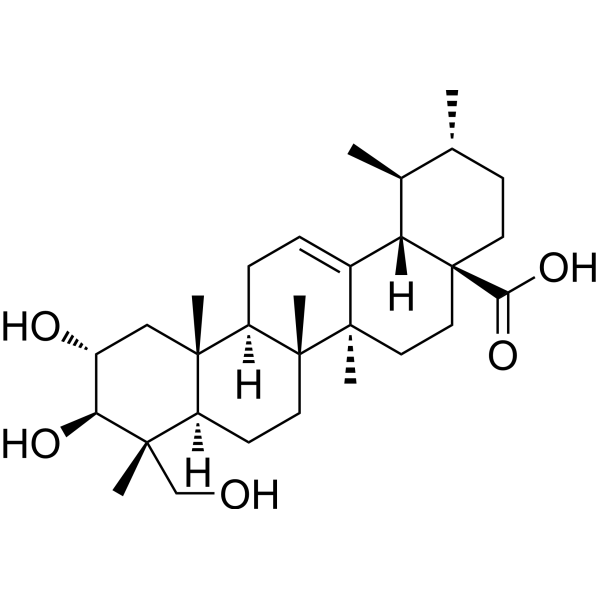
Asiatic acid, a pentacyclic triterpene found in Centella asiatica (Centella asiatica), has anticancer activity. Asiatic acid induces apoptosis in melanoma cells and has barrier protective effects on human aortic endothelial cells (HAEC). Asiatic acid also has anti-inflammatory activity and inhibits tumor necrosis factor (TNF)-α-induced endothelial barrier dysfunction. Asiatic acid also inhibits NLRP3 inflammasome activation and NF-κB pathway, effectively inhibits inflammation in rats, and has neuroprotective effects in rat spinal cord injury (SCI) model.
Nos produits utilisent uniquement pour la recherche. Nous ne vendons pas aux patients.
- Pureté : 99.49%
- CAS No.: 464-92-6
- Formule: C30H48O5
- Masse moléculaire:488.70
-
Stockage:
4°C, protect from light
* In solvent : -80°C, 6 months; -20°C, 1 month (protect from light)

To place orders, for customer services and technical support, please contact: MedChemExpress USA
Tel: 609-228-6898 E-mail: [email protected] [email protected]


-
 Activité biologique
-
Chemical Information
-
Solvant et solubilité
- Protocole
- Pureté et documentation
- Références
-
 Help & FAQs


-
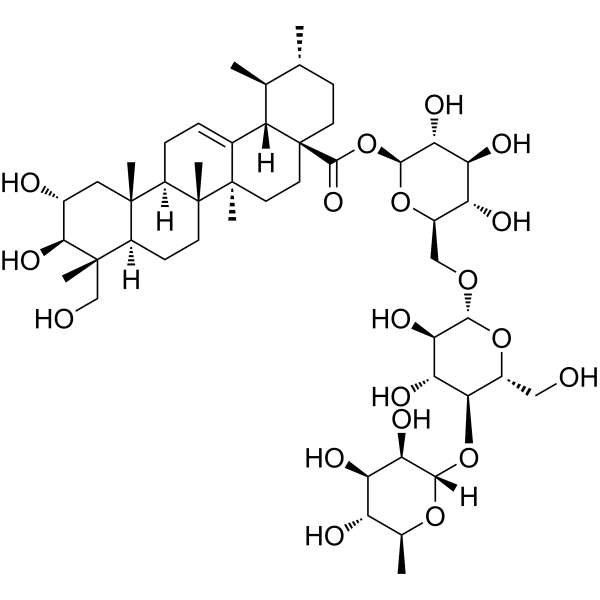
HY-N0439
AsiaticosideTriterpene Glycoside -
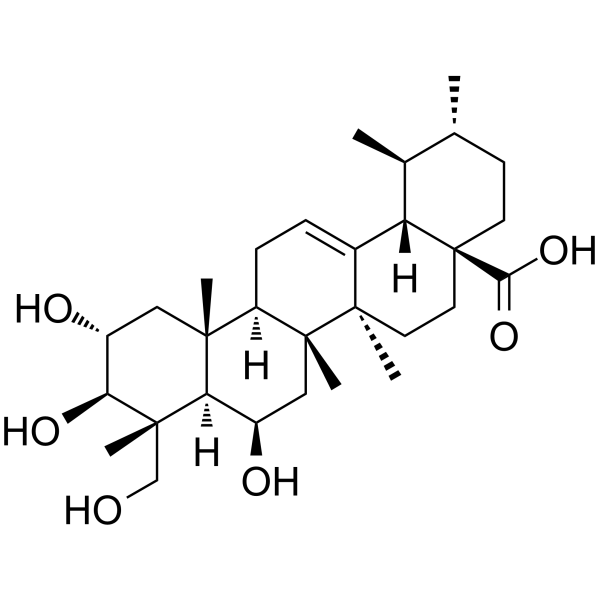
HY-N0569
Madecassic acidNO Synthase Inhibitor -
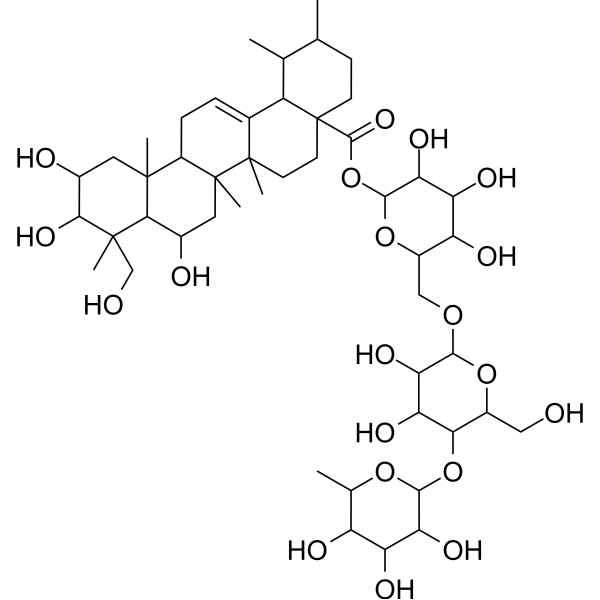
HY-N0568
MadecassosideEndogenous Metabolite -
HY-15097
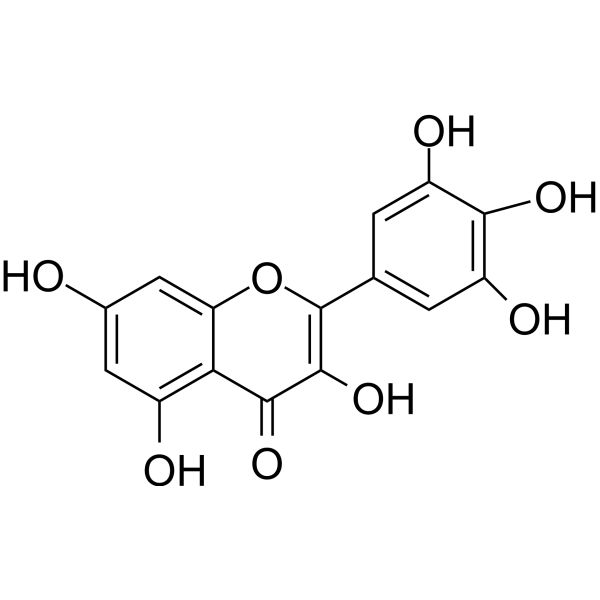
MyricetinAutophagy Inducer -
HY-N0140
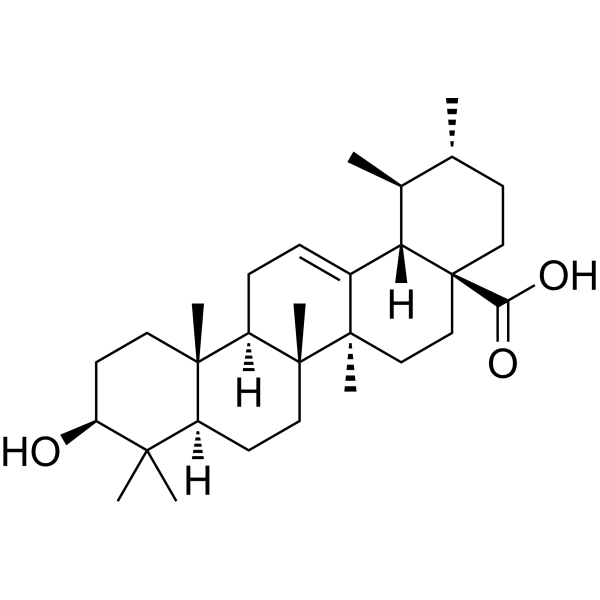
Ursolic acidAutophagy Inducer -

HY-N0194R
Asiatic acid (Standard)Apoptosis Inducer -
HY-18085
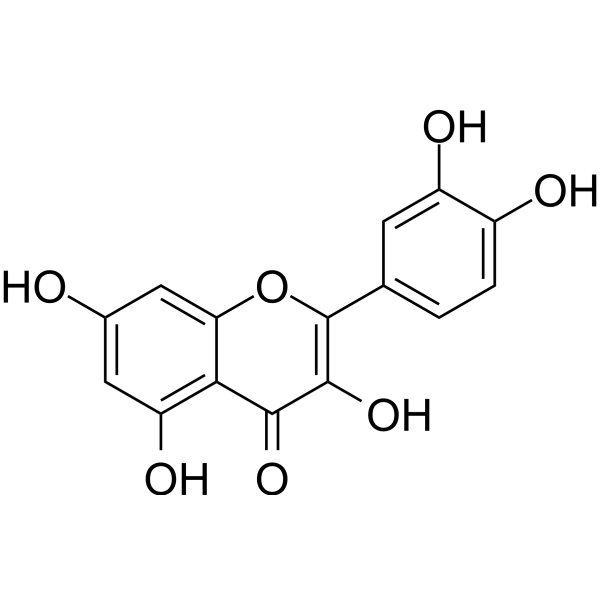
QuercetinFlavonoid Antioxidant -
HY-10320
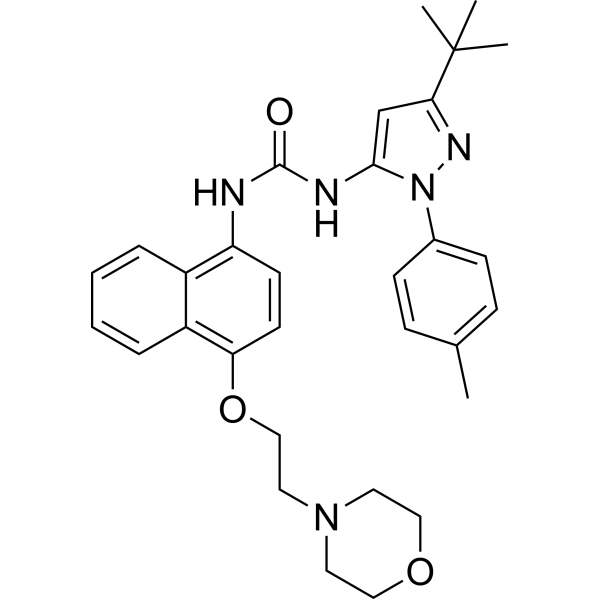
Doramapimodp38 MAPK Inhibitor -
HY-15371
ForskolinAdenylate Cyclase Activator -
HY-N0156
Oleanolic acidAutophagy Inducer -
HY-N1201
ApigeninCytochrome P450 Inhibitor -
HY-N0162
LuteolinNrf2 Inhibitor
Publications Citing Use of MedChemExpress (MCE) Asiatic acid
More- Acta Pharmacol Sin. 2026 Feb 5. [Abstract]
- Acta Pharmacol Sin. 2022 Jun;43(6):1395-1407. [Abstract]
- J Ethnopharmacol. 2026 Aug 26:373:122321.
- Pharmaceuticals (Basel). 2024 Jul 22;17(7):969. [Abstract]
- Cancers (Basel). 2023 Jan 16;15(2):548. [Abstract]
- Naunyn Schmiedebergs Arch Pharmacol. 2026 Jun 27. [Abstract]
 Customer Validation & Images

-
Cell Proliferation/Viability Assay

-
Flow Cytometry
-
In Vivo Efficacy Study
-
In Vivo Efficacy Study
-
IHC
Voir tous les produits spécifiques à Isoform Parasite
More

Activité biologique
Description
Cellular Effect
|
Cell Line

|
Type | Value | Description | References |
|---|---|---|---|---|
| 518A2 | EC50 |
21.9 μM
Compound: AA
|
Cytotoxicity against human 518A2 cells after 96 hrs by sulforhodamine B assay
Cytotoxicity against human 518A2 cells after 96 hrs by sulforhodamine B assay
|
[PMID: 30278332] |
| 8505C | EC50 |
16.8 μM
Compound: AA
|
Cytotoxicity against human 8505C cells after 96 hrs by sulforhodamine B assay
Cytotoxicity against human 8505C cells after 96 hrs by sulforhodamine B assay
|
[PMID: 30278332] |
| A2780 | EC50 |
28.2 μM
Compound: AA
|
Cytotoxicity against human A2780 cells after 96 hrs by sulforhodamine B assay
Cytotoxicity against human A2780 cells after 96 hrs by sulforhodamine B assay
|
[PMID: 30278332] |
| A2780 | EC50 |
28.2 μM
Compound: 1
|
Cytotoxicity against human A2780 cells incubated for 72 hrs by SRB assay
Cytotoxicity against human A2780 cells incubated for 72 hrs by SRB assay
|
[PMID: 36780832] |
| A-375 | EC50 |
>30 μM
Compound: 1
|
Cytotoxicity against human A-375 cells incubated for 72 hrs by SRB assay
Cytotoxicity against human A-375 cells incubated for 72 hrs by SRB assay
|
[PMID: 36780832] |
| A-375 | IC50 |
50.33 μM
Compound: AA; Asiatic Acid
|
Cytotoxicity against human A375 cells after 72 hrs by MTT assay
Cytotoxicity against human A375 cells after 72 hrs by MTT assay
|
[PMID: 26974379] |
| A549 | EC50 |
26.2 μM
Compound: AA
|
Cytotoxicity against human A549 cells after 96 hrs by sulforhodamine B assay
Cytotoxicity against human A549 cells after 96 hrs by sulforhodamine B assay
|
[PMID: 30278332] |
| A549 | IC50 |
>100 μM
Compound: AA
|
Antiproliferative activity against human A549 cells after 48 hrs by CCK-8 assay
Antiproliferative activity against human A549 cells after 48 hrs by CCK-8 assay
|
[PMID: 26343825] |
| A549 | IC50 |
>20 μM
Compound: AA
|
Inhibition of NFkappaB (unknown origin) expressed in human A549 cells co-transfected with pNFkappaB-Luc vector assessed as reduction in TNFalpha-induced NFkappaB transcriptional activity co-incubated for 7 hrs in presence of TNFalpha by bright-glo lucifer
Inhibition of NFkappaB (unknown origin) expressed in human A549 cells co-transfected with pNFkappaB-Luc vector assessed as reduction in TNFalpha-induced NFkappaB transcriptional activity co-incubated for 7 hrs in presence of TNFalpha by bright-glo lucifer
|
[PMID: 31057738] |
| A549 | IC50 |
18.8 μM
Compound: AA 6
|
Cytotoxicity in human A549 cells assessed as reduction in cell viability incubated for 72 hrs by CCK8 assay
Cytotoxicity in human A549 cells assessed as reduction in cell viability incubated for 72 hrs by CCK8 assay
|
[PMID: 28754470] |
| A549 | IC50 |
37.81 μM
Compound: AA 6
|
Cytotoxicity in human A549 cells assessed as reduction in cell viability incubated for 48 hrs by MTT assay
Cytotoxicity in human A549 cells assessed as reduction in cell viability incubated for 48 hrs by MTT assay
|
[PMID: 28754470] |
| A549 | IC50 |
41.02 μM
Compound: AA
|
Cytotoxicity against human A549 cells after 48 hrs by MTT assay
Cytotoxicity against human A549 cells after 48 hrs by MTT assay
|
[PMID: 31057738] |
| BJ | IC50 |
88.7 μM
Compound: AA; Asiatic Acid
|
Cytotoxicity against human BJ cells after 72 hrs by MTT assay
Cytotoxicity against human BJ cells after 72 hrs by MTT assay
|
[PMID: 26974379] |
| CHO | EC50 |
>10 μM
Compound: Asiatic acid
|
Agonist activity at TGR5 expressed in CHO cells by CRE-driven luciferase reporter gene assay
Agonist activity at TGR5 expressed in CHO cells by CRE-driven luciferase reporter gene assay
|
[PMID: 19911773] |
| COS-1 | EC50 |
0 μM
Compound: Asiatic acid
|
Agonist activity at human FXR expressed in COS1 cells by luciferase reporter gene assay
Agonist activity at human FXR expressed in COS1 cells by luciferase reporter gene assay
|
[PMID: 19911773] |
| Epithelial cell | IC50 |
>20 μM
Compound: asiatic acid
|
Antiproliferative activity against mouse +SA mammary epithelial cells after 4 days by MTT assay
Antiproliferative activity against mouse +SA mammary epithelial cells after 4 days by MTT assay
|
[PMID: 18826277] |
| H9 | IC50 |
9 μg/mL
Compound: 8
|
Antiviral activity against HIV1 3B in human H9 cells after 4 days by p24 antigen ELISA
Antiviral activity against HIV1 3B in human H9 cells after 4 days by p24 antigen ELISA
|
[PMID: 9748372] |
| HeLa | IC50 |
37.26 μM
Compound: AA
|
Cytotoxicity against human HeLa cells after 48 hrs by MTT assay
Cytotoxicity against human HeLa cells after 48 hrs by MTT assay
|
[PMID: 25151580] |
| HeLa | IC50 |
4 μM
Compound: AA 6
|
Cytotoxicity in human HeLa cells assessed as reduction in cell viability incubated for 72 hrs by CCK8 assay
Cytotoxicity in human HeLa cells assessed as reduction in cell viability incubated for 72 hrs by CCK8 assay
|
[PMID: 28754470] |
| HeLa | IC50 |
52.47 μM
Compound: AA 6
|
Cytotoxicity in human HeLa cells assessed as reduction in cell viability incubated for 72 hrs by MTT assay
Cytotoxicity in human HeLa cells assessed as reduction in cell viability incubated for 72 hrs by MTT assay
|
[PMID: 28754470] |
| HeLa | IC50 |
52.47 μM
Compound: AA; Asiatic Acid
|
Cytotoxicity against human HeLa cells after 72 hrs by MTT assay
Cytotoxicity against human HeLa cells after 72 hrs by MTT assay
|
[PMID: 26974379] |
| HeLa | IC50 |
91.07 μM
Compound: AA
|
Antiproliferative activity against human HeLa cells after 48 hrs by CCK-8 assay
Antiproliferative activity against human HeLa cells after 48 hrs by CCK-8 assay
|
[PMID: 26343825] |
| HepG2 | IC50 |
>10 μM
Compound: 24
|
Cytotoxicity against human HepG2 cells after 72 hrs by MTT assay
Cytotoxicity against human HepG2 cells after 72 hrs by MTT assay
|
[PMID: 27797185] |
| HepG2 | IC50 |
34.9 μM
Compound: AA
|
Cytotoxicity against human HepG2 cells after 48 hrs by MTT assay
Cytotoxicity against human HepG2 cells after 48 hrs by MTT assay
|
[PMID: 25151580] |
| HepG2 | IC50 |
35.37 μM
Compound: AA
|
Cytotoxicity against human HepG2 cells after 48 hrs by MTT assay
Cytotoxicity against human HepG2 cells after 48 hrs by MTT assay
|
[PMID: 31057738] |
| HT-29 | EC50 |
>30 μM
Compound: AA
|
Cytotoxicity against human HT-29 cells after 96 hrs by sulforhodamine B assay
Cytotoxicity against human HT-29 cells after 96 hrs by sulforhodamine B assay
|
[PMID: 30278332] |
| HT-29 | EC50 |
>30 μM
Compound: 1
|
Cytotoxicity against human HT-29 cells incubated for 72 hrs by SRB assay
Cytotoxicity against human HT-29 cells incubated for 72 hrs by SRB assay
|
[PMID: 36780832] |
| HT-29 | IC50 |
64.3 μM
Compound: AA; Asiatic Acid
|
Cytotoxicity against human HT-29 cells after 72 hrs by MTT assay
Cytotoxicity against human HT-29 cells after 72 hrs by MTT assay
|
[PMID: 26974379] |
| HT-29 | IC50 |
64.33 μM
Compound: AA 6
|
Cytotoxicity in human HT-29 cells assessed as reduction in cell viability incubated for 72 hrs by MTT assay
Cytotoxicity in human HT-29 cells assessed as reduction in cell viability incubated for 72 hrs by MTT assay
|
[PMID: 28754470] |
| HUVEC | IC50 |
>100 μM
Compound: AA
|
Cytotoxicity against human HUVEC cells after 48 hrs by MTT assay
Cytotoxicity against human HUVEC cells after 48 hrs by MTT assay
|
[PMID: 25151580] |
| HUVEC | IC50 |
>100 μM
Compound: AA 6
|
Cytotoxicity in HUVEC cells assessed as reduction in cell viability incubated for 48 hrs by MTT assay
Cytotoxicity in HUVEC cells assessed as reduction in cell viability incubated for 48 hrs by MTT assay
|
[PMID: 28754470] |
| Jurkat | IC50 |
37.17 μM
Compound: AA; Asiatic Acid
|
Cytotoxicity against human Jurkat cells after 72 hrs by XTT assay
Cytotoxicity against human Jurkat cells after 72 hrs by XTT assay
|
[PMID: 26974379] |
| L02 | IC50 |
>50 μM
Compound: AA
|
Cytotoxicity against human HL-7702 cells after 48 hrs by MTT assay
Cytotoxicity against human HL-7702 cells after 48 hrs by MTT assay
|
[PMID: 31057738] |
| MCF7 | EC50 |
>30 μM
Compound: AA
|
Cytotoxicity against human MCF7 cells after 96 hrs by sulforhodamine B assay
Cytotoxicity against human MCF7 cells after 96 hrs by sulforhodamine B assay
|
[PMID: 30278332] |
| MCF7 | EC50 |
>30 μM
Compound: 1
|
Cytotoxicity against human MCF7 cells incubated for 72 hrs by SRB assay
Cytotoxicity against human MCF7 cells incubated for 72 hrs by SRB assay
|
[PMID: 36780832] |
| MCF7 | GI50 |
19.1 μM
Compound: AA 6
|
Cytotoxicity in human MCF7 cells assessed as reduction in cell viability incubated for 48 hrs by SRB assay
Cytotoxicity in human MCF7 cells assessed as reduction in cell viability incubated for 48 hrs by SRB assay
|
[PMID: 28754470] |
| MCF7 | IC50 |
>10 μM
Compound: 24
|
Cytotoxicity against human MCF7 cells after 72 hrs by MTT assay
Cytotoxicity against human MCF7 cells after 72 hrs by MTT assay
|
[PMID: 27797185] |
| MCF7 | IC50 |
32.8 μM
Compound: AA 6
|
Cytotoxicity in human MCF7 cells assessed as reduction in cell viability incubated for 72 hrs by CCK8 assay
Cytotoxicity in human MCF7 cells assessed as reduction in cell viability incubated for 72 hrs by CCK8 assay
|
[PMID: 28754470] |
| MCF7 | IC50 |
67.58 μM
Compound: AA
|
Antiproliferative activity against human MCF7 cells after 48 hrs by CCK-8 assay
Antiproliferative activity against human MCF7 cells after 48 hrs by CCK-8 assay
|
[PMID: 26343825] |
| MCF7 | IC50 |
68.5 μM
Compound: AA; Asiatic Acid
|
Cytotoxicity against human MCF7 cells after 72 hrs by MTT assay
Cytotoxicity against human MCF7 cells after 72 hrs by MTT assay
|
[PMID: 26974379] |
| MDA-MB-231 | GI50 |
18.1 μM
Compound: AA 6
|
Cytotoxicity in human MDA-MB-231 cells assessed as reduction in cell viability incubated for 48 hrs by SRB assay
Cytotoxicity in human MDA-MB-231 cells assessed as reduction in cell viability incubated for 48 hrs by SRB assay
|
[PMID: 28754470] |
| MGC-803 | IC50 |
22.57 μM
Compound: AA
|
Cytotoxicity against human MGC803 cells after 48 hrs by MTT assay
Cytotoxicity against human MGC803 cells after 48 hrs by MTT assay
|
[PMID: 25151580] |
| MIA PaCa-2 | IC50 |
50.67 μM
Compound: AA; Asiatic Acid
|
Cytotoxicity against human MIAPaCa2 cells after 72 hrs by MTT assay
Cytotoxicity against human MIAPaCa2 cells after 72 hrs by MTT assay
|
[PMID: 26974379] |
| NCI-H460 | IC50 |
39.55 μM
Compound: AA
|
Cytotoxicity against human NCI-H460 cells after 48 hrs by MTT assay
Cytotoxicity against human NCI-H460 cells after 48 hrs by MTT assay
|
[PMID: 25151580] |
| NCI-H460 | IC50 |
44.82 μM
Compound: AA
|
Cytotoxicity against human NCI-H460 cells after 48 hrs by MTT assay
Cytotoxicity against human NCI-H460 cells after 48 hrs by MTT assay
|
[PMID: 31057738] |
| NCI-N87 | IC50 |
>10 μM
Compound: 24
|
Cytotoxicity against human NCI-N87 cells after 72 hrs by MTT assay
Cytotoxicity against human NCI-N87 cells after 72 hrs by MTT assay
|
[PMID: 27797185] |
| NIH3T3 | EC50 |
26.2 μM
Compound: AA
|
Cytotoxicity against mouse NIH/3T3 cells after 96 hrs by sulforhodamine B assay
Cytotoxicity against mouse NIH/3T3 cells after 96 hrs by sulforhodamine B assay
|
[PMID: 30278332] |
| NIH3T3 | EC50 |
26.2 μM
Compound: 1
|
Cytotoxicity against mouse NIH/3T3 cells incubated for 72 hrs by SRB assay
Cytotoxicity against mouse NIH/3T3 cells incubated for 72 hrs by SRB assay
|
[PMID: 36780832] |
| PC-3 | IC50 |
53.6 μM
Compound: AA 6
|
Cytotoxicity in human PC3 cells assessed as reduction in cell viability incubated for 72 hrs by CCK8 assay
Cytotoxicity in human PC3 cells assessed as reduction in cell viability incubated for 72 hrs by CCK8 assay
|
[PMID: 28754470] |
| PC-3 | IC50 |
67.25 μM
Compound: AA; Asiatic Acid
|
Cytotoxicity against human PC3 cells after 72 hrs by MTT assay
Cytotoxicity against human PC3 cells after 72 hrs by MTT assay
|
[PMID: 26974379] |
| RAW264.7 | IC50 |
74.8 μM
Compound: 4
|
Antiinflammatory activity in mouse RAW264.7 cells assessed as inhibition of LPS-induced TNF-alpha secretion after 18 hrs
Antiinflammatory activity in mouse RAW264.7 cells assessed as inhibition of LPS-induced TNF-alpha secretion after 18 hrs
|
[PMID: 21353543] |
| RAW264.7 | IC50 |
8.6 μM
Compound: 4
|
Antiinflammatory activity in mouse RAW264.7 cells assessed as inhibition of LPS-induced nitric oxide production after 24 hrs by Griess method
Antiinflammatory activity in mouse RAW264.7 cells assessed as inhibition of LPS-induced nitric oxide production after 24 hrs by Griess method
|
[PMID: 21353543] |
| Sf21 | IC50 |
>40 μM
Compound: 25
|
Inhibition of human recombinant COX2 expressed in baculovirus infected sf21 cells assessed as decrease in PGE2 formation using arachidonic acid as substrate preincubated for 10 mins followed by substrate addition measured after 45 mins by LC-MS analysis
Inhibition of human recombinant COX2 expressed in baculovirus infected sf21 cells assessed as decrease in PGE2 formation using arachidonic acid as substrate preincubated for 10 mins followed by substrate addition measured after 45 mins by LC-MS analysis
|
[PMID: 31774676] |
| SGC-7901 | IC50 |
36.8 μM
Compound: AA 6
|
Cytotoxicity in human SGC7901 cells assessed as reduction in cell viability incubated for 72 hrs by CCK8 assay
Cytotoxicity in human SGC7901 cells assessed as reduction in cell viability incubated for 72 hrs by CCK8 assay
|
[PMID: 28754470] |
| T-24 | IC50 |
33.72 μM
Compound: AA 6
|
Cytotoxicity in human T24 cells assessed as reduction in cell viability incubated for 48 hrs by MTT assay
Cytotoxicity in human T24 cells assessed as reduction in cell viability incubated for 48 hrs by MTT assay
|
[PMID: 28754470] |
| T-24 | IC50 |
43.97 μM
Compound: AA
|
Cytotoxicity against human T24 cells after 48 hrs by MTT assay
Cytotoxicity against human T24 cells after 48 hrs by MTT assay
|
[PMID: 31057738] |
In Vitro
Asiatic acid exerts barrier stabilizing effects against TNF-α by maintaining adherens junctions (AJs) and inhibiting tight junction (TJ) redistribution[2].
Asiatic acid (40 μM) stabilizes F-actin and diphosphate-MLC at the cell periphery and prevents their rearrangement stimulated by TNF-α (10 ng/mL; 1 h). However, Asiatic acid (10-30 μM; 6 h) cannot reduce F-actin aggregation[2].
Asiatic acid (40 μM; 6 h) preserves the network structure of cell-cell contact areas and abolishes TNF-α-induced structural reorganization of vascular endothelial (VE)-cadherin and β-catenin[2].
However, Asiatic acid (10-40 μM; 6 h) had no inhibitory effect on endothelial cell permeability increased by cytochalasin D (5 μM; 15 min). Asiatic acid increases the diphosphorylation of myosin light chain (MLC)[2].
MedChemExpress (MCE) has not independently confirmed the accuracy of these methods. They are for reference only.
In Vivo
Asiatic acid (30 mg/kg, 75 mg/kg; intragastric injection, once daily) has neuroprotective effects on spinal cord injury (SCI) in rats by inhibiting inflammation and oxidative stres[4].
MedChemExpress (MCE) has not independently confirmed the accuracy of these methods. They are for reference only.
- Detection of Apoptosis
- TUNEL staining for apoptotic DNA fragmentation
- Annexin V plus membrane-impermeant dye apoptosis staining
- Cotton Pellet Granuloma
- Carrageenan-Induced Paw Edema
- Endothelial Tube Formation Assay
- Apoptosis Solutions
- Transepithelial/transendothelial electrical resistance assay
- Research Protocol for Inflammation-related Diseases
- Pyroptosis Solutions


Chemical Information
-
CAS No. 464-92-6
-
Appearance Solid
-
Masse moléculaire 488.70
-
Formule C30H48O5
-
Color White to off-white
-
SMILES
C[C@@]1(CO)[C@@H](O)[C@H](O)C[C@]2(C)[C@@]3([H])CC=C4[C@]5([H])[C@@H](C)[C@H](C)CC[C@@](C(O)=O)5CC[C@](C)4[C@@](C)3CC[C@@]12[H]
-
Structure Classification
-
Livraison
Room temperature in continental US; may vary elsewhere.
-
Stockage
4°C, protect from light
* In solvent : -80°C, 6 months; -20°C, 1 month (protect from light)


Publications (6)
-
Journal Impact Factor
-
Most Recent
-
Acta Pharmacol Sin
Asiatic acid promotes CD8+ T cell-mediated antitumor immunity by targeting HDAC8/CXCL10 axis in hepatocellular carcinoma. [Abstract]2026 Feb 5. PMID: 41644738
Asiatic acid purchased from MedChemExpress. Usage Cited in: Acta Pharmacol Sin. 2026 Feb 5. [Abstract]
The cell viability of human normal liver cells (L02), human HCC cells (HuH7), and murine hepatoma cells (Hepa 1-6, H22) treated with Asiatic acid (AA) (20-120 μM; 48 h).
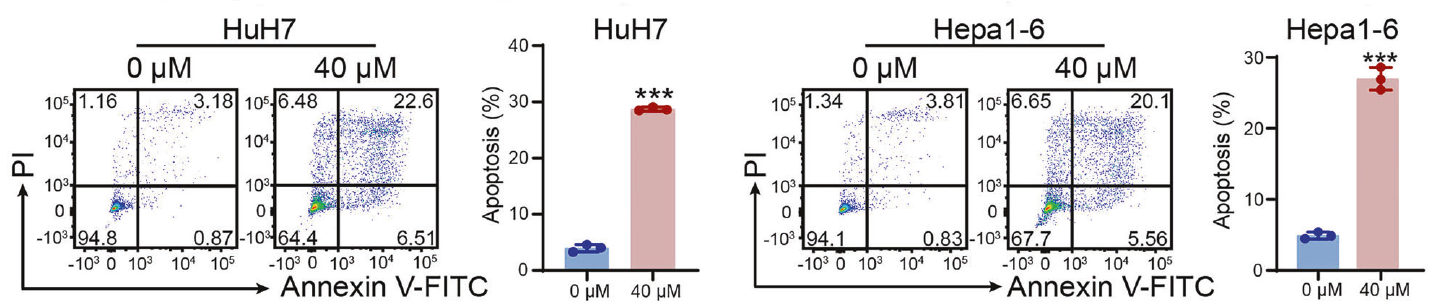
Asiatic acid purchased from MedChemExpress. Usage Cited in: Acta Pharmacol Sin. 2026 Feb 5. [Abstract]
Asiatic acid (AA) (40 μM; 24 h) markedly increased apoptosis rate of HCC cells.
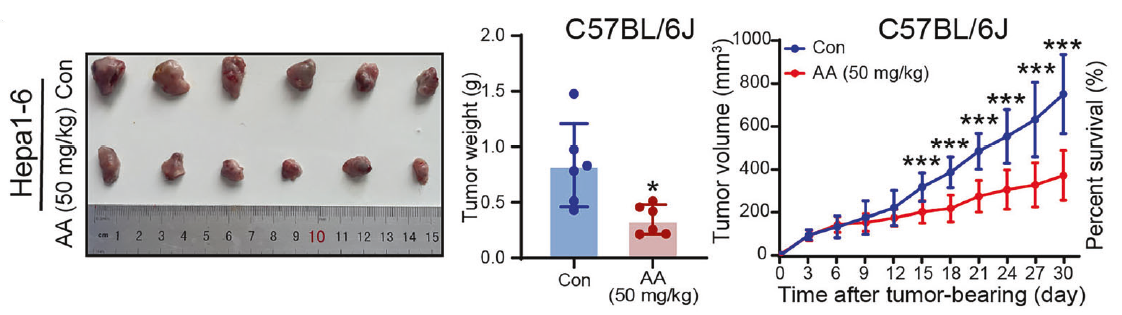
Asiatic acid purchased from MedChemExpress. Usage Cited in: Acta Pharmacol Sin. 2026 Feb 5. [Abstract]
Asiatic acid (AA) (50 mg/kg; i.g.; once daily) reduced the tumor weight and volume in C57BL/6J subcutaneous allograft tumor models.
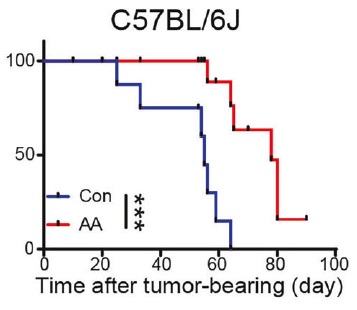
Asiatic acid purchased from MedChemExpress. Usage Cited in: Acta Pharmacol Sin. 2026 Feb 5. [Abstract]
Asiatic acid (AA) (50 mg/kg; i.g.; once daily) prolonged the overall survival of C57BL/6J tumor-bearing mice.
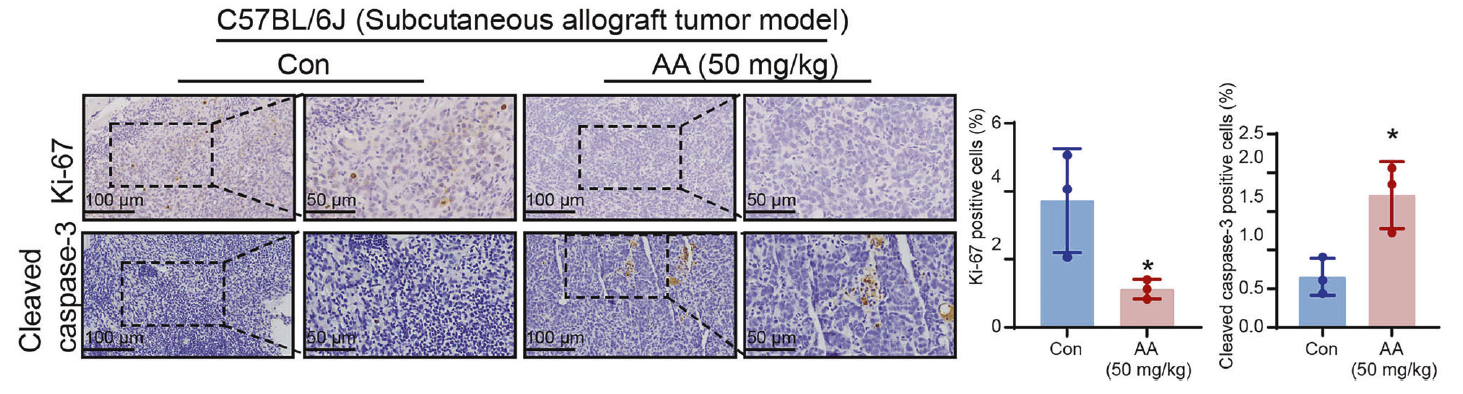
Asiatic acid purchased from MedChemExpress. Usage Cited in: Acta Pharmacol Sin. 2026 Feb 5. [Abstract]
Asiatic acid (AA) (50 mg/kg; i.g.; once daily) significantly increased cleaved caspase-3 and decreased Ki-67 levels in tumor tissues of C57BL/6J tumor-bearing mice.
-
Acta Pharmacol Sin
Asiatic acid alleviates ischemic myocardial injury in mice by modulating mitophagy- and glycophagy-based energy metabolism. [Abstract]2022 Jun;43(6):1395-1407. PMID: 34522006 -
-
Pharmaceuticals (Basel)
Exploring the Mechanism of Asiatic Acid against Atherosclerosis Based on Molecular Docking, Molecular Dynamics, and Experimental Verification. [Abstract]2024 Jul 22;17(7):969. PMID: 39065817 -
Cancers (Basel)
Synergistic Combination of Luteolin and Asiatic Acid on Cervical Cancer In Vitro and In Vivo. [Abstract]2023 Jan 16;15(2):548. PMID: 36672499 -
Naunyn Schmiedebergs Arch Pharmacol
Serum-based untargeted metabolomics reveals the therapeutic mechanism of asiatic acid against atherosclerosis in ApoE-/- mice. [Abstract]2026 Jun 27. PMID: 42363947


Solvant et solubilité
In Vitro:
DMSO : 250 mg/mL (511.56 mM; Need ultrasonic; Hygroscopic DMSO has a significant impact on the solubility of product, please use newly opened DMSO)
Please refer to the solubility information to select the appropriate solvent. Once prepared, please aliquot and store the solution to prevent product inactivation from repeated freeze-thaw cycles.
Storage method and period of stock solution: -80°C, 6 months; -20°C, 1 month (protect from light). When stored at -80°C, please use it within 6 months. When stored at -20°C, please use it within 1 month.
Please refer to the solubility information to select the appropriate solvent. Once prepared, please aliquot and store the solution to prevent product inactivation from repeated freeze-thaw cycles.
Storage method and period of stock solution: -80°C, 6 months; -20°C, 1 month (protect from light). When stored at -80°C, please use it within 6 months. When stored at -20°C, please use it within 1 month.
Concentration (start) × Volume (start) = Concentration (final) × Volume (final)
In Vivo:
Select the appropriate dissolution method based on your experimental animal and administration route.
- For the following dissolution methods, please ensure to first prepare a clear stock solution using an In Vitro approach and then sequentially add co-solvents:
- To ensure reliable experimental results, the clarified stock solution can be appropriately stored based on storage conditions. As for the working solution for In Vivo experiments, it is recommended to prepare freshly and use it on the same day.
- The percentages shown for the solvents indicate their volumetric ratio in the final prepared solution. If precipitation or phase separation occurs during preparation, heat and/or sonication can be used to aid dissolution.
Add each solvent one by one: 10% DMSO 40% PEG300 5% Tween-80 45% Saline
Solubility: ≥ 2.25 mg/mL (4.60 mM); Clear solution
This protocol yields a clear solution of ≥ 2.25 mg/mL (saturation unknown).
Taking 1 mL working solution as an example, add 100 μL DMSO stock solution (22.5 mg/mL) to 400 μL PEG300, and mix evenly; then add 50 μL Tween-80 and mix evenly; then add 450 μL Saline to adjust the volume to 1 mL.
Preparation of Saline: Dissolve 0.9 g sodium chloride in ddH₂O and dilute to 100 mL to obtain a clear Saline solution.
Add each solvent one by one: 10% DMSO 90% (20% SBE-β-CD in Saline)
Solubility: 2.08 mg/mL (4.26 mM); Suspended solution; Need ultrasonic
This protocol yields a suspended solution of 2.08 mg/mL. Suspended solution can be used for oral and intraperitoneal injection.
Taking 1 mL working solution as an example, add 100 μL DMSO stock solution (20.8 mg/mL) to 900 μL 20% SBE-β-CD in Saline, and mix evenly.
Preparation of 20% SBE-β-CD in Saline (4°C, storage for one week): 2 g SBE-β-CD powder is dissolved in 10 mL Saline, completely dissolve until clear.
In Vivo Dissolution Calculator
Please enter the basic information of animal experiments:
-
-
-
-
Recommended: Prepare an additional quantity of animals to account for potential losses during experiments.
Please enter your animal formula composition:
-
%DMSO +
Recommended: Keep the proportion of DMSO in working solution below 2% if your animal is weak.
-
%+
-
+%Tween-80 + +
-
%Saline +
The co-solvents required include: DMSO, . All of co-solvents are available by MedChemExpress (MCE). , Tween 80. All of co-solvents are available by MedChemExpress (MCE).
Working solution concentration: 0.22 mg/mL
Method for preparing stock solution: mg drug dissolved in μL DMSO. Stock solution concentration: mg/mL. * In solvent : -80°C, 6 months; -20°C, 1 month (protect from light)
1. Take μL DMSO stock solution;
2. Add μL .
μL , mix evenly;
3. Then add μL Tween 80, mix evenly;
4. Then add μL
Please ensure that the stock solution in the first step is dissolved to a clear state, and add co-solvents in sequence. You can use ultrasonic heating (ultrasonic cleaner, recommended frequency 20-40 kHz), vortexing, etc. to assist dissolution.


Pureté et documentation
-
Fiche technique (291 KB)
-
SDS (394 KB)
- English - EN (394 KB)
- Français - FR (394 KB)
- Deutsch - DE (394 KB)
- Norwegian - NO (394 KB)
- Español - ES (394 KB)
- Swedish - SV (394 KB)
- Italian - IT (394 KB)
- Korean - KR (394 KB)
- Portuguese - PT (394 KB)
-
Instruction de manipulation (2659 KB)
Références
[1]. Park BC, et al. Asiatic acid induces apoptosis in SK-MEL-2 human melanoma cells. Cancer Lett. 2005 Jan 31;218(1):81-90. [Content Brief]
[2]. Huang SS, et al. Antinociceptive activities and the mechanisms of anti-inflammation of asiatic Acid in mice. Evid Based Complement Alternat Med. 2011;2011:895857. [Content Brief]
[3]. Fong LY, et al. Asiatic acid stabilizes cytoskeletal proteins and prevents TNF-α-induced disorganization of cell-cell junctions in human aortic endothelial cells. Vascul Pharmacol. 2019 Jun;117:15-26. [Content Brief]
[4]. Jiang W, et al. Neuroprotective effect of asiatic acid against spinal cord injury in rats. Life Sci. 2016 Jul 15;157:45-51. [Content Brief]
[5]. Kong D, et al. Protective effects of Asiatic acid against pelvic inflammatory disease in rats. Exp Ther Med. 2019 Jun;17(6):4687-4692. [Content Brief]


Complete Stock Solution Preparation Table
Please refer to the solubility information to select the appropriate solvent. Once prepared, please aliquot and store the solution to prevent product inactivation from repeated freeze-thaw cycles.
Storage method and period of stock solution: -80°C, 6 months; -20°C, 1 month (protect from light). When stored at -80°C, please use it within 6 months. When stored at -20°C, please use it within 1 month.
| Optional Solvent | Concentration Solvent Mass | 1 mg | 5 mg | 10 mg | 25 mg |
|---|---|---|---|---|---|
| DMSO | 1 mM | 2.0462 mL | 10.2312 mL | 20.4625 mL | 51.1561 mL |
| 5 mM | 0.4092 mL | 2.0462 mL | 4.0925 mL | 10.2312 mL | |
| 10 mM | 0.2046 mL | 1.0231 mL | 2.0462 mL | 5.1156 mL | |
| 15 mM | 0.1364 mL | 0.6821 mL | 1.3642 mL | 3.4104 mL | |
| 20 mM | 0.1023 mL | 0.5116 mL | 1.0231 mL | 2.5578 mL | |
| 25 mM | 0.0818 mL | 0.4092 mL | 0.8185 mL | 2.0462 mL | |
| 30 mM | 0.0682 mL | 0.3410 mL | 0.6821 mL | 1.7052 mL | |
| 40 mM | 0.0512 mL | 0.2558 mL | 0.5116 mL | 1.2789 mL | |
| 50 mM | 0.0409 mL | 0.2046 mL | 0.4092 mL | 1.0231 mL | |
| 60 mM | 0.0341 mL | 0.1705 mL | 0.3410 mL | 0.8526 mL | |
| 80 mM | 0.0256 mL | 0.1279 mL | 0.2558 mL | 0.6395 mL | |
| 100 mM | 0.0205 mL | 0.1023 mL | 0.2046 mL | 0.5116 mL |


Asiatic acid Related Classifications
HY-N0194 Related Classifications
 Powered by Bioz
Keywords
- Asiatic acid
- 464-92-6
- Apoptosis
- Parasite
- Actin
- Anti-hyperpermeability
- Diphosphorylated myosin light chain
- Endothelial cell-cell junctions
- Human aortic endothelial cells
- TNF-α
- inflammatory response
- nuclear factor-κB
- nucleotide-binding domain-like receptor protein 3 inflammasome
- pelvic inflammatory disease
- Inhibitor
- inhibitor
- inhibit