



Asiatic acid (Standard)

Based on 1 Customer Validation
Asiatic acid (Standard) is the analytical standard of Asiatic acid. This product is intended for research and analytical applications. Asiatic acid, a pentacyclic triterpene found in Centella asiatica (Centella asiatica), has anticancer activity. Asiatic acid induces apoptosis in melanoma cells and has barrier protective effects on human aortic endothelial cells (HAEC). Asiatic acid also has anti-inflammatory activity and inhibits tumor necrosis factor (TNF)-α-induced endothelial barrier dysfunction. Asiatic acid also inhibits NLRP3 inflammasome activation and NF-κB pathway, effectively inhibits inflammation in rats, and has neuroprotective effects in rat spinal cord injury (SCI) model.
For research use only. We do not sell to patients.
- Purity : 98.16%
- CAS No.: 464-92-6
- Formula: C₃₀H₄₈O₅
- Molecular Weight:488.70
-
Storage:
Please store the product under the recommended conditions in the Certificate of Analysis.


To place orders, for customer services and technical support, please contact: MedChemExpress USA
Tel: 609-228-6898 E-mail: [email protected] [email protected]


-
 Product Information
-
Chemical Information
- Purity & Documentation
-
 Help & FAQs


-
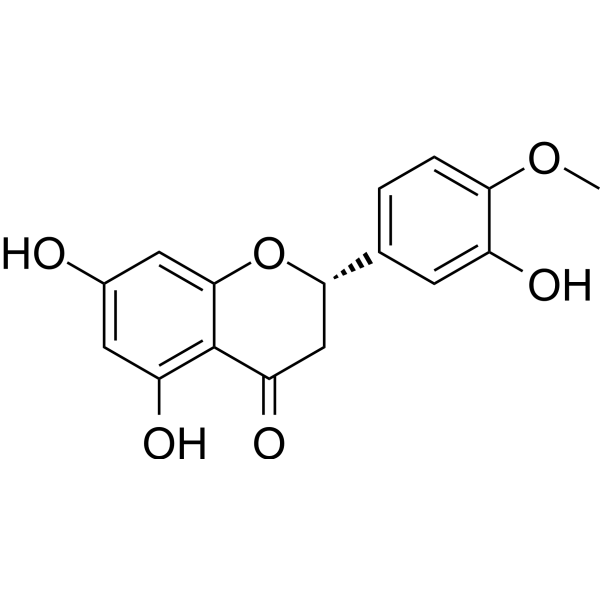
HY-N0168
HesperetinUGT Inhibitor -
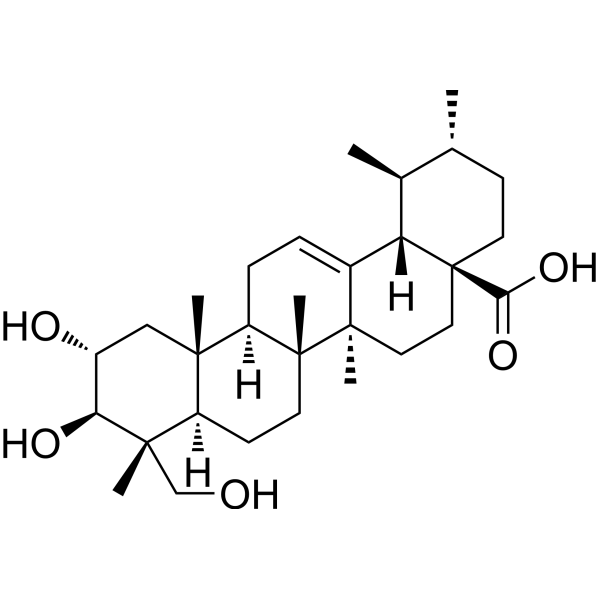
HY-N0194
Asiatic acidApoptosis Inducer -

HY-N0112R
Dihydromyricetin (Standard)Autophagy Inducer -
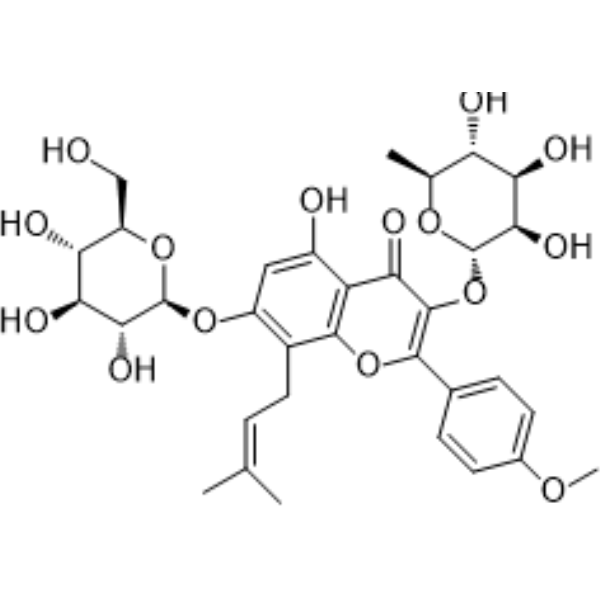
HY-N0014
IcariinPPAR Activator -
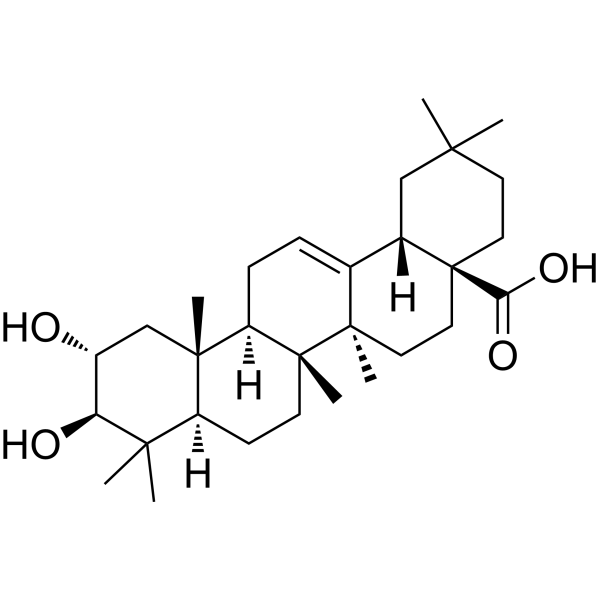
HY-N0629
Maslinic acidBacterial Inhibitor -
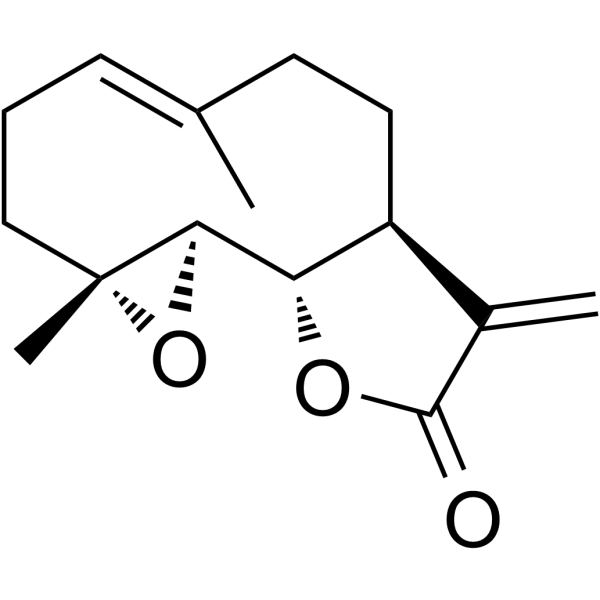
HY-N0141
ParthenolideNF-κB Inhibitor -
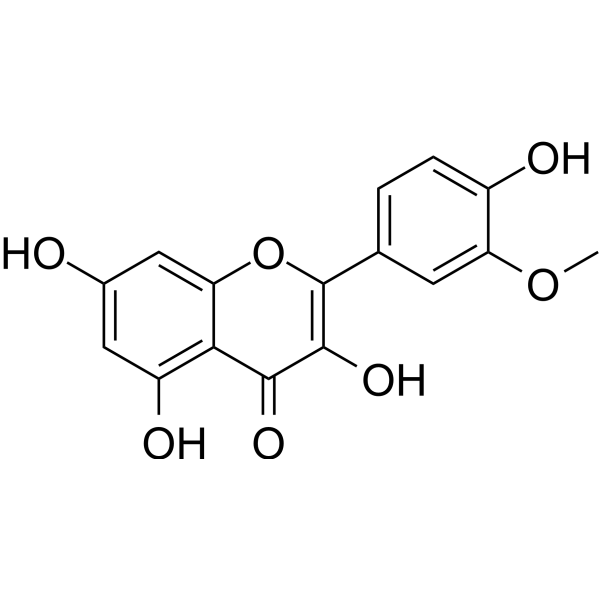
HY-N0776
IsorhamnetinEndogenous Metabolite -
HY-10256
Adezmapimodp38 MAPK Inhibitor -
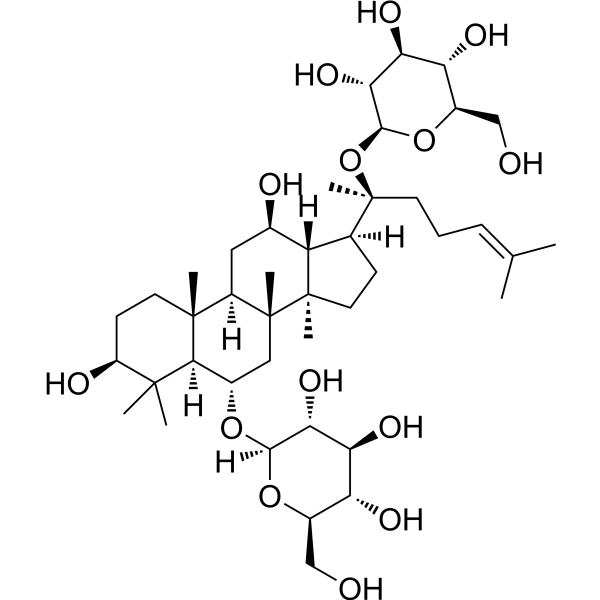
HY-N0045
Ginsenoside Rg1Apoptosis Inducer -
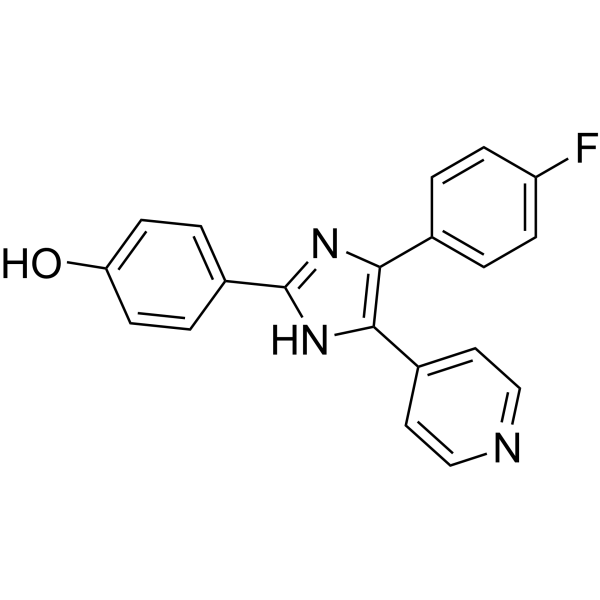
HY-10295
SB 202190p38 MAPK Inhibitor -
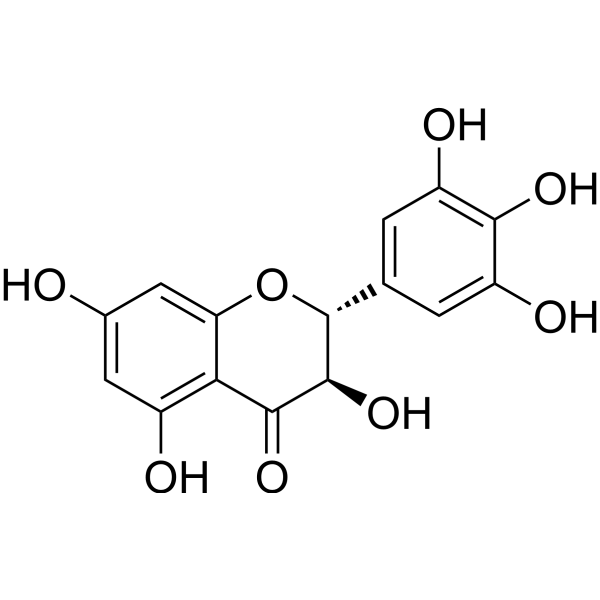
HY-N0112
DihydromyricetinAutophagy Inducer -
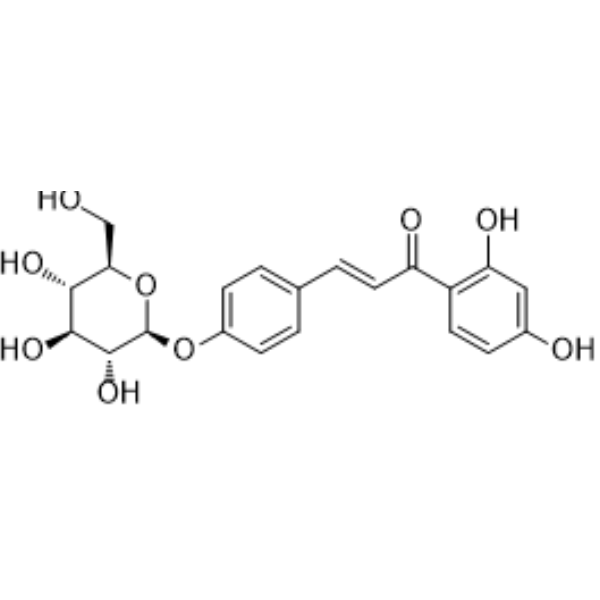
HY-N0765
IsoliquiritinFungal Inhibitor


Product Information
Information
Application
The compound is the grade of analytical standard, which is the reference standard supplied assay. It is commonly used in qualitative, quantitative and methodological research experiments in HPLC, GC and MS.


Chemical Information
-
CAS No. 464-92-6
-
Appearance Solid
-
Molecular Weight 488.70
-
Formula C₃₀H₄₈O₅
-
Color White to off-white
-
SMILES
C[C@@]1(CO)[C@@H](O)[C@H](O)C[C@]2(C)[C@@]3([H])CC=C4[C@]5([H])[C@@H](C)[C@H](C)CC[C@@](C(O)=O)5CC[C@](C)4[C@@](C)3CC[C@@]12[H]
-
Structure Classification
-
Shipping
Room temperature in continental US; may vary elsewhere.
-
Storage
Please store the product under the recommended conditions in the Certificate of Analysis.


Purity & Documentation
-
SDS (394 KB)
- English - EN (394 KB)
- Français - FR (394 KB)
- Deutsch - DE (394 KB)
- Norwegian - NO (394 KB)
- Español - ES (394 KB)
- Swedish - SV (394 KB)
- Italian - IT (394 KB)
- Korean - KR (394 KB)
- Portuguese - PT (394 KB)
-
Handling Instructions (2659 KB)
References
[1]. Park BC, et al. Asiatic acid induces apoptosis in SK-MEL-2 human melanoma cells. Cancer Lett. 2005 Jan 31;218(1):81-90. [Content Brief]
[2]. Huang SS, et al. Antinociceptive activities and the mechanisms of anti-inflammation of asiatic Acid in mice. Evid Based Complement Alternat Med. 2011;2011:895857. [Content Brief]
[3]. Fong LY, et al. Asiatic acid stabilizes cytoskeletal proteins and prevents TNF-α-induced disorganization of cell-cell junctions in human aortic endothelial cells. Vascul Pharmacol. 2019 Jun;117:15-26. [Content Brief]
[4]. Jiang W, et al. Neuroprotective effect of asiatic acid against spinal cord injury in rats. Life Sci. 2016 Jul 15;157:45-51. [Content Brief]
[5]. Kong D, et al. Protective effects of Asiatic acid against pelvic inflammatory disease in rats. Exp Ther Med. 2019 Jun;17(6):4687-4692. [Content Brief]

Calculators
Concentration (start) × Volume (start) = Concentration (final) × Volume (final)


Asiatic acid (Standard) Related Classifications
HY-N0194R Related Classifications
 Powered by Bioz
Keywords
- Asiatic acid (Standard)
- 464-92-6
- Reference Standards
- Apoptosis
- Parasite
- Actin
- Anti-hyperpermeability
- Asiatic acid
- Diphosphorylated myosin light chain
- Endothelial cell-cell junctions
- Human aortic endothelial cells
- TNF-α
- inflammatory response
- nuclear factor-κB
- nucleotide-binding domain-like receptor protein 3 inflammasome
- pelvic inflammatory disease
- Inhibitor
- inhibitor
- inhibit