1. Search Result
Search Result
Results for "

skbr3 cancer

" in MedChemExpress (MCE) Product Catalog:

31

Inhibitors & Agonists

2

Fluorescent Dyes

1

Biochemical Assay Reagents

3

Peptides

1

Natural
Products

1

Isotope-Labeled Compounds

1

Click Chemistry

Targets Recommended:
Cat. No. Product Name Target Research Areas Chemical Structure
  • HY-12682
    Glutaminase C-IN-1
    Maximum Cited Publications
    11 Publications Verification

    Compound 968

    Glutaminase Cancer
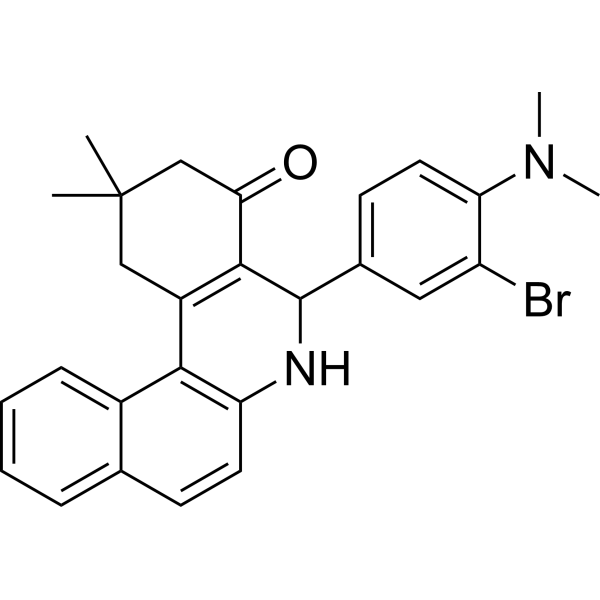
    Glutaminase C-IN-1 (Compound 968) is an allosteric inhibitor of Glutaminase C that inhibits cancer cell growth without affecting their normal cellular counterparts .
    Glutaminase C-IN-1
  • HY-164992
    Trastuzumab vedotin
    2 Publications Verification

    MRG002; Trastuzumab MMAE

    Antibody-Drug Conjugates (ADCs) EGFR Microtubule/Tubulin Cancer
    Trastuzumab vedotin (MRG002; Trastuzumab MMAE) is an antibody-drug conjugate and cytotoxin targeting HER2, with a Kd of 7.50E-11 M for human HER2. After binding to HER2, Trastuzumab vedotin undergoes internalization and lysosomal trafficking, delivering a cytotoxic payload to HER2-expressing cells and inducing tumor regression in in vivo xenograft models with HER2-expressing tumors. The anti-tumor activity of Trastuzumab vedotin is enhanced when used in combination with anti-PD-1 antibodies, and it exhibits preclinical anti-tumor activity in drug-resistant breast cancer, gastric cancer, and urothelial carcinoma PDX models. Trastuzumab vedotin has low antibody-dependent cellular cytotoxicity activity and can be used in studies related to HER2-positive breast cancer, HER2-positive gastric cancer, and unresectable locally advanced or metastatic HER2-positive urothelial carcinoma .
    Trastuzumab vedotin
  • HY-B2099A
    Buformin hydrochloride
    3 Publications Verification

    1-Butylbiguanide hydrochloride

    AMPK Cancer
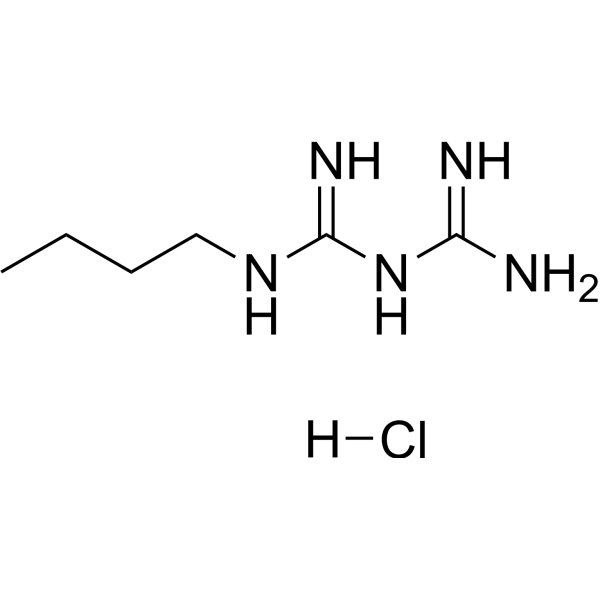
    Buformin hydrochloride (1-Butylbiguanide hydrochloride), a potent AMPK activator, acts as an orally active biguanide antidiabetic agent. Buformin hydrochloride decreases hepatic gluconeogenesis and lowers blood glucose production in vivo. Buformin hydrochloride also has anti-cancer activities and is applied in cancer study (such as, cervical cancer and breast cancer, et al) .
    Buformin hydrochloride
  • HY-U00447

    MDM-2/p53 DNA Alkylator/Crosslinker Cancer
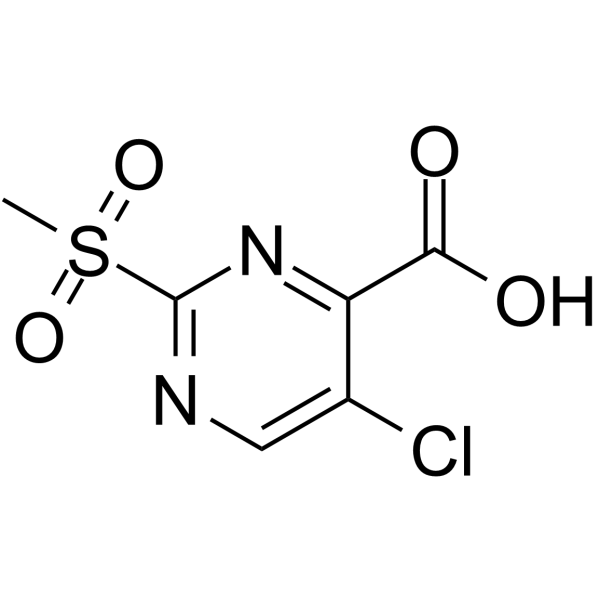
    PK11000 is an alkylating agent, and stabilizes the DNA-binding domain of both WT and mutant p53 proteins by covalent cysteine modification without compromising DNA binding. PK11000 has anti-tumor activities .
    PK11000
  • HY-NP163A

    WGA-AF488

    Fluorescent Dye Cancer
    Wheat germ agglutinin-AF488 (WGA-AF488) is a cell membrane-specific staining agent prepared by conjugating wheat germ agglutinin with the Alexa Fluor 488 (HY-D1304) fluorescent dye, and it binds to cell surface glycoproteins with high affinity. Wheat germ agglutinin-AF488 is applied in fluorescence microscopy and confocal imaging techniques, and it can clearly label the membrane structures of various cells including breast cancer cells, enabling high-resolution visual observation. Wheat germ agglutinin-AF488 is used in studies of breast cancer and triple-negative breast cancer to observe cell morphology and membrane dynamic changes .
    Wheat germ agglutinin-AF488
  • HY-153588

    HSP Cancer
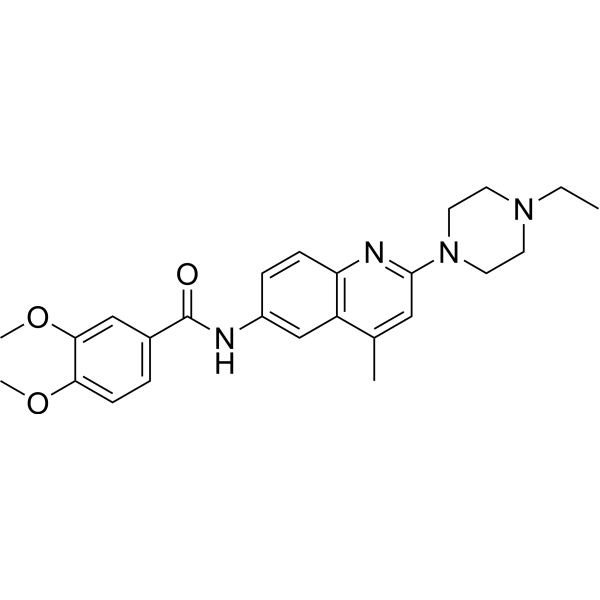
    HSP90-IN-22 (Compound 35) is an Hsp90 inhibitor with antiproliferative properties on cells with IC50 values of 3.65 μM for MCF7 breast cancer cells and 2.71 μM for SKBr3 breast cancer cells, respectively.
    HSP90-IN-22
  • HY-W591393

    Biochemical Assay Reagents Cancer
    Biotin Azide Plus is an oxazolidine reagent that integrates azide-biotin click chemistry and a photocleavable linker arm. Biotin Azide Plus not only reacts with biotin thioether to form stable sulfinimide products, but also enables bioconjugation of proteins and DNA through biotin redox-activated chemical labeling technology. Taking advantage of the streptavidin capture and photo-release properties, Biotin Azide Plus effectively facilitates the isolation of lipid-derived electrophile-protein adducts, thus finding wide application in scientific research related to fields such as SKBR3 cancer .
    Biotin Azide Plus
  • HY-120234

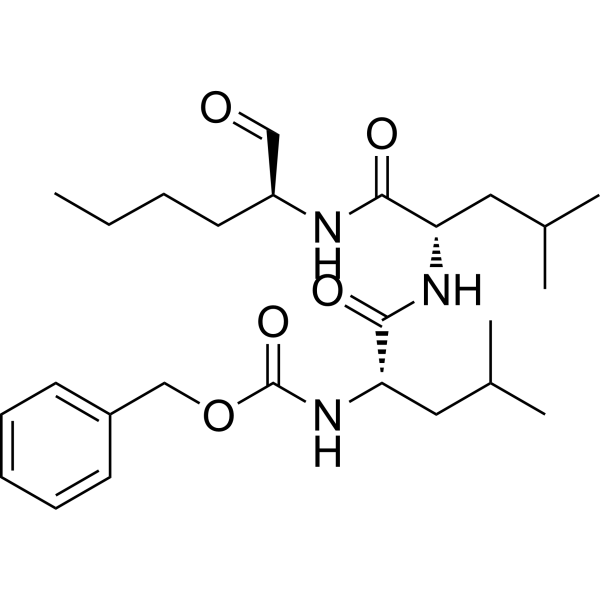
    Z-Leu-Leu-Nle-CHO; GSII

    γ-secretase Proteasome Apoptosis Cancer
    Z-LLNle-CHO (Z-Leu-Leu-Nle-CHO) is a γ-secretase inhibitor I. Z-LLNle-CHO induces caspase and ROS-dependent apoptosis by blocking the Akt-mediated pro-survival pathway. Z-LLNle-CHO can be used in cancer research, such as breast cancer and leukaemia .
    Z-LLNle-CHO
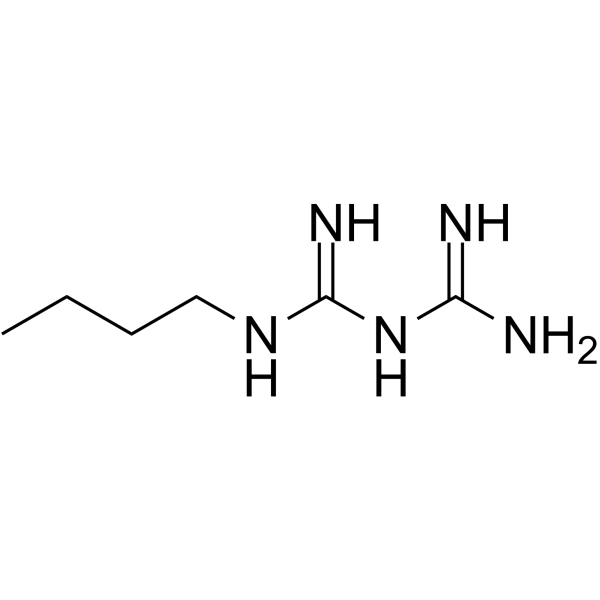
  • HY-B2099

    1-Butylbiguanide

    AMPK Metabolic Disease Cancer
    Buformin (1-Butylbiguanide), a potent AMPK activator, acts as an orally active biguanide antidiabetic agent. Buformin decreases hepatic gluconeogenesis and lowers blood glucose production in vivo. Buformin also has anti-cancer activities and is applied in cancer study (such as, cervical cancer and breast cancer, et al) .
    Buformin
  • HY-121605

    Apoptosis Cancer
    RL71 is a curcuminoid anticancer agent that exhibits potent cytotoxicity against a variety of ER-negative breast cancer cells. RL71 (1 μM) induces cell cycle arrest in the G2/M phase and induces apoptosis in SKBr3 cells. RL7 also decreases HER2/neu phosphorylation and increases p27. RL71 also significantly reduced the phosphorylation of Akt and transiently increased the stress kinases JNK1/2 and p38 MAPK. Furthermore, RL71 exhibited anti-angiogenic potential in vitro, inhibiting the migration of HUVEC cells and the ability of these cells to form tubular networks .
    RL71
  • HY-172091

    EGFR Cancer
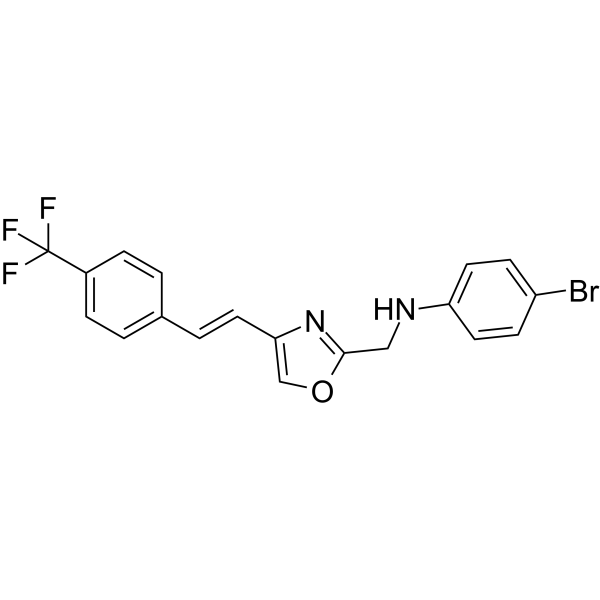
    CZY43 is a HER3 degrader. CZY43 can effectively induce HER3 degradation in a dose- and time-dependent manner in breast cancer SKBR3 cells. CZY43 potently inhibits HER3-dependent signaling and cancer cell growth and outperforms Bosutinib (HY-10158) .
    CZY43
  • HY-171755

    HSP Cancer
    Hsp90-IN-40 (Compound 15b) is a heat shock protein 90 (Hsp90) C-terminal inhibitor. Hsp90-IN-40 exhibits antiproliferative activity against SKBr3 and MCF-7 breast cancer cells (IC50 of 2.57 µM and 2.43 µM, respectively). Hsp90-IN-40 inhibits cancer cell growth by inhibiting the Hsp90 C-terminal function, leading to Hsp90-dependent protein degradation. Hsp90-IN-40 can be used in breast cancer research .
    Hsp90-IN-40
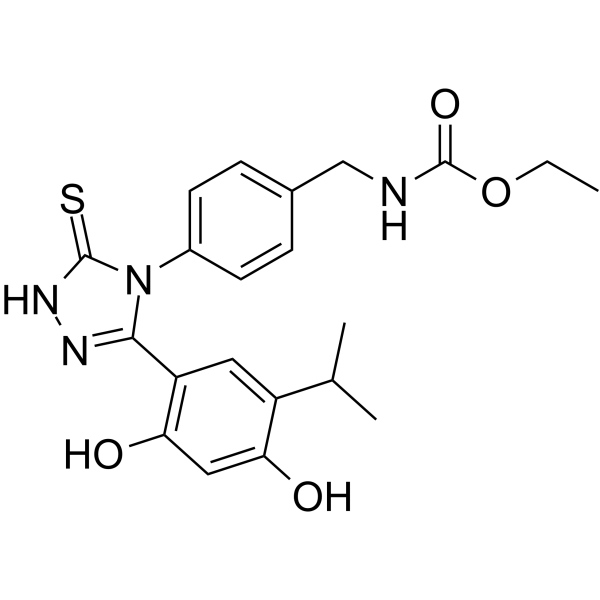
  • HY-170910

    HSP Cancer
    Hsp90-IN-39 (Compound 16t) is a HSP90 inhibitor with notable selectivity for the HSP90α isoform. Hsp90-IN-39 demonstrates significant antiproliferative activity in various cancer cell lines, including MCF-7, HCT116, SKBr3, K562, and A549. Hsp90-IN-39 holds potential for cancer research .
    Hsp90-IN-39
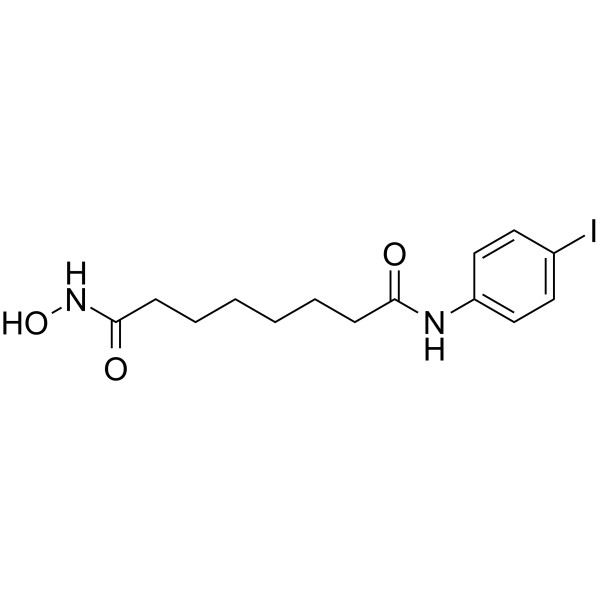
  • HY-124007

    ISAHA

    HDAC Cancer
    4-Iodo-SAHA (1k) is an orally active class I and class II histone deacetylase (HDAC) inhibitor with EC50s of 1.1, 0.95, 0.12, 0.24, 0.85 and 1.3 μM for Skbr3, HT29, U937, JA16 and HL60 cell lines, respectively. 4-Iodo-SAHA (1k) can be used for the research of cancer .
    4-Iodo-SAHA
  • HY-10062

    EBP-921

    Akt Farnesyl Transferase Cancer
    AZD3409 is a prenyl inhibitor that exhibits inhibitory activity against both farnesyl transferase and geranylgeranyl transferase I. AZD3409 inhibits the growth of breast cancer cells, with IC50s of 220 nM (MDA-MB-468), 180 nM (MDA-MB-361), and 290 nM (SK-Br-3). AZD3409 significantly reduces the activation level of AKT in breast cancer cell lines. AZD3409 induces G0/G1 phase arrest in MDA-MB-468 cells, causes G2/M phase arrest in MDA-MB-361 cells. AZD3409 can be used for the study of breast cancer .
    AZD3409
  • HY-124454

    Drug Derivative Cancer
    JCC76 is the derivative of Nimesulide (HY-B0363). JCC76 inhibits the proliferation of Her2 positive breast cancer cell SKBR-3 with IC50 of 3.43 μM .
    JCC76
  • HY-162751

    HSP Apoptosis Cancer
    Anticancer agent 249 (Compound 89) is an inhibitor for Hsp90β with IC50 of 16.5 μM in PC3MM2 cell. Anticancer agent 249 inhibits proliferation of cancer cells MCF-7, T47D, MDA-MB-231, MDA-MB-468 and SKBr3 with IC50 of 1.8-5.3 μM. Anticancer agent 249 induces apoptosis in MDA-MB-231. Anticancer agent 249 exhibits antitumor efficacy in mice .
    Anticancer agent 249
  • HY-164489

    EGFR Akt ERK Apoptosis Cancer
    KU004 is a potent dual EGFR/HER2 inhibitor with anticancer effects. KU004 inhibits the proliferation of human breast cancer SKBR3 cells by inducing G1 phase arrest. KU004 blocks the activation of HER2, EGFR and downstream Akt and Erk pathways and induces cell Apoptosis mainly via the extrinsic pathway. KU004 is a quinazoline derivative .
    KU004
  • HY-173640

    Androgen Receptor Phosphodiesterase (PDE) Cancer
    ID11916 is an orally active androgen receptor (AR) antagonist and a phosphodiesterase 5 (PDE5) inhibitor. ID11916 blocks androgen binding to AR, nuclear translocation, and androgen-dependent transcriptional activity of AR, while increasing intracellular cGMP levels and activating PKG via inhibition. ID11916 shows potent anti-cancer effect in prostate cancer cell lines VCaP and 22Rv1 and in AR-positive breast cancer cell lines SK-BR-3 .
    ID11916
  • HY-157085

    HSP Cancer
    BX-2819 is a Hsp90 inhibitor with an IC50 value of 41 nM. BX-2819 inhibits the proliferation of cancer cells. BX-2819 can significantly inhibit the growth of NCI-N87 and HT-29 tumors in nude mice .
    BX-2819
  • HY-P10393

    ERα (295-311)

    Apoptosis Cancer
    ERα17p (ERα 295-311) is the epitope of the CaM binding site on the estrogen receptor α (ER), which interacts with calmodulin (CaM) in a calcium-dependent manner. ERα17p regulates the migration of cancer cells MCF-7, SK-BR-3, T47D, and MDA-MB-231 through Rho/ROCK and PI3K/Akt signaling pathways. ERα17p inhibits proliferations of breast cancer cells, induces apoptosis, and inhibits tumor growth in mouse models .
    ERα17p
  • HY-161780

    Drug-Linker Conjugates for ADC CDK Cancer
    Maleimide-Val-Ala-PAB-SNS032 is a conjugate of ADC toxin and linker. SNS032 is an inhibitor for CDK, inhibiting the cell cycle at G1/S phase and cell viability of cancer cells. Maleimide-Val-Ala-PAB is a cleavable ADC linker. Maleimide-Val-Ala-PAB-SNS032 can be utilized for the synthesis of ADC molecules .
    Maleimide-PEG8-Val-Ala-PAB-SNS032
  • HY-159519

    Apoptosis EGFR Cancer
    EGFR/HER2-IN-16 (compound 12K) is an effective dual-target inhibitor of EGFR (IC50=6.15 nM) and HER-2 (IC50=9.78 nM) with anti-tumor activity. EGFR/HER2-IN-16 can inhibit the migration of SK-BR-3 cells, arrest the cell cycle in the G0/G1 phase, and induce apoptosis. EGFR/HER2-IN-16 exhibits good anti-proliferative activity against tumor cell models and has little damage to healthy cells. EGFR/HER2-IN-16 can be used in breast cancer research .
    EGFR/HER2-IN-16
  • HY-121605S

    Isotope-Labeled Compounds Apoptosis Cancer
    RL71-d6 is a deuterium labeled RL71 (HY-121605). RL71 is a curcuminoid anticancer agent that exhibits potent cytotoxicity against a variety of ER-negative breast cancer cells. RL71 (1 μM) induces cell cycle arrest in the G2/M phase and induces apoptosis in SKBr3 cells. RL7 also decreases HER2/neu phosphorylation and increases p27. RL71 also significantly reduced the phosphorylation of Akt and transiently increased the stress kinases JNK1/2 and p38 MAPK. Furthermore, RL71 exhibited anti-angiogenic potential in vitro, inhibiting the migration of HUVEC cells and the ability of these cells to form tubular networks .
    RL71-d6
  • HY-158649

    Fatty Acid Synthase (FASN) Apoptosis Cancer
    Fasnall benzenesulfonate is the benzenesulfonate salt form of Fasnall (HY-121250). Fasnall benzenesulfonate is the inhibitor for fatty acid synthase (FASN) with IC50 of 3.7 μM. Fasnall benzenesulfonate inhibits the proliferation and induces apoptosis in breast cancer cells. Fasnall benzenesulfonate exhibits antitumor efficacy in mice .
    Fasnall benzenesulfonate
  • HY-143323

    EGFR Cancer
    HER2-IN-9 is an orally active HER2 inhibitor, with an IC50 value of 0.03 μM. HER2-IN-9 inhibits HER-2 positive breast cancer cells proliferation and migration. HER2-IN-9 can be used in the research of breast cancers .
    HER2-IN-9
  • HY-151375

    CDK Cancer
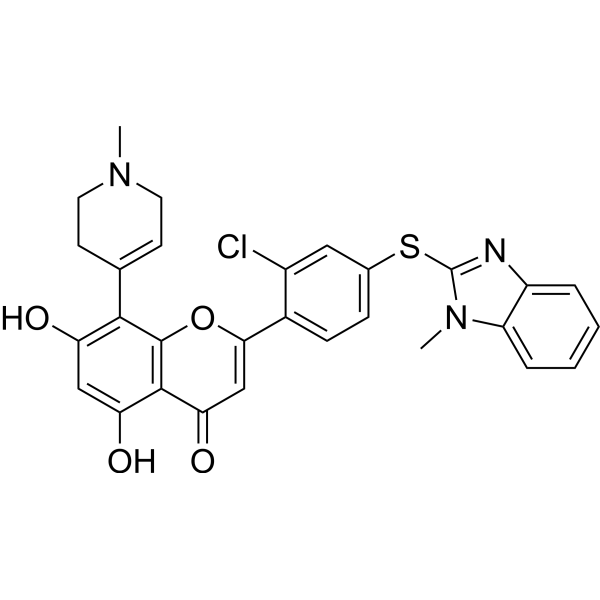
    CDK9/10/GSK3β-IN-1 (compound 13c) is a kinase inhibitor (Flavopiridol (HY-10005) analogue) that effectively inhibits HsGSK3β (IC50=59 nM), HsCDK9/CyclinT (IC50=64 nM), HsCDK5/p25 (IC50=1.093 μM) and HsCDK2/CyclinA (IC50=1.725 μM). CDK9/10/GSK3β-IN-1 has anti-cancer cellular activity comparable to or higher than that of Flavopiridol. CDK9/10/GSK3β-IN-1 shows high anti-proliferative activity in vitro against up to seven cancer cell lines .
    CDK9/10/GSK3β-IN-1
  • HY-B2099AR

    1-Butylbiguanide hydrochloride (Standard)

    AMPK Reference Standards Cancer
    Buformin (hydrochloride) (Standard) is the analytical standard of Buformin (hydrochloride). This product is intended for research and analytical applications. Buformin hydrochloride (1-Butylbiguanide hydrochloride), a potent AMPK activator, acts as an orally active biguanide antidiabetic agent. Buformin hydrochloride decreases hepatic gluconeogenesis and lowers blood glucose production in vivo. Buformin hydrochloride also has anti-cancer activities and is applied in cancer study (such as, cervical cancer and breast cancer, et al) .
    Buformin hydrochloride (Standard)
  • HY-N9804

    Drug Derivative Others
    3,3′,5-Trihydroxybibenzyl is a natural phenolic compound.
    3,3′,5-Trihydroxybibenzyl
  • HY-183558

    Drug-Linker Conjugates for ADC Topoisomerase Cancer
    AV-DL055 is a conjugate of the toxin molecule Exatecan (HY-13631) and the linker AV-L03 (HY-183678). AV-DL055 can be used to construct ADCs, such as T-DL055 .
    AV-DL055
  • HY-P11590

    EGFR Cancer
    WGYRGFYC (WC8) is a selective HER2-targeting peptide that binds specifically to HER2 by mimicking the antigen-binding site of trastuzumab. The DOTA precursor of WGYRGFYC has a KD of 61.20 nM for HER2. WGYRGFYC enables specific and highly sensitive detection of HER2 expression in HER2-positive breast cancer cells and tumor tissues, and monitors the dynamic downregulation of HER2 expression. WGYRGFYC rapidly distributes to target tissues and is efficiently cleared from non-target tissues via the kidneys, generating an ideal tumor-to-background ratio in imaging; it is a component of the PET radiotracer Ga-DOTA-WC8. WGYRGFYC exhibits no significant cytotoxicity in breast cancer cells, and can be used for non-invasive imaging diagnosis and therapeutic efficacy evaluation of HER2-positive breast cancer .
    WGYRGFYC

Inquiry Online

Your information is safe with us. * Required Fields.

Salutation


Country or Region *

Applicant Name *


Organization Name *

Department *


Email Address *


Product Name *

Cat. No.


Requested quantity *

Phone Number *


Remarks

Inquiry Online

Inquiry Information

Product Name:
Cat. No.:
Quantity:
MCE Japan Authorized Agent: