
Search Result
Results for "
stones
" in MedChemExpress (MCE) Product Catalog:
3
Biochemical Assay Reagents
4
Isotope-Labeled Compounds
| Cat. No. |
Product Name |
Target |
Research Areas |
Chemical Structure |
-
- HY-N0190
-
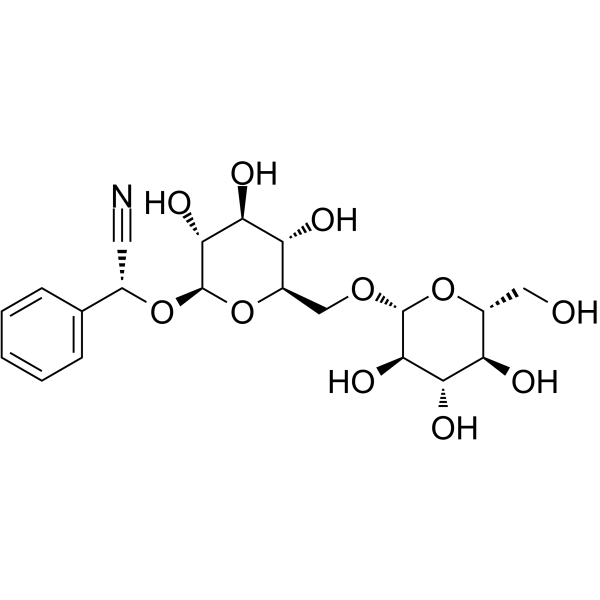
Amygdalin
Maximum Cited Publications
7 Publications Verification
|
Others
|
Cancer
|
|
Amygdalin is a plant glucoside isolated from the stones of rosaceous fruits, such as apricots, peaches, almond, cherries, and plums.
|
-
-
- HY-N0394
-
|
|
Endogenous Metabolite
Ferroptosis
ROS Kinase
Keap1-Nrf2
Reactive Oxygen Species (ROS)
|
Metabolic Disease
Inflammation/Immunology
Cancer
|
|
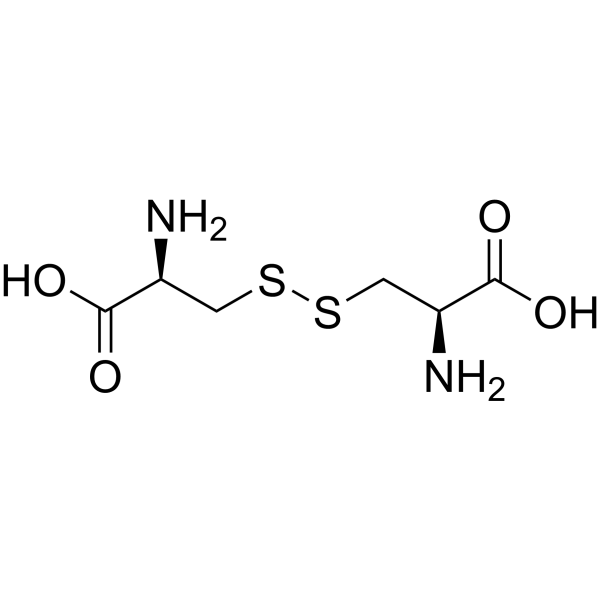
L-Cystine is an orally active extracellular form of L-Cysteine (HY-Y0337), occurring in proteins of plants and animals. L-Cystine elevates Nrf2 protein expression and activates Nrf2 transcription factor. L-cystine reduces ROS generation and protects against oxidant- or Doxorubicin (HY-15142A)-induced apoptosis. L-Cystine combined with L-theanine (HY-15121) enhances the production of antigen-specific IgG by increasing glutathione (GSH) levels and T helper 2 (Th2) mediated responses in mice. L-Cystine is promising for research of cystinuria and kidney stones
|
-
-
- HY-W009203
-
|
|
Endogenous Metabolite
Apoptosis
Keap1-Nrf2
Reactive Oxygen Species (ROS)
Ferroptosis
|
Metabolic Disease
Inflammation/Immunology
Cancer
|
|
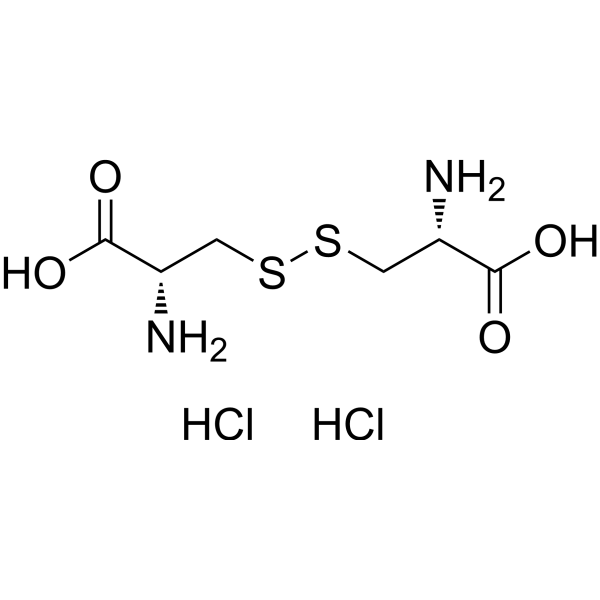
L-Cystine dihydrochloride is the dihydrochloride salt form of L-Cystine (HY-N0394). L-Cystine dihydrochloride elevates Nrf2 protein expression and activates Nrf2 transcription factor. L-cystine dihydrochloride reduces ROS generation and protects against oxidant- or Doxorubicin (HY-15142A)-induced apoptosis. L-Cystine dihydrochloride combined with L-theanine (HY-15121) enhances the production of antigen-specific IgG by increasing glutathione (GSH) levels and T helper 2 (Th2) mediated responses in mice. L-Cystine dihydrochloride is promising for research of cystinuria and kidney stones
|
-
-
- HY-113063
-
|
|
Endogenous Metabolite
|
Metabolic Disease
|
|
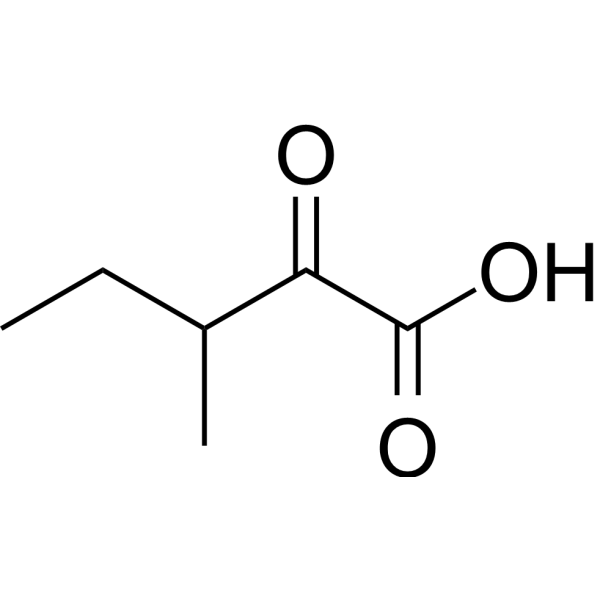
3-Methyl-2-oxovaleric acid is a degradation product from Isoleucine. 3-Methyl-2-oxovaleric acid is a biomarker of mustard airway diseases (MADs) and uric acid stone .
|
-
-
- HY-Y1117
-
-
-
- HY-W017386
-
|
|
Endogenous Metabolite
|
Metabolic Disease
|
|
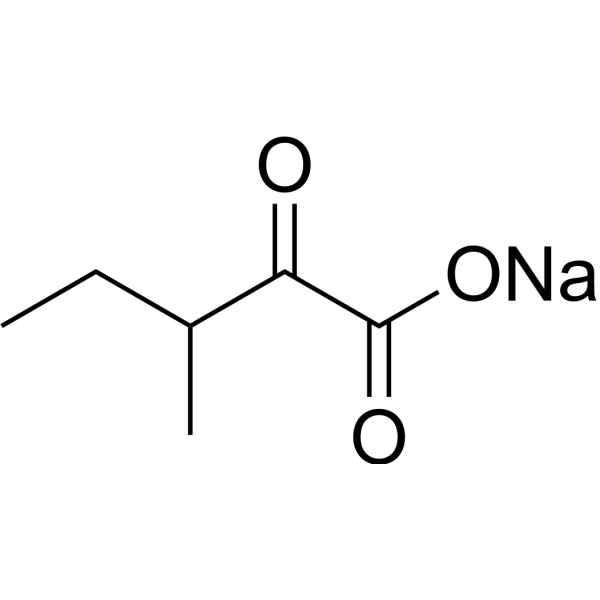
3-Methyl-2-oxovaleric acid sodium is a degradation product from Isoleucine. 3-Methyl-2-oxovaleric acid sodium is a biomarker of mustard airway diseases (MADs) and uric acid stone .
|
-
-
- HY-100956
-
|
|
Bacterial
Urease
|
Infection
Metabolic Disease
|
|
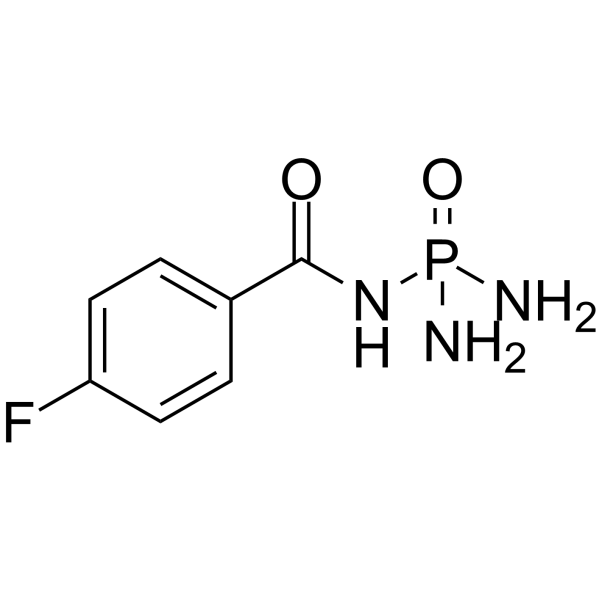
Flurofamide is an effective bacterial urease inhibitor and antibacterial agent. Flurofamide inhibits urease and partially inhibits the chemotactic activity of Helicobacter pylori strain CPY3401. Flurofamide inhibits the growth of Ureaplasma urealyticum. Flurofamide reduces blood ammonia. Flurofamide can be used in the research of infectious urinary stones .
|
-
-
- HY-142035
-
|
|
Mitochondrial Metabolism
|
Neurological Disease
Metabolic Disease
Inflammation/Immunology
Cancer
|
|
N-Propargylglycine is a brain-penetrant and orally active PRODH inhibitor. N-Propargylglycine covalently modifies enzyme-bound FAD and active site lysine, causing enzyme structural distortion, protein decay, and irreversible inhibition of proline and 4-hydroxyproline catabolism. N-Propargylglycine induces UPRmt, upregulates mitochondrial chaperones and YME1L1, enhances mitochondrial proteostasis, blocks astrocytic L-proline consumption, and abolishes L-proline’s ATP-maintaining and viability-protective effects. N-Propargylglycine stimulates neural processes, increases brain proline, hydroxyproline, and sarcosine levels, partially normalizes Huntington’s disease whole brain transcriptomes. N-Propargylglycine reduces hyperoxaluria, prevents calcium oxalate stone formation, reduces kidney tubular damage, and restores weight and survival in Grhpr knockout mice. N-Propargylglycine can be used for the research of breast cancer, neurodegenerative disorders, Huntington’s disease, and primary hyperoxaluria type 2 .
|
-
-
- HY-Y0708
-
|
Calcium phosphate dihydrate
|
Biochemical Assay Reagents
|
Others
|
|
Calcium hydrogen phosphate dihydrate (Calcium phosphate dihydrate) can be found quite frequently in urinary calculi stones. Calcium hydrogen phosphate dihydrate can be used as an excipient, such as diluent, adsorbent. Pharmaceutical excipients, or pharmaceutical auxiliaries, refer to other chemical substances used in the pharmaceutical process other than pharmaceutical ingredients. Pharmaceutical excipients generally refer to inactive ingredients in pharmaceutical preparations, which can improve the stability, solubility and processability of pharmaceutical preparations. Pharmaceutical excipients also affect the absorption, distribution, metabolism, and elimination (ADME) processes of co-administered drugs .
|
-
-
- HY-N9941
-
|
|
Endogenous Metabolite
|
Metabolic Disease
|
|
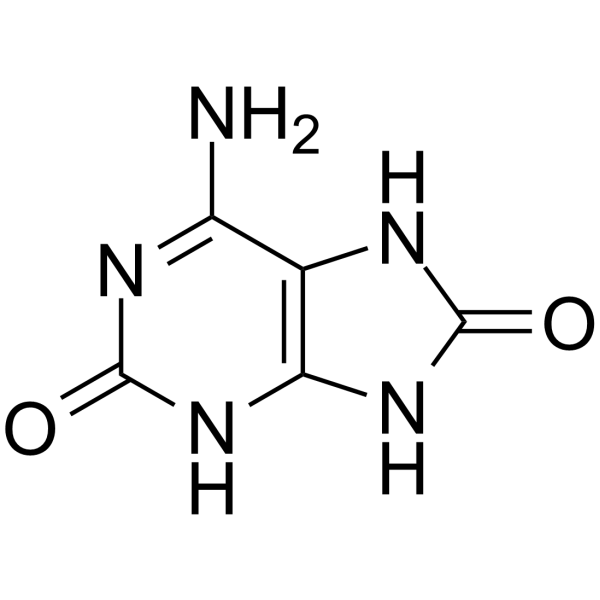
2,8-Dihydroxyadenine, an endogenous metabolite, can cause the formation of urinary crystals and kidney stones. 2,8-Dihydroxyadenine can be used to diagnose adenine phosphoribosyltransferase (APRT) deficiency .
|
-
-
- HY-113063R
-
|
|
Reference Standards
Endogenous Metabolite
|
Metabolic Disease
|
|
3-Methyl-2-oxovaleric acid (Standard) is the analytical standard of 3-Methyl-2-oxovaleric acid (HY-113063). This product is intended for research and analytical applications. 3-Methyl-2-oxovaleric acid is a degradation product from Isoleucine. 3-Methyl-2-oxovaleric acid is a biomarker of mustard airway diseases (MADs) and uric acid stone.
|
-
-
- HY-W088011B
-
|
Sodium hydroxyacetate, 98%
|
Lactate Dehydrogenase
Aminotransferases (Transaminases)
|
Endocrinology
|
|
Sodium glycolate, 98% (Sodium hydroxyacetate, 98%) is an orally active, versatile organic salt . Sodium glycolate, 98% acts as an enzyme activity regulator that increases the activities of glycolate oxidase (GAO) and lactate dehydrogenase (LDH), while reducing the activity of glycolate dehydrogenase (GAD). Sodium glycolate, 98% induces oxalate biosynthesis and causes hyperoxaluria in rats. Sodium glycolate, 98% reduces urinary calcium excretion in male albino rats. Sodium glycolate, 98% can be used in studies related to calcium oxalate urolithiasis and hyperoxaluria .
|
-
-
- HY-Y0785
-
|
|
Drug Metabolite
|
Metabolic Disease
|
|
Glyoxal is a cytotoxic α-oxoaldehyde. Glyoxal induces cell damage and promotes protein glycation to form advanced glycation end-products (AGEs). Glyoxal is promising for research of oxidative stress-related diseases (such as atherosclerosis, cataract, Alzheimer's disease), and the formation of calcium oxalate kidney stones .
|
-
-
- HY-139725
-
|
|
CDK
|
Metabolic Disease
|
|
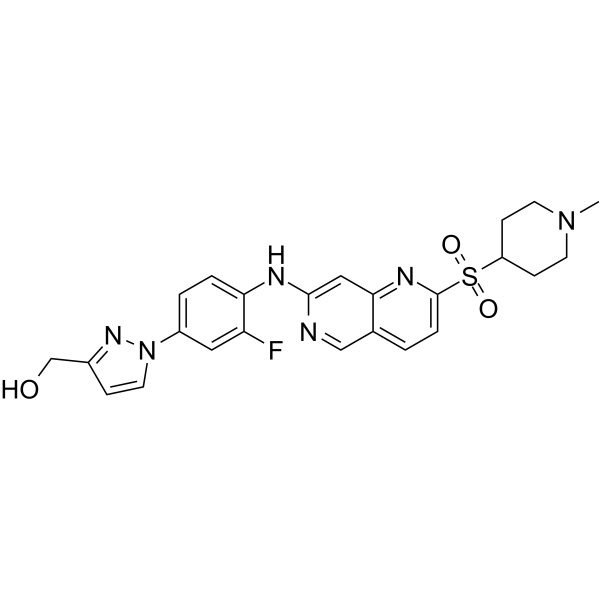
CDK5-IN-1 is a potent CDK5 inhibitor with an IC50 less than 10 nM. CDK5-IN-1 is greater than 100-fold more active against CDK5 than CDK2. CDK5-IN-1 is used for kidney diseases research .
|
-
-
- HY-W009356
-
|
|
Endogenous Metabolite
Ferroptosis
ROS Kinase
Keap1-Nrf2
Reactive Oxygen Species (ROS)
|
Others
|
|
L-Cystine hydrochloride is an orally active extracellular form of L-Cysteine (HY-Y0337), occurring in proteins of plants and animals. L-Cystine hydrochloride elevates Nrf2 protein expression and activates Nrf2 transcription factor. L-Cystine hydrochloride reduces ROS generation and protects against oxidant- or Doxorubicin (HY-15142A)-induced apoptosis. L-Cystine hydrochloride combined with L-theanine (HY-15121) enhances the production of antigen-specific IgG by increasing glutathione (GSH) levels and T helper 2 (Th2) mediated responses in mice. L-Cystine hydrochloride is promising for research of cystinuria and kidney stones
|
-
-
- HY-N0394R
-
|
|
Reference Standards
Endogenous Metabolite
Ferroptosis
ROS Kinase
Keap1-Nrf2
|
Metabolic Disease
Inflammation/Immunology
Cancer
|
|
L-Cystine (Standard) is the analytical standard of L-Cystine. This product is intended for research and analytical applications. L-Cystine, the extracellular form of L-Cysteine (HY-Y0337), is a nutritionally dispensable semiessential sulfur-containing amino acid, occurring in proteins of plants and animals. L-Cystine induces Nrf2 protein elevation in a Keap1 (HY-P75897)-dependent manner and activates Nrf2 transcription factor. L-cystine can elicit cytoprotection by reducing ROS generation and protecting against oxidant- or doxorubicin-induced apoptosis. The reduced reabsorption of L-Cystine in renal tubules and its poor solubility in urine are the important causes of cystine precipitation and cystine crystal formation eventually leading to kidney stones. L-Cystine combined with L-theanine (HY-15121) enhances the production of antigen-specific IgG by increasing glutathione (GSH) levels and T helper 2 (Th2) mediated responses in mice. L-Cystine is promising for research of cystinuria and cystinosis
|
-
-
- HY-Y0785S
-
|
|
Isotope-Labeled Compounds
Drug Metabolite
|
Metabolic Disease
|
|
Glyoxal-d2 is the deuterium labeled Glyoxal (HY-Y0785). Glyoxal is a cytotoxic α-oxoaldehyde. Glyoxal induces cell damage and promotes protein glycation to form advanced glycation end-products (AGEs). Glyoxal is promising for research of oxidative stress-related diseases (such as atherosclerosis, cataract, Alzheimer's disease), and the formation of calcium oxalate kidney stones .
|
-
-
- HY-W017386S
-
|
|
Isotope-Labeled Compounds
Endogenous Metabolite
|
Metabolic Disease
|
|
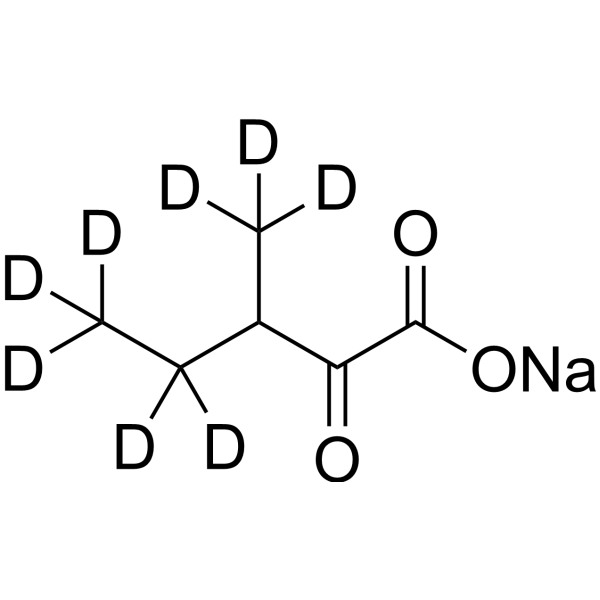
3-Methyl-2-oxovaleric acid-d8 sodium is the deuterium labeled 3-Methyl-2-oxovaleric acid. 3-Methyl-2-oxovaleric acid is a degradation product from Isoleucine. 3-Methyl-2-oxovaleric acid is a biomarker of mustard airway diseases (MADs) and uric acid stone .
|
-
-
- HY-168434
-
|
|
Urease
|
Metabolic Disease
|
|
Urease-IN-19 (Compound 3c) is a potent urease inhibitor with an IC50 value of 2.7 µM. Urease-IN-19 is promising for research of kidney stones and stomach ulcers .
|
-
-
- HY-161856
-
|
|
mTOR
Fungal
|
Others
|
|
Antifungal agent 106 (Compound Z31) is a benzoic acid derivative and a potential fungicide against Monilinia fructicola. Antifungal agent 106 exhibits antifungal activity with an EC50 value of 11.8 mg/L. It affects hyphal growth by disrupting cell membrane integrity, leading to increased membrane permeability and release of intracellular electrolytes. Antifungal agent 106 can be used in research related to brown rot of stone fruits .
|
-
-
- HY-156648
-
|
|
Others
|
Metabolic Disease
|
|
Vamagloxistat is glycolate oxidase inhibitor, used to inhibit hyperoxaluria and kidney stones .
|
-
-
- HY-121745
-
|
Imidoxon; Oxoimidan
|
Drug Metabolite
|
Infection
|
|
Phosmet oxon (Imidoxon) is a main and toxic metabolite of phosmet. Phosmet is a cholinesterase inhibitor insecticide used on pome and stone fruits .
|
-
-
- HY-W711323
-
|
|
Isotope-Labeled Compounds
Bacterial
|
Infection
|
|
Flurofamide-d4 is the deuterium labeled Flurofamide (HY-100956). Flurofamide is a potent bacterial urease inhibitor with potential in the treatment of infection induced urinary stones .
|
-
-
- HY-N0190R
-
|
|
Reference Standards
Others
|
Cancer
|
|
Amygdalin (Standard) is the analytical standard of Amygdalin. This product is intended for research and analytical applications. Amygdalin is a plant glucoside isolated from the stones of rosaceous fruits, such as apricots, peaches, almond, cherries, and plums.
|
-
-
- HY-121745R
-
|
Imidoxon (Standard); Oxoimidan (Standard)
|
Reference Standards
Drug Metabolite
|
Infection
|
|
Phosmet oxon (Standard) is the analytical standard of Phosmet oxon. This product is intended for research and analytical applications. Phosmet oxon (Imidoxon) is a main and toxic metabolite of phosmet. Phosmet is a cholinesterase inhibitor insecticide used on pome and stone fruits .
|
-
-
- HY-W009156R
-
|
Potassium citrate monohydrate (Standard)
|
Reference Standards
Apoptosis
Endogenous Metabolite
Bacterial
|
Infection
Cardiovascular Disease
Metabolic Disease
Inflammation/Immunology
Cancer
|
|
Citric acid tripotassium hydrate (Standard) (Potassium citrate monohydrate (Standard)) is the analytical standard of Citric acid tripotassium hydrate (HY-W009156). This product is intended for research and analytical applications. Citric acid tripotassium hydrate is a natural preservative and food tartness enhancer. Citric acid tripotassium hydrate induces apoptosis and cell cycle arrest at G2/M phase and S phase in HaCaT cells. Citric acid tripotassium hydrate cause oxidative damage of the liver by means of the decrease of antioxidative enzyme activities. Citric acid tripotassium hydrate is also an acidulant, emulsifier, sequestrant and buffering agent widely used across many industries .
|
-
-
- HY-W772717
-
|
|
Endogenous Metabolite
Ferroptosis
Reactive Oxygen Species (ROS)
Keap1-Nrf2
Apoptosis
|
Metabolic Disease
Inflammation/Immunology
Cancer
|
|
L-Cystine disodium monohydrate is an orally active extracellular form of L-Cysteine (HY-Y0337), occurring in proteins of plants and animals. L-Cystine disodium monohydrate elevates Nrf2 protein expression and activates Nrf2 transcription factor. L-Cystine disodium monohydrate reduces ROS generation and protects against oxidant- or Doxorubicin (HY-15142A)-induced apoptosis. L-Cystine disodium monohydrate combined with L-theanine (HY-15121) enhances the production of antigen-specific IgG by increasing glutathione (GSH) levels and T helper 2 (Th2) mediated responses in mice. L-Cystine disodium monohydrate is promising for research of cystinuria and kidney stones .
|
-
-
- HY-W009203R
-
|
|
Endogenous Metabolite
Apoptosis
Keap1-Nrf2
Reactive Oxygen Species (ROS)
Ferroptosis
Reference Standards
|
Metabolic Disease
Inflammation/Immunology
Cancer
|
|
L-Cystine (dihydrochloride) (Standard) is the analytical standard of L-Cystine (dihydrochloride) (HY-W009203). This product is intended for research and analytical applications. L-Cystine dihydrochloride is the dihydrochloride salt form of L-Cystine (HY-N0394). L-Cystine dihydrochloride elevates Nrf2 protein expression and activates Nrf2 transcription factor. L-cystine dihydrochloride reduces ROS generation and protects against oxidant- or Doxorubicin (HY-15142A)-induced apoptosis. L-Cystine dihydrochloride combined with L-theanine (HY-15121) enhances the production of antigen-specific IgG by increasing glutathione (GSH) levels and T helper 2 (Th2) mediated responses in mice. L-Cystine dihydrochloride is promising for research of cystinuria and kidney stones
|
-
-
- HY-156648A
-
-
-
- HY-N18737
-
|
|
Others
|
Inflammation/Immunology
|
|
Phyllanthus niruri extract, extracted from the whole plant of Phyllanthus niruri, is rich in bioactive compounds such as alkaloids, flavonoids, and tannins. Phyllanthus niruri extract has alkalizing properties, which may help prevent the formation of gallstones and acidic kidney stones.
|
-
-
- HY-N0394S5
-
|
|
Isotope-Labeled Compounds
|
Others
|
|
L-Cystine- 13C6, 15N2 is the 13C- and 15N-labeled L-Cystine (HY-N0394). L-Cystine is an orally active extracellular form of L-Cysteine (HY-Y0337), occurring in proteins of plants and animals. L-Cystine elevates Nrf2 protein expression and activates Nrf2 transcription factor. L-cystine reduces ROS generation and protects against oxidant- or Doxorubicin (HY-15142A)-induced apoptosis. L-Cystine combined with L-theanine (HY-15121) enhances the production of antigen-specific IgG by increasing glutathione (GSH) levels and T helper 2 (Th2) mediated responses in mice. L-Cystine is promising for research of cystinuria and kidney stones.
|
-
| Cat. No. |
Product Name |
Type |
-
- HY-W017386
-
|
|
Biochemical Assay Reagents
|
|
3-Methyl-2-oxovaleric acid sodium is a degradation product from Isoleucine. 3-Methyl-2-oxovaleric acid sodium is a biomarker of mustard airway diseases (MADs) and uric acid stone .
|
-
- HY-W088011B
-
|
Sodium hydroxyacetate, 98%
|
Biochemical Assay Reagents
|
|
Sodium glycolate, 98% (Sodium hydroxyacetate, 98%) is an orally active, versatile organic salt . Sodium glycolate, 98% acts as an enzyme activity regulator that increases the activities of glycolate oxidase (GAO) and lactate dehydrogenase (LDH), while reducing the activity of glycolate dehydrogenase (GAD). Sodium glycolate, 98% induces oxalate biosynthesis and causes hyperoxaluria in rats. Sodium glycolate, 98% reduces urinary calcium excretion in male albino rats. Sodium glycolate, 98% can be used in studies related to calcium oxalate urolithiasis and hyperoxaluria .
|
-
- HY-W772717
-
|
|
Biochemical Assay Reagents
|
|
L-Cystine disodium monohydrate is an orally active extracellular form of L-Cysteine (HY-Y0337), occurring in proteins of plants and animals. L-Cystine disodium monohydrate elevates Nrf2 protein expression and activates Nrf2 transcription factor. L-Cystine disodium monohydrate reduces ROS generation and protects against oxidant- or Doxorubicin (HY-15142A)-induced apoptosis. L-Cystine disodium monohydrate combined with L-theanine (HY-15121) enhances the production of antigen-specific IgG by increasing glutathione (GSH) levels and T helper 2 (Th2) mediated responses in mice. L-Cystine disodium monohydrate is promising for research of cystinuria and kidney stones .
|
| Cat. No. |
Product Name |
Target |
Research Area |
-
- HY-W009203
-
|
|
Endogenous Metabolite
Apoptosis
Keap1-Nrf2
Reactive Oxygen Species (ROS)
Ferroptosis
|
Metabolic Disease
Inflammation/Immunology
Cancer
|
|
L-Cystine dihydrochloride is the dihydrochloride salt form of L-Cystine (HY-N0394). L-Cystine dihydrochloride elevates Nrf2 protein expression and activates Nrf2 transcription factor. L-cystine dihydrochloride reduces ROS generation and protects against oxidant- or Doxorubicin (HY-15142A)-induced apoptosis. L-Cystine dihydrochloride combined with L-theanine (HY-15121) enhances the production of antigen-specific IgG by increasing glutathione (GSH) levels and T helper 2 (Th2) mediated responses in mice. L-Cystine dihydrochloride is promising for research of cystinuria and kidney stones
|
-
- HY-W009356
-
|
|
Endogenous Metabolite
Ferroptosis
ROS Kinase
Keap1-Nrf2
Reactive Oxygen Species (ROS)
|
Others
|
|
L-Cystine hydrochloride is an orally active extracellular form of L-Cysteine (HY-Y0337), occurring in proteins of plants and animals. L-Cystine hydrochloride elevates Nrf2 protein expression and activates Nrf2 transcription factor. L-Cystine hydrochloride reduces ROS generation and protects against oxidant- or Doxorubicin (HY-15142A)-induced apoptosis. L-Cystine hydrochloride combined with L-theanine (HY-15121) enhances the production of antigen-specific IgG by increasing glutathione (GSH) levels and T helper 2 (Th2) mediated responses in mice. L-Cystine hydrochloride is promising for research of cystinuria and kidney stones
|
-
- HY-W009203R
-
|
|
Endogenous Metabolite
Apoptosis
Keap1-Nrf2
Reactive Oxygen Species (ROS)
Ferroptosis
Reference Standards
|
Metabolic Disease
Inflammation/Immunology
Cancer
|
|
L-Cystine (dihydrochloride) (Standard) is the analytical standard of L-Cystine (dihydrochloride) (HY-W009203). This product is intended for research and analytical applications. L-Cystine dihydrochloride is the dihydrochloride salt form of L-Cystine (HY-N0394). L-Cystine dihydrochloride elevates Nrf2 protein expression and activates Nrf2 transcription factor. L-cystine dihydrochloride reduces ROS generation and protects against oxidant- or Doxorubicin (HY-15142A)-induced apoptosis. L-Cystine dihydrochloride combined with L-theanine (HY-15121) enhances the production of antigen-specific IgG by increasing glutathione (GSH) levels and T helper 2 (Th2) mediated responses in mice. L-Cystine dihydrochloride is promising for research of cystinuria and kidney stones
|
| Cat. No. |
Product Name |
Category |
Target |
Chemical Structure |
-
- HY-N0190
-
-
-
- HY-N0394
-
-
-
- HY-W009203
-
-
-
- HY-113063
-
-
-
- HY-Y1117
-
-
-
- HY-N9941
-
-
-
- HY-113063R
-
-
-
- HY-N0394R
-
|
|
Structural Classification
Human Gut Microbiota Metabolites
Microorganisms
Amino acids
Endogenous metabolite
Source Classification
|
Reference Standards
Endogenous Metabolite
Ferroptosis
ROS Kinase
Keap1-Nrf2
|
|
L-Cystine (Standard) is the analytical standard of L-Cystine. This product is intended for research and analytical applications. L-Cystine, the extracellular form of L-Cysteine (HY-Y0337), is a nutritionally dispensable semiessential sulfur-containing amino acid, occurring in proteins of plants and animals. L-Cystine induces Nrf2 protein elevation in a Keap1 (HY-P75897)-dependent manner and activates Nrf2 transcription factor. L-cystine can elicit cytoprotection by reducing ROS generation and protecting against oxidant- or doxorubicin-induced apoptosis. The reduced reabsorption of L-Cystine in renal tubules and its poor solubility in urine are the important causes of cystine precipitation and cystine crystal formation eventually leading to kidney stones. L-Cystine combined with L-theanine (HY-15121) enhances the production of antigen-specific IgG by increasing glutathione (GSH) levels and T helper 2 (Th2) mediated responses in mice. L-Cystine is promising for research of cystinuria and cystinosis
|
-
-
- HY-N0190R
-
-
-
- HY-W009156R
-
|
Potassium citrate monohydrate (Standard)
|
Structural Classification
Ketones, Aldehydes, Acids
Guttiferae
Plants
Garcinia cambogia
|
Reference Standards
Apoptosis
Endogenous Metabolite
Bacterial
|
|
Citric acid tripotassium hydrate (Standard) (Potassium citrate monohydrate (Standard)) is the analytical standard of Citric acid tripotassium hydrate (HY-W009156). This product is intended for research and analytical applications. Citric acid tripotassium hydrate is a natural preservative and food tartness enhancer. Citric acid tripotassium hydrate induces apoptosis and cell cycle arrest at G2/M phase and S phase in HaCaT cells. Citric acid tripotassium hydrate cause oxidative damage of the liver by means of the decrease of antioxidative enzyme activities. Citric acid tripotassium hydrate is also an acidulant, emulsifier, sequestrant and buffering agent widely used across many industries .
|
-
-
- HY-W009203R
-
|
|
Ketones, Aldehydes, Acids
Endogenous metabolite
Source Classification
|
Endogenous Metabolite
Apoptosis
Keap1-Nrf2
Reactive Oxygen Species (ROS)
Ferroptosis
Reference Standards
|
|
L-Cystine (dihydrochloride) (Standard) is the analytical standard of L-Cystine (dihydrochloride) (HY-W009203). This product is intended for research and analytical applications. L-Cystine dihydrochloride is the dihydrochloride salt form of L-Cystine (HY-N0394). L-Cystine dihydrochloride elevates Nrf2 protein expression and activates Nrf2 transcription factor. L-cystine dihydrochloride reduces ROS generation and protects against oxidant- or Doxorubicin (HY-15142A)-induced apoptosis. L-Cystine dihydrochloride combined with L-theanine (HY-15121) enhances the production of antigen-specific IgG by increasing glutathione (GSH) levels and T helper 2 (Th2) mediated responses in mice. L-Cystine dihydrochloride is promising for research of cystinuria and kidney stones
|
-
-
- HY-N18737
-
|
|
Structural Classification
Extract
|
Others
|
|
Phyllanthus niruri extract, extracted from the whole plant of Phyllanthus niruri, is rich in bioactive compounds such as alkaloids, flavonoids, and tannins. Phyllanthus niruri extract has alkalizing properties, which may help prevent the formation of gallstones and acidic kidney stones.
|
-
| Cat. No. |
Product Name |
Chemical Structure |
-
- HY-Y0785S
-
|
|
|
Glyoxal-d2 is the deuterium labeled Glyoxal (HY-Y0785). Glyoxal is a cytotoxic α-oxoaldehyde. Glyoxal induces cell damage and promotes protein glycation to form advanced glycation end-products (AGEs). Glyoxal is promising for research of oxidative stress-related diseases (such as atherosclerosis, cataract, Alzheimer's disease), and the formation of calcium oxalate kidney stones .
|
-
-
- HY-W017386S
-
|
|
|
3-Methyl-2-oxovaleric acid-d8 sodium is the deuterium labeled 3-Methyl-2-oxovaleric acid. 3-Methyl-2-oxovaleric acid is a degradation product from Isoleucine. 3-Methyl-2-oxovaleric acid is a biomarker of mustard airway diseases (MADs) and uric acid stone .
|
-
-
- HY-W711323
-
|
|
|
Flurofamide-d4 is the deuterium labeled Flurofamide (HY-100956). Flurofamide is a potent bacterial urease inhibitor with potential in the treatment of infection induced urinary stones .
|
-
-
- HY-N0394S5
-
|
|
|
L-Cystine- 13C6, 15N2 is the 13C- and 15N-labeled L-Cystine (HY-N0394). L-Cystine is an orally active extracellular form of L-Cysteine (HY-Y0337), occurring in proteins of plants and animals. L-Cystine elevates Nrf2 protein expression and activates Nrf2 transcription factor. L-cystine reduces ROS generation and protects against oxidant- or Doxorubicin (HY-15142A)-induced apoptosis. L-Cystine combined with L-theanine (HY-15121) enhances the production of antigen-specific IgG by increasing glutathione (GSH) levels and T helper 2 (Th2) mediated responses in mice. L-Cystine is promising for research of cystinuria and kidney stones.
|
-
| Cat. No. |
Product Name |
|
Classification |
-
- HY-142035
-
|
|
|
Alkynes
|
|
N-Propargylglycine is a brain-penetrant and orally active PRODH inhibitor. N-Propargylglycine covalently modifies enzyme-bound FAD and active site lysine, causing enzyme structural distortion, protein decay, and irreversible inhibition of proline and 4-hydroxyproline catabolism. N-Propargylglycine induces UPRmt, upregulates mitochondrial chaperones and YME1L1, enhances mitochondrial proteostasis, blocks astrocytic L-proline consumption, and abolishes L-proline’s ATP-maintaining and viability-protective effects. N-Propargylglycine stimulates neural processes, increases brain proline, hydroxyproline, and sarcosine levels, partially normalizes Huntington’s disease whole brain transcriptomes. N-Propargylglycine reduces hyperoxaluria, prevents calcium oxalate stone formation, reduces kidney tubular damage, and restores weight and survival in Grhpr knockout mice. N-Propargylglycine can be used for the research of breast cancer, neurodegenerative disorders, Huntington’s disease, and primary hyperoxaluria type 2 .
|
| Cat. No. |
Product Name |
|
Classification |
-
- HY-Y0708
-
|
Calcium phosphate dihydrate
|
|
Others
|
|
Calcium hydrogen phosphate dihydrate (Calcium phosphate dihydrate) can be found quite frequently in urinary calculi stones. Calcium hydrogen phosphate dihydrate can be used as an excipient, such as diluent, adsorbent. Pharmaceutical excipients, or pharmaceutical auxiliaries, refer to other chemical substances used in the pharmaceutical process other than pharmaceutical ingredients. Pharmaceutical excipients generally refer to inactive ingredients in pharmaceutical preparations, which can improve the stability, solubility and processability of pharmaceutical preparations. Pharmaceutical excipients also affect the absorption, distribution, metabolism, and elimination (ADME) processes of co-administered drugs .
|
Your information is safe with us. * Required Fields.
Inquiry Information
- Product Name:
- Cat. No.:
- Quantity:
- MCE Japan Authorized Agent:

