



L-Cystine (Standard)

Based on 1 Customer Validation
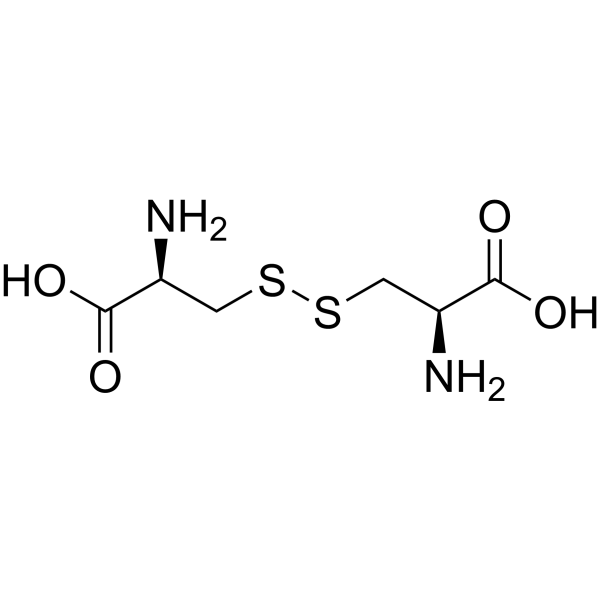
L-Cystine (Standard) is the analytical standard of L-Cystine. This product is intended for research and analytical applications. L-Cystine, the extracellular form of L-Cysteine (HY-Y0337), is a nutritionally dispensable semiessential sulfur-containing amino acid, occurring in proteins of plants and animals. L-Cystine induces Nrf2 protein elevation in a Keap1 (HY-P75897)-dependent manner and activates Nrf2 transcription factor. L-cystine can elicit cytoprotection by reducing ROS generation and protecting against oxidant- or doxorubicin-induced apoptosis. The reduced reabsorption of L-Cystine in renal tubules and its poor solubility in urine are the important causes of cystine precipitation and cystine crystal formation eventually leading to kidney stones. L-Cystine combined with L-theanine (HY-15121) enhances the production of antigen-specific IgG by increasing glutathione (GSH) levels and T helper 2 (Th2) mediated responses in mice. L-Cystine is promising for research of cystinuria and cystinosis
For research use only. We do not sell to patients.
- Assay : 96.68%
- CAS No.: 56-89-3
- Formula: C₆H₁₂N₂O₄S₂
- Molecular Weight:240.30
-
Storage:
Please store the product under the recommended conditions in the Certificate of Analysis.


To place orders, for customer services and technical support, please contact: MedChemExpress USA
Tel: 609-228-6898 E-mail: [email protected] [email protected]


-
 Product Information
-
Chemical Information
- Purity & Documentation
-
 Help & FAQs


-

HY-Y0337R
L-Cysteine (Standard) -
HY-N0394
L-CystineNrf2 Activator/ROS Inhibitor -

HY-D0187R
L-Glutathione reduced (Standard)Antioxidant -

HY-101037R
Sarcosine (Standard)GlyT1 Inhibitor -
HY-N0230R
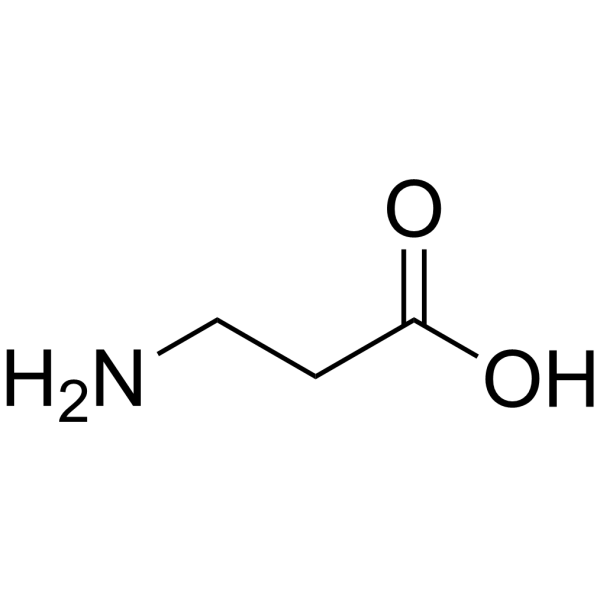
β-Alanine (Standard)Endogenous Metabolite -
HY-Y0337
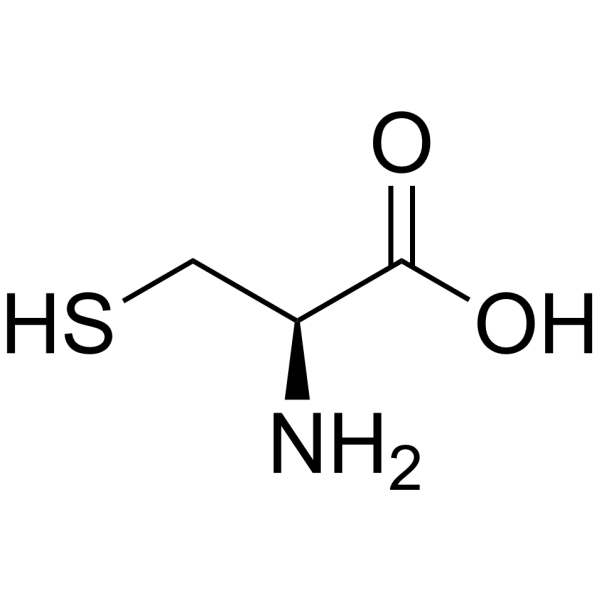
L-CysteineAnorectic Agent -
HY-N0486
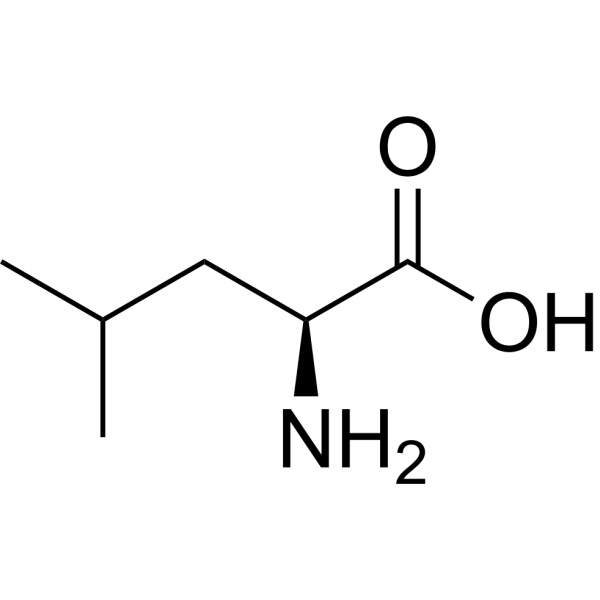
L-LeucinemTOR activator -
HY-14608
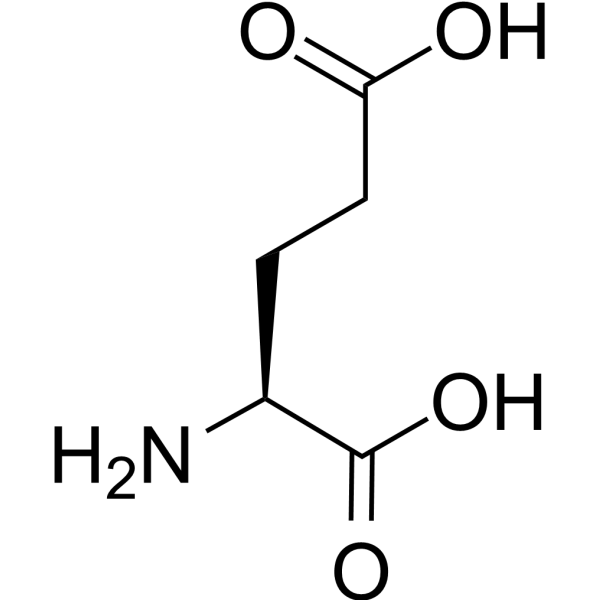
L-Glutamic acidGlutamate Receptors Agonist -
HY-Y0966
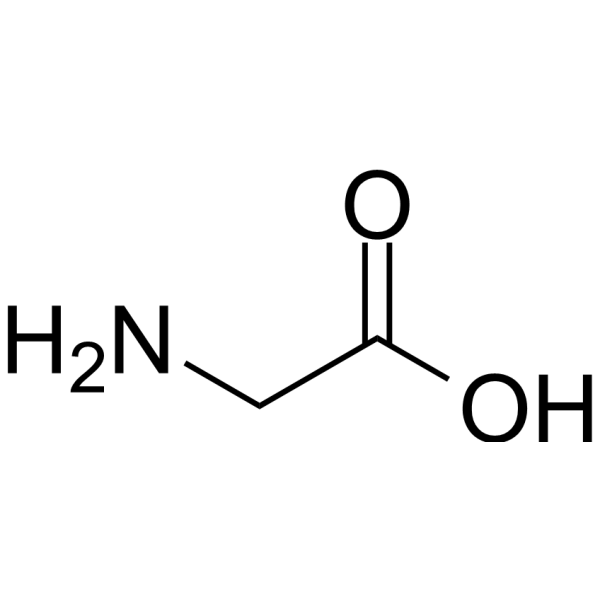
GlycineNMDAR Agonist -
HY-Y0252
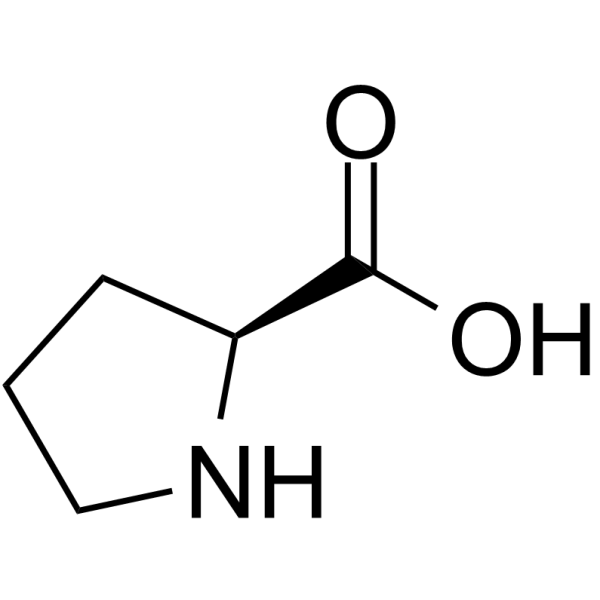
L-Proline -
HY-N0326
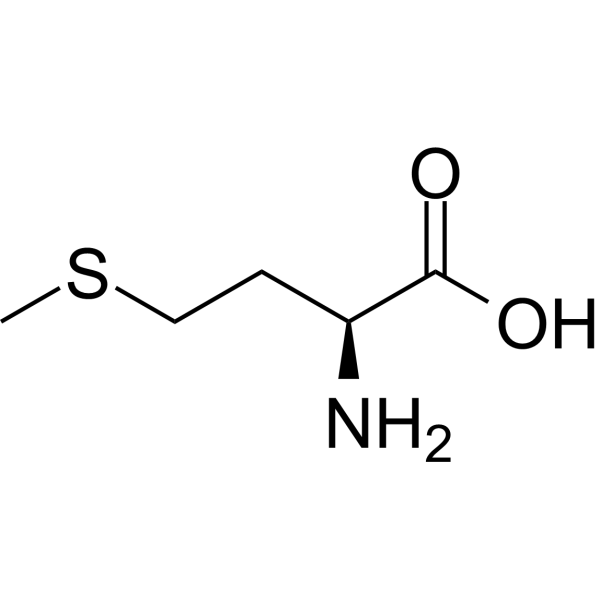
L-MethionineEndogenous Metabolite -
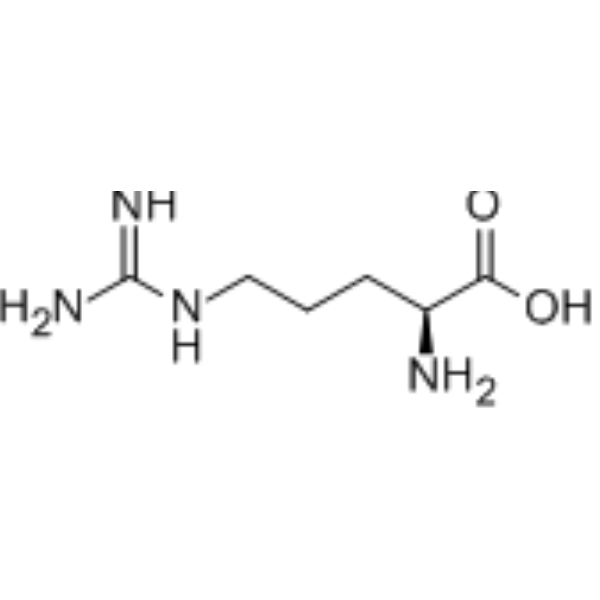
HY-N0455
L-ArginineeNOS Substrate


Product Information
Information
Application
The compound is the grade of analytical standard, which is the reference standard supplied assay. It is commonly used in qualitative, quantitative and methodological research experiments in HPLC, GC and MS.


Chemical Information
-
CAS No. 56-89-3
-
Appearance Solid
-
Molecular Weight 240.30
-
Formula C₆H₁₂N₂O₄S₂
-
Color White to off-white
-
SMILES
N[C@@H](CSSC[C@@H](C(O)=O)N)C(O)=O
-
Structure Classification
-
Initial Source
-
Shipping
Room temperature in continental US; may vary elsewhere.
-
Storage
Please store the product under the recommended conditions in the Certificate of Analysis.


Purity & Documentation
-
SDS (394 KB)
- English - EN (394 KB)
- Français - FR (394 KB)
- Deutsch - DE (394 KB)
- Norwegian - NO (394 KB)
- Español - ES (394 KB)
- Swedish - SV (394 KB)
- Italian - IT (394 KB)
- Korean - KR (394 KB)
- Portuguese - PT (394 KB)
-
Handling Instructions (2659 KB)
References
[1]. Abdullah M, et al. Extracellular Concentration of L-Cystine Determines the Sensitivity to System xc- Inhibitors[J]. Biomol Ther (Seoul). 2022 Mar 1;30(2):184-190. [Content Brief]
[2]. Kurihara S, et al. Enhancement of antigen-specific immunoglobulin G production in mice by co-administration of L-cystine and L-theanine[J]. J Vet Med Sci. 2007 Dec;69(12):1263-70. [Content Brief]
[4]. Greth WE, et al. Cellular accumulation of L-cystine in rat kidney cortex in vivo[J]. J Clin Invest. 1973 Feb;52(2):454-62. [Content Brief]
[5]. Ohtsu I, et al. Uptake of L-cystine via an ABC transporter contributes defense of oxidative stress in the L-cystine export-dependent manner in Escherichia coli. PLoS One. 2015 Apr 2;10(3):e0120619. [Content Brief]
[6]. Dai W, et al. Fresh Medium or L-Cystine as an Effective Nrf2 Inducer for Cytoprotection in Cell Culture[J]. Cells. 2023 Jan 12;12(2):291. [Content Brief]

Calculators
Concentration (start) × Volume (start) = Concentration (final) × Volume (final)


L-Cystine (Standard) Related Classifications
HY-N0394R Related Classifications
 Powered by Bioz