



L-Methionine
Based on 12 publication(s) in Google Scholar
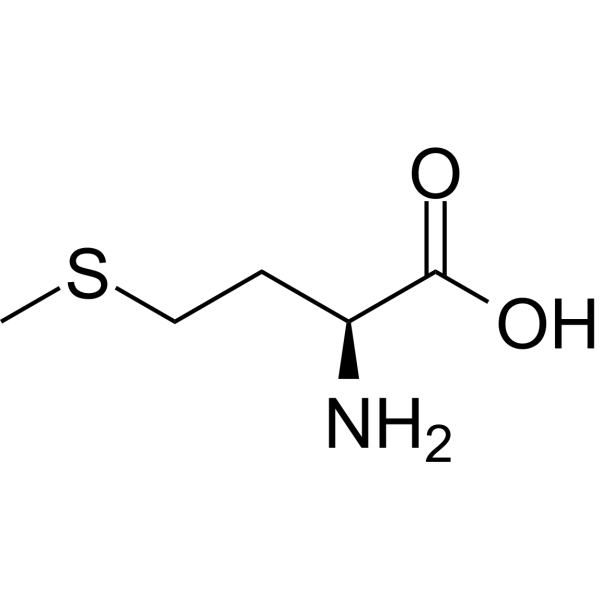
L-Methionine is an L-isomer of orally active Methionine, an essential amino acid. Methionine is a strong liver antidote that acts as a liver protector. L-Methionine can inhibit cell proliferation and induce cell apoptosis. L-Methionine has antitumor and antioxidant activity.
For research use only. We do not sell to patients.
- Purity : 99.98%
- CAS No.: 63-68-3
- Formula: C5H11NO2S
- Molecular Weight:149.22
-
Storage:Powder -20°C, 3 years , 4°C, 2 years ; In solvent -80°C, 6 months , -20°C, 1 month

To place orders, for customer services and technical support, please contact: MedChemExpress USA
Tel: 609-228-6898 E-mail: [email protected] [email protected]


-
 Biological Activity
-
Chemical Information
-
Solvent & Solubility
- Protocols
- Purity & Documentation
- References
-
 Help & FAQs


-
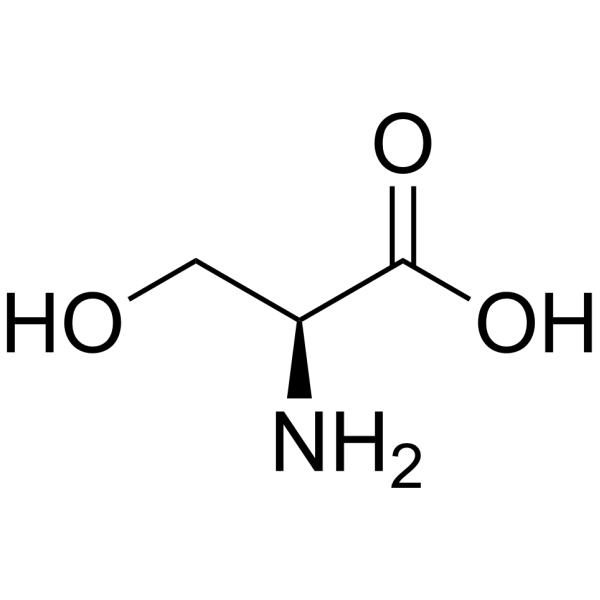
HY-N0650
L-SerineAmino Acid -
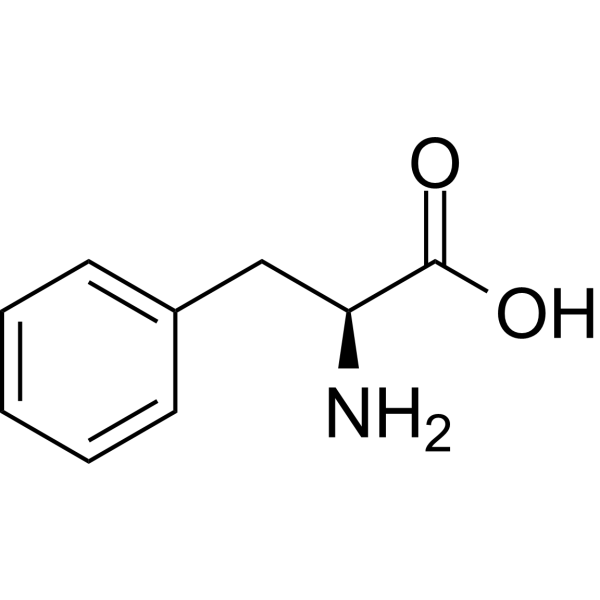
HY-N0215
L-PhenylalanineCalcium Channels Antagonist -
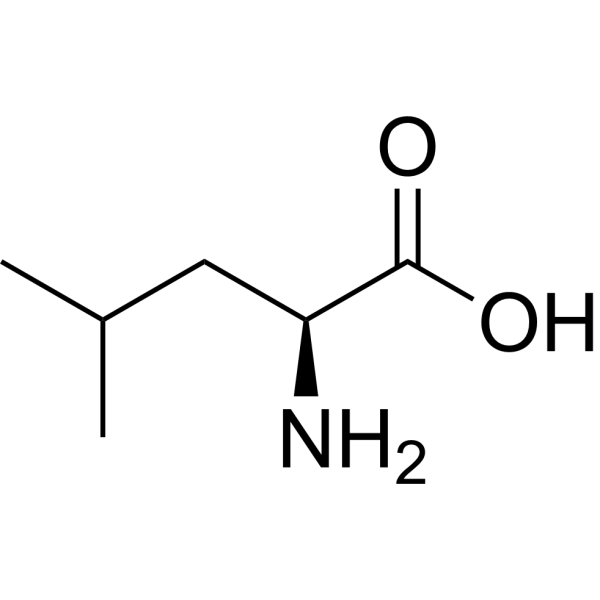
HY-N0486
L-LeucinemTOR activator -
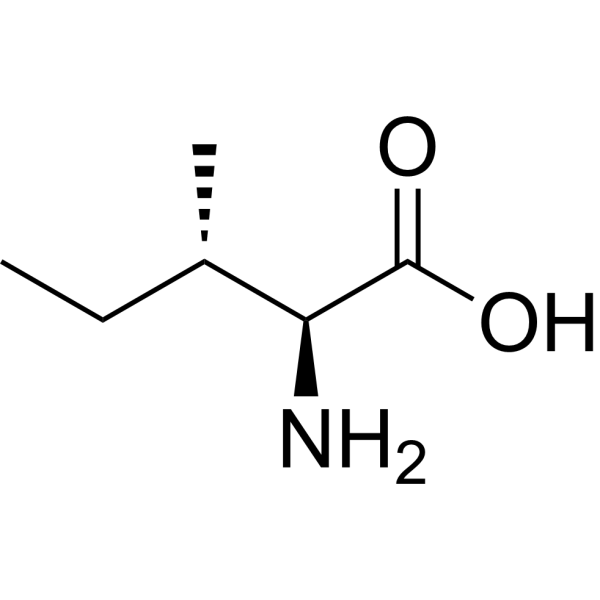
HY-N0771
L-IsoleucineEndogenous Metabolite, L-enantiomer of Isoleucine -
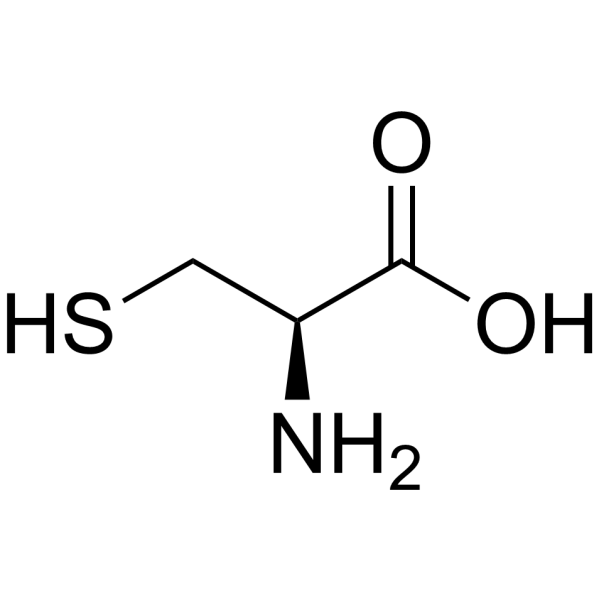
HY-Y0337
L-CysteineAnorectic Agent -
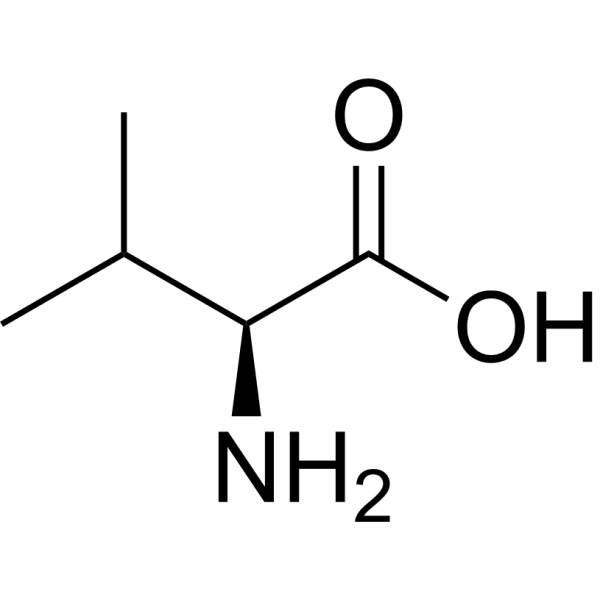
HY-N0717
L-ValineNonlinear Semiorganic Material -
HY-N0455
L-ArginineeNOS Substrate -
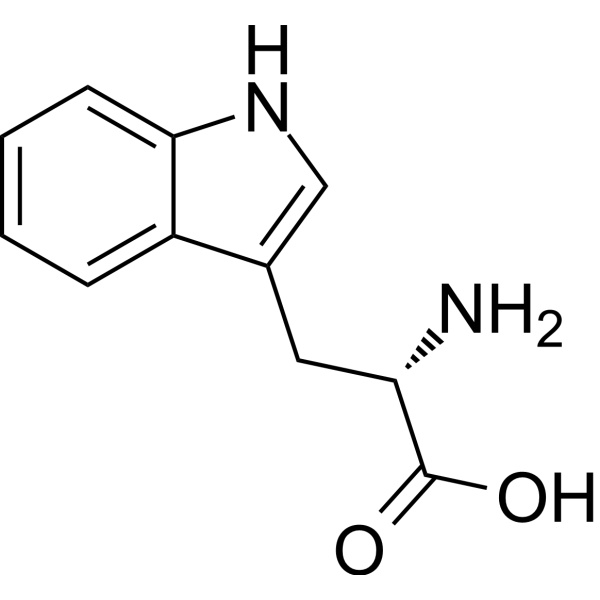
HY-N0623
L-TryptophanEssential Amino Acid -
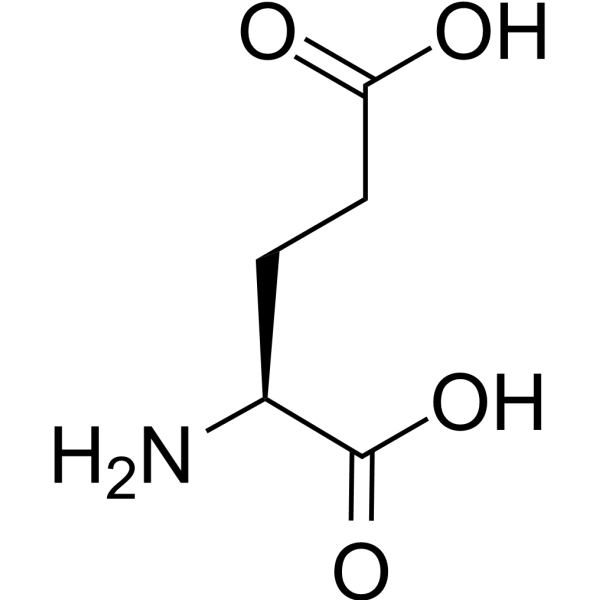
HY-14608
L-Glutamic acidGlutamate Receptors Agonist -
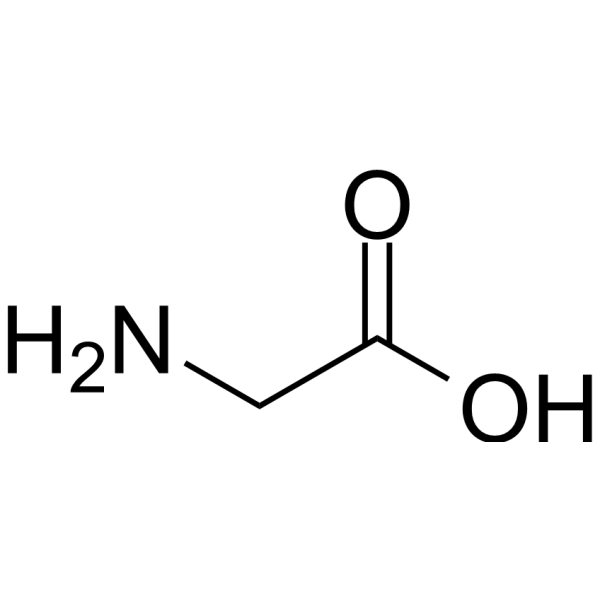
HY-Y0966
GlycineNMDAR Agonist -
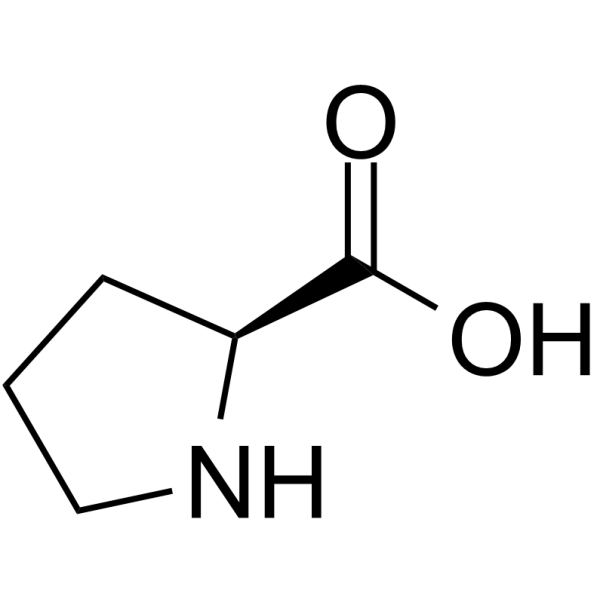
HY-Y0252
L-Proline -
HY-N0832
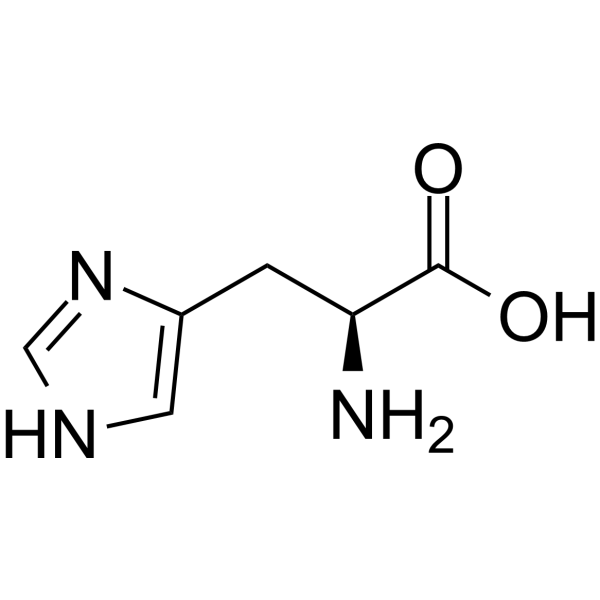
L-HistidineEndogenous Metabolite
Publications Citing Use of MedChemExpress (MCE) L-Methionine
More- Nature. 2025 Jul;643(8070):192-200. [Abstract]
- Nat Genet. 2026 Jul 8.
- Nat Commun. 2025 Jan 31;16(1):1233. [Abstract]
- Adv Sci (Weinh). 2026 Mar 18:e22690. [Abstract]
- Adv Sci (Weinh). 2025 May;12(19):e2501623. [Abstract]
- Antioxidants (Basel). 2026 Sep 11;15(9):1162.
- Emerg Microbes Infect. 2025 Dec;14(1):2447620. [Abstract]
- Molecules. 2025 Mar 9;30(6):1224. [Abstract]
- Sci Rep. 2026 Jan 14;16(1):5201. [Abstract]
- Neoplasia. 2025 Jun:64:101160. [Abstract]
- J Chromatogr A. 2025 Aug 16:1755:466036. [Abstract]
- bioRxiv. 2024 August 18.
 Customer Validation & Images

-
WB
-
ELISA
-
IHC
-
In Vivo Efficacy Study
-
Flow Cytometry
All Endogenous Metabolite Isoforms
More

Biological Activity
Description
IC50 & Target
|
Microbial Metabolite |
Human Endogenous Metabolite |
In Vitro
L-Methionine (5 mg/mL, 7 or 3 days) can inhibit the proliferation of BXPC-3 (mutant p53) and HPAC (wild-type p53) pancreatic cancer cells, interfere with cell cycle, and induce apoptosis of BXPC-3 cells[1].
L-Methionine (0.3-10 mM, 24 h) reduces the formation of free radicals in endothelial cells by inducing heme oxidase-1 and ferritin[2].
MedChemExpress (MCE) has not independently confirmed the accuracy of these methods. They are for reference only.
-
Cell Line:BXPC-3, HPAC
-
Concentration:5 mg/mL
-
Incubation Time:7 or 3 days
-
Result:Reduced growth of BXPC-3 cells by 31 and 32%, respectively.
Reduced growth of HPAC cells by 35% and 18%, respectively.
Reduced S to G2 transition in BXPC-3 cells and intervened in both G1–S and S–G2 transitions in HPAC cells.
Increased late cell apoptosis at a percentage of 76% in BXPC-3 cells.
-
Cell Line:ECV304
-
Concentration:0.3, 1, 3, 5, 10 mM
-
Incubation Time:24 h
-
Result:Increased the level of HO-1 protein up to 9.5-fold and the HO-1 activity.
In Vivo
MedChemExpress (MCE) has not independently confirmed the accuracy of these methods. They are for reference only.
-
Animal Model:Male Wistar rats (body weight 70-80 g)[3]
-
Dosage:215,268.8, 322.5, 430 mg/kg
-
Administration:p.o.
-
Result:Reduced the hepatic ROS levels and the hepatic MDA contents.
Increased the hepatic T-AOC, CAT and T-SOD.
Increased the hepatic activity of GCL, GR, GST and GPx.
- Annexin V plus membrane-impermeant dye apoptosis staining
- BrdU Incorporation Assay
- Somatic Cell Culture
- CFSE Dye Dilution Proliferation Assay
- Dye-dilution cell tracking and proliferation staining
- CCK-8/WST-8 Cell Proliferation Assay
- Protocol for Cell Cycle
- Cell Counting-Based Growth Curve Assay
- Colony Formation (Clonogenic) Assay
- Cell Viability Determination by MTT Colorimetric Assay
- EdU Incorporation Assay (Click Chemistry-Based DNA Synthesis Measurement)
- Ki-67 Immunostaining Proliferation Assay
- Detection of Apoptosis
- TUNEL staining for apoptotic DNA fragmentation
- PCNA Immunodetection Proliferation Assay
- Protocol for Cell Counting and Cell Density Analysis
- Apoptosis Solutions
- MTT Cell Proliferation Assay
Clinical Trial
| NCT Number | Sponsor | Condition | Start Date |
Phase

|
|---|---|---|---|---|
| NCT01329991 | 2011-05 | PHASE1 |


Chemical Information
-
CAS No. 63-68-3
-
Appearance Solid
-
Molecular Weight 149.22
-
Formula C5H11NO2S
-
Color White to off-white
-
SMILES
N[C@@H](CCSC)C(O)=O
-
Structure Classification
-
Shipping
Room temperature in continental US; may vary elsewhere.
-
Storage
Powder -20°C 3 years 4°C 2 years In solvent -80°C 6 months -20°C 1 month


Publications (12)
-
Journal Impact Factor
-
Most Recent
-
Nature
2025 Jul;643(8070):192-200. PMID: 39695227 -
-
Nat Commun
2025 Jan 31;16(1):1233. PMID: 39890804 -
Adv Sci (Weinh)
Cars2-Mediated Cysteine Catabolism Drives Brown Fat Development and Thermogenesis Through Persulfidating EBF2. [Abstract]2026 Mar 18:e22690. PMID: 41849685 -
Adv Sci (Weinh)
Methionine Metabolism Dictates PCSK9 Expression and Antitumor Potency of PD-1 Blockade in MSS Colorectal Cancer. [Abstract]2025 May;12(19):e2501623. PMID: 40125618
L-Methionine purchased from MedChemExpress. Usage Cited in: Adv Sci (Weinh). 2025 May;12(19):e2501623. [Abstract]
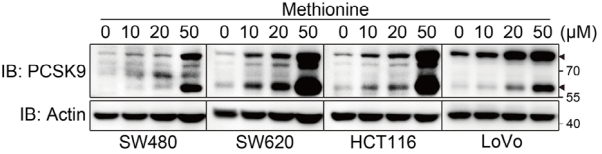
The expression and secretion of PCSK9 in human with methionine deprivation for 6 h and then methionine (0-50 μM) supplementation for 24h. Immunoblotting analysis of PCSK9 in human CRC cell lines (SW480, SW620, HCT116, and LoVo).
L-Methionine purchased from MedChemExpress. Usage Cited in: Adv Sci (Weinh). 2025 May;12(19):e2501623. [Abstract]
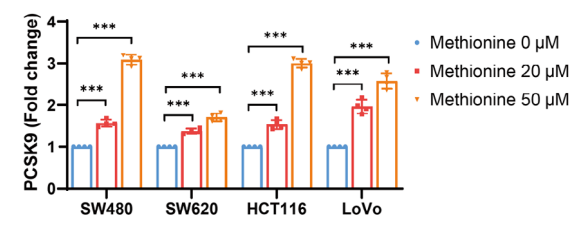
L-Methionine (0, 20, 50 μM). ELISA analysis of PCSK9 in culture supernatant of human CRC cell lines (SW480, SW620, HCT116, and LoVo).
L-Methionine purchased from MedChemExpress. Usage Cited in: Adv Sci (Weinh). 2025 May;12(19):e2501623. [Abstract]
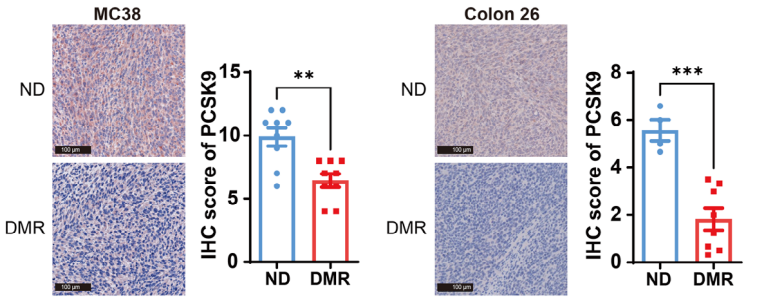
Mice were housed on either a normal diet (ND) with 0.86% methionine or a dietary methionine restriction (DMR) diet with 0.12% methionine from the day after injection until the endpoints. Immunohistochemistry analysis of PCSK9 in tumors from MC38‐ (n = 9) and Colon 26‐ (n = 4 (ND), n = 8 (DMR)) bearing mice fed with normal diet and methionine restriction diet (left). The abundance of PCSK9 was assessed (right).
L-Methionine purchased from MedChemExpress. Usage Cited in: Adv Sci (Weinh). 2025 May;12(19):e2501623. [Abstract]
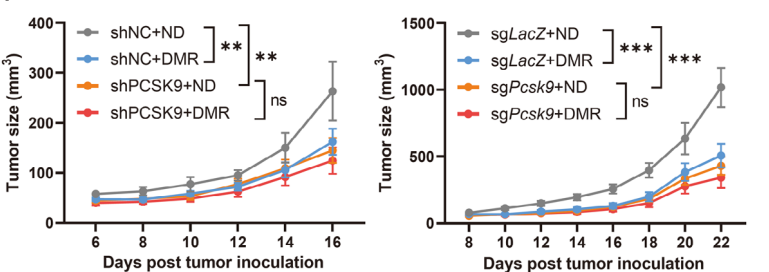
Mice were housed on either a normal diet (ND) with 0.86% methionine or a dietary methionine restriction (DMR) diet with 0.12% methionine from the day after injection until the endpoints. Tumor volume of PCSK9‐KD (n = 10) or PCSK9‐KO (n = 9) MC38‐bearing mice fed with normal diet and methionine restriction diet. EAA, essential amino acid; NEEA, non‐essential amino acid; CM, complete medium; ND, normal diet; DMR, dietary methionine restriction.
L-Methionine purchased from MedChemExpress. Usage Cited in: Adv Sci (Weinh). 2025 May;12(19):e2501623. [Abstract]
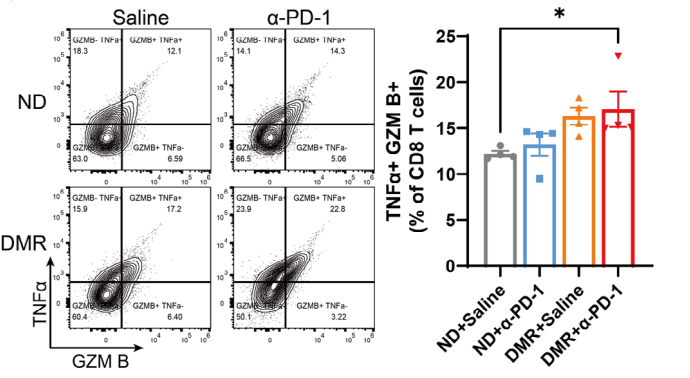
Mice were housed on either a normal diet (ND) with 0.86% methionine or a dietary methionine restriction (DMR) diet with 0.12% methionine from the day after injection until the endpoints. Flow cytometric analysis of TNFα and Granzyme B in intratumoral CD8+T cells from Colon 26‐bearing mice fed with a methionine restriction diet alone or in combination with anti‐PD‐1 therapy.
-
-
Emerg Microbes Infect
SARS-CoV-2 and HCoV-OC43 regulate host m6A modification via activation of the mTORC1 signaling pathway to facilitate viral replication. [Abstract]2025 Dec;14(1):2447620. PMID: 39745173 -
Molecules
Seeking Correlation Among Porin Permeabilities and Minimum Inhibitory Concentrations Through Machine Learning: A Promising Route to the Essential Molecular Descriptors. [Abstract]2025 Mar 9;30(6):1224. PMID: 40142001 -
Sci Rep
Interaction between ELMO1 DNA methylation and Med31 promotes H. pylori-induced gastric cancer EMT and intestinal metaplasia via M2 polarization. [Abstract]2026 Jan 14;16(1):5201. PMID: 41535333 -
Neoplasia
L-methionine promotes CD8+ T cells killing hepatocellular carcinoma by inhibiting NR1I2/PCSK9 signaling. [Abstract]2025 Jun:64:101160. PMID: 40158232 -
J Chromatogr A
Quantification of five intracellular and extracellular methionine pathway intermediates using stable isotope dilution UHPLC-MS/MS. [Abstract]2025 Aug 16:1755:466036. PMID: 40398135 -


Solvent & Solubility
In Vitro:
H2O : 10 mg/mL (67.02 mM; Need ultrasonic)
Please refer to the solubility information to select the appropriate solvent. Once prepared, please aliquot and store the solution to prevent product inactivation from repeated freeze-thaw cycles.
Storage method and period of stock solution: -80°C, 6 months; -20°C, 1 month. When stored at -80°C, please use it within 6 months. When stored at -20°C, please use it within 1 month.
* Note: If you choose water as the stock solution, please dilute it to the working solution, then filter and sterilize it with a 0.22 μm filter before use.
Please refer to the solubility information to select the appropriate solvent. Once prepared, please aliquot and store the solution to prevent product inactivation from repeated freeze-thaw cycles.
Storage method and period of stock solution: -80°C, 6 months; -20°C, 1 month. When stored at -80°C, please use it within 6 months. When stored at -20°C, please use it within 1 month.
* Note: If you choose water as the stock solution, please dilute it to the working solution, then filter and sterilize it with a 0.22 μm filter before use.
Concentration (start) × Volume (start) = Concentration (final) × Volume (final)
In Vivo:
For the following dissolution methods, please prepare the working solution directly:
It is recommended to prepare fresh solutions and use them promptly within a short period of time.
The percentages shown for the solvents indicate their volumetric ratio in the final prepared solution. If precipitation or phase separation occurs during preparation, heat and/or sonication can be used to aid dissolution.
Add each solvent one by one: PBS
Solubility: 12.5 mg/mL (83.77 mM); Clear solution; Need ultrasonic and warming and heat to 60°C


Purity & Documentation
-
Data Sheet (276 KB)
-
SDS (396 KB)
- English - EN (396 KB)
- Français - FR (396 KB)
- Deutsch - DE (396 KB)
- Norwegian - NO (396 KB)
- Español - ES (396 KB)
- Swedish - SV (396 KB)
- Italian - IT (396 KB)
- Korean - KR (396 KB)
- Portuguese - PT (396 KB)
-
Handling Instructions (2659 KB)
References
[1]. Benavides MA, et al. L-Methionine inhibits growth of human pancreatic cancer cells. Anticancer Drugs. 2014 Feb;25(2):200-3. [Content Brief]
[2]. Erdmann K, et al. L-methionine reduces oxidant stress in endothelial cells: role of heme oxygenase-1, ferritin, and nitric oxide. AAPS J. 2005 Aug 29;7(1):E195-200. [Content Brief]
[3]. Wang Z, et al. l-Methionine activates Nrf2-ARE pathway to induce endogenous antioxidant activity for depressing ROS-derived oxidative stress in growing rats. J Sci Food Agric. 2019 Aug 15;99(10):4849-4862. [Content Brief]


Complete Stock Solution Preparation Table
Please refer to the solubility information to select the appropriate solvent. Once prepared, please aliquot and store the solution to prevent product inactivation from repeated freeze-thaw cycles.
Storage method and period of stock solution: -80°C, 6 months; -20°C, 1 month. When stored at -80°C, please use it within 6 months. When stored at -20°C, please use it within 1 month.
| Optional Solvent | Concentration Solvent Mass | 1 mg | 5 mg | 10 mg | 25 mg |
|---|---|---|---|---|---|
| H2O | 1 mM | 6.7015 mL | 33.5076 mL | 67.0151 mL | 167.5379 mL |
| 5 mM | 1.3403 mL | 6.7015 mL | 13.4030 mL | 33.5076 mL | |
| 10 mM | 0.6702 mL | 3.3508 mL | 6.7015 mL | 16.7538 mL | |
| 15 mM | 0.4468 mL | 2.2338 mL | 4.4677 mL | 11.1692 mL | |
| 20 mM | 0.3351 mL | 1.6754 mL | 3.3508 mL | 8.3769 mL | |
| 25 mM | 0.2681 mL | 1.3403 mL | 2.6806 mL | 6.7015 mL | |
| 30 mM | 0.2234 mL | 1.1169 mL | 2.2338 mL | 5.5846 mL | |
| 40 mM | 0.1675 mL | 0.8377 mL | 1.6754 mL | 4.1884 mL | |
| 50 mM | 0.1340 mL | 0.6702 mL | 1.3403 mL | 3.3508 mL | |
| 60 mM | 0.1117 mL | 0.5585 mL | 1.1169 mL | 2.7923 mL |
* Note: If you choose water as the stock solution, please dilute it to the working solution, then filter and sterilize it with a 0.22 μm filter before use.


L-Methionine Related Classifications
HY-N0326 Related Classifications
 Powered by Bioz