



N-Propargylglycine
Based on 1 publication(s) in Google Scholar
N-Propargylglycine is a brain-penetrant and orally active PRODH inhibitor. N-Propargylglycine covalently modifies enzyme-bound FAD and active site lysine, causing enzyme structural distortion, protein decay, and irreversible inhibition of proline and 4-hydroxyproline catabolism. N-Propargylglycine induces UPRmt, upregulates mitochondrial chaperones and YME1L1, enhances mitochondrial proteostasis, blocks astrocytic L-proline consumption, and abolishes L-proline’s ATP-maintaining and viability-protective effects. N-Propargylglycine stimulates neural processes, increases brain proline, hydroxyproline, and sarcosine levels, partially normalizes Huntington’s disease whole brain transcriptomes. N-Propargylglycine reduces hyperoxaluria, prevents calcium oxalate stone formation, reduces kidney tubular damage, and restores weight and survival in Grhpr knockout mice. N-Propargylglycine can be used for the research of breast cancer, neurodegenerative disorders, Huntington’s disease, and primary hyperoxaluria type 2.
For research use only. We do not sell to patients.
- Purity : 99.70%
- CAS No.: 58160-95-5
- Formula: C5H7NO2
- Molecular Weight:113.11
-
Storage:
Store at room temperature, keep dry and cool.
In solvent -80°C, 1 year , -20°C, 6 months


To place orders, for customer services and technical support, please contact: MedChemExpress USA
Tel: 609-228-6898 E-mail: [email protected] [email protected]


-
 Biological Activity
-
Chemical Information
-
Solvent & Solubility
- Protocols
- Purity & Documentation
- References
-
 Help & FAQs


Publications Citing Use of MedChemExpress (MCE) N-Propargylglycine
More Customer Validation & Images

-
Others
-
Others


Biological Activity
Description
In Vitro
N-Propargylglycine (5 mM; 6 min/48 h) irreversibly inhibits proline oxidation and NADH formation in mitochondria from ZR-75-1 human breast cancer cells at a concentration of 5 mM, with persistent inhibition observed 48 h after pretreatment of cultured cells[1].
N-Propargylglycine (5 mM; 24-48 h) induces rapid decay of mitochondrial PRODH protein and upregulates expression of mitochondrial chaperones GRP-75, HSP-60, and the protease YME1L1 in ZR-75-1 human breast cancer cells after 24 h and 48 h of treatment, consistent with activation of the mitochondrial unfolded protein response[1].
N-propargylglycine (0.01-5 mM; 8 h) potently inhibits L-proline consumption in cultured primary rat astrocytes, with half-maximal inhibition at 0.2 mM and greater than 80% inhibition at 1 mM after 8 h of incubation[2].
N-Propargylglycine (5 mM; 48 h) reduces mitochondrial HYPDH/PRODH2 expression levels to ~40% of control, promoting mitochondrial degradation of the enzyme[4].
MedChemExpress (MCE) has not independently confirmed the accuracy of these methods. They are for reference only. Further protocols information, click here.
-
Cell Line:ZR-75-1 human breast cancer cells
-
Concentration:5 mM
-
Incubation Time:24 h; 48 h
-
Result:Showed significant loss of mitochondrial PRODH protein, with concurrent upregulation of mitochondrial GRP-75 and no change in mitochondrial TOM20 levels.
Decreased PRODH levels to 0.6-fold of control, increased GRP-75 levels to 2.2-fold of control, and increased HSP-60 levels to 1.3-fold of control in mitochondrial fractions.
Decreased PRODH levels to 0.75-fold of control, increased 60 kDa YME1L1 levels to 1.34-fold of control, and increased 80 kDa YME1L1 levels to 1.38-fold of control in whole-cell lysates (24 h treatment).
Decreased PRODH levels to 0.58-fold of control, maintained 60 kDa YME1L1 levels at 1.35-fold of control, and returned 80 kDa YME1L1 levels to 1.08-fold of control in whole-cell lysates (48 h treatment).
-
Cell Line:Human hepatocarcinoma HepG2 cells
-
Concentration:5 mM
-
Incubation Time:48 h
-
Result:Reduced mitochondrial HYPDH/PRODH2 expression levels to ~40% of untreated control levels.
Left non-specific bands in the cytoplasmic fraction insensitive to treatment.
In Vivo
N-Propargylglycine (N-PPG) (50 mg/kg; oral gavage; daily; 9 days) induces brain mitohormesis in WT mice, reducing Prodh protein levels by ~30% and altering brain transcriptomic and kidney metabolomic profiles[3].
N-Propargylglycine (N-PPG) (50 mg/kg; oral gavage; daily; 9 days) induces brain mitohormesis and partially normalizes transcriptomic profiles in R6/2 HD mice[3].
N-Propargylglycine (N-PPG) (50 mg/kg; oral gavage; daily; 14 days) is well-tolerated in R6/2 HD mice and increases tissue levels of proline, hydroxyproline, and sarcosine without altering disease progression or lifespan[3].
N-Propargylglycine (200 mg/kg; p.o.; daily; 5 days) reduces mouse liver Hypdh/Prodh2 and Prodh1 protein levels to 73% and 66% of control levels, respectively[4].
N-Propargylglycine (50 mg/kg; p.o.; daily; 9 days) significantly elevates kidney 4-hydroxyproline and proline levels in both wild-type and Huntington's disease model mice, with fold increases ranging from 1.42 to 4.57 relative to controls[4].
N-Propargylglycine (50 mg/kg; p.o.; daily; 14 days) significantly elevates blood 4-hydroxyproline levels 3.59-fold, and brain 4-hydroxyproline and proline levels 2.72-fold and 2.57-fold, respectively, in Huntington's disease model mice[4].
N-Propargylglycine (200 mg/kg; p.o.; daily; 21 days) reduces urinary oxalate excretion by ~32% after 3 weeks, prevents Ca2+Ox crystal formation, restores weight gain, and preserves kidney function in Grhpr knockout mice with Primary Hyperoxaluria Type 2[5].
N-Propargylglycine (200 mg/kg; p.o.; daily; up to 24 weeks) fully restores survival to wild-type levels, suppresses hyperoxaluria long-term, prevents Ca2+Ox stone formation, and preserves kidney function and body weight in Grhpr knockout mice with Primary Hyperoxaluria Type 2 over 24 weeks[5].
MedChemExpress (MCE) has not independently confirmed the accuracy of these methods. They are for reference only.
-
Animal Model:Mixed B6/CBA background (5-week-old; male and female)[1]
-
Dosage:50-200 mg/kg
-
Administration:p.o.; daily; 9 days
-
Result:Reduced mean brain PRODH protein expression.
Upregulated HSP-60 transcripts 1.68-fold and YME1L1 transcripts 1.35-fold relative to housekeeping genes (single 200 mg/kg treated mouse).
Increased median YME1L1 transcript levels by 18.5% (50 mg/kg, not statistically significant) and mean brain YME1L1 protein expression by 30-40%.
Identified 1324 differentially expressed genes, with 841 genes upregulated via RNAseq analysis.
Confirmed significant enrichment (FDR) of 77 Gene Ontology pathways and 7 Reactome neural pathways, including glutaminergic and GABAergic synapses, nervous system development, and voltage-gated ion channel pathways.
Upregulated neural genes 1.64-fold (Htr3a), 1.72-fold (Itpr1), 1.48-fold (Syt6), and 2.00-fold (Pcsk2) relative to GAPDH via RTqPCR validation.
-
Animal Model:R6/2 (male, ~4 weeks at receipt, Huntington's disease transgenic model expressing N-terminal human mutant HTT with ~150 CAG repeats)[3]
-
Dosage:50 mg/kg
-
Administration:oral gavage; daily; 9 days
-
Result:Induced brain mitohormesis with nominal (insignificant) declines in Prodh protein levels and increased expression of Yme1l1 protease and chaperone Grp78.
Partially normalized HD whole brain transcriptomes toward WT profiles, with a strong linear Pearson correlation between control WT/HD gene ratios and N-PPG treated/control HD gene ratios.
Upregulated average tyrosine hydroxylase (Th) mRNA levels to 40% of control WT levels, dopamine receptor-1 (Drd1) to 44%, and adenosine A2A receptor (Adora2a) to 32% of control WT levels.
Increased kidney proline levels 1.4-fold, hydroxyproline 2.8-fold, and sarcosine 1.9-fold compared to vehicle control.
-
Animal Model:C57BL/6J (4-month-old, male and female; Grhpr knockout, fed 1% hydroxyproline diet)[5]
-
Dosage:200 mg/kg
-
Administration:p.o.; daily; 21 days
-
Result:Reduced urinary oxalate excretion by 31% after 9 days and 32% after 22 days compared to vehicle controls.
Reversed weight loss and induced weight gain, while vehicle controls continued to lose weight.
Increased hepatic hydroxyproline levels ~20-fold and proline levels ~10-fold compared to vehicle controls.
Significantly reduced liver glyoxylate levels compared to vehicle controls.
Reduced renal tubule calcium oxalate crystals by nearly 100-fold (fewer and smaller) compared to vehicle controls.
Drastically reduced urine kidney injury molecule-1 (KIM-1) levels and significantly lowered plasma Cystatin C levels compared to vehicle controls.
Showed minimal KIM-1 staining in kidney tissue, indistinguishable from wild-type mice.


Chemical Information
-
CAS No. 58160-95-5
-
Appearance Solid
-
Molecular Weight 113.11
-
Formula C5H7NO2
-
Color Off-white to light yellow
-
SMILES
O=C(O)CNCC#C
-
Shipping
Room temperature in continental US; may vary elsewhere.
-
Storage
Store at room temperature, keep dry and cool
In solvent -80°C 1 year -20°C 6 months


Publications (1)
-
Journal Impact Factor
-
Most Recent
-
Neurochem Res
2025 Nov 26;51(1):1. PMID: 41296118
N-Propargylglycine purchased from MedChemExpress. Usage Cited in: Neurochem Res. 2025 Nov 26;51(1):1. [Abstract]
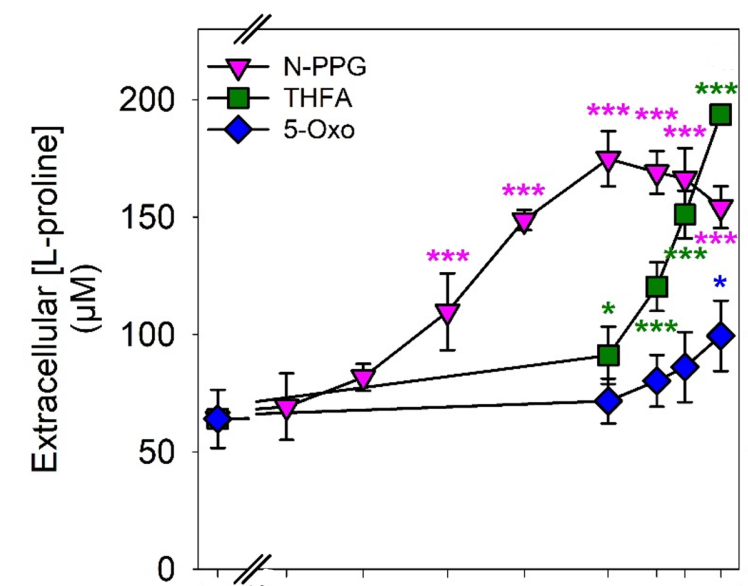
N-Propargylglycine (N-PPG) and THFA, at concentrations of 1 mM and 5 mM, respectively, inhibited the consumption of L-proline by more than 80% and 95%.
N-Propargylglycine purchased from MedChemExpress. Usage Cited in: Neurochem Res. 2025 Nov 26;51(1):1. [Abstract]
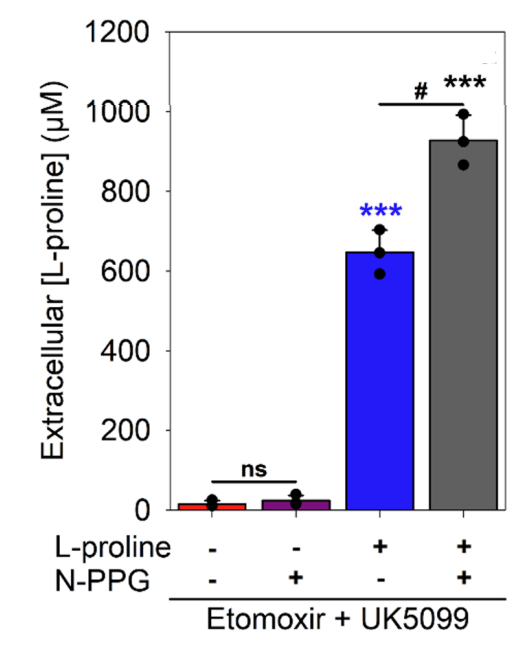
Cells were incubated with 10 µM etomoxi and 1 µM UK5099 for 8 hours, with or without the addition of 1000 µM L-proline and/or 1 mM N-Propargylglycine (N-PPG), and the extracellular L-proline concentration was then measured.


Solvent & Solubility
In Vitro:
H2O : ≥ 100 mg/mL (884.10 mM)
DMSO : 8.33 mg/mL (73.65 mM; ultrasonic and warming and heat to 60°C; Hygroscopic DMSO has a significant impact on the solubility of product, please use newly opened DMSO)
* "≥" means soluble, but saturation unknown.
Please refer to the solubility information to select the appropriate solvent. Once prepared, please aliquot and store the solution to prevent product inactivation from repeated freeze-thaw cycles.
Storage method and period of stock solution: -80°C, 1 year; -20°C, 6 months. When stored at -80°C, please use it within 1 year. When stored at -20°C, please use it within 6 months.
* Note: If you choose water as the stock solution, please dilute it to the working solution, then filter and sterilize it with a 0.22 μm filter before use.
Please refer to the solubility information to select the appropriate solvent. Once prepared, please aliquot and store the solution to prevent product inactivation from repeated freeze-thaw cycles.
Storage method and period of stock solution: -80°C, 1 year; -20°C, 6 months. When stored at -80°C, please use it within 1 year. When stored at -20°C, please use it within 6 months.
* Note: If you choose water as the stock solution, please dilute it to the working solution, then filter and sterilize it with a 0.22 μm filter before use.
Concentration (start) × Volume (start) = Concentration (final) × Volume (final)

Protocols
-
Gene Editing
Gene editing modify specific sites within the genome through gene deletions, insertions or conversions to study functionally unknown genes or conduct gene therapy. It is also used to change the biological traits of organisms to establish new varieties. Gene editing techniques include zinc finger nuclease (ZFN), transcription activator-like effector nuclease (TALEN), and clustered regularly interspaced short palindromic repeats (CRISPR)/CRISPR-associated protein 9 (Cas 9) (CRISPR/Cas9).
-
Breast Cancer Modeling
Breast cancer is a heterogeneous cancer, and it has been distinguished into four subtypes: luminal A, luminal B, HER2-positive and basal-like. Molecular mutations, epigenetic alterations, hormone exposure and immune microenvironment are related to the progression of breast cancer.
-
Cell Viability Determination by MTT Colorimetric Assay
The following protocol uses the MTT colorimetric assay as a classic literature-established method for assessing cell viability/metabolic activity in cultured mammalian cells. MTT[3-(4,5-dimethylthiazol-2-yl)-2,5-diphenyltetrazolium bromide] is reduced by metabolically active cells to a colored formazan product; the amount of formazan is quantified spectrophotometrically and provides an indirect measure of metabolically active viable cells. Importantly, MTT reduction reflects cellular oxidoreductase/metabolic activity rather than an absolute direct count of living cells, so changes in cellular metabolism can alter the signal independently of cell number.


Purity & Documentation
-
Data Sheet (283 KB)
-
SDS (393 KB)
- English - EN (393 KB)
- Français - FR (393 KB)
- Deutsch - DE (393 KB)
- Norwegian - NO (393 KB)
- Español - ES (393 KB)
- Swedish - SV (393 KB)
- Italian - IT (393 KB)
- Korean - KR (393 KB)
- Portuguese - PT (393 KB)
-
Handling Instructions (2659 KB)
References
[1]. Scott GK, et al. N-Propargylglycine: a unique suicide inhibitor of proline dehydrogenase with anticancer activity and brain-enhancing mitohormesis properties. Amino Acids. 2021;53(12):1927-1939. [Content Brief]
[2]. Spellerberg P, et al. Consumption of L-Proline as Energy Substrate by Cultured Primary Rat Astrocytes. Neurochem Res. 2025;51(1):1. Published 2025 Nov 26. [Content Brief]
[3]. Teramayi F, et al. Brain transcriptomic, metabolic and mitohormesis properties associated with N-propargylglycine treatment: A prevention strategy against neurodegeneration. Brain Res. 2024;1826:148733. [Content Brief]
[4]. Bons J, et al. Therapeutic targeting of HYPDH/PRODH2 with N-propargylglycine offers a Hyperoxaluria treatment opportunity. Biochim Biophys Acta Mol Basis Dis. 2024;1870(1):166848. [Content Brief]
[5]. Hady M, et al. N-Propargylglycine Restores Survival by Preventing Calcium Oxalate Stone Formation, Tubular Injury, and Kidney Dysfunction in a Lethal Mouse Model of Primary Hyperoxaluria Type 2. Kidney Int. Published online March 20, 2026. [Content Brief]


Complete Stock Solution Preparation Table
Please refer to the solubility information to select the appropriate solvent. Once prepared, please aliquot and store the solution to prevent product inactivation from repeated freeze-thaw cycles.
Storage method and period of stock solution: -80°C, 1 year; -20°C, 6 months. When stored at -80°C, please use it within 1 year. When stored at -20°C, please use it within 6 months.
| Optional Solvent | Concentration Solvent Mass | 1 mg | 5 mg | 10 mg | 25 mg |
|---|---|---|---|---|---|
| DMSO / H2O | 1 mM | 8.8410 mL | 44.2048 mL | 88.4095 mL | 221.0238 mL |
| 5 mM | 1.7682 mL | 8.8410 mL | 17.6819 mL | 44.2048 mL | |
| 10 mM | 0.8841 mL | 4.4205 mL | 8.8410 mL | 22.1024 mL | |
| 15 mM | 0.5894 mL | 2.9470 mL | 5.8940 mL | 14.7349 mL | |
| 20 mM | 0.4420 mL | 2.2102 mL | 4.4205 mL | 11.0512 mL | |
| 25 mM | 0.3536 mL | 1.7682 mL | 3.5364 mL | 8.8410 mL | |
| 30 mM | 0.2947 mL | 1.4735 mL | 2.9470 mL | 7.3675 mL | |
| 40 mM | 0.2210 mL | 1.1051 mL | 2.2102 mL | 5.5256 mL | |
| 50 mM | 0.1768 mL | 0.8841 mL | 1.7682 mL | 4.4205 mL | |
| 60 mM | 0.1473 mL | 0.7367 mL | 1.4735 mL | 3.6837 mL | |
| H2O | 80 mM | 0.1105 mL | 0.5526 mL | 1.1051 mL | 2.7628 mL |
| 100 mM | 0.0884 mL | 0.4420 mL | 0.8841 mL | 2.2102 mL |
* Note: If you choose water as the stock solution, please dilute it to the working solution, then filter and sterilize it with a 0.22 μm filter before use.


N-Propargylglycine Related Classifications
HY-142035 Related Classifications
 Powered by Bioz