1. Search Result
Search Result
Results for "

topoisomerase β

" in MedChemExpress (MCE) Product Catalog:

30

Inhibitors & Agonists

4

Fluorescent Dyes

1

Biochemical Assay Reagents

4

Natural
Products

1

Antibodies

1

Click Chemistry

1

GMP Molecules

Targets Recommended:
Cat. No. Product Name Target Research Areas Chemical Structure
  • HY-13555
    β-Lapachone
    10+ Cited Publications

    ARQ-501; NSC-26326

    Indoleamine 2,3-Dioxygenase (IDO) Topoisomerase Autophagy Apoptosis Cancer
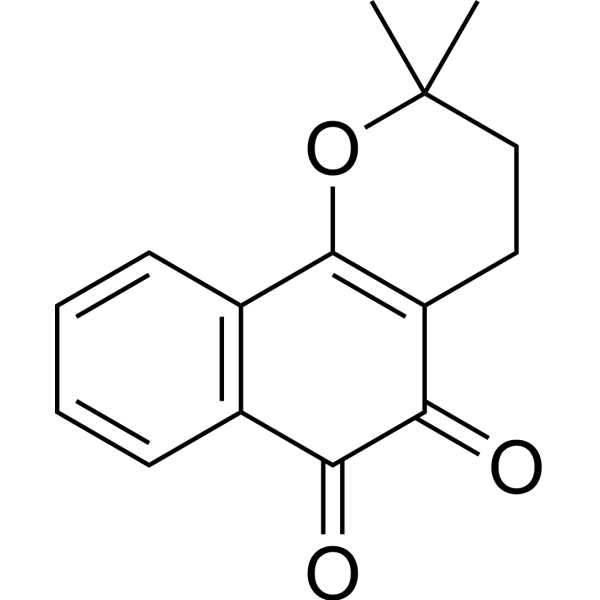
    β-Lapachone (ARQ-501;NSC-26326) is a naturally occurring O-naphthoquinone, acts as a topoisomerase I inhibitor, and induces apoptosis by inhibiting cell cycle progression.
    β-Lapachone
  • HY-177434

    Precem-TcT; M 9140

    Antibody-Drug Conjugates (ADCs) Transmembrane Glycoprotein Topoisomerase Cancer
    Precemtabart tocentecan (Precem-TcT; M 9140) is an anti-CEACAM5 (carcinoembryonic antigen-related cell adhesion molecule 5) antibody-drug conjugate (ADC). Precemtabart tocentecan consists of a tumor-specific anti-CEACAM5 monoclonal antibody Precemtabart (HY-P990940), a highly hydrophilic and stable cleavable β-glucuronide linker, and a topoisomerase 1 inhibitor payload Exatecan (HY-13631), and the drug-linker conjugate for ADC is Mal-Gly-PAB-Exatecan-D-glucuronic acid (HY-153179). Precemtabart tocentecan inhibits the growth of CEACAM5-positive cancer cells. Precemtabart tocentecan exhibits significant antitumor activity in CEACAM5-expressing xenograft models. Precemtabart tocentecan can be used for the study of CEACAM5-expressing advanced solid tumors, especially mCRC .
    Precemtabart tocentecan
  • HY-160788

    Drug-Linker Conjugates for ADC Topoisomerase Cancer
    DBCO-β-Glu-PEG12-Exatecan (Compound 107) is an inhibitor for topoisomerase I. DBCO-β-Glu-PEG12-Exatecan can be used as a Drug-Linker Conjugate for ADC molecule .
    DBCO-β-Glu-PEG12-Exatecan
  • HY-173639

    Antibody-Drug Conjugates (ADCs) Topoisomerase Apoptosis Cancer
    AZD0516 is a first-in-class antibody-drug conjugate (ADC) targeting six-transmembrane epithelial antigen of the prostate-2 (STEAP2). The anti-STEAP2 monoclonal antibody (mAb) is conjugated via interchain cysteines to a maleimide-reactive, β-glucuronidase-cleavable linker (HY-173635) bearing the topoisomerase 1 inhibitor, Exatecan (HY-13631). AZD0516 can be used for the study of prostate cancer .
    AZD0516
  • HY-173634

    Drug-Linker Conjugates for ADC Topoisomerase Cancer
    Mal((3S,3aR,6S,6aR)-Hexahydrofuro[3,2-b]furan-3,6-diamine-PEG12)-β-Glu-PAB-Exatecan (LP1) is a drug-linker conjugate composed of a potent a DNA Topoisomerase I inhibitor Exatecan (HY-13631) and a linker Mal((3S,3aR,6S,6aR)-Hexahydrofuro[3,2-b]furan-3,6-diamine-PEG12)-β-Glu-PAB (HY-173635) to make antibody agent conjugate (ADC), AZD0516 (HY-173639) .
    Mal((3S,3aR,6S,6aR)-Hexahydrofuro[3,2-b]furan-3,6-diamine-PEG12)-β-Glu-PAB-Exatecan
  • HY-N1457
    Chrysosplenetin
    3 Publications Verification

    P-glycoprotein Topoisomerase Apoptosis DNA/RNA Synthesis Wnt β-catenin Parasite Infection Metabolic Disease Cancer
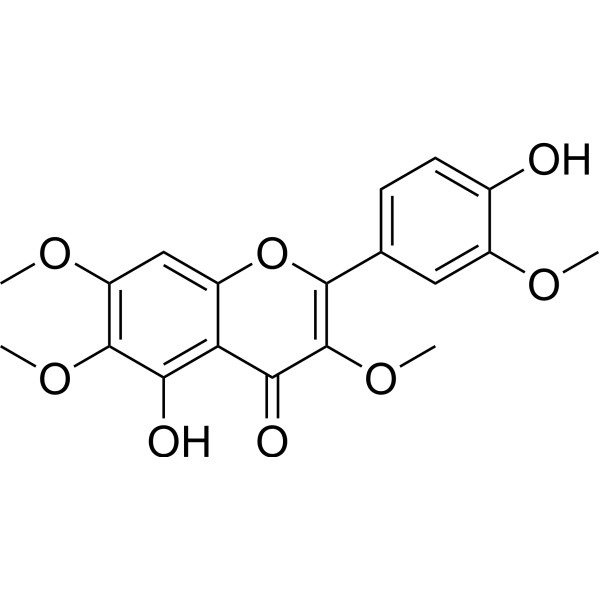
    Chrysosplenetin is an orally active polymethoxyflavone. Chrysosplenetin exerts anticancer effects by inhibiting topoisomerase, protecting DNA and inducing apoptosis. Chrysosplenetin acts as an antimalarial sensitizer, reverses Artemisinin (HY-B0094) resistance by inhibiting and downregulating P-glycoprotein, and enhances the efficacy of Artemisinin. Chrysosplenetin promotes bone formation by activating the Wnt/β-catenin pathway and exerts anti-osteoporotic effects .
    Chrysosplenetin
  • HY-158109

    Antibody-Drug Conjugates (ADCs) CD2 Topoisomerase Cancer
    M3554 is an anti-GD2 antibody-drug conjugate (ADC) based on the humanized anti-GD2 antibody. M3554 consists of the humanized monoclonal antibody hu14.18 (K322A) (HY-P991040) linked to a topoisomerase 1 inhibitor Exatecan (HY-13631) via a cleavable β-glucuronide linker. M3554 can be used for the study of neuroblastoma, osteosarcoma or glioma .
    M3554
  • HY-122594

    Topoisomerase Cancer
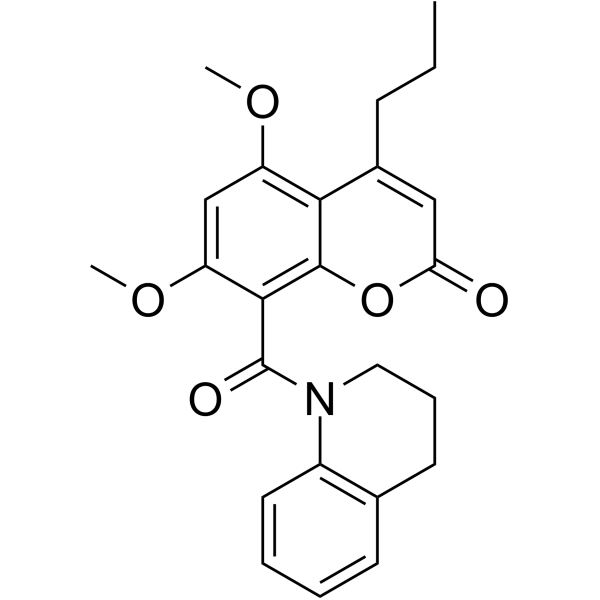
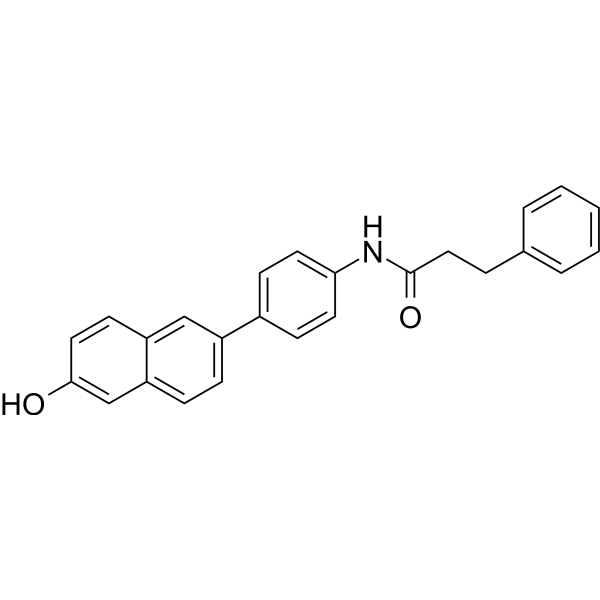
    BNS-22 is a DNA topoisomerase II (TOP2) catalytic inhibitor with the IC50 values of 2.8 μM and 0.42 μM for human TOP2α and TOP2β, respectively. BNS-22 induces abnormal division and has anti-proliferative activity .
    BNS-22
  • HY-106662

    Chloroquinoxaline; NSC-339004

    Molecular Glues Topoisomerase Parasite Infection Cancer
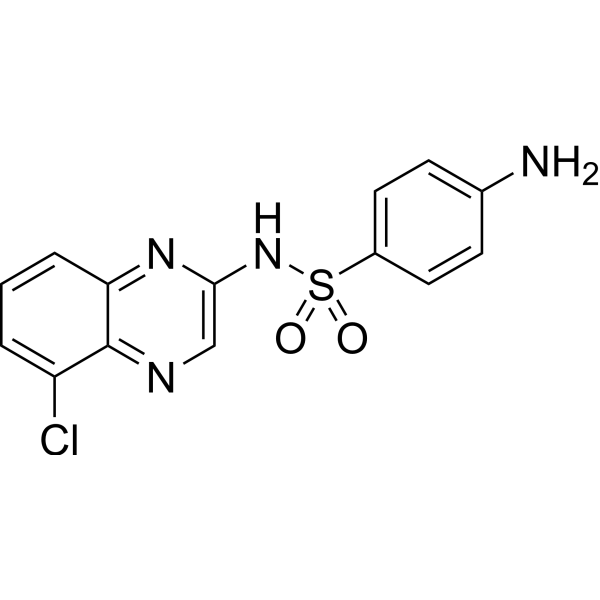
    Chloroquinoxaline sulfonamide (Chloroquinoxaline), a structural analogue of sulfaquinoxaline, is a topoisomerase II alpha/beta poison. Chloroquinoxaline sulfonamide is used to control coccidiosis in poultry, rabbit, sheep, and cattle . Antitumor activity .
    Chloroquinoxaline sulfonamide
  • HY-137466

    Topoisomerase Cancer
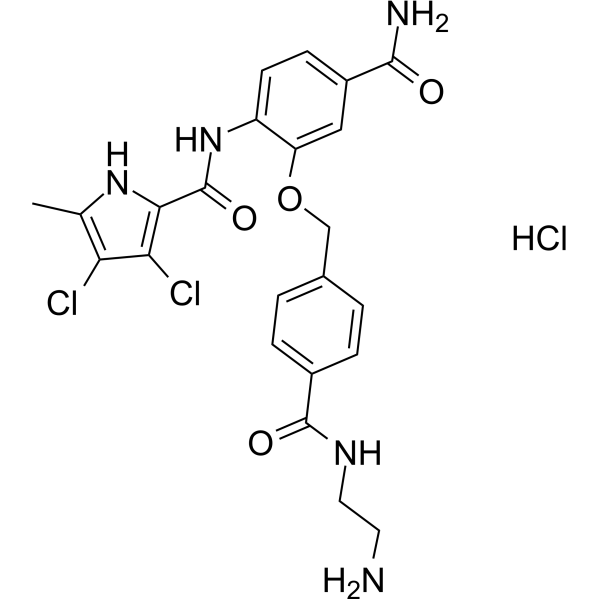
    ARN-21934 is a potent, highly selective, blood-brain barrier (BBB) penetrant inhibitor for human topoisomerase II α over β. ARN-21934 inhibits DNA relaxation with an IC50 of 2 μM as compared to the anticancer agent Etoposide (IC50=120 μM). ARN-21934 exhibits a favorable in vivo pharmacokinetic profile and is a promising lead compound for anticancer research .
    ARN-21934
  • HY-173703

    Topoisomerase Drug Intermediate Cancer
    β-Glu-PAB(CH2NH2)-Exatecan (Compound 9a) is a topoisomerase I inhibitor. β-Glu-PAB(CH2NH2)-Exatecan binds to the topoisomerase I-DNA complex to prevent DNA strand reconnection, thereby inducing DNA breakage and cell apoptosis. β-Glu-PAB(CH2NH2)-Exatecan can be specifically cleaved by β-glucuronidase highly expressed in the tumor microenvironment to release Exatecan for cytotoxic effect. β-Glu-PAB(CH2NH2)-Exatecan is also an intermediate of Mal((3S,3aR,6S,6aR) -hexahydrofuro [3, 2-B]furan-3,6-diamine-PEG12)-β -Glu-Pab-Exatecan. β-Glu-PAB(CH2NH2)-Exatecan is promising for research of cancers .
    β-Glu-PAB(CH2NH2)-Exatecan
  • HY-164429

    Integrin Elastase Cancer
    VIP236 is a small-molecule drug conjugate targeting αvβ3 integrin. VIP236 achieves tumor homing via specific binding to αvβ3 integrin and delivers its payload to the tumor microenvironment. The linker of VIP236 is cleavable by neutrophil elastase, which is highly expressed in the tumor microenvironment, to release the payload 7-ethylcamptothecin. This payload induces DNA damage by inhibiting topoisomerase 1, thereby exerting anti-tumor effects. VIP236 exhibits excellent plasma stability and tumor targeting property, with a tumor/plasma payload ratio 10-fold higher than that of the single administration. It effectively induces tumor regression, reduces metastasis formation, and shows good tolerance in mouse models. VIP236 has been used in studies related to non-small cell lung cancer, clear cell renal cell carcinoma, colon cancer, triple-negative breast cancer, small cell lung cancer, and metastatic solid tumors .
    VIP236
  • HY-151453

    Topoisomerase Apoptosis Cancer
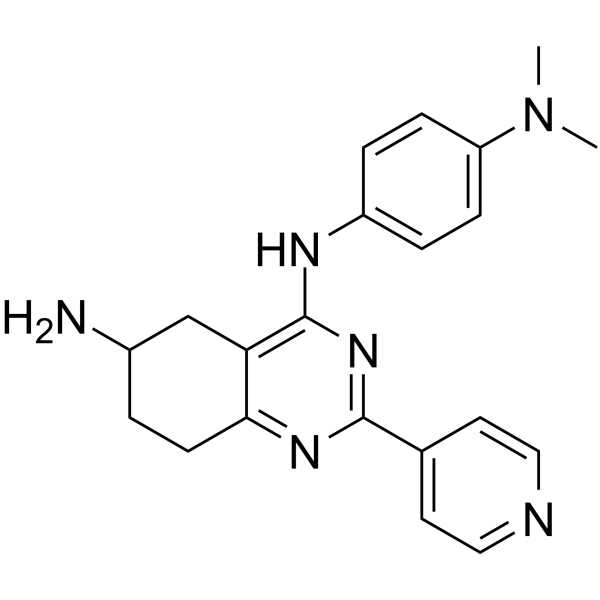
    Topoisomerase IIα-IN-4 (F2) is a non-intercalative ATP-competitive human DNA topoisomerase II inhibitor with an IC50 value of 3.8 and 10.1 μM for TopoIIα and TopoIIβ, respectively. Topoisomerase IIα-IN-4 shows potent potency in apoptosis induction and cell cycle arrest in HepG2 cells. Topoisomerase IIα-IN-4 exhibits strong antitumor activities against human cancer cell lines, it can be used for the research of cancer .
    Topoisomerase IIα-IN-4
  • HY-123393

    Topoisomerase Others
    PNU-142586 is the major metabolite of Linezolid (HY-10394). PNU-142586 can inhibit the activity of DNA topoisomerase 2-α (TOP2A) and DNA topoisomerase 2-β (TOP2B). PNU-142586 interferes with DNA replication and transcription by blocking the binding of DNA to TOP2 and inhibiting ATP hydrolysis, ultimately leading to antiproliferative and cytotoxic effects, including mitochondrial dysfunction. PNU-142586 can be used to study Linezolid-induced hematotoxicity and its molecular mechanism .
    PNU-142586
  • HY-143279

    Topoisomerase Apoptosis Cancer
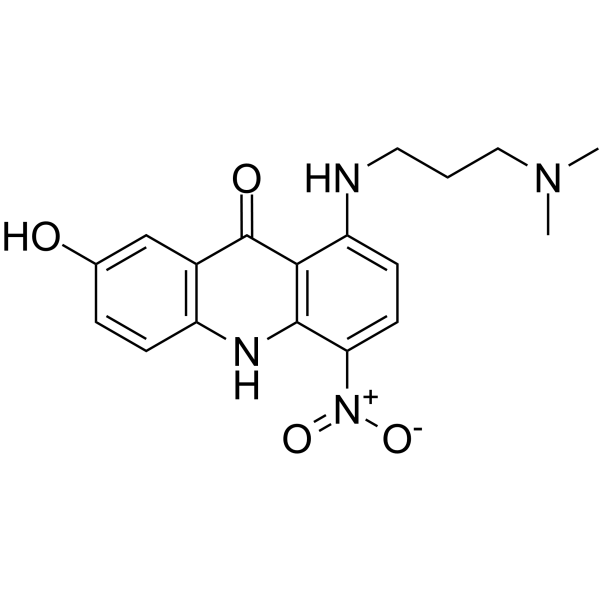
    Topoisomerase II inhibitor 3 (Compound 6 h ) is a acridone derivatives, as well as a Type II DNA topoisomerase (topo II) inhibitor , as a topo IIα/β inhibitor with the value of IC50 is 0.17 μM for topo IIα and the value of IC50 is 0.23 μM for topo IIβ subtypes, caused obvious DNA damage, and induced apoptosis by triggering the loss of mitochondrial membrane potential .
    Topoisomerase II inhibitor 3
  • HY-117543

    AMP-53; 6-Ethoxyazonafide

    Topoisomerase Cancer
    Ethonafide (AMP-53) is an anthracene-containing derivative of Amonafide that belongs to the Azonafide series of anticancer agents. Ethonafide (AMP-53) inhibits topoisomerase II activity by stabilizing the enzyme-DNA complex, involving both topoisomerase IIα and β .
    Ethonafide
  • HY-152473

    Topoisomerase Cancer
    Topoisomerase IIα-IN-6 (Compound 47d) is an inhibitor of DNA topoisomerase IIα/β. Topoisomerase IIα-IN-6 inhibits human topoisomerase IIα and human topoisomerase IIβ with IC50 values of 0.67 µM and 0.55 µM, respectively. Topoisomerase IIα-IN-6 has stable metabolism .
    Topoisomerase IIα-IN-6
  • HY-13555R

    ARQ-501 (Standard); NSC-26326 (Standard)

    Indoleamine 2,3-Dioxygenase (IDO) Topoisomerase Autophagy Apoptosis Reference Standards Cancer
    β-Lapachone (Standard) is the analytical standard of β-Lapachone. This product is intended for research and analytical applications. β-Lapachone (ARQ-501;NSC-26326) is a naturally occurring O-naphthoquinone, acts as a topoisomerase I inhibitor, and induces apoptosis by inhibiting cell cycle progression.
    β-Lapachone (Standard)
  • HY-106662R

    Molecular Glues Topoisomerase Parasite Infection Cancer
    Chloroquinoxaline sulfonamide (Standard) is the analytical standard of Chloroquinoxaline sulfonamide. This product is intended for research and analytical applications. Chloroquinoxaline sulfonamide (Chloroquinoxaline), a structural analogue of sulfaquinoxaline, is a topoisomerase II alpha/beta poison. Chloroquinoxaline sulfonamide is used to control coccidiosis in poultry, rabbit, sheep, and cattle . Antitumor activity .
    Chloroquinoxaline sulfonamide (Standard)
  • HY-176762

    Topoisomerase Infection Cancer
    TOP3B-IN-1 (NSC-260610) is a Topoisomerase IIIβ (TOP3B) inhibitor. TOP3B-IN-1 fails to induce the formation of TOP3B cleavage complexes (TOP3Bccs) with both DNA and RNA, and destabilizes TOP3Bccs. TOP3B-IN-1 can be used as a control compound for the development of inhibitors targeting TOP3B .
    TOP3B-IN-1
  • HY-146138

    EGFR VEGFR Casein Kinase Topoisomerase Microtubule/Tubulin Apoptosis Cancer
    EGFR-IN-57 (Compound 25a) is a potent, orally active EGFR-TK inhibitor with an IC50 of 0.054 µM. EGFR-IN-57 also inhibits VEGFR-2, CK2α, topoisomerase IIβ and tubulin polymerization with IC50 values of 0.087, 0.171, 0.13 and 3.61 µM, respectively. EGFR-IN-57 induces cell cycle arrest at G2/M and pre-G1 phases. EGFR-IN-57 induces cancer cell apoptosis .
    EGFR-IN-57
  • HY-178029

    Ribosomal S6 Kinase (RSK) Topoisomerase Apoptosis Autophagy Reactive Oxygen Species (ROS) Cancer
    RSK2/TOP2-IN-1 is a RSK2/TOP2 dual inhibitor. RSK2/TOP2-IN-1 targets key tumor progression enzymes including ribosomal S6 kinase 2 and topoisomerases IIα/IIβ. RSK2/TOP2-IN-1 shows selectivity index > 2 against all squamous cell carcinoma (SCC) cell lines. RSK2/TOP2-IN-1 can induce cell apoptosis, autophagy and ROS production. RSK2/TOP2-IN-1 can be used for the research of cancer, such as squamous cell carcinoma .
    RSK2/TOP2-IN-1
  • HY-E70900

    Topoisomerase Metabolic Disease
    Topoisomerase II β, Human (EC 5.99.1.3) is a nuclear enzyme that play essential roles in DNA replication, transcription, chromosome segregation, and recombination. All cells have two major forms of topoisomerases: type I, which makes single-stranded cuts in DNA, and type II enzymes, which cut and pass double-stranded DNA.
    Topoisomerase II β, Human
  • HY-W654323

    Topoisomerase Drug Metabolite Others
    PNU-142586 sodiu) is the major metabolite of Linezolid (HY-10394). PNU-142586 can inhibit the activity of DNA topoisomerase 2-α (TOP2A) and DNA topoisomerase 2-β (TOP2B). PNU-142586 interferes with DNA replication and transcription by blocking the binding of DNA to TOP2 and inhibiting ATP hydrolysis, ultimately leading to antiproliferative and cytotoxic effects, including mitochondrial dysfunction. PNU-142586 can be used to study Linezolid-induced hematotoxicity and its molecular mechanism .
    PNU-142586 sodium
  • HY-164380

    Drug-Linker Conjugates for ADC Topoisomerase Cancer
    MC-Val-Cit-Gly-exatecan-β-D-glucopyranosiduronic acid (example 13) is a drug-linker conjugate that consists of a DNA topoisomerase I inhibitor Exatecan (HY-13631) and a linker (HY-180841). MC-Val-Cit-Gly-exatecan-β-D-glucopyranosiduronic acid can be used in synthesis of ADC .
    MC-Val-Cit-Gly-exatecan-β-D-glucopyranosiduronic acid
  • HY-N18220

    Others Others
    Naringenin-7-O-(3″,6″-di-O-p-E-coumaroyl)-β-glucopyranoside (Compound 7) is a flavonoid found in Cnidoscolus texanus. Naringenin-7-O-(3″,6″-di-O-p-E-coumaroyl)-β-glucopyranoside does not functionally modulate DNA topoisomerase I activity .
    Naringenin-7-O-(3″,6″-di-O-p-E-coumaroyl)-β-glucopyranoside
  • HY-181836

    IKK Topoisomerase Apoptosis NF-κB Reactive Oxygen Species (ROS) Bcl-2 Family Cancer
    IKKβ-IN-6 is an antitumor agent. IKKβ-IN-6 inhibits IKKβ (IC50: 18.24 μM), thereby suppressing the phosphorylation of p65 and IκBα, blocking the nuclear translocation of p65, and subsequently regulating genes controlled by NF-κB. IKKβ-IN-6 also targets topoisomerase I (Topo I), induces DNA damage, ROS accumulation, loss of mitochondrial membrane potential, and S-phase arrest. IKKβ-IN-6 is applicable to related research on colorectal cancer .
    IKKβ-IN-6
  • HY-109113

    GPX-150

    Topoisomerase Cancer
    Camsirubicin (GPX-150) is a non-cardiotoxic Doxorubicin (HY-15142) analog that selectively targets topoisomerase IIβ. Camsirubicin reduces cell viability and clone formation of MDA-MB-468 breast cancer cells. Camsirubicin increases the exposure of CALR and HSP90 on the cell surface. Camsirubicin can be used for the study of breast cancer .
    Camsirubicin
  • HY-183091

    Fungal Infection
    Antifungal agent 159 is an antifungal agent with broad-spectrum activity against phytopathogenic fungi. Antifungal agent 159 binds tightly to the active sites of exo-β-(1,3)-glucanase, topoisomerase II-DNA-nucleotide, dihydrofolate reductase, sterol 14-α demethylase and chitin synthase. Antifungal agent 159 can be used in studies related to phytopathogenic fungal infections .
    Antifungal agent 159
  • HY-B0356G

    Bay-09867

    Bacterial Topoisomerase Akt β-catenin Inflammation/Immunology
    Ciprofloxacin GMP is Ciprofloxacin (HY-B0356) produced by using GMP guidelines. GMP small molecules works appropriately as an auxiliary reagent for cell therapy manufacture. Ciprofloxacin (Bay-09867) is an orally active, blood-brain barrier permeable fluoroquinolone antibacterial agent. Ciprofloxacin exerts bactericidal effects primarily by inhibiting topoisomerase II and IV. Ciprofloxacin inhibits the proliferation of human dental pulp stem cells and chondrocytes from young rats, and also activates the Akt signaling pathway and upregulates markers such as β-catenin and Nanog to maintain the morphological characteristics of stem cells. Ciprofloxacin induces significant neurotoxicity and tissue damage, including reducing serotonin and glutathione levels in the brain, inducing oxidative stress and depression-like behaviors, and causing articular cartilage damage. Ciprofloxacin can be applied to research related to infections of necrotic young permanent teeth and neurotoxicity .
    Ciprofloxacin

Inquiry Online

Your information is safe with us. * Required Fields.

Salutation


Country or Region *

Applicant Name *


Organization Name *

Department *


Email Address *


Product Name *

Cat. No.


Requested quantity *

Phone Number *


Remarks

Inquiry Online

Inquiry Information

Product Name:
Cat. No.:
Quantity:
MCE Japan Authorized Agent: