Search Result
Results for "
triazole inhibitor
" in MedChemExpress (MCE) Product Catalog:
2
Biochemical Assay Reagents
11
Isotope-Labeled Compounds
| Cat. No. |
Product Name |
Target |
Research Areas |
Chemical Structure |
-
- HY-B0101
-
|
UK-49858
|
Environmental Pollutants
Antibiotic
Fungal
Bacterial
|
Infection
Cancer
|
|
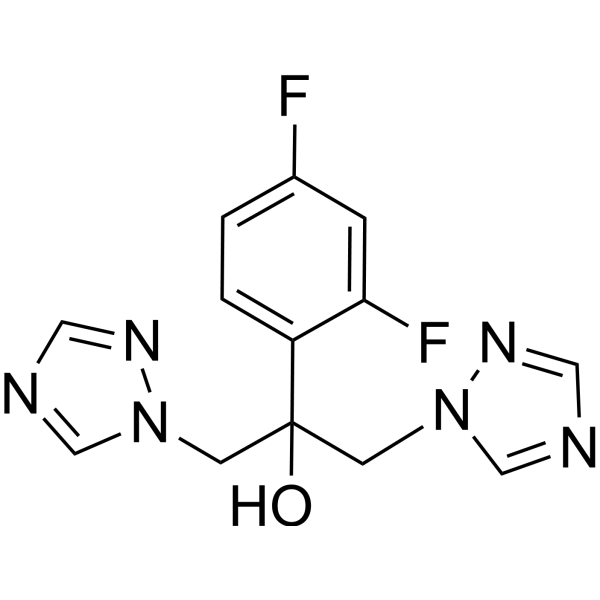
Fluconazole (UK-49858) is a triazole antifungal agent with excellent activities against a broad range of fungi, especially against Candida albicans. Fluconazole inhibits C. albicans and Candida kefyr with IC99s range from 0.20 μg/mL to 0.39 μg/mL .
|
-
-
- HY-17514
-
|
R51211
|
Fungal
Hedgehog
Cytochrome P450
Autophagy
Antibiotic
Bacterial
|
Infection
Cancer
|
|
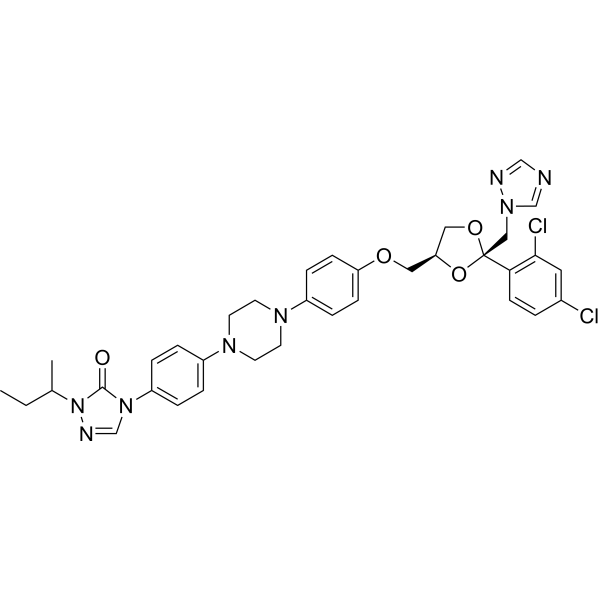
Itraconazole (R51211) is a triazole antifungal agent and a potent and orally active Hedgehog (Hh) signaling pathway antagonist with an IC50 of ~800 nM. Itraconazole potently inhibits lanosterol 14α-demethylase (cytochrome P450 enzyme), thereby inhibits the oxidative conversion of lanosterol to ergosterol. Itraconazole has anticancer and antiangiogenic effects. Itraconazole is a oxysterol-binding protein (OSBP) inhibitor .
|
-
-
- HY-76200
-
|
UK-109496
|
Fungal
Bacterial
|
Infection
Neurological Disease
Cancer
|
|
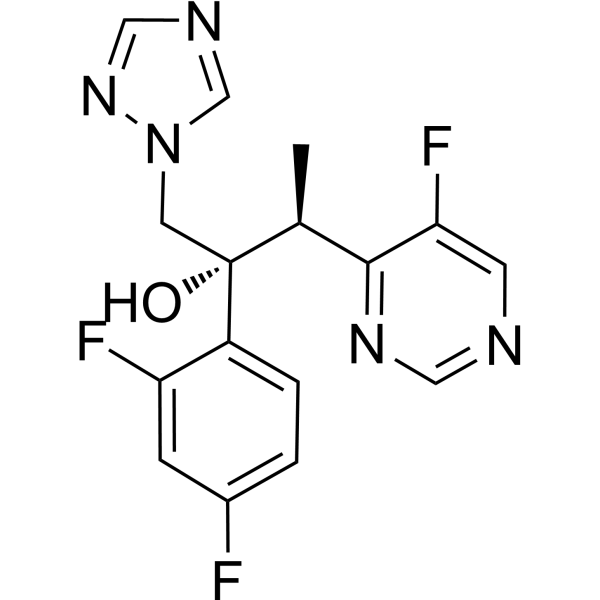
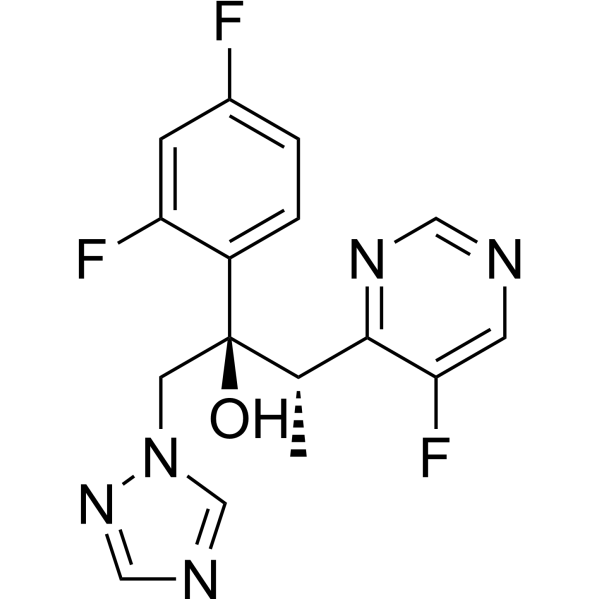
Voriconazole (UK-109496) is a second-generation, broad-spectrum triazole antifungal agent that inhibits fungal ergosterol biosynthesis. Voriconazole exerts its antifungal activity by inhibition of 14-α-lanosterol demethylation, which is mediated by fungal cytochrome P450 enzymes. Voriconazole can penetrate the blood brain barrier (BBB) .
|
-
-
- HY-14273
-
|
BAL-4815; RO-0094815
|
Fungal
Cytochrome P450
Antibiotic
|
Infection
Cancer
|
|
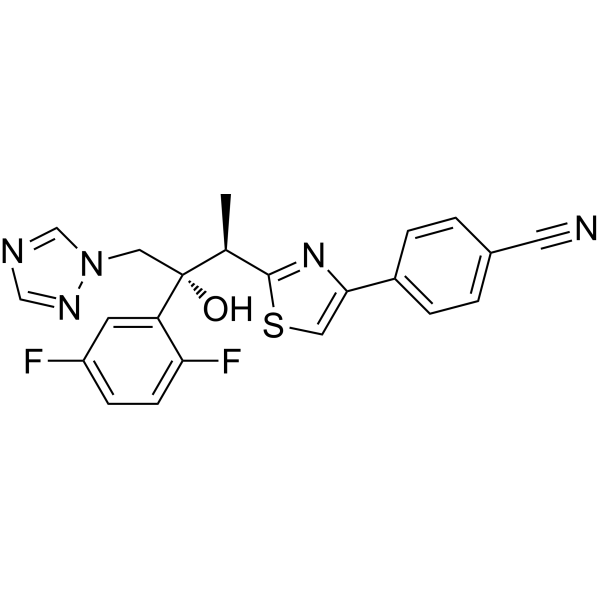
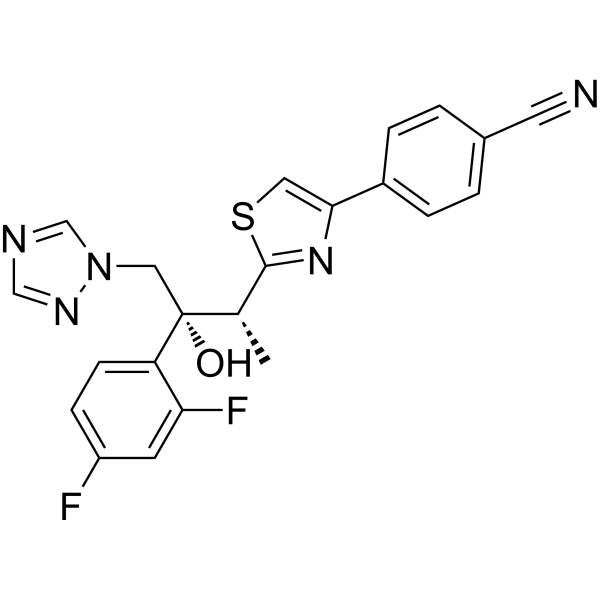
Isavuconazole (BAL-4815) is a triazole proagent with antifungal activity against yeasts, molds, and dimorphic fungi. Isavuconazole inhibits ergosterol biosynthesis and results in the disruption of fungal membrane structure and function. Isavuconazole is a moderate inhibitor of CYP3A4.
|
-
-
- HY-121161A
-
|
|
Cytochrome P450
|
Others
|
|
Brassinazole is a selective triazole-type brassinosteroid (BR) biosynthesis inhibitor. Brassinazole is used for regulating plant growth and development .
|
-
-
- HY-B0853
-
|
|
Environmental Pollutants
Fungal
|
Infection
|
|
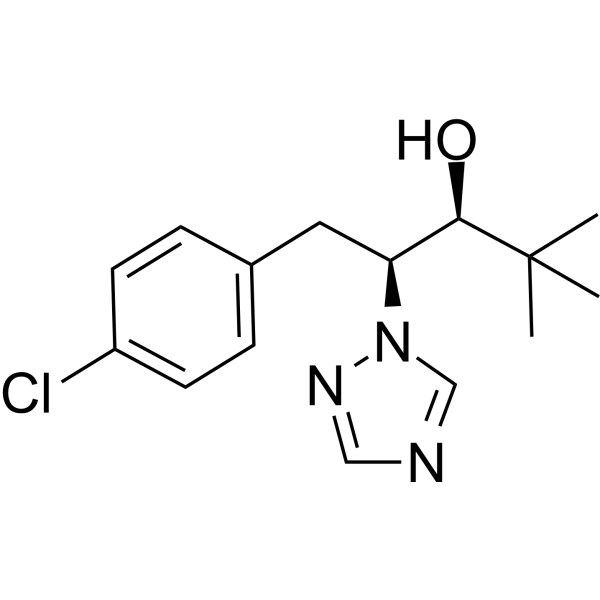
Paclobutrazol is a triazole-containing plant growth retardant that is known to inhibit the biosynthesis of gibberellins. Paclobutrazol also has antifungal activities. Paclobutrazol, transported acropetally in plants, can also suppress the synthesis of abscisic acid and induce chilling tolerance in plants. Paclobutrazol is typically used to support research on the role of gibberellins in plant biology .
|
-
-
- HY-14272
-
|
BMS-207147; ER-30346
|
Fungal
|
Infection
Cancer
|
|
Ravuconazole (BMS-207147;ER-30346) is an orally available triazole antifungle agent that potently inhibits a wide range of fungi.
|
-
-
- HY-W027592
-
|
|
Environmental Pollutants
MOFs
|
Others
|
|
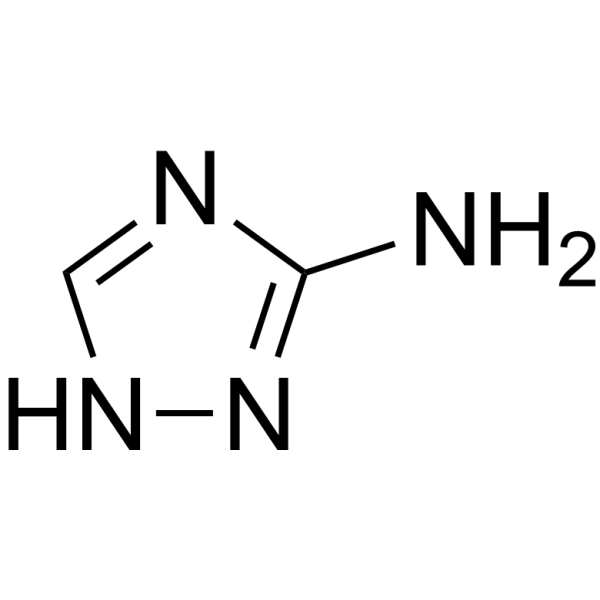
1H-1,2,4-Triazol-3-amine consists of a triazole ring system and an amino group attached to carbon atom 3. The compound has potential applications in various fields such as medicinal chemistry, agrochemicals and material science. In medicinal chemistry, 1H-1,2,4-Triazol-3-amine is used as a starting material for the synthesis of pharmaceutical compounds such as antifungal agents, anticancer agents, and enzyme inhibitors associated with cardiovascular disease. In agrochemicals, it can be used as a raw material for the synthesis of herbicides, fungicides and insecticides. Furthermore, 1H-1,2,4-Triazol-3-amine is used as a ligand in coordination chemistry and as a precursor for the production of new functional materials such as polymers and metal-organic frameworks.
|
-
-
- HY-135761
-
-
-
- HY-136403
-
|
|
Phytohormone
|
Others
|
|
TIS108 is a triazole-type strigolactone biosynthesis inhibitor. TIS108 inhibits Arabidopsis embryogenesis and root hair growth, and promotes shoot branching. TIS108 can also increase the gibberellin content in Gastrodia elata. TIS108 can be used in the research of plant growth and development as well as plant responses to the environment .
|
-
-
- HY-117766
-
|
PC945
|
Fungal
Cytochrome P450
|
Infection
|
|
Opelconazole (PC945), a potent, long-acting antifungal triazole, possesses activity against a broad range of both azole-susceptible and azole-resistant strains of Aspergillus fumigatus. Opelconazole is also a potent, tightly binding inhibitor of A. fumigatus sterol 14α-demethylase activity, CYP51A and CYP51B, with IC50s of 0.23 μM and 0.22 μM, respectively .
|
-
-
- HY-128147
-
|
|
MetAP
|
Metabolic Disease
Cancer
|
|
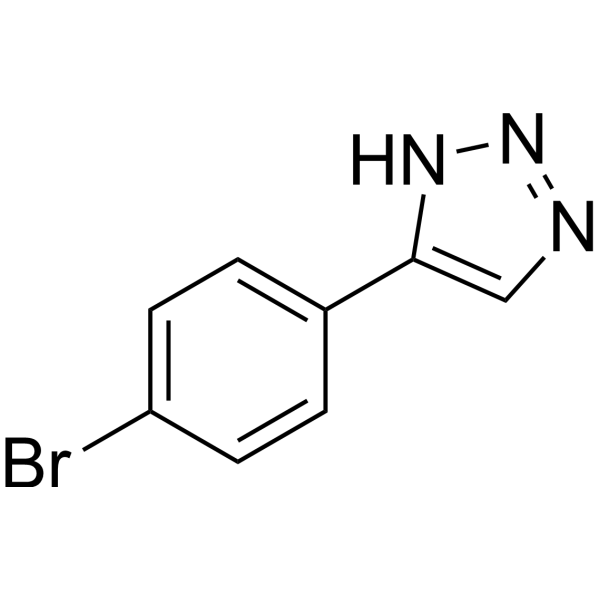
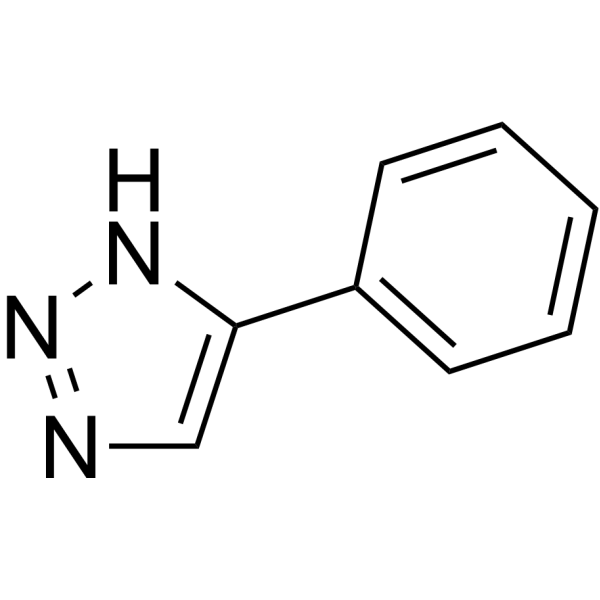
MetAP-2-IN-6 (4-(4-bromophenyl)-1H-1,2,3-triazole) is a MetAP2 inhibitor. MetAP-2-IN-6 can be used for research in conditions mediated by angiogenesis .
|
-
-
- HY-17514S
-
|
R51211-d5
|
Fungal
Hedgehog
Cytochrome P450
Autophagy
Antibiotic
|
Infection
Cancer
|
|
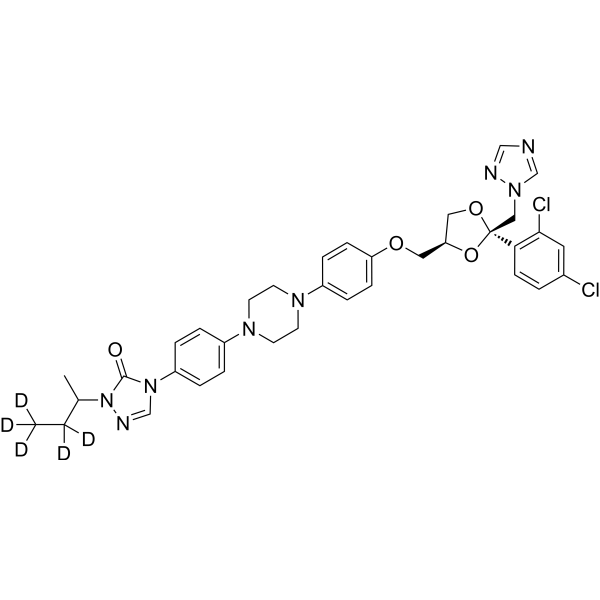
Itraconazole-d5 is the deuterium labeled Itraconazole. Itraconazole (R51211) is a triazole antifungal agent and a potent and orally active Hedgehog (Hh) signaling pathway antagonist with an IC50 of ~800 nM. Itraconazole potently inhibits lanosterol 14α-demethylase (cytochrome P450 enzyme), thereby inhibits the oxidative conversion of lanosterol to ergosterol. Itraconazole has anticancer and antiangiogenic effects .
|
-
-
- HY-76200S
-
|
UK-109496-d3
|
Fungal
|
Infection
|
|
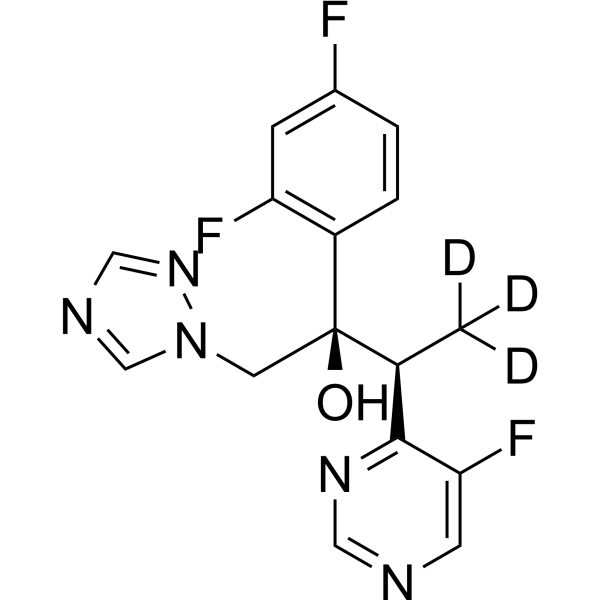
Voriconazole-d3 is the deuterium labeled Voriconazole. Voriconazole (UK-109496) is a second-generation, broad-spectrum triazole antifungal agent that inhibits fungal ergosterol biosynthesis. Voriconazole exerts its antifungal activity by inhibition of 14-α-lanosterol demethylation, which is mediated by fungal cytochrome P450 enzymes .
|
-
-
- HY-B0101S
-
|
UK-49858-d4
|
Isotope-Labeled Compounds
Fungal
Antibiotic
|
Infection
|
|
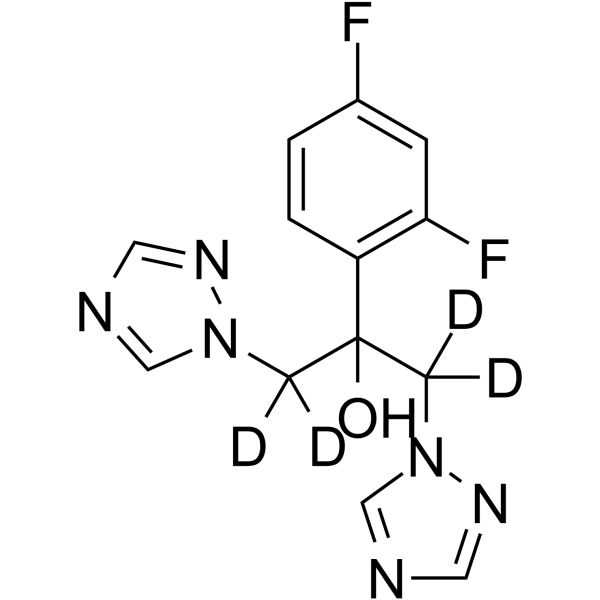
Fluconazole-d4 is the deuterium labeled Fluconazole. Fluconazole (UK-49858) is a triazole antifungal agent with excellent activities against a broad range of fungi, especially against Candida albicans. Fluconazole inhibits C. albicans and Candida kefyr with IC99s range from 0.20 μg/mL to 0.39 μg/mL .
|
-
-
- HY-17514S1
-
|
R51211-d3
|
Antibiotic
Autophagy
Bacterial
Cytochrome P450
Fungal
Hedgehog
|
Infection
Cancer
|
|
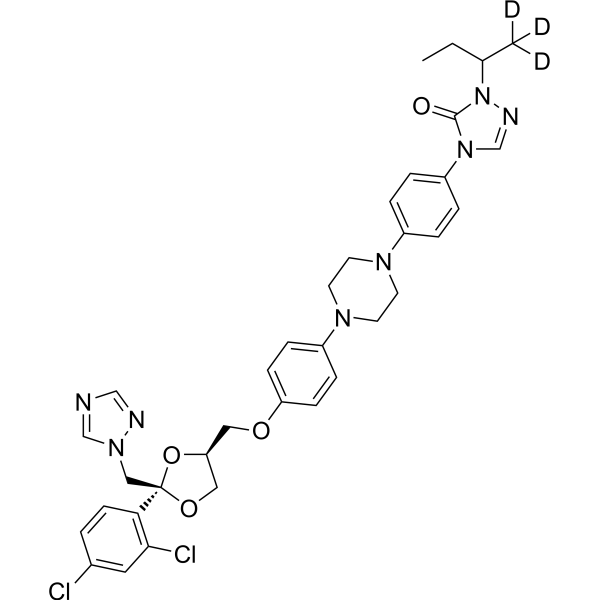
Itraconazole-d3 (R51211-d3) is the deuterium labeled Itraconazole (HY-17514) . Itraconazole (R51211) is a triazole antifungal agent and a potent and orally active Hedgehog (Hh) signaling pathway antagonist with an IC50 of ~800 nM. Itraconazole potently inhibits lanosterol 14α-demethylase (cytochrome P450 enzyme), thereby inhibits the oxidative conversion of lanosterol to ergosterol. Itraconazole has anticancer and antiangiogenic effects. Itraconazole is a oxysterol-binding protein (OSBP) inhibitor.
|
-
-
- HY-W113615
-
-
-
- HY-14273R
-
|
BAL-4815 (Standard); RO-0094815 (Standard)
|
Reference Standards
Fungal
Cytochrome P450
Antibiotic
|
Infection
|
|
Isavuconazole (Standard) is the analytical standard of Isavuconazole. This product is intended for research and analytical applications. Isavuconazole (BAL-4815) is a triazole proagent with antifungal activity against yeasts, molds, and dimorphic fungi. Isavuconazole inhibits ergosterol biosynthesis and results in the disruption of fungal membrane structure and function. Isavuconazole is a moderate inhibitor of CYP3A4.
|
-
-
- HY-76200R
-
|
UK-109496 (Standard)
|
Reference Standards
Fungal
Bacterial
|
Infection
Cancer
|
|
Voriconazole (Standard) is the analytical standard of Voriconazole. This product is intended for research and analytical applications. Voriconazole (UK-109496) is a second-generation, broad-spectrum triazole antifungal agent that inhibits fungal ergosterol biosynthesis. Voriconazole exerts its antifungal activity by inhibition of 14-α-lanosterol demethylation, which is mediated by fungal cytochrome P450 enzymes .
|
-
-
- HY-B0101R
-
|
UK-49858 (Standard)
|
Reference Standards
Fungal
Antibiotic
Bacterial
|
Infection
Cancer
|
|
Fluconazole (Standard) is the analytical standard of Fluconazole. This product is intended for research and analytical applications. Fluconazole (UK-49858) is a triazole antifungal agent with excellent activities against a broad range of fungi, especially against Candida albicans. Fluconazole inhibits C. albicans and Candida kefyr with IC99s range from 0.20 μg/mL to 0.39 μg/mL .
|
-
-
- HY-17514R
-
|
R51211 (Standard)
|
Reference Standards
Fungal
Hedgehog
Cytochrome P450
Autophagy
Antibiotic
Bacterial
|
Infection
Cancer
|
|
Itraconazole (Standard) is the analytical standard of Itraconazole. This product is intended for research and analytical applications. Itraconazole (R51211) is a triazole antifungal agent and a potent and orally active Hedgehog (Hh) signaling pathway antagonist with an IC50 of ~800 nM. Itraconazole potently inhibits lanosterol 14α-demethylase (cytochrome P450 enzyme), thereby inhibits the oxidative conversion of lanosterol to ergosterol. Itraconazole has anticancer and antiangiogenic effects. Itraconazole is a oxysterol-binding protein (OSBP) inhibitor .
|
-
-
- HY-121161
-
|
|
Cytochrome P450
|
Metabolic Disease
|
|
(Rac)-Brassinazole, triazole-type compound, is a brassinosteroid (BR) biosynthesis inhibitor. (Rac)-Brassinazole increases inhibition of CYP90B in BR biosynthesis
|
-
-
- HY-138665
-
|
|
Prostaglandin Receptor
|
Endocrinology
|
|
HHS-0701, a sulfur-triazole exchange (SuTEx) ligand, is a potent tyrosine-reactive prostaglandin reductase 2 (PTGR2) inhibitor. HHS-0701 blocks PTGR2 metabolism of the lipid substrate 15-Keto-PGE2 .
|
-
-
- HY-B0853R
-
|
|
Reference Standards
Fungal
|
Infection
|
|
Paclobutrazol (Standard) is the analytical standard of Paclobutrazol. This product is intended for research and analytical applications. Paclobutrazol is a triazole-containing plant growth retardant that is known to inhibit the biosynthesis of gibberellins. Paclobutrazol also has antifungal activities. Paclobutrazol, transported acropetally in plants, can also suppress the synthesis of abscisic acid and induce chilling tolerance in plants. Paclobutrazol is typically used to support research on the role of gibberellins in plant biology .
|
-
-
- HY-W749242
-
|
|
Fungal
|
Infection
|
|
Paclobutrazol-d4 is the deuterium labeled Paclobutrazol. Paclobutrazol is a triazole-containing plant growth retardant that is known to inhibit the biosynthesis of gibberellins .
|
-
-
- HY-135761R
-
|
|
Reference Standards
Fungal
Cholinesterase (ChE)
|
Infection
Neurological Disease
|
|
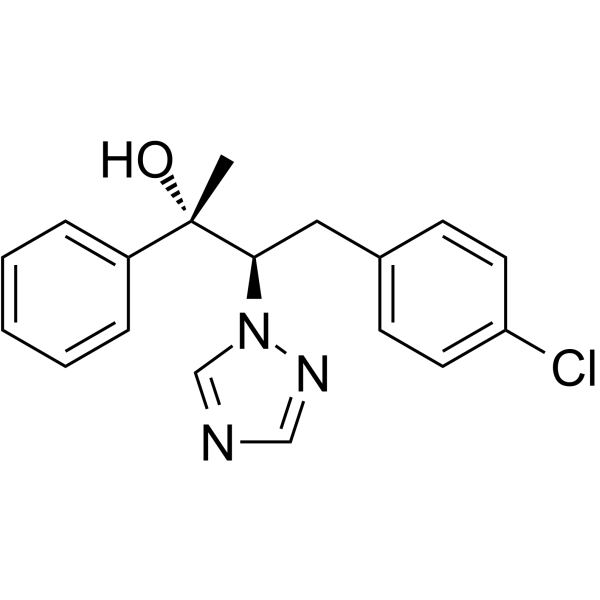
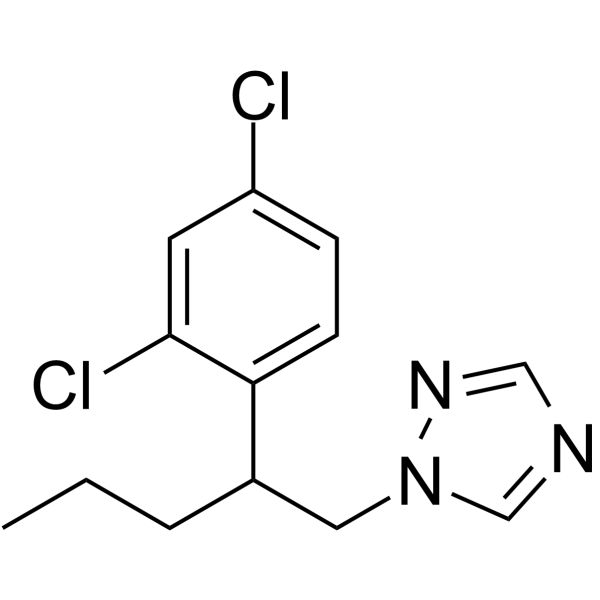
Penconazole (Standard) is the analytical standard of Penconazole. This product is intended for research and analytical applications. Penconazole is a typical triazole fungicide, and mainly applied on apples, grapes, and vegetables to control powdery mildew. Penconazole inhibits sterol biosynthesis in fungi. Penconazole decrease AChE activity in the cerebrum and cerebellum of rats .
|
-
-
- HY-W706180
-
|
|
Isotope-Labeled Compounds
Fungal
|
Infection
|
|
(±)-Triadimefon-d4 is deuterium labeled Triadimefon. Triadimefon is a triazole fungicide used to control powdery mildew, rusts, and other fungal pests on grains, fruit and vegetable crops, turf, shrubs, and trees. Triadimefon inhibits lanosterol 14α-demethylase, interfering with oxidative demethylation reactions in the ergosterol biosynthesis pathway of fungi, and also blocks gibberellin biosynthesis .
|
-
-
- HY-17514S2
-
|
R51211-d9
|
Fungal
Hedgehog
Bacterial
Autophagy
Cytochrome P450
Antibiotic
|
Infection
|
|
Itraconazole-d9 is the deuterium labeled Itraconazole . Itraconazole (R51211) is a triazole antifungal agent and a potent and orally active Hedgehog (Hh) signaling pathway antagonist with an IC50 of ~800 nM. Itraconazole potently inhibits lanosterol 14α-demethylase (cytochrome P450 enzyme), thereby inhibits the oxidative conversion of lanosterol to ergosterol. Itraconazole has anticancer and antiangiogenic effects. Itraconazole is a oxysterol-binding protein (OSBP) inhibitor .
|
-
-
- HY-W329835
-
|
|
Fungal
|
Infection
|
|
Fenbuconazole is a triazole fungicide that has fungicidal activity through inhibiting sterol biosynthesis. Fenbuconazole is an inhibitor of human aromatase activity in human choriocarcinoma JEG-3 cell line. Fenbuconazole can result in a significant increase in DNA damage in Allium cepa root cells. Fenbuconazole significantly increases the abnormal cell frequency in vitro. Fenbuconazole exhibits ED50 of 0.21 μg/mL with M.citri and 1.01 μg/mL with C. acutatum .
|
-
-
- HY-B2058
-
|
|
Fungal
Androgen Receptor
|
Infection
|
|
Triticonazole is an orally active triazole fungicide and androgen receptor antagonist. Triticonazole inhibits testosterone-induced androgen receptor activation and reduces basal testosterone secretion. Prenatal exposure to Triticonazole causes shortened anogenital distance in male rat fetuses and induces organ-specific histopathological changes in pigs. Triticonazole can be used for detoxification of seeds contaminated with fungal pathogens, but there is a risk of animal poisoning if the treated seeds are used as animal feed .
|
-
-
- HY-161943
-
|
|
Influenza Virus
|
Neurological Disease
|
|
NEU3-IN-1 (compound 963) is a NEU3 inhibitor (Ki: 0.12 μM; IC50: 0.31 μM) based on the 2-deoxy-2,3-didehydro-N-acetylneuraminic acid (DANA) scaffold and is a C9 biphenylcarbamate derivative. NEU is a human neuraminidase with 4 isozymes; NEU3-IN-1 is an important tool for studying the function of NEU3 isozymes; its amide and triazole linker analogs are selective for NEU1 and NEU4 isozymes, respectively .
|
-
-
- HY-168005
-
|
|
p97
ATP Synthase
|
Cancer
|
|
NSC799462 is a triazole inhibitor of p97 ATPase. NSC799462 inhibits p97 ATPase activity (IC50 = 15 nM) by binding to a specific site on p97 and causing local changes in the p97 structure .
|
-
-
- HY-76200B
-
|
UK-109496 camphorsulfonate
|
Fungal
Bacterial
|
Infection
Cancer
|
|
Voriconazole (UK-109496) camphorsulfonate is a second-generation, broad-spectrum triazole antifungal agent that inhibits fungal ergosterol biosynthesis. Voriconazole camphorsulfonate exerts its antifungal activity by inhibition of 14-α-lanosterol demethylation, which is mediated by fungal cytochrome P450 enzymes .
|
-
-
- HY-155011
-
|
|
Bacterial
|
Infection
|
|
MB076 is a novel heterocyclic triazole with improved plasma stability. MB076 inhibits seven different Class C Acinetobacter-derived cephalosporinases (ADCs) β-lactamase variants with Ki values <1 μM. MB076 acts synergistically in combination with multiple cephalosporins to restore pBCSK(-) susceptibility .
|
-
-
- HY-B0101S1
-
|
UK-49858-13C2,15N
|
Isotope-Labeled Compounds
Fungal
Antibiotic
Bacterial
|
Infection
Cancer
|
|
Fluconazole-13C2,15N (UK-49858-13C2,15N) is the 13C and 15N labeled isotope of Fluconazole (HY-B0101). Fluconazole (UK-49858) is a triazole antifungal agent with excellent activities against a broad range of fungi, especially against Candida albicans. Fluconazole inhibits C. albicans and Candida kefyr with IC99s range from 0.20 μg/mL to 0.39 μg/mL .
|
-
-
- HY-168006
-
|
|
p97
ATP Synthase
|
Cancer
|
|
NSC819701 is a triazole inhibitor of the p97 ATPase. NSC819701 inhibits the activity of p97 ATPase by binding to a specific site of p97 .
|
-
-
- HY-157532
-
-
-
- HY-144426
-
|
|
Influenza Virus
|
Infection
|
|
Neuraminidase-IN-6 (Compound 5c) is a potent inhibitor of neuraminidase with an IC50 of 0.11 μM. Neuraminidase-IN-6 is a 1,3,4-triazole-3-acetamide derivative. Neuraminidase (NA) is an ideal target for the development of anti-influenza agents .
|
-
-
- HY-126475
-
|
|
Bacterial
|
Others
|
|
KSK213 is a 1,2,3-triazole-based Chlamydia infectivity inhibitor with high potency (EC50 ≤ 20 nM) against Chlamydia infectivity.
|
-
-
- HY-145864
-
|
|
VEGFR
|
Cancer
|
|
VEGFR-2-IN-12 (compound 6g), a 2-oxoquinoxalinyl-1,2,4-triazole, is a potent VEGFR-2 inhibitor with an IC50 of 0.037 µM. VEGFR-2-IN-12 shows high growth inhibition against MCF-7 cells (GI50=1.6 µM). VEGFR-2-IN-12 has antitumor activity .
|
-
-
- HY-158968
-
|
|
MDM-2/p53
|
Cancer
|
|
MMs02943764 is a 1,2,4-triazole derivative with anticancer activity. MMs02943764 has significant antiproliferative effects on multiple cancer cell lines. PAC, a structural analog of MMs02943764, has significant cytotoxicity against the leukemia cell line K562 (IC50=35.264 μM), reduces the degradation of p53 by inhibiting Mdm2 and Pirh2, and induces K562 cell cycle arrest .
|
-
-
- HY-14272R
-
|
BMS-207147 (Standard); ER-30346 (Standard)
|
Reference Standards
Fungal
|
Infection
Cancer
|
|
Ravuconazole (Standard) is the analytical standard of Ravuconazole. This product is intended for research and analytical applications. Ravuconazole (BMS-207147;ER-30346) is an orally available triazole antifungle agent that potently inhibits a wide range of fungi.
|
-
-
- HY-135761S
-
|
|
Fungal
Cholinesterase (ChE)
|
Infection
|
|
Penconazole-d7 is the deuterium labeled Penconazole . Penconazole is a typical triazole fungicide, and mainly applied on apples, grapes, and vegetables to control powdery mildew. Penconazole inhibits sterol biosynthesis in fungi. Penconazole decrease AChE activity in the cerebrum and cerebellum of rats .
|
-
-
- HY-W282615
-
|
|
Bacterial
|
Infection
|
|
Antibacterial agent 117, triazole derivative, is an antibacterial agent. Antibacterial agent 117 has against R. prowazekii MetAP1 (RpMetAP1) activity with an IC50 value of 15 μM. Antibacterial agent 117 also inhibits rickettsial growth and can be used for the research of infection .
|
-
-
- HY-116686
-
|
|
Cytochrome P450
Fungal
|
Infection
|
|
Inz-1 is a potent and selective mitochondrial cytochrome bc1 inhibitor for yeast (IC50=8.092 μM) over humans (IC50=45.320 μM). Inz-1 reverses Fluconazole (HY-B0101) or other triazole antifungals’ resistance in the pathogenic fungus Candida albicans .
|
-
-
- HY-162479
-
|
|
Phosphatase
Amyloid-β
|
Metabolic Disease
|
|
PTP1B-IN-26 (Compound 7a) is a derivative of phenylthiosemicarbazide‐phenoxy‐1,2,3‐triazole‐N‐phenylacetamide. PTP1B-IN-26 is an inhibitor of protein tyrosine phosphatase 1B (PTP-1B). PTP1B-IN-26 is a competitive inhibitor. PTP1B-IN-26 can be used to research in type 2 diabetes .
|
-
-
- HY-B0847S1
-
|
|
Fungal
Reactive Oxygen Species (ROS)
|
Infection
|
|
Propiconazole-d3 (nitrate) is the deuterium labeled Propiconazole nitrate. Propiconazole is a broad-spectrum triazole fungicide that inhibits the conversion of lanosterol to ergosterol, leading to fungal cell membrane disruption. Propiconazole inhibits S. cerevisiae, but not rat liver, microsomal cytochrome P450 (IC50s=0.04 and >200 µM, respectively). Propiconazole inhibits the growth of T. deformans and R. stolonifer (ED50s=0.073 and 4.6 µg/mL, respectively). Propiconazole increases production of reactive oxygen species (ROS).
|
-
-
- HY-B0847S
-
|
|
Isotope-Labeled Compounds
Fungal
Reactive Oxygen Species (ROS)
|
Infection
|
|
Propiconazole-d7 is the deuterium labeled Propiconazole. Propiconazole is a broad-spectrum triazole fungicide that inhibits the conversion of lanosterol to ergosterol, leading to fungal cell membrane disruption. Propiconazole inhibits S. cerevisiae, but not rat liver, microsomal cytochrome P450 (IC50s=0.04 and >200 μM, respectively). Propiconazole inhibits the growth of T. deformans and R. stolonifer (ED50s=0.073 and 4.6 μg/mL, respectively). Propiconazole increases production of reactive oxygen species (ROS) .
|
-
-
- HY-149709
-
|
|
ICMT
|
Cancer
|
|
ICMT-IN-35 (compound 10n) is a FTPA-triazole compound and ICMT inhibitor (IC50=0.8 μM). ICMT-IN-35 is taken up by mammalian cells and can prevent K-Ras membrane localization and induce K-Ras mislocalization. Furthermore, ICMT-IN-35 is selectively cytotoxic against ICMT +/+ MEF cells and has low micromolar activity (IC50=0.8 μM) against metastatic pancreatic cancer cell lines .
|
-
-
- HY-W027592R
-
|
|
Biochemical Assay Reagents
Reference Standards
|
Others
|
|
1H-1,2,4-Triazol-3-amine (Standard) is the analytical standard of 1H-1,2,4-Triazol-3-amine. This product is intended for research and analytical applications. 1H-1,2,4-Triazol-3-amine consists of a triazole ring system and an amino group attached to carbon atom 3. The compound has potential applications in various fields such as medicinal chemistry, agrochemicals and material science. In medicinal chemistry, 1H-1,2,4-Triazol-3-amine is used as a starting material for the synthesis of pharmaceutical compounds such as antifungal agents, anticancer agents, and enzyme inhibitors associated with cardiovascular disease. In agrochemicals, it can be used as a raw material for the synthesis of herbicides, fungicides and insecticides. Furthermore, 1H-1,2,4-Triazol-3-amine is used as a ligand in coordination chemistry and as a precursor for the production of new functional materials such as polymers and metal-organic frameworks.
|
-
- HY-163107
-
|
|
Bacterial
|
Infection
|
|
Antimycobacterial agent-7 (compound 4) is a 1,2,4-triazole anti-tuberculosis agent (MIC: 2 μg/mL). Antimycobacterial agent-7 inhibits Mtb KatG and causes the accumulation of ROS in Mtb cells. ROS produces oxidative damage, leading to the death of Mtb .
|
-
- HY-122225
-
|
|
MetAP
|
Cancer
|
|
JNJ-4929821 (Compound 88), a triazole derivative, is a selective Methionine aminopeptidase-2 (MetAP-2) inhibitor with an IC50 of 15 nM over MetAP-1. JNJ-4929821 can be used for cancers like liver cancer, colorectal adenocarcinoma and pancreatic cancer research .
|
-
- HY-76200C
-
|
(R,R)-UK-109496
|
Drug Isomer
|
Others
|
|
(R,R)-Voriconazole ((R,R)-UK-109496) is an enantiomer of Voriconazole (HY-76200). Voriconazole (UK-109496) is a second-generation broad-spectrum triazole antifungal compound that inhibits the biosynthesis of fungal ergosterol. Voriconazole exerts its antifungal activity by inhibiting the 14-α-lanosterol demethylation mediated by fungal cytochrome P450 enzymes. Voriconazole exhibits blood-brain barrier permeability .
|
-
- HY-136755
-
|
|
Cytochrome P450
Fungal
|
Infection
|
|
CYP51-IN-5 is a cytochrome P450 14α-demethylase (CYP51) inhibitor and an antifungal (fungal) agent belonging to the triazole derivative class. CYP51-IN-5 is applicable to the research of Candida albicans, Cryptococcus neoformans, Candida parapsilosis, Candida tropicalis, Trichophyton rubrum, Candida krusei and Microsporum gypseum .
|
-
- HY-W715812
-
|
|
Fungal
Apoptosis
Caspase
Reactive Oxygen Species (ROS)
MDM-2/p53
SOD
Bcl-2 Family
PERK
JNK
p38 MAPK
|
Cardiovascular Disease
Infection
Endocrinology
Cancer
|
|
Bromuconazole is a triazole fungicide with oral efficacy and blood-brain barrier permeability . Bromuconazole protects crops from various fungal contaminations. Bromuconazole exhibits cytotoxicity against a variety of cancer cells, induces G0/G1 cell cycle arrest and inhibits DNA synthesis in cancer cells, and triggers cytoskeletal structural disorder, genotoxic damage, apoptotic (apoptosis) cell death, and mitochondrial membrane depolarization. Bromuconazole activates caspase-3, induces excessive production of ROS, p53 and Bax, lipid peroxidation, increased activities of SOD and CAT, and downregulates Bcl-2. By upregulating p-ERK1/2 and p-JNK, Bromuconazole disrupts the MAPK signaling pathway, impairs the cellular stress response of human trophoblast cells and endometrial cells, and damages the implantation process . Bromuconazole is applicable to research related to glioma, colon cancer, reproductive injury (implantation dysfunction), and cardiac dysfunction .
|
-
| Cat. No. |
Product Name |
Type |
-
- HY-W027592
-
|
|
Biochemical Assay Reagents
|
|
1H-1,2,4-Triazol-3-amine consists of a triazole ring system and an amino group attached to carbon atom 3. The compound has potential applications in various fields such as medicinal chemistry, agrochemicals and material science. In medicinal chemistry, 1H-1,2,4-Triazol-3-amine is used as a starting material for the synthesis of pharmaceutical compounds such as antifungal agents, anticancer agents, and enzyme inhibitors associated with cardiovascular disease. In agrochemicals, it can be used as a raw material for the synthesis of herbicides, fungicides and insecticides. Furthermore, 1H-1,2,4-Triazol-3-amine is used as a ligand in coordination chemistry and as a precursor for the production of new functional materials such as polymers and metal-organic frameworks.
|
-
- HY-W027592R
-
|
|
Biochemical Assay Reagents
|
|
1H-1,2,4-Triazol-3-amine (Standard) is the analytical standard of 1H-1,2,4-Triazol-3-amine. This product is intended for research and analytical applications. 1H-1,2,4-Triazol-3-amine consists of a triazole ring system and an amino group attached to carbon atom 3. The compound has potential applications in various fields such as medicinal chemistry, agrochemicals and material science. In medicinal chemistry, 1H-1,2,4-Triazol-3-amine is used as a starting material for the synthesis of pharmaceutical compounds such as antifungal agents, anticancer agents, and enzyme inhibitors associated with cardiovascular disease. In agrochemicals, it can be used as a raw material for the synthesis of herbicides, fungicides and insecticides. Furthermore, 1H-1,2,4-Triazol-3-amine is used as a ligand in coordination chemistry and as a precursor for the production of new functional materials such as polymers and metal-organic frameworks.
|
| Cat. No. |
Product Name |
Category |
Target |
Chemical Structure |
-
- HY-17514
-
|
R51211
|
Microorganisms
Source Classification
|
Fungal
Hedgehog
Cytochrome P450
Autophagy
Antibiotic
Bacterial
|
|
Itraconazole (R51211) is a triazole antifungal agent and a potent and orally active Hedgehog (Hh) signaling pathway antagonist with an IC50 of ~800 nM. Itraconazole potently inhibits lanosterol 14α-demethylase (cytochrome P450 enzyme), thereby inhibits the oxidative conversion of lanosterol to ergosterol. Itraconazole has anticancer and antiangiogenic effects. Itraconazole is a oxysterol-binding protein (OSBP) inhibitor .
|
-
-
- HY-76200R
-
|
UK-109496 (Standard)
|
Microorganisms
Source Classification
|
Reference Standards
Fungal
Bacterial
|
|
Voriconazole (Standard) is the analytical standard of Voriconazole. This product is intended for research and analytical applications. Voriconazole (UK-109496) is a second-generation, broad-spectrum triazole antifungal agent that inhibits fungal ergosterol biosynthesis. Voriconazole exerts its antifungal activity by inhibition of 14-α-lanosterol demethylation, which is mediated by fungal cytochrome P450 enzymes .
|
-
-
- HY-B0101R
-
|
UK-49858 (Standard)
|
Microorganisms
Source Classification
|
Reference Standards
Fungal
Antibiotic
Bacterial
|
|
Fluconazole (Standard) is the analytical standard of Fluconazole. This product is intended for research and analytical applications. Fluconazole (UK-49858) is a triazole antifungal agent with excellent activities against a broad range of fungi, especially against Candida albicans. Fluconazole inhibits C. albicans and Candida kefyr with IC99s range from 0.20 μg/mL to 0.39 μg/mL .
|
-
-
- HY-17514R
-
|
R51211 (Standard)
|
Microorganisms
Source Classification
|
Reference Standards
Fungal
Hedgehog
Cytochrome P450
Autophagy
Antibiotic
Bacterial
|
|
Itraconazole (Standard) is the analytical standard of Itraconazole. This product is intended for research and analytical applications. Itraconazole (R51211) is a triazole antifungal agent and a potent and orally active Hedgehog (Hh) signaling pathway antagonist with an IC50 of ~800 nM. Itraconazole potently inhibits lanosterol 14α-demethylase (cytochrome P450 enzyme), thereby inhibits the oxidative conversion of lanosterol to ergosterol. Itraconazole has anticancer and antiangiogenic effects. Itraconazole is a oxysterol-binding protein (OSBP) inhibitor .
|
-
| Cat. No. |
Product Name |
Chemical Structure |
-
- HY-17514S
-
|
|
|
Itraconazole-d5 is the deuterium labeled Itraconazole. Itraconazole (R51211) is a triazole antifungal agent and a potent and orally active Hedgehog (Hh) signaling pathway antagonist with an IC50 of ~800 nM. Itraconazole potently inhibits lanosterol 14α-demethylase (cytochrome P450 enzyme), thereby inhibits the oxidative conversion of lanosterol to ergosterol. Itraconazole has anticancer and antiangiogenic effects .
|
-
-
- HY-76200S
-
2 Publications Verification
|
|
Voriconazole-d3 is the deuterium labeled Voriconazole. Voriconazole (UK-109496) is a second-generation, broad-spectrum triazole antifungal agent that inhibits fungal ergosterol biosynthesis. Voriconazole exerts its antifungal activity by inhibition of 14-α-lanosterol demethylation, which is mediated by fungal cytochrome P450 enzymes .
|
-
-
- HY-B0101S
-
|
|
|
Fluconazole-d4 is the deuterium labeled Fluconazole. Fluconazole (UK-49858) is a triazole antifungal agent with excellent activities against a broad range of fungi, especially against Candida albicans. Fluconazole inhibits C. albicans and Candida kefyr with IC99s range from 0.20 μg/mL to 0.39 μg/mL .
|
-
-
- HY-17514S1
-
|
|
|
Itraconazole-d3 (R51211-d3) is the deuterium labeled Itraconazole (HY-17514) . Itraconazole (R51211) is a triazole antifungal agent and a potent and orally active Hedgehog (Hh) signaling pathway antagonist with an IC50 of ~800 nM. Itraconazole potently inhibits lanosterol 14α-demethylase (cytochrome P450 enzyme), thereby inhibits the oxidative conversion of lanosterol to ergosterol. Itraconazole has anticancer and antiangiogenic effects. Itraconazole is a oxysterol-binding protein (OSBP) inhibitor.
|
-
-
- HY-W749242
-
|
|
|
Paclobutrazol-d4 is the deuterium labeled Paclobutrazol. Paclobutrazol is a triazole-containing plant growth retardant that is known to inhibit the biosynthesis of gibberellins .
|
-
-
- HY-W706180
-
|
|
|
(±)-Triadimefon-d4 is deuterium labeled Triadimefon. Triadimefon is a triazole fungicide used to control powdery mildew, rusts, and other fungal pests on grains, fruit and vegetable crops, turf, shrubs, and trees. Triadimefon inhibits lanosterol 14α-demethylase, interfering with oxidative demethylation reactions in the ergosterol biosynthesis pathway of fungi, and also blocks gibberellin biosynthesis .
|
-
-
- HY-17514S2
-
|
|
|
Itraconazole-d9 is the deuterium labeled Itraconazole . Itraconazole (R51211) is a triazole antifungal agent and a potent and orally active Hedgehog (Hh) signaling pathway antagonist with an IC50 of ~800 nM. Itraconazole potently inhibits lanosterol 14α-demethylase (cytochrome P450 enzyme), thereby inhibits the oxidative conversion of lanosterol to ergosterol. Itraconazole has anticancer and antiangiogenic effects. Itraconazole is a oxysterol-binding protein (OSBP) inhibitor .
|
-
-
- HY-B0101S1
-
|
|
|
Fluconazole-13C2,15N (UK-49858-13C2,15N) is the 13C and 15N labeled isotope of Fluconazole (HY-B0101). Fluconazole (UK-49858) is a triazole antifungal agent with excellent activities against a broad range of fungi, especially against Candida albicans. Fluconazole inhibits C. albicans and Candida kefyr with IC99s range from 0.20 μg/mL to 0.39 μg/mL .
|
-
-
- HY-135761S
-
|
|
|
Penconazole-d7 is the deuterium labeled Penconazole . Penconazole is a typical triazole fungicide, and mainly applied on apples, grapes, and vegetables to control powdery mildew. Penconazole inhibits sterol biosynthesis in fungi. Penconazole decrease AChE activity in the cerebrum and cerebellum of rats .
|
-
-
- HY-B0847S1
-
|
|
|
Propiconazole-d3 (nitrate) is the deuterium labeled Propiconazole nitrate. Propiconazole is a broad-spectrum triazole fungicide that inhibits the conversion of lanosterol to ergosterol, leading to fungal cell membrane disruption. Propiconazole inhibits S. cerevisiae, but not rat liver, microsomal cytochrome P450 (IC50s=0.04 and >200 µM, respectively). Propiconazole inhibits the growth of T. deformans and R. stolonifer (ED50s=0.073 and 4.6 µg/mL, respectively). Propiconazole increases production of reactive oxygen species (ROS).
|
-
-
- HY-B0847S
-
|
|
|
Propiconazole-d7 is the deuterium labeled Propiconazole. Propiconazole is a broad-spectrum triazole fungicide that inhibits the conversion of lanosterol to ergosterol, leading to fungal cell membrane disruption. Propiconazole inhibits S. cerevisiae, but not rat liver, microsomal cytochrome P450 (IC50s=0.04 and >200 μM, respectively). Propiconazole inhibits the growth of T. deformans and R. stolonifer (ED50s=0.073 and 4.6 μg/mL, respectively). Propiconazole increases production of reactive oxygen species (ROS) .
|
-
Your information is safe with us. * Required Fields.
Inquiry Information
- Product Name:
- Cat. No.:
- Quantity:
- MCE Japan Authorized Agent:

