



Prexasertib dihydrochloride
Based on 39 publication(s) in Google Scholar
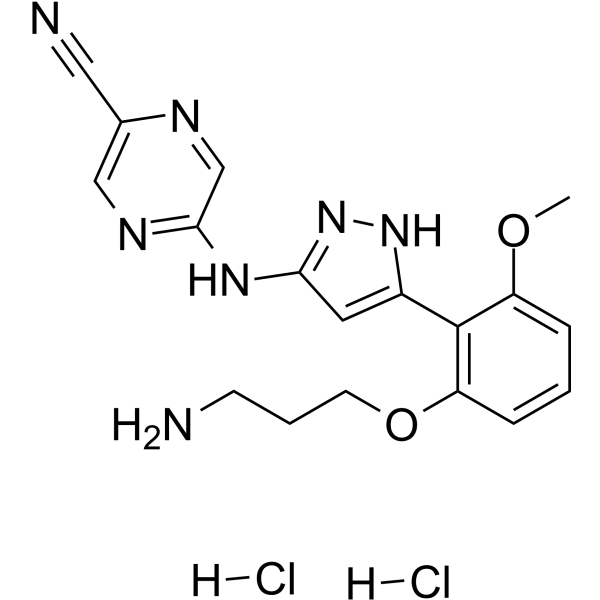
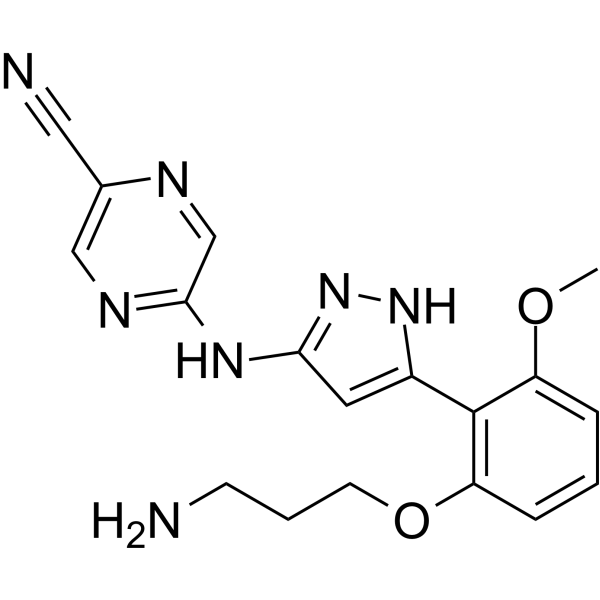
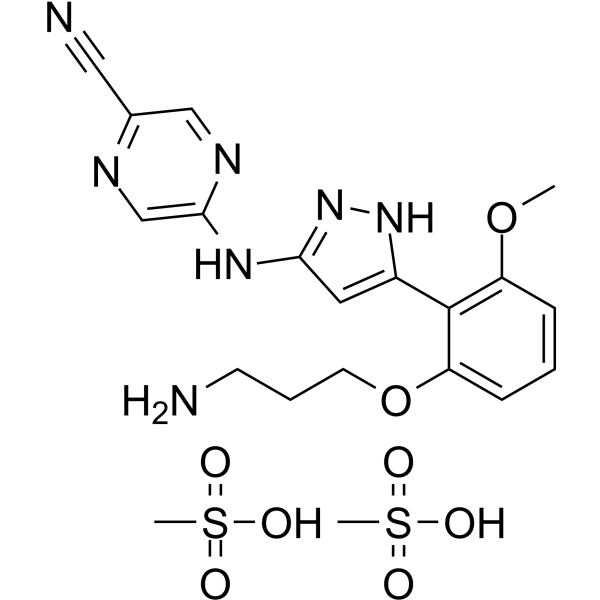
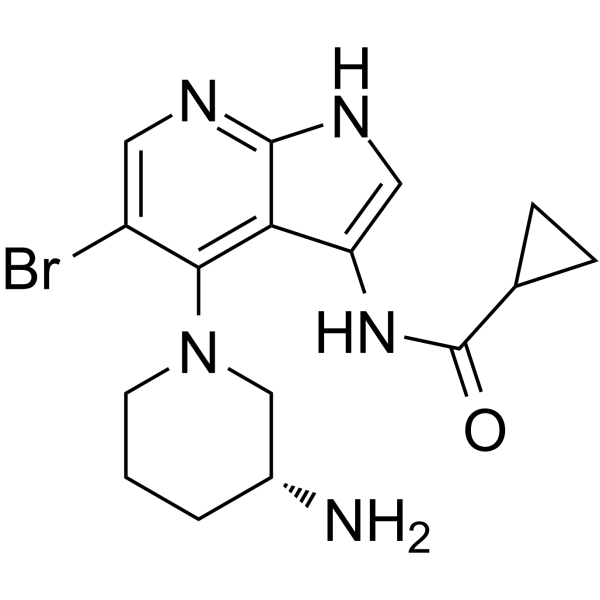
Prexasertib dihydrochloride (LY2606368 dihydrochloride) is a selective, ATP-competitive second-generation checkpoint kinase 1 (CHK1) inhibitor with a Ki of 0.9 nM and an IC50 of <1 nM. Prexasertib dihydrochloride inhibits CHK2 (IC50=8 nM) and RSK1 (IC50=9 nM). Prexasertib dihydrochloride causes double-stranded DNA breakage and replication catastrophe resulting in apoptosis. Prexasertib dihydrochloride shows potent anti-tumor activity.
For research use only. We do not sell to patients.
- Purity : 99.42%
- CAS No.: 1234015-54-3
- Formula: C18H21Cl2N7O2
- Molecular Weight:438.31
-
Storage:
4°C, sealed storage, away from moisture
* In solvent : -80°C, 6 months; -20°C, 1 month (sealed storage, away from moisture)

To place orders, for customer services and technical support, please contact: MedChemExpress USA
Tel: 609-228-6898 E-mail: [email protected] [email protected]


-
 Biological Activity
-
Chemical Information
-
Solvent & Solubility
- Purity & Documentation
- References
-
 Help & FAQs


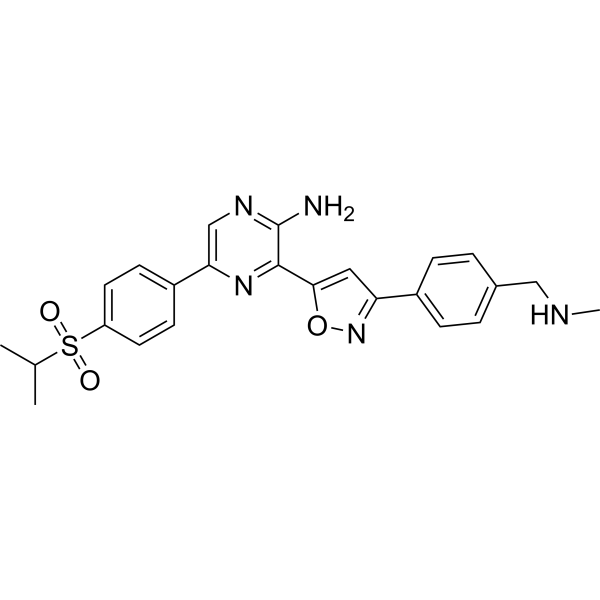
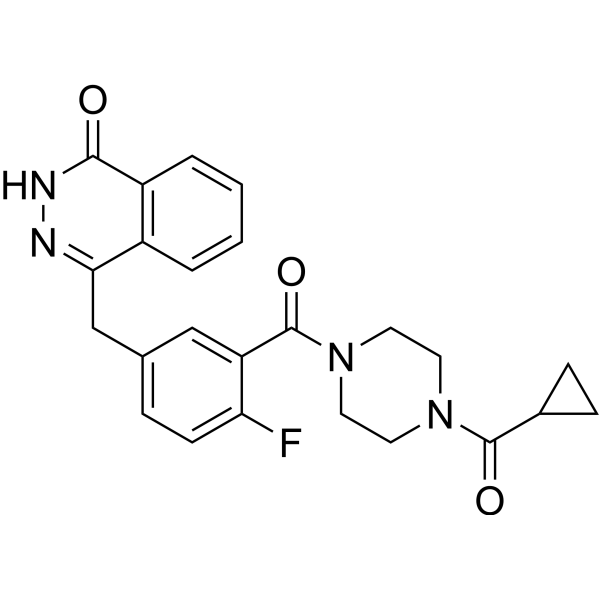
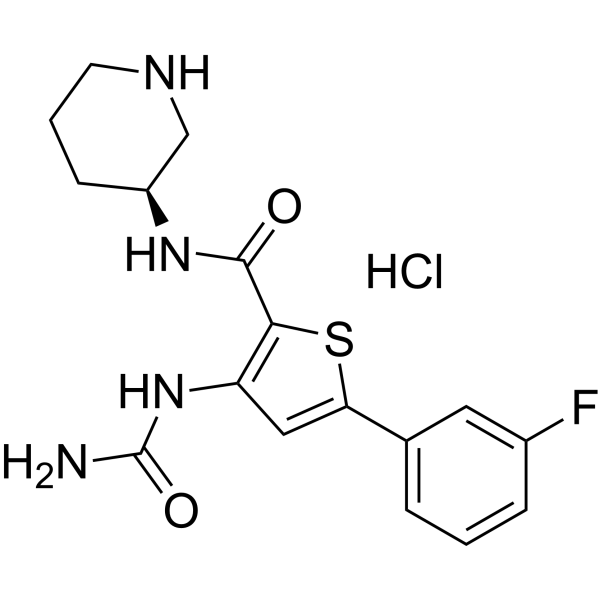
Publications Citing Use of MedChemExpress (MCE) Prexasertib dihydrochloride
More- Nat Commun. 2019 Aug 2;10(1):3485. [Abstract]
- Sci Adv. 2026 Jun 26;12(26):eadz3351. [Abstract]
- Cell Death Dis. 2026 Mar 26;17(1):375. [Abstract]
- Cancer Lett. 2026 Feb 4;642:218300.
- Cancer Lett. 2026 Apr 1:642:218300. [Abstract]
- Oncogene. 2026 Jun 10. [Abstract]
- Oncogene. 2022 Nov;41(46):5020-5031. [Abstract]
- Thorax. 2022 Mar;77(3):247-258. [Abstract]
- Cell Chem Biol. 2026 Jun 18;33(6):767-784.e7. [Abstract]
- Br J Cancer. 2021 Jul;125(1):101-111. [Abstract]
- Cell Rep. 2025 Apr 17;44(5):115605. [Abstract]
- Mol Cancer Ther. 2026 Jul 15:10.1158/1535-7163.MCT-26-0182.
- Mol Cancer Ther. 2025 Jun 4;24(6):920-930. [Abstract]
- Oncogenesis. 2025 Mar 1;14(1):4. [Abstract]
- Cells. 2024 Apr 19;13(8):710. [Abstract]
- Mol Cancer Res. 2019 Oct;17(10):2102-2114. [Abstract]
- Eur J Pharmacol. 2025 Sep 15:1003:177942. [Abstract]
- Cell Biol Toxicol. 2023 Jun;39(3):795-811. [Abstract]
- Int Immunopharmacol. 2026 Feb 15:171:116126. [Abstract]
- Int Immunopharmacol. 2025 Mar 26:150:114278. [Abstract]
- Sci Rep. 2025 Nov 27. [Abstract]
- Sci Rep. 2021 Feb 4;11(1):3176. [Abstract]
- Cancers (Basel). 2021 Aug 20;13(16):4200. [Abstract]
- Cancers (Basel). 2020 Aug 26;12(9):2426. [Abstract]
- Cancers (Basel). 2020 Jun 29;12(7):1726. [Abstract]
- Cell Signal. 2025 Jul:131:111709. [Abstract]
- Neurooncol Adv. 2024 Nov 19;6(1):vdae187. [Abstract]
- Discov Oncol. 2026 Jul 14. [Abstract]
- bioRxiv. 2025 Dec 25.
- bioRxiv. 2025 April 17.
- Research Square Preprint. 2024 Nov 06.
- bioRxiv. 2024 Nov 6:2024.11.04.621884. [Abstract]
- Universität Hamburg. 2022 Aug.
- Utrecht University. 2023 Feb.
- bioRxiv. January 04, 2022.
- Patent. US20210353605A1.
- bioRxiv. September 10, 2021.
- Research Square Preprint. 2021 May.
- Methods Mol Biol. 2018:1711:351-398. [Abstract]
 Customer Validation & Images

-
WB
-
Flow Cytometry
-
In Vivo Efficacy Study
-
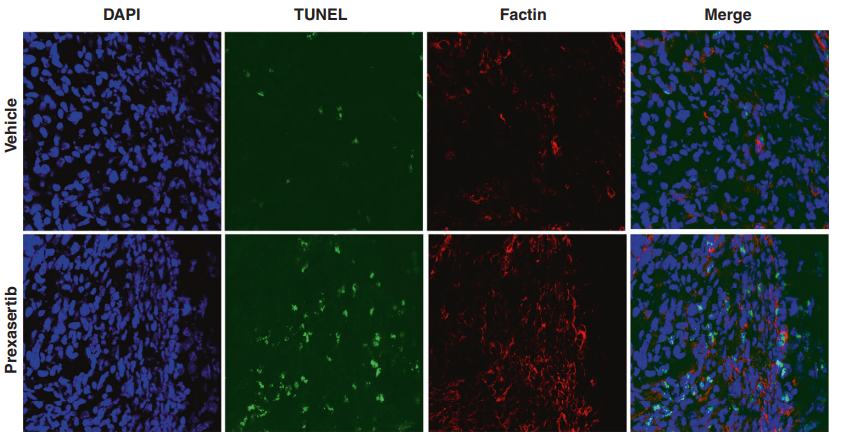
Apoptosis Analysis
-
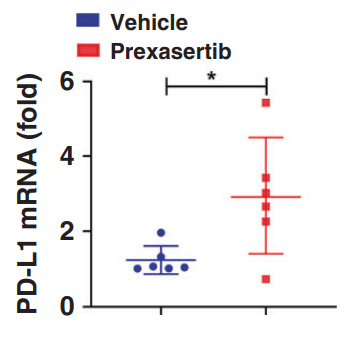
RT-PCR


Biological Activity
Description
IC50 & Target
[1]|
Chk1 0.9 nM (Ki) |
Chk1 <1 nM (IC50) |
Chk2 8 nM (IC50) |
In Vitro
Prexasertib dihydrochloride (LY2606368 dihydrochloride) inhibits MELK (IC50=38 nM), SIK (IC50=42 nM), BRSK2 (IC50=48 nM), ARK5 (IC50=64 nM). LY2606368 requires CDC25A and CDK2 to cause DNA damage[1].
?
Prexasertib dihydrochloride (33, 100 nM; for 7 hours) results in DNA damage during S-phase in HeLa cells[1].
?
Prexasertib dihydrochloride (8-250 nM; pre-treated for 15 minutes) inhibits CHK1 autophosphorylation (S296) and CHK2 autophosphorylation (S516) in HT-29 cells[1].
?
Prexasertib dihydrochloride (4 nM; 24 hours) results in a large shift in cell-cycle populations from G1 and G2-M to S-phase with an accompanied induction of H2AX phosphorylation in U-2 OS cells[1].
? ?
Prexasertib dihydrochloride (33 nM; for 12 hours) causes chromosomal fragmentation in HeLa cells. Prexasertib (100 nM; 0.5 to 9 hours) induces replication stress and depletes the pool of available RPA2 for binding to DNA[1].
MedChemExpress (MCE) has not independently confirmed the accuracy of these methods. They are for reference only.
-
Cell Line:HeLa cells
-
Concentration:33, 100 nM
-
Incubation Time:For 7 hours
-
Result:Had an IC50 of 37 nM and resulted in the G2-M population received DNA damage during S-phase but continued to progress through the cell cycle into an early mitosis.
-
Cell Line:HT-29 cells
-
Concentration:8, 16, 31, 63, 125, 250 nM
-
Incubation Time:Pre-treated for 15 minutes
-
Result:Inhibited CHK1 autophosphorylation (S296) and CHK2 autophosphorylation (S516) (IC50 of less than 31 nM) in HT-29 cells.
In Vivo
? Prexasertib dihydrochloride (15 mg/kg; SC) causes CHK1 inhibition in the blood and the phosphorylation of both H2AX (S139) and RPA2 (S4/S8)[1].
MedChemExpress (MCE) has not independently confirmed the accuracy of these methods. They are for reference only.
-
Animal Model:Female CD-1 nu-/nu- mice (26-28 g) with Calu-6 cells[1]
-
Dosage:1, 3.3, or 10 mg/kg
-
Administration:SC; twice daily for 3 days, rest 4 days; for three cycles
-
Result:Caused statistically significant tumor growth inhibition (up to 72.3%).
-
Animal Model:Female CD-1 nu-/nu- mice (26-28 g) with Calu-6 cells[1]
-
Dosage:15 mg/kg (Pharmacokinetic Analysis)
-
Administration:SC (200 μL)
-
Result:CHK1 was 7 ng/mL at 12 hours and 3 ng/mL by 24 hours in plasma exposures.
Phosphorylation of both H2AX (S139) and RPA2 (S4/S8) was detectable at 4 hours, showing the rapid occurrence of DNA damage.


Chemical Information
-
CAS No. 1234015-54-3
-
Appearance Solid
-
Molecular Weight 438.31
-
Formula C18H21Cl2N7O2
-
Color Light yellow to yellow
-
SMILES
NCCCOC(C=CC=C1OC)=C1C2=CC(NC3=NC=C(C#N)N=C3)=NN2.[H]Cl.[H]Cl
-
Synonyms
LY2606368 dihydrochloride
-
Shipping
Room temperature in continental US; may vary elsewhere.
-
Storage
4°C, sealed storage, away from moisture
* In solvent : -80°C, 6 months; -20°C, 1 month (sealed storage, away from moisture)


Publications (39)
-
Journal Impact Factor
-
Most Recent
-
Nat Commun
MYC paralog-dependent apoptotic priming orchestrates a spectrum of vulnerabilities in small cell lung cancer. [Abstract]2019 Aug 2;10(1):3485. PMID: 31375684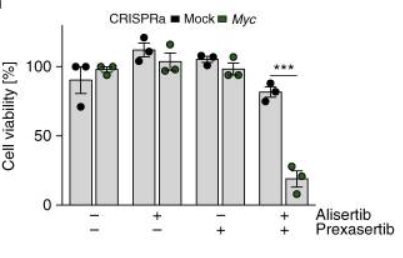
Prexasertib dihydrochloride purchased from MedChemExpress. Usage Cited in: Nat Commun. 2019 Aug 2;10(1):3485. [Abstract]
Viability of mock control and Myc-activated CRISPRa cells upon treatment with 40 nM prexasertib for 96 h (n = 3).
-
Sci Adv
Patient-derived organoids across cancers reveal conserved tumor heterogeneity and actionable therapeutic vulnerabilities. [Abstract]2026 Jun 26;12(26):eadz3351. PMID: 42361179 -
Cell Death Dis
2026 Mar 26;17(1):375. PMID: 41888112 -
-
Cancer Lett
2026 Apr 1:642:218300. PMID: 41651400 -
Oncogene
DNA replication stress and translational repression converge to drive CDK1- and caspase-dependent apoptosis in Ewing sarcoma. [Abstract]2026 Jun 10. PMID: 42270776 -
Oncogene
Distinct roles of treatment schemes and BRCA2 on the restoration of homologous recombination DNA repair and PARP inhibitor resistance in ovarian cancer. [Abstract]2022 Nov;41(46):5020-5031. PMID: 36224341 -
Thorax
Potential for inhibition of checkpoint kinases 1/2 in pulmonary fibrosis and secondary pulmonary hypertension. [Abstract]2022 Mar;77(3):247-258. PMID: 34226205 -
Cell Chem Biol
The cytotoxic effect of prexasertib is a consequence of dual inhibition on both CHK1 and AMPK. [Abstract]2026 Jun 18;33(6):767-784.e7. PMID: 42061410 -
Br J Cancer
Interferon regulatory factor 1 (IRF-1) downregulates Checkpoint kinase 1 (CHK1) through miR-195 to upregulate apoptosis and PD-L1 expression in Hepatocellular carcinoma (HCC) cells. [Abstract]2021 Jul;125(1):101-111. PMID: 33772151
Prexasertib dihydrochloride purchased from MedChemExpress. Usage Cited in: Br J Cancer. 2021 Jul;125(1):101-111. [Abstract]
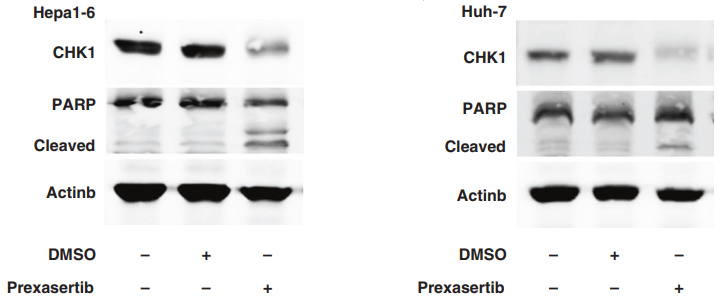
Full length and cleaved PARP protein expressions are determined by western blot in Hepa1-6 cells and Huh-7 cells induced by prexasertib with dose of 1 µM and 5 nM for 24 h, respectively.
Prexasertib dihydrochloride purchased from MedChemExpress. Usage Cited in: Br J Cancer. 2021 Jul;125(1):101-111. [Abstract]
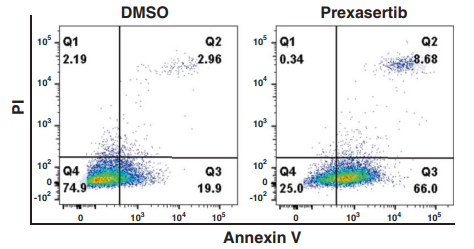
Representative image of FACS analysis of late apoptotic Hepa1-6 cell rate treated by DMSO or prexasertib with dose of 1 µM for 24 h are shown.
Prexasertib dihydrochloride purchased from MedChemExpress. Usage Cited in: Br J Cancer. 2021 Jul;125(1):101-111. [Abstract]
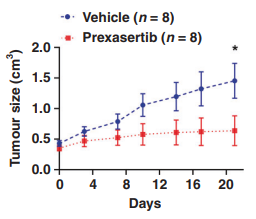
Tumour growth curves (Mean ± SEM) of murine HCC model treated by vehicle (n = 8) or prexasertib (10mg/kg, subcutaneous injection, 2 of 7 days, n = 8) are shown.
Prexasertib dihydrochloride purchased from MedChemExpress. Usage Cited in: Br J Cancer. 2021 Jul;125(1):101-111. [Abstract]
Prexasertib (10mg/kg, subcutaneous injection, 2 of 7 days). Representative images of TUNEL assay for cellular apoptosis (green staining) in tumours are shown.
Prexasertib dihydrochloride purchased from MedChemExpress. Usage Cited in: Br J Cancer. 2021 Jul;125(1):101-111. [Abstract]
Prexasertib (10mg/kg, subcutaneous injection, 2 of 7 days, n = 8). PD-L1 mRNA expression is determined by qPCR in tumours treated by prexasertib or vehicle.
-
Cell Rep
The low-dose CHK1 inhibitor prexasertib triggers VDAC1 dephosphorylation to activate mtDNA-STING signaling and synergize immunotherapy. [Abstract]2025 Apr 17;44(5):115605. PMID: 40249707 -
-
Mol Cancer Ther
Targeting Monounsaturated Fatty Acid Metabolism for Radiosensitization of KRAS Mutant 3D Lung Cancer Models. [Abstract]2025 Jun 4;24(6):920-930. PMID: 39834305 -
Oncogenesis
STAG2 expression imparts distinct therapeutic vulnerabilities in muscle-invasive bladder cancer cells. [Abstract]2025 Mar 1;14(1):4. PMID: 40025053 -
Cells
Genomic Engineering of Oral Keratinocytes to Establish In Vitro Oral Potentially Malignant Disease Models as a Platform for Treatment Investigation. [Abstract]2024 Apr 19;13(8):710. PMID: 38667326 -
Mol Cancer Res
Pharmacologic Ascorbate Primes Pancreatic Cancer Cells for Death by Rewiring Cellular Energetics and Inducing DNA Damage. [Abstract]2019 Oct;17(10):2102-2114. PMID: 31337671 -
Eur J Pharmacol
VOPP1, a determinant of the sensitivity of non-small cell lung cancer cells to NAE inhibitors. [Abstract]2025 Sep 15:1003:177942. PMID: 40651787 -
Cell Biol Toxicol
Exploring the ATR-CHK1 pathway in the response of doxorubicin-induced DNA damages in acute lymphoblastic leukemia cells. [Abstract]2023 Jun;39(3):795-811. PMID: 34519926 -
Int Immunopharmacol
CHK1 inhibition by prexasertib sensitizes cisplatin-resistant malignant tumor cells via checkpoint abrogation and STAT1-driven PD-L1 upregulation. [Abstract]2026 Feb 15:171:116126. PMID: 41477994 -
Int Immunopharmacol
Prexasertib exerts a synergistic effect on the antitumor activity of Lenvatinib through ALOX15-mediated ferroptosis in hepatocellular carcinoma. [Abstract]2025 Mar 26:150:114278. PMID: 39954659 -
Sci Rep
Synergistic inhibition of CHK1 and MUS81 to combat replication stress resistance in high-risk neuroblastoma. [Abstract]2025 Nov 27. PMID: 41310217 -
Sci Rep
The mitotic checkpoint is a targetable vulnerability of carboplatin-resistant triple negative breast cancers. [Abstract]2021 Feb 4;11(1):3176. PMID: 33542435 -
Cancers (Basel)
Novel Insights into the Molecular Regulation of Ribonucleotide Reductase in Adrenocortical Carcinoma Treatment. [Abstract]2021 Aug 20;13(16):4200. PMID: 34439352 -
Cancers (Basel)
Systems Biology Approach Identifies Prognostic Signatures of Poor Overall Survival and Guides the Prioritization of Novel BET-CHK1 Combination Therapy for Osteosarcoma. [Abstract]2020 Aug 26;12(9):2426. PMID: 32859084 -
Cancers (Basel)
Cotargeting CHK1 and PI3K Synergistically Suppresses Tumor Growth of Oral Cavity Squamous Cell Carcinoma in Patient-Derived Xenografts. [Abstract]2020 Jun 29;12(7):1726. PMID: 32610557 -
Cell Signal
2025 Jul:131:111709. PMID: 40037423 -
Neurooncol Adv
Ion channel modulator DPI-201-106 significantly enhances antitumor activity of DNA damage response inhibitors in glioblastoma. [Abstract]2024 Nov 19;6(1):vdae187. PMID: 39659830 -
Discov Oncol
Chk1 inhibition emerges as the most effective partner for PARP inhibition in BRCA-proficient pancreatic cancer. [Abstract]2026 Jul 14. PMID: 42446852 -
-
-
-
bioRxiv
PAIRWISE: Deep Learning-based Prediction of Effective Personalized Drug Combinations in Cancer. [Abstract]2024 Nov 6:2024.11.04.621884. PMID: 39574568 -
-
-
-
-
-
-
Methods Mol Biol
2018:1711:351-398. PMID: 29344898


Solvent & Solubility
In Vitro:
DMSO : 8 mg/mL (18.25 mM; Need ultrasonic; Hygroscopic DMSO has a significant impact on the solubility of product, please use newly opened DMSO)
H2O : < 0.1 mg/mL (insoluble)
Please refer to the solubility information to select the appropriate solvent. Once prepared, please aliquot and store the solution to prevent product inactivation from repeated freeze-thaw cycles.
Storage method and period of stock solution: -80°C, 6 months; -20°C, 1 month (sealed storage, away from moisture). When stored at -80°C, please use it within 6 months. When stored at -20°C, please use it within 1 month.
Please refer to the solubility information to select the appropriate solvent. Once prepared, please aliquot and store the solution to prevent product inactivation from repeated freeze-thaw cycles.
Storage method and period of stock solution: -80°C, 6 months; -20°C, 1 month (sealed storage, away from moisture). When stored at -80°C, please use it within 6 months. When stored at -20°C, please use it within 1 month.
Concentration (start) × Volume (start) = Concentration (final) × Volume (final)
In Vivo:
Select the appropriate dissolution method based on your experimental animal and administration route.
- For the following dissolution methods, please ensure to first prepare a clear stock solution using an In Vitro approach and then sequentially add co-solvents:
- To ensure reliable experimental results, the clarified stock solution can be appropriately stored based on storage conditions. As for the working solution for In Vivo experiments, it is recommended to prepare freshly and use it on the same day.
- The percentages shown for the solvents indicate their volumetric ratio in the final prepared solution. If precipitation or phase separation occurs during preparation, heat and/or sonication can be used to aid dissolution.
Add each solvent one by one: 10% DMSO 40% PEG300 5% Tween-80 45% Saline
Solubility: ≥ 0.8 mg/mL (1.83 mM); Clear solution
This protocol yields a clear solution of ≥ 0.8 mg/mL (saturation unknown).
Taking 1 mL working solution as an example, add 100 μL DMSO stock solution (8.0 mg/mL) to 400 μL PEG300, and mix evenly; then add 50 μL Tween-80 and mix evenly; then add 450 μL Saline to adjust the volume to 1 mL.
Preparation of Saline: Dissolve 0.9 g sodium chloride in ddH₂O and dilute to 100 mL to obtain a clear Saline solution.
Add each solvent one by one: 10% DMSO 90% (20% SBE-β-CD in Saline)
Solubility: ≥ 0.8 mg/mL (1.83 mM); Clear solution
This protocol yields a clear solution of ≥ 0.8 mg/mL (saturation unknown).
Taking 1 mL working solution as an example, add 100 μL DMSO stock solution (8.0 mg/mL) to 900 μL 20% SBE-β-CD in Saline, and mix evenly.
Preparation of 20% SBE-β-CD in Saline (4°C, storage for one week): 2 g SBE-β-CD powder is dissolved in 10 mL Saline, completely dissolve until clear.
In Vivo Dissolution Calculator
Please enter the basic information of animal experiments:
-
-
-
-
Recommended: Prepare an additional quantity of animals to account for potential losses during experiments.
Please enter your animal formula composition:
-
%DMSO +
Recommended: Keep the proportion of DMSO in working solution below 2% if your animal is weak.
-
%+
-
+%Tween-80 + +
-
%Saline +
The co-solvents required include: DMSO, . All of co-solvents are available by MedChemExpress (MCE). , Tween 80. All of co-solvents are available by MedChemExpress (MCE).
Working solution concentration: 0.22 mg/mL
Method for preparing stock solution: mg drug dissolved in μL DMSO. Stock solution concentration: mg/mL. * In solvent : -80°C, 6 months; -20°C, 1 month (sealed storage, away from moisture)
1. Take μL DMSO stock solution;
2. Add μL .
μL , mix evenly;
3. Then add μL Tween 80, mix evenly;
4. Then add μL
Please ensure that the stock solution in the first step is dissolved to a clear state, and add co-solvents in sequence. You can use ultrasonic heating (ultrasonic cleaner, recommended frequency 20-40 kHz), vortexing, etc. to assist dissolution.


Purity & Documentation
-
Data Sheet (285 KB)
-
SDS (393 KB)
- English - EN (393 KB)
- Français - FR (393 KB)
- Deutsch - DE (393 KB)
- Norwegian - NO (393 KB)
- Español - ES (393 KB)
- Swedish - SV (393 KB)
- Italian - IT (393 KB)
- Korean - KR (393 KB)
- Portuguese - PT (393 KB)
-
Handling Instructions (2659 KB)
References
[1]. King C, et al. LY2606368 Causes Replication Catastrophe and Antitumor Effects through CHK1-Dependent Mechanisms. Mol Cancer Ther. 2015 Sep;14(9):2004-1 [Content Brief]
[2]. Yin Y, et al. Chk1 inhibition potentiates the therapeutic efficacy of PARP inhibitor BMN673 in gastric cancer. Am J Cancer Res. 2017 Mar 1;7(3):473-483. [Content Brief]


Complete Stock Solution Preparation Table
Please refer to the solubility information to select the appropriate solvent. Once prepared, please aliquot and store the solution to prevent product inactivation from repeated freeze-thaw cycles.
Storage method and period of stock solution: -80°C, 6 months; -20°C, 1 month (sealed storage, away from moisture). When stored at -80°C, please use it within 6 months. When stored at -20°C, please use it within 1 month.
| Optional Solvent | Concentration Solvent Mass | 1 mg | 5 mg | 10 mg | 25 mg |
|---|---|---|---|---|---|
| DMSO | 1 mM | 2.2815 mL | 11.4075 mL | 22.8149 mL | 57.0373 mL |
| 5 mM | 0.4563 mL | 2.2815 mL | 4.5630 mL | 11.4075 mL | |
| 10 mM | 0.2281 mL | 1.1407 mL | 2.2815 mL | 5.7037 mL | |
| 15 mM | 0.1521 mL | 0.7605 mL | 1.5210 mL | 3.8025 mL |


Prexasertib dihydrochloride Related Classifications
HY-18174A Related Classifications
 Powered by Bioz