1. GPCR/G Protein Membrane Transporter/Ion Channel
  2. Potassium Channel LPL Receptor
  3. Siponimod

Siponimod (BAF-312) is an orally active, blood-brain barrier penetrant dual agonist of S1P1/S1P5, with EC50 values of 0.39 nM and 0.98 nM, respectively. Siponimod induces S1P1 internalization, activates GIRK channels, inhibits lymphocyte egress, reduces peripheral lymphocyte counts, triggers transient bradycardia, prevents synaptic neurodegeneration, promotes remyelination, alleviates demyelination, and prevents the loss of GABAergic interneurons. Siponimod can be used in research related to multiple sclerosis.

For research use only. We do not sell to patients.

CAS No. : 1230487-00-9

Size Price Stock Quantity
Solid + Solvent (Highly Recommended)
10 mM * 1 mL in DMSO
ready for reconstitution
In-stock
Solution
10 mM * 1 mL in DMSO In-stock
Solid
5 mg In-stock
10 mg In-stock
25 mg In-stock
50 mg In-stock
100 mg In-stock
500 mg In-stock
1 g In-stock
5 g   Get quote  
10 g   Get quote  

* Please select Quantity before adding items.

This product is a controlled substance and not for sale in your territory.

Customer Review

Based on 10 publication(s) in Google Scholar

Other Forms of Siponimod:

Top Publications Citing Use of Products

    Siponimod purchased from MedChemExpress. Usage Cited in: Neurosci Res. 2025 Apr:213:138-145.  [Abstract]

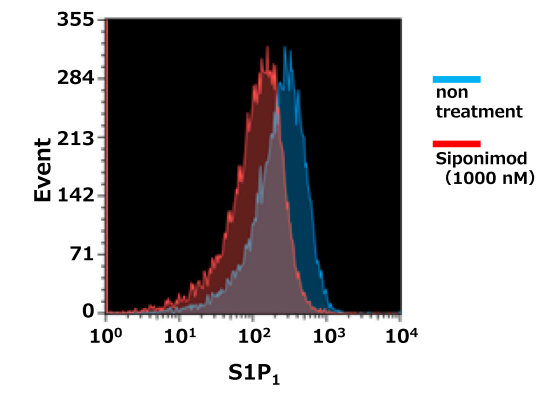
    Internalization of S1P1 on microglia treated with siponimod. Representative flow cytometry data showing the internalization of S1P1 on microglia with no treatment (blue) or 1000 nM Siponimod (red).

    Siponimod purchased from MedChemExpress. Usage Cited in: Neurosci Res. 2025 Apr:213:138-145.  [Abstract]

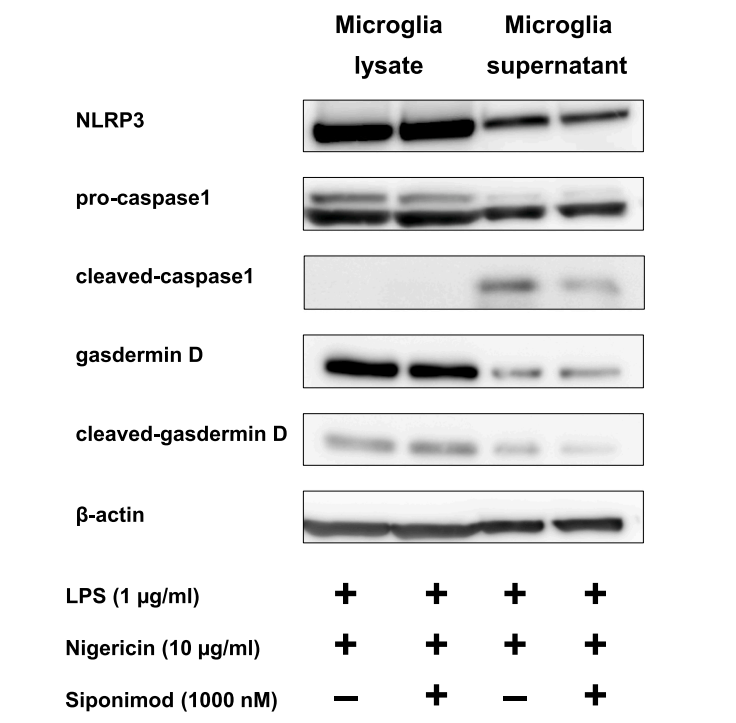
    Western blot and quantification were performed on microglial cell culture lysates and supernatants with or without prior Siponimod (1000 nM) treatment, followed by stimulation with LPS and nigrain.

    Siponimod purchased from MedChemExpress. Usage Cited in: Sci Rep. 2024 Aug 1;14(1):17823.  [Abstract]

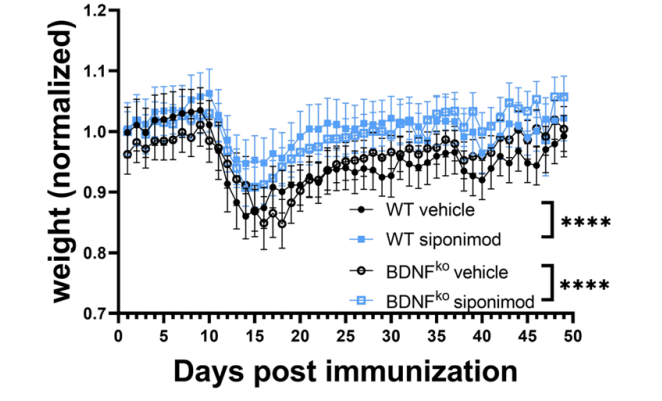
    weight loss was averted in Siponimod (0.45 µg/d) treated mice independent of BDNFko.

    Siponimod purchased from MedChemExpress. Usage Cited in: Sci Rep. 2024 Aug 1;14(1):17823.  [Abstract]

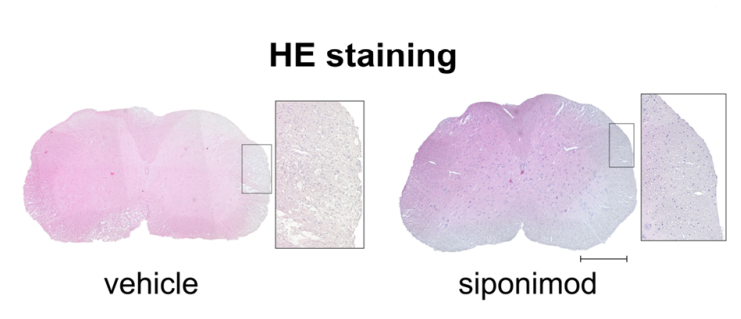
    Siponimod (0.45 µg/d) treatment reduces lymphocyte infiltration of white matter in lumbar spinal cord. Represenative hematoxylin and eosin (HE) images of spinal cord sections.

    Siponimod purchased from MedChemExpress. Usage Cited in: Vet Microbiol. 2021 Oct:261:109177.

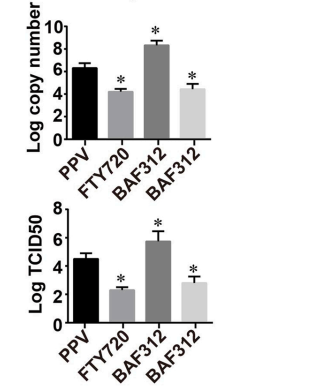
    The S1P-S1P3 axis is involved in the infection of PPV. PK15 cells were infected with PPV (MOI = 1) and simultaneously incubated with 10 μM Fingolimod hydrochloride (FTY720), 10 μM Siponimod (BAF-312), 10 μM TY-52,156 or not for 24 h. The values of Log copy number and Log TCID50 for 24 h p.i. were done.

    View All LPL Receptor Isoform Specific Products:

    • Biological Activity

    • Purity & Documentation

    • References

    • Customer Review

    Description

    Siponimod (BAF-312) is an orally active, blood-brain barrier penetrant dual agonist of S1P1/S1P5, with EC50 values of 0.39 nM and 0.98 nM, respectively. Siponimod induces S1P1 internalization, activates GIRK channels, inhibits lymphocyte egress, reduces peripheral lymphocyte counts, triggers transient bradycardia, prevents synaptic neurodegeneration, promotes remyelination, alleviates demyelination, and prevents the loss of GABAergic interneurons. Siponimod can be used in research related to multiple sclerosis[1][2][3][4].

    IC50 & Target

    S1PR1

    0.39 nM (EC50)

    S1PR5

    0.98 nM (EC50)

    S1PR4

    750 nM (EC50)

    S1PR3

    >1000 nM (EC50)

    S1PR2

    >10000 nM (EC50)

    Cellular Effect
    Cell Line Type Value Description References
    CHO EC50
    0.0004 μM
    Compound: 32, BAF312, Siponimod
    Agonist activity at human S1P1 receptor transfected in CHO cells incubated for 10 to 15 mins prior to GTPgamma35S addition measured after 120 mins by GTPgamma35S binding assay
    Agonist activity at human S1P1 receptor transfected in CHO cells incubated for 10 to 15 mins prior to GTPgamma35S addition measured after 120 mins by GTPgamma35S binding assay
    [PMID: 24900670]
    CHO EC50
    0.98 nM
    Compound: 3, BAF312
    Agonist activity at human S1P5 receptor expressed in CHO cells by [35S]GTPgammaS binding assay
    Agonist activity at human S1P5 receptor expressed in CHO cells by [35S]GTPgammaS binding assay
    [PMID: 24125884]
    CHO EC50
    5 μM
    Compound: 32, BAF312, Siponimod
    Agonist activity at human S1P3 receptor transfected in CHO cells incubated for 10 to 15 mins prior to GTPgamma35S addition measured after 120 mins by GTPgamma35S binding assay
    Agonist activity at human S1P3 receptor transfected in CHO cells incubated for 10 to 15 mins prior to GTPgamma35S addition measured after 120 mins by GTPgamma35S binding assay
    [PMID: 24900670]
    CHO EC50
    750 nM
    Compound: 3, BAF312
    Agonist activity at human S1P4 receptor expressed in CHO cells by [35S]GTPgammaS binding assay
    Agonist activity at human S1P4 receptor expressed in CHO cells by [35S]GTPgammaS binding assay
    [PMID: 24125884]
    In Vitro

    Siponimod (10-1000 nM; 4-13 h) induces significant and persistent internalization of human S1P1 receptors in CHO cells. Obvious internalization is detectable even at concentrations as low as 10 nM, and the receptors remain localized intracellularly after drug washout[1].
    Siponimod regulates microglial function by reducing IL6 secretion in cultured microglia[4].
    Siponimod improves oligodendrocyte degeneration by alleviating demyelination in organotypic brain slice cultures[4].

    MedChemExpress (MCE) has not independently confirmed the accuracy of these methods. They are for reference only.

    In Vivo

    Siponimod (0.03-3 mg/kg; p.o.; daily; day 11 to day 34 post-immunization) dose-dependently suppresses established chronic experimental autoimmune encephalomyelitis in female DA rats, with significant efficacy observed at doses of 0.3 mg/kg and 3 mg/kg[1].
    Siponimod (0.14-1 mg/kg; p.o.; single dose) causes a rapid, dose-dependent reduction in peripheral lymphocyte counts in Lewis rats, with an ED50 of 0.14 mg/kg at 6 hours post-dose, and counts return to normal within 48 hours[2].

    MedChemExpress (MCE) has not independently confirmed the accuracy of these methods. They are for reference only.

    Animal Model: Dark Agouti (DA) (female, 9 weeks old at immunization, 200-250 g, chronic experimental autoimmune encephalomyelitis induced via subcutaneous tail base injection of antigen/adjuvant mix)[1]
    Dosage: 0.03 mg/kg; 0.3 mg/kg; 3 mg/kg
    Administration: p.o.; daily; day 11 to day 34 post-immunization
    Result: Reduced area under the curve (AUC) of clinical disease scores from days 12 to 34 compared with vehicle-treated controls.
    Showed borderline effect on disease scores at 0.03 mg/kg dose.
    Animal Model: Lewis rats[2]
    Dosage: 1 mg/kg; 0.14 mg/kg
    Administration: p.o.; single dose
    Result: Decreased peripheral lymphocyte counts by 88% at 8 hours post-administration.
    Returned peripheral lymphocyte counts to normal levels by 48 hours post-administration.
    Achieved an ED50 of 0.14 mg/kg for 50% reduction of peripheral lymphocyte counts at 6 hours post-dose.
    Clinical Trial
    Molecular Weight

    516.60

    Formula

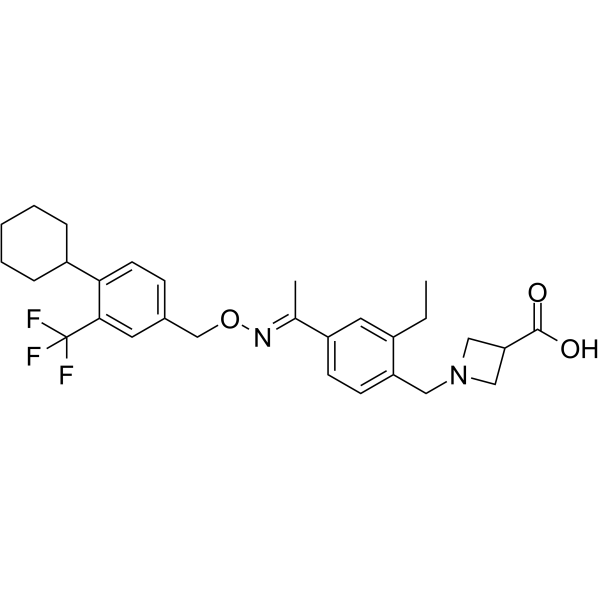
    C29H35F3N2O3

    CAS No.
    Appearance

    Solid

    Color

    White to off-white

    SMILES

    O=C(C1CN(CC2=CC=C(/C(C)=N/OCC3=CC=C(C4CCCCC4)C(C(F)(F)F)=C3)C=C2CC)C1)O

    Shipping

    Room temperature in continental US; may vary elsewhere.

    Storage

    4°C, sealed storage, away from moisture

    *In solvent : -80°C, 1 year; -20°C, 6 months (sealed storage, away from moisture)

    Solvent & Solubility
    In Vitro: 

    DMSO : 25 mg/mL (48.39 mM; ultrasonic and warming and heat to 60°C; Hygroscopic DMSO has a significant impact on the solubility of product, please use newly opened DMSO)

    Preparing
    Stock Solutions
    Concentration Solvent Mass 1 mg 5 mg 10 mg
    1 mM 1.9357 mL 9.6787 mL 19.3573 mL
    5 mM 0.3871 mL 1.9357 mL 3.8715 mL
    View the Complete Stock Solution Preparation Table

    * Please refer to the solubility information to select the appropriate solvent. Once prepared, please aliquot and store the solution to prevent product inactivation from repeated freeze-thaw cycles.
    Storage method and period of stock solution: -80°C, 1 year; -20°C, 6 months (sealed storage, away from moisture). When stored at -80°C, please use it within 1 year. When stored at -20°C, please use it within 6 months.

    • Molarity Calculator

    • Dilution Calculator

    Mass (g) = Concentration (mol/L) × Volume (L) × Molecular Weight (g/mol)

    Mass
    =
    Concentration
    ×
    Volume
    ×
    Molecular Weight *

    Concentration (start) × Volume (start) = Concentration (final) × Volume (final)

    This equation is commonly abbreviated as: C1V1 = C2V2

    Concentration (start)

    C1

    ×
    Volume (start)

    V1

    =
    Concentration (final)

    C2

    ×
    Volume (final)

    V2

    In Vivo:

    Select the appropriate dissolution method based on your experimental animal and administration route.

    For the following dissolution methods, please ensure to first prepare a clear stock solution using an In Vitro approach and then sequentially add co-solvents:
    To ensure reliable experimental results, the clarified stock solution can be appropriately stored based on storage conditions. As for the working solution for in vivo experiments, it is recommended to prepare freshly and use it on the same day.
    The percentages shown for the solvents indicate their volumetric ratio in the final prepared solution. If precipitation or phase separation occurs during preparation, heat and/or sonication can be used to aid dissolution.

    • Protocol 1

      Add each solvent one by one:  10% DMSO    40% PEG300    5% Tween-80    45% Saline

      Solubility: ≥ 2.5 mg/mL (4.84 mM); Clear solution

      This protocol yields a clear solution of ≥ 2.5 mg/mL (saturation unknown).

      Taking 1 mL working solution as an example, add 100 μL DMSO stock solution (25.0 mg/mL) to 400 μL PEG300, and mix evenly; then add 50 μL Tween-80 and mix evenly; then add 450 μL Saline to adjust the volume to 1 mL.

      Preparation of Saline: Dissolve 0.9 g sodium chloride in ddH₂O and dilute to 100 mL to obtain a clear Saline solution.
    • Protocol 2

      Add each solvent one by one:  10% DMSO    90% (20% SBE-β-CD in Saline)

      Solubility: ≥ 2.5 mg/mL (4.84 mM); Clear solution

      This protocol yields a clear solution of ≥ 2.5 mg/mL (saturation unknown).

      Taking 1 mL working solution as an example, add 100 μL DMSO stock solution (25.0 mg/mL) to 900 μL 20% SBE-β-CD in Saline, and mix evenly.

      Preparation of 20% SBE-β-CD in Saline (4°C, storage for one week): 2 g SBE-β-CD powder is dissolved in 10 mL Saline, completely dissolve until clear.
    In Vivo Dissolution Calculator
    Please enter the basic information of animal experiments:

    Dosage

    mg/kg

    Animal weight
    (per animal)

    g

    Dosing volume
    (per animal)

    μL

    Number of animals

    Recommended: Prepare an additional quantity of animals to account for potential losses during experiments.
    Please enter your animal formula composition:
    %
    DMSO +
    +
    %
    Tween-80 +
    %
    Saline
    Recommended: Keep the proportion of DMSO in working solution below 2% if your animal is weak.
    The co-solvents required include: DMSO, . All of co-solvents are available by MedChemExpress (MCE). , Tween 80. All of co-solvents are available by MedChemExpress (MCE).
    Calculation results:
    Working solution concentration: mg/mL
    Method for preparing stock solution: mg drug dissolved in μL  DMSO (Stock solution concentration: mg/mL).

    *In solvent : -80°C, 1 year; -20°C, 6 months (sealed storage, away from moisture)

    The concentration of the stock solution you require exceeds the measured solubility. The following solution is for reference only. If necessary, please contact MedChemExpress (MCE).
    Method for preparing in vivo working solution for animal experiments: Take μL DMSO stock solution, add μL . μL , mix evenly, next add μL Tween 80, mix evenly, then add μL Saline.
     If the continuous dosing period exceeds half a month, please choose this protocol carefully.
    Please ensure that the stock solution in the first step is dissolved to a clear state, and add co-solvents in sequence. You can use ultrasonic heating (ultrasonic cleaner, recommended frequency 20-40 kHz), vortexing, etc. to assist dissolution.
    Purity & Documentation

    Purity: 99.95%

    References

    Complete Stock Solution Preparation Table

    * Please refer to the solubility information to select the appropriate solvent. Once prepared, please aliquot and store the solution to prevent product inactivation from repeated freeze-thaw cycles.
    Storage method and period of stock solution: -80°C, 1 year; -20°C, 6 months (sealed storage, away from moisture). When stored at -80°C, please use it within 1 year. When stored at -20°C, please use it within 6 months.

    Optional Solvent Concentration Solvent Mass 1 mg 5 mg 10 mg 25 mg
    DMSO 1 mM 1.9357 mL 9.6787 mL 19.3573 mL 48.3933 mL
    5 mM 0.3871 mL 1.9357 mL 3.8715 mL 9.6787 mL
    10 mM 0.1936 mL 0.9679 mL 1.9357 mL 4.8393 mL
    15 mM 0.1290 mL 0.6452 mL 1.2905 mL 3.2262 mL
    20 mM 0.0968 mL 0.4839 mL 0.9679 mL 2.4197 mL
    25 mM 0.0774 mL 0.3871 mL 0.7743 mL 1.9357 mL
    30 mM 0.0645 mL 0.3226 mL 0.6452 mL 1.6131 mL
    40 mM 0.0484 mL 0.2420 mL 0.4839 mL 1.2098 mL
    • No file chosen (Maximum size is: 1024 Kb)
    • If you have published this work, please enter the PubMed ID.
    • Your name will appear on the site.
    Help & FAQs
    • Do most proteins show cross-species activity?

      Species cross-reactivity must be investigated individually for each product. Many human cytokines will produce a nice response in mouse cell lines, and many mouse proteins will show activity on human cells. Other proteins may have a lower specific activity when used in the opposite species.

    Your Recently Viewed Products:

    Inquiry Online

    Your information is safe with us. * Required Fields.

    Product Name


    Requested Quantity *

    Applicant Name *


    Salutation

    Email Address *


    Phone Number *

    Department


    Organization Name *

    City

    State

    Country or Region *


    Remarks

    Bulk Inquiry

    Inquiry Information

    Product Name:
    Siponimod
    Cat. No.:
    HY-12355
    Quantity:
    MCE Japan Authorized Agent: