



Beta-secretase
BACE; β-Secretase
Beta-secretase (BACE) is a transmembrane aspartic proteinase responsible for cleaving the amyloid precursor protein (APP) to generate the soluble ectodomain sAPPbeta and its C-terminal fragment CTFbeta. BACE is a major target of Alzheimer's disease (AD) therapeutics. There are two forms of the enzyme: BACE1 and BACE2.
Deposition of amyloid-β protein (Aβ) to form neuritic plaques is the characteristic neuropathology of Alzheimer's disease (AD). Aβ is generated from APP by β- and γ-secretase cleavages. BACE1 is the β-secretase and its inhibition induces severe side effects, whereas its homolog BACE2 normally suppresses Aβ by cleaving APP/Aβ at the θ-site (Phe20) within the Aβ domain.
Beta-secretase Isoform Specific Products
All Product Categories
-
Beta-secretase Related Products (143)
Related Products (143)

-
Antibodies (1)
-
Beta-secretase Isoform Comparison

-
GL189
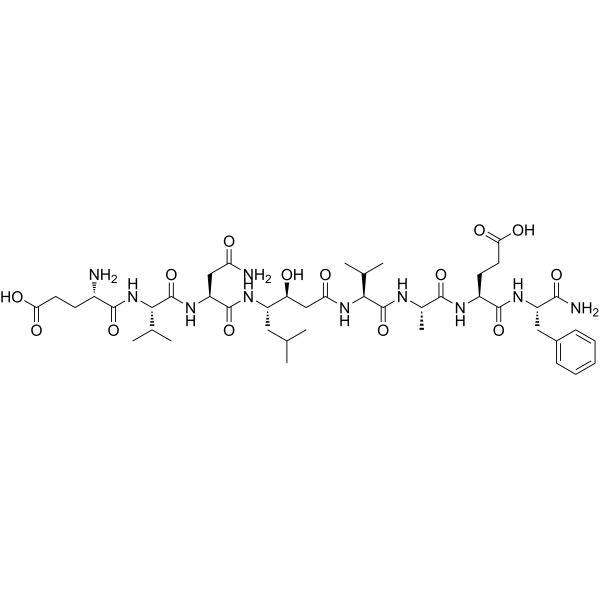 0 ImagesCat. No.: HY-P10077CAS No.: 552337-94-7GL189 is a β-secretase inhibitor. GL189 has neuroprotective effect, and can be used for research of neurodegenerative diseases.
-
AZD3839 fumarate
 0 ImagesCat. No.: HY-13438ACAS No.: 1421852-78-9AZD3839 fumarate is an orally available, selective, reversible inhibitor of the β-site amyloid precursor protein cleaving enzyme BACE1 that can cross the blood-brain barrier. AZD3839 fumarate inhibits recombinant human BACE1 with a Ki=26.1 nM. AZD3839 fumarate inhibits A40 production in SH-SY5Y cells with an IC50 of 4.8 nM. AZD3839 fumarate binds to BACE1 and reduces the Aβ amyloid produced by the cleavage of amyloid precursor protein (APP) by BACE1 and γ-secretase. AZD3839 fumarate can be used in the field of Alzheimer's disease research.
-
BACE1-IN-13
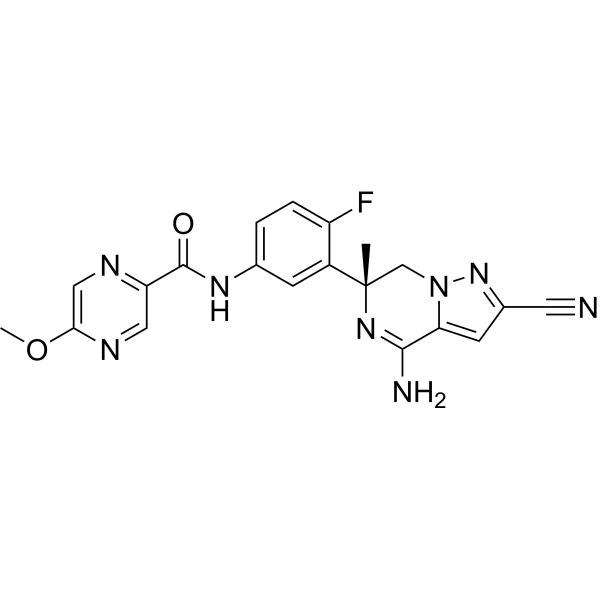 0 ImagesCat. No.: HY-153255CAS No.: 1397683-26-9BACE1-IN-13 (Compound 36) is an orally active BACE1 inhibitor with an IC50 value of 2.9 nM. BACE1-IN-13 is highly potent in hAβ42 cell (IC50 = 1.3 nM). BACE1-IN-13 has cardiovascularly safty and elicits sustained Aβ42 reduction in mouse and dog animal models.
-
NB-533
 0 ImagesCat. No.: HY-182429CAS No.: 1146544-18-4NB-533 is an orally active and brain-penetrant BACE-1 inhibitor with a human IC50 of 0.002 μM. NB-533 also inhibits human cathepsin D with an IC50 of 0.001 μM. NB-533 inhibits amyloidogenic amyloid precursor protein (APP) processing and reduces Aβ40 release. NB-533 reduces brain levels of APP metabolite C99 and Aβ40 in transgenic mice. NB-533 can be used for the research of Alzheimer’s disease.
-
Lanabecestat camsylate
 0 ImagesCat. No.: HY-100740BCAS No.: 1522418-41-2Synonyms: LY3314814 camsylate; AZD3293 camsylateLanabecestat (AZD3293; LY3314814) camsylate is a potent, orally active and blood-brain barrier penetrating BACE1 inhibitor with a Ki of 0.4 nM. Lanabecestat camsylate is used for the research of Alzheimer's disease.
-
JNK3/Wnt/β-catenin modulator-1
 0 ImagesCat. No.: HY-181160JNK3/Wnt/β-catenin modulator-1 is a brain-penetrant JNK3 inhibitor and Wnt/β-catenin activator. JNK3/Wnt/β-catenin modulator-1 decreases Aβ1-42 production and reduced ROS generation. JNK3/Wnt/β-catenin modulator-1 inhibits the activation of JNK and Puma, promotes Beclin-1 expression, reduces GSK-3β and BACE1 expression and activates Wnt/β-catenin signaling. JNK3/Wnt/β-catenin modulator-1 improves cognitive and memory performance, attenuates histopathological brain damage, preserves structure of hippocampal pyramidal cells and cerebral cortical neurons. JNK3/Wnt/β-catenin modulator-1 can be used for the research of Alzheimer's disease.
-
BACE-IN-3
 0 ImagesCat. No.: HY-111894CAS No.: 1388149-39-0BACE-IN-3 (Example 3) is a BACE inhibitor, with an IC50 of 0.004 μM.
-
NB-216
 0 ImagesCat. No.: HY-11014CAS No.: 943924-04-7NB-216 is an orally active and brain-penetrant BACE-1 inhibitor (IC50 = 17 nM). NB-216 has a strong inhibitory effect on cathepsin D (IC50 = 1 nM) and cathepsin E (IC50 = 0.4 nM). NB-216 can be used for the study of Alzheimer's disease.
-
Se-Methylselenocysteine hydrochloride
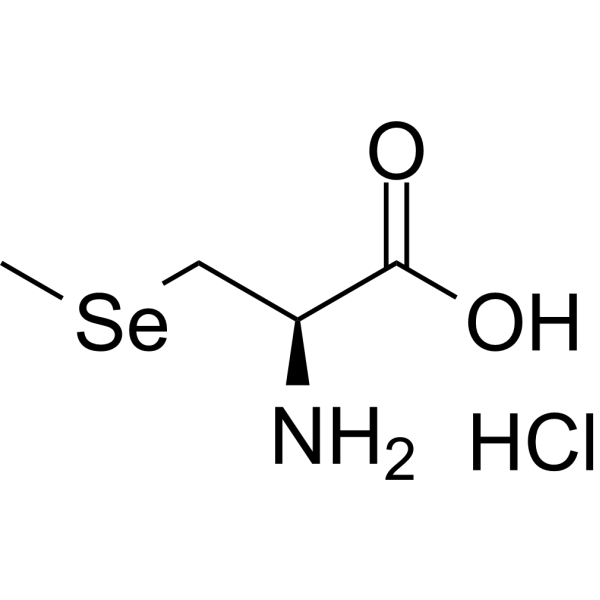 0 ImagesCat. No.: HY-114245BCAS No.: 863394-07-4Synonyms: Methylselenocysteine hydrochloride; Se-Methylseleno-L-cysteine hydrochloride
-
AChE/BChE/BACE-1-IN-2
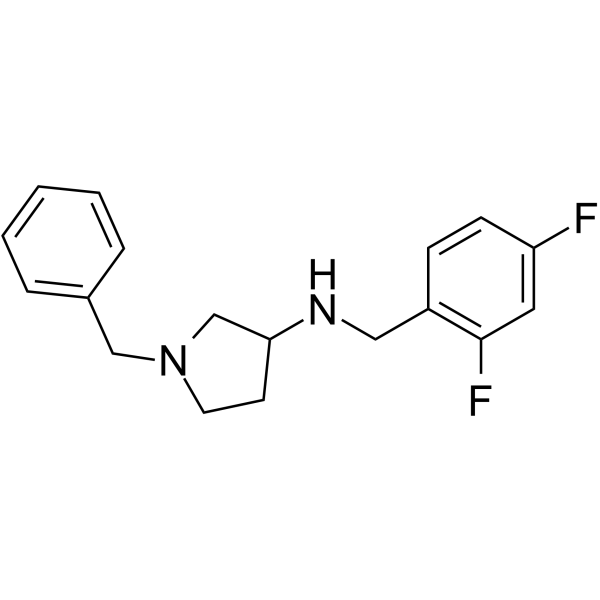 0 ImagesCat. No.: HY-147659CAS No.: 1877000-20-8AChE/BChE/BACE-1-IN-2 (Compound 4o) is an orally active inhibitor of AChE, BChE, and BACE-1 with IC50 values of 0.069, 0.127 and 0.097 μM against hAChE, hBChE and hBACE-1, respectively. AChE/BChE/BACE-1-IN-2 shows considerable PAS-AChE binding capability, excellent brain permeation, potential disassembly of Aβ aggregates, and neuroprotective activity against Aβ-induced stress. AChE/BChE/BACE-1-IN-2 has remarkable antioxidant potential.
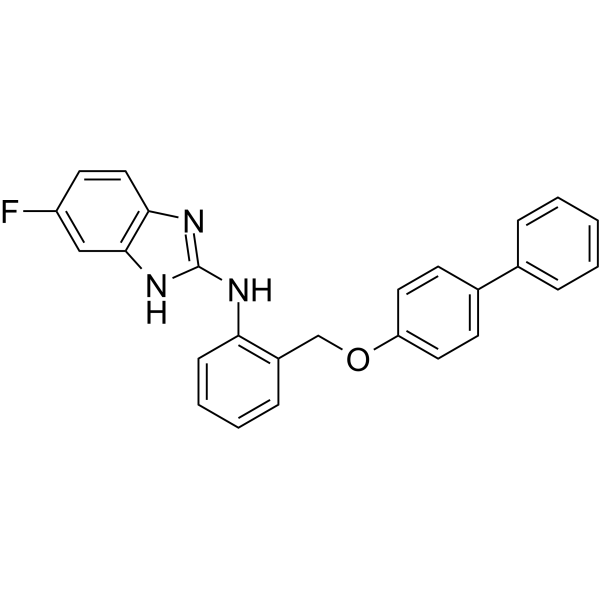
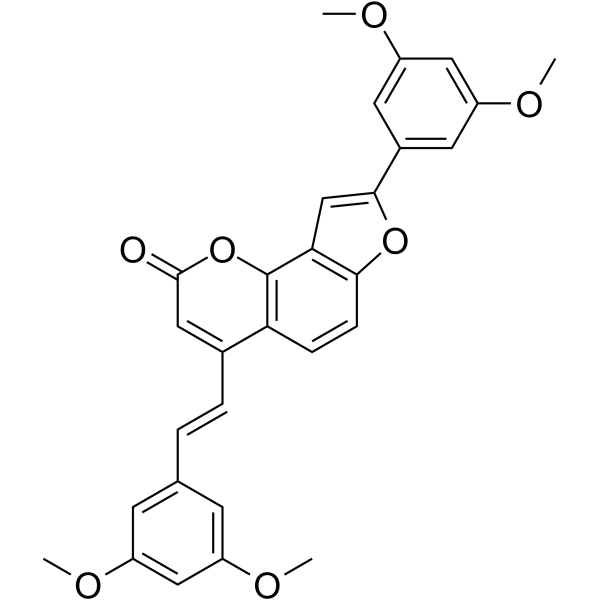
-
Eslicarbazepine Acetate-d3
 0 ImagesCat. No.: HY-W744263CAS No.: 2512192-54-8Eslicarbazepine Acetate-d3 is the deuterium labeled Eslicarbazepine acetate (HY-B0703). Eslicarbazepine acetate (BIA 2-093), an antiepileptic agent, is a dual a dual Inhibitor of β-Secretase and voltage-gated sodium channel.
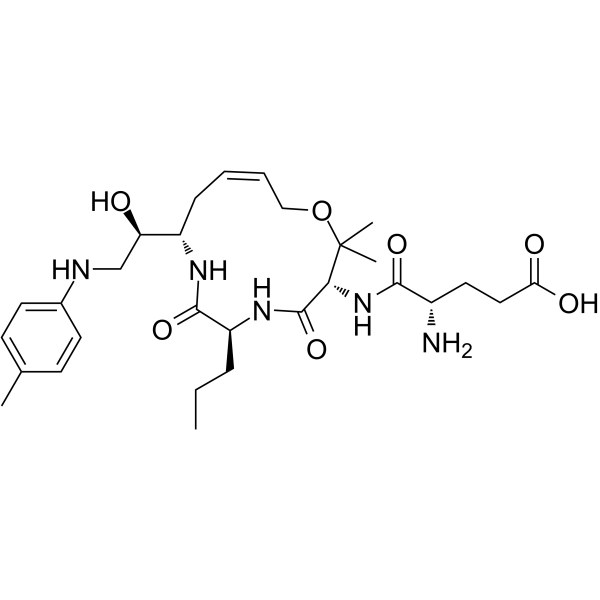
-
TAK-070 hydrochloride hydrate
 0 ImagesCat. No.: HY-114234CAS No.: 365276-12-6TAK-070 hydrochloride hydrate is a noncompetitive and orally active BACE1 inhibitor (IC50 = 3.15 μM). TAK-070 hydrochloride hydrate can be used for research of Alzheimer’s disease (AD). TAK-070 hydrochloride hydrate inhibits brain levels of soluble Aβ, and improves cognitive impairments in AD model.
-
Multitarget AD inhibitor-1
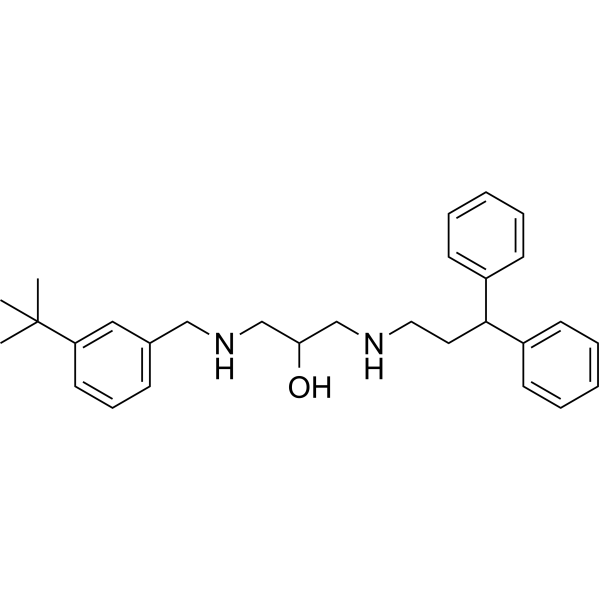 0 ImagesCat. No.: HY-136813CAS No.: 2205015-77-4Multitarget AD inhibitor-1 is a selective and reversible butyrylcholinesterase (BuChE) inhibitor with IC50s of 7.22 μM and 1.55 μM for hBuChE and eqBuChE (BuChE from equine serum), respectively. Multitarget AD inhibitor-1 inhibits β-secretase (IC50hBACE-1=41.60 μM), amyloid β aggregation (IC50Aβ=3.09 μM), tau aggregation. Multitarget AD inhibitor-1, a diphenylpropylamine derivative, has the potential for multifunctional disease-modifying anti-Alzheimer’s research.
-
BACE1-IN-15
 0 ImagesCat. No.: HY-173226BACE1-IN-15 (Compound 72) is a selective inhibitor of beta-site amyloid precursor protein cleaving enzyme 1 (BACE-1) with oral activity and the ability to penetrate the blood-brain barrier. Its IC50 value is 121.65 nM (the IC50 value for BACE-2 is 480.92 nM). BACE1-IN-15 can be used in the research of the Alzheimer's disease field

-
BACE1-IN-11
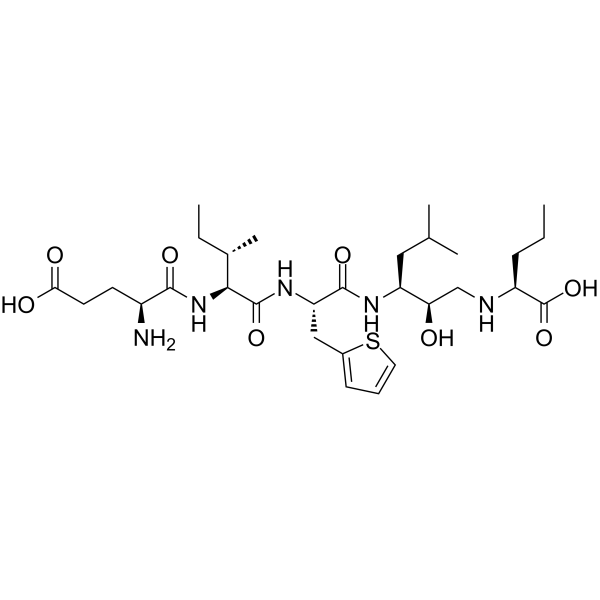 0 ImagesCat. No.: HY-151348CAS No.: 1803952-77-3




