



CXCR
CXC chemokine receptors; C-X-C motif chemokine receptors
CXCRs (CXC chemokine receptors) are integral membrane proteins that specifically bind and respond to cytokines of the CXC chemokine family. They represent one subfamily of chemokine receptors, a large family of G protein-linked receptors that are known as seven transmembrane (7-TM) proteins, since they span thecell membrane seven times. There are currently seven known CXC chemokine receptors in mammals, named CXCR1 through CXCR7. CXCR1 and CXCR2 are closely related receptors that recognize CXC chemokines that possess an E-L-R amino acid motif immediately adjacent to their CXC motif. CXCR3 is expressed predominantly on T lymphocytes. CXCR4 is the receptor for a chemokine known as CXCL12 (or SDF-1) and, as with CCR5, is utilized by HIV-1 to gain entry into target cells. The chemokine receptor CXCR5 is selectively expressed on B cells and is involved in lymphocyte homing and the development of normal lymphoid tissue. CXCR6 was formerly called three different names (STRL33, BONZO, and TYMSTR) before being assigned CXCR6 based on its chromosomal location and its similarity to other chemokine receptors in its gene sequence. CXCR7 was originally called RDC-1 (an orphan receptor) but has since been shown to cause chemotaxis in T lymphocytes in response to CXCL12 (the ligand for CXCR4) prompting the renaming of this molecule as CXCR7.
CXCR Isoform Specific Products
All Product Categories
-
CXCR Inhibitors
(106)
View all products
-
CXCR Agonists
(25)
View all products
-
CXCR Antagonists
(128)
View all products
-
CXCR Activators
(12)
View all products
-
CXCR Modulators
(19)
View all products
-
CXCR Inducer
(1)
View all products
-
CXCR Degrader
(1)
View all products
-
CXCR Controls
(2)
View all products
-
CXCR Ligand
(1)
View all products
-
CXC Chemokines Proteins
(140)
View all products
-
CXC Chemokine Receptor Proteins
(13)
View all products
-
CXCR2 Proteins
(3)
View all products
-
CXCR3 Proteins
(3)
View all products
-
CXCR4 Proteins
(6)
View all products
-
CXCR Related Products (354)
Related Products (354)

-
Recombinant Proteins (153)
-
Antibodies (9)
-
Related Compound Screening Libraries (1)
-
CXCR Isoform Comparison
-
AZ10397767
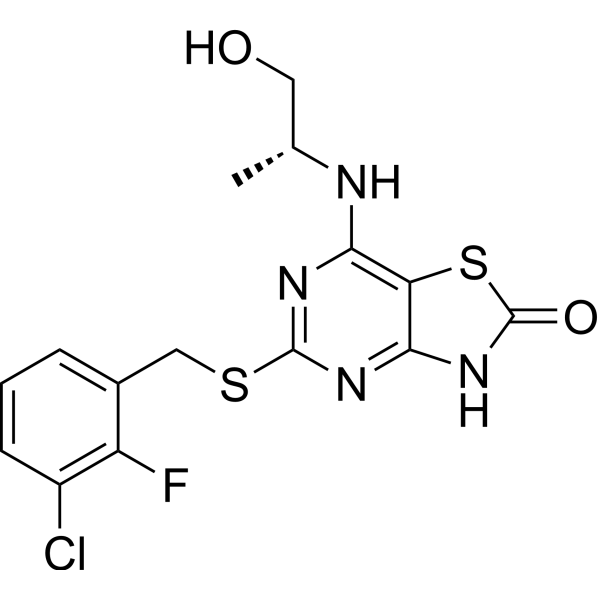 0 ImagesCat. No.: HY-124056CAS No.: 333742-63-5AZ10397767 is an orally active, selective CXCR2 receptor antagonist with an IC50 of 1 nM. AZ10397767 attenuates the Oxaliplatin (HY-17371)-induced NF-κB transcriptional activity and potentiates Oxaliplatin-induced apoptosis in androgen-independent prostate cancer (AIPC) cells. AZ10397767 significantly inhibits neutrophil recruitment into tumors which then adversely affects tumor growth in vitro and in vivo.
-
CXCR2-IN-3
 0 ImagesCat. No.: HY-179387CXCR2-IN-3 is a CXCR2 inhibitor with an IC50 of 11.37 μM. CXCR2-IN-3 mediates CXCR2-Ca2+ signalling inhibition halted autophagic flux, subsequently facilitating ROS-mediated apoptotic cell death. CXCR2-IN-3 suppresses the CXCR2-NLRP3 canonical pathway, suppressing pre-tumorigenic markers. CXCR2-IN-3 causes autophagy-dependent cell death in polyploid giant cancer cells (PGCCs). CXCR2-IN-3 can be used for the research of oral squamous cell carcinoma (OSCC).


-
Mz438
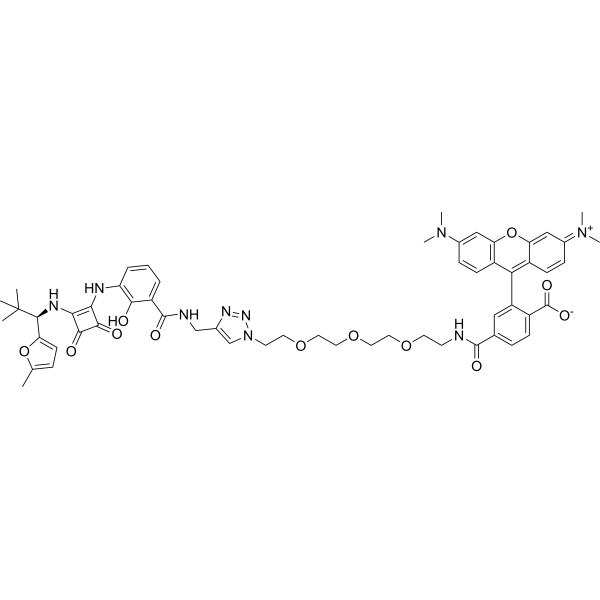 0 ImagesCat. No.: HY-155698CAS No.: 3033041-20-9
-
Corydalmine hydrochloride
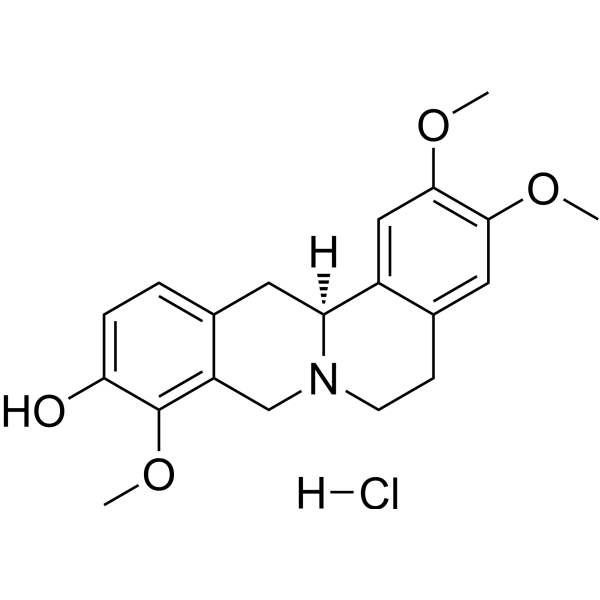 0 ImagesCat. No.: HY-N2573ACAS No.: 2428393-60-4Synonyms: L-Corydalmine hydrochloride; TLZ-16-CLCorydalmine hydrochloride inhibits spore germination of some plant pathogenic as well as saprophytic fungi. Corydalmine hydrochloride acts as an oral analgesic agent, exhibiting potent analgesic activity. Corydalmine hydrochloride alleviates Vincristine-induced neuropathic pain in mice by inhibiting an NF-κB-dependent CXCL1/CXCR2 signaling pathway.
-
LY-2624587
 0 ImagesCat. No.: HY-P991656CAS No.: 2125546-89-4LY-2624587 is a humanized IgG4 monoclonal antibody antagonist targeting CXCR4. LY-2624587 blocks SDF-1/CXCR4 interaction and SDF-1-induced GTP binding. LY-2624587 significantly inhibits cell migration and induces apoptosis in human lymphoma and leukemia cells. LY-2624587 also inhibits CXCR4 and SDF-1 mediated cell signaling including activation of MAPK and AKT. LY-2624587 can be used for human hematological malignancies like acute myeloid leukemia (AML) research.
-
CXCR4 antagonist 7
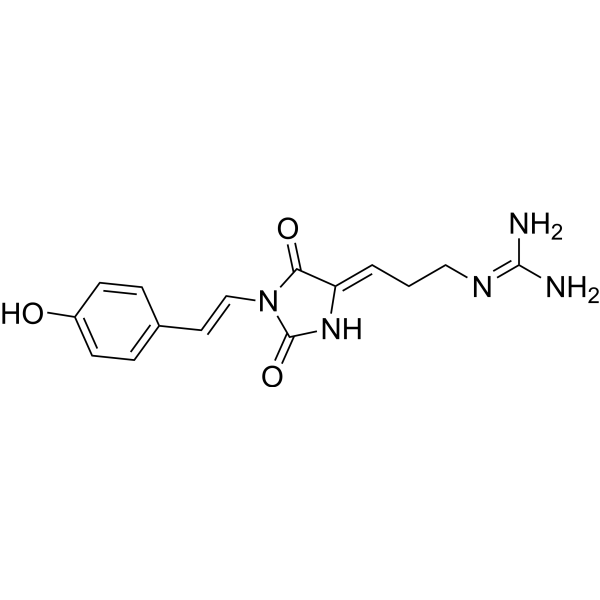 0 ImagesCat. No.: HY-147808CAS No.: 1185451-72-2CXCR4 antagonist 7 (Compound PARA-B) is a CXCR4 antagonist with the IC50 of 9.3 nM. CXCR4 antagonist 7 can be used for the research of HIV infection, inflammatory diseases, cancer, and WHIM syndrome.

-
TJX7
 0 ImagesCat. No.: HY-P992476TJX7 is a recombinant antibody targeting CXCL13/BCA-1/BLC.
-
Burixafor
 0 ImagesCat. No.: HY-19867CAS No.: 1191448-17-5Synonyms: TG-0054Burixafor (TG-0054) is a potent CXCR4 antagonist with a pIC50 of 7.4. Burixafor inhibits the binding of CXCL12 to CXCR4, antagonizes CXCL12-induced recruitment of Gαᵢ and β-arrestin2, and blocks the downstream Gαᵢ-mediated inhibitory effect on cAMP signal transduction. Burixafor mobilizes CD34+ hematopoietic stem/progenitor cells (HSPC) from the bone marrow to the peripheral blood. Burixafor can be used for research on autologous hematopoietic stem cell transplantation (ASCT).
-
PROTAC STING Degrader-2
 0 ImagesCat. No.: HY-158036CAS No.: 3023095-61-3PROTAC STING Degrader-2 is a STING PROTAC degrader with a DC50 of 0.53 μM. PROTAC STING Degrader-2 reduces the phosphorylation levels of TBK1 and IRF3. PROTAC STING Degrader-2 decreases the mRNA expression levels of IFN-β, CXCL10 and TNF-α, and blocks luciferase secretion. PROTAC STING Degrader-2 can be used in the research of autoimmune diseases.

-
AMD 3329 octahydrobromide
 0 ImagesCat. No.: HY-164682CAS No.: 170861-77-5AMD 3329 octahydrobromide is a potent and selective anti-HIV-1 and HIV-2 compound with activity to inhibit viral replication. AMD 3329 blocks viral invasion by binding to the chemokine receptor CXCR4. AMD 3329 exhibits EC50 values as low as 0.8 and 1.6 nM when inhibiting HIV-1 and HIV-2 replication, showing better antiviral efficacy than AMD3100. AMD 3329 significantly inhibits the binding of specific CXCR4 monoclonal antibodies and the Ca(2+) flux induced by SDF-1alpha. AMD 3329 is also able to effectively interfere with virus-induced syncytium formation, with an EC50 value of 12 nM.

-
CXCR2 antagonist 7
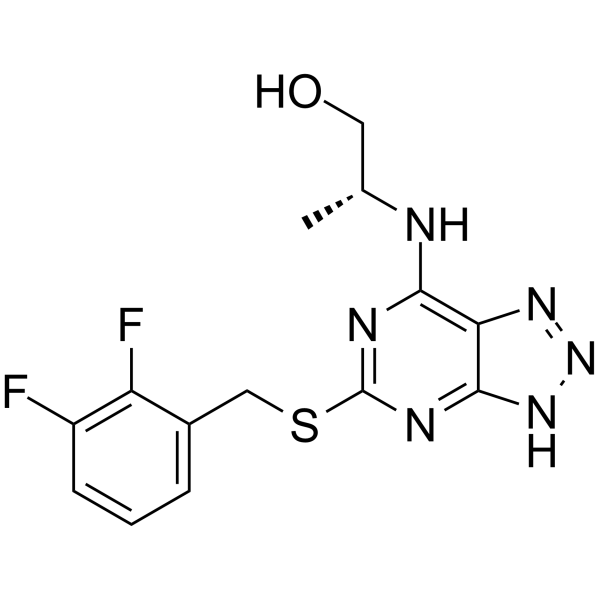 0 ImagesCat. No.: HY-144784CXCR2 antagonist 7 (compound 19) is a potent CXCR2 antagonist. CXCR2 antagonist 7 shows potent CXCR2 binding affinity (IC50=0.044 µM) and calcium mobilization (IC50=0.66 µM)[ 1].
-
BPRCX807
 0 ImagesCat. No.: HY-178205CAS No.: 2236595-58-5BPRCX 807 is a selective and potent CXCR4 (CXC chemokine receptor type 4) antagonist. BPRCX 807 inhibits CXCL12-mediated ERK and Akt phosphorylation. BPRCX 807 can significantly suppress primary tumor growth. BPRCX 807 can be used for the study of hepatocellular carcinoma.
-
STING agonist-50
 0 ImagesCat. No.: HY-181484CAS No.: 3058842-90-0STING agonist-50 is an orally active STING agonist with an IC50 of 3.457 μM. STING agonist-50 activates the STING signaling pathway and promotes the phosphorylation of downstream TBK1 and IRF3. STING agonist-50 induces the expression of IFN-β, CXCL10 and IL-6. STING agonist-50 inhibits tumor growth in syngeneic mouse models. STING agonist-50 can be used for the research of colorectal cancer.
-
DOTA-CXCR4-L
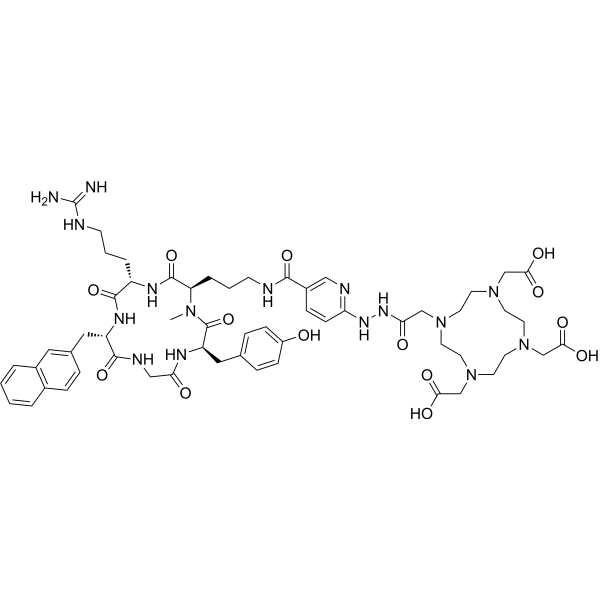 0 ImagesCat. No.: HY-P5297DOTA-CXCR4-L is a CXCR4 targeting peptide. DOTA-CXCR4-L can be used in the study of cancers, including glioblastoma and triple-negative breast cancer. NODAGA-LM3 can be labeled with [68Ga]/[177Lu] for the synthesis/research of Radionuclide-Drug Conjugates (RDCs).
-
CXCR6 antagonist 1
 0 ImagesCat. No.: HY-133151CAS No.: 2579689-85-1CXCR6 antagonist 1 (Compound 81) is an orally active CXCR6 antagonist. CXCR6 antagonist 1 inhibits the CXCR6 receptor signaling pathway, including β-arrestin recruitment and Forskolin (HY-15371)-induced cAMP production. CXCR6 antagonist 1 reduces tumor growth in a mouse xenograft model of hepatocellular carcinoma. CXCR6 antagonist 1 can be used in research related to hepatocellular carcinoma.




