1. Signaling Pathways
  2. Apoptosis
  3. Caspase

Caspase

Caspase is a family of cysteine proteases that play essential roles in apoptosis (programmed cell death), necrosis, and inflammation. There are two types of apoptotic caspases: initiator (apical) caspases and effector (executioner) caspases. Initiator caspases (e.g., CASP2, CASP8, CASP9, and CASP10) cleave inactive pro-forms of effector caspases, thereby activating them. Effector caspases (e.g., CASP3, CASP6, CASP7) in turn cleave other protein substrates within the cell, to trigger the apoptotic process. The initiation of this cascade reaction is regulated by caspase inhibitors. CASP4 and CASP5, which are overexpressed in some cases of vitiligo and associated autoimmune diseases caused by NALP1 variants, are not currently classified as initiator or effector in MeSH, because they are inflammatory enzymes that, in concert with CASP1, are involved in T-cell maturation.

Cat. No. Product Name Effect Purity Chemical Structure
  • HY-155402
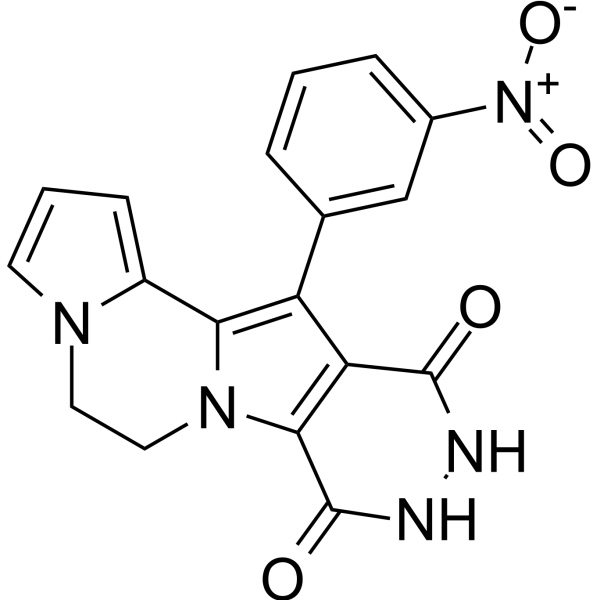
    Antiproliferative agent-42
    Inhibitor
    Antiproliferative agent-42 (compound 7m) is a dihydrodipyrrolo compound. Antiproliferative agent-42 showed antiproliferative activity against Panc-1 cell line with an IC50 value of 12.54 μM.
    Antiproliferative agent-42
  • HY-108312
    Ac-VEID-CHO
    Inhibitor
    Ac-VEID-CHO is a peptide-derived caspase inhibitor and has potency of inhibition for Caspase-6, Caspase-3 and Caspase-7 with IC50 values of 16.2 nM, 13.6 nM and 162.1 nM, respectively. Ac-VEID-CHO also inhibits VEIDase activity an IC50 value of 0.49 µM. Ac-VEID-CHO can be used for the research of neurodegenerative conditions including Alzheimer’s and Huntington’s disease.
    Ac-VEID-CHO
  • HY-117047
    ALC67
    Activator
    ALC67 is a cytotoxic thiazolidine compound with an IC50 of approximately 5 μM against liver, breast cancer, colon cancer, and endometrial cancer cell lines. ALC67 induces apoptosis in cancer cells by activating caspase-9 and causing cell cycle arrest at the SubG1/G1 phase, via a pathway that is independent of death receptors. ALC67 can be used in cancer research.
    ALC67
  • HY-171031
    TFGF-18
    Activator
    TFGF-18 is a GSK-3β inhibitor (IC50: 0.59 μM). TFGF-18 inhibits LPS-induced microglia activation and proinflammatory mediators release via inhibiting GSK-3β and downstream p65/NF-κB signaling. TFGF-18 inhibits neuronal apoptosis and oxidative stress, inhibits expressions of Bax, caspase3 and cleaved-caspase3 and increases the expression of Bcl-2. TFGF-18 has neuroprotection effect, inhibit neuroinflammation and attenuates cognitive impairment.
    TFGF-18
  • HY-N0876R
    Arenobufagin (Standard)
    Arenobufagin is a natural bufadienolide that can be extracted from toad venom. Arenobufagin can induce apoptosis and autophagy in human hepatocellular carcinoma cells through inhibition of PI3K/Akt/mTOR pathway. Arenobufagin has potent antineoplastic activity against HCC HepG2 cells as well as corresponding multidrug-resistant HepG2/ADM cells. Arenobufagin can inhibit VEGF-mediated angiogenesis through suppression of VEGFR-2 signaling pathway.
    Arenobufagin (Standard)
  • HY-N0346
    4-Methoxycinnamic acid ethyl ester
    Agonist 98.72%
    4-Methoxycinnamic acid ethyl ester (Ethyl p-methoxycinnamate) is an orally active natural compound found. 4-Methoxycinnamic acid ethyl ester exerts anti-inflammatory effects by inhibiting cyclooxygenase (COX-1 (IC50 = 1.12 μM) and COX-2 (IC50 = 0.83 μM)), NF-κB (IC50 = 88.7 μM) and cytokine production (TNF-α (IC50 = 96.84 μg/mL) and IL-1β (IC50 = 166.4 μg/mL)). 4-Methoxycinnamic acid ethyl ester inhibits tumor cell proliferation, migration and cancer metabolism and induces apoptosis.4-Methoxycinnamic acid ethyl ester inhibits VEGF expression, thereby inhibiting angiogenesis. 4-Methoxycinnamic acid ethyl ester has a significant inhibitory effect on dengue virus and Mycobacterium tuberculosis. 4-Methoxycinnamic acid ethyl ester has analgesic effects in rats.
    4-Methoxycinnamic acid ethyl ester
  • HY-N6951R
    Guaiazulene (Standard)
    Guaiazulene (Standard) is the analytical standard of Guaiazulene (HY-N6951). This product is intended for research and analytical applications. Guaiazulene is a bicyclic sesquiterpene that can cross the blood-brain barrier. Guaiazulene exhibits various biological activities such as anti-inflammatory, antioxidant, hepatoprotective, antibacterial, and anti-tumor properties. Guaiazulene is also commonly used as a colorant in cosmetics. Guaiazulene shows in vitro cytotoxicity to rat neuronal cells and N2a neuroblastoma cells at high concentrations.
    Guaiazulene (Standard)
  • HY-16232R
    Glufosfamide (Standard)
    Activator
    Glufosfamide (Standard) is the analytical standard of Glufosfamide. This product is intended for research and analytical applications. Glufosfamide is a glucose-conjugated alkylating cytotoxic agent and a derivative of Ifosfamide (HY-17419). Glufosfamide induces apoptosis frequency and increase the expression of caspase-9 and caspase-3 in cancer cells. Glufosfamide shows great anti-tumor activity in MiaPaCa-2-RFP mouse model. Glufosfamide can be used for the study of hepatocellular carcinoma, prostate cancer and pancreatic carcinoma.
    Glufosfamide (Standard)
  • HY-W075770
    Nickel(II) oxide
    Activator ≥99.0%
    Nickel(II) oxide (nickel monoxide) is a chemical warfare agent that can enter the body through the respiratory tract and other routes, distributing to organs such as the lungs and testes. The nanoparticle form of nickel(II) oxide (NiO NPs) exhibits antibacterial, anti-leishmanial, anti-diabetic, and anti-cancer activities. NiO NPs can be activated by ultraviolet and visible light, generating reactive oxygen species (ROS). Nickel(II) oxide induces oxidative stress by generating reactive oxygen species, activating the TGF-β1-mediated MAPK and PI3K/AKT pathways, disrupting the MMPs/TIMPs balance, and upregulating the expression of inflammatory factors (IL-1β, IL-6) and apoptosis-related molecules (Bax, caspase-3, p53), while inhibiting the activity of the anti-apoptotic molecule Bcl-2. Nickel(II) oxide induces cytotoxicity, promotes fibrosis, triggers inflammatory responses, and causes apoptosis. Nickel(II) oxide can be applied in research on the safety assessment of nanomaterials, such as in the context of pulmonary fibrosis and reproductive system toxicity.
    Nickel(II) oxide
  • HY-B0420AR
    Moroxydine hydrochloride (Standard)
    Inhibitor
    Moroxydine (ABOB) hydrochloride (Standard) is the analytical standard of Moroxydine (ABOB) hydrochloride (HY-B0420A). Moroxydine (ABOB) hydrochloride is a broad-spectrum agent with multi-antiviral activities against DNA and RNA viruses, including influenza virus, herpes simplex, varicella zoster, measles, mumps disease, hepatitis C virus, etc. Moroxydine hydrochloride exhibits excellent antiviral activity and shows low cytotoxicity to cells infected by dsRNA viruses (grass carp reovirus, GCRV) and large DNA viruses (giant salamander iridovirus, GSIV). Moroxydine hydrochloride blocks the GCRV-induced cytopathic effects and eliminates nucleocapsids in ctenopharyngodon idella kidney (CIK) cells to keep the normal morphological structure. Moroxydine hydrochloride significantly inhibits the apoptosis, the caspase 3 activity, Bax expression and down-regulates Bcl-2 levels.
    Moroxydine hydrochloride (Standard)
  • HY-100573R
    Necrosulfonamide (Standard)
    Inhibitor
    Necrosulfonamide (Standard) is the analytical standard of Necrosulfonamide (HY-100573). This product is intended for research and analytical applications. Necrosulfonamide is a MLKL and Gasdermin D (GSDMD) inhibitor, capable of separately inhibiting necroptosis and pyroptosis of cells. Necrosulfonamide does not affect the activation of upstream signals, but specifically inhibits the downstream executor oligomerization step. Necrosulfonamide reduces the expression of the key kinases NLRP3 and caspase-1 involved in necroptosis and pyroptosis, activate the Nrf2 pathway and the downstream antioxidant enzymes, and also downregulates a variety of inflammatory factors. Necrosulfonamide plays significant roles in various diseases such as neurodegenerative diseases (such as Parkinson’s disease), tissue damage and ischemia-reperfusion injury, inflammatory bowel disease, osteoarthritis and fracture repair, and hair loss by regulating two important programmed necrosis pathways.
    Necrosulfonamide (Standard)
  • HY-103348R
    Boc-Asp(OMe)-fluoromethyl ketone (Standard)
    Inhibitor
    Boc-Asp(OMe)-fluoromethyl ketone (Standard) is the analytical standard of Boc-Asp(OMe)-fluoromethyl ketone (HY-103348). This product is intended for research and analytical applications. Boc-Asp(OME)-Fluoromethyl Ketone is a broad range caspase inhibitor that inhibits Fas-mediated phagocytosis and oxidative rupture inhibition, but does not affect the chemotactic activity of IL-8.
    Boc-Asp(OMe)-fluoromethyl ketone (Standard)
  • HY-171447
    LPT99
    Inhibitor
    LPT-99 is an antagonist of apoptotic protease activating factor 1 (APAF-1). LPT-99 suppresses the activation of procaspase-9. LPT99 suppresses Cisplatin (HY-17394)-induced apoptosis. LPT99 can effectively mitigate cisplatin-induced hearing loss in rats.
    LPT99
  • HY-N15466
    Longan cerebroside II
    Longan cerebroside II is a cerebroside found in Typhonium giganteum. Longan cerebroside II shows anti-apoptosis and neuroprotective activity. Longan cerebroside II reduces protein expression of caspase-9, caspase-3, and Bax, increases Bcl-2, cytochrome c levles.
    Longan cerebroside II
  • HY-14584A
    PQ-1 succinate
    Inhibitor
    PQ-1 succinate is an inhibitor for gap junction, which suppresses the gap junction dye transfer activity in retinal neurosensory R28 cells, and inhibits the CoCl2-induced ischemic apoptosis in retinal cell.
    PQ-1 succinate
  • HY-16658C
    Z-VA-DL-D-FMK
    Inhibitor
    Z-VA-DL-D-FMK (Z-VA-DL-D(OH)-FMK) is an inhibitor for caspase. Z-VA-DL-D-FMK binds irreversibly to caspases, increases the sensitivity of TNF-α, and activates HIV replication in infected T cell ACH-2.
    Z-VA-DL-D-FMK
  • HY-N8210R
    Homoeriodictyol (Standard)
    Homoeriodictyol (Standard) is the analytical standard of Homoeriodictyol (HY-N8210). This product is intended for research and analytical applications. Homoeriodictyol is an orally active, bitter-tasting flavanone that can penetrate the blood-brain barrier. Homoeriodictyol enhances synaptic-related protein expression through NCOA4-mediated ferritin autophagy. Homoeriodictyol improves memory impairment in mice by inhibiting the NLRP3 inflammasome. Homoeriodictyol protects human endothelial cells from oxidative damage by activating Nrf2 and inhibiting mitochondrial dysfunction. Homoeriodictyol enhances ROS activity and induces apoptosis, exhibiting anticancer effects. Homoeriodictyol inhibits the survival and migration of androgen-resistant prostate cancer cells in vitro. Homoeriodictyol exerts antinociceptive activity in mice in vivo.
    Homoeriodictyol (Standard)
  • HY-165550
    Sphingosine
    Sphingosine (C22-D-erythro-Sphingosine) is a metabolite of sphingolipid and a pro-Apoptotic signaling messenger. Sphingosine induces apoptosis via Caspase-dependent, mitochondria-dependent and lysosomal affinity detergent pathways, downregulates Bcl-2 and Bcl-xL, and truncates Bid and Bax. Sphingosine is used for cancer research.
    Sphingosine
  • HY-N0257R
    Epimedin A (Standard)
    Inhibitor
    Epimedin A (Standard) is the analytical standard of Epimedin A (HY-N0257). This product is intended for research and analytical applications. Epimedin A, one of the main flavonoid active components in Herba Epimedii, is orally active. Epimedin A can inhibit osteoclastogenesis, differentiation, and bone resorption. Epimedin A also possesses anti-inflammatory activity. Epimedin A can be used in the research of osteoporosis and inflammatory diseases.
    Epimedin A (Standard)
  • HY-N3055
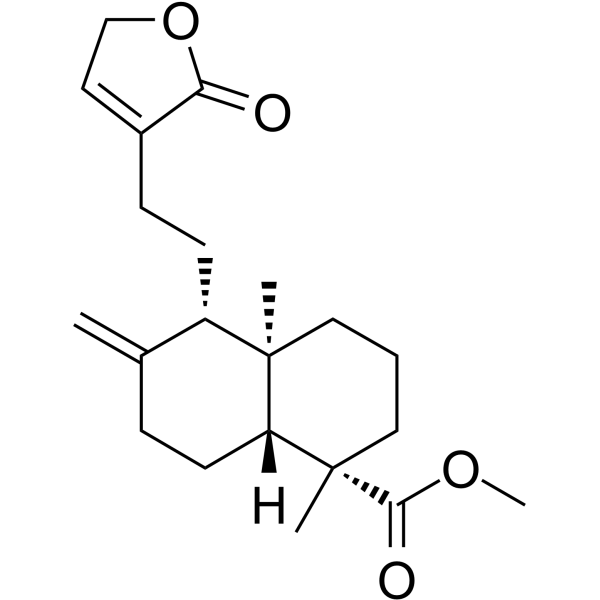
    Pinusolide
    Inhibitor 99.93%
    Pinusolide is an AMPK activator and PAF receptor antagonist. Pinusolide activates AMPK, phosphorylates ACC, enhances IRS-1 tyrosine phosphorylation, boosts glucose uptake, and modulates insulin signaling. Pinusolide inhibits caspase-3/7 activation, intracellular calcium elevation, reactive oxygen species overproduction, lipid peroxidation, and tumor cell proliferation. Pinusolide stabilizes superoxide dismutase activity, reduces apoptotic hallmarks, induces mitochondrial pathway apoptosis, and triggers DNA fragmentation. Pinusolide can be used for the research of type 2 diabetes, neurodegenerative diseases, acute lymphoblastic leukemia, acute myeloid leukemia, and Burkitt lymphoma.
    Pinusolide
Cat. No. Product Name / Synonyms Species Source
Cat. No. Product Name / Synonyms Application Reactivity

Upon binding to their cognate ligand, death receptors such as Fas and TRAILR can activate initiator Caspases (Pro-caspase 8 and Pro-caspase 10) through dimerization mediated by adaptor proteins such as FADD and TRADD. Active Caspase 8 and Caspase 10 then cleave and activate the effector Caspase 3, 6 and 7, leading to apoptosis. ROS/DNA damage and ER stress trigger Caspase 2 activation. Active Caspase 2 cleaves and activates Caspase 3 and initiates apoptosis directly. Caspase 2, 8 and 10 can also cleave Bid, stimulate mitochondrial outer membrane permeabilization (MOMP) and initiate the intrinsic apoptotic pathway. Following MOMP, mitochondrial intermembrane space proteins such as Smac and Cytochrome C are released into the cytosol. Cytochrome C interacts with Apaf-1, triggering apoptosome assembly, which activates Caspase 9. Active Caspase 9, in turn, activates Caspase 3, 6 and 7, leading to apoptosis. Mitochondrial release of Smac facilitates apoptosis by blocking the inhibitor of apoptosis (IAP) proteins. 


Following the binding of TNF to TNFR1, TNFR1 binds to TRADD, which recruits RIPK1, TRAF2/5 and cIAP1/2 to form TNFR1 signaling complex I. Formation of the complex IIa and complex IIb is initiated either by RIPK1 deubiquitylation mediated by CYLD or by RIPK1 non-ubiquitylation due to depletion of cIAPs. The Pro-caspase 8 homodimer in complex IIa and complex IIb generates active Caspase 8. This active Caspase 8 in the cytosol then carries out cleavage reactions to activate downstream executioner caspases and thus induce classical apoptosis[1][2]


Reference:

[1]. Thomas C, et al. Caspases in retinal ganglion cell death and axon regeneration. Cell Death Discovery volume 3, Article number: 17032 (2017).
[2]. Brenner D, et al. Regulation of tumour necrosis factor signalling: live or let die. Nat Rev Immunol. 2015 Jun;15(6):362-74.

Your Search Returned No Results.

Sorry. There is currently no product that acts on isoform together.

Please try each isoform separately.