



IFNAR
Interferon-α/β receptor; Interferon-alpha/beta receptor
The interferon-α/β receptor (IFNAR) is composed of two subunits, IFNAR1 and IFNAR2, encoding transmembrane polypeptides. Type-I IFNs, interferon α (IFN-α) and interferon β (IFN-β), act through a shared receptor complex, IFNAR. Binding of type-I IFN to IFNAR1 will robustly activate Janus activated kinase-signal transducer and activator of transcription (JAK-STAT) signaling pathway. Aberrant activation of the type-I IFN response results in a spectrum of disorders called interferonopathies.
Type-I IFN response occurs when IFN-α/β binds to their receptor complex, IFNAR. The ligand-receptor complex is phosphorylated, presumably by pre-associated Janus activated kinases (JAKs) namely tyrosine kinase 2 (TYK2) on IFNAR1 and JAK1 on IFNAR2. The phosphorylated receptors are docking sites for signal transducers and activators of transcription (STAT) factors that dimerise and translocate to the nucleus. STATs 1, 2, 3, 4, and 5 are activated by type-I IFNs in many cell types. Other kinases (e.g., mitogen-activated protein kinases) and transcription factors (e.g., nuclear factor-κB) can also be activated in response to type-I IFNs. Multiple pathways and IFN-regulated genes are activated by IFNs, many of which remain unknown.
All Product Categories
-
IFNAR Inhibitors
(123)
View all products
-
IFNAR Agonists
(11)
View all products
-
IFNAR Antagonists
(6)
View all products
-
IFNAR Activators
(84)
View all products
-
IFNAR Modulators
(4)
View all products
-
IFNAR Inducers
(23)
View all products
-
IFNAR Degrader
(1)
View all products
-
IFNAR Control
(1)
View all products
-
IFN-α/β Receptor Proteins
(16)
View all products
-
IFN-alpha/beta R2 Proteins
(6)
View all products
-
IFNAR Related Products (324)
Related Products (324)

-
Recombinant Proteins (16)
-
Antibodies (14)
-
CCCP
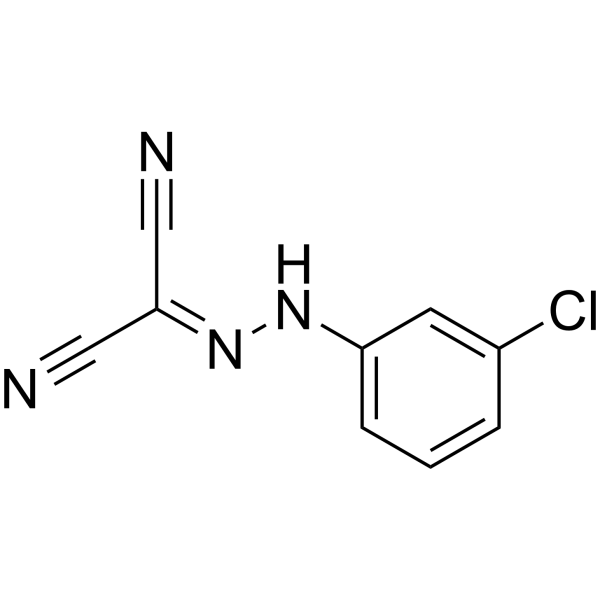 0 ImagesSynonyms: Carbonyl cyanide 3-chlorophenylhydrazone; Carbonyl Cyanide m-ChlorophenylhydrazoneCCCP is an oxidative phosphorylation (OXPHOS) uncoupler. CCCP induces activation of PINK1 leading to Parkin Ser65 phosphorylation.
-
Deucravacitinib
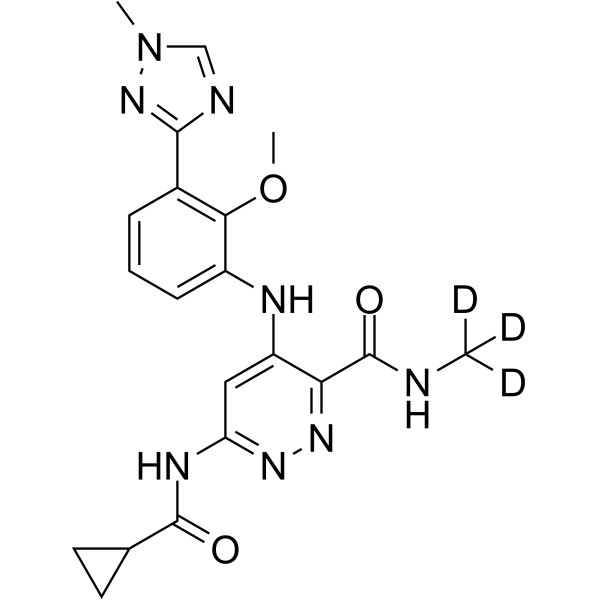 0 ImagesSynonyms: BMS-986165Deucravacitinib (BMS-986165) is an orally active allosteric inhibitor of tyrosine kinase 2 (TYK2), with an IC50 of 0.2 nM and a Ki of 0.02 nM against the JH2 domain of TYK2, and it exhibits selectivity over other JAK subtypes and most of the kinome. Deucravacitinib blocks IL-23, IL-12, p-STAT1/3 and Type I IFN signaling, and inhibits Th17/Th1-mediated psoriasis inflammation. Deucravacitinib can be used in research related to moderate-to-severe plaque psoriasis, inflammatory bowel disease and systemic lupus erythematosus.
-
Icotrokinra
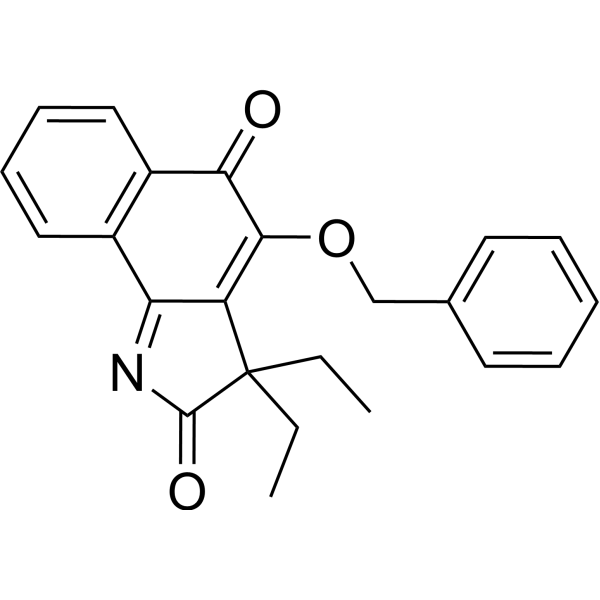
 0 ImagesSynonyms: JNJ-77242113; JNJ-2113; PN-235Icotrokinra (JNJ-77242113) is an orally available, selective antagonist of the IL-23 receptor. Icotrokinra inhibits IL-23-induced STAT3 phosphorylation in peripheral blood mononuclear cells (IC50=5.6 pM) and inhibits IL-23-induced interferon IFN-γ production in NK cells with an IC50 of 18.4 pM. Icotrokinra exhibits anti-inflammatory activity in a rat TNBS-induced colitis model. Icotrokinra can be used in the study of psoriasis, psoriatic arthritis, and inflammatory bowel disease.
-
Emapalumab
 0 ImagesSynonyms: NI-0501
-
YE6144
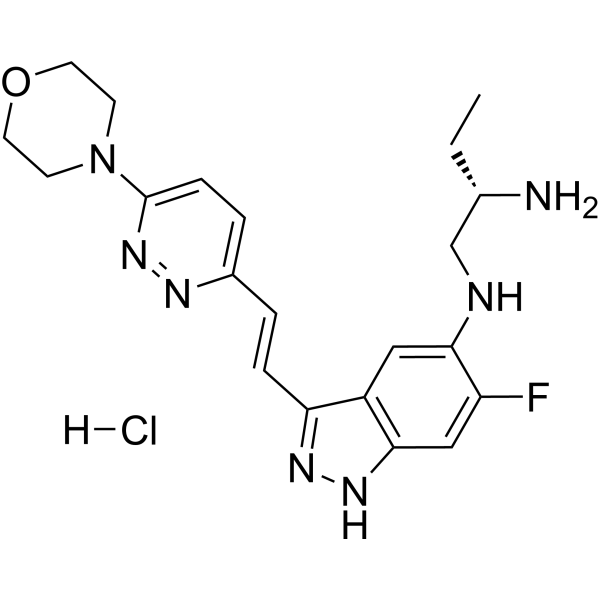 0 ImagesCat. No.: HY-150095CAS No.: 3065657-02-2YE6144 free base is a selective prototypical interferon regulatory factor 5 (IRF5) inhibitor. YE6144 free base suppresses the disease course and is especially effective in remission maintenance in a mouse model of systemic lupus erythematosus (SLE). YE6144 free base can be used for SLE research.
-
IRF1-IN-1
 0 ImagesIRF1-IN-1 (Compound I-2) is an IRF1 inhibitor. IRF1-IN-1 decreases the recruitment of IRF1 to the promoter of CASP1. IRF1-IN-1 inhibits cell death signaling pathway (i.e., cleavage of Caspase 1, GSDMD, IL-1 and PARP1). IRF1-IN-1 has a protective effect on ionizing radiation-induced inflammatory skin injury.
-
Anti-Mouse IFN gamma Antibody (XMG1.2)
 0 ImagesCat. No.: HY-P990798Purity: 99.00%Anti-Mouse IFN gamma Antibody (XMG1.2) is a kind of rat-derived IgG1 antibody inhibitor, targeting to IFN-γ. Anti-Mouse IFN gamma Antibody (XMG1.2) can neutralize IFN-γ. Anti-Mouse IFN gamma Antibody (XMG1.2) can be used for the researches of cancer, inflammation and immunology, such as multiple myeloma and chronic inflammation.
-
IFN alpha-IFNAR-IN-1 hydrochloride
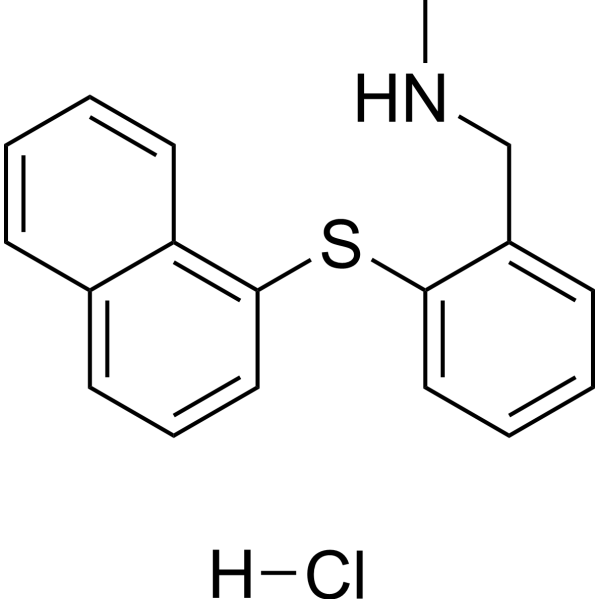 0 ImagesIFN alpha-IFNAR-IN-1 hydrochloride is a nonpeptidic, low-molecular-weight inhibitor of the interaction between IFN-α and IFNAR. IFN alpha-IFNAR-IN-1 hydrochloride inhibits modified Vaccinia virus ankara (MVA)-induced IFN-α responses in murine bone-marrow-derived, Flt3- L-differentiated pDC cultures (BM-pDCs) (IC50=2-8 μM).
-
Cyclo(L-Phe-L-Pro)
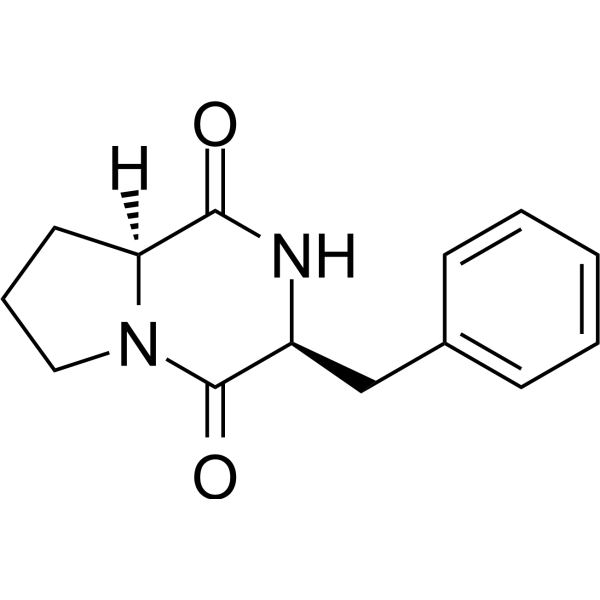 0 ImagesCyclo(L-Phe-L-Pro), isolated from Pseudomonas fluorescens and Pseudomonas alcaligenes cell-free culture supernatants is an antifungal cyclic dipeptide. Cyclo(L-Phe-L-Pro) inhibits IFN-β production by interfering with retinoic-acid-inducible gene-I (RIG-I) activation. Cyclo(L-Phe-L-Pro) exhibits free-radical scavenging activity with the IC50 of 24 µM in the DPPH assay.
-
Anti-Mouse IFN gamma Antibody (H22)
 0 ImagesCat. No.: HY-P99136Anti-Mouse IFN gamma Antibody (H22) is an anti-mouse IFN gamma IgG antibody inhibitor derived from host Armenian Hamster. Anti-Mouse IFN gamma Antibody (H22) abrogates specific binding of I25II-rIFN-γ to macrophages. Anti-Mouse IFN gamma Antibody (H22) inhibits macrophage-activating factor (MAF) (ID50 = 56 ng). Anti-Mouse IFN gamma Antibody (H22) inhibits IFN-gamma dependent antiviral activity (ID50 = 2 ng). Anti-Mouse IFN gamma Antibody (H22) neutralizes IFNγ in mice. Anti-Mouse IFN gamma Antibody (H22) can be used for the researches of inflammation and infection, such as arthritis.
-
IRF1-IN-2
 0 ImagesIRF1-IN-2 (Compound I-19) is an IRF1 inhibitor. IRF1-IN-2 decreases the recruitment of IRF1 to the promoter of CASP1. IRF1-IN-2 inhibits cell death signaling pathway (i.e., cleavage of Caspase 1, GSDMD, IL-1 and PARP1; inhibits the Pho of TKB1, upregulates GPX4 and downregulates FACL4). IRF1-IN-2 has a protective effect on ionizing radiation-induced inflammatory skin injury.
-
Ezurpimtrostat hydrochloride
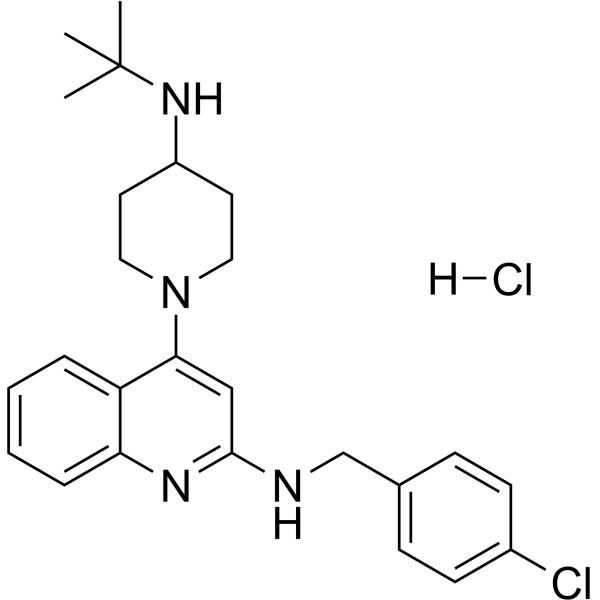 0 ImagesSynonyms: GNS561 hydrochlorideEzurpimtrostat hydrochloride (GNS561 hydrochloride) is an orally active PPT1 inhibitor, autophagy inhibitor, immunomodulator, anti-inflammatory agent, and anticancer agent. Ezurpimtrostat hydrochloride inhibits PPT1, dysregulates lysosomal function, redistributes mTOR, and induces apoptosis. Ezurpimtrostat hydrochloride reduces IFN‑α, CRP, immune complex deposition, and SARS‑CoV‑2 viral load. Ezurpimtrostat hydrochloride can be used for the study of systemic lupus erythematosus, SARS‑CoV‑2, hepatocellular carcinoma, fibrosis, and related disorders.
-
AX-024
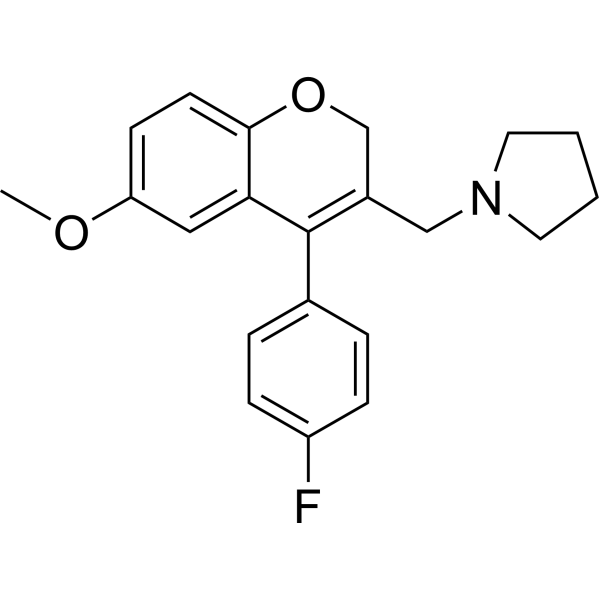 0 ImagesAX-024 is an orally available, first-in-class inhibitor of the TCR-Nck interaction that selectively inhibits TCR-triggered T cell activation with an IC50 ~1 nM. AX-024 modulates cell signaling by targeting SH3 domains. AX-024 has low-acute toxicity and high potency and selectivity, and strongly inhibit the production of IL-6, TNF-α, IFN-γ, IL-10 and IL-17A.

-
Royal Jelly acid
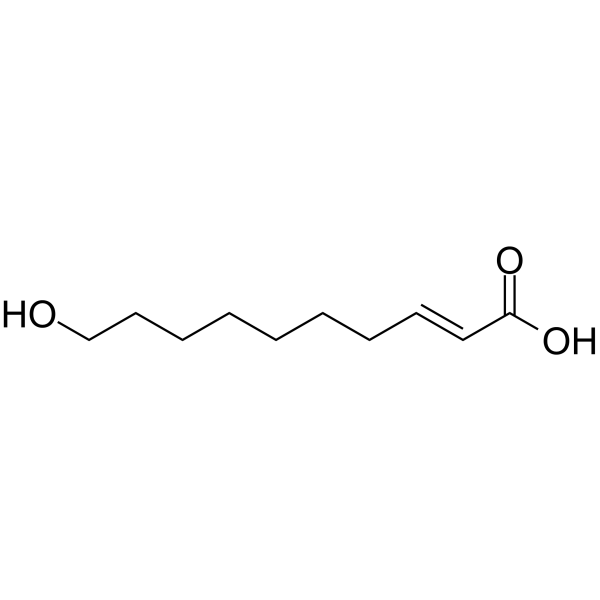 0 ImagesSynonyms: (E)-Queen Bee Acid; (E)-10-Hydroxy-2-decenoic acidRoyal Jelly Acid ((E)-Queen Bee Acid) is a major fatty acid found in royal jelly with oral bioavailability, exhibiting anti-inflammatory, anticancer, antimalarial, antiprotozoal, and neuroregulatory activities. Royal Jelly Acid can be used for research in various fields, including cancer, infections, immune inflammation, and neurological diseases.
-
Anti-IFNγ Antibody (B133.5)
 0 ImagesCat. No.: HY-P990839Anti-IFNγ Antibody (B133.5) is a kind of mouse IgG1 chimeric antibody inhibitor, targeting to human IFNγ. Anti-IFNγ Antibody (B133.5) can neutralize human IFNγ (interferon gamma). Anti-IFNγ Antibody (B133.5) can be used for the research of immunology.
-
Anti-Mouse CD40L/CD154 Antibody (MR-1)
 0 ImagesCat. No.: HY-P990134Purity: 99.62%Anti-Mouse CD40L/CD154 Antibody (MR-1) is an anti-mouse CD40L/CD154 IgG monoclonal antibody. Anti-Mouse CD40L/CD154 Antibody (MR-1) reduces the expression of IFN signaling pathway and lowers the level of IFN-β. Anti-Mouse CD40L/CD154 Antibody (MR-1) can prolong the survival time of transplants. Anti-Mouse CD40L/CD154 Antibody (MR-1) can be used for researches on cancer, inflammation conditions and xenotransplantation such as pancreatic cancer and autoimmune cholangitis.
-
VVD-118313
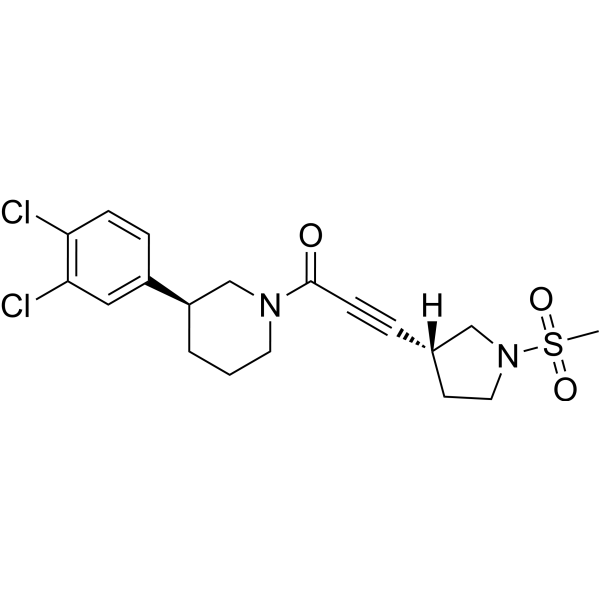 0 ImagesVVD-118313 (compound 5a) is a potent, selective JAK1 inhibitor. VVD-118313 targets an isoform-restricted allosteric cysteine to block JAK1-dependent trans-phosphorylation and cytokine signaling. VVD-118313 can be used for research of cancer. VVD-118313 is a click chemistry reagent, it contains an Alkyne group and can undergo copper-catalyzed azide-alkyne cycloaddition (CuAAc) with molecules containing Azide groups.




