



Anti-Mouse IFN gamma Antibody (XMG1.2)

Based on 1 Customer Validation
Anti-Mouse IFN gamma Antibody (XMG1.2) is a kind of rat-derived IgG1 antibody inhibitor, targeting to IFN-γ. Anti-Mouse IFN gamma Antibody (XMG1.2) can neutralize IFN-γ. Anti-Mouse IFN gamma Antibody (XMG1.2) can be used for the researches of cancer, inflammation and immunology, such as multiple myeloma and chronic inflammation.
For research use only. We do not sell to patients.
- Purity : 99.00%
- Molecular Weight:150 kDa
-
Storage:
Please store the product under the recommended conditions in the Certificate of Analysis.


To place orders, for customer services and technical support, please contact: MedChemExpress USA
Tel: 609-228-6898 E-mail: [email protected] [email protected]


-
 Biological Activity
-
Chemical Information
- Purity & Documentation
- References
-
 Help & FAQs


-

HY-P990121
Anti-Mouse IL-4 Antibody (11B11) -
HY-P99979
Rat IgG1 kappa, Isotype Control -

HY-P70709
IL-23 Protein, Mouse (HEK293) -
HY-P7063
IL-6 Protein, Mouse -
HY-P7077
IL-2 Protein, Mouse -
HY-P7117
TGF beta 1/TGFB1 Protein, Mouse/Rat (HEK293, Tag Free) -
HY-P7073
IL-1 beta Protein, Mouse -
HY-P99137
Anti-Mouse IFNAR1 Antibody (MAR1-5A3) -
HY-P990219
Anti-Mouse IL-2 Antibody (JES6-1A12) -
HY-P70666
IL-12 Protein, Mouse (HEK293) -
HY-P7208
IL-12 Protein, Mouse (CHO)


Biological Activity
Description
Isotype
Rat IgG1 kappa
Recommend Isotype Controls
Species Reactivity
Mouse
IC50 & Target
IFNγ
In Vivo
Anti-Mouse IFN gamma Antibody (XMG1.2) is efficacious in a mouse model of hemophagocytic lymphohistiocytosis secondary to chronic inflammation[2].
Anti-Mouse IFN gamma Antibody (XMG1.2) (100 mg/kg, i.v., after 14, 20, 28, 35 and 42 days) improves engraftment in Bacillus Calmette-Guerin-infected Ifngr1-/- mice[3].
Anti-Mouse IFN gamma Antibody (XMG1.2) (100 μg, i.p., every other day from day 10) prevents purkinje cell loss and clinical disease in paraneoplastic cerebellar degeneration mice models[4].
Anti-Mouse IFN gamma Antibody (XMG1.2) (100 µg/g, i.p., a single dose) increases survival rate in LPS (HY-D1056)-induced macrophage activation syndrome mice models[5].
MedChemExpress (MCE) has not independently confirmed the accuracy of these methods. They are for reference only.
-
Animal Model:Multiple myeloma mice models[1]
-
Dosage:500 μg
-
Administration:Intraperitoneally injection, at days 0, 3, 7, 10, 14, 17
-
Result:Increased serum IgG2b levels and percentages of mice with progressive disease.
Increased BM tumor burden and splenic tumor load.
-
Animal Model:Paraneoplastic cerebellar degeneration mice models[4]
-
Dosage:100 μg
-
Administration:Intraperitoneally injection, every other day from day 10
-
Result:Protected mice from the clinical manifestations of paraneoplastic cerebellar degeneration, namely weight loss, and reduced motor performance.
Prevented T cell-mediated Purkinje cell death.
Inhibited T cell accumulation into the cerebellum.
-
Animal Model:LPS (HY-D1056)-challenged macrophage activation syndrome mice models[5]
-
Dosage:100 µg/g
-
Administration:Intraperitoneally injection
-
Result:Showed 70% of mice survived treated with 7.5 µg/g LPS, and all mice survived treated with 5 µg/g LPS.
Increased fibrinogen levels and decreased IL-6 and ALT levels.
Gene ID
Accession
Conjugated
Unconjugated
Reconsititution
The product can be reconstituted/diluted with sterile PBS or saline.
Format
-
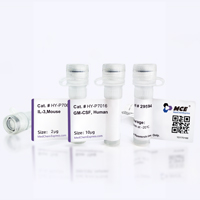
Product Image
Application
in vivo IFNγ neutralization; in vitro IFNγ neutralization; ELISPOT; Flow cytometry; Western blot


Chemical Information
-
Appearance Liquid
-
Molecular Weight 150 kDa
-
Color Colorless to light yellow
-
SMILES
[Anti-Mouse IFN gamma Antibody (XMG1.2)]
-
Formulation
Please refer to the lot-specific COA for specific buffer information.
-
Storage
Please store the product under the recommended conditions in the Certificate of Analysis.


Purity & Documentation
-
Data Sheet (262 KB)
-
SDS (251 KB)
- English - EN (251 KB)
- Français - FR (251 KB)
- Deutsch - DE (251 KB)
- Norwegian - NO (251 KB)
- Español - ES (251 KB)
- Swedish - SV (251 KB)
- Italian - IT (251 KB)
- Korean - KR (251 KB)
- Portuguese - PT (251 KB)
-
Inhibitory Antibodies User Guide (603 KB)
References
[1]. Kellermayer Z, et al. Interferon gamma-mediated prevention of tumor progression in a mouse model of multiple myeloma. Hemasphere. 2024 Dec 2;8(12):e70047. [Content Brief]
[3]. Merli P, et al. Role of interferon-γ in immune-mediated graft failure after allogeneic hematopoietic stem cell transplantation. Haematologica. 2019 Nov;104(11):2314-2323. [Content Brief]
[4]. Yshii L, et al. IFN-γ is a therapeutic target in paraneoplastic cerebellar degeneration. JCI Insight. 2019 Apr 4;4(7):e127001. [Content Brief]
[5]. Prencipe G, et al. Neutralization of IFN-γ reverts clinical and laboratory features in a mouse model of macrophage activation syndrome. J Allergy Clin Immunol. 2018 Apr;141(4):1439-1449. [Content Brief]

Calculators
Concentration (start) × Volume (start) = Concentration (final) × Volume (final)


Anti-Mouse IFN gamma Antibody (XMG1.2) Related Classifications
HY-P990798 Related Classifications
 Powered by Bioz