



Microtubule/Tubulin
Microtubules are a component of the cytoskeleton, found throughout the cytoplasm. These tubular polymers of tubulin can grow as long as 50 micrometres, with an average length of 25 µm, and are highly dynamic. The outer diameter of a microtubule is about 24 nm while the inner diameter is about 12 nm. Microtubules are found in eukaryotic cells and are formed by the polymerization of a dimer of two globular proteins, alpha and beta tubulin. Tubulin is one of several members of a small family of globular proteins. The tubulin superfamily includes five distinct families, the alpha-, beta-, gamma-, delta-, and epsilon-tubulins and a sixth family which is present only in kinetoplastid protozoa. The most common members of the tubulin family are α-tubulin and β-tubulin, the proteins that make up microtubules. Microtubules are very important in a number of cellular processes. They are involved in maintaining the structure of the cell.
All Product Categories
-
Microtubule/Tubulin Inhibitors
(812)
View all products
-
Microtubule/Tubulin Agonists
(2)
View all products
-
Microtubule/Tubulin Antagonist
(1)
View all products
-
Microtubule/Tubulin Activators
(21)
View all products
-
Microtubule/Tubulin Modulators
(20)
View all products
-
Microtubule/Tubulin Inducers
(5)
View all products
-
Microtubule/Tubulin Degraders
(3)
View all products
-
Microtubule/Tubulin Controls
(19)
View all products
-
Microtubule/Tubulin Ligands
(5)
View all products
-
Microtubule/Tubulin Related Products (1003)
Related Products (1003)

-
Antibodies (69)
-
Tubulin polymerization-IN-87
 0 ImagesCat. No.: HY-177988CAS No.: 2035931-43-0Tubulin polymerization-IN-87 (Compound 9) is a tubulin polymerization inhibitor. Tubulin polymerization-IN-87 disrupts tubulin polymerization and induces G2/M cell cycle arrest. Tubulin polymerization-IN-87 exhibits anti-tubulin and anti-proliferative effects. Tubulin polymerization-IN-87 exhibits anticancer activity against ovarian cancer.
-
OX01914
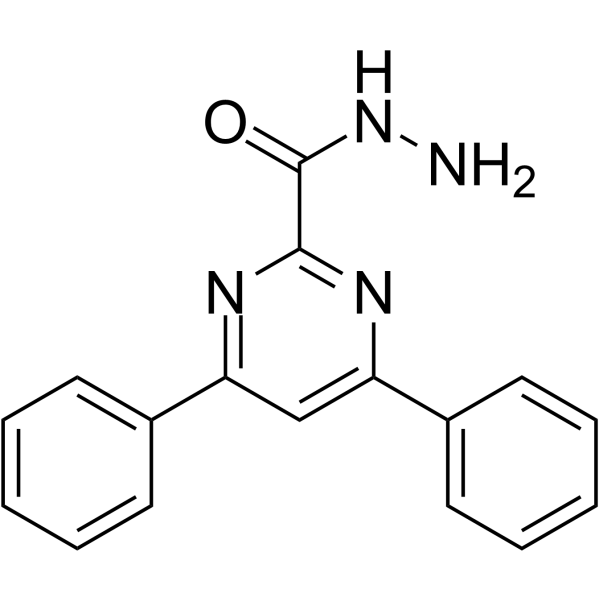 0 ImagesCat. No.: HY-150078CAS No.: 49676-35-9OX01914 is a water-solube and permeable utrophin modulator (upregulates utrophin protein levels), with an EC50 of 20.5 μM. OX01914 can be used in study of duchenne muscular dystrophy (DMD).
-
Kolaflavanone
 0 ImagesCat. No.: HY-121816CAS No.: 68705-66-8Kolaflavanone is an biflavonoid allosteric inhibitor of Eg5. Kolaflavanone inhibits the ATPase and tyrosinase activities of Eg5 under both basal and microtubule-activated conditions, suppresses microtubule sliding activity, binds to the L5/α2/α3 allosteric pocket of Eg5, induces conformational changes of Eg5 and microtubule dissociation, interacts with aldehyde dehydrogenase, inhibits the ATPase activity of kinesin-1, and binds to HSA via pH-dependent forces. Kolaflavanone exhibits antihepatotoxic activity and can be used in studies related to Phalloidin (HY-P0028)-induced liver injury.
-
Amphethinile
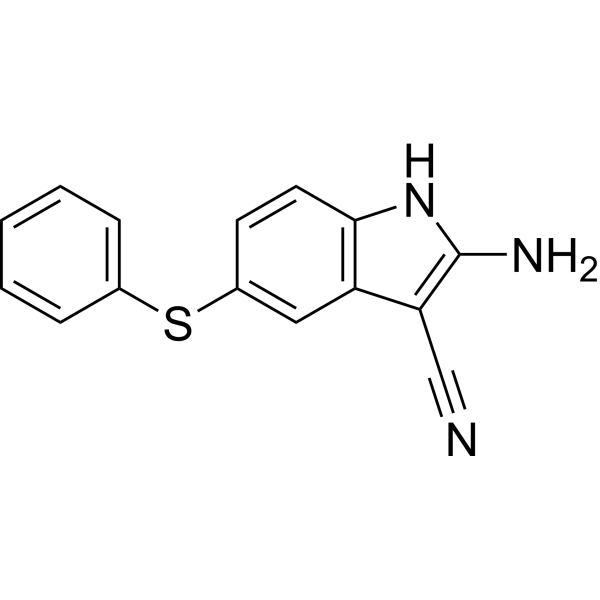 0 ImagesCat. No.: HY-100190CAS No.: 91531-98-5Synonyms: Amphetinile; CRC 82-07Amphethinile is an anti-tubulin agent. The affinity constant for the association (Ka) of Amphethinile with tubulin is 1.3 μM.
-
Tubulin polymerization-IN-10
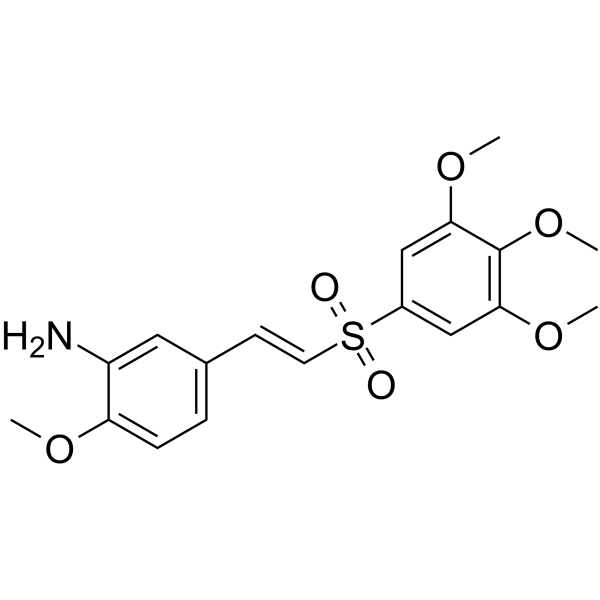 0 ImagesCat. No.: HY-146863CAS No.: 2238784-19-3Tubulin polymerization-IN-10 is a potent tubulin polymerization inhibitor with an IC50 of 4.25±0.75 μM. Tubulin polymerization-IN-10 has anti-tumor effects.
-
Phomopsin B
 0 ImagesCat. No.: HY-N16438CAS No.: 64925-81-1Phomopsin B (Compound 3), a hexapeptide, is a Microtubule depolymerizer. Phomopsin B can be isolated from the fungus Phomopsis Leptostromiformis. Phomopsin B has an antimitotic activity. Phomopsin B can be used for cancers research.
-
Utrophin modulator 1
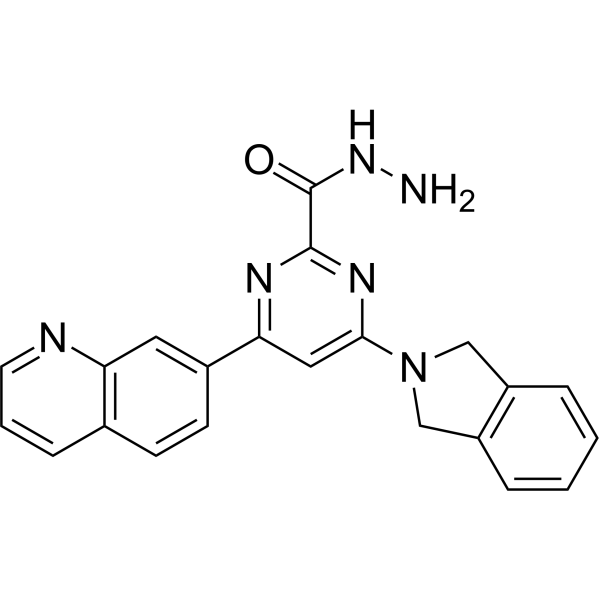 0 ImagesCat. No.: HY-150077CAS No.: 3068935-32-7Utrophin modulator 1 is a potent utrophin modulator (upregulates utrophin protein levels), with an EC50 of 0.11 μM. Utrophin modulator 1 can be used in study of duchenne muscular dystrophy (DMD).
-
Tubulin polymerization-IN-37
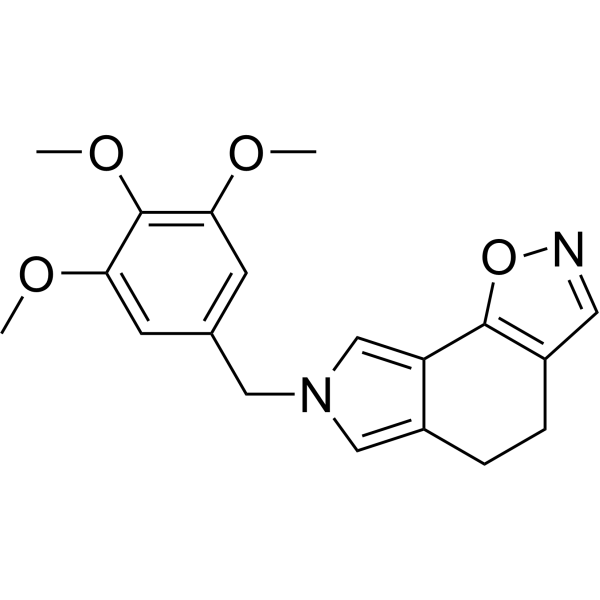 0 ImagesCat. No.: HY-151398CAS No.: 2011784-92-0Tubulin polymerization-IN-37 is a tubulin polymerization inhibitor (IC50: 2.3 μΜ). Tubulin polymerization-IN-37 binds to the colchicine site of tubulin and inhibits colchicine binding. Tubulin polymerization-IN-37 can be used in the research of cancers, such as lymphomas.
-
Dolastatin 15
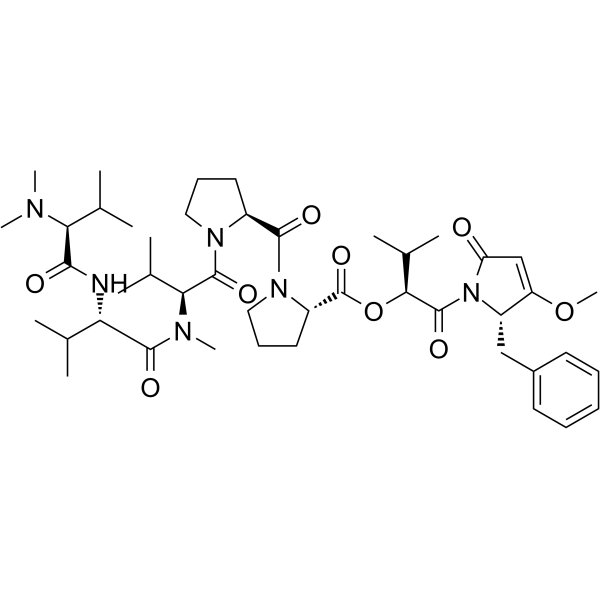 0 ImagesCat. No.: HY-P1126CAS No.: 123884-00-4Synonyms: DLS 15Dolastatin 15 (DLS 15), a depsipeptide derived from Dolabella auricularia, is a potent antimitotic agent structurally related to the antitubulin agent Dolastatin 10. Dolastatin 15 induces cell cycle arrest and apoptosis in multiple myeloma cells. Dolastatin 15 can be used as an ADC cytotoxin.
-
Fosbretabulin tromethamine
 0 ImagesCat. No.: HY-15855CAS No.: 404886-32-4Fosbretabulin (tromethamine), also known as combretastatin A4 phosphate (CA4P), is a vascular disrupting agent evaluated for its efficacy against anaplastic thyroid carcinoma (ATC). It targets tumor neovasculature, causing acute and reversible reductions in tumor blood flow and central necrosis.
-
Tubulin inhibitor 15
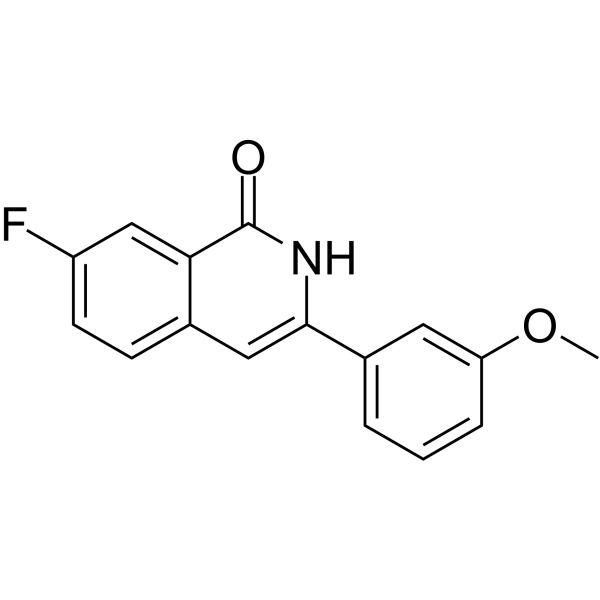 0 ImagesCat. No.: HY-145821CAS No.: 2767446-36-4Tubulin inhibitor 15 is a potent tubulin inhibitor. Tubulin inhibitor 15 shows antiproliferative activity. Tubulin inhibitor 15 shows cytotoxicity in HepG2 cells.
-
9-cis-UAB30
 0 ImagesCat. No.: HY-129108CAS No.: 205252-57-9Synonyms: (9Z)-UAB-309-cis-UAB30 is a rexinoid agonist. 9-cis-UAB30 significantly decreases the proliferation, viability, and motility of both patient-derived xenografts (PDXs). 9-cis-UAB30 induced cell-cycle arrest as demonstrated by the significant increase in the percentage of cells in G1 and a decrease in the percentage of cells in S phase by downregulating SKP2 and/or 20S proteasome activity, which leads to increased p27kip1 protein stability. 9-cis-UAB30 downregulates the abundance of stem cell marker mRNAs (Oct4, Nanog, Sox2, nestin) and upregulates the abundance of differentiation marker mRNAs (β3-tubulin, NSE, HOXC9, GAP43). 9-cis-UAB30 has no adverse effects on the central nervous system and cardiovascular system at the tested dose. 9-cis-UAB30 can be used for the study of neuroblastoma, cutaneous T-cell lymphomas, and breast cancer.
-
Tubulin inhibitor 33
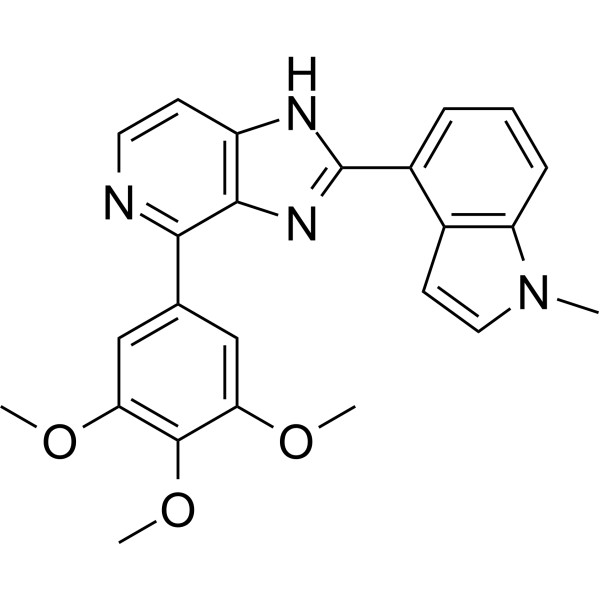 0 ImagesCat. No.: HY-149856CAS No.: 2944462-67-1Tubulin inhibitor 33, a tubulin polymerization inhibitor, inhibits tubulin polymerization in a dose-dependent manner with an IC50 of 9.05 μM. Tubulin inhibitor 33 has antitumor effects and induces cell apoptosis that can be used for antitumor research.
-
BNZ-111
 0 ImagesCat. No.: HY-168111CAS No.: 3022361-60-7BNZ-111 is an orally active inhibitor of tubulin. BNZ-111 has antitumor activity.
-
Tubulin/MMP-IN-2
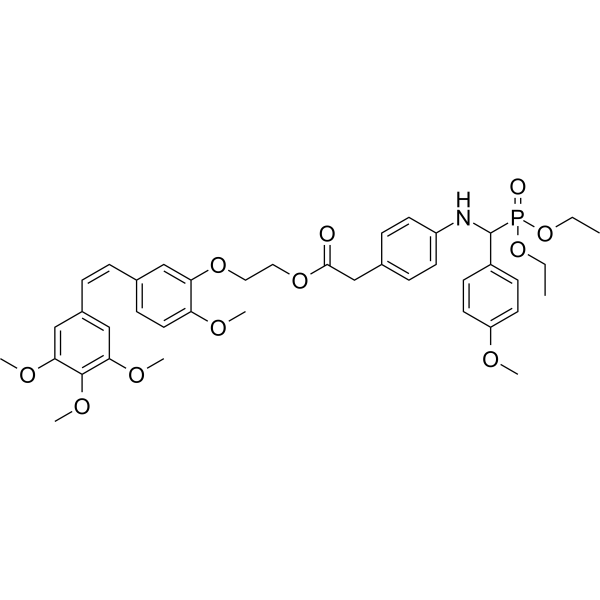 0 ImagesCat. No.: HY-152030CAS No.: 2734877-51-9Tubulin/MMP-IN-2 is dual inhibitor of tubulin and matrix metalloproteinases. Tubulin/MMP-IN-2 can strongly inhibit tubulin polymerization and induces cell apoptosis. Tubulin/MMP-IN-2 has inhibitory activities against MMP-2, MMP-3 and MMP-9 with IC50 values of 24.95 μM, 31.60 μM and 22.37 μM, respectively. Tubulin/MMP-IN-2 can be used for the research of cancer.
-
Tubulin Polymerization-IN-1 prodrug
 0 ImagesCat. No.: HY-159921CAS No.: 3033099-32-7Tubulin Polymerization-IN-1 prodrug (Compound 2b) is a palladium (Pd)-mediated tubulin polymerization inhibitor prodrug. Developed based on colchicine binding site inhibitors (CBSIs), it reduces toxicity and enhances targeted release properties. Compared to the parent compound, Tubulin Polymerization-IN-1 prodrug exhibited 68.3-fold lower cytotoxicity, which can be restored in situ in the presence of Pd resin. Mechanistic studies showed that its anticancer activity is consistent with CBSIs. In vivo, Tubulin Polymerization-IN-1 prodrug significantly inhibited tumor growth (63.2%) when activated by Pd resin. It holds promise for research in the field of anticancer therapy.
-
VEGFR2/HDAC-IN-1
 0 ImagesCat. No.: HY-181793VEGFR2/HDAC-IN-1 is a dual selective enzymatic inhibitor of VEGFR2 kinase and HDAC6 with oral activity. VEGFR2/HDAC-IN-1 has an IC50 of 19.19 nM for VEGFR2 and 0.165 μM for HDAC6. VEGFR2/HDAC-IN-1 increases α-tubulin acetylation, exerts antiproliferative effects, inhibits tumor growth, and exhibits antiangiogenic activity. VEGFR2/HDAC-IN-1 can be used for the research of colorectal carcinoma and hepatocellular carcinoma.
-
Tubulin polymerization-IN-34
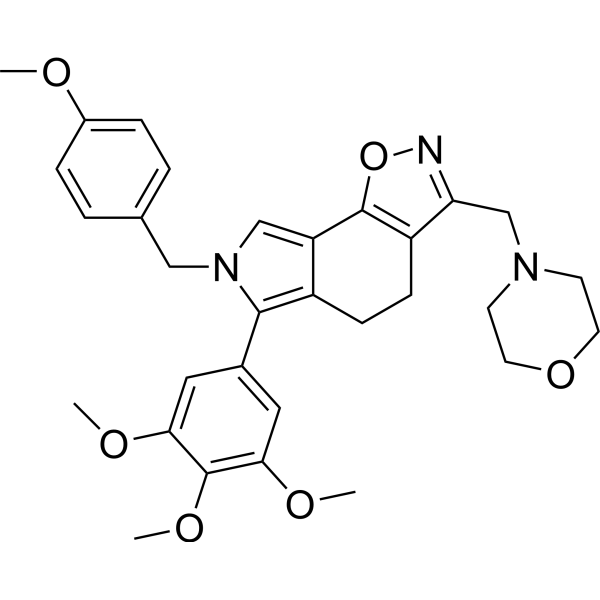 0 ImagesCat. No.: HY-151395CAS No.: 3051788-87-2Tubulin polymerization-IN-34 is an inhibitor of [1,2]oxazoloisoindoles tubulin polymerization, demonstrates high selectivity against marginal zone lymphoma VL51 cell line.
-
SL-3-19
 0 ImagesCat. No.: HY-130559CAS No.: 2000199-45-9SL-3-19 is a tubulin ligand. SL-3-19 exhibits antitumor activity against esophageal squamous cell carcinoma (ESCC) both in vitro and in vivo by inhibiting microtubule assembly, inducing G2/M phase cell cycle arrest and apoptosis, and disrupting tumor blood vessels. SL-3-19 has a higher activity than SL-1-73 (HY-130558). SL-3-19 can be used for the research of ESCC and other tumors.
-
Microtubule destabilizing agent-2
 0 ImagesCat. No.: HY-159891Microtubule destabilizing agent-2 (Compound 21) is an orally active and selective antitumor compound targeting microtubule protein. Microtubule destabilizing agent-2 destabilizes microtubule proteins and inhibits microtubule polymers. Microtubule destabilizing agent-2 arrests the G0/G1 phase in human tumor cells. Microtubule destabilizing agent-2 induces Apoptosis by activating the cascade pathway of caspases. Microtubule destabilizing agent-2 has anti-inflammatory activity, as inhibiting TNF-α and IL-6 in vitro. Microtubule destabilizing agent-2 reduces tumors growth in xenograft mice.




