



PI3K
Phosphoinositide 3-kinase
PI3K (Phosphoinositide 3-kinase), via phosphorylation of the inositol lipid phosphatidylinositol 4,5-bisphosphate (PI(4,5)P2), forms the second messenger molecule phosphatidylinositol (3,4,5)-trisphosphate (PI(3,4,5)P3) which recruits and activates pleckstrin homology domain containing proteins, leading to downstream signalling events crucial for proliferation, survival and migration. Class I PI3K enzymes consist of four distinct catalytic isoforms, PI3Kα, PI3Kβ, PI3Kδ and PI3Kγ.
There are three major classes of PI3K enzymes, being class IA widely associated to cancer. Class IA PI3K are heterodimeric lipid kinases composed of a catalytic subunit (p110α, p110β, or p110δ; encoded by PIK3CA, PIK3CB, and PIK3CD genes, respectively) and a regulatory subunit (p85).
The PI3K pathway plays an important role in many biological processes, including cell cycle progression, cell growth, survival, actin rearrangement and migration, and intracellular vesicular transport.
PI3K Isoform Specific Products
-
PI3Kα
(240)
View all products
-
PI3Kβ
(165)
View all products
-
PI3Kγ
(185)
View all products
-
PI3Kδ
(205)
View all products
-
PI3KC2α
(8)
View all products
-
PI3KC2β
(12)
View all products
-
PI3KC2γ
(4)
View all products
-
Vps34
(25)
View all products
-
PI3K
(671)
View all products
-
PI3KC3
(1)
View all products
-
p120γ
(1)
View all products
All Product Categories
-
PI3K Inhibitors
(881)
View all products
-
PI3K Agonists
(9)
View all products
-
PI3K Antagonist
(1)
View all products
-
PI3K Activators
(133)
View all products
-
PI3K Modulators
(23)
View all products
-
PI3K Inducers
(3)
View all products
-
PI3K Degraders
(7)
View all products
-
PI3K Controls
(4)
View all products
-
PI3K Substrate
(1)
View all products
-
PI3K Ligands
(9)
View all products
-
PI3K Related Products (1133)
Related Products (1133)

-
Antibodies (16)
-
PI3K Signaling Pathway
-
PI3K Isoform Comparison
-
CC-11
 0 ImagesCat. No.: HY-179457CAS No.: 3079942-94-9CC-11 is an orally active small molecule drug conjugate (SMDC) that links the PI3K/mTOR inhibitor with the extracellular heat shock protein 90 (EHSP90) targeting ligand through a cleavable linker. CC-11 exhibits strong HSP90 binding activity (IC50 = 15 nM) and inhibits PI3Kα kinase activity (IC50 = 0.54 nM). CC-11 has anti-proliferative activity against colon cancer cells. CC-11 shows significant efficacy in the HCT-116 xenograft tumor model. CC-11 can be used for research on colon cancer.
-
MTX-241F
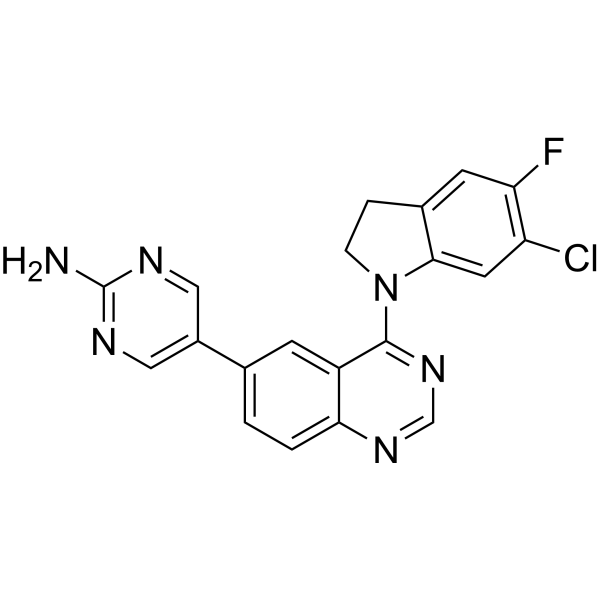 0 ImagesCat. No.: HY-149556CAS No.: 3036637-30-3MTX-241F is a selective small molecule inhibitor targeting EGFR and PI3 kinase family members. MTX-241F is able to penetrate the blood-brain barrier and control tumor growth over the long term. MTX-241F exhibits radiosensitizing activity in patient-derived DIPG neurospheres and may be used in the study of diffuse intrinsic pontine glioma (DIPG).
-
SJY26
 0 ImagesCat. No.: HY-178485SJY26 is a PI3K/HDAC dual-target inhibitor with IC50s of 0.59 nM (PI3Kα and PI3Kδ), 2.02 nM (PI3Kγ), 12.69 nM (PI3Kβ) and 114 nM (HDAC1). SJY26 exhibits potent broad-spectrum anti-proliferative activity, and is particularly sensitive to Jurkat and PC9R cells. SJY26 inhibited the migration of PC9R cells, arrested the cell cycle and induced cell apoptosis. SJY26 reduces AKT phosphorylation, and decreases histone H3 deacetylation (Ac-H3). SJY26 can be used for the studies of non-small cell lung cancer and leukemia.
-
Isorhapontigenin (Standard)
 0 ImagesCat. No.: HY-N2593RCAS No.: 32507-66-7Isorhapontigenin (Standard) is the analytical standard of Isorhapontigenin (HY-N2593). This product is intended for research and analytical applications. Isorhapontigenin is an orally active dietary polyphenol. Isorhapontigenin acts as a potent antioxidant that reduces the production of reactive oxygen species (ROS). Isorhapontigenin promotes the binding of JUN to the AP-1 site on the SESN2 promoter, induces SESN2 transcription, triggers MAPK8-dependent JUN activation, and upregulates the expression of PPAR-α, PGC-1α and CPT-1A to facilitate fatty acid oxidation. Isorhapontigenin induces autophagy, apoptosis and preadipocyte differentiation; it inhibits tumor growth, cell invasion, NF-κB transcriptional activity, the PI3K/Akt signaling pathway, STAT1 phosphorylation and MMP-2 expression. Isorhapontigenin alleviates oxidative stress, inflammatory cytokine release and triglyceride accumulation; it increases intracellular ATP levels and promotes Nrf2 nuclear translocation. Isorhapontigenin improves insulin sensitivity in adipose tissue and glucose tolerance, and reduces postprandial blood glucose, insulin and free fatty acid levels. Isorhapontigenin is applicable to research on bladder cancer, liver injury, chronic obstructive pulmonary disease, acute lung injury and type 2 diabetes.
-
SRX3212
 0 ImagesCat. No.: HY-183922CAS No.: 2735720-80-4SRX3212 is a potent PI3Kα/BRD4 inhibitor with human IC50 values of 22 nM, 3.7 nM, and 32 nM for PI3Kα, BRD4BD1, and BRD4BD2, respectively. SRX3212 inhibits PI3K kinase activity and blocks acetyllysine binding function of BRD4BD1 and BRD4BD2. SRX3212 can be used for the research of mantle cell lymphoma, colon carcinoma, neuroblastoma, prostate cancer[1].
-
PI3K-IN-52
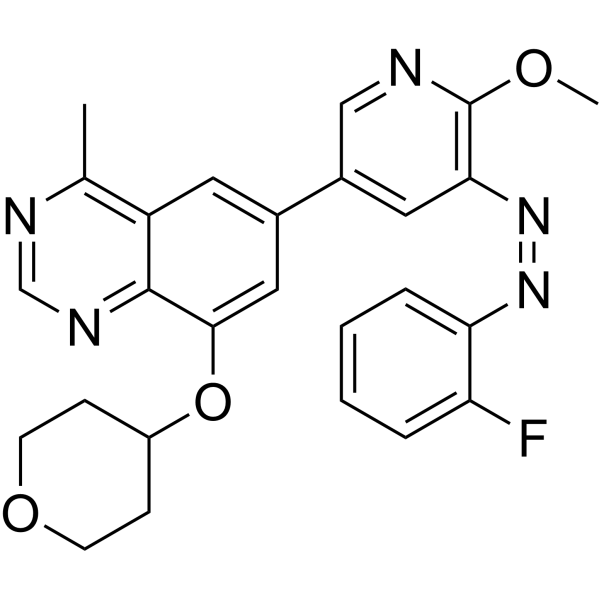 0 ImagesCat. No.: HY-161301CAS No.: 3030012-25-7

-
Dinitramine
 0 ImagesCat. No.: HY-W714183CAS No.: 29091-05-2Dinitramine is a herbicide. Dinitramine activates the Erk/P38/JNK/MAPK pathway and inactivates the PI3k/Akt pathway in testicular cells. Dinitramine induces endoplasmic reticulum stress, dysregulation of calcium homeostasis in the cytoplasm and mitochondria, apoptosis, and downregulated expression of cell cycle genes in testicular cells. Dinitramine reduces the viability and proliferation capacity of testicular cells, and inhibits cell division by suppressing the synthesis of tubulin. Dinitramine induces abnormal heart development, inhibited angiogenesis, inflammatory responses, apoptosis, and impaired embryonic growth in zebrafish embryos.
-
Demethoxyviridiol
 0 ImagesCat. No.: HY-135526CAS No.: 56617-66-4Synonyms: DesmethoxyviridiolDemethoxyviridiol is a mycotoxin originally isolated from N. hinnuleum. Demethoxyviridiol induces lethality in day-old cockerels (LD50=4.2 mg/kg). Demethoxyviridiol is also an inhibitor of phosphatidylinositol 3-kinase (PI3K).
-
PI3K-IN-26
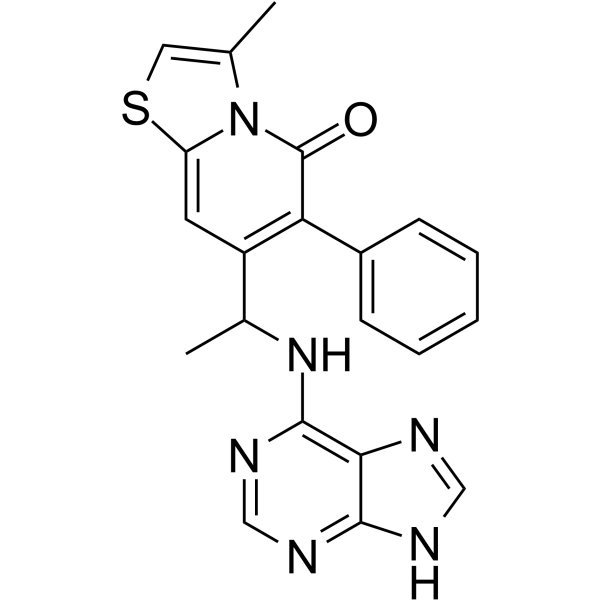 0 ImagesCat. No.: HY-142676CAS No.: 1918151-65-1PI3K-IN-26 is a potent PI3K inhibitor with an IC50 of 36 nM for SU-DHL-6 cells (WO2016066142A1, compound 1).
-
(3R,10R,14aS)-AZD4625
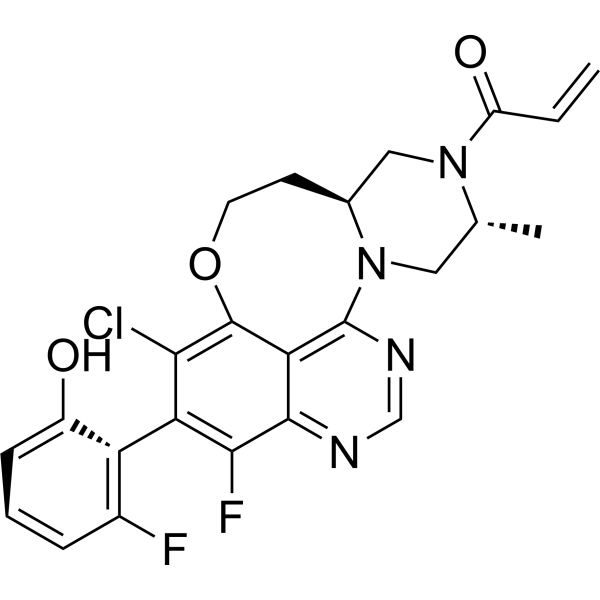 0 ImagesCat. No.: HY-146223APurity: 98.00%(3R,10R,14aS)-AZD4625 is the isomer of AZD4625 (HY-146223), and can be used as an experimental control. AZD4625 is an orally active, selective irreversible, covalent allosteric GTPase KRASG12C inhibitor with an IC50 of 3 nM. AZD4625 can inhibit the MAPK pathway (with decreased pCRAF, pMEK, and pERK) and the PI3K pathway (with decreased pAKT and pS6), and induce cell apoptosis. AZD4625 has no binding and inhibition of wild-type RAS or isoforms carrying non-KRASG12C mutations. AZD4625 can be used for the study of KRASG12C mutant non-small cell lung cancer.

-
PI3K-IN-29
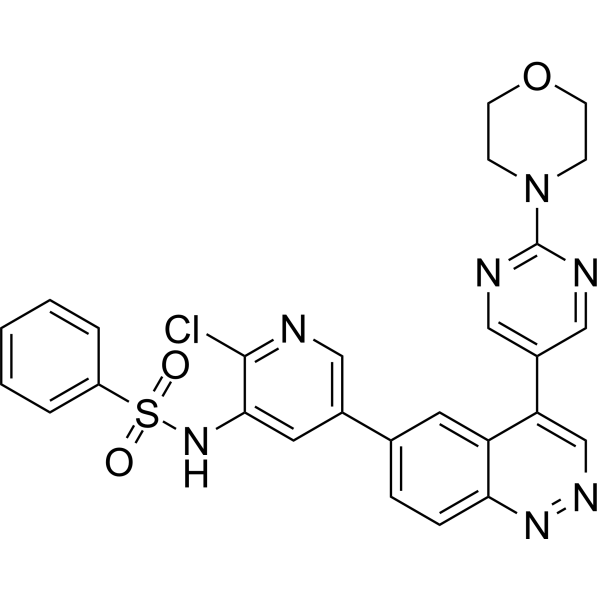 0 ImagesCat. No.: HY-144450CAS No.: 2768005-77-0
-
PI3K-IN-10
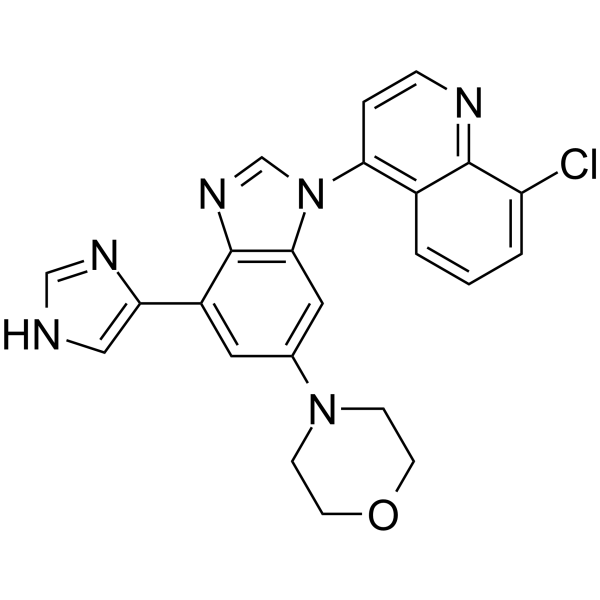 0 ImagesCat. No.: HY-112191CAS No.: 2211922-64-2PI3K-IN-10 is a potent pan-PI3K inhibitor as a benzimidazole derivative, compound 332, extracted from patent WO2018057808A1.
-
VVD-844
 0 ImagesCat. No.: HY-183741CAS No.: 3080226-63-4VVD-844 is an orally active covalent inhibitor of PI3Kα, which inhibits Pl3Kα/p110α interaction with an IC50 of 4 nM. VVD-844 covalently binds to Cys242 in the RAS binding domain of p110α, blocking RAS-p110α interaction and inhibiting PI3Kα activity. VVD-844 inhibits PI3Kα signaling activation in HER2-overexpressing cells via a RAS-independent mechanism. VVD-844 suppresses tumor growth in mouse. VVD-844 can be used for the research of cancers.
-
PI3K/mTOR Inhibitor-6
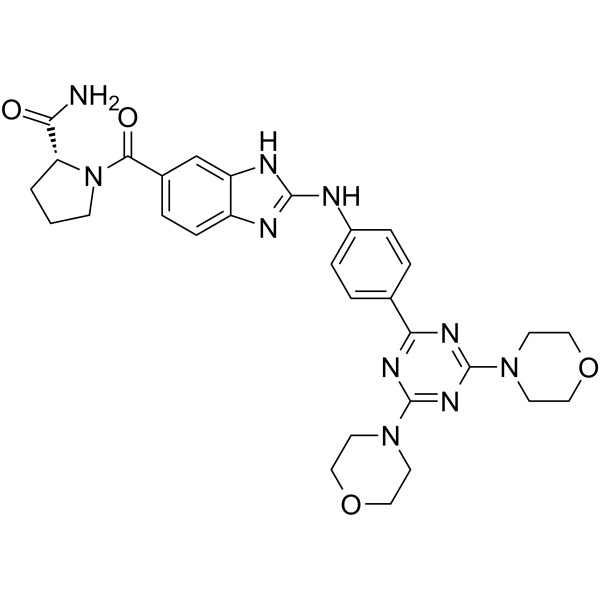 0 ImagesCat. No.: HY-147613CAS No.: 2456295-59-1PI3K/mTOR Inhibitor-6 (Compound 19c) is a potent and dual inhibitor of PI3K/mTOR. PI3K/mTOR Inhibitor-6 displays better stability in artificial gastric fluids than gedatolisib. PI3K/mTOR Inhibitor-6 significantly suppresses the PI3K/Akt/mTOR signaling pathway at 10 μM. PI3K/mTOR Inhibitor-6 has the potential for the research of cancer diseases.
-
TYM-3-98
 0 ImagesTYM-3-98 is a selective inhibitor for PI3Kδ, with an IC50 of 7.1 nM. TYM-3-98 inhibits proliferationso of B-lymphoma cells. TYM-3-98 inhibits PI3K/AKT/mTOR signaling pathway through induction of apoptosis. TYM-3-98 exhibits good pahrmacokinetic characters and antitumor efficacy in mouse/rat model, without significant toxicity.
-
Fusaric acid (Standard)
 0 ImagesFusaric acid (Standard) is the analytical standard of Fusaric acid (HY-128483). This product is intended for research and analytical applications. Fusaric acid is an orally active multi-pathway inhibitor with the activity of inducing oxidative stress and apoptosis. Fusaric acid can chelate divalent metal cations, damage mitochondrial membrane structure, and activate apoptosis-related proteases such as Caspase-3/7, -8, and -9. Fusaric acid also regulates Bax/Bcl-2 protein, inhibits fibrosis-related signaling pathways such as NF-κB, TGF-β1/SMADs, and PI3K/AKT/mTOR, and reduces collagen deposition. Fusaric acid is also a dopamine β-hydroxylase inhibitor, which reduces endogenous levels of norepinephrine and epinephrine in the brain, heart, spleen, and adrenal glands. Fusaric acid can play a role in myocardial fibrosis and improve cardiac hypertrophy in heart disease, and can also be used in the study of esophageal cancer and liver cancer.

-
Benzoin-d10
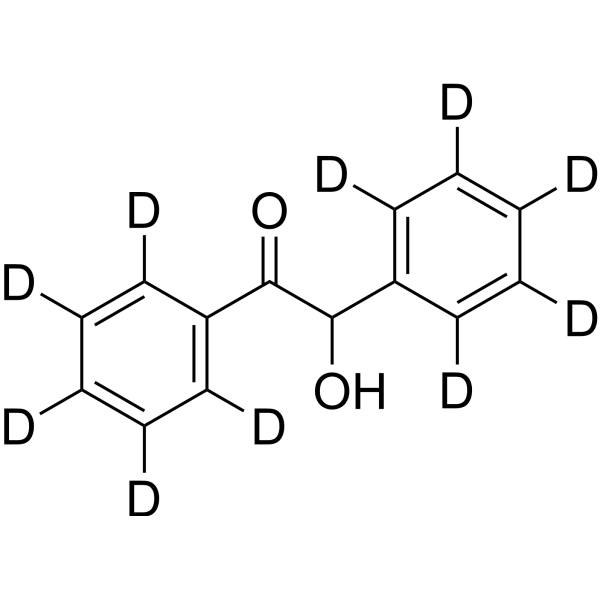 0 ImagesCat. No.: HY-B1550SCAS No.: 56830-64-9Synonyms: DL-Benzoin-d10; Desyl alcohol-d10; (±)-2-Hydroxy-2-phenylacetophenone-d10




