



VEGFR
Vascular endothelial growth factor receptor
VEGFRs consist of three subtypes, the fms-like tyrosine kinase Flt-1 (VEGFR1/Flt-1), the kinase domain region, also referred to as fetal liver kinase (VEGFR2/KDR/Flk-1), and Flt-4 (VEGFR3). Each receptor has seven immunoglobulinlike domains in the extracellular domain, a single transmembrane region, and a consensus tyrosine kinase sequence interrupted by a kinase insert domain. VEGFR1 and 2 are expressed on vascular endothelial cells, whereas VEGFR3 is expressed on lymphatic endothelial. The VEGF family members VEGF-A, -B, -C, -D, -E, and PlGF, and the human immunodeficiency (HIV) Tat protein bind in specific patterns to three related receptor protein tyrosine kinases, VEGFR1, 2, and 3, and induce the formation of homo- and heteromeric receptor complexes. Binding of VEGF to VEGFR causes dimerization and autophosphorylation of the receptor. Intracellular proteins such as VEGFR-associated protein (VRAP), PLC, and Sck that associate with specific tyrosine residues of VEGFR are phosphorylated upon receptor activation. Several signal transduction pathways are activated by the binding of VEGF to its receptor, leading to increased proliferation, survival, permeability, and migration of cells.
VEGFR Isoform Specific Products
All Product Categories
-
VEGFR Inhibitors
(726)
View all products
-
VEGFR Agonists
(7)
View all products
-
VEGFR Antagonists
(6)
View all products
-
VEGFR Activators
(17)
View all products
-
VEGFR Modulators
(6)
View all products
-
VEGFR Chemical
(1)
View all products
-
VEGFR Inducer
(1)
View all products
-
VEGFR Degraders
(6)
View all products
-
VEGFR Ligands
(5)
View all products
-
VEGFR Proteins
(36)
View all products
-
VEGFR-1 Proteins
(10)
View all products
-
VEGFR-3 Proteins
(7)
View all products
-
VEGFR Related Products (823)
Related Products (823)

-
Recombinant Proteins (36)
-
Antibodies (9)
-
VEGFR Isoform Comparison
-
Chloramphenicol/BSA
 0 ImagesCat. No.: HY-161586Chloramphenicol/BSA is the antigen-adjuvant conjugate formed by the coupling of Chloramphenicol (HY-B0239) with Bovine Serum Albumin (BSA). By conjugating the antigen with a protein adjuvant, the production of antigen-specific antibodies in vaccine models can be enhanced. The conjugate does not affect protein folding or disrupt major epitopes, and it can enhance cross-presentation and the generation of antigen-specific T cells.
-
Jujuboside B (Standard)
 0 ImagesCat. No.: HY-N0660RCAS No.: 55466-05-2Jujuboside B (Standard) is the analytical standard of Jujuboside B. This product is intended for research and analytical applications. Jujuboside B is a bioactive saponin component isolated from Ziziphi Spinosae Semen (sour jujube seed), with oral efficacy and blood-brain barrier permeability. Jujuboside B induces acute leukemia cell death and drives necroptosis apoptosis by activating the RIPK1/RIPK3/MLKL pathway. Jujuboside B upregulates the expression of NOXA, PARP and caspase-3, activates AMPK, inhibits the proliferation of breast cancer cells, and induces cell apoptosis and autophagy. Jujuboside B inhibits angiogenesis and tumor growth by blocking the VEGFR-2 signaling pathway. Jujuboside B alleviates liver injury in mice by regulating the Nrf2-STING signaling pathway. Jujuboside B alleviates liver injury by regulating anti-inflammatory responses and downregulating the expression of 11β-HSD2. Jujuboside B induces ferroptosis and overcomes radioresistance in non-small cell lung cancer via the PPARγ-ATF3-Gpx4 signaling pathway. Jujuboside B exerts inhibitory effects on platelet aggregation. Jujuboside B inhibits febrile seizures by suppressing the activity of AMPA receptors. Jujuboside B reverses chronic unpredictable mild stress-promoted tumor progression by blocking the PI3K/Akt and MAPK/ERK pathways and dephosphorylating CREB signaling. Jujuboside B is applicable to related studies on acute leukemia, breast cancer, PM2.5-induced lung injury, hepatotoxicity, liver injury, colorectal cancer, non-small cell lung cancer, thromboembolic diseases, cardiovascular diseases associated with high platelet aggregation, febrile seizures, and depressive-like phenotypes.
-
CLM3
 0 ImagesCat. No.: HY-164413CAS No.: 1312024-59-1CLM3, a pyrazolopyrimidine derivative, is a multiple tyrosine kinase inhibitor. CLM3 shows antiproliferative and proapoptotic activity on endothelial and cancer cells, synergistically enhanced by SN38 (HY-13704). These effects are mainly due to its inhibition of phosphorylation of VEGFR-2, EGFR and RET tyrosine kinases and their related signaling pathways.
-
FR 111142
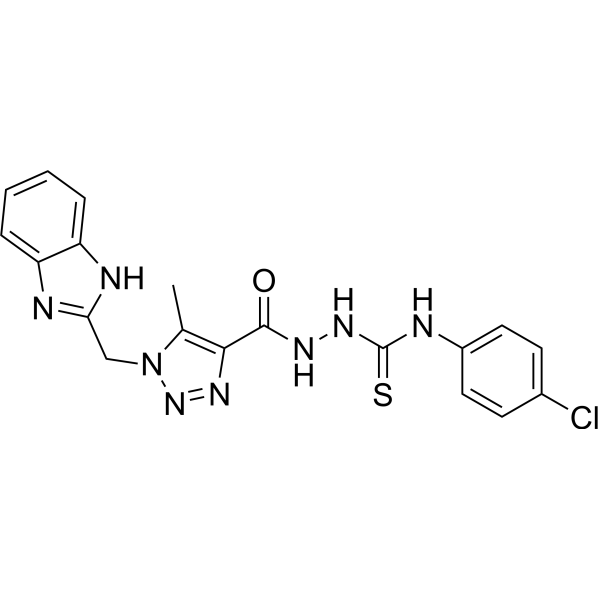
 0 ImagesCat. No.: HY-182569CAS No.: 132340-44-4FR 111142 is an angiogenesis inhibitor (IC50 = 18.4 μM) and has anti-inflammatory activity (IC50 = 20.6 μM). FR 111142 inhibits capillary-like tube formation as well as nitric oxide production in LPS (HY-D1056)-activated murine macrophages. FR 111142 enhances catabolism of low-density lipoprotein (LDL). FR 111142 does not induce significant cytotoxicity in human endothelial progenitor cells, nor affect cell viability of murine macrophages. FR 111142 can be used for the research of cancer, inflammatory diseases.
-
Multi-kinase inhibitor 3
 0 ImagesCat. No.: HY-168114CAS No.: 2648279-76-7Multi-kinase inhibitor 3 (compound 12) is a potent and orally active multikinase inhibitor with IC50 values of 1.59, 1.23, 1.19, 0.59, 0.22, 1.15 nM for FLT1/VEGFR1, KDR/VEGFR2, FLT4/VEGFR3, FLT3, PDGFRα, PDGFRβ, respectively. Multi-kinase inhibitor 3 shows antiproliferative activity. Multi-kinase inhibitor 3 shows anticancer activity.
-
hCA/VEGFR-2-IN-3
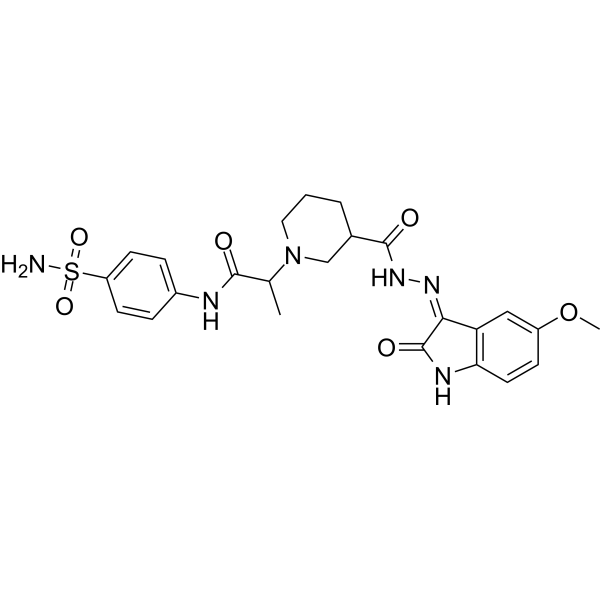 0 ImagesCat. No.: HY-155760CAS No.: 2971782-73-5hCA/VEGFR-2-IN-3 (compound 8j) is an indolinonylbenzenesulfonamide and a potential dual inhibitor of cancer-associated hCA IX/XII and VEGFR-2. hCA/VEGFR-2-IN-3 inhibits VEGFR-2 (IC50=358 nM), has high binding activity to hCAs with Ki of 4.2 nM (hCA IX), 22.9 nM (hCA II), 25.1 nM (hCA I), 28.0 nM (hCA XII), respectively. hCA/VEGFR-2-IN-3 has antiproliferative activity against VEGFR-2 overexpressing breast cancer cells.
-
Alacizumab
 0 ImagesCat. No.: HY-P990318CAS No.: 934216-54-3
-
Lenvatinib-d5
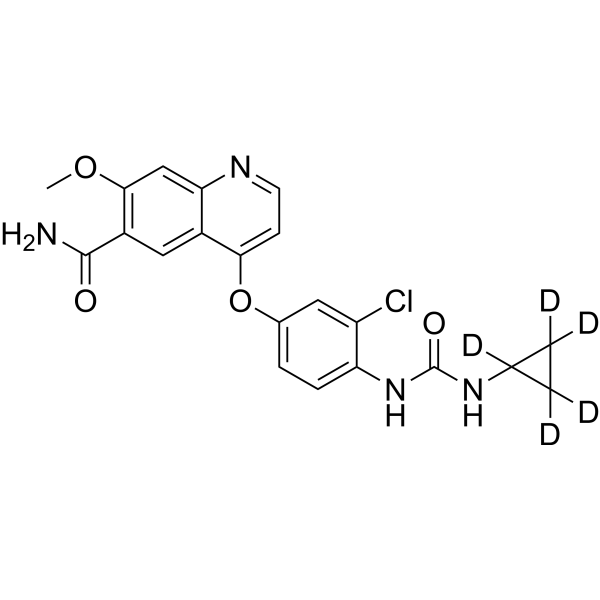 0 ImagesCat. No.: HY-10981S1Synonyms: E7080-d5
-
C-VGB3
 0 ImagesCat. No.: HY-P10833C-VGB3 is a selective vascular endothelial growth factor receptor 2 (VEGFR2) antagonist, which inhibits VEGFR2-mediated PI3K/AKT/mTOR and PLCγ/ERK1/2 signaling pathways. C-VGB3 binds to the extracellular domain of VEGFR2, blocking ligand-receptor interaction and inducing apoptosis in endothelial and tumor cells through both intrinsic (involving Bcl2 family and caspases) and extrinsic (death receptor-mediated) pathways. C-VGB3 is promising for research of angiogenesis-related cancers, such as breast cancer.
-
EGFR-IN-192
 0 ImagesCat. No.: HY-181097EGFR-IN-192 is an anticancer agent. EGFR-IN-192 inhibits EGFR (IC50: 0.12 μM), downregulates the HIF-VEGF and PI3K/AKT/mTOR pathways, upregulates the tumor suppressor gene PTEN, and induces cell cycle arrest and apoptosis in tumor cells. EGFR-IN-192 exhibits antitumor activity and can be used in tumor research.
-
Caulerpin
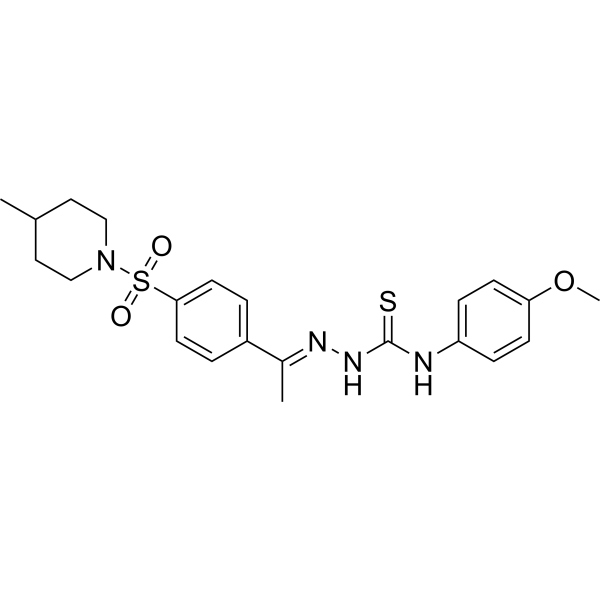
 0 ImagesCat. No.: HY-N10650CAS No.: 26612-48-6Caulerpin is an orally active natural product with anti-tumor, anti-viral, anti-oxidant, anti-fungal, anti-bacteria and analgesic activities. Caulerpin acts as an inhibitor of mitochondrial ETC complex I and acetylcholinesterase. Caulerpin blocks hypoxia-induced activation of HIF-1α protein, inhibits VEGF secretion and tumor angiogenesis under hypoxic conditions, reduces the expression of NLRP3 and the production of pro-inflammatory cytokines, and suppresses the load of Mycobacterium tuberculosis. Caulerpin can be used in studies related to breast cancer, prostate cancer, tuberculosis and viral infections.
-
NYLTHRQ
 0 ImagesCat. No.: HY-P11649CAS No.: 1004284-41-6NYLTHRQ is a peptide. NYLTHRQ specifically blocks the interaction between sVEGFR1-i13 and β1 integrin, and inhibits the activation of VEGFR1 and VEGFR2. NYLTHRQ inhibits cancer cell proliferation. NYLTHRQ can be used in the research of tumors such as lung squamous cell carcinoma.
-
Sutetinib maleate
 0 ImagesCat. No.: HY-164387ACAS No.: 1701408-75-4Sutetinib maleate is the maleate form of Sutetinib (HY-164387). Sutetinib maleate is an orally active inhibitor for tyrosine kinase, that is associated with tumor growth and angiogenesis, such as VEGFR (Ki= 0.009 µM for VEGFR-1/2/3), PDGFR (Ki= 0.008 µM for PDGFR-α/β) and proto-oncogene cKIT. Sutetinib maleate inhibits the proliferation, migration, and tubular structure formation of endothelial cells and fibroblasts, and exhibits board-spectrum antitumor efficacy in vitro and in vivo.
-
DHW-221
 0 ImagesCat. No.: HY-130133CAS No.: 2378831-21-9DHW-221 is a potent orally active dual PI3K/mTOR inhibitor, exhibiting low nanomolar potency against all four Class I PI3K isoforms and mTOR (PI3Kα, IC50 = 0.50 nM; PI3Kβ, IC50 = 1.9 nM; PI3Kγ, IC50 = 1.8 nM; PI3Kδ, IC50 = 0.74 nM; mTOR, IC50 = 3.9 nM). DHW-221 exerts antitumor effects by blocking the PI3K/Akt/mTOR pathway and inducing mitochondrial apoptosis and paraptosis (via Endoplasmic Reticulum (ER) stress and MAPK signaling) and arrests cell cycle, thereby inhibiting cell migration, invasion and angiogenesis. DHW-221 inhibits tumor growth in both the A549/Taxol (HY-B0015) and the HCC827 xenograft mouse models. DHW-221 can be used for non-small cell lung cancer (NSCLC), colon and breast cancer research.
-
Multi-kinase-IN-4
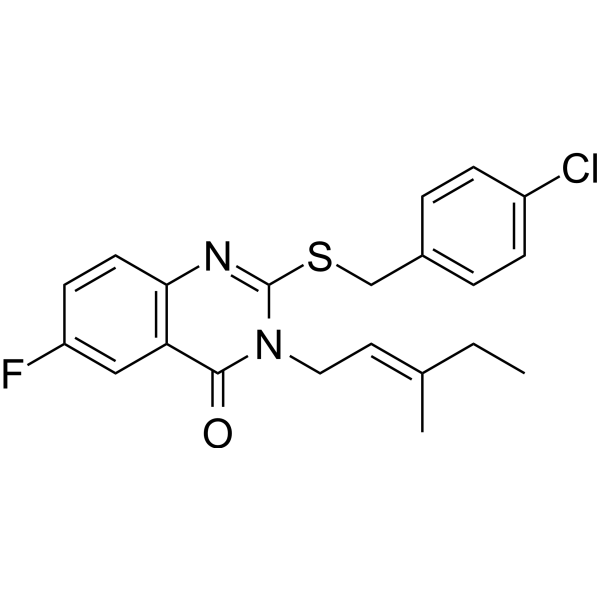 0 ImagesCat. No.: HY-149407Multi-kinase-IN-4 (compound 5d) is multi-targeted kinase inhibitor, including VEGFR2, EGFR, HER2, and CDK2, with IC50 values of 0.33, 0.22, 0.18 and 2.09 μM, respectively. Multi-kinase-IN-4 shows broad-spectrum anti-cancer activities against HepG2, MCF-7, MDA-231, and HeLa cell lines (IC50 = 1.94–7.1 µM), but exhibits lower toxicity in the WI-38 cells (IC50 = 40.85 µM). Multi-kinase-IN-4 induces apoptosis and arrests cell cycle at S phase in HepG2 cells. Multi-kinase-IN-4 has the potential for the research of cancer.
-
VEGFR-2-IN-15
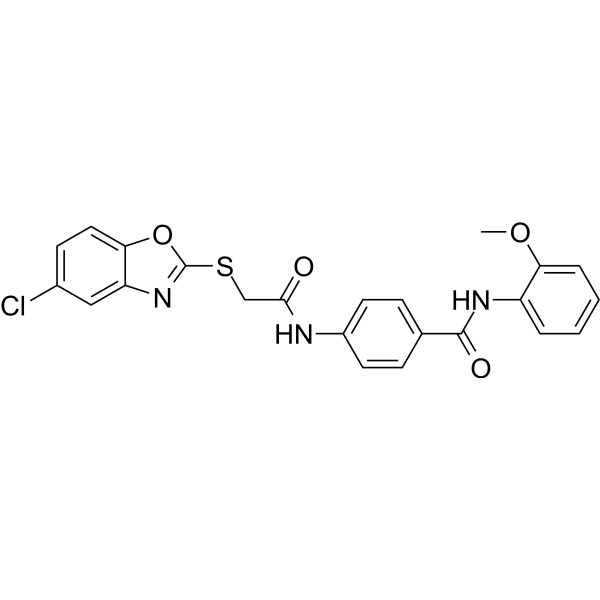 0 ImagesCat. No.: HY-144796CAS No.: 3033033-20-1VEGFR-2-IN-15 (Compound 14b) is a potent VEGFR-2 inhibitor. VEGFR-2-IN-15 arrests the HepG2 cell growth at the Pre-G1 phase and induces apoptosis.
-
AGN-745
 0 ImagesCat. No.: HY-177612CAS No.: 1255908-66-7Synonyms: AGN-211745; Sirna-027AGN-745 is a chemically modified siRNA targeted to VEGFR-1. It is used for the study of Macular degeneration.
-
VEGFR-2-IN-59
 0 ImagesCat. No.: HY-169409VEGFR-2-IN-59 (Compound 3h) is an inhibitor for VEGFR2 with an IC50 of 3.73 µM. VEGFR-2-IN-59 exhibits cytotoxicity in cancer cell A549, HT-29, A375, MCF7 and NHDF with IC50 of 20.91, 19.70, 9.63, 17.43 and 20.71 μM. VEGFR-2-IN-59 inhibits formation of tubular structure and exhibits anti-angiogenic property.




