



mGluR
Metabotropic glutamate receptors
mGluR (metabotropic glutamate receptor) is a type of glutamate receptor that are active through an indirect metabotropic process. They are members of thegroup C family of G-protein-coupled receptors, or GPCRs. Like all glutamate receptors, mGluRs bind with glutamate, an amino acid that functions as an excitatoryneurotransmitter. The mGluRs perform a variety of functions in the central and peripheral nervous systems: mGluRs are involved in learning, memory, anxiety, and the perception of pain. mGluRs are found in pre- and postsynaptic neurons in synapses of the hippocampus, cerebellum, and the cerebral cortex, as well as other parts of the brain and in peripheral tissues. Eight different types of mGluRs, labeled mGluR1 to mGluR8, are divided into groups I, II, and III. Receptor types are grouped based on receptor structure and physiological activity.
mGluR Isoform Specific Products
All Product Categories
-
mGluR Related Products (399)
Related Products (399)

-
Antibodies (8)
-
mGluR Isoform Comparison
-
VU0364289
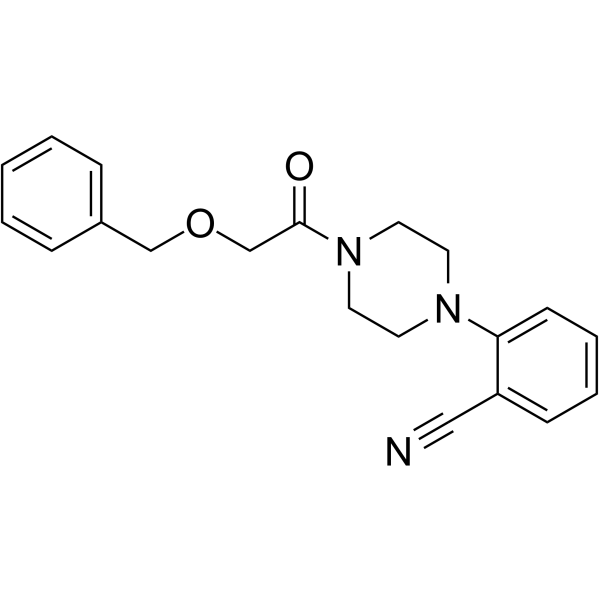 0 ImagesVU0364289 is a highly selective mGlu5 positive allosteric modulator (PAM) (binds to the MPEP (HY-14609A) site), with an EC50 of 1.6 μM. VU0364289 shows excellent central nervous system penetration. VU0364289 can reverse amphetamine-induced hyperlocomotion in a dose-dependent manner, which can be used for schizophrenia and other psychiatric research.
-
GSK1331268
 0 ImagesCat. No.: HY-120662CAS No.: 1207197-70-3GSK1331268 is a selective, orally active agonist for mGluR2 with a pEC50 of 6.9. GSK1331268 exhibits good blood-brain barrier penetration. GSK1331268 regulates glutamate signaling, and can be used in research of neurodegenerative and neuropsychiatric diseases.
-
LBG30300
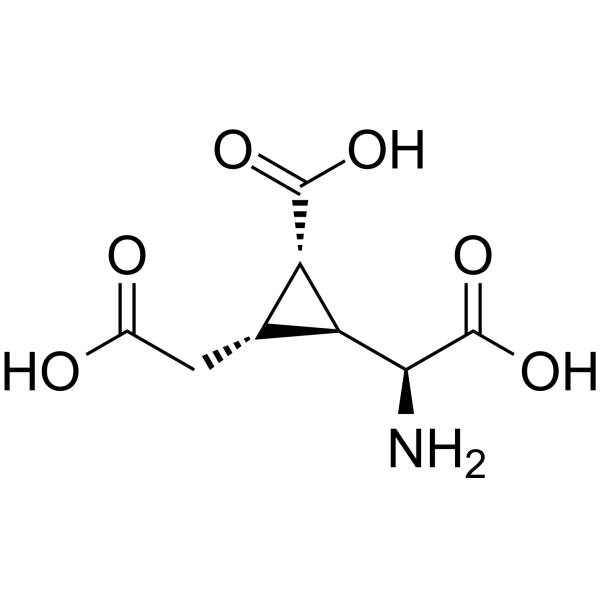 0 ImagesCat. No.: HY-162117CAS No.: 3086973-64-7LBG30300 is a subtype-selective mGlu2 receptor agonist EC50 0.6 nM. LBG30300 is blood-brain barrier permeable.
-
Ro 67-4853
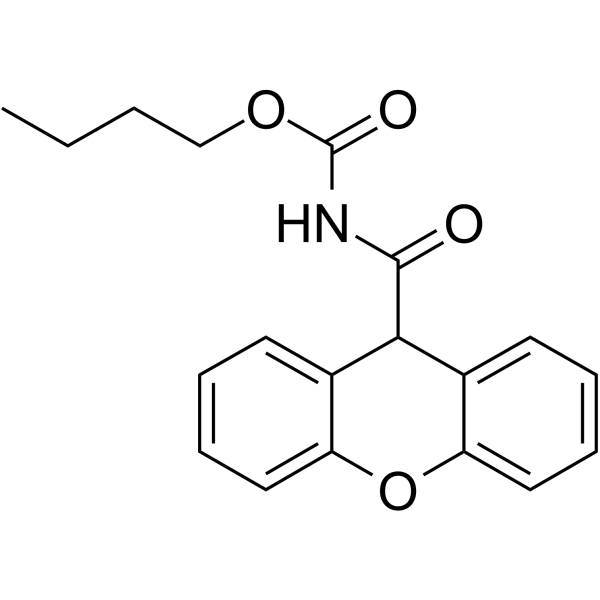 0 ImagesRo 67-4853 is a positive allosteric modulator (PAM) of mGluR1 (pEC50=7.16 for rmGlu1a receptor). Ro67-4853 exhibits activity at all group I mGlu receptors including hmGlu1, rmGlu1, and rmGlu5. Ro 67-4853 enhances the potency of L-Glu by interacting with the transmembrane domain (TMD) of the receptor. Ro 67-4853 potentiates sensory synaptic responses to repetitive vibrissa stimulation.
-
VU0240382
 0 ImagesCat. No.: HY-114589CAS No.: 1092550-36-1VU0240382 is a metabotropic glutamate receptor subtype 5 modulator whose activity differs depending on whether it has allosteric agonist activity. VU0240382 with allosteric agonist activity can activate mGlu(5) receptors in cell lines, but has no agonist activity in natural systems and has similar efficacy to mGlu(5) modulators without allosteric agonist activity in animal models.
-
VU0418506
 0 ImagesCat. No.: HY-120068CAS No.: 1330624-42-4VU0418506 is a selective positive allosteric modulator of mGlu4, with EC50 values of 68 nM and 46 nM for hmGlu4 and rmGlu4, respectively. VU0418506 exhibits antiparkinsonian activity.

-
LY 541850
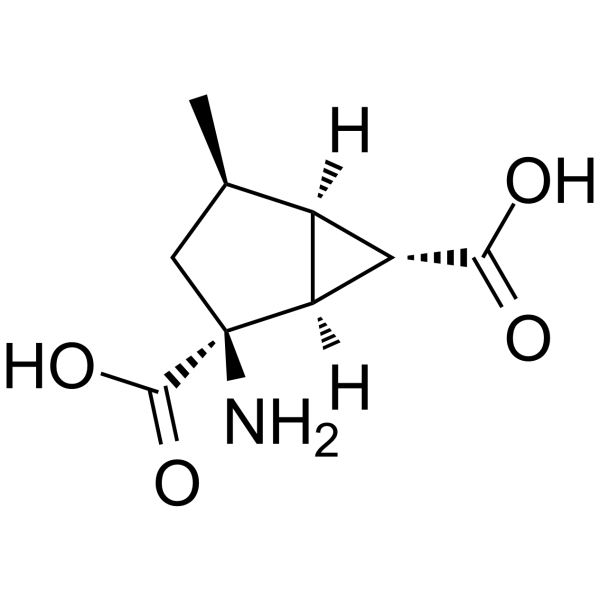 0 ImagesCat. No.: HY-103551ACAS No.: 852679-76-6LY 541850 is claimed from human ionotropic and metabotropic glutamate (mGlu) receptors expressed in non-neuronal cells. LY541850 is a selective orthosteric mGlu2 agonist and mGlu3 antagonist with IC50 values of 0.161 μM and 0.038 μM, respectively.
-
VU6001192
 0 ImagesCat. No.: HY-115782CAS No.: 1821325-29-4VU6001192 is a potent and selective mGlu2 (metabotropic glutamate receptor 2) negative allosteric modulator. VU6001192 has potent inhibitory activity against the mGlu2 receptor (IC50 = 207 nM), but no activity against the mGlu3 receptor and the other 6 mGlu subtypes. VU6001192 can be used for the research of neurological disease, such as depression.
-
Pomaglumetad methionil anhydrous
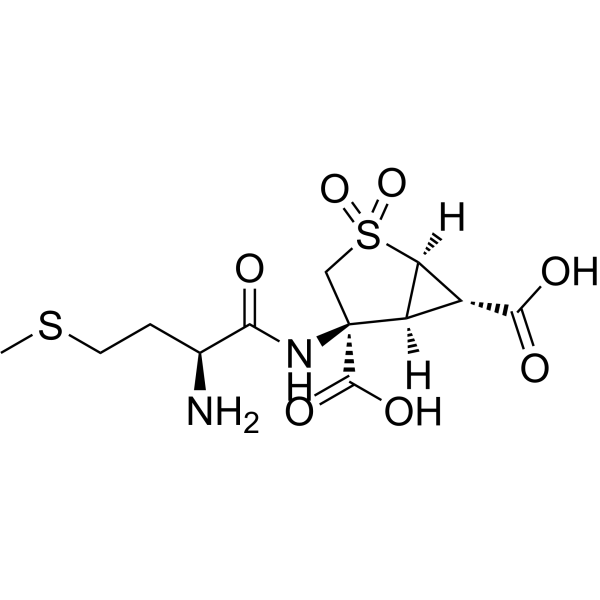 0 ImagesCat. No.: HY-14554CAS No.: 635318-55-7Synonyms: LY2140023Pomaglumetad methionil anhydrous (LY2140023) is an orally active, methionine prodrug of the selective mGlu2/3 receptor agonist LY404039. LY2140023 has the potential for schizophrenia research.
-
VU0410425
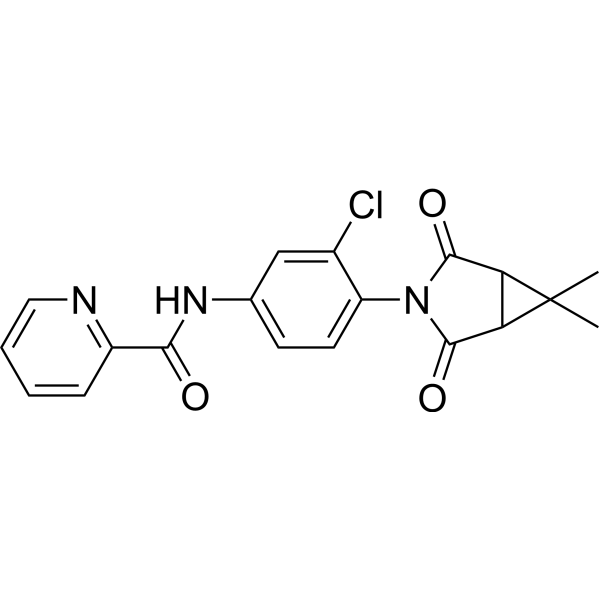 0 ImagesCat. No.: HY-120428CAS No.: 1341167-72-3VU0410425 is an mGlu1 negative allosteric modulator. VU0410425 exhibits potent inhibitory activity for rat mGlu1 with an IC50 value of 140 nM. VU0410425 can be used for the research of central nervous system disorders.
-
MGS0008
 0 ImagesCat. No.: HY-131293CAS No.: 234085-20-2MGS0008 is an orally active and brain-penetrant metabotropic glutamate receptor 2/3 (mGlu2/3) agonist with EC50 values of 29.4 nM and 45.4 nM for mGluR2 and mGluR3, respectively. MGS0008 is promising for research of central nervous system disorders, including schizophrenia, anxiety, and neurodegenerative diseases.
-
ADD-17014
 0 ImagesCat. No.: HY-19021CAS No.: 55643-87-3ADD-17014 is a L-Glu antagonist. ADD-17014 impairs presynaptic excitatory amino acid L-Glu neurotransmission. ADD-17014 is a prodrug of its β-amino alcohol metabolite, and the metabolite acts as a NMDA receptor antagonist by binding to the MK-801 site located inside the NMDA receptor or ion channel. ADD-17014 has an anticonvulsant and anti-ischemic activity. ADD-17014 can be used for neurodegenerative diseases like Parkinson’s disease, Alzheimer’s disease and stroke research.
-
VU 0360223
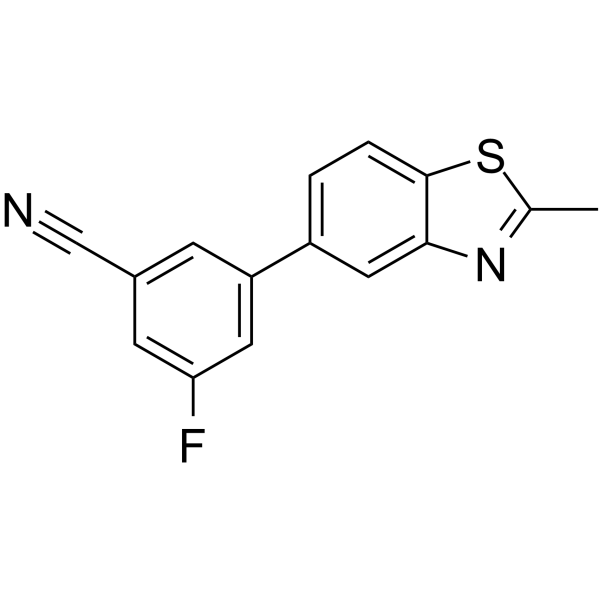 0 ImagesCat. No.: HY-103573CAS No.: 1274859-33-4VU 0360223 is a potent metabotropic glutamate receptors (mGluR) negative allosteric modulator with an IC50 of 61 nM.
-
mGluR2 modulator 6
 0 ImagesCat. No.: HY-177302CAS No.: 1127498-73-0mGluR2 modulator 6 (Compound 25-a) is a mGluR2 modulator. mGluR2 modulator 6 has anticonvulsant activity in the 6Hz epilepsy model, and the effect is better when combined with Levetiracetam (HY-B0106). mGluR2 modulator 6 can be used in the research of epilepsy.
-
R214127
 0 ImagesCat. No.: HY-114891CAS No.: 409345-76-2R214127 is a selective mGlu1 receptor antagonist with IC50 values of 6 and 14 nM for rat and human mGlu1a. R214127 acts on a site from the glutamate binding pocket, and competes for the same transmembrane segment VII as other noncompetitive mGlu1 antagonists.
-
VU0469650 hydrochloride
 0 ImagesCat. No.: HY-W714513VU0469650 hydrochloride is a brain-penetrant negative allosteric modulator of metabotropic glutamate receptor 1 (mGluR1). VU0469650 hydrochloride inhibits glutamate-induced calcium flux in cells expressing human mGluR1 (IC50= 99 nM). VU0469650 hydrochloride is promising for research of central nervous system diseases such as anxiety, addiction, and epilepsy.

-
HexylHIBO hydrobromide
 0 ImagesCat. No.: HY-175100HexylHIBO hydrobromide is a potent group I mGluR antagonist with Kbs of 140 μM and 110 μM at mGlu1a and mGlu5a receptors, respectively. HexylHIBO hydrobromide does not inhibits mGlu2 and mGlu4a. HexylHIBO hydrobromide decreases spontaneous excitatory postsynaptic currents (sEPSCs) in rat.
-
Troriluzole hydrochloride
 0 ImagesCat. No.: HY-122487ACAS No.: 1926204-76-3Synonyms: BHV-4157 hydrochlorideTroriluzole hydrochloride is a third-generation peptide precursor of Riluzole (HY-B0211) and is an orally active glutamate modulator. Troriluzole hydrochloride can reduce synaptic glutamate levels and enhance the uptake of synaptic glutamate. Troriluzole hydrochloride shows potential for treating Alzheimer's disease and Generalized Anxiety Disorder (GAD) .




