1. 疾患モデリングル製品 GPCR/G Protein Apoptosis
  2. Cardiovascular System Disease Models Angiotensin Receptor Apoptosis
  3. Hypertension Models
  4. Angiotensin II human acetate

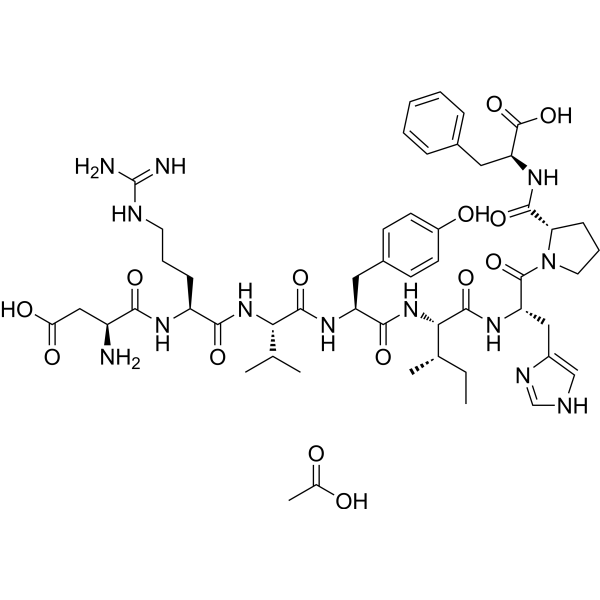
Angiotensin II human acetate  (Synonyms: Angiotensin II acetate; Ang II acetate; DRVYIHPF acetate)

製品番号: HY-13948A 純度: 99.80%
COA 取扱説明書 Technical Support

Angiotensin II human (Angiotensin II) acetate is a vasoconstrictor and a major bioactive peptide of the renin/angiotensin system. Angiotensin II human acetate plays a central role in regulating human blood pressure, which is mainly mediated by interactions between Angiotensin II and the G-protein-coupled receptors (GPCRs) Angiotensin II type 1 receptor (AT1R) and Angiotensin II type 2 receptor (AT2R). Angiotensin II human acetate stimulates sympathetic nervous stimulation, increases aldosterone biosynthesis and renal actions. Angiotensin II human acetate induces growth of vascular smooth muscle cells, increases collagen type I and III synthesis in fibroblasts, leading to thickening of the vascular wall and myocardium, and fibrosis. Angiotensin II human acetate also induces apoptosis. Angiotensin II human acetate induces capillary formation from endothelial cells via the LOX-1 dependent redox-sensitive pathway.

商品は「研究用試薬」です。人や動物の医療用・臨床診断用・食品用の製品ではありません。
研究用途以外に使用した場合、当社は一切の責任を負いかねます。

カスタムペプチド

CAS 番号 : 68521-88-0

容量 価格(税別) 在庫状況 数量
5 mg $41 在庫あり
10 mg $66 在庫あり
25 mg $140 在庫あり
50 mg $278 在庫あり
100 mg $420 在庫あり
500 mg $1015 在庫あり
1 g   お問い合わせ  
5 g   お問い合わせ  

* アイテムを追加する前、数量をご選択ください

This product is a controlled substance and not for sale in your territory.

カスタマーレビュー

Based on 222 publication(s) in Google Scholar

Other Forms of Angiotensin II human acetate:

Top Publications Citing Use of Products

顧客検証

WB
RT-PCR

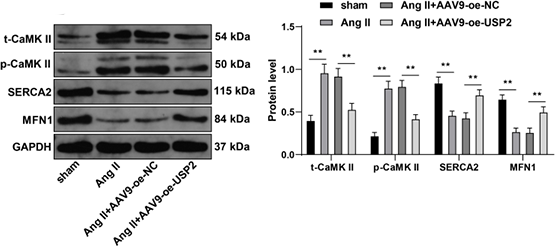
    Angiotensin II human acetate purchased from MedChemExpress. Usage Cited in: Mol Cell Endocrinol. 2023 Jul 1:571:111938.  [Abstract]

    Angiotensin II human (Ang II; 1 μM; 48 h) increases the expression of MFN1, t-CaMKⅡ and p-CaMKⅡ and decreases the expression of SERCA2 in NMCMs.

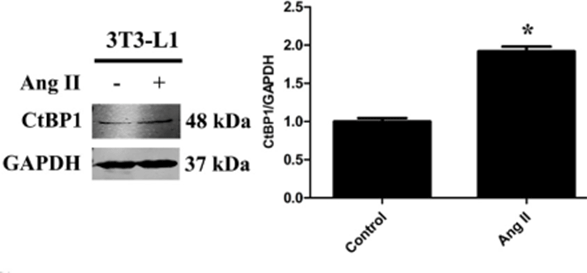
    Angiotensin II human acetate purchased from MedChemExpress. Usage Cited in: Biomedicines. 2022 Dec 4;10(12):3131.

    Angiotensin II human (Ang II; 100 nM; 24 h) pretreatment significantly increases both the protein level of CtBP1 during 3T3-L1 adipogenesis.

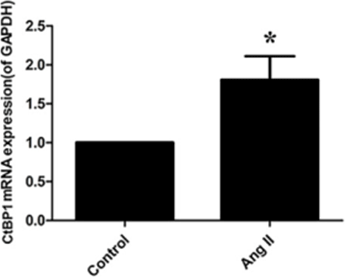
    Angiotensin II human acetate purchased from MedChemExpress. Usage Cited in: Biomedicines. 2022 Dec 4;10(12):3131.

    Angiotensin II human (Ang II; 100 nM; 24 h) pretreatment significantly increases both the mRNA level of CtBP1 during 3T3-L1 adipogenesis.

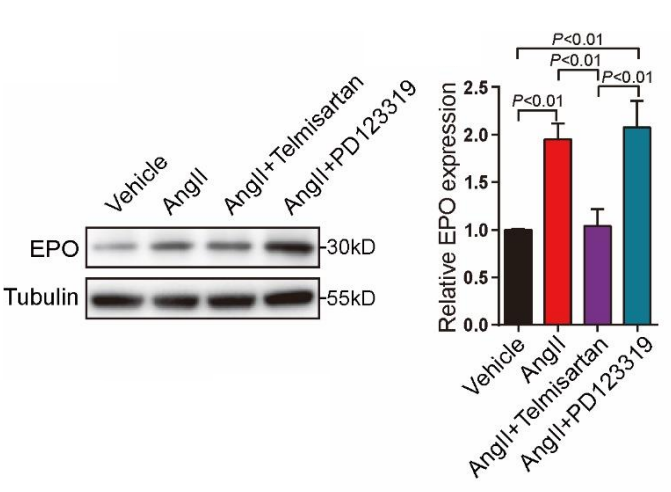
    Angiotensin II human acetate purchased from MedChemExpress. Usage Cited in: Sci Transl Med. 2021 Jul 21;13(603):eaaz4959.  [Abstract]

    Cultured human renal 786-O cells were stimulated with vehicle, AngII (50 μM), AngII + Telmisartan (1 μM), AngII + PD123319 (50 μM) for 12 hrs. Cells were harvested and EPO protein abundance was detected by Western blot.

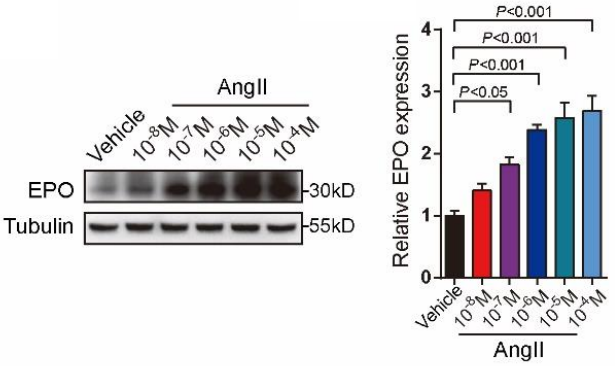
    Angiotensin II human acetate purchased from MedChemExpress. Usage Cited in: Sci Transl Med. 2021 Jul 21;13(603):eaaz4959.  [Abstract]

    SMC was stimulated with vehicle and AngII of 10-8 M, 10-7 M, 10-6 M,10-5 M and 10-4 M, respectively, for 24 hrs. Cells were harvested and EPO protein abundance measured by Western blot.

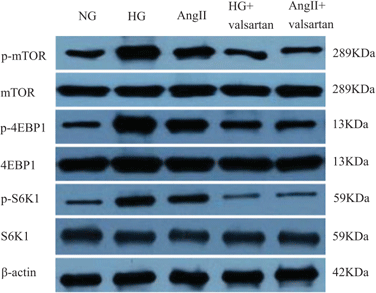
    Angiotensin II human acetate purchased from MedChemExpress. Usage Cited in: Int J Biochem Cell Biol. 2020 Apr;121:105703.  [Abstract]

    HPMCs are treated with 5.6 mM glucose (NG) or with 236 mM glucose (HG), or 100 nM AngII (AngII), or 236 mM glucose plus 10 mM valsartan (HGþvalsartan), or 100 nM AngII plus 10 mM valsartan (AngIIþvalsartan) for 24 h. The protein levels of p-mTOR, mTOR, p-4EBP1, 4EBP1, p-S6K1, and S6K1 are examined by Western blot analysis.

    Angiotensin Receptor アイソフォーム固有の製品をすべて表示:

    • 生物活性

    • 純度とドキュメンテーション

    • 参考文献

    • カスタマーレビュー

    製品説明

    Angiotensin II human (Angiotensin II) acetate is a vasoconstrictor and a major bioactive peptide of the renin/angiotensin system. Angiotensin II human acetate plays a central role in regulating human blood pressure, which is mainly mediated by interactions between Angiotensin II and the G-protein-coupled receptors (GPCRs) Angiotensin II type 1 receptor (AT1R) and Angiotensin II type 2 receptor (AT2R). Angiotensin II human acetate stimulates sympathetic nervous stimulation, increases aldosterone biosynthesis and renal actions. Angiotensin II human acetate induces growth of vascular smooth muscle cells, increases collagen type I and III synthesis in fibroblasts, leading to thickening of the vascular wall and myocardium, and fibrosis. Angiotensin II human acetate also induces apoptosis. Angiotensin II human acetate induces capillary formation from endothelial cells via the LOX-1 dependent redox-sensitive pathway[1][2][3][4].

    IC50 & Target

    AT2 Receptor


    AT1 Receptor


    体外実験

    Most of the known actions of Angiotensin II (Ang II) human acetate are mediated by AT1 receptors, the AT2 receptor contributes to the regulation of blood pressure and renal function[1].
    Angiotensin II human acetate raises blood pressure (BP) by a number of actions, the most important ones being vasoconstriction, sympathetic nervous stimulation, increased aldosterone biosynthesis and renal actions. Other Angiotensin II human acetate actions include induction of growth, cell migration, and mitosis of vascular smooth muscle cells, increased synthesis of collagen type I and III in fibroblasts, leading to thickening of the vascular wall and myocardium, and fibrosis. These actions are mediated by type 1 Ang II receptors (AT1)[2].
    Angiotensin II (1 nM) induces the expression of LOX-1 and VEGF and enhances capillary formation from human coronary endothelial cells in Matrigel assay. Angiotensin II -mediated expression of LOX-1 and VEGF, capillary formation, intracellular reactive oxygen species generation, and phosphorylation of p38 as well as p44/42 mitogen-activated protein kinases, were suppressed by anti-LOX-1 antibody, nicotinamide-adenine dinucleotide phosphate oxidase inhibitor apocynin and the Ang II type 1 receptor blocker Losartan, but not by the Ang II type 2 receptor blocker PD123319[3].

    MedChemExpress (MCE) has not independently confirmed the accuracy of these methods. They are for reference only.

    体内実験

    Note:
    Please do not refer to only one article to determine the experimental conditions. It is recommended to determine the optimal experimental conditions (animal strain, age, dosage, frequency and cycle, detection time and indicators, etc.) through preliminary experiments before the formal experiment.

    Angiotensin II human (acetate) can be used to induce models of hypertension, cardiac hypertrophy and abdominal aortic aneurysm[7][8][9][10][11].

    Angiotensin II (acetate) is internalized by various cell types through receptor-mediated endocytosis and is highly enriched in tissues such as the heart, kidney, and adrenal glands. The concentration in skeletal muscle tissue is 8%-41% of the plasma concentration, 64%-150% in the heart, 340%-550% in the kidney, and as high as 680%-2100% in the adrenal gland. It takes only about 5 minutes for Angiotensin II (acetate) in plasma to reach a steady-state concentration, while it takes 30-60 minutes to reach a steady-state concentration in tissues. The half-life of Angiotensin II (acetate) in the circulation system is extremely short (about 0.5 minutes), while in the heart, kidney, and adrenal tissues, the in vivo half-life of Angiotensin II (acetate) formed after endocytosis is significantly extended to about 15 minutes[10].
    1. Induction of hypertension[7]
    Background
    Angiotensin II human induces hypertension by activating AT1 receptors, leading to vasoconstriction, sodium and water retention, sympathetic nervous system activation, and oxidative stress.
    Specific Modeling Methods
    Mice: C57/BL6J • male and female • 12-16 wk old • 21-27 g
    Administration: 800 ng/kg/min, 0.003 mL/min • 7 days • sc, osmotic pump implanted subcutaneously
    Note
    Effect of gender: Chronic ANG II-induced hypertension differs by gender in awake mice. Female mice may be protected from the ANG II-induced increase in blood pressure.
    Modeling Indicators
    Key Factor: Blood pressure ↑ on day 7, blood pressure in male was greater than in female.
    2. Induction of Cardiac Hypertrophy[8][9]
    Background
    Angiotensin II human induces cardiac hypertrophy by activating the AT1 receptor, leading to inflammation, oxidative stress, and extracellular matrix remodeling, which cause myocardial cell proliferation and hypertrophy.
    Specific Modeling Methods
    Mice: C57/BL6J • male • 8 wk old •
    Administration: 2 μg/kg/min • 4 weeks • sc, osmotic pump implanted subcutaneously
    Note
    Modeling Indicators
    Indicator changes: Blood pressure in WT mice increased significantly.
    Appearance monitoring: cardiac hypertrophy and fibrosis.
    Opposite Product(s): Eplerenone (HY-B0251)
    3. Abdominal aortic aneurysm model[11]
    Pathogenic mechanism
    Angiotensin II induces atherosclerosis by stimulating monocyte recruitment, macrophage activation, and enhancing oxidative stress, ultimately leading to local dilation and thinning of the abdominal aorta in mice and the formation of abdominal aortic aneurysm.
    Specific modeling method
    Mice: ApoE–/– mice • female • 6-month-old
    Administration: 500 or 1000 ng/min/kg • s.c. • 28 days
    Modeling success index
    Cellular changes: Increased in lipid-laden macrophages and lymphocytes in the aortic intima.
    Phenotype observation: There are a large number of atherosclerotic lesions in the mice. The size of the abdominal area of the aorta is significantly increased, there is a large amount of adventitial tissue, and blood clots exist in the adventitial tissue, and new blood vessels appear on the outer surface.
    Antagonist products: (±)-Clopidogrel bisulfate (HY-107867)

    MedChemExpress (MCE) has not independently confirmed the accuracy of these methods. They are for reference only.

    分子量

    1106.23

    分子式

    C52H75N13O14

    CAS 番号
    Appearance

    Solid

    Color

    White to off-white

    Sequence

    Asp-Arg-Val-Tyr-Ile-His-Pro-Phe

    Sequence Shortening

    DRVYIHPF

    輸送条件

    Room temperature in continental US; may vary elsewhere.

    保管条件

    polypeptide, sealed storage, away from moisture and light, under nitrogen

    *In solvent : -80°C, 6 months; -20°C, 1 month (polypeptide, sealed storage, away from moisture and light, under nitrogen)

    溶剤 & 溶解度
    体外: 

    H2O : 5 mg/mL (4.52 mM; ultrasonic and warming and heat to 37°C)

    Preparing
    Stock Solutions
    Concentration Solvent Mass 1 mg 5 mg 10 mg
    1 mM 0.9040 mL 4.5199 mL 9.0397 mL
    5 mM --- --- ---
    10 mM --- --- ---
    View the Complete Stock Solution Preparation Table

    * Please refer to the solubility information to select the appropriate solvent. Once prepared, please aliquot and store the solution to prevent product inactivation from repeated freeze-thaw cycles.
    Storage method and period of stock solution: -80°C, 1 year; -20°C, 6 months (sealed storage, away from moisture and light, under nitrogen). When stored at -80°C, please use it within 1 year. When stored at -20°C, please use it within 6 months.

    * Note: If you choose water as the stock solution, please dilute it to the working solution, then filter and sterilize it with a 0.22 μm filter before use.

    • Molarity Calculator

    • Dilution Calculator

    Mass (g) = Concentration (mol/L) × Volume (L) × Molecular Weight (g/mol)

    Mass
    =
    Concentration
    ×
    Volume
    ×
    Molecular Weight *

    Concentration (start) × Volume (start) = Concentration (final) × Volume (final)

    一般には略語で表示されます:C1V1 = C2V2

    濃度 (開始)

    C1

    ×
    体積 (開始)

    V1

    =
    濃度 (終了)

    C2

    ×
    体積 (終了)

    V2

    体内:

    For the following dissolution methods, please prepare the working solution directly. It is recommended to prepare fresh solutions and use them promptly within a short period of time.
    The percentages shown for the solvents indicate their volumetric ratio in the final prepared solution. If precipitation or phase separation occurs during preparation, heat and/or sonication can be used to aid dissolution.

    • Protocol 1

      Add each solvent one by one:  PBS

      Solubility: 10 mg/mL (9.04 mM); Clear solution; Need ultrasonic

    • Protocol 2

      Add each solvent one by one:  Saline

      Solubility: 12.5 mg/mL (11.30 mM); Clear solution; Need ultrasonic and warming and heat to 60°C

    In Vivo Dissolution Calculator
    Please enter the basic information of animal experiments:

    Dosage

    mg/kg

    Animal weight
    (per animal)

    g

    Dosing volume
    (per animal)

    μL

    Number of animals

    Recommended: Prepare an additional quantity of animals to account for potential losses during experiments.
    Calculation results:
    Working solution concentration: mg/mL
    The concentration of the stock solution you require exceeds the measured solubility. The following solution is for reference only.If necessary, please contact MedChemExpress (MCE).
    純度とドキュメンテーション

    純度: 99.81%

    参考文献

    Complete Stock Solution Preparation Table

    * Please refer to the solubility information to select the appropriate solvent. Once prepared, please aliquot and store the solution to prevent product inactivation from repeated freeze-thaw cycles.
    Storage method and period of stock solution: -80°C, 1 year; -20°C, 6 months (sealed storage, away from moisture and light, under nitrogen). When stored at -80°C, please use it within 1 year. When stored at -20°C, please use it within 6 months.

    Optional Solvent Concentration Solvent Mass 1 mg 5 mg 10 mg 25 mg
    H2O 1 mM 0.9040 mL 4.5199 mL 9.0397 mL 22.5993 mL

    * Note: If you choose water as the stock solution, please dilute it to the working solution, then filter and sterilize it with a 0.22 μm filter before use.

    • No file chosen (Maximum size is: 1024 Kb)
    • If you have published this work, please enter the PubMed ID.
    • Your name will appear on the site.
    • Molarity Calculator

    • Dilution Calculator

    The molarity calculator equation

    Mass (g) = Concentration (mol/L) × Volume (L) × Molecular Weight (g/mol)

    質量   濃度   体積   分子量 *
    = × ×

    The dilution calculator equation

    Concentration (start) × Volume (start) = Concentration (final) × Volume (final)

    一般には略語で表示されます:C1V1 = C2V2

    濃度 (開始) × 体積 (開始) = 濃度 (終了) × 体積 (終了)
    × = ×
    C1   V1   C2   V2
    Help & FAQs
    • Do most proteins show cross-species activity?

      Species cross-reactivity must be investigated individually for each product. Many human cytokines will produce a nice response in mouse cell lines, and many mouse proteins will show activity on human cells. Other proteins may have a lower specific activity when used in the opposite species.

    最近チェックした製品:

    オンラインお問い合わせ

    Your information is safe with us. * Required Fields.

    製品名


    カスタマ需要量 *

    お名前 *


    タイトル

    メールアドレス *


    電話番号 *

    デパートメント


    組纖名 *

    市区町村

    都道府県

    国或いは地域 *


    必ず会社名を記載ください。個人への返信は行いません。

    備考

    バルクお問い合わせ

    Inquiry Information

    製品名:
    Angiotensin II human acetate
    製品番号:
    HY-13948A
    数量:
    MCE 日本正規代理店: