



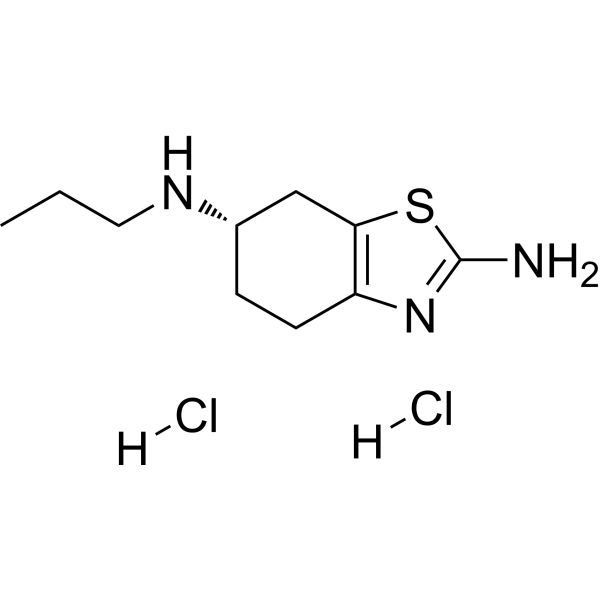
Pramipexole dihydrochloride
Based on 14 publication(s) in Google Scholar
Pramipexole dihydrochloride is a selective and blood-brain barrier (BBB) penetrant dopamine D2-type receptor agonist, with Kis of 2.2 nM, 3.9 nM, 0.5 nM and 1.3 nM for D2-type receptor, D2, D3 and D4 receptors, respectively. Pramipexole dihydrochloride can be used for the research of Parkinson's disease (PD) and restless legs syndrome (RLS).
For research use only. We do not sell to patients.
- Purity: 99.85%
- CAS No.: 104632-25-9
- Formula: C10H19Cl2N3S
- Molecular Weight:284.25
-
Storage:
4°C, sealed storage, away from moisture
* In solvent : -80°C, 6 months; -20°C, 1 month (sealed storage, away from moisture)

To place orders, for customer services and technical support, please contact: MedChemExpress USA
Tel: 609-228-6898 E-mail: [email protected] [email protected]


-
 Biological Activity
-
Chemical Information
-
Solvent & Solubility
- Purity & Documentation
- References
-
 Help & FAQs


-
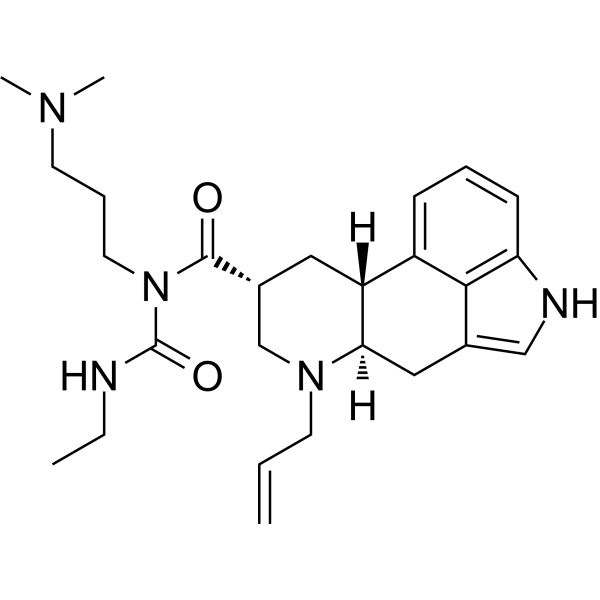
HY-15296
Cabergoline -
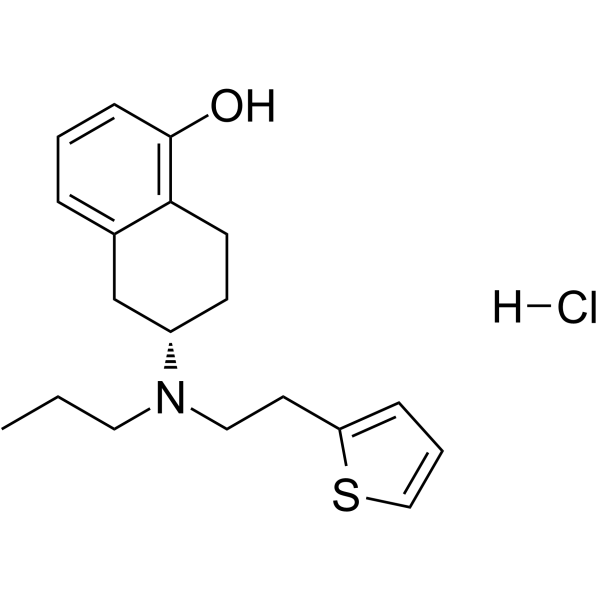
HY-A0007
Rotigotine Hydrochloride -
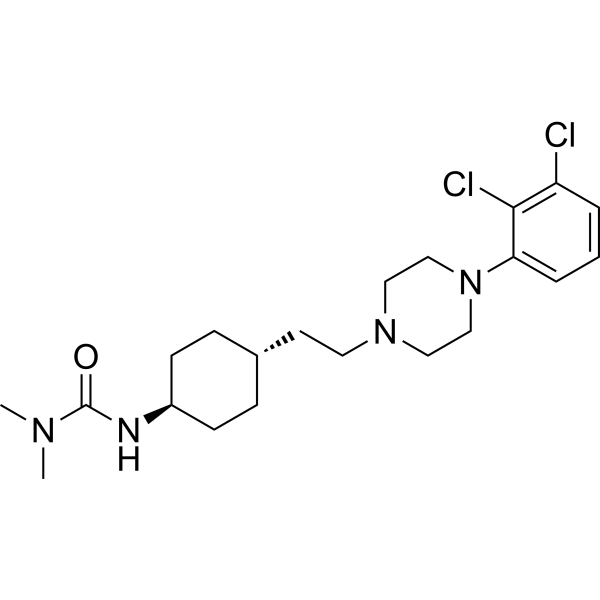
HY-14763
Cariprazine -
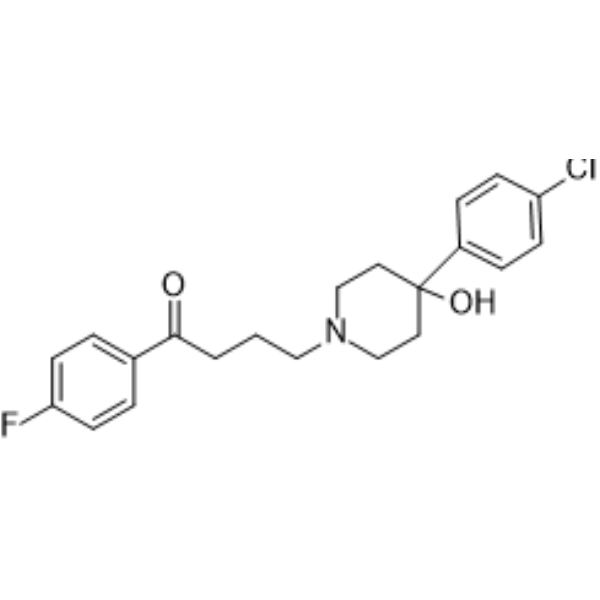
HY-14538
Haloperidol -
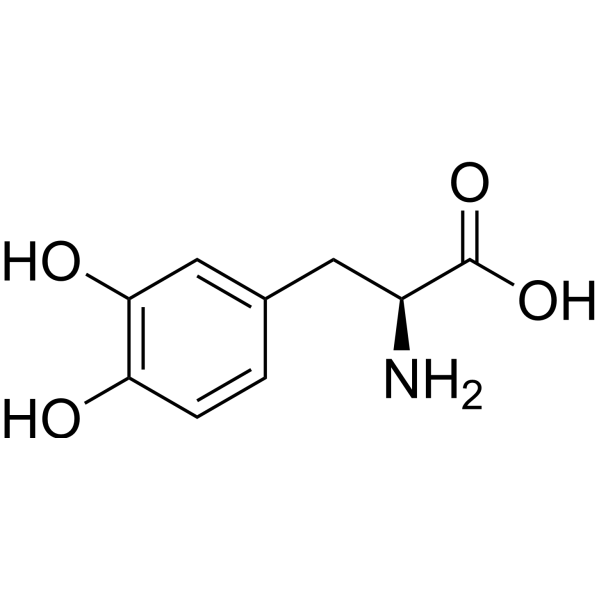
HY-N0304
L-DOPA -
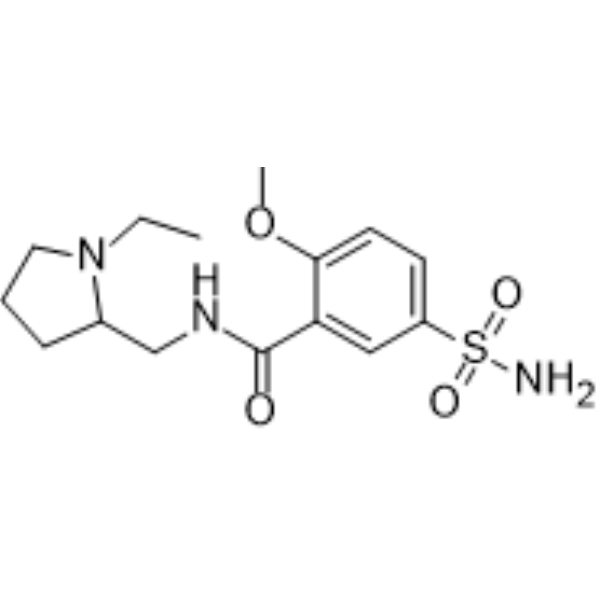
HY-B1019
Sulpiride -
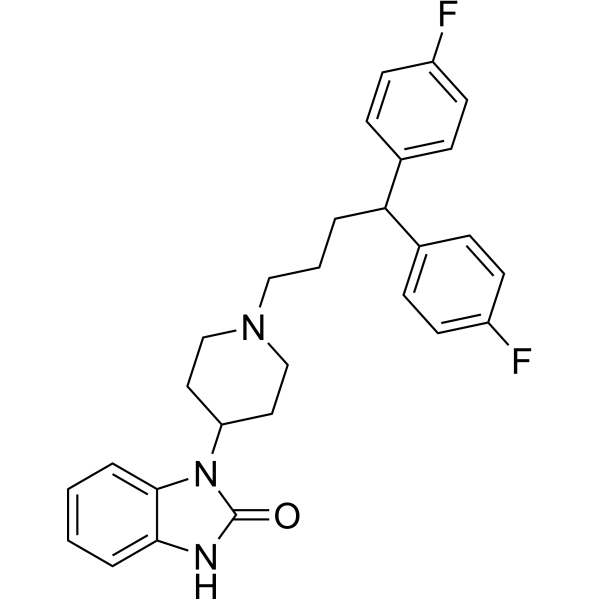
HY-12987
Pimozide -
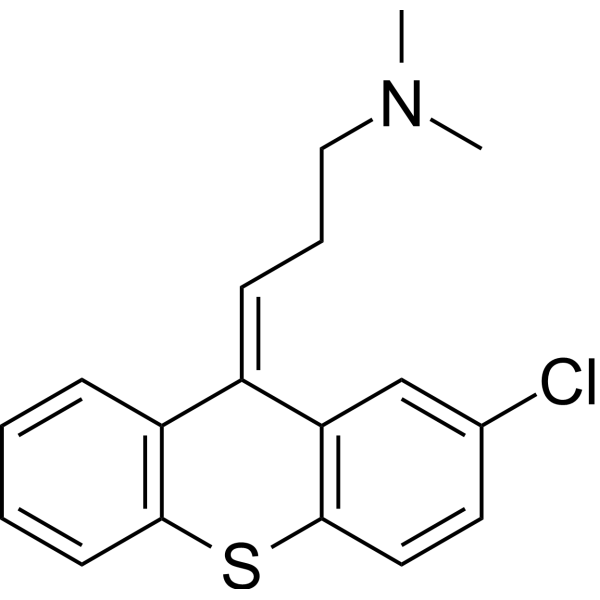
HY-B0274
Chlorprothixene -
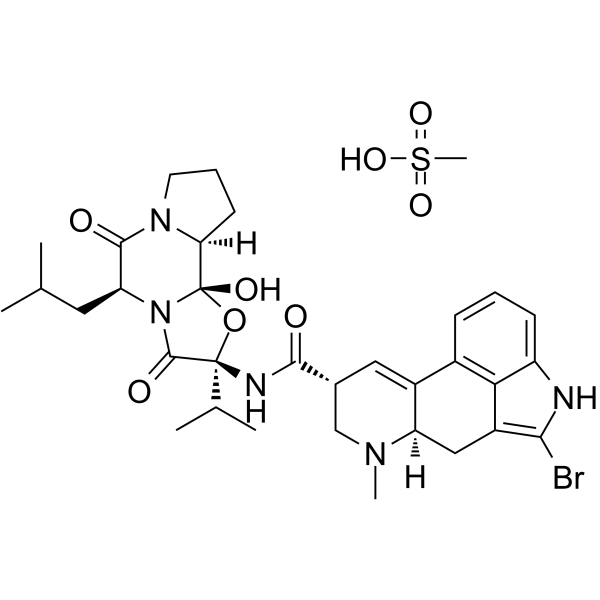
HY-12705A
Bromocriptine mesylate -

HY-15296R
Cabergoline (Standard) -

HY-17355R
Pramipexole dihydrochloride (Standard) -
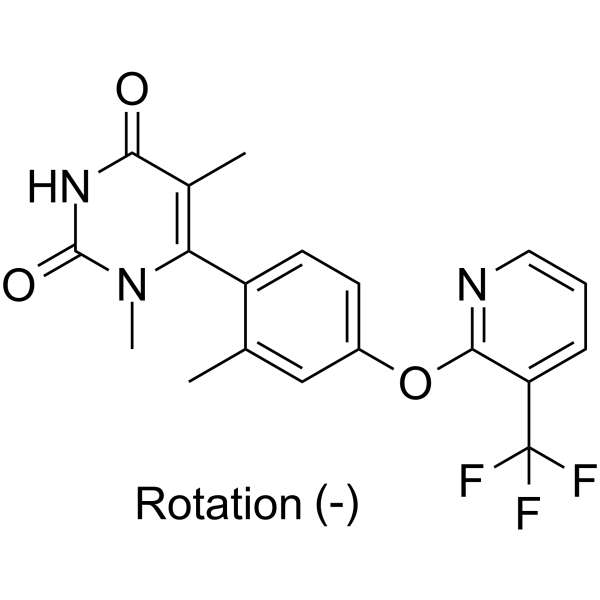
HY-119486
Tavapadon
Publications Citing Use of MedChemExpress (MCE) Pramipexole dihydrochloride
More- Nat Commun. 2026 Jun 16. [Abstract]
- Phytomedicine. 2025 Jun:141:156707. [Abstract]
- Mol Psychiatry. 2025 Dec 12. [Abstract]
- ACS Environ Au. 2025 Aug 5;5(6):573-582. [Abstract]
- Anal Chem. 2025 Jun 3;97(21):11099-11109. [Abstract]
- J Affect Disord. 2024 Jul 1:356:586-596. [Abstract]
- Neurochem Int. 2021 Jun:146:104972. [Abstract]
- Sci Rep. 2026 Feb 26;16(1):11134. [Abstract]
- Exp Neurol. 2025 Oct 13:395:115503. [Abstract]
- Prog Neurobiol. 2023 Dec:231:102536. [Abstract]
- PeerJ. 2023 Sep 11:11:e16039. [Abstract]
- J Stroke Cerebrovasc Dis. 2025 Jan;34(1):108101. [Abstract]
- J Stroke Cerebrovasc Dis. 2023 Jul;32(7):107142. [Abstract]
- Narra J. 2025 Aug;5(2):e2439. [Abstract]
All Dopamine Receptor Isoforms
More

Biological Activity
Description
IC50 & Target
|
D2 Receptor |
D3 Receptor |
D4 Receptor |
In Vitro
Pramipexole shows a low binding affinity for D1-type receptor, with an IC50 of >50,000 nM[1].
?
Pramipexole dihydrochloride (0.01-10?μM; 72 hours) produces dose-dependent increases of dendritic arborization and soma size[3].
?
Pramipexole dihydrochloride attenuates levodopa-induced toxicity in mesencephalic cultures, suggests that pramipexole may be cytoprotective to dopamine neurons in tissue culture[4].
MedChemExpress (MCE) has not independently confirmed the accuracy of these methods. They are for reference only.
In Vivo
? Pramipexole dihydrochloride improves neurological recovery[5].
? Pramipexole dihydrochloride prevents ischemic cell death via mitochondrial pathways in ischemic stroke[5].
MedChemExpress (MCE) has not independently confirmed the accuracy of these methods. They are for reference only.
-
Animal Model:Male Wistar rats weighing 250-300 g (16-18 weeks old)[5]
-
Dosage:0.25 mg/kg, 1 mg/kg
-
Administration:Intraperitoneal injection, at 1 hour, 6 hours, 12 hours, 18 hours post-occlusion
-
Result:Decreased infarction volume as compared to tMCAO (transient middle cerebral artery occlusion)-only animals.


Chemical Information
-
CAS No. 104632-25-9
-
Appearance Solid
-
Molecular Weight 284.25
-
Formula C10H19Cl2N3S
-
Color White to off-white
-
SMILES
NC(S1)=NC2=C1C[C@@H](NCCC)CC2.[H]Cl.[H]Cl
-
Shipping
Room temperature in continental US; may vary elsewhere.
-
Storage
4°C, sealed storage, away from moisture
* In solvent : -80°C, 6 months; -20°C, 1 month (sealed storage, away from moisture)


Publications (14)
-
Journal Impact Factor
-
Most Recent
-
Nat Commun
Targeting dopamine transporter for treating social transmission of depression-like behaviors in male mice. [Abstract]2026 Jun 16. PMID: 42303982 -
Phytomedicine
Valproic acid promotes transcriptional activation of Drd2 by mediating histone acetylation to inhibit the mTOR-Pttg1 signaling axis and exerts anti-PitNETs activity. [Abstract]2025 Jun:141:156707. PMID: 40220407 -
Mol Psychiatry
A co-culture model of dopaminergic and glutamatergic neurons derived from patients with idiopathic schizophrenia reveals a hypodopaminergic phenotype. [Abstract]2025 Dec 12. PMID: 41388144 -
ACS Environ Au
Machine Learning-Assisted Recognition of Environmental Sulfur-Containing Chemicals in Nontargeted Mass Spectrometry Analysis of Inadequate Mass Resolution. [Abstract]2025 Aug 5;5(6):573-582. PMID: 41277996 -
Anal Chem
Exposome-Scale Investigation of Cl-/Br-Containing Chemicals Using High-Resolution Mass Spectrometry, Multistage Machine Learning, and Cloud Computing. [Abstract]2025 Jun 3;97(21):11099-11109. PMID: 40401576 -
J Affect Disord
Pramipexole improves depression-like behavior in diabetes mellitus with depression rats by inhibiting NLRP3 inflammasome-mediated neuroinflammation and preventing impaired neuroplasticity. [Abstract]2024 Jul 1:356:586-596. PMID: 38657764 -
Neurochem Int
Pramipexole attenuates neuronal injury in Parkinson's disease by targeting miR-96 to activate BNIP3-mediated mitophagy. [Abstract]2021 Jun:146:104972. PMID: 33493581 -
Sci Rep
Pramipexole alleviates ferroptosis in HT22 cells induced by oxygen-glucose deprivation/reoxygenation via the Nrf2/SLC7A11/GPX4 pathway. [Abstract]2026 Feb 26;16(1):11134. PMID: 41741591 -
Exp Neurol
Pramipexole improves cognitive deficits and synaptic plasticity impairments in 3xTg-AD mice through enhancing autophagy. [Abstract]2025 Oct 13:395:115503. PMID: 41093093 -
Prog Neurobiol
A mouse model of sleep disorders in Parkinson's disease showing distinct effects of dopamine D2-like receptor activation. [Abstract]2023 Dec:231:102536. PMID: 37805096 -
PeerJ
Pramipexole has a neuroprotective effect in spinal cord injury and upregulates D2 receptor expression in the injured spinal cord tissue in rats. [Abstract]2023 Sep 11:11:e16039. PMID: 37719118 -
J Stroke Cerebrovasc Dis
Dopamine receptor agonist pramipexole exerts neuroprotection on global cerebral ischemia/reperfusion injury by inhibiting ferroptosis. [Abstract]2025 Jan;34(1):108101. PMID: 39490461 -
J Stroke Cerebrovasc Dis
Effects of different doses of dopamine receptor agonist pramipexole on neurobehaviors and changes of mitochondrial membrane potentials in rats with global cerebral ischemia-reperfusion injury. [Abstract]2023 Jul;32(7):107142. PMID: 37105127 -
Narra J
Thymoquinone and madecassoside improve motor function in a rotenone-induced mouse model of early Parkinson's disease: Role of dopamine, alpha-synuclein and mBDNF. [Abstract]2025 Aug;5(2):e2439. PMID: 40951472


Solvent & Solubility
In Vitro:
DMSO : 175 mg/mL (615.66 mM; Need ultrasonic; Hygroscopic DMSO has a significant impact on the solubility of product, please use newly opened DMSO)
H2O : ≥ 50 mg/mL (175.90 mM)
* "≥" means soluble, but saturation unknown.
Please refer to the solubility information to select the appropriate solvent. Once prepared, please aliquot and store the solution to prevent product inactivation from repeated freeze-thaw cycles.
Storage method and period of stock solution: -80°C, 6 months; -20°C, 1 month (sealed storage, away from moisture). When stored at -80°C, please use it within 6 months. When stored at -20°C, please use it within 1 month.
* Note: If you choose water as the stock solution, please dilute it to the working solution, then filter and sterilize it with a 0.22 μm filter before use.
Please refer to the solubility information to select the appropriate solvent. Once prepared, please aliquot and store the solution to prevent product inactivation from repeated freeze-thaw cycles.
Storage method and period of stock solution: -80°C, 6 months; -20°C, 1 month (sealed storage, away from moisture). When stored at -80°C, please use it within 6 months. When stored at -20°C, please use it within 1 month.
* Note: If you choose water as the stock solution, please dilute it to the working solution, then filter and sterilize it with a 0.22 μm filter before use.
Concentration (start) × Volume (start) = Concentration (final) × Volume (final)
In Vivo:
Select the appropriate dissolution method based on your experimental animal and administration route.
- For the following dissolution methods, please ensure to first prepare a clear stock solution using an In Vitro approach and then sequentially add co-solvents:
- To ensure reliable experimental results, the clarified stock solution can be appropriately stored based on storage conditions. As for the working solution for In Vivo experiments, it is recommended to prepare freshly and use it on the same day.
- The percentages shown for the solvents indicate their volumetric ratio in the final prepared solution. If precipitation or phase separation occurs during preparation, heat and/or sonication can be used to aid dissolution.
Add each solvent one by one: 10% DMSO 40% PEG300 5% Tween-80 45% Saline
Solubility: ≥ 5 mg/mL (17.59 mM); Clear solution
This protocol yields a clear solution of ≥ 5 mg/mL (saturation unknown).
Taking 1 mL working solution as an example, add 100 μL DMSO stock solution (50.0 mg/mL) to 400 μL PEG300, and mix evenly; then add 50 μL Tween-80 and mix evenly; then add 450 μL Saline to adjust the volume to 1 mL.
Preparation of Saline: Dissolve 0.9 g sodium chloride in ddH₂O and dilute to 100 mL to obtain a clear Saline solution.
Add each solvent one by one: 10% DMSO 90% (20% SBE-β-CD in Saline)
Solubility: ≥ 5 mg/mL (17.59 mM); Clear solution
This protocol yields a clear solution of ≥ 5 mg/mL (saturation unknown).
Taking 1 mL working solution as an example, add 100 μL DMSO stock solution (50.0 mg/mL) to 900 μL 20% SBE-β-CD in Saline, and mix evenly.
Preparation of 20% SBE-β-CD in Saline (4°C, storage for one week): 2 g SBE-β-CD powder is dissolved in 10 mL Saline, completely dissolve until clear.
For the following dissolution methods, please prepare the working solution directly:
It is recommended to prepare fresh solutions and use them promptly within a short period of time.
The percentages shown for the solvents indicate their volumetric ratio in the final prepared solution. If precipitation or phase separation occurs during preparation, heat and/or sonication can be used to aid dissolution.
Add each solvent one by one: PBS
Solubility: 100 mg/mL (351.80 mM); Clear solution; Need ultrasonic
In Vivo Dissolution Calculator
Please enter the basic information of animal experiments:
-
-
-
-
Recommended: Prepare an additional quantity of animals to account for potential losses during experiments.
Working solution concentration: 0.22 mg/mL
This product has good water solubility, please refer to the measured solubility data in water/PBS/Saline for details.


Purity & Documentation
-
Data Sheet (275 KB)
-
SDS (393 KB)
- English - EN (393 KB)
- Français - FR (393 KB)
- Deutsch - DE (393 KB)
- Norwegian - NO (393 KB)
- Español - ES (393 KB)
- Swedish - SV (393 KB)
- Italian - IT (393 KB)
- Korean - KR (393 KB)
- Portuguese - PT (393 KB)
-
Handling Instructions (2659 KB)
References
[1]. Kvernmo, T., et al. A review of the receptor-binding and pharmacokinetic properties of dopamine agonists. Clin Ther, 2006. 28(8): p. 1065-78. [Content Brief]
[2]. Takashi Okura, et al. Blood-brain barrier transport of pramipexole, a dopamine D2 agonist. Life Sci. 2007 Apr 3;80(17):1564-71. [Content Brief]
[3]. Ginetta Collo, et al. Ropinirole and Pramipexole Promote Structural Plasticity in Human iPSC-Derived Dopaminergic Neurons via BDNF and mTOR Signaling. Neural Plast. 2018; 2018: 4196961. [Content Brief]
[4]. P M Carvey, et al. Attenuation of levodopa-induced toxicity in mesencephalic cultures by pramipexole. J Neural Transm (Vienna). 1997;104(2-3):209-28. [Content Brief]
[5]. Syed Suhail Andrabi, et al. Pramipexole prevents ischemic cell death via mitochondrial pathways in ischemic stroke. Dis Model Mech. 2019 Aug 1; 12(8): dmm033860. [Content Brief]


Complete Stock Solution Preparation Table
Please refer to the solubility information to select the appropriate solvent. Once prepared, please aliquot and store the solution to prevent product inactivation from repeated freeze-thaw cycles.
Storage method and period of stock solution: -80°C, 6 months; -20°C, 1 month (sealed storage, away from moisture). When stored at -80°C, please use it within 6 months. When stored at -20°C, please use it within 1 month.
| Optional Solvent | Concentration Solvent Mass | 1 mg | 5 mg | 10 mg | 25 mg |
|---|---|---|---|---|---|
| H2O / DMSO | 1 mM | 3.5180 mL | 17.5901 mL | 35.1803 mL | 87.9507 mL |
| 5 mM | 0.7036 mL | 3.5180 mL | 7.0361 mL | 17.5901 mL | |
| 10 mM | 0.3518 mL | 1.7590 mL | 3.5180 mL | 8.7951 mL | |
| 15 mM | 0.2345 mL | 1.1727 mL | 2.3454 mL | 5.8634 mL | |
| 20 mM | 0.1759 mL | 0.8795 mL | 1.7590 mL | 4.3975 mL | |
| 25 mM | 0.1407 mL | 0.7036 mL | 1.4072 mL | 3.5180 mL | |
| 30 mM | 0.1173 mL | 0.5863 mL | 1.1727 mL | 2.9317 mL | |
| 40 mM | 0.0880 mL | 0.4398 mL | 0.8795 mL | 2.1988 mL | |
| 50 mM | 0.0704 mL | 0.3518 mL | 0.7036 mL | 1.7590 mL | |
| 60 mM | 0.0586 mL | 0.2932 mL | 0.5863 mL | 1.4658 mL | |
| 80 mM | 0.0440 mL | 0.2199 mL | 0.4398 mL | 1.0994 mL | |
| 100 mM | 0.0352 mL | 0.1759 mL | 0.3518 mL | 0.8795 mL |
* Note: If you choose water as the stock solution, please dilute it to the working solution, then filter and sterilize it with a 0.22 μm filter before use.


Pramipexole dihydrochloride Related Classifications
HY-17355 Related Classifications
 Powered by Bioz