1. GPCR/G Protein Metabolic Enzyme/Protease
  2. Leukotriene Receptor Endogenous Metabolite
  3. Pranlukast

Pranlukast is a highly potent, selective and competitive antagonist of peptide leukotrienes. Pranlukast inhibits [3H]LTE4, [3H]LTD4, and [3H]LTC4 bindings to lung membranes with Kis of 0.63±0.11, 0.99±0.19, and 5640±680 nM, respectively.

Nur für Forschungszwecke. Wir verkaufen nicht an Patienten.

CAS. Nr. : 103177-37-3

Größe Preis Verfügbarkeit Menge
Kostenlose Probe (0.1 - 0.2 mg)   Jetzt bewerben  
Solid + Solvent (Highly Recommended)
10 mM * 1 mL in DMSO
ready for reconstitution
Auf Lager
Solution
10 mM * 1 mL in DMSO Auf Lager
Solid
100 mg Auf Lager
500 mg Auf Lager
1 g   Angebot einholen  
5 g   Angebot einholen  

* Bitte wählen Sie Menge, bevor Sie Artikel hinzufügen.

This product is a controlled substance and not for sale in your territory.

Kundenbewertung

Based on 3 publication(s) in Google Scholar

Other Forms of Pranlukast:

Top Publications Citing Use of Products

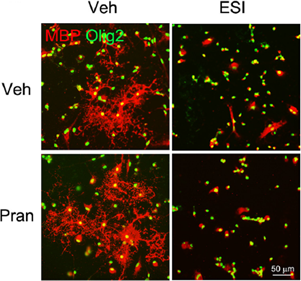
    Pranlukast purchased from MedChemExpress. Usage Cited in: J Neurosci. 2016 Oct 12;36(41):10560-10573.  [Abstract]

    The inhibition of Epac1 activity by ESI-09 reduces oligodendrocyte maturation.

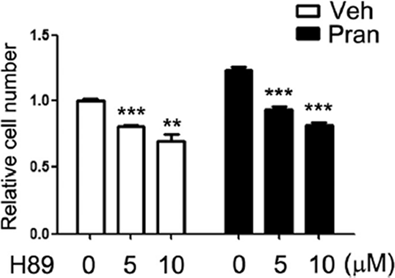
    Pranlukast purchased from MedChemExpress. Usage Cited in: J Neurosci. 2016 Oct 12;36(41):10560-10573.  [Abstract]

    The inhibition of PKA signaling with PKA inhibitor H89 reduces cell viability observed after Pranlukast treatment.

    Alle Leukotriene Receptor Isoform-spezifische Produkte anzeigen:

    Alle Endogenous Metabolite Isoform-spezifische Produkte anzeigen:

    • Biologische Aktivität

    • Protokoll

    • Reinheit & Dokumentation

    • Verweise

    • Kundenbewertung

    Beschreibung

    Pranlukast is a highly potent, selective and competitive antagonist of peptide leukotrienes. Pranlukast inhibits [3H]LTE4, [3H]LTD4, and [3H]LTC4 bindings to lung membranes with Kis of 0.63±0.11, 0.99±0.19, and 5640±680 nM, respectively.

    IC50 & Target[1]

    LTE4

    0.63 nM (Ki)

    LTD4

    0.99 nM (Ki)

    LTC4

    5640 nM (Ki)

    Cellular Effect
    Cell Line Type Value Description References
    U-937 IC50
    1 1
    Compound: Pranlukast
    In vitro blocking of extracellular calcium mobilization in human U937 cells
    In vitro blocking of extracellular calcium mobilization in human U937 cells
    [PMID: 10509933]
    HEK-293T IC50
    3620 1
    Compound: pranlukast
    Antagonist activity at human CysLT2 expressed in HEK293T cells assessed as inhibition of LTC4-induced effect preincubated for 30 mins prior to LTC4 addition by Aequorin luminescence assay
    Antagonist activity at human CysLT2 expressed in HEK293T cells assessed as inhibition of LTC4-induced effect preincubated for 30 mins prior to LTC4 addition by Aequorin luminescence assay
    [PMID: 26200813]
    HeLa EC50
    15 3
    Compound: Pranlukast
    Partial agonist activity at human full-length FXR expressed in human HeLa cells co-expressing pSG5-RXR measured after 24 hrs by dual-glo luciferase reporter gene assay
    Partial agonist activity at human full-length FXR expressed in human HeLa cells co-expressing pSG5-RXR measured after 24 hrs by dual-glo luciferase reporter gene assay
    [PMID: 31188588]
    HeLa EC50
    15 3
    Compound: Pranlukast
    Partial agonist activity at human full-length FXR expressed in human HeLa cells co-expressing pSG5-RXR measured after 24 hrs by dual-glo luciferase reporter gene assay
    Partial agonist activity at human full-length FXR expressed in human HeLa cells co-expressing pSG5-RXR measured after 24 hrs by dual-glo luciferase reporter gene assay
    [PMID: 31188588]
    HEK-293T IC50
    3620 1
    Compound: pranlukast
    Antagonist activity at human CysLT2 expressed in HEK293T cells assessed as inhibition of LTC4-induced effect preincubated for 30 mins prior to LTC4 addition by Aequorin luminescence assay
    Antagonist activity at human CysLT2 expressed in HEK293T cells assessed as inhibition of LTC4-induced effect preincubated for 30 mins prior to LTC4 addition by Aequorin luminescence assay
    [PMID: 26200813]
    HEK-293T IC50
    3620 1
    Compound: pranlukast
    Antagonist activity at human CysLT2 expressed in HEK293T cells assessed as inhibition of LTC4-induced effect preincubated for 30 mins prior to LTC4 addition by Aequorin luminescence assay
    Antagonist activity at human CysLT2 expressed in HEK293T cells assessed as inhibition of LTC4-induced effect preincubated for 30 mins prior to LTC4 addition by Aequorin luminescence assay
    [PMID: 26200813]
    U-937 IC50
    0.001 3
    Compound: 2
    Compound was evaluated for influx of calcium mobilization in human U937 cells
    Compound was evaluated for influx of calcium mobilization in human U937 cells
    [PMID: 9873435]
    HeLa EC50
    15 3
    Compound: Pranlukast
    Partial agonist activity at human full-length FXR expressed in human HeLa cells co-expressing pSG5-RXR measured after 24 hrs by dual-glo luciferase reporter gene assay
    Partial agonist activity at human full-length FXR expressed in human HeLa cells co-expressing pSG5-RXR measured after 24 hrs by dual-glo luciferase reporter gene assay
    [PMID: 31188588]
    U-937 IC50
    0.001 3
    Compound: 2
    Compound was tested for its ability to inhibit calcium influx in human U937 cells
    Compound was tested for its ability to inhibit calcium influx in human U937 cells
    [PMID: 9934474]
    U-937 IC50
    0.001 3
    Compound: 2
    Compound was evaluated for influx of calcium mobilization in human U937 cells
    Compound was evaluated for influx of calcium mobilization in human U937 cells
    [PMID: 9873435]
    U-937 IC50
    0.001 3
    Compound: 2
    Compound was tested for its ability to inhibit calcium influx in human U937 cells
    Compound was tested for its ability to inhibit calcium influx in human U937 cells
    [PMID: 9934474]
    U-937 IC50
    1 1
    Compound: Pranlukast
    In vitro blocking of extracellular calcium mobilization in human U937 cells
    In vitro blocking of extracellular calcium mobilization in human U937 cells
    [PMID: 10509933]
    In Vitro

    In the radioligand binding assay, Pranlukast (ONO-1078) inhibits [3H]LTE4, [3H]LTD4, and [3H]LTC4 bindings to lung membranes with Kis of 0.63±0.11, 0.99±0.19, and 5640±680 nM, respectively. The antagonism of Pranlukast against [3H]LTD4 binding is competitive. In functional experiments, Pranlukast shows competitive antagonism against the LTC4- and LTD4-induced contractions of guinea pig trachea and lung parenchymal strips with a pA2 range of 7.70 to 10.71. In the presence of an inhibitor of the bioconversion of LTC4 to LTD4, Pranlukast also antagonizes the LTC4-induced contraction of guinea pig trachea (pA2=7.78). Pranlukast significantly reverses the LTD4-induced prolonged contraction without effect on the KCl- and BaCl2-induced contractions of guinea pig trachea[1]. Oxygen-glucose deprivation (OGD)-induced nuclear translocation of CysLT1 receptors is inhibited by pretreatment with the CysLT1 receptor antagonist Pranlukast (10 μM). Pranlukast protects endothelial cells against ischemia-like injury. The effects of the CysLT1 receptor antagonist Pranlukast and the 5-lipoxygenase inhibitor Zileuton on translocation are also assessed. The results show that Pranlukast, but not Zileuton, inhibits the translocation of the CysLT1 receptor 6 h after OGD[2].

    MedChemExpress (MCE) has not independently confirmed the accuracy of these methods. They are for reference only.

    In Vivo

    Carrageenan (CAR, 5 mg per mouse) is injected i.p. 24 h before LPS (50 μg per mouse) is injected i.v. Various doses of Pranlukast (ONO-1078; 40, 20, and 10 mmol/kg), AA-861 (20, 10, and 5 mmol/kg), Indomethacin (40 mmollkg), and the controls are injected s.c. into mice 30 min before they are challenged with 50 p,g of LPS. The maximum soluble doses are 0.6 mmol/mL in 10% DMSO for AA-861 and 1.2 mmol/mL in 10% ethanol for Pranlukast. These solutions are used as the maximum doses for the treatments. The mortality of mice is significantly decreased in AA-861- Pranlukast-treated mice relative to that in the control mice. Pretreatment with CAR (5 mg i.p.) renders the mice more sensitive to the effect of LPS. Although the survival rate of mice treated with each solvent is 20% at 72 h after LPS (50 p,g per mouse) administration, s.c. treatment with AA-861 (20 mmol/kg) or Pranlukast (40 mmol/kg) significantly increases the survival rate after the LPS administration (AA-861, P<0.001; Pranlukast, P<0.01)[3].

    MedChemExpress (MCE) has not independently confirmed the accuracy of these methods. They are for reference only.

    Klinische Studie
    Molekulargewicht

    481.50

    Formel

    C27H23N5O4

    CAS. Nr.
    Appearance

    Solid

    Color

    White to off-white

    SMILES

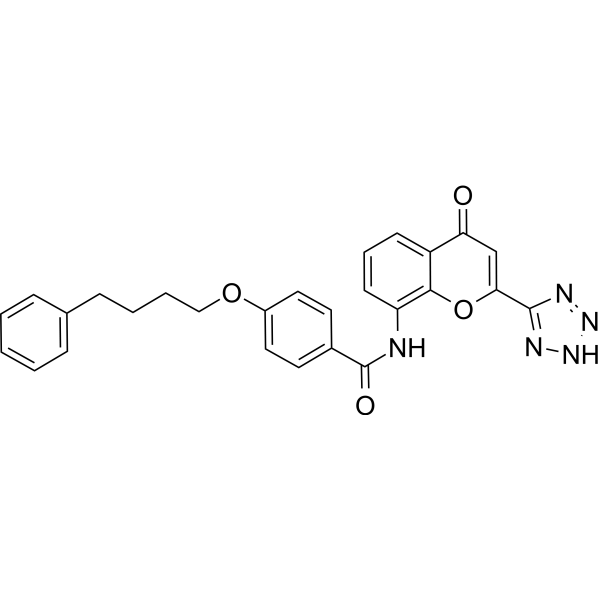
    O=C(NC1=C2C(C(C=C(C3=NNN=N3)O2)=O)=CC=C1)C4=CC=C(OCCCCC5=CC=CC=C5)C=C4

    Structure Classification
    Initial Source
    Versand

    Room temperature in continental US; may vary elsewhere.

    Speicherung
    Powder -20°C 3 years
    4°C 2 years
    In solvent -80°C 2 years
    -20°C 1 year
    Lösungsmittel & Löslichkeit
    In Vitro: 

    DMSO : 33.33 mg/mL (69.22 mM; Need ultrasonic; Hygroscopic DMSO has a significant impact on the solubility of product, please use newly opened DMSO)

    H2O : < 0.1 mg/mL (insoluble)

    Preparing
    Stock Solutions
    Concentration Solvent Mass 1 mg 5 mg 10 mg
    1 mM 2.0768 mL 10.3842 mL 20.7684 mL
    5 mM 0.4154 mL 2.0768 mL 4.1537 mL
    View the Complete Stock Solution Preparation Table

    * Please refer to the solubility information to select the appropriate solvent. Once prepared, please aliquot and store the solution to prevent product inactivation from repeated freeze-thaw cycles.
    Storage method and period of stock solution: -80°C, 2 years; -20°C, 1 year. When stored at -80°C, please use it within 2 years. When stored at -20°C, please use it within 1 year.

    • Molaritätsrechner

    • Verdünnungsrechner

    Mass (g) = Concentration (mol/L) × Volume (L) × Molecular Weight (g/mol)

    Mass
    =
    Concentration
    ×
    Volume
    ×
    Molecular Weight *

    Concentration (start) × Volume (start) = Concentration (final) × Volume (final)

    This equation is commonly abbreviated as: C1V1 = C2V2

    Concentration (start)

    C1

    ×
    Volume (start)

    V1

    =
    Concentration (final)

    C2

    ×
    Volume (final)

    V2

    In Vivo:

    Select the appropriate dissolution method based on your experimental animal and administration route.

    For the following dissolution methods, please ensure to first prepare a clear stock solution using an In Vitro approach and then sequentially add co-solvents:
    To ensure reliable experimental results, the clarified stock solution can be appropriately stored based on storage conditions. As for the working solution for in vivo experiments, it is recommended to prepare freshly and use it on the same day.
    The percentages shown for the solvents indicate their volumetric ratio in the final prepared solution. If precipitation or phase separation occurs during preparation, heat and/or sonication can be used to aid dissolution.

    • Protocol 1

      Add each solvent one by one:  10% DMSO    40% PEG300    5% Tween-80    45% Saline

      Solubility: 2.75 mg/mL (5.71 mM); Suspended solution; Need ultrasonic

      This protocol yields a suspended solution of 2.75 mg/mL. Suspended solution can be used for oral and intraperitoneal injection.

      Taking 1 mL working solution as an example, add 100 μL DMSO stock solution (27.5 mg/mL) to 400 μL PEG300, and mix evenly; then add 50 μL Tween-80 and mix evenly; then add 450 μL Saline to adjust the volume to 1 mL.

      Preparation of Saline: Dissolve 0.9 g sodium chloride in ddH₂O and dilute to 100 mL to obtain a clear Saline solution.
    • Protocol 2

      Add each solvent one by one:  10% DMSO    90% Corn Oil

      Solubility: ≥ 2.75 mg/mL (5.71 mM); Clear solution

      This protocol yields a clear solution of ≥ 2.75 mg/mL (saturation unknown). If the continuous dosing period exceeds half a month, please choose this protocol carefully.

      Taking 1 mL working solution as an example, add 100 μL DMSO stock solution (27.5 mg/mL) to 900 μL Corn oil, and mix evenly.

    In Vivo Dissolution Calculator
    Please enter the basic information of animal experiments:

    Dosage

    mg/kg

    Animal weight
    (per animal)

    g

    Dosing volume
    (per animal)

    μL

    Number of animals

    Recommended: Prepare an additional quantity of animals to account for potential losses during experiments.
    Please enter your animal formula composition:
    %
    DMSO +
    +
    %
    Tween-80 +
    %
    Saline
    Recommended: Keep the proportion of DMSO in working solution below 2% if your animal is weak.
    The co-solvents required include: DMSO, . All of co-solvents are available by MedChemExpress (MCE). , Tween 80. All of co-solvents are available by MedChemExpress (MCE).
    Calculation results:
    Working solution concentration: mg/mL
    Method for preparing stock solution: mg drug dissolved in μL  DMSO (Stock solution concentration: mg/mL).
    The concentration of the stock solution you require exceeds the measured solubility. The following solution is for reference only. If necessary, please contact MedChemExpress (MCE).
    Method for preparing in vivo working solution for animal experiments: Take μL DMSO stock solution, add μL . μL , mix evenly, next add μL Tween 80, mix evenly, then add μL Saline.
     If the continuous dosing period exceeds half a month, please choose this protocol carefully.
    Please ensure that the stock solution in the first step is dissolved to a clear state, and add co-solvents in sequence. You can use ultrasonic heating (ultrasonic cleaner, recommended frequency 20-40 kHz), vortexing, etc. to assist dissolution.
    Reinheit & Dokumentation
    Verweise
    Zellassay
    [2]

    EA.hy926 cells are cultured in Dulbecco's modified Eagle's medium (DMEM), supplemented with 10% heat-inactivated fetal calf serum, Penicillin (100 U/mL) and Streptomycin (100 mg/mL). Experiments are conducted 24 h after cells are seeded. OGD is performed. Briefly, the original medium is removed; the cells are washed twice with glucose-free Earle's balanced salt solution (EBSS) and placed in fresh glucose-free EBSS. Cultures are then placed in an incubator containing 5% CO2 and 95% N2 at 37°C for 2 to 8 h. Control cultures are maintained in glucose-containing EBSS under normal conditions. 10 μM Pranlukast, 10 μM Zileuton, a 5-LOX inhibitor or 10 μM Pyrrolidine dithiocarbamate (PDTC), is added to the culture 30 min before OGD exposure and maintained during OGD[2].

    MCE hat die Genauigkeit dieser Methoden nicht unabhängig bestätigt. Sie dienen nur als Referenz.

    Tierverwaltung
    [3]

    Mice[3]
    Male ddY mice are used. All mice used are 7 to 8 weeks of age. Endotoxin shock is induced in mice. In brief, CAR (5 mg in 0.5 mL of physiological saline) is injected intraperitoneally (i.p.) as a priming agent 24 h before LPS challenge. LPS (50 p,g in 0.5 mL of physiological saline) is injected intravenously into the tail vein as an inducing agent. The indicated doses of AA-861, Pranlukast (40, 20, and 10 mmol/kg), saline, DMSO, or ethanol are administrated subcutaneously (s.c.) in a volume of 1 mL into the backs of mice 30 min before the LPS provocation. Both drugs are injected s.c., because CAR i.p. pretreatment caused peritonitis. To examine the role of endogenous TNF in CAR pretreated mice, 2×10⁵ U of rabbit anti-TNF-a antibody or normal serum of rabbit in 0.2 mL is injected intravenously (i.v.) before the LPS challenge[3].

    MCE hat die Genauigkeit dieser Methoden nicht unabhängig bestätigt. Sie dienen nur als Referenz.

    Verweise

    Complete Stock Solution Preparation Table

    * Please refer to the solubility information to select the appropriate solvent. Once prepared, please aliquot and store the solution to prevent product inactivation from repeated freeze-thaw cycles.
    Storage method and period of stock solution: -80°C, 2 years; -20°C, 1 year. When stored at -80°C, please use it within 2 years. When stored at -20°C, please use it within 1 year.

    Optional Solvent Concentration Solvent Mass 1 mg 5 mg 10 mg 25 mg
    DMSO 1 mM 2.0768 mL 10.3842 mL 20.7684 mL 51.9211 mL
    5 mM 0.4154 mL 2.0768 mL 4.1537 mL 10.3842 mL
    10 mM 0.2077 mL 1.0384 mL 2.0768 mL 5.1921 mL
    15 mM 0.1385 mL 0.6923 mL 1.3846 mL 3.4614 mL
    20 mM 0.1038 mL 0.5192 mL 1.0384 mL 2.5961 mL
    25 mM 0.0831 mL 0.4154 mL 0.8307 mL 2.0768 mL
    30 mM 0.0692 mL 0.3461 mL 0.6923 mL 1.7307 mL
    40 mM 0.0519 mL 0.2596 mL 0.5192 mL 1.2980 mL
    50 mM 0.0415 mL 0.2077 mL 0.4154 mL 1.0384 mL
    60 mM 0.0346 mL 0.1731 mL 0.3461 mL 0.8654 mL
    • No file chosen (Maximum size is: 1024 Kb)
    • If you have published this work, please enter the PubMed ID.
    • Your name will appear on the site.
    Help & FAQs
    • Do most proteins show cross-species activity?

      Species cross-reactivity must be investigated individually for each product. Many human cytokines will produce a nice response in mouse cell lines, and many mouse proteins will show activity on human cells. Other proteins may have a lower specific activity when used in the opposite species.

    Ihre kürzlich angesehenen Produkte:

    Online-Anfrage

    Your information is safe with us. * Required Fields.

    Produktname


    Requested Quantity *

    Name des Antragstellers *


    Anrede

    E-Mail-Addresse *


    Telefonnummer *

    Department


    Name der Organisation *

    City

    Bundesland

    Country or Region *


    Bemerkungen

    Massenanfrage

    Inquiry Information

    Produktname:
    Pranlukast
    Art. -Nr.:
    HY-B0290
    Menge:
    MCE Japan Authorized Agent: