Search Result
Results for "
μ and δ opioid receptors agonist
" in MedChemExpress (MCE) Product Catalog:
4
Isotope-Labeled Compounds
| Cat. No. |
Product Name |
Target |
Research Areas |
Chemical Structure |
-
- HY-P1502
-
|
|
Opioid Receptor
|
Neurological Disease
|
|
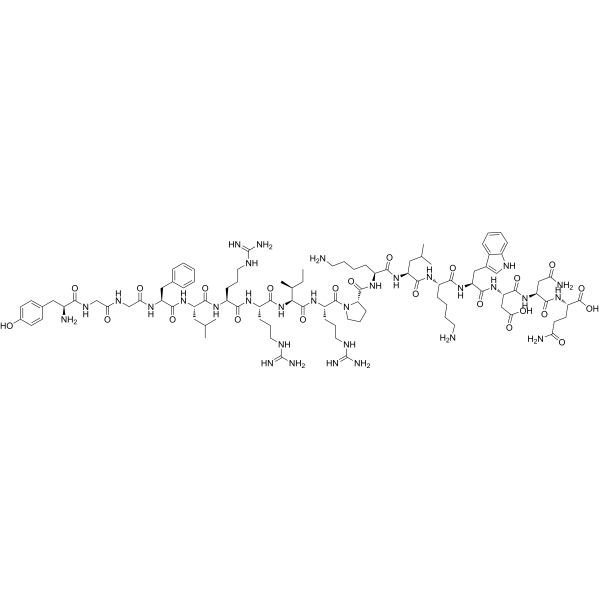
β-Endorphin, human, a prominent endogenous peptide, existing in the hypophysis cerebri and hypothalamus, is an agonist of opioid receptor, with preferred affinity for μ-opioid receptor and δ-opioid receptor; β-Endorphin, human exhibits antinociception activity.
|
-

-
- HY-P1333
-
|
|
Opioid Receptor
Apoptosis
Caspase
Endogenous Metabolite
|
Neurological Disease
|
|
Dynorphin A is an endogenous opioid peptide involved in inhibitory neurotransmission in the central nervous system (CNS). Dynorphin A is a highy potent kappa opioid receptor (KOR) agonist, and is also an agonist for other opioid receptors, such as mu (MOR) and delta (DOR). Dynorphin A can induce neuronal death, and can be used in the research of neurological disease .
|
-
-
- HY-101202
-
|
NIH 10815
|
Opioid Receptor
|
Neurological Disease
|
|
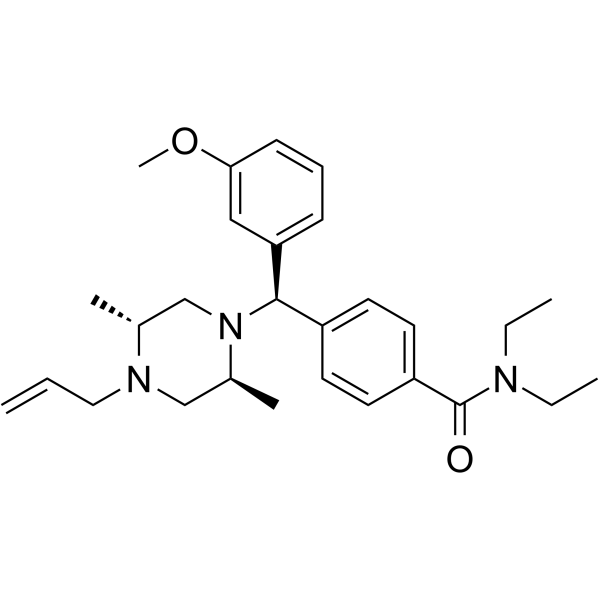
SNC80 (NIH 10815) is a potent, highly selective and non-peptide δ-opioid receptor agonist with a Ki of 1.78 nM and an IC50 of 2.73 nM. SNC80 also selectively activates μ-δ heteromer in HEK293 cells with an EC50 of 52.8 nM. SNC80 shows antinociceptive, antihyperalgesic and antidepressant‐like effects. SNC80 has the potential for multiple headache disorders treatment .
|
-
-
- HY-90003
-
|
|
Opioid Receptor
iGluR
MMP
PI3K
Akt
NF-κB
|
Neurological Disease
Inflammation/Immunology
|
|
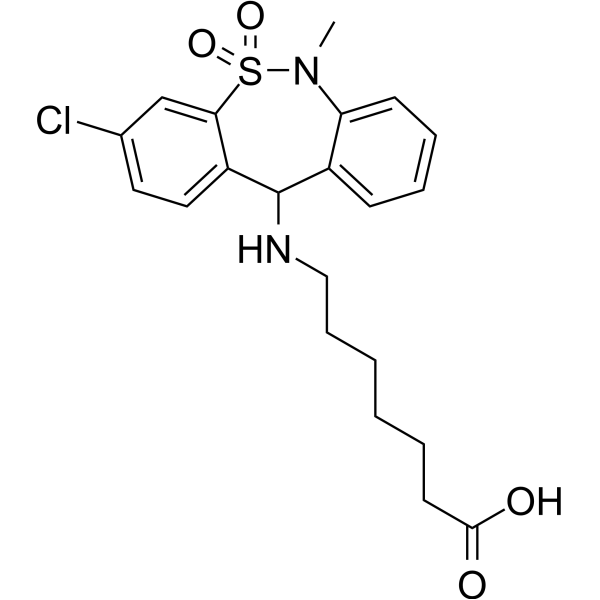
Tianeptine is an atypical antidepressant. Tianeptine is a moderate-intensity agonist of the μ-opioid receptor (MOR), and to a lesser extent, is an agonist of the δ-opioid receptor (DOR). Tianeptine is a glutamate modulator that can enhance AMPA receptor and antagonize NMDA receptor. tianeptine increases sensitivity of the α1 adrenergic receptor, which only manifests in chronic treatment. Tianeptine exerts neuroprotective effects under stress/inflammation-induced conditions, exhibiting anti-inflammatory and antioxidant properties. Tianeptine inhibits MMP-9 by suppressing the PI3K/Akt-mediated NF-κB pathway. Tianeptine can be used to alleviate symptoms of depression and anxiety, but does not cause sedative effects .
|
-
-
- HY-156131
-
Loperamide
Maximum Cited Publications
12 Publications Verification
ADL 2-1294
|
Opioid Receptor
|
Neurological Disease
Inflammation/Immunology
|
|
Loperamide (ADL 2-1294) is selective and orally active μ opioid receptor agonist with Ki valuess of 3, 48 and 1156 nM against μ, δ and κ opioid receptor, respectively. Loperamide produces antinociception and antihyperalgesia. Loperamide exhibits peripheral selectivity, enhancing fluid, electrolyte, and glucose absorption, reversing PGE2 (HY-101952)- and Cholera toxin (HY-P1446)-induced intestinal secretion, and reducing intestinal motility. Loperamide can be used for the researches of inflammatory pain and protracted diarrhoea .
|
-

-
- HY-145404
-
|
|
Opioid Receptor
|
Metabolic Disease
|
|
Mitragynine pseudoindoxyl is a potent orally active agonist of the μ-opioid receptor (MOR-1, Ki=0.8 nM) and an antagonist of the δ-opioid receptor (DOR-1, Ki=3.0 nM). Mitragynine pseudoindoxyl has moderate affinity for the κ-opioid receptor (KOR-1, Ki=24 nM) and does not recruit β-arrestin-2, acting through G protein-mediated signaling pathways without β-arrestin-2-related activation. Mitragynine pseudoindoxyl produces potent analgesic activity through a mixed μ-agonist/δ-antagonist mechanism, with low side effects such as physical dependence, respiratory depression, and constipation, and no rewarding or aversive behaviors. Mitragynine pseudoindoxyl reduces hyperactivity, inhibits GI transit, and enhances characteristics, making it a potential analgesic .
|
-

-
- HY-130118
-
|
|
Mas-related G-protein-coupled Receptor (MRGPR)
|
Neurological Disease
|
|
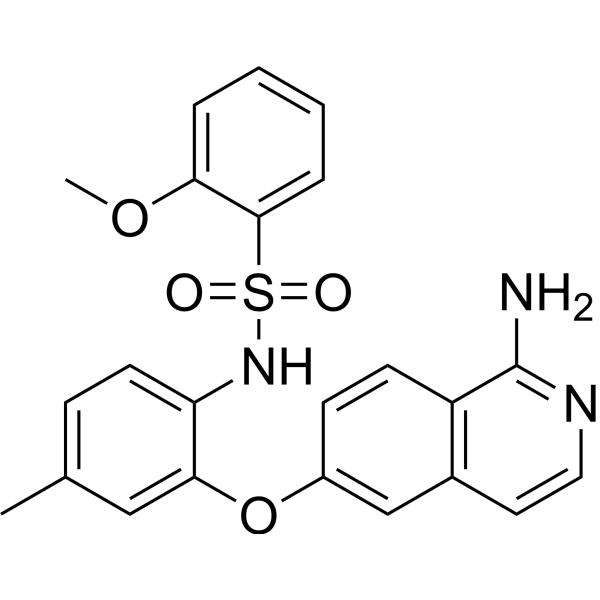
MRGPRX1 agonist 1 is a highly potent MRGPRX1 agonist (EC50=50 nM) with greater than 50-fold selectivity for δ, μ, and κ opioid receptors. MRGPRX1 agonist 1 is inactive against MRGPRC11. MRGPRC11 inhibits high voltage-activated (HVA) Ca 2+ currents, reduces neurotransmitter release, and mitigates nociceptive transmission in the spinal cord. MRGPRX1 agonist 1 is useful for the study of chronic pain, especially neuropathic pain .
|
-
-
- HY-123689
-
|
ALKS-33; RDC-0313
|
Opioid Receptor
|
Neurological Disease
|
|
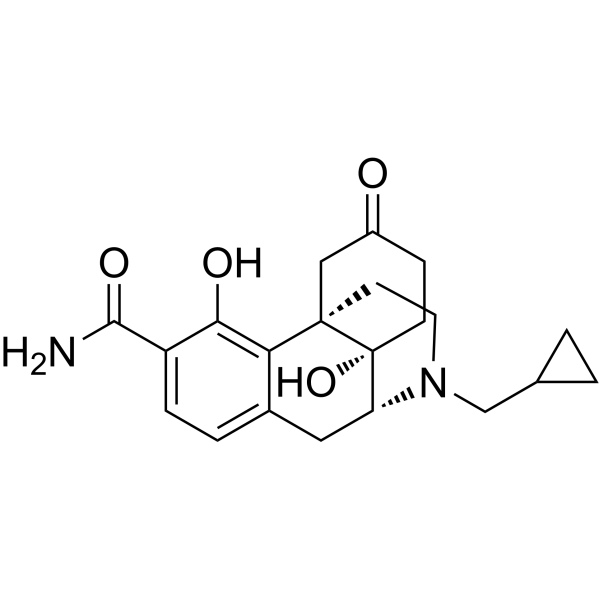
Samidorphan (ALKS-33) is an orally active opioid system modulator that has a high affinity for binding with μ‐opioid, κ‐opioid, and δ‐opioid receptors. Samidorphan acts as an antagonist at μ‐opioid receptors and acts as a partial agonist at k-opioid and δ‐opioid receptors. Samidorphan primarily acts as an opioid receptor antagonist in vivo. Samidorphan can improve the behavior of depressed animals .
|
-
-
- HY-90003A
-
|
|
Opioid Receptor
iGluR
MMP
PI3K
Akt
NF-κB
|
Neurological Disease
Inflammation/Immunology
|
|
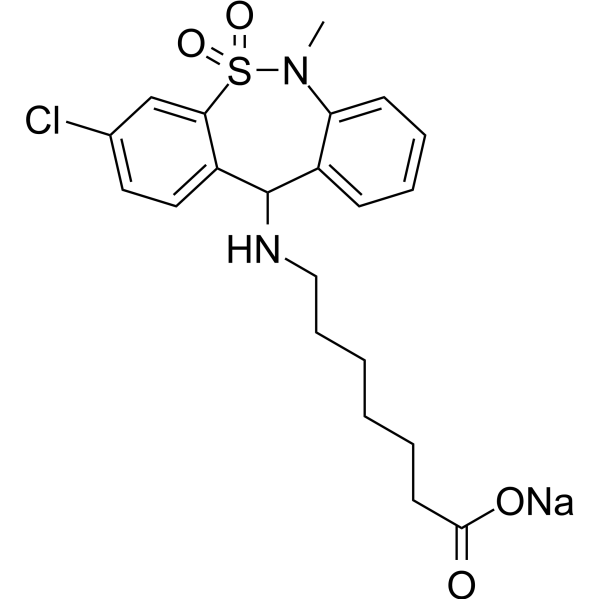
Tianeptine sodium salt is an atypical antidepressant. Tianeptine sodium salt is a moderate-intensity agonist of the μ-opioid receptor (MOR), and to a lesser extent, is an agonist of the δ-opioid receptor (DOR). Tianeptine sodium salt is a glutamate modulator that can enhance AMPA receptor and antagonize NMDA receptor. Tianeptine sodium salt increases sensitivity of the α1 adrenergic receptor, which only manifests in chronic treatment. Tianeptine sodium salt exerts neuroprotective effects under stress/inflammation-induced conditions, exhibiting anti-inflammatory and antioxidant properties. Tianeptine sodium salt inhibits MMP-9 by suppressing the PI3K/Akt-mediated NF-κB pathway. Tianeptine sodium salt can be used to alleviate symptoms of depression and anxiety, but does not cause sedative effects .
|
-
-
- HY-120511
-
KNT-127
1 Publications Verification
|
Opioid Receptor
|
Neurological Disease
|
|
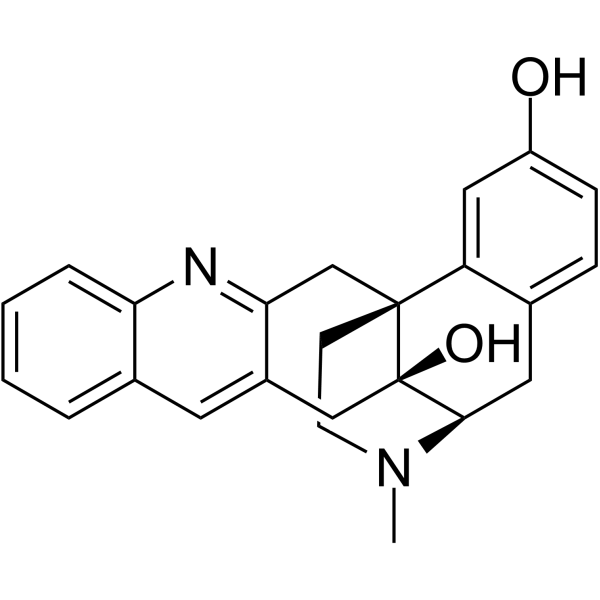
KNT-127 is a selective and BBB-penetrant δ-opioid receptor (DOR) agonist (Ki = 0.16 nM). KNT-127 is highly selective to the δ receptor, with Ki values of 0.16, 21.3 and 153 nM for δ, μ and κ receptors, respectively. KNT-127 acts as a biased ligand that mainly activates cyclic adenosine monophosphate (cAMP) signaling with lower beta-arrestin signaling activation. KNT-127 increases the release of dopamine and L-glutamate in the striatum, nucleus accumbens, and prefrontal cortex. KNT-127 exhibits antidepressant- and anxiolytic-like effects. KNT-127 can be studied in research on neurological diseases .
|
-
-
- HY-107743
-
|
NalBzoH
|
Opioid Receptor
|
Neurological Disease
|
|
Naloxone benzoylhydrazone (NalBzoH) is a mixed agonist/antagonist. Naloxone benzoylhydrazone is a prototypic κ3-opioid receptor agonist, and a partial agonist at the cloned μ and δ opioid receptors, and an antagonist at opioid-like NOP receptors. Naloxone benzoylhydrazone has potently analgesia effect .
|
-

-
- HY-19231
-
|
Org 41793
|
Opioid Receptor
|
Neurological Disease
|
|
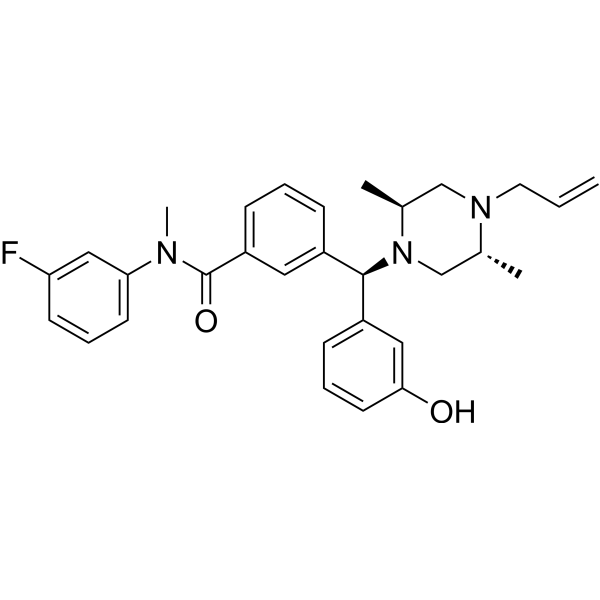
DPI-3290 (Org 41793) is a potent and specific opioid receptors agonist with Ki values of 0.18 nM, 0.46 nM, and 0.62 nM for δ-, μ-, and κ-opioid receptors, respectively. DPI-3290 is one of a series of novel centrally acting agents with potent antinociceptive activity .
|
-
-
- HY-170973
-
|
|
Opioid Receptor
|
|
|
KOR agonist 4 (compound 39) is an agonist of Kappa Opioid Receptor. KOR agonist 4 is an activator of G-protein signaling. KOR agonist 4 binds with GTPγS with an EC50 of 14 nM and with an Emax of 83 %. KOR agonist 4 demonstrates moderate to high intrinsic clearance in human hepatocytes. KOR agonist 4 exhibits 60- and 810-fold selectivities versus the related mu (MOR) and delta (DOR) opioid receptors. KOR agonist 4 is potential for central nervous system (CNS) disorders research .
|
-

-
- HY-178235
-
|
|
Opioid Receptor
|
Neurological Disease
|
|
MDAN-21 is a bivalent opioid ligand that contains both μ-opioid receptor agonists and δ-opioid receptor antagonists. MDAN-21 has a strong analgesic effect and does not produce tolerance in mouse studies. MDAN-21 can effectively inhibit the withdrawal of morphine dependent monkeys and alleviate abnormal pain in the study of rhesus monkeys. MDAN-21 can be used for the study of allodynia .
|
-

-
- HY-106756
-
|
U-62066
|
Opioid Receptor
|
Neurological Disease
|
|
Spiradoline (U-62066), an arylacetamide, is a selective kappa opioid receptor (KOR) agonist with a Ki of 8.6 nM in guinea pig. The Ki values of Spiradoline for μ and δ receptors are 252 nM and 9400 nM, respectively. Spiradoline has potent diuretic, analgesic, antiarrythmic, antitussive, neuroprotective properties and easily penetrates the blood-brain barrier .
|
-

-
- HY-109166
-
-

-
- HY-123689S1
-
|
ALKS-33-d5; RDC-0313-d5
|
Isotope-Labeled Compounds
Opioid Receptor
|
Neurological Disease
|
|
Samidorphan-d5 (ALKS-33-d5) is is a deuterated compound of Samidorphan. Samidorphan is an orally active opioid system modulator that binds with high affinity to μ-opioid, κ-opioid, and δ-opioid receptors. Samidorphan is a μ-opioid receptor antagonist and a partial agonist at k-opioid and δ-opioid receptors. Samidorphan acts primarily as an opioid receptor antagonist in vivo .
|
-

-
- HY-151811
-
|
|
Opioid Receptor
|
Neurological Disease
|
|
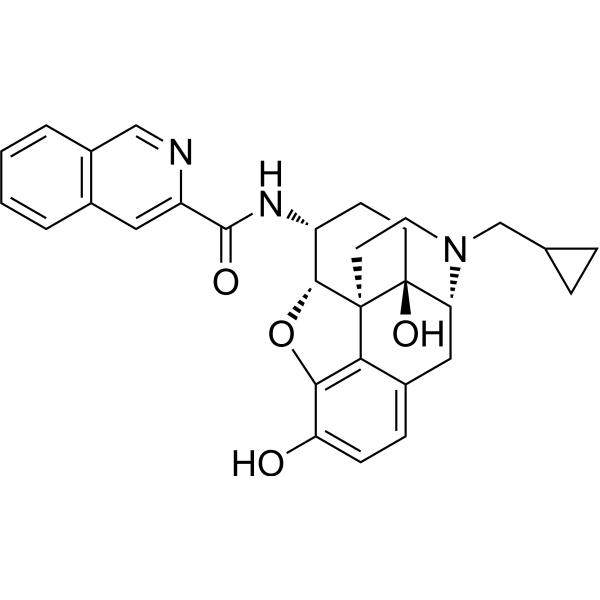
NAQ is a potent and selective μ opioid receptor partial agonist, with a Ki of 0.55 nM. NAQ shows selectivity for Mu opioid receptor over the δ receptor (Ki=132.50 nM) and the κ receptor (Ki=26.45 nM). NAQ can be used for the research of opioid withdrawal or dependence .
|
-
-
- HY-171758
-
|
|
Opioid Receptor
|
Neurological Disease
|
|
BU72 is a highly potent and long-acting agonist of μ and κ opioid receptors, and also has a partial agonist effect on δ opioid receptors (EC50 values are 0.054, 0.033, and 0.58 nM, respectively). BU72 has a strong and long-lasting analgesic effect, which is mainly mediated by μ opioid receptors. BU72 has a long-lasting activity and can partially reverse the analgesic effect of morphine. BU72 can be used in the study of opioid dependence .
|
-

-
- HY-P1316A
-
|
|
Opioid Receptor
|
Neurological Disease
|
|
Ac-RYYRWK-NH2 is a potent and selective partial agonist for the nociceptin receptor (NOP), [ 3H]Ac-RYYRWK-NH2 binds to rat cortical membranes ORL1 with a Kd of 0.071 nM, but has no affinity for μ-, κ- or δ-opioid receptors .
|
-

-
- HY-135698
-
|
M-CAM
|
Opioid Receptor
|
Neurological Disease
|
|
Methocinnamox (M-CAM) a selective and long-acting μ-opioid receptor (MOR) antagonist with a Ki of 0.6 nM. Methocinnamox binds to the orthosteric site of the MOR in a pseudo-irreversible, non-covalent manner, resulting in prolonged receptor blockade that persists until new receptors are synthesized. Methocinnamox acts as a reversible antagonist at both the kappa-opioid receptor (KOR) (Ki = 4.9 nM) and delta-opioid receptor (DOR) (Ki = 2.2 nM), and it exhibits no intrinsic agonist activity at these receptors. Methocinnamox can be used to reverse and prevent opioid overdose and addiction .
|
-

-
- HY-124959
-
|
U-62066 mesylate
|
Opioid Receptor
|
Neurological Disease
|
|
Spiradoline mesylate (U-62066 mesylate), an arylacetamide, is a selective kappa opioid receptor (KOR) agonist with a Ki of 8.6 nM in guinea pig. The Ki values of Spiradoline mesylate for μ and δ receptors are 252 nM and 9400 nM, respectively. Spiradoline mesylate has potent diuretic, analgesic, antiarrythmic, antitussive, neuroprotective properties and easily penetrates the blood-brain barrier .
|
-

-
- HY-108043
-
|
|
Opioid Receptor
|
Neurological Disease
|
|
AZD-2327 is a potent and selective δ-opioid receptor agonist. AZD-2327 binds to the human opioid receptor (Ki of 0.49 and 0.75 nM and EC50 of 24 and 9.2 nM at the C27 and F27 isoforms, respectively). AZD-2327 shows selectivity of >1000-fold over the human μ- and κ-opioid receptor subtypes as well as >130 other receptors and channels. AZD-2327 exhibits antidepressant and anxiolytic activities and can be used for the research of neurological disease .
|
-

-
- HY-178945
-
|
|
Opioid Receptor
Interleukin Related
TNF Receptor
Sigma Receptor
|
Neurological Disease
Inflammation/Immunology
|
|
KOR agonist 7 (Compound 29) is a highly selective κ-opioid receptor (KOR) agonist with a Ki of 138 nM. KOR agonist 7 shows no activity at μ- and δ-opioid receptors or σ1 receptor, and exhibits extremely low affinity for σ2 receptor (Ki = 2.8 μM). KOR agonist 7 significantly reduces the secretion of pro-inflammatory cytokines such as IL-6, TNF-α, and IFN-γ, while increasing the production of the anti-inflammatory cytokine IL-10. KOR agonist 7 downregulates the expression of the pro-inflammatory M1 macrophage marker CD80 and upregulates the anti-inflammatory M2 macrophage marker CD163. KOR agonist 7 holds potential for applications in analgesia and immune modulation .
|
-

-
- HY-90003S
-
|
|
Isotope-Labeled Compounds
Opioid Receptor
iGluR
MMP
PI3K
Akt
NF-κB
|
Neurological Disease
Inflammation/Immunology
|
|
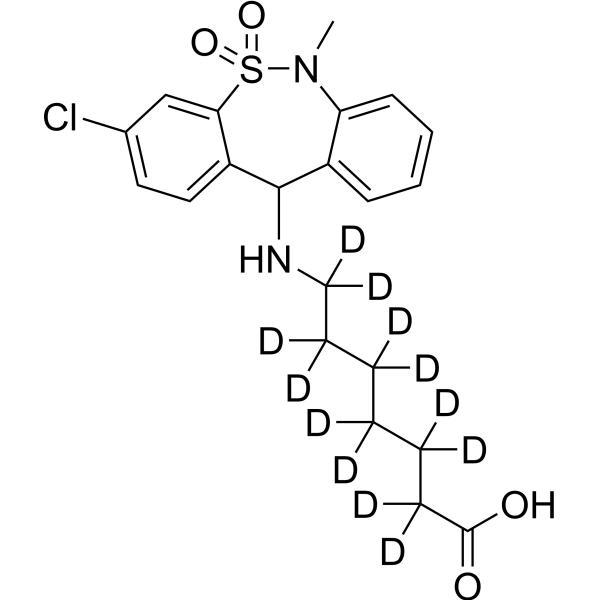
Tianeptine-d12 is a deuterated analog of Tianeptine (HY-90003).Tianeptine is an atypical antidepressant. Tianeptine is a moderate-intensity agonist of the μ-opioid receptor (MOR), and to a lesser extent, is an agonist of the δ-opioid receptor (DOR). Tianeptine is a glutamate modulator that can enhance AMPA receptor and antagonize NMDA receptor. Tianeptine increases sensitivity of the α1 adrenergic receptor, which only manifests in chronic treatment. Tianeptine exerts neuroprotective effects under stress/inflammation-induced conditions, exhibiting anti-inflammatory and antioxidant properties. Tianeptine inhibits MMP-9 by suppressing the PI3K/Akt-mediated NF-κB pathway. Tianeptine can be used to alleviate symptoms of depression and anxiety, but does not cause sedative effects.
|
-
-
- HY-90003AR
-
|
|
Reference Standards
Opioid Receptor
iGluR
MMP
PI3K
Akt
NF-κB
|
Neurological Disease
Inflammation/Immunology
|
|
Tianeptine sodium salt (Standard) is the analytical standard of Tianeptine sodium salt (HY-90003A). This product is intended for research and analytical applications. Tianeptine sodium salt is an atypical antidepressant. Tianeptine sodium salt is a moderate-intensity agonist of the μ-opioid receptor (MOR), and to a lesser extent, is an agonist of the δ-opioid receptor (DOR). Tianeptine sodium salt is a glutamate modulator that can enhance AMPA receptor and antagonize NMDA receptor. Tianeptine sodium salt increases sensitivity of the α1 adrenergic receptor, which only manifests in chronic treatment. Tianeptine sodium salt exerts neuroprotective effects under stress/inflammation-induced conditions, exhibiting anti-inflammatory and antioxidant properties. Tianeptine sodium salt inhibits MMP-9 by suppressing the PI3K/Akt-mediated NF-κB pathway. Tianeptine sodium salt can be used to alleviate symptoms of depression and anxiety, but does not cause sedative effects.
|
-

-
- HY-P10203
-
|
|
Opioid Receptor
|
Inflammation/Immunology
|
|
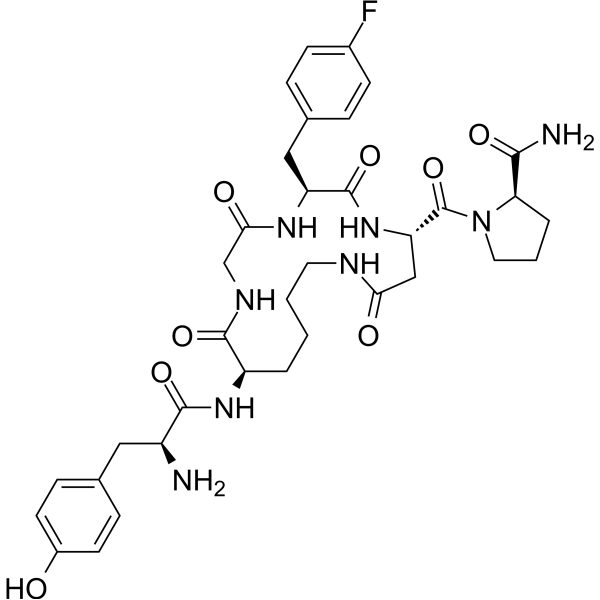
μ/κ/δ opioid receptor agonist 1 is a μ opioid receptor (MOR), κ opioid receptor (KOR), and δ opioid receptor (DOR) agonist. μ/κ/δ opioid receptor agonist 1 produces a strong and long-lasting analgesic effect through peripheral MOR and KOR in the tail-flick test .
|
-
-
- HY-123689A
-
|
ALKS-33 hydrochloride; RDC-0313 hydrochloride
|
Opioid Receptor
|
Neurological Disease
|
|
Samidorphan hydrochloride is an orally active opioid system modulator that has a high affinity for binding with μ‐opioid, κ‐opioid, and δ‐opioid receptors. Samidorphan hydrochloride acts as an antagonist at μ‐opioid receptors and acts as a partial agonist at k-opioid and δ‐opioid receptors. Samidorphan hydrochloride primarily acts as an opioid receptor antagonist in vivo. Samidorphan can improve the behavior of depressed animals .
|
-

-
- HY-123689S
-
|
ALKS-33-d4; RDC-0313-d4
|
Isotope-Labeled Compounds
Opioid Receptor
|
Neurological Disease
|
|
Samidorphan-d4 is the deuterium labeled Samidorphan(HY-123689).Samidorphan (ALKS-33) is an orally active opioid system modulator that has a high affinity for binding with μ‐opioid, κ‐opioid, and δ‐opioid receptors. Samidorphan acts as an antagonist at μ‐opioid receptors and acts as a partial agonist at k-opioid and δ‐opioid receptors. Samidorphan primarily acts as an opioid receptor antagonist in vivo .
|
-

-
- HY-123689R
-
|
ALKS-33 (Standard); RDC-0313 (Standard)
|
Opioid Receptor
Reference Standards
|
Neurological Disease
|
|
Samidorphan (Standard) is the analytical standard of Samidorphan. This product is intended for research and analytical applications. Samidorphan (ALKS-33) is an orally active opioid system modulator that has a high affinity for binding with μ‐opioid, κ‐opioid, and δ‐opioid receptors. Samidorphan acts as an antagonist at μ‐opioid receptors and acts as a partial agonist at k-opioid and δ‐opioid receptors. Samidorphan primarily acts as an opioid receptor antagonist in vivo. Samidorphan can improve the behavior of depressed animals.
|
-

-
- HY-P1333A
-
|
|
Opioid Receptor
Apoptosis
Caspase
Endogenous Metabolite
|
Neurological Disease
|
|
Dynorphin A TFA is an endogenous opioid peptide involved in inhibitory neurotransmission in the central nervous system (CNS). Dynorphin A TFA is a highy potent kappa opioid receptor (KOR) agonist, and is also an agonist for other opioid receptors, such as mu (MOR) and delta (DOR). Dynorphin A TFA can induce neuronal death, and can be used in the research of neurological disease .
|
-

-
- HY-P1502F
-
|
|
Opioid Receptor
|
Neurological Disease
|
|
Biocytin-β-endorphin, human is abiotinylated β-Endorphin, human (HY-P1502). β-Endorphin, human, a prominent endogenous peptide, existing in the hypophysis cerebri and hypothalamus, is an agonist of opioid receptor, with preferred affinity for μ-opioid receptor and δ-opioid receptor; β-Endorphin, human exhibits antinociception activity.
|
-

-
- HY-P1625
-
|
Dynorphin A ethylamide (1-9)
|
Opioid Receptor
|
Neurological Disease
|
|
Daeatal (Dynorphin A ethylamide (1-9)) is an ethylamine-modified dynorphin fragment that can be used in the study of analgesia, addiction, depression, etc. Dynorphin A is an endogenous opioid peptide involved in inhibitory neurotransmission in the central nervous system (CNS). Dynorphin A is a highy potent kappa opioid receptor (KOR) agonist, and is also an agonist for other opioid receptors, such as mu (MOR) and delta (DOR). Dynorphin A can induce neuronal death, and can be used in the research of neurological disease .
|
-

-
- HY-P1301
-
|
|
Opioid Receptor
|
Neurological Disease
|
|
[Arg14,Lys15]Nociceptin is a highly potent and selective NOP receptor (ORL1; OP4) agonist, with an EC50 of 1 nM. [Arg14,Lys15]Nociceptin displays high selectivity over opioid receptors, with IC50s of 0.32, 280, >10000 and 1500 nM for NOP, μ, δ and κ receptors, respectively .
|
-
![[Arg14,Lys15]Nociceptin](//file.medchemexpress.com/product_pic/hy-p1301.gif)
-
- HY-P1301A
-
|
|
Opioid Receptor
|
Neurological Disease
|
|
[Arg14,Lys15]Nociceptin TFA is a highly potent and selective NOP receptor (ORL1; OP4) agonist, with an EC50 of 1 nM. [Arg14,Lys15]Nociceptin TFA displays high selectivity over opioid receptors, with IC50s of 0.32, 280, >10000 and 1500 nM for NOP, μ, δ and κ receptors, respectively .
|
-
![[Arg14,Lys15]Nociceptin TFA](//file.medchemexpress.com/product_pic/hy-p1301a.gif)
-
- HY-P1300
-
|
|
Opioid Receptor
|
Neurological Disease
|
|
[(pF)Phe4]Nociceptin(1-13)NH2 is a highly potent and selective NOP receptor (OP4) agonist, with a pKi of 10.68 and a pEC50 of 9.31. [(pF)Phe4]Nociceptin(1-13)NH2 displays high selectivity over δ, κ, and μ opioid receptors (>3000 fold) .
|
-
![[(pF)Phe4]Nociceptin(1-13)NH2](//file.medchemexpress.com/product_pic/hy-p1300.gif)
-
- HY-P1300A
-
|
|
Opioid Receptor
|
Neurological Disease
|
|
[(pF)Phe4]Nociceptin(1-13)NH2 TFA is a highly potent and selective NOP receptor (OP4) agonist, with a pKi of 10.68 and a pEC50 of 9.31. [(pF)Phe4]Nociceptin(1-13)NH2 TFA displays high selectivity over δ, κ, and μ opioid receptors (>3000 fold) .
|
-
![[(pF)Phe4]Nociceptin(1-13)NH2 TFA](//file.medchemexpress.com/product_pic/hy-p1300a.gif)
-
- HY-144224S
-
|
|
Isotope-Labeled Compounds
Opioid Receptor
iGluR
MMP
PI3K
Akt
NF-κB
|
Neurological Disease
Inflammation/Immunology
Cancer
|
|
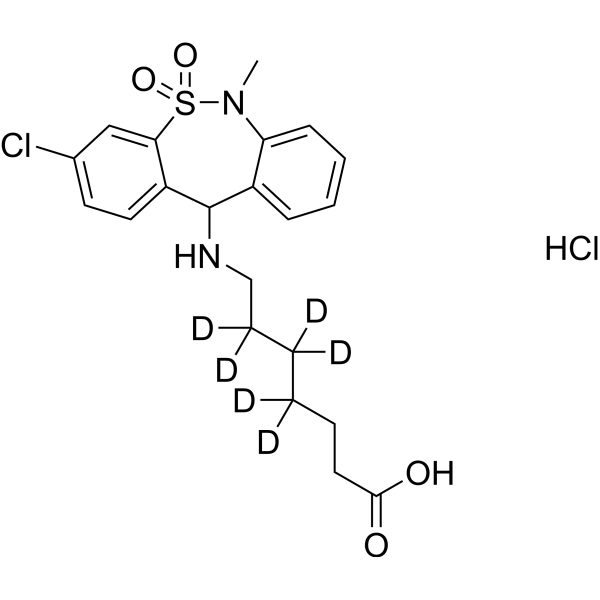
Tianeptine-d6 hydrochloride is the deuterium labeled Tianeptine hydrochloride. Tianeptine hydrochloride is an atypical antidepressant. Tianeptine hydrochloride is a moderate-intensity agonist of the μ-opioid receptor (MOR), and to a lesser extent, is an agonist of the δ-opioid receptor (DOR). Tianeptine hydrochloride is a glutamate modulator that can enhance AMPA receptor and antagonize NMDA receptor. Tianeptine hydrochloride increases sensitivity of the α1 adrenergic receptor, which only manifests in chronic treatment. Tianeptine hydrochloride exerts neuroprotective effects under stress/inflammation-induced conditions, exhibiting anti-inflammatory and antioxidant properties. Tianeptine hydrochloride inhibits MMP-9 by suppressing the PI3K/Akt-mediated NF-κB pathway. Tianeptine hydrochloride can be used to alleviate symptoms of depression and anxiety, but does not cause sedative effects.
|
-
-
- HY-W399025
-
|
|
Opioid Receptor
Arrestin
|
Neurological Disease
|
|
ID110460001 is a full agonist of μ-opioid receptor and an agonist of δ-opioid receptor. ID110460001 exhibits high intrinsic efficacy for G protein pathway activation of μ-opioid receptor, and this property is not affected by the reduction in receptor quantity. ID110460001 acts only as a very weak partial agonist in the β-arrestin-2 pathway of both receptors, and binds to μ-opioid receptor via a specific mode. The efficacy of ID110460001 in the G protein pathway of δ-opioid receptor is sensitive to changes in receptor quantity. ID110460001 can be used in pain-related research .
|
-

-
- HY-182563
-
|
|
Opioid Receptor
|
Endocrinology
|
|
Tyr-Ala-N-(1,3-dimethylbutyl)glycinamide is a μ/δ opioid receptor ligand with high μ opioid receptor selectivity and agonist activity. Tyr-Ala-N-(1,3-dimethylbutyl)glycinamide has an IC50 of 237 nM for μ receptors and 1050 nM for δ receptors. Tyr-Ala-N-(1,3-dimethylbutyl)glycinamide shows Ki values of 17 nM for μ receptors and 480 nM for δ receptors. Tyr-Ala-N-(1,3-dimethylbutyl)glycinamide inhibits electrically evoked contractions of guinea pig ileum and mouse vas deferens. Tyr-Ala-N-(1,3-dimethylbutyl)glycinamide serves as a starting compound for structure-activity relationship investigations of μ receptor recognition .
|
-

-
- HY-183773
-
|
|
Opioid Receptor
|
Neurological Disease
|
|
KOR agonist-9 is a selective kappa opioid receptor (KOR) agonist with an EC50 of 1.41 nM. KOR agonist-9 exhibits >125-fold selectivity over μ/δ-opioid receptors. KOR agonist-9 antinociceptive and antipruritic effects in mice. KOR agonist-9 can be used for the research of pain, pruritus .
|
-

-
- HY-125790
-
|
|
Opioid Receptor
|
Neurological Disease
|
|
Cyclazocine is a μ, δ, and κ opioid receptor modulator with Ki values of 0.32, 1.1, and 0.18 nM, respectively. Cyclazocine exhibits "mixed" pharmacological activities, acting as a μ-partial antagonist, κ-agonist, and low-affinity δ ligand. Cyclazocine shows antinociceptive activity in mice. Cyclazocine can be used in studies on psychoactive substance addiction .
|
-

-
- HY-180212
-
|
|
Opioid Receptor
|
Neurological Disease
|
|
SYK-1106 is a potent delta-opioid receptor (DOR) agonist with an EC50 of 89 pM and a Ki of 848 pM. SYK-1106 is selective for μ and κ opioid receptors, with Ki values of 9.54 nM and 2.45 nM, respectively. SYK-1106 induces dose-dependent antidepressant-like effects. SYK-1106 can be used for the research of depression .
|
-

-
- HY-W414109
-
|
|
Opioid Receptor
Arrestin
|
Neurological Disease
|
|
ID110460002 possesses both full agonist activity at the μ-opioid receptor (OPRM) and agonist activity at the δ-opioid receptor (OPRD). ID110460002 acts as a potent agonist for the G protein pathways of both receptors, but exhibits only very weak partial agonist activity towards the β-arrestin-2 pathway. The agonistic potency of ID110460002 at OPRM has extremely high intrinsic activity and is unaffected by reduced receptor expression levels, while its potency at OPRD depends on receptor expression levels. ID110460002 displays tissue- or organ-dependent properties, and serves as a critical compound for investigating pain mechanisms and analgesia .
|
-

-
- HY-101202R
-
|
NIH 10815 (Standard)
|
Opioid Receptor
Reference Standards
|
Neurological Disease
|
|
SNC80 (Standard) is the analytical standard of SNC80 (HY-101202). This product is intended for research and analytical applications. SNC80 (NIH 10815) is a potent, highly selective and non-peptide δ-opioid receptor agonist with a Ki of 1.78 nM and an IC50 of 2.73 nM. SNC80 also selectively activates μ-δ heteromer in HEK293 cells with an EC50 of 52.8 nM. SNC80 shows antinociceptive, antihyperalgesic and antidepressant‐like effects. SNC80 has the potential for multiple headache disorders treatment .
|
-

| Cat. No. |
Product Name |
Target |
Research Area |
-
- HY-P1502
-
|
|
Opioid Receptor
|
Neurological Disease
|
|
β-Endorphin, human, a prominent endogenous peptide, existing in the hypophysis cerebri and hypothalamus, is an agonist of opioid receptor, with preferred affinity for μ-opioid receptor and δ-opioid receptor; β-Endorphin, human exhibits antinociception activity.
|
-
- HY-P1333
-
|
|
Opioid Receptor
Apoptosis
Caspase
Endogenous Metabolite
|
Neurological Disease
|
|
Dynorphin A is an endogenous opioid peptide involved in inhibitory neurotransmission in the central nervous system (CNS). Dynorphin A is a highy potent kappa opioid receptor (KOR) agonist, and is also an agonist for other opioid receptors, such as mu (MOR) and delta (DOR). Dynorphin A can induce neuronal death, and can be used in the research of neurological disease .
|
-
- HY-109166
-
-
- HY-P1316A
-
|
|
Opioid Receptor
|
Neurological Disease
|
|
Ac-RYYRWK-NH2 is a potent and selective partial agonist for the nociceptin receptor (NOP), [ 3H]Ac-RYYRWK-NH2 binds to rat cortical membranes ORL1 with a Kd of 0.071 nM, but has no affinity for μ-, κ- or δ-opioid receptors .
|
-
- HY-P10203
-
|
|
Opioid Receptor
|
Inflammation/Immunology
|
|
μ/κ/δ opioid receptor agonist 1 is a μ opioid receptor (MOR), κ opioid receptor (KOR), and δ opioid receptor (DOR) agonist. μ/κ/δ opioid receptor agonist 1 produces a strong and long-lasting analgesic effect through peripheral MOR and KOR in the tail-flick test .
|
-
- HY-P1333A
-
|
|
Opioid Receptor
Apoptosis
Caspase
Endogenous Metabolite
|
Neurological Disease
|
|
Dynorphin A TFA is an endogenous opioid peptide involved in inhibitory neurotransmission in the central nervous system (CNS). Dynorphin A TFA is a highy potent kappa opioid receptor (KOR) agonist, and is also an agonist for other opioid receptors, such as mu (MOR) and delta (DOR). Dynorphin A TFA can induce neuronal death, and can be used in the research of neurological disease .
|
-
- HY-P1502F
-
|
|
Opioid Receptor
|
Neurological Disease
|
|
Biocytin-β-endorphin, human is abiotinylated β-Endorphin, human (HY-P1502). β-Endorphin, human, a prominent endogenous peptide, existing in the hypophysis cerebri and hypothalamus, is an agonist of opioid receptor, with preferred affinity for μ-opioid receptor and δ-opioid receptor; β-Endorphin, human exhibits antinociception activity.
|
-
- HY-P1625
-
|
Dynorphin A ethylamide (1-9)
|
Opioid Receptor
|
Neurological Disease
|
|
Daeatal (Dynorphin A ethylamide (1-9)) is an ethylamine-modified dynorphin fragment that can be used in the study of analgesia, addiction, depression, etc. Dynorphin A is an endogenous opioid peptide involved in inhibitory neurotransmission in the central nervous system (CNS). Dynorphin A is a highy potent kappa opioid receptor (KOR) agonist, and is also an agonist for other opioid receptors, such as mu (MOR) and delta (DOR). Dynorphin A can induce neuronal death, and can be used in the research of neurological disease .
|
-
- HY-P1301
-
|
|
Opioid Receptor
|
Neurological Disease
|
|
[Arg14,Lys15]Nociceptin is a highly potent and selective NOP receptor (ORL1; OP4) agonist, with an EC50 of 1 nM. [Arg14,Lys15]Nociceptin displays high selectivity over opioid receptors, with IC50s of 0.32, 280, >10000 and 1500 nM for NOP, μ, δ and κ receptors, respectively .
|
-
- HY-P1301A
-
|
|
Opioid Receptor
|
Neurological Disease
|
|
[Arg14,Lys15]Nociceptin TFA is a highly potent and selective NOP receptor (ORL1; OP4) agonist, with an EC50 of 1 nM. [Arg14,Lys15]Nociceptin TFA displays high selectivity over opioid receptors, with IC50s of 0.32, 280, >10000 and 1500 nM for NOP, μ, δ and κ receptors, respectively .
|
-
- HY-P1300
-
|
|
Opioid Receptor
|
Neurological Disease
|
|
[(pF)Phe4]Nociceptin(1-13)NH2 is a highly potent and selective NOP receptor (OP4) agonist, with a pKi of 10.68 and a pEC50 of 9.31. [(pF)Phe4]Nociceptin(1-13)NH2 displays high selectivity over δ, κ, and μ opioid receptors (>3000 fold) .
|
-
- HY-P1300A
-
|
|
Opioid Receptor
|
Neurological Disease
|
|
[(pF)Phe4]Nociceptin(1-13)NH2 TFA is a highly potent and selective NOP receptor (OP4) agonist, with a pKi of 10.68 and a pEC50 of 9.31. [(pF)Phe4]Nociceptin(1-13)NH2 TFA displays high selectivity over δ, κ, and μ opioid receptors (>3000 fold) .
|
| Cat. No. |
Product Name |
Chemical Structure |
-
- HY-123689S1
-
|
|
|
Samidorphan-d5 (ALKS-33-d5) is is a deuterated compound of Samidorphan. Samidorphan is an orally active opioid system modulator that binds with high affinity to μ-opioid, κ-opioid, and δ-opioid receptors. Samidorphan is a μ-opioid receptor antagonist and a partial agonist at k-opioid and δ-opioid receptors. Samidorphan acts primarily as an opioid receptor antagonist in vivo .
|
-
-
- HY-90003S
-
|
|
|
Tianeptine-d12 is a deuterated analog of Tianeptine (HY-90003).Tianeptine is an atypical antidepressant. Tianeptine is a moderate-intensity agonist of the μ-opioid receptor (MOR), and to a lesser extent, is an agonist of the δ-opioid receptor (DOR). Tianeptine is a glutamate modulator that can enhance AMPA receptor and antagonize NMDA receptor. Tianeptine increases sensitivity of the α1 adrenergic receptor, which only manifests in chronic treatment. Tianeptine exerts neuroprotective effects under stress/inflammation-induced conditions, exhibiting anti-inflammatory and antioxidant properties. Tianeptine inhibits MMP-9 by suppressing the PI3K/Akt-mediated NF-κB pathway. Tianeptine can be used to alleviate symptoms of depression and anxiety, but does not cause sedative effects.
|
-
-
- HY-123689S
-
|
|
|
Samidorphan-d4 is the deuterium labeled Samidorphan(HY-123689).Samidorphan (ALKS-33) is an orally active opioid system modulator that has a high affinity for binding with μ‐opioid, κ‐opioid, and δ‐opioid receptors. Samidorphan acts as an antagonist at μ‐opioid receptors and acts as a partial agonist at k-opioid and δ‐opioid receptors. Samidorphan primarily acts as an opioid receptor antagonist in vivo .
|
-
-
- HY-144224S
-
|
|
|
Tianeptine-d6 hydrochloride is the deuterium labeled Tianeptine hydrochloride. Tianeptine hydrochloride is an atypical antidepressant. Tianeptine hydrochloride is a moderate-intensity agonist of the μ-opioid receptor (MOR), and to a lesser extent, is an agonist of the δ-opioid receptor (DOR). Tianeptine hydrochloride is a glutamate modulator that can enhance AMPA receptor and antagonize NMDA receptor. Tianeptine hydrochloride increases sensitivity of the α1 adrenergic receptor, which only manifests in chronic treatment. Tianeptine hydrochloride exerts neuroprotective effects under stress/inflammation-induced conditions, exhibiting anti-inflammatory and antioxidant properties. Tianeptine hydrochloride inhibits MMP-9 by suppressing the PI3K/Akt-mediated NF-κB pathway. Tianeptine hydrochloride can be used to alleviate symptoms of depression and anxiety, but does not cause sedative effects.
|
-
Your information is safe with us. * Required Fields.
Inquiry Information
- Product Name:
- Cat. No.:
- Quantity:
- MCE Japan Authorized Agent:





![[Arg14,Lys15]Nociceptin](http://file.medchemexpress.com/product_pic/hy-p1301.gif)
![[Arg14,Lys15]Nociceptin TFA](http://file.medchemexpress.com/product_pic/hy-p1301a.gif)
![[(pF)Phe4]Nociceptin(1-13)NH2](http://file.medchemexpress.com/product_pic/hy-p1300.gif)
![[(pF)Phe4]Nociceptin(1-13)NH2 TFA](http://file.medchemexpress.com/product_pic/hy-p1300a.gif)





