



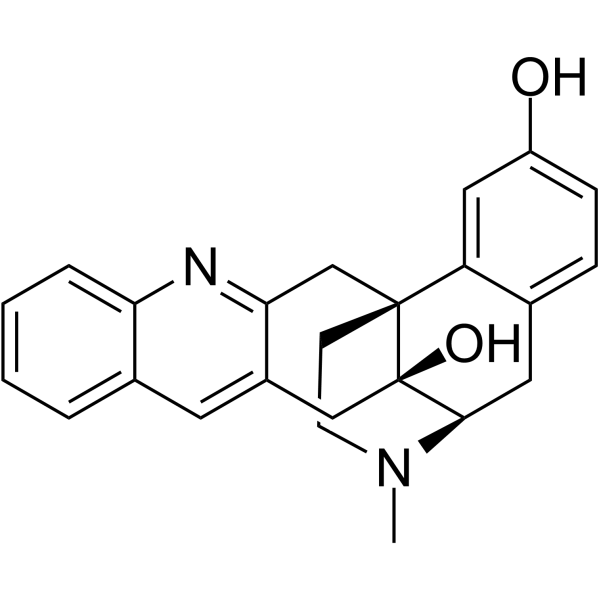
KNT-127
Based on 1 publication(s) in Google Scholar
KNT-127 is a selective and BBB-penetrant δ-opioid receptor (DOR) agonist (Ki = 0.16 nM). KNT-127 is highly selective to the δ receptor, with Ki values of 0.16, 21.3 and 153 nM for δ, μ and κ receptors, respectively. KNT-127 acts as a biased ligand that mainly activates cyclic adenosine monophosphate (cAMP) signaling with lower beta-arrestin signaling activation. KNT-127 increases the release of dopamine and L-glutamate in the striatum, nucleus accumbens, and prefrontal cortex. KNT-127 exhibits antidepressant- and anxiolytic-like effects. KNT-127 can be studied in research on neurological diseases.
Nur für Forschungszwecke. Wir verkaufen nicht an Patienten.
- Reinheit : 99.11%
- CAS. Nr.: 1256921-89-7
- Formel: C24H24N2O2
- Molecular Weight:372.46
-
Speicherung:Powder -20°C, 3 years , 4°C, 2 years ; In solvent -80°C, 6 months , -20°C, 1 month

To place orders, for customer services and technical support, please contact: MedChemExpress USA
Tel: 609-228-6898 E-mail: [email protected] [email protected]


-
 Biologische Aktivität
-
Chemical Information
-
Lösungsmittel & Löslichkeit
- Reinheit & Dokumentation
- Verweise
-
 Help & FAQs


-
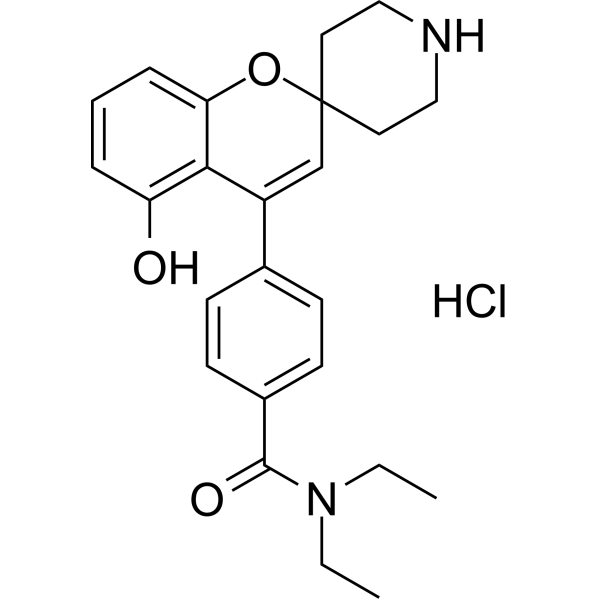
HY-13044
ADL-5859 hydrochlorideOpioid Receptor Agonist -
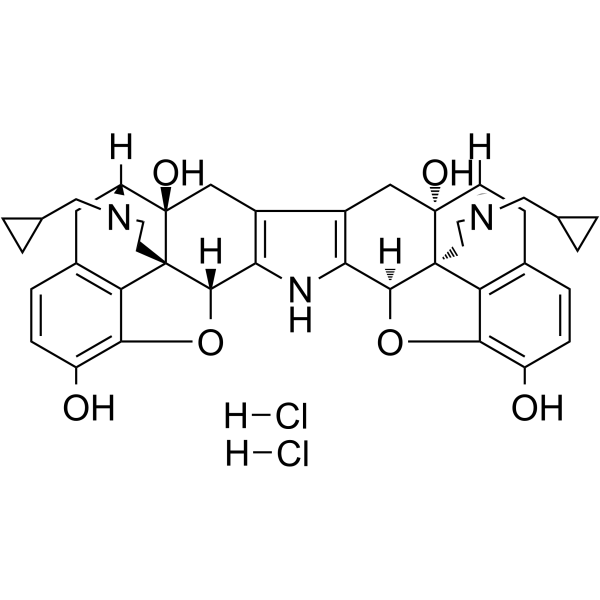
HY-100903
Norbinaltorphimine dihydrochlorideκ-opioid receptor Antagonist -

HY-15997B
(±)-U-50488 hydrochlorideKOR Agonist -
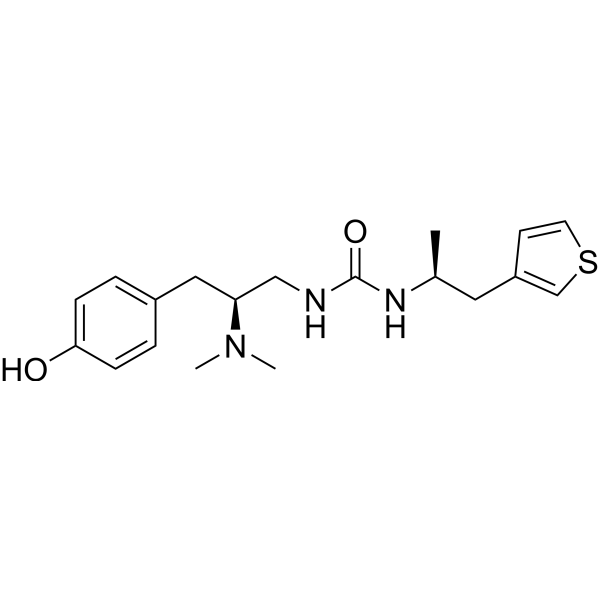
HY-101386
PZM21μ-opioid Receptor Agonist -
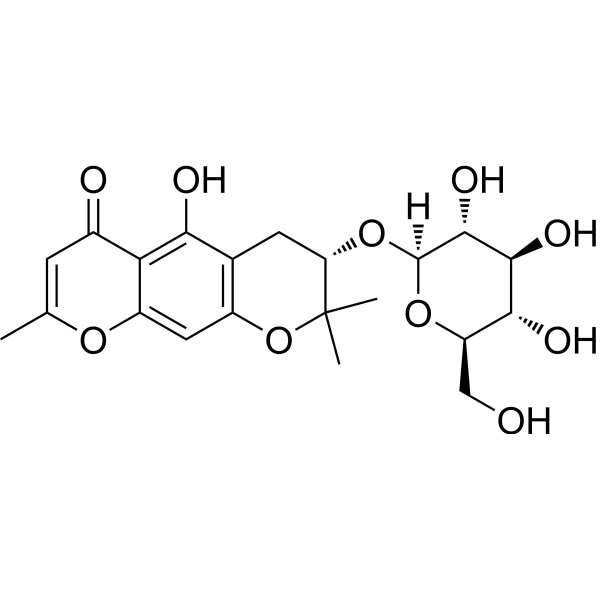
HY-N0398
Sec-O-GlucosylhamaudolOpioid Receptor Inhibitor -
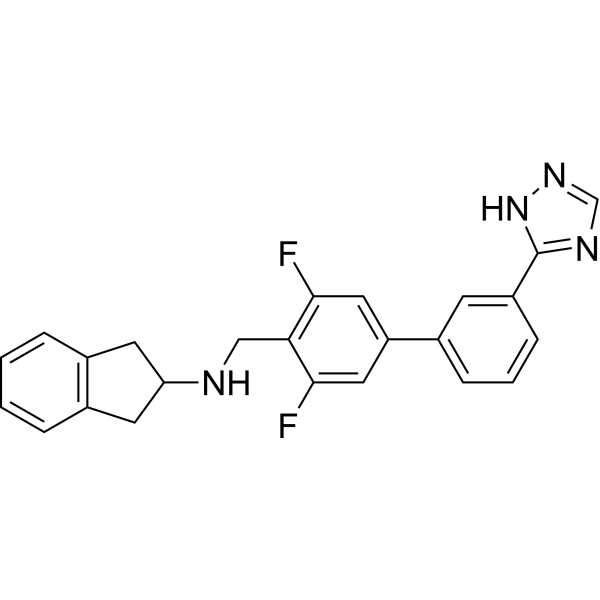
HY-115066
GSK1521498 free baseμ-opioid Receptor Antagonist -

HY-15997
(-)-U-50488 hydrochlorideKOR Agonist -
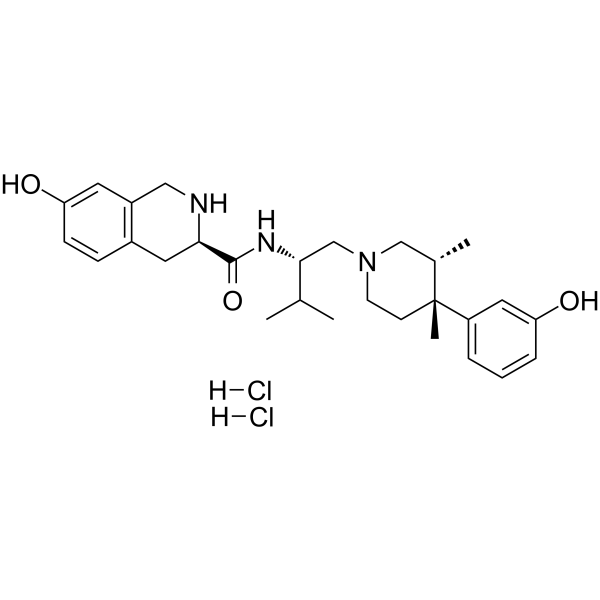
HY-10487
JDTic dihydrochloride -
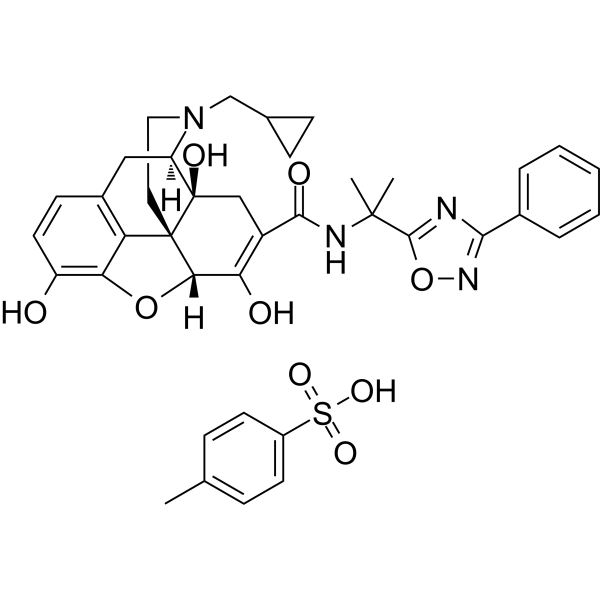
HY-19627A
Naldemedine tosylateμ-opioid Receptor Antagonist -
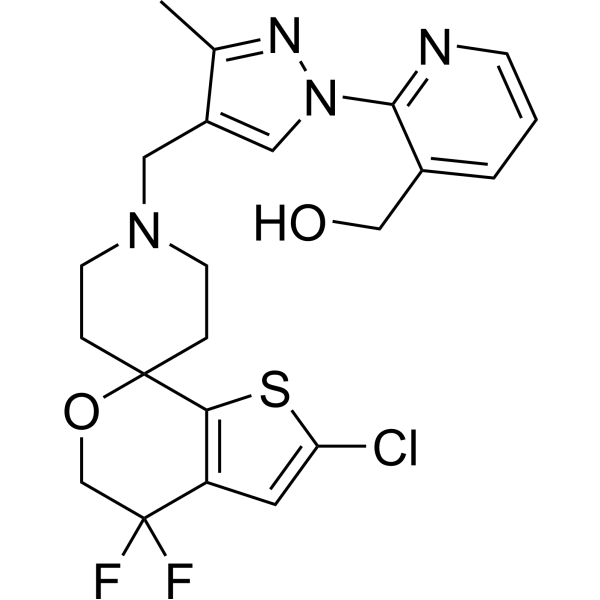
HY-114452
LY2940094NOP Antagonist -
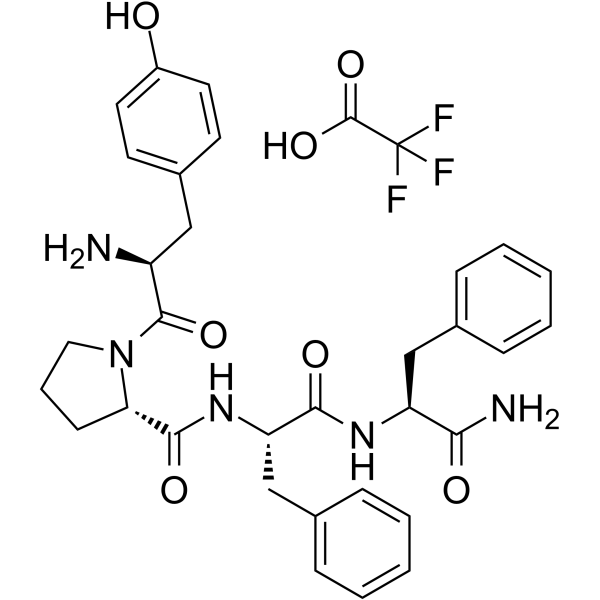
HY-P0186A
Endomorphin 2 TFAμ-opioid Receptor Agonist -
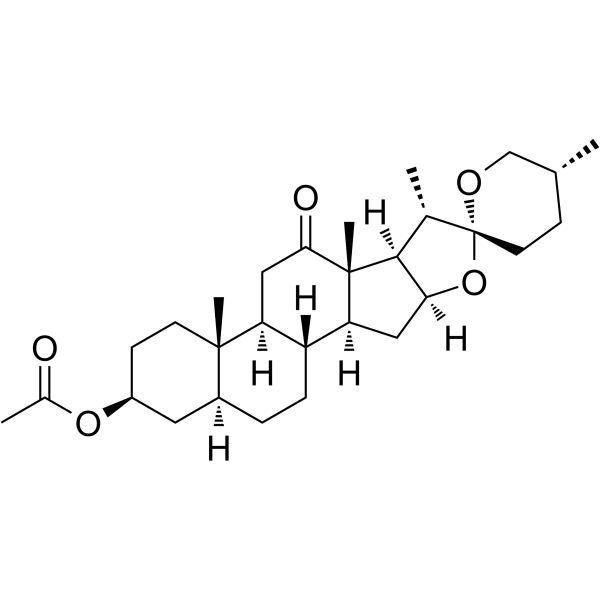
HY-126941
Hecogenin acetateAnti-inflammatory Analgesic/Anti-tumor/Diuretic Agent
Publications Citing Use of MedChemExpress (MCE) KNT-127
MoreAlle Opioid Receptor Isoform-spezifische Produkte anzeigen
More

Biologische Aktivität
Beschreibung
IC50 & Target
[4]|
δ Opioid Receptor/DOR |
mTORC1 |
In Vivo
KNT-127 (0.4 nmol, local infusion, single dose 15 min before test) significantly reduces immobility when infused into infralimbic prefrontal cortex (IL-PFC) but not prelimbic prefrontal cortexin cannula-implanted mice model[1].
KNT-127 (0.4 nmol, s.c., single dose 30 min before test) increases social interaction time with the target mouse and increases sucrose consumption in male and female cVSDS mice model, where both can be blocked by i.c.v. Rapamycin (HY-10219)[1].
KNT-127 (1-10 mg/kg/day, s.c., 14 d) does not influence hippocampal neurogenesis under normal states in naïve mice, unlike conventional antidepressents[2].
KNT-127 (3 mg/kg/day, s.c., 28 d) exerts antidepressant-like effects without affecting immature neurons of 10-day stress exposed cVSDS mice[2].
KNT-127 (3 mg/kg/day, s.c., 30 min before each stress session) suppresses the emergence of depressive-like symptoms and decreases newborn neuron survival rate in cVSDS mice[2].
KNT-127 (5 mg/kg/day, s.c., single dose) significantly reduces the cortical spreading depression (CSD) events and inhibits chronic migraine-associated allodynia in C57BL6/J mice[3].
KNT-127 (0.1-1 mg/kg, i.p., single dose) dose dependently increases striatal, accumbal, and pre-frontal releases of dopamine in male Sprague-Dawley rats[5].
MedChemExpress (MCE) has not independently confirmed the accuracy of these methods. They are for reference only.
-
Animal Model:Naïve mice with depression-like helplessness behavior[1]
-
Dosage:10 mg/kg
-
Administration:Subcutaneous injection (s.c.), single dose
-
Result:Decreased the immobility count.
Did not alter the locomotor activity of mice over 40 min post-injection.
Was reversed by prior i.c.v. injection of the DOP inhibitor Naltrindole (10 nmol/5 μL).
Indicated that KNT-127 exerts an antidepressant-like action through DOP stimulation.
-
Animal Model:Naïve mice with depression-like helplessness behavior and mTOR inhibitor Rapamycin[1]
-
Dosage:10 mg/kg
-
Administration:Subcutaneous injection (s.c.), single dose, 30 min after i.c.v. of Rapamycin (HY-10219) (0.2 nmol)
-
Result:Increased phosphorylation of Akt (a protein upstream of mTOR complex 1-mTORC1), in the mPFC but not in the amygdala.
Increased phosphorylation of ERK in the amygdala but not in the mPFC.
Increased the phosphorylation of p70S6K, a protein kinase downstream of mTORC1, in both mPFC and amygdala, and both responses were inhibited by i.c.v. Rapamycin.
Activated glutamatergic system in the IL-PFC via the mTOR signaling pathway and GABAA receptors, whilst suppresses GABAergic synapse currents in the IL-PFC.
Suppressed GABAergic synapse currents in the IL-PFC.
-
Animal Model:Male Sprague-Dawley rats (250-300 g)[5]
-
Dosage:1 mg/kg
-
Administration:Intraperitoneal injection (i.p.), single dose
-
Result:Was inhibited by 1 nM BNTX (HY-169867) pre-perfusion on its induction of striatal and accumbal releases of dopamine.
Was inhibited by 50 μM MK801 (HY-15084B) pre-perfusion on its induction of striatal and accumbal releases of dopamine.
Enhanced pre-frontal dopamine release with the pre-perfusion of Muscimol (50 μM). Was inhibited by 25 μM Sulpiride (HY-B1019) pre-perfusion on its reduction of accumbal releases of GABA.


Chemical Information
-
CAS. Nr. 1256921-89-7
-
Appearance Solid
-
Molecular Weight 372.46
-
Formel C24H24N2O2
-
Color Off-white to light yellow
-
SMILES
O[C@@]12[C@]3(CC4=NC5=CC=CC=C5C=C4C2)C6=CC(O)=CC=C6C[C@H]1N(CC3)C
-
Versand
Room temperature in continental US; may vary elsewhere.
-
Speicherung
Powder -20°C 3 years 4°C 2 years In solvent -80°C 6 months -20°C 1 month


Publications (1)
-
Journal Impact Factor
-
Most Recent


Lösungsmittel & Löslichkeit
In Vitro:
DMSO : 25 mg/mL (67.12 mM; Need ultrasonic; Hygroscopic DMSO has a significant impact on the solubility of product, please use newly opened DMSO)
Please refer to the solubility information to select the appropriate solvent. Once prepared, please aliquot and store the solution to prevent product inactivation from repeated freeze-thaw cycles.
Storage method and period of stock solution: -80°C, 6 months; -20°C, 1 month. When stored at -80°C, please use it within 6 months. When stored at -20°C, please use it within 1 month.
Please refer to the solubility information to select the appropriate solvent. Once prepared, please aliquot and store the solution to prevent product inactivation from repeated freeze-thaw cycles.
Storage method and period of stock solution: -80°C, 6 months; -20°C, 1 month. When stored at -80°C, please use it within 6 months. When stored at -20°C, please use it within 1 month.
Konzentration (Stammlösung) × Volumen (Stammlösung) = Konzentration (Ziellösung) × Volumen (Ziellösung)
In Vivo:
Select the appropriate dissolution method based on your experimental animal and administration route.
- For the following dissolution methods, please ensure to first prepare a clear stock solution using an In Vitro approach and then sequentially add co-solvents:
- To ensure reliable experimental results, the clarified stock solution can be appropriately stored based on storage conditions. As for the working solution for In Vivo experiments, it is recommended to prepare freshly and use it on the same day.
- The percentages shown for the solvents indicate their volumetric ratio in the final prepared solution. If precipitation or phase separation occurs during preparation, heat and/or sonication can be used to aid dissolution.
Add each solvent one by one: 10% DMSO 90% (20% SBE-β-CD in Saline)
Solubility: ≥ 1.25 mg/mL (3.36 mM); Clear solution
This protocol yields a clear solution of ≥ 1.25 mg/mL (saturation unknown).
Taking 1 mL working solution as an example, add 100 μL DMSO stock solution (12.5 mg/mL) to 900 μL 20% SBE-β-CD in Saline, and mix evenly.
Preparation of 20% SBE-β-CD in Saline (4°C, storage for one week): 2 g SBE-β-CD powder is dissolved in 10 mL Saline, completely dissolve until clear.
In Vivo Dissolution Calculator
Please enter the basic information of animal experiments:
-
-
-
-
Recommended: Prepare an additional quantity of animals to account for potential losses during experiments.
Please enter your animal formula composition:
-
%DMSO +
Recommended: Keep the proportion of DMSO in working solution below 2% if your animal is weak.
-
%+
-
+%Tween-80 + +
-
%Saline +
The co-solvents required include: DMSO, . All of co-solvents are available by MedChemExpress (MCE). , Tween 80. All of co-solvents are available by MedChemExpress (MCE).
Working solution concentration: 0.22 mg/mL
Method for preparing stock solution: mg drug dissolved in μL DMSO. Stock solution concentration: mg/mL.
1. Take μL DMSO stock solution;
2. Add μL .
μL , mix evenly;
3. Then add μL Tween 80, mix evenly;
4. Then add μL
Please ensure that the stock solution in the first step is dissolved to a clear state, and add co-solvents in sequence. You can use ultrasonic heating (ultrasonic cleaner, recommended frequency 20-40 kHz), vortexing, etc. to assist dissolution.


Reinheit & Dokumentation
-
Data Sheet (285 KB)
-
SDS (254 KB)
- English - EN (254 KB)
- Français - FR (254 KB)
- Deutsch - DE (254 KB)
- Norwegian - NO (254 KB)
- Español - ES (254 KB)
- Swedish - SV (254 KB)
- Italian - IT (254 KB)
- Korean - KR (254 KB)
- Portuguese - PT (254 KB)
-
Handling Instructions (2659 KB)
Verweise
[1]. Yoshioka T, et al. Delta opioid receptor agonists activate PI3K-mTORC1 signaling in parvalbumin-positive interneurons in mouse infralimbic prefrontal cortex to exert acute antidepressant-lie effects. Mol Psychiatry. 2024 Dec 6. [Content Brief]
[2]. Yoshioka T, et al. KNT-127, a selective delta opioid receptor agonist, shows beneficial effects in the hippocampal dentate gyrus of a chronic vicarious social defeat stress mouse model. Neuropharmacology. 2023 Jul 1;232:109511. [Content Brief]
[3]. Bertels Z, et al. A non-convulsant delta-opioid receptor agonist, KNT-127, reduces cortical spreading depression and nitroglycerin-induced allodynia. Headache. 2021 Jan;61(1):170-178. [Content Brief]
[4]. Nagase H, et al. Design and synthesis of KNT-127, a δ-opioid receptor agonist effective by systemic administration. Bioorg Med Chem Lett. 2010;20(21):6302-6305. [Content Brief]
[5]. Tanahashi S, et al. Novel δ1-receptor agonist KNT-127 increases the release of dopamine and L-glutamate in the striatum, nucleus accumbens and median pre-frontal cortex. Neuropharmacology. 2012;62(5-6):2057-2067. [Content Brief]


Complete Stock Solution Preparation Table
Please refer to the solubility information to select the appropriate solvent. Once prepared, please aliquot and store the solution to prevent product inactivation from repeated freeze-thaw cycles.
Storage method and period of stock solution: -80°C, 6 months; -20°C, 1 month. When stored at -80°C, please use it within 6 months. When stored at -20°C, please use it within 1 month.
| Optional Solvent | Concentration Solvent Mass | 1 mg | 5 mg | 10 mg | 25 mg |
|---|---|---|---|---|---|
| DMSO | 1 mM | 2.6849 mL | 13.4243 mL | 26.8485 mL | 67.1213 mL |
| 5 mM | 0.5370 mL | 2.6849 mL | 5.3697 mL | 13.4243 mL | |
| 10 mM | 0.2685 mL | 1.3424 mL | 2.6849 mL | 6.7121 mL | |
| 15 mM | 0.1790 mL | 0.8950 mL | 1.7899 mL | 4.4748 mL | |
| 20 mM | 0.1342 mL | 0.6712 mL | 1.3424 mL | 3.3561 mL | |
| 25 mM | 0.1074 mL | 0.5370 mL | 1.0739 mL | 2.6849 mL | |
| 30 mM | 0.0895 mL | 0.4475 mL | 0.8950 mL | 2.2374 mL | |
| 40 mM | 0.0671 mL | 0.3356 mL | 0.6712 mL | 1.6780 mL | |
| 50 mM | 0.0537 mL | 0.2685 mL | 0.5370 mL | 1.3424 mL | |
| 60 mM | 0.0447 mL | 0.2237 mL | 0.4475 mL | 1.1187 mL |


KNT-127 Related Classifications
HY-120511 Related Classifications
 Powered by Bioz