Search Result
Results for "
GABAA α1 receptor
" in MedChemExpress (MCE) Product Catalog:
8
Isotope-Labeled Compounds
| Cat. No. |
Nom du produit |
Target |
Áreas de investigación |
Chemical Structure |
-
- HY-B0135
-
Furosemide
Maximum Cited Publications
8 Publications Verification
|
NKCC
GABA Receptor
|
Cardiovascular Disease
Metabolic Disease
Cancer
|
|
Furosemide is a potent and orally active inhibitor of Na +/K +/2Cl - (NKCC) cotransporter, NKCC1 and NKCC2 [1]. Furosemide is also a GABAA receptors antagonist and displays 100-fold selectivity for α6-containing receptors than α1-containing receptors. Furosemide acts as a loop diuretic and used for the study of congestive heart failure, hypertension and edema .
|
-
-
- HY-B1494
-
|
|
Chloride Channel
GABA Receptor
|
Neurological Disease
|
|
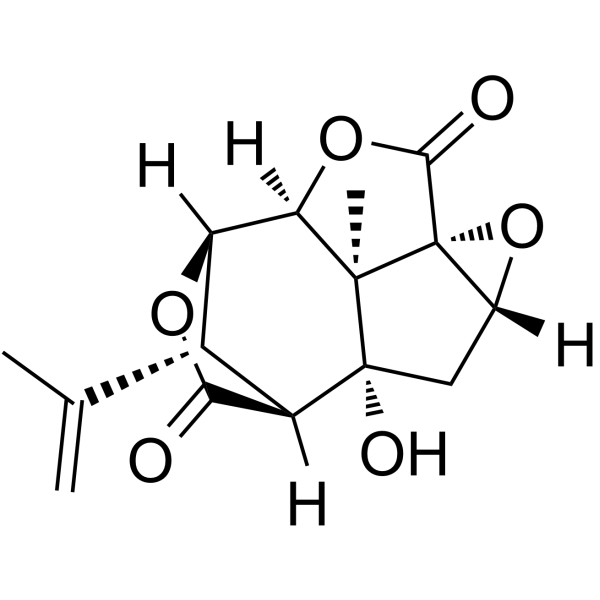
Picrotoxinin, a potent convulsant, is a chloride channel blocker. Picrotoxinin is a noncompetitive GABAA receptor antagonist, which negatively modulates the action of GABA on GABAA receptors. Picrotoxinin inhibits α1β2γ2L GABAA receptor with an IC50 of 1.15 μM [1].
|
-
-
- HY-111052
-
|
|
GABA Receptor
Cytochrome P450
|
Neurological Disease
Inflammation/Immunology
|
|
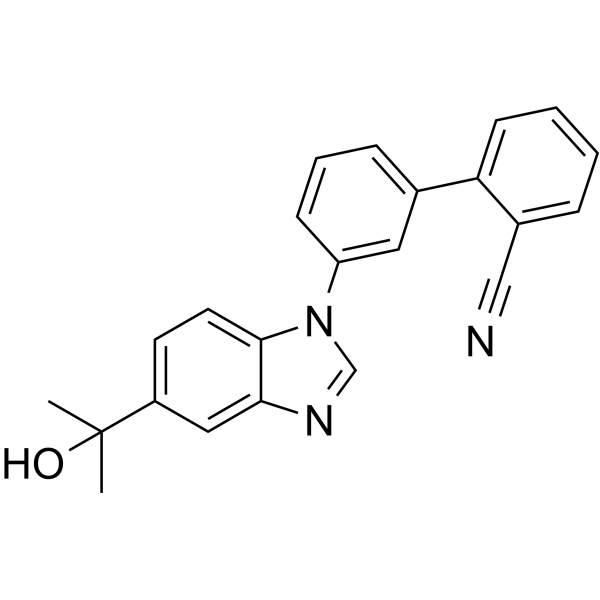
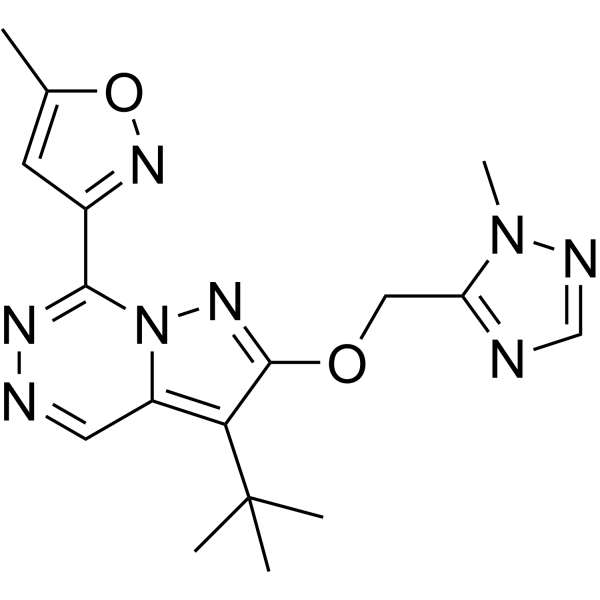
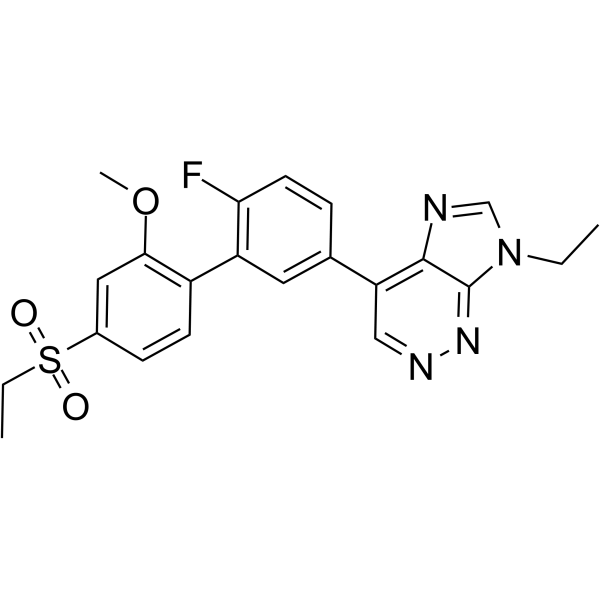
AZD7325 is a potent and orally active partial selective PAM of GABAAα2 and Aα3 receptor (Ki=0.3 and 1.3 nM, respectively), and has less antagonistic efficacy at the Aα1 and Aα5 receptor subtypes [1] . AZD7325 is a moderate CYP1A2 and a potent CYP3A4 inducer in vitro . AZD7325 has the potential for the investigation of anxiety and dravet syndrome . PAM: positive allosteric modulator.
|
-
-
- HY-Y0313
-
-
-
- HY-W013150
-
|
|
GABA Receptor
|
Neurological Disease
|
|
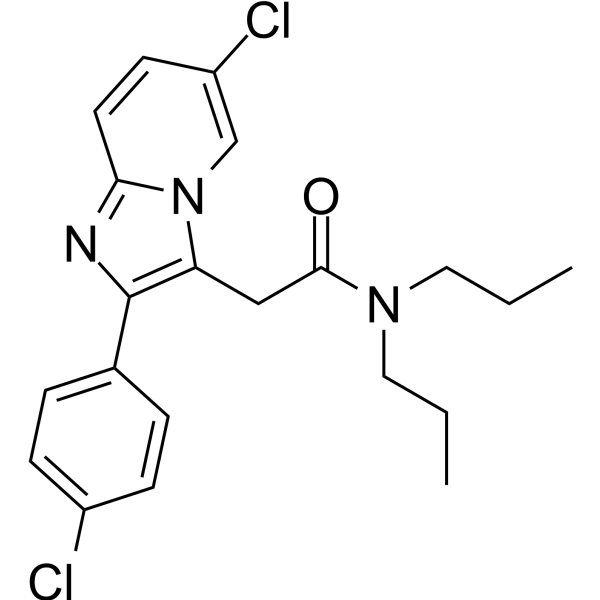
Alpidem, an anxiolytic agent, is an orally active and brain-penetrant GABAA receptor ligand, binds to α1β2γ2 subunit-containing GABAA receptors (IC50 of 17 nM) over α5β2γ2 subunit-containing GABAA receptors (IC50 of >10 μM). Alpidem modulates calcium-induced mitochondrial permeability transition, induces glutathione depletion and hepatocyte necrosis, potentiates TNF-α toxicity, inhibits marble-burying and locomotor activity, enhances stressed rodent feeding behavior, and exerts anticonvulsant effects. Alpidem can be used for the research of anxiety, anxiety disorders, and convulsions [1] .
|
-
-
- HY-10233
-
|
Lu 02-030 hydrochloride; THIP hydrochloride
|
GABA Receptor
|
Neurological Disease
|
|
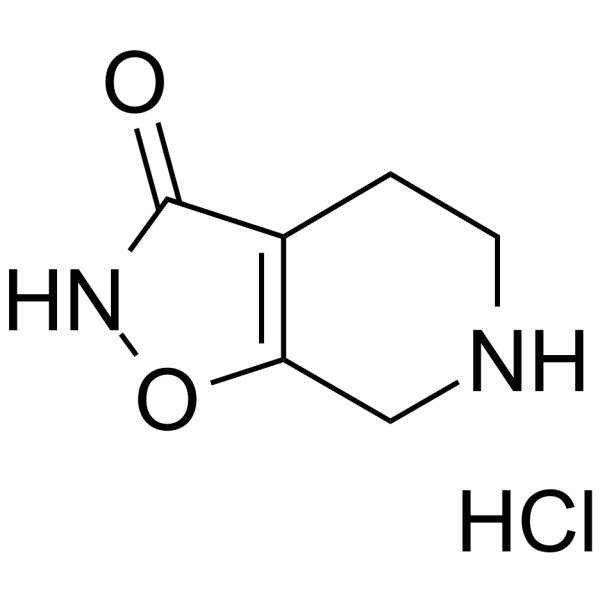
Gaboxadol hydrochloride (Lu 02-030 hydrochloride) is a potent agonist of the GABAA receptor and an antagonist of GABAC receptors (IC50=25 μM). Gaboxadol hydrochloride displays a partial agonist efficacy on subunit α1β2γ2 with an ED50 value of 143 μM, a full agonist efficacy at α5 subunit (ED50=28-129 μM) and a superagonist efficacy at α4β3δ (ED50=6 μM). Gaboxadol hydrochloride is a non-opioid agent [1] .
|
-
-
- HY-16579
-
|
HOE 36-801 hydrochloride
|
GABA Receptor
|
Neurological Disease
|
|
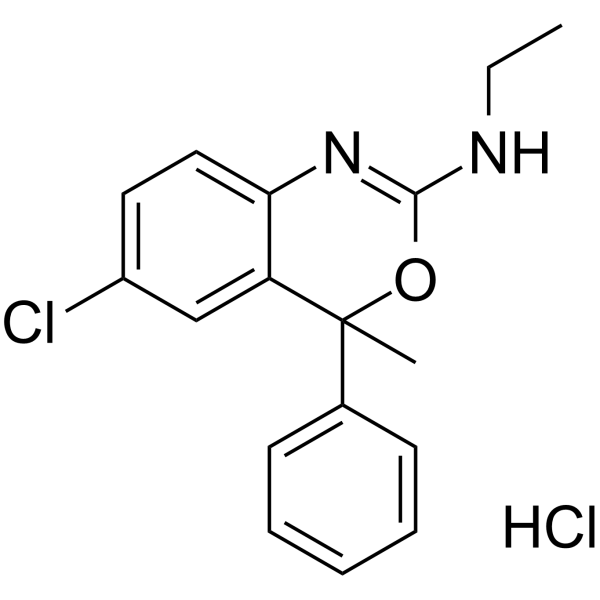
Etifoxine hydrochloride, a non-benzodiazepine GABAergic compound, is a positive allosteric modulator of α1β2γ2 and α1β3γ2 subunit-containing GABAA receptors. Etifoxine hydrochloride reveals anxiolytic and anticonvulsant properties in rodents [1] .
|
-
-
- HY-120874
-
|
PF-06372865; CVL-865
|
GABA Receptor
|
Neurological Disease
|
|
Darigabat (PF-06372865) is an orally active, α2/α3/α5 subtype-selective GABAA positive allosteric modulator (PAM). Darigabat is a high affinity ligand at GABAA receptors containing α1/α2/α3/α5 subunits (Kis of 2.9 nM, 21 nM, 134 nM for α2, α1 PAM, α2 PAM, respectively), with low affinity for α4/α6 subunits. Darigabat can across the blood-brain barrier (BBB). Darigabat has anxiolytic activity and has the potential for epilepsy [1].
|
-
-
- HY-B0135A
-
|
|
NKCC
GABA Receptor
|
Cardiovascular Disease
Metabolic Disease
Cancer
|
|
Furosemide sodium is a potent and orally active inhibitor of Na +/K +/2Cl - (NKCC) cotransporter, NKCC1 and NKCC2 [1]. Furosemide sodium is also a GABAA receptors antagonist and displays 100-fold selectivity for α6-containing receptors than α1-containing receptors. Furosemide sodium acts as a loop diuretic and used for the study of congestive heart failure, hypertension and edema .
|
-
-
- HY-16579A
-
|
HOE 36-801
|
GABA Receptor
|
Neurological Disease
|
|
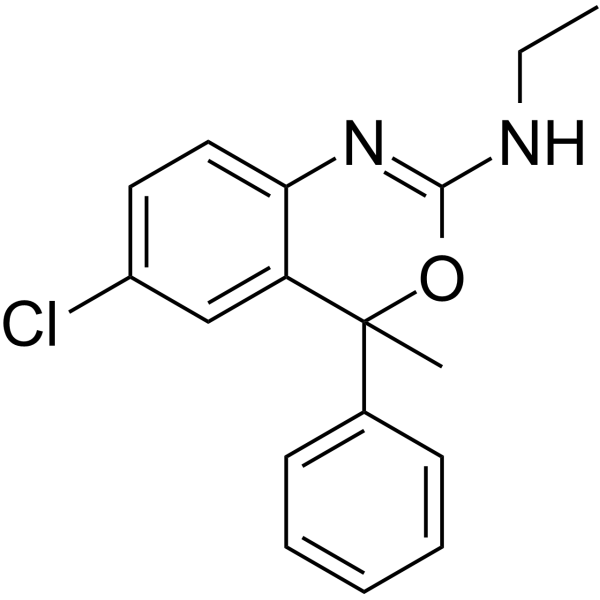
Etifoxine, a non-benzodiazepine GABAergic compound, is a positive allosteric modulator of α1β2γ2 and α1β3γ2 subunit-containing GABAA receptors. Etifoxine reveals anxiolytic and anticonvulsant properties in rodents [1] .
|
-
-
- HY-100991
-
|
ZK 39106; LSU-65
|
GABA Receptor
|
Neurological Disease
|
|
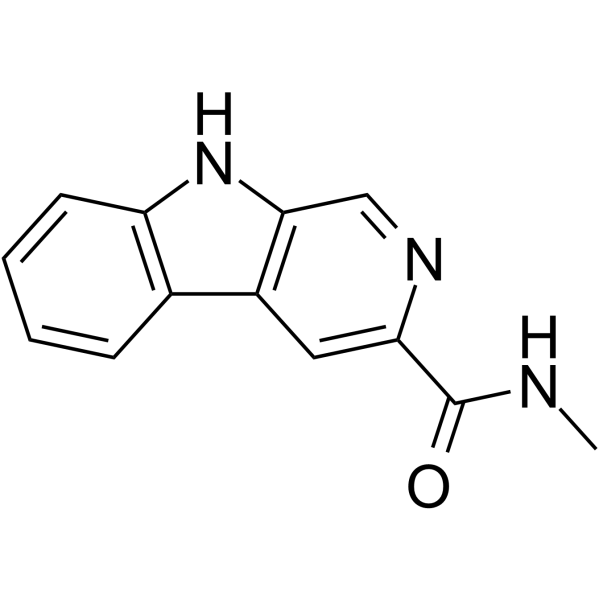
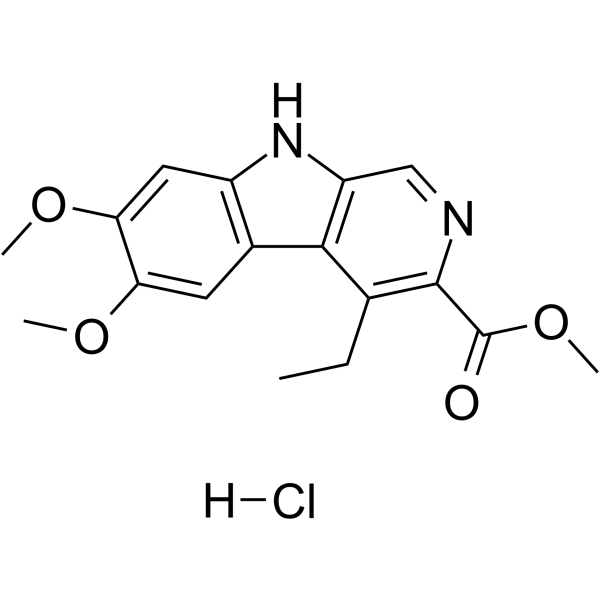
FG 7142 (ZK 39106; LSU-65), a non-selectively benzodiazepine inverse agonist, has high affinity for the α1 subunit-containing GABAA receptor (Ki=91 nM). FG 7142 (ZK 39106; LSU-65) also modulates GABA-induced chloride flux at GABAA receptors expressing the α1 subunit (EC50= 137 nM). FG 7142 (ZK 39106; LSU-65) can increase tyrosine hydroxylation and cause upregulation of β-adrenoceptors in mouse cerebral cortex [1].
|
-
-
- HY-100369A
-
|
|
GABA Receptor
|
Neurological Disease
|
|
DMCM hydrochloride is a nonselective full inverse agonist of benzodiazepine. DMCM shows bnding afinity at human recombinant GABAA αxβ3γ2 receptor subtypes with Kis of 10 nM, 13 nM, 7.5 nM, 2.2 nM for α1, α2, α3, and α5 receptors, respectively [1].
|
-
-
- HY-19505
-
|
|
GABA Receptor
|
Neurological Disease
|
|
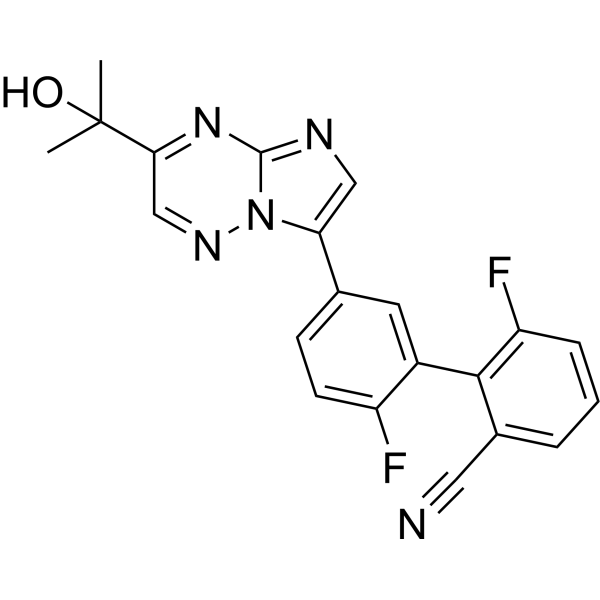
TPA-023B is a high-affinity and orally active GABAA receptor α2/α3 subtype (Kis of 0.73 nM/2 nM) partial agonist and a α1 subtype (Ki of 1.8 nM) antagonist. TPA-023B has non-sedating anxiolytic-like properties [1].
|
-
-
- HY-15831
-
|
|
Isotope-Labeled Compounds
GABA Receptor
|
Neurological Disease
|
|
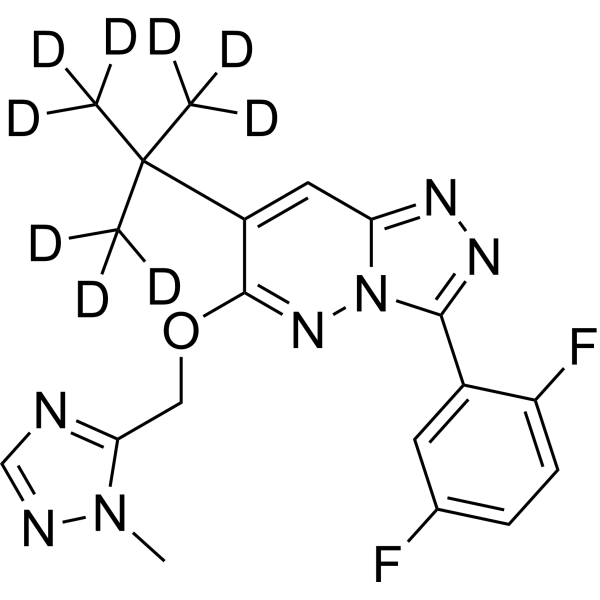
L-838417-d9 is the deuterium labeled L-838417 (HY-W009009). L-838417 is a selective partial agonist at the α2, α3 and α5 subtypes of the GABAA receptor and an antagonist at the α1, with binding Ki values of 0.79 nM, 0.67 nM, 1.67 nM, 267 nM, 2.25 nM and 2183 nM for α1β3γ2, α2β3γ2, α3β3γ2, α4β3γ2, α5β3γ2 and α6β3γ2. L-838417 has anti-anxiety activity [1].
|
-
-
- HY-100370
-
MRK-016
2 Publications Verification
|
GABA Receptor
|
Cancer
|
|
MRK-016 is a selective, orally bioavailable inverse agonist of GABAA α5 receptor, with an EC50 of 3 nM for GABAA α5, and Kis of 0.83, 0.85, 0.77 and 1.4 nM for human GABAA α1β3γ2, GABAA α2β3γ2, GABAA α3β3γ2, and GABAA α5β3γ2, respectively; MRK-016 also readily penetrates the CNS.
|
-
-
- HY-114871
-
|
|
GABA Receptor
|
Neurological Disease
|
|
SL651498 is a full agonist of α2 and α3 GABAA receptors, and a partial agonist of α1 and α5 GABAA receptors. SL651498 shows anxiolytic and anticonvulsant activities [1].
|
-
-
- HY-105056
-
|
Ro 16-6028
|
GABA Receptor
|
Neurological Disease
|
|
Bretazenil (Ro 16-6028) is a partial agonist at the gamma-aminobutyric acid A (GABAA) receptor-linked benzodiazepine site. Bretazenil is potent benzodiazepine examined, exhibiting an IC50 (concentration at which half-maximal inhibition of specific [35S]TBPS binding occurs) of 6.1 nM. Bretazenil shows an EC50 of 10 nM for recombinant α1β1γ2. Anticonvulsant effects [1] .
|
-
-
- HY-B0135S
-
|
|
NKCC
GABA Receptor
|
Metabolic Disease
Cancer
|
|
Furosemide-d5 is the deuterium labeled Furosemide. Furosemide is a potent and orally active inhibitor of Na+/K+/2Cl-?(NKCC) cotransporter, NKCC1 and NKCC2 [1].?Furosemide is also a GABAA?receptors antagonist and displays 100-fold selectivity for?α6-containing receptors than?α1-containing receptors. Furosemide acts as a loop diuretic and used for the study of congestive heart failure, hypertension and edema .
|
-
-
- HY-N6630
-
-
-
- HY-11048
-
NS11394
3 Publications Verification
|
GABA Receptor
|
Neurological Disease
|
|
NS11394 is an orally active and unique subtype-selective GABAA positive allosteric receptor (PAM), with a Ki of ~0.5 nM. NS11394 shows a selectivity profile in the order of GABAA-5 > α3 > α2 > α1-containing receptors. NS11394 has anxiolytic and anti-inflammatory properties [1] .
|
-
-
- HY-103511
-
|
|
GABA Receptor
|
Neurological Disease
|
|
TCS1105 is a benzodiazepine ligand with agonist for α2-subunit containing GABAA receptors and antagonist for α1-subunit containing GABAA receptors. TCS1105 reduces anxiety-like behavior in mice. TCS1105 enhances offensive behavior and social dominance. TCS1105 blocks Sema3A induced AGC (axonal growth cones) collapse in a concentration-dependent fashion [1] .
|
-
-
- HY-B0135R
-
|
|
Reference Standards
NKCC
GABA Receptor
|
Metabolic Disease
Cancer
|
|
Furosemide (Standard) is the analytical standard of Furosemide. This product is intended for research and analytical applications. Furosemide is a potent and orally active inhibitor of Na +/K +/2Cl - (NKCC) cotransporter, NKCC1 and NKCC2 [1]. Furosemide is also a GABAA receptors antagonist and displays 100-fold selectivity for α6-containing receptors than α1-containing receptors. Furosemide acts as a loop diuretic and used for the study of congestive heart failure, hypertension and edema .
|
-
-
- HY-W009009
-
|
|
GABA Receptor
|
Neurological Disease
|
|
L-838417 is a selective partial agonist at the α2, α3 and α5 subtypes of the GABAA receptor and an antagonist at the α1, with binding Ki values of 0.79 nM, 0.67 nM, 1.67 nM, 267 nM, 2.25 nM and 2183 nM for α1β3γ2, α2β3γ2, α3β3γ2, α4β3γ2, α5β3γ2 and α6β3γ2. L-838417 has anti-anxiety activity [1] .
|
-
-
- HY-N8852
-
|
6-MeOF
|
GABA Receptor
Taste Receptor
|
Neurological Disease
Metabolic Disease
|
|
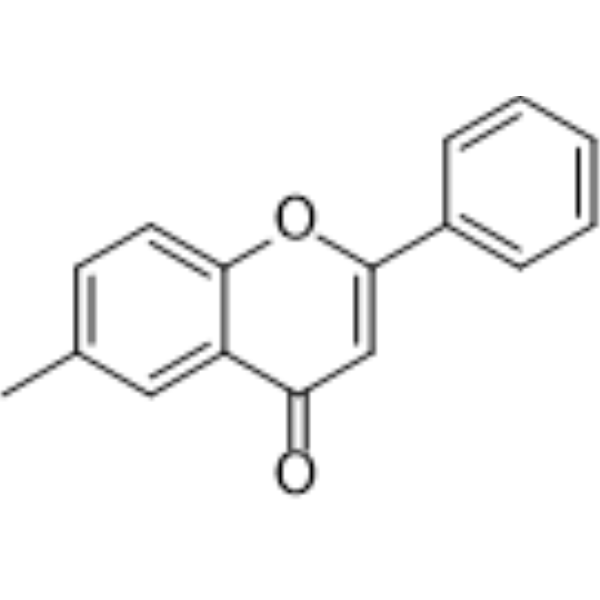
6-Methoxyflavanone (6-MeOF) is a flavonoid compound that can cross the blood-brain barrier. 6-Methoxyflavanone is a positive allosteric modulator of GABAA receptors. 6-Methoxyflavanone exhibits positive allosteric regulatory effects on human recombinant α1β2γ2L and α2β2γ2L GABAA receptors, and is relatively inactive on the α1β2 GABAA receptor. 6-Methoxyflavanone showes inhibitory behavior towards the activation of bitter receptor hTAS2R39 and hTAS2R14, demonstrating a reversible and non-overcome antagonistic effect. 6-Methoxyflavanone has the effects of anti-anxiety, analgesia and relief of neuropathic pain [1] .
|
-
-
- HY-153584
-
|
|
GABA Receptor
|
Neurological Disease
|
|
MRK-898 is an orally active GABA(A) receptor modulator. MRK-898 binds to α1, α2, α3 or α5 subunit of GABA(A) receptor with Ki values of 1.2 nM, 1.0 nM, 0.73 nM, and 0.50 nM, respectively. However, α1-containing GABA(A) receptors are identified as the "sedative" and α2- and/or α3-containing receptors as the "anxiolytic" subtype(s) [1].
|
-
-
- HY-103520
-
|
|
GABA Receptor
|
Neurological Disease
|
|
DS2 is a selective positive allosteric modulator of δ-GABAA receptor. DS2 selectively potentiates GABA responses mediated by α4β3δ receptor. DS2 does not enhance activity at α4β3γ2 and α1β3γ2 receptors. DS2 relieves pain and has the potential for sleep disorders research [1].
|
-
-
- HY-B1803A
-
|
ICI 136753 hydrochloride
|
GABA Receptor
|
Neurological Disease
|
|
Tracazolate (ICI 136753) hydrochloride is a potent GABAA receptor modulator. Tracazolate hydrochloride has selectivity for β3 and potentiates α1β1γ2s (EC50=13.2 μM), α1β3γ2 (EC50=1.5 μM). Tracazolate hydrochloride has the potency (EC50) determined by the nature of the third subunit (γ1-3, δ, ε) within the receptor complex. Tracazolate hydrochloride possesses anxiolytic and anticonvulsant activity [1] .
|
-
-
- HY-W001692
-
|
DOV 273547
|
GABA Receptor
|
Neurological Disease
|
|
Ocinaplon (DOV 273547) is an orally active positive allosteric modulator of GABAA receptor, with an EC50 ranging from 3.07 μM (α1β2γ2 subtype) to 10.03 μM (α1β2γ3 subtype). Ocinaplon enhances GABA-stimulated chloride currents across multiple GABAA receptor subtypes, with varying potency between different subtypes. Ocinaplon exerts anxiolytic and anticonvulsant effects, and causes motor impairment at high doses. Ocinaplon can be used for research on generalized anxiety disorder [1] .
|
-
-
- HY-Y0313R
-
|
|
Reference Standards
Endogenous Metabolite
GABA Receptor
|
Neurological Disease
|
|
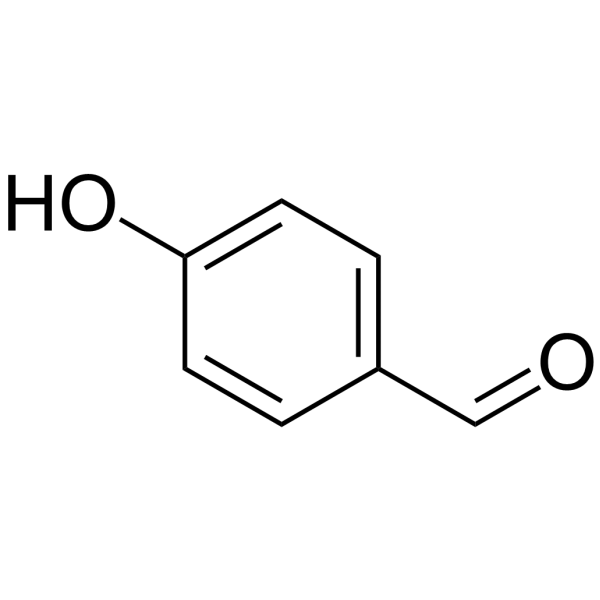
p-Hydroxybenzaldehyde (Standard) is the analytical standard of p-Hydroxybenzaldehyde. This product is intended for research and analytical applications. p-Hydroxybenzaldehyde is a one of the major components in vanilla aroma, with antagonistic effect on GABAA receptor of the α1β2γ2S subtype at high concentrations.
|
-
-
- HY-168758
-
|
|
GABA Receptor
|
Neurological Disease
|
|
Delta3,5-cholestadien-7-one is an oxysterol and a negative allosteric modulator of GABAA receptors. Delta3,5-cholestadien-7-one reduces GABA-induced currents in HEK cells expressing α1β1γ2 or α4β3γ2 subunit-containing GABAA receptors with IC50 values of 1.5 and 1 µM, respectively. Delta3,5-cholestadien-7-one reduces GABA-induced depolarization of peptidergic and non-peptidergic nociceptors, C-LTMRs, and cold thermosensors in isolated mouse dorsal root ganglion (DRG) neurons [1] .
|
-
-
- HY-123840
-
|
|
GABA Receptor
|
Neurological Disease
|
|
MRK-623 (Compound 14k) is an orally active, high-affinity GABAA receptor agonist, with the Ki values of 0.85 nM, 3.7 nM, 4.0 nM, and 0.53 nM for α1, α2, α3, and α5, respectively. MRK-623 shows anxiolytic effect [1].
|
-
-
- HY-19371
-
|
|
GABA Receptor
|
Neurological Disease
|
|
Lorediplon is a novel non-benzodiazepine drug acting as a GABAA receptor modulator, differentially active at the alpha1-subunit, associated with promoting sleep.
|
-
-
- HY-Y0313S
-
-
-
- HY-118502
-
|
|
GABA Receptor
|
Neurological Disease
|
|
DOV51892 is a GABAA receptor modulator. DOV51892 has a specific effect on GABAA receptors containing the α1 subunit. DOV51892 exhibits non-sedative anti-anxiety effects. DOV51892 can be used for in-depth research on the function of GABAA receptors [1].
|
-
-
- HY-Y0313S1
-
-
-
- HY-W747264
-
-
-
- HY-103512
-
|
|
GABA Receptor
|
Neurological Disease
|
|
TP003 is a non-selective benzodiazepine site agonist with EC50s of 20.3, 10.6, 3.24, 5.64 nM for α1β2γ2, α2β3γ2, α3β3γ2, α5β2γ2, respectively. TP003 induces anxiolysis via α2GABAA receptors [1].
|
-
-
- HY-100991R
-
|
ZK 39106 (Standard); LSU-65 (Standard)
|
Reference Standards
GABA Receptor
|
Neurological Disease
|
|
FG 7142 (Standard) is the analytical standard of FG 7142. This product is intended for research and analytical applications. FG 7142 (ZK 39106; LSU-65), a non-selectively benzodiazepine inverse agonist, has high affinity for the α1 subunit-containing GABAA receptor (Ki=91 nM). FG 7142 (ZK 39106; LSU-65) also modulates GABA-induced chloride flux at GABAA receptors expressing the α1 subunit (EC50= 137 nM). FG 7142 (ZK 39106; LSU-65) can increase tyrosine hydroxylation and cause upregulation of?β-adrenoceptors in mouse cerebral cortex [1].
|
-
-
- HY-103510
-
|
|
GABA Receptor
|
Neurological Disease
|
|
TB-21007 is a selective and brain penetrant α5 subunit-containing GABAA receptor inverse agonist with Kis of 1.6 nM, 20 nM, 16 nM, and 20 nM for α5, α1, α2 and α3 subtypes, respectively. TB-21007 enhances cognition in rats [1].
|
-
-
- HY-100369AR
-
|
|
Reference Standards
GABA Receptor
|
Neurological Disease
|
|
DMCM (hydrochloride) (Standard) is the analytical standard of DMCM (hydrochloride). This product is intended for research and analytical applications. DMCM hydrochloride is a nonselective full inverse agonist of benzodiazepine. DMCM shows bnding afinity at human recombinant GABAA αxβ3γ2 receptor subtypes with Kis of 10 nM, 13 nM, 7.5 nM, 2.2 nM for α1, α2, α3, and α5 ?receptors, respectively [1].
|
-
-
- HY-B0135AR
-
|
|
NKCC
GABA Receptor
Reference Standards
|
Cardiovascular Disease
Metabolic Disease
Cancer
|
|
Furosemide (sodium) (Standard) is the analytical standard of Furosemide (sodium). This product is intended for research and analytical applications. Furosemide sodium is a potent and orally active inhibitor of Na+/K+/2Cl- (NKCC) cotransporter, NKCC1 and NKCC2 [1]. Furosemide sodium is also a GABAA receptors antagonist and displays 100-fold selectivity for α6-containing receptors than α1-containing receptors. Furosemide sodium acts as a loop diuretic and used for the study of congestive heart failure, hypertension and edema .
|
-
-
- HY-115857
-
|
|
GABA Receptor
|
Neurological Disease
|
|
SH-053-S-CH3-2'F is a selective positive allosteric modulator that produces mild to partial agonistic activity at α(1) GABA(A) receptors. SH-053-S-CH3-2'F showed anxiety-relieving effects at a dose of 30 mg/kg. SH-053-S-CH3-2'F completely avoids the memory impairment commonly caused by benzodiazepine site agonists. SH-053-S-CH3-2'F shows strong selectivity at GABA(A) receptors, which could potentially be used to develop more selective anti-anxiety drugs [1].
|
-
-
- HY-131997
-
|
|
GABA Receptor
|
Neurological Disease
Inflammation/Immunology
|
|
2'MeO6MF is a brain-penetrant positive allosteric modulator at α2β1γ2L and all α1-containing GABAA receptors. 2'MeO6MF also can directly activate α2β2/3 and α2β2/3γ2L GABAA receptors. 2'MeO6MF has anxiolytic and psychomotor stabilizing properties. 2'MeO6MF offers neuroprotection and improved functional recovery and dampens the stroke-induced inflammatory response [1] .
|
-
-
- HY-111052R
-
|
|
GABA Receptor
Cytochrome P450
|
Neurological Disease
Inflammation/Immunology
|
|
AZD7325 (Standard) is the analytical standard of AZD7325. This product is intended for research and analytical applications. AZD7325 is a potent and orally active partial selective PAM of GABAAα2 and Aα3 receptor (Ki=0.3 and 1.3 nM, respectively), and has less antagonistic efficacy at the Aα1 and Aα5 receptor subtypes [1] . AZD7325 is a moderate CYP1A2 and a potent CYP3A4 inducer in vitro . AZD7325 has the potential for the investigation of anxiety and dravet syndrome . PAM: positive allosteric modulator.
|
-
-
- HY-W009009R
-
|
|
Reference Standards
GABA Receptor
|
Neurological Disease
|
|
L-838417 (Standard) is the analytical standard of L-838417 (HY-W009009). This product is intended for research and analytical applications. L-838417 is a selective partial agonist at the α2, α3 and α5 subtypes of the GABAA receptor and an antagonist at the α1, with binding Ki values of 0.79 nM, 0.67 nM, 1.67 nM, 267 nM, 2.25 nM and 2183 nM for α1β3γ2, α2β3γ2, α3β3γ2, α4β3γ2, α5β3γ2 and α6β3γ2. L-838417 has anti-anxiety activity [1] .
|
-
-
- HY-170902
-
|
|
GABA Receptor
|
Neurological Disease
|
|
GABAA receptor modulator-4 (Compound 4) is the negative allosteric modulator for GABAA receptor. GABAA receptor modulator-4 inhibits α1β3γ2 GABAA receptor-mediated peak and steady currents with IC50 of 10 μM and 10 μM [1].
|
-
-
- HY-175670
-
|
|
GABA Receptor
|
Neurological Disease
|
|
GABAA receptor modulator-10 is an orally active, potent positive allosteric modulator (PAM) of the α1β2γ2 GABAA receptor with favorable blood-brain barrier (BBB) penetration. GABAA receptor modulator-10 enhances α1β2γ2 GABAA receptor function and potentiates GABA-evoked currents. GABAA receptor modulator-10 demonstrates potent antiepileptic efficacy in both the Pentetrazol (PTZ)- and Kainic Acid (KA) (HY-N2309)-induced mice epilepsy models. GABAA receptor modulator-10 can be used for the study of epilepsy [1].
|
-
-
- HY-135482
-
|
|
GABA Receptor
|
Neurological Disease
|
|
GABAA receptor agent 2 TFA is a potent and high-affinity GABAA receptor antagonist with an IC50 of 24 nM (human α1β2γ2 GABAA-expressing tsA201 cells) and a Ki of 28 nM (rat GABAA receptors). GABAA receptor agent 2 TFA is inactive against four human GABA transporters (hGAT-1, hBGT-1, hGAT-2, and hGAT-3) [1].
|
-
-
- HY-B1494R
-
|
|
Reference Standards
Chloride Channel
GABA Receptor
|
Neurological Disease
|
|
Picrotoxinin (Standard) is the analytical standard of Picrotoxinin. This product is intended for research and analytical applications. Picrotoxinin, a potent convulsant, is a chloride channel blocker. Picrotoxinin is a noncompetitive GABAA receptor antagonist, which negatively modulates the action of GABA on GABAA receptors. Picrotoxinin inhibits α1β2γ2L GABAA receptor with an IC50 of 1.15 μM [1].
|
-
-
- HY-175251
-
|
|
GABA Receptor
|
Neurological Disease
|
|
GABAA receptor modulator-9 is and positive allosteric modulator of a1β2y2 subtype GABAA that can cross the blood-brain barrier. GABAA receptor modulator-9 exhibits comparable activity on α1β2γ2 (EC50: 0.9 μM in oocytes, 0.2 μM in CHO cells) and on α1β2, α3β2γ2 and α1β3γ2 (EC50s of 1.3, 3.4 and 1.1 μM). GABAA receptor modulator-9 significantly suppresses seizure progression and reduces delayed mortality. GABAA receptor modulator-9 can be used for the study of status epilepticus (SE) [1].
|
-
- HY-161784
-
|
|
GABA Receptor
|
Neurological Disease
|
|
GABAA receptor modulator-5 (Compound S28) is a modulator for (γ-aminobutyric acid)A receptor (GABAA receptor), with EC50 of 56 nM and 10 nM, for α1β2γ2 and α4β3δ subtype. GABAA receptor modulator-5 exhibits good pharmacokinetic characteristics in rats. GABAA receptor modulator-5 is slightly toxic toxicity in rats with a loss of rollover reflex (LORR) threshold dose of 23.3 μmol/kg, and exhibits potential ameliorating the postpartum depression [1].
|
-
- HY-170903
-
|
|
GABA Receptor
|
Neurological Disease
|
|
GABAA receptor modulator-3 (compound 3b) is a positive allosteric modulator (PAM). GABAA receptor modulator-3 inhibits α1β3γ2 GABAAR at peak and steady state currents with IC50s of 671 and 64 μM, respectively [1].
|
-
- HY-170930
-
|
|
GABA Receptor
Sodium Channel
|
Neurological Disease
|
|
Anticonvulsant agent 9 (compound 4f) is an α1β2γ2 GABAA receptors activator. Anticonvulsant agent 9 activatesα1β2γ2 GABAA receptors with an EC50 of 1.24 μM. Anticonvulsant agent 9 inhibits the inactivation of Nav1.2 channels. Anticonvulsant agent 9 exhibits significant anticonvulsant activities [1].
|
-
- HY-112426
-
-
- HY-W013150R
-
|
|
Reference Standards
GABA Receptor
|
Neurological Disease
|
|
Alpidem (Standard) is the analytical standard of Alpidem (HY-W013150). This product is intended for research and analytical applications. Alpidem, an anxiolytic agent, is an orally active and brain-penetrant GABAA receptor ligand, binds to α1β2γ2 subunit-containing GABAA receptors (IC50 of 17 nM) over α5β2γ2 subunit-containing GABAA receptors (IC50 of >10 μM). Alpidem modulates calcium-induced mitochondrial permeability transition, induces glutathione depletion and hepatocyte necrosis, potentiates TNF-α toxicity, inhibits marble-burying and locomotor activity, enhances stressed rodent feeding behavior, and exerts anticonvulsant effects. Alpidem can be used for the research of anxiety, anxiety disorders, and convulsions.
|
-
- HY-W013150S
-
|
|
Isotope-Labeled Compounds
GABA Receptor
|
Neurological Disease
|
|
Alpidem-d14 is the deuterium labeled Alpidem (HY-W013150) [1]. Alpidem, an anxiolytic agent, is an orally active and brain-penetrant GABAA receptor ligand, binds to α1β2γ2 subunit-containing GABAA receptors (IC50 of 17 nM) over α5β2γ2 subunit-containing GABAA receptors (IC50 of >10 μM). Alpidem modulates calcium-induced mitochondrial permeability transition, induces glutathione depletion and hepatocyte necrosis, potentiates TNF-α toxicity, inhibits marble-burying and locomotor activity, enhances stressed rodent feeding behavior, and exerts anticonvulsant effects. Alpidem can be used for the research of anxiety, anxiety disorders, and convulsions.
|
-
- HY-16579AS2
-
|
|
GABA Receptor
|
Neurological Disease
|
|
Etifoxine-d5 is the deuterium labeled Etifoxine. Etifoxine, a non-benzodiazepine GABAergic compound, is a positive allosteric modulator of α1β2γ2 and α1β3γ2 subunit-containing GABAA receptors. Etifoxine reveals anxiolytic and anticonvulsant properties in rodents [1] .
|
-
- HY-Y0313S2
-
|
|
GABA Receptor
Endogenous Metabolite
|
Neurological Disease
|
|
p-Hydroxybenzaldehyde-d5 is the deuterium labeled p-Hydroxybenzaldehyde [1]. p-Hydroxybenzaldehyde is a one of the major components in vanilla aroma, with antagonistic effect on GABAA receptor of the α1β2γ2S subtype at high concentrations .
|
-
- HY-16579AR
-
|
HOE 36-801 (Standard)
|
Reference Standards
GABA Receptor
|
Neurological Disease
|
|
Etifoxine (Standard) is the analytical standard of Etifoxine. This product is intended for research and analytical applications. Etifoxine, a non-benzodiazepine GABAergic compound, is a positive allosteric modulator of α1β2γ2 and α1β3γ2 subunit-containing GABAA receptors. Etifoxine reveals anxiolytic and anticonvulsant properties in rodents [1] .
|
-
- HY-130349
-
|
L-656,748
|
GABA Receptor
|
Infection
|
|
Emamectin B1a (L-656,748) is a semisynthetic derivative of avermectin B1a that binds to GABA receptors (Ki=17.6 nM in rat brain membranes) and enhances GABA responses. Emamectin B1a acitivates GABAA receptors α1β1γ2, α1β2γ2, and α1β3γ2 with IC50s of 57, 210, and 49.8 nM, respectively. Emamectin B1a also binds to glycine receptors, inhibiting glycine receptors with an IC50=218 nM in rat spinal cord. Emamectin B1a (1.067 ng/mL) caused 90% mortality of S. exigua larvae in foliar spray bioassays and topical application, making it more toxic than avermectin B1.
|
-
- HY-129431
-
|
PNU-89843
|
GABA Receptor
|
Neurological Disease
|
|
U-89843A (PNU-89843) is a GABAA receptors positive allosteric modulator (PAM). U-89843A enhances GABA-induced Cl - currents in the α1β2γ2, α3β2γ2 and α6β2γ2 subtypes. U-89843A shows antioxidant and sedative effects [1] .
|
-
- HY-103497
-
|
PNU-89843 hydrochloride
|
GABA Receptor
|
Neurological Disease
|
|
U-89843A (PNU-89843) hydrochloride is a GABAA receptors positive allosteric modulator (PAM). U-89843A hydrochloride enhances GABA-induced Cl - currents in the α1β2γ2, α3β2γ2 and α6β2γ2 subtypes. U-89843A hydrochloride shows antioxidant and sedative effects [1] .
|
-
- HY-10233R
-
|
Lu 02-030 hydrochloride (Standard); THIP hydrochloride (Standard)
|
Reference Standards
GABA Receptor
|
Neurological Disease
|
|
Gaboxadol (hydrochloride) (Standard) is the analytical standard of Gaboxadol (hydrochloride). This product is intended for research and analytical applications. Gaboxadol hydrochloride (Lu 02-030 hydrochloride) is a potent agonist of the GABAA receptor and an antagonist of GABAC receptors (IC50=25 μM). Gaboxadol hydrochloride displays a partial agonist efficacy on subunit α1β2γ2 with an ED50 value of 143 μM, a full agonist efficacy at α5 subunit (ED50=28-129 μM) and a superagonist efficacy at α4β3δ (ED50=6 μM). Gaboxadol hydrochloride is a non-opioid agent [1] .
|
-
- HY-117106
-
|
|
GABA Receptor
|
Others
|
|
PNU-107484A is a GABAA receptor ligand that exhibits target activity mechanisms dependent on α isoforms. In the α1β2γ2 subtype, PNU-107484A acts as a positive allosteric modulator, enhancing GABA-induced Cl - currents, while it inhibits the currents in the α3β2γ2 and α6β2γ2 subtypes. The half-maximal concentrations for the α1β2γ2, α3β2γ2, and α6β2γ2 subtypes are 3.1, 4.2, and 3.5 μM, respectively. PNU-107484A can be used as a probe to investigate the physiological roles of different α isoform subtypes [1].
|
-
- HY-123426
-
|
|
GABA Receptor
|
|
|
JY-XHe-053 is a potent and selective agonist of GABAA receptors containing the α5 subunit (Kis of 22.0 nM, 12.3 nM, 34.9 nM, 0.7 nM for α1, α2, α3, α5, respectively). JY-XHe-053 lacks significant anti-anxiety activity, despite its efficacy at α2- and α3-GABAA receptors [1] .
|
-
- HY-178782
-
|
|
GABA Receptor
|
Neurological Disease
|
|
GABAA receptor modulator-11 (Compound 4) is a GABAA receptor modulator. GABAA receptor modulator-11 inhibits anesthetic-induced desensitization of GABAA α1β3γ2 and α1β3 receptors, with IC50 values of 5.1 μM and 3.1 μM, respectively. GABAA receptor modulator-11 can be used for research on central nervous system diseases [1].
|
-
- HY-N15436
-
|
|
GABA Receptor
|
Neurological Disease
|
|
5-Deoxykievitone, an isoflavanone found in Phaseolus species, is a GABA receptor modulator. 5-Deoxykievitone potentiates GABA-induced chloride current through α1β2γ2s GABAA receptors. 5-Deoxykievitone can be used for the research of epilepsy and anxiety [1] .
|
-
- HY-16579R
-
|
HOE 36-801 hydrochloride (Standard)
|
GABA Receptor
Reference Standards
|
Neurological Disease
|
|
Etifoxine (hydrochloride) (Standard) is the analytical standard of Etifoxine (hydrochloride). This product is intended for research and analytical applications. Etifoxine hydrochloride, a non-benzodiazepine GABAergic compound, is a positive allosteric modulator of α1β2γ2 and α1β3γ2 subunit-containing GABAA receptors. Etifoxine hydrochloride reveals anxiolytic and anticonvulsant properties in rodents [1] .
|
-
- HY-182023
-
|
|
Reactive Oxygen Species (ROS)
GABA Receptor
|
Neurological Disease
|
|
Anticonvulsant agent 11 (Compound 8b) is an anticonvulsant agent. Anticonvulsant agent 11 exerts neuroprotective effects by enhancing cell viability and reducing ROS levels. Anticonvulsant agent 11 induces the expression of GABAA α1, resulting in neuronal hyperpolarization. Anticonvulsant agent 11 increases the number of neurite-bearing cells and the length of neurites. Anticonvulsant agent 11 exhibits dose-dependent anticonvulsant effects in mice. Anticonvulsant agent 11 can be used for the research of epilepsy .
|
-
- HY-181135
-
|
|
GABA Receptor
|
Neurological Disease
|
|
Bicyclo-GABA is a selective betaine/GABA transporter 1 (BGT1) competitive, non-transported inhibitor with an IC50 of 590 nM. Bicyclo-GABA exhibits low micromolar agonistic activity at α1β2γ2 GABAA receptors with an EC50 of 5.1 μM. Bicyclo-GABA displays 129 times higher activity for BGT1 than GAT3. Bicyclo-GABA serves as a valuable tool compound for deciphering its elusive pharmacological role in the brain and periphery [1].
|
-
- HY-105056R
-
|
Ro 16-6028 (Standard)
|
Reference Standards
GABA Receptor
|
Neurological Disease
|
|
Bretazenil (Standard) is the analytical standard of Bretazenil (HY-105056). This product is intended for research and analytical applications. Bretazenil (Ro 16-6028) is a partial agonist at the gamma-aminobutyric acid A (GABAA) receptor-linked benzodiazepine site. Bretazenil is potent benzodiazepine examined, exhibiting an IC50 (concentration at which half-maximal inhibition of specific [35S]TBPS binding occurs) of 6.1 nM. Bretazenil shows an EC50 of 10 nM for recombinant α1β1γ2. Anticonvulsant effects [1] .
|
-
| Cat. No. |
Nom du produit |
Category |
Target |
Chemical Structure |
| Cat. No. |
Compare |
Nom du produit |
Species |
Source |
Image |
Compare Products
|
| Products |
|
| Cat. No. |
|
| Species |
|
| Source |
|
| Tag |
|
| Accession |
|
| Gene ID |
|
| Molecular Weight |
|
| Purity |
|
| Endotoxin Level |
|
| Biological Activity |
|
| Appearance |
|
| Formulation |
|
| Storage & Stability |
|
| Shipping |
|
| Free Sample |
Yes
No
|
| Size |
* This product has been "discontinued".
Optimized version of product available:
-
Ajouter au chariot
Obtenir un devis
|
| Cat. No. |
Nom du produit |
Chemical Structure |
-
- HY-15831
-
|
|
|
L-838417-d9 is the deuterium labeled L-838417 (HY-W009009). L-838417 is a selective partial agonist at the α2, α3 and α5 subtypes of the GABAA receptor and an antagonist at the α1, with binding Ki values of 0.79 nM, 0.67 nM, 1.67 nM, 267 nM, 2.25 nM and 2183 nM for α1β3γ2, α2β3γ2, α3β3γ2, α4β3γ2, α5β3γ2 and α6β3γ2. L-838417 has anti-anxiety activity [1].
|
-
-
- HY-B0135S
-
|
|
|
Furosemide-d5 is the deuterium labeled Furosemide. Furosemide is a potent and orally active inhibitor of Na+/K+/2Cl-?(NKCC) cotransporter, NKCC1 and NKCC2 [1].?Furosemide is also a GABAA?receptors antagonist and displays 100-fold selectivity for?α6-containing receptors than?α1-containing receptors. Furosemide acts as a loop diuretic and used for the study of congestive heart failure, hypertension and edema .
|
-
-
- HY-Y0313S
-
|
|
|
p-Hydroxybenzaldehyde-d4 is the deuterium labeled p-Hydroxybenzaldehyde. p-Hydroxybenzaldehyde is a one of the major components in Dendrocalamus asper bamboo shoots, with antagonistic effect on GABAA receptor of the α1β2γ2S subtype at high concentrations.
|
-
-
- HY-Y0313S1
-
|
|
|
p-Hydroxybenzaldehyde- 13C is the 13C-labeled p-Hydroxybenzaldehyde. p-Hydroxybenzaldehyde is a one of the major components in Dendrocalamus asper bamboo shoots, with antagonistic effect on GABAA receptor of the α1β2γ2S subtype at high concentrations.
|
-
-
- HY-W747264
-
|
|
|
P-Hydroxybenzaldehyde- 13C6 is the 13C-labeled p-Hydroxybenzaldehyde (HY-Y0313). p-Hydroxybenzaldehyde is a one of the major components in vanilla aroma, with antagonistic effect on GABAA receptor of the α1β2γ2S subtype at high concentrations.
|
-
-
- HY-W013150S
-
|
|
|
Alpidem-d14 is the deuterium labeled Alpidem (HY-W013150) [1]. Alpidem, an anxiolytic agent, is an orally active and brain-penetrant GABAA receptor ligand, binds to α1β2γ2 subunit-containing GABAA receptors (IC50 of 17 nM) over α5β2γ2 subunit-containing GABAA receptors (IC50 of >10 μM). Alpidem modulates calcium-induced mitochondrial permeability transition, induces glutathione depletion and hepatocyte necrosis, potentiates TNF-α toxicity, inhibits marble-burying and locomotor activity, enhances stressed rodent feeding behavior, and exerts anticonvulsant effects. Alpidem can be used for the research of anxiety, anxiety disorders, and convulsions.
|
-
-
- HY-16579AS2
-
|
|
|
Etifoxine-d5 is the deuterium labeled Etifoxine. Etifoxine, a non-benzodiazepine GABAergic compound, is a positive allosteric modulator of α1β2γ2 and α1β3γ2 subunit-containing GABAA receptors. Etifoxine reveals anxiolytic and anticonvulsant properties in rodents [1] .
|
-
-
- HY-Y0313S2
-
|
|
|
p-Hydroxybenzaldehyde-d5 is the deuterium labeled p-Hydroxybenzaldehyde [1]. p-Hydroxybenzaldehyde is a one of the major components in vanilla aroma, with antagonistic effect on GABAA receptor of the α1β2γ2S subtype at high concentrations .
|
-
Your information is safe with us. * Required Fields.
Inquiry Information
- Nom du produit:
- Cat. No.:
- Quantité:
- MCE Japan Authorized Agent:

