



Etifoxine hydrochloride
Based on 3 publication(s) in Google Scholar
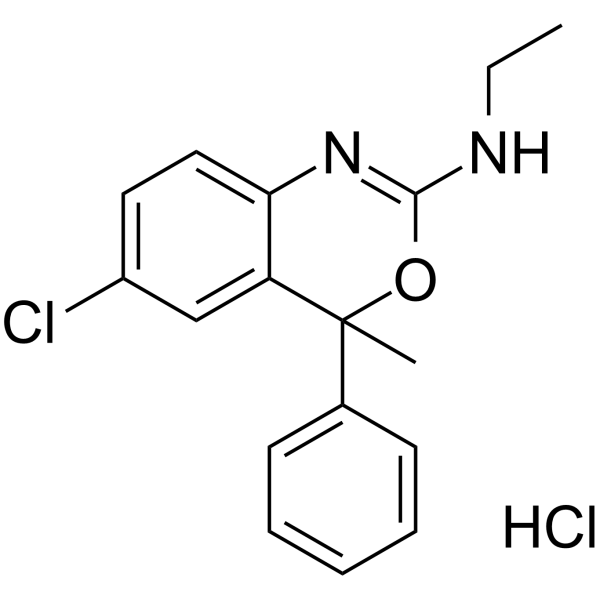
Etifoxine hydrochloride, a non-benzodiazepine GABAergic compound, is a positive allosteric modulator of α1β2γ2 and α1β3γ2 subunit-containing GABAA receptors. Etifoxine hydrochloride reveals anxiolytic and anticonvulsant properties in rodents.
For research use only. We do not sell to patients.
- Purity : 99.83%
- CAS No.: 56776-32-0
- Formula: C17H18Cl2N2O
- Molecular Weight:337.24
-
Storage:
4°C, sealed storage, away from moisture
* In solvent : -80°C, 6 months; -20°C, 1 month (sealed storage, away from moisture)

To place orders, for customer services and technical support, please contact: MedChemExpress USA
Tel: 609-228-6898 E-mail: [email protected] [email protected]


-
 Biological Activity
-
Chemical Information
-
Solvent & Solubility
- Purity & Documentation
- References
-
 Help & FAQs


-
HY-B0007
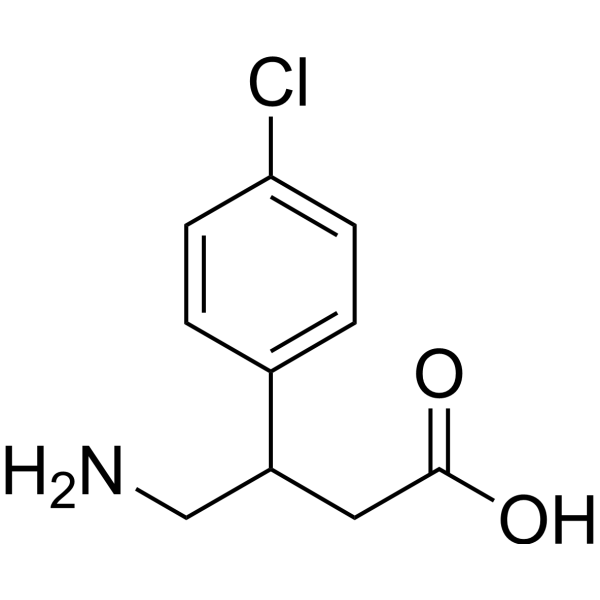
Baclofen -
HY-103531
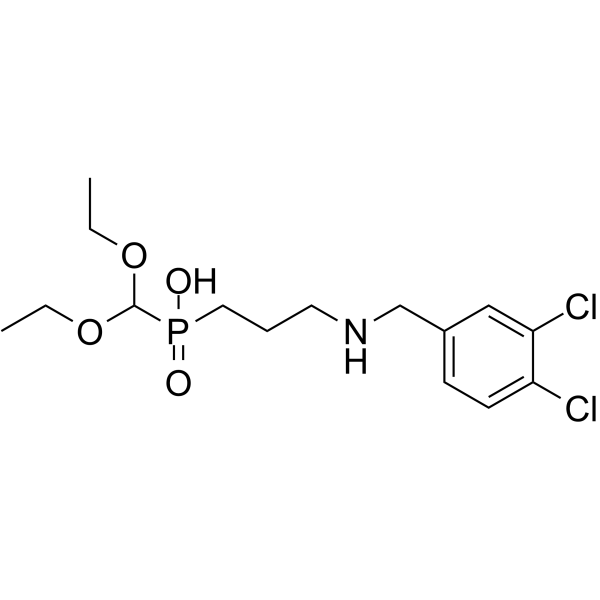
CGP52432 -
HY-B0799
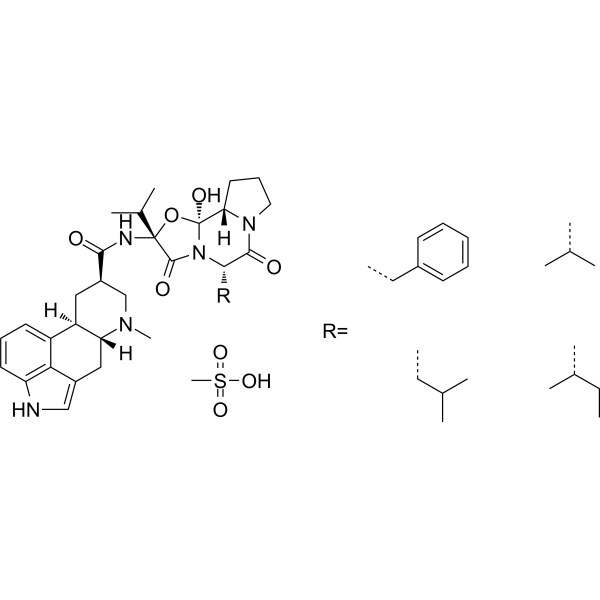
Dihydroergotoxine mesylate -
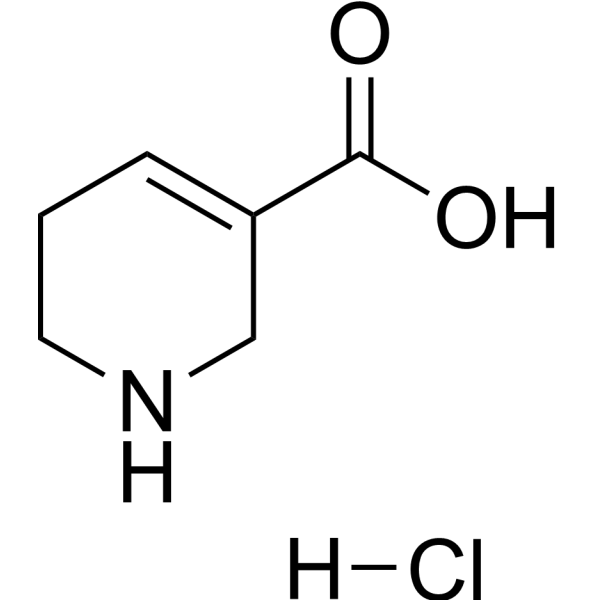
HY-100809
Guvacine hydrochloride -
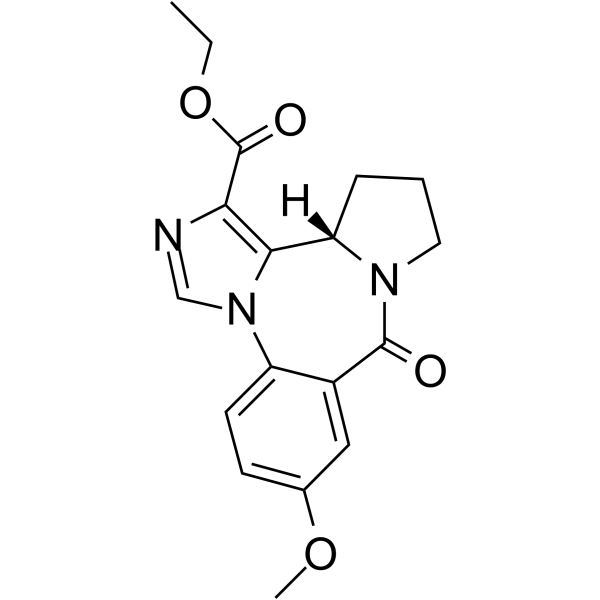
HY-14426
L-655708 -
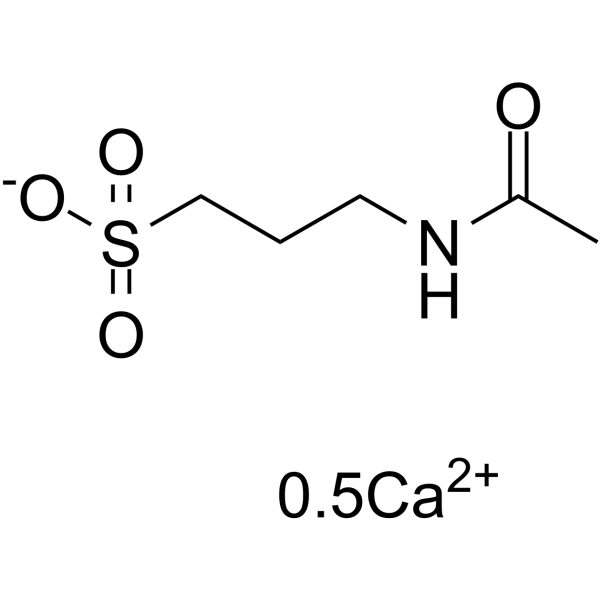
HY-17030
Acamprosate calcium -

HY-16579R
Etifoxine hydrochloride (Standard) -
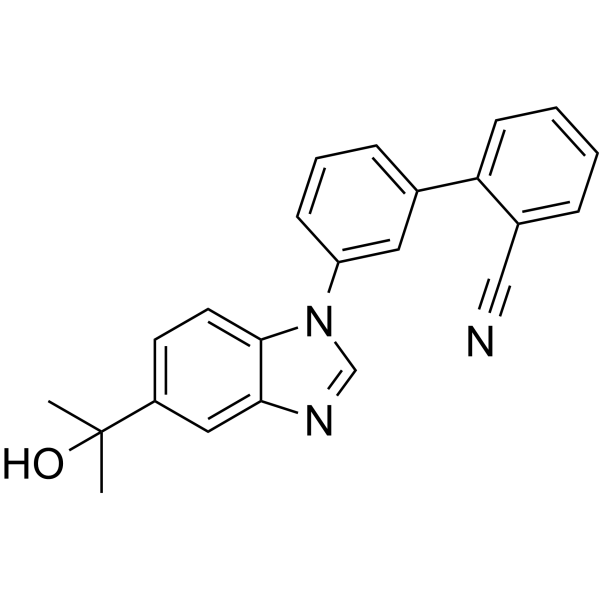
HY-11048
NS11394 -
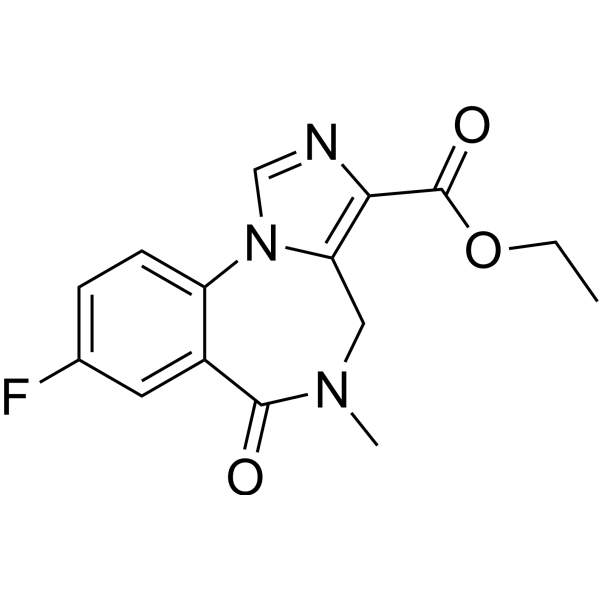
HY-B0009
Flumazenil -
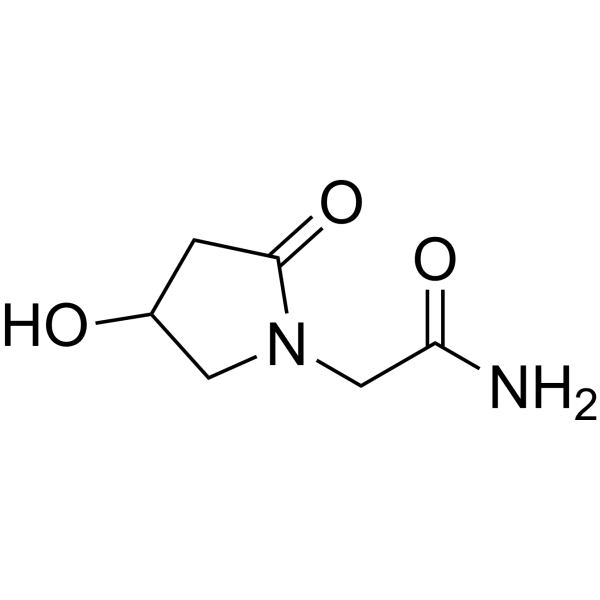
HY-B1715
Oxiracetam -
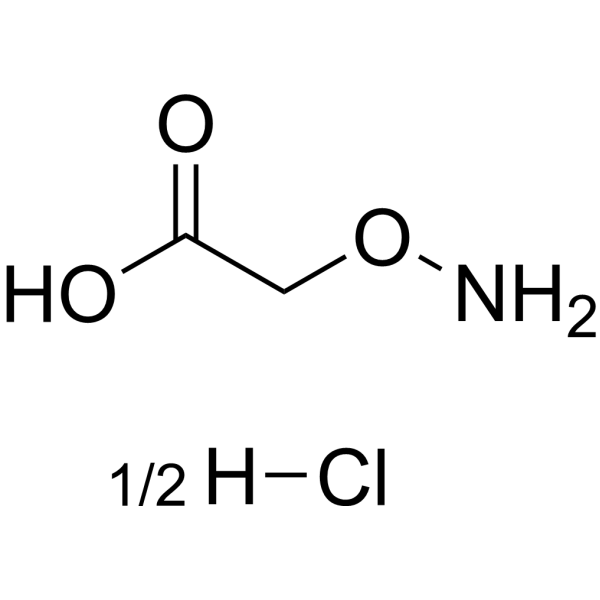
HY-107994
Aminooxyacetic acid hemihydrochloride
Publications Citing Use of MedChemExpress (MCE) Etifoxine hydrochloride
More

Biological Activity
Description
In Vitro
Etifoxine (EFX), at concentrations ranging from 10 to 300 μM (higher concentrations limited its solubility), produces a dose-dependent increase in the [3H]muscimol binding at equilibrium, to 155±2% of its control value at 300 μM EFX[1].
MedChemExpress (MCE) has not independently confirmed the accuracy of these methods. They are for reference only.
In Vivo
Etifoxine (3.125-50 mg/kg) exhibits more pronounced anxiolytic and anticonvulsant effects in the BALB/cByJ mice compared to the C57BL/6J mice[3].
MedChemExpress (MCE) has not independently confirmed the accuracy of these methods. They are for reference only.
-
Animal Model:Six-week old BALB/cByJ and C57BL/6J mice (20-25 g)[3].
-
Dosage:3.125-50 mg/kg.
-
Administration:Intraperitoneal inhection.
-
Result:Significantly increased the amount of time spent on the open arms at the 12.5 mg/kg dose when compared to vehicle (p = 0.009) in BALB/cByJ mice but produced no effect in C57B/6J mice.
BALB/cByJ mice compared with C57BL/6J mice exhibited significantly (p < 0.012) lower plasma levels of the compound at 15 and 30 min.


Chemical Information
-
CAS No. 56776-32-0
-
Appearance Solid
-
Molecular Weight 337.24
-
Formula C17H18Cl2N2O
-
Color White to off-white
-
SMILES
ClC1=CC=C2C(C(C3=CC=CC=C3)(C)OC(NCC)=N2)=C1.Cl
-
Synonyms
HOE 36-801 hydrochloride
-
Shipping
Room temperature in continental US; may vary elsewhere.
-
Storage
4°C, sealed storage, away from moisture
* In solvent : -80°C, 6 months; -20°C, 1 month (sealed storage, away from moisture)


Publications (3)
-
Journal Impact Factor
-
Most Recent
-
Front Mol Neurosci
2022 May 24:15:850904. PMID: 35686060 -
Psychopharmacology (Berl)
TSPO activation ameliorates maternal immune activation induced PV interneuron deficits via BDNF/TrkB signaling. [Abstract]2025 Jun;242(6):1303-1319. PMID: 39621042 -


Solvent & Solubility
In Vitro:
DMSO : 50 mg/mL (148.26 mM; Need ultrasonic; Hygroscopic DMSO has a significant impact on the solubility of product, please use newly opened DMSO)
H2O : 5 mg/mL (14.83 mM; Need ultrasonic)
Please refer to the solubility information to select the appropriate solvent. Once prepared, please aliquot and store the solution to prevent product inactivation from repeated freeze-thaw cycles.
Storage method and period of stock solution: -80°C, 6 months; -20°C, 1 month (sealed storage, away from moisture). When stored at -80°C, please use it within 6 months. When stored at -20°C, please use it within 1 month.
* Note: If you choose water as the stock solution, please dilute it to the working solution, then filter and sterilize it with a 0.22 μm filter before use.
Please refer to the solubility information to select the appropriate solvent. Once prepared, please aliquot and store the solution to prevent product inactivation from repeated freeze-thaw cycles.
Storage method and period of stock solution: -80°C, 6 months; -20°C, 1 month (sealed storage, away from moisture). When stored at -80°C, please use it within 6 months. When stored at -20°C, please use it within 1 month.
* Note: If you choose water as the stock solution, please dilute it to the working solution, then filter and sterilize it with a 0.22 μm filter before use.
Concentration (start) × Volume (start) = Concentration (final) × Volume (final)
In Vivo:
Select the appropriate dissolution method based on your experimental animal and administration route.
- For the following dissolution methods, please ensure to first prepare a clear stock solution using an In Vitro approach and then sequentially add co-solvents:
- To ensure reliable experimental results, the clarified stock solution can be appropriately stored based on storage conditions. As for the working solution for In Vivo experiments, it is recommended to prepare freshly and use it on the same day.
- The percentages shown for the solvents indicate their volumetric ratio in the final prepared solution. If precipitation or phase separation occurs during preparation, heat and/or sonication can be used to aid dissolution.
Add each solvent one by one: 10% DMSO 40% PEG300 5% Tween-80 45% Saline
Solubility: ≥ 2.5 mg/mL (7.41 mM); Clear solution
This protocol yields a clear solution of ≥ 2.5 mg/mL (saturation unknown).
Taking 1 mL working solution as an example, add 100 μL DMSO stock solution (25.0 mg/mL) to 400 μL PEG300, and mix evenly; then add 50 μL Tween-80 and mix evenly; then add 450 μL Saline to adjust the volume to 1 mL.
Preparation of Saline: Dissolve 0.9 g sodium chloride in ddH₂O and dilute to 100 mL to obtain a clear Saline solution.
Add each solvent one by one: 10% DMSO 90% (20% SBE-β-CD in Saline)
Solubility: ≥ 2.5 mg/mL (7.41 mM); Clear solution
This protocol yields a clear solution of ≥ 2.5 mg/mL (saturation unknown).
Taking 1 mL working solution as an example, add 100 μL DMSO stock solution (25.0 mg/mL) to 900 μL 20% SBE-β-CD in Saline, and mix evenly.
Preparation of 20% SBE-β-CD in Saline (4°C, storage for one week): 2 g SBE-β-CD powder is dissolved in 10 mL Saline, completely dissolve until clear.
In Vivo Dissolution Calculator
Please enter the basic information of animal experiments:
-
-
-
-
Recommended: Prepare an additional quantity of animals to account for potential losses during experiments.
Please enter your animal formula composition:
-
%DMSO +
Recommended: Keep the proportion of DMSO in working solution below 2% if your animal is weak.
-
%+
-
+%Tween-80 + +
-
%Saline +
The co-solvents required include: DMSO, . All of co-solvents are available by MedChemExpress (MCE). , Tween 80. All of co-solvents are available by MedChemExpress (MCE).
Working solution concentration: 0.22 mg/mL
Method for preparing stock solution: mg drug dissolved in μL DMSO. Stock solution concentration: mg/mL. * In solvent : -80°C, 6 months; -20°C, 1 month (sealed storage, away from moisture)
1. Take μL DMSO stock solution;
2. Add μL .
μL , mix evenly;
3. Then add μL Tween 80, mix evenly;
4. Then add μL
Please ensure that the stock solution in the first step is dissolved to a clear state, and add co-solvents in sequence. You can use ultrasonic heating (ultrasonic cleaner, recommended frequency 20-40 kHz), vortexing, etc. to assist dissolution.


Purity & Documentation
-
Data Sheet (279 KB)
-
SDS (394 KB)
- English - EN (394 KB)
- Français - FR (394 KB)
- Deutsch - DE (394 KB)
- Norwegian - NO (394 KB)
- Español - ES (394 KB)
- Swedish - SV (394 KB)
- Italian - IT (394 KB)
- Korean - KR (394 KB)
- Portuguese - PT (394 KB)
-
Handling Instructions (2659 KB)
References
[1]. Marc Verleye, et al. Effects of etifoxine on ligand binding to GABA(A) receptors in rodents. Neurosci Res. 2002 Oct;44(2):167-72. [Content Brief]
[2]. Alain Hamon, et al. The modulatory effects of the anxiolytic etifoxine on GABA(A) receptors are mediated by the beta subunit. Neuropharmacology. 2003 Sep;45(3):293-303. [Content Brief]
[3]. Marc Verleye, et al. Differential effects of etifoxine on anxiety-like behaviour and convulsions in BALB/cByJ and C57BL/6J mice: any relation to overexpression of central GABAA receptor beta2 subunits? Eur Neuropsychopharmacol. 2011 Jun;21(6):457-70. [Content Brief]


Complete Stock Solution Preparation Table
Please refer to the solubility information to select the appropriate solvent. Once prepared, please aliquot and store the solution to prevent product inactivation from repeated freeze-thaw cycles.
Storage method and period of stock solution: -80°C, 6 months; -20°C, 1 month (sealed storage, away from moisture). When stored at -80°C, please use it within 6 months. When stored at -20°C, please use it within 1 month.
| Optional Solvent | Concentration Solvent Mass | 1 mg | 5 mg | 10 mg | 25 mg |
|---|---|---|---|---|---|
| H2O / DMSO | 1 mM | 2.9652 mL | 14.8262 mL | 29.6525 mL | 74.1312 mL |
| 5 mM | 0.5930 mL | 2.9652 mL | 5.9305 mL | 14.8262 mL | |
| 10 mM | 0.2965 mL | 1.4826 mL | 2.9652 mL | 7.4131 mL | |
| DMSO | 15 mM | 0.1977 mL | 0.9884 mL | 1.9768 mL | 4.9421 mL |
| 20 mM | 0.1483 mL | 0.7413 mL | 1.4826 mL | 3.7066 mL | |
| 25 mM | 0.1186 mL | 0.5930 mL | 1.1861 mL | 2.9652 mL | |
| 30 mM | 0.0988 mL | 0.4942 mL | 0.9884 mL | 2.4710 mL | |
| 40 mM | 0.0741 mL | 0.3707 mL | 0.7413 mL | 1.8533 mL | |
| 50 mM | 0.0593 mL | 0.2965 mL | 0.5930 mL | 1.4826 mL | |
| 60 mM | 0.0494 mL | 0.2471 mL | 0.4942 mL | 1.2355 mL | |
| 80 mM | 0.0371 mL | 0.1853 mL | 0.3707 mL | 0.9266 mL | |
| 100 mM | 0.0297 mL | 0.1483 mL | 0.2965 mL | 0.7413 mL |
* Note: If you choose water as the stock solution, please dilute it to the working solution, then filter and sterilize it with a 0.22 μm filter before use.


Etifoxine hydrochloride Related Classifications
HY-16579 Related Classifications
 Powered by Bioz