



Picrotoxinin
Based on 4 publication(s) in Google Scholar
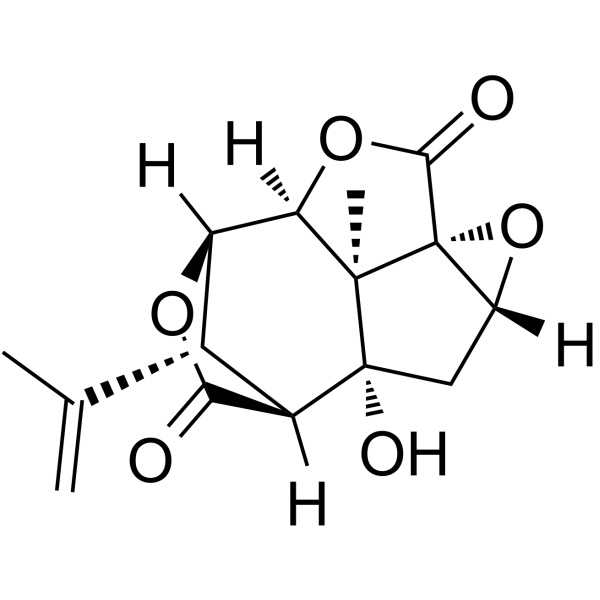
Picrotoxinin, a potent convulsant, is a chloride channel blocker. Picrotoxinin is a noncompetitive GABAA receptor antagonist, which negatively modulates the action of GABA on GABAA receptors. Picrotoxinin inhibits α1β2γ2L GABAA receptor with an IC50 of 1.15 μM.
Para uso exclusivo en investigación. No vendemos a pacientes.
- Pureza : 99.91%
- No. CAS: 17617-45-7
- Fòrmula: C15H16O6
- Peso molecular:292.28
-
Almacenamiento:Powder -20°C, 3 years , 4°C, 2 years ; In solvent -80°C, 6 months , -20°C, 1 month

To place orders, for customer services and technical support, please contact: MedChemExpress USA
Tel: 609-228-6898 E-mail: [email protected] [email protected]


-
 Actividad biológica
-
Chemical Information
-
Solvente y solubilidad
- Pureza y Documentación
- Referencias
-
 Help & FAQs


-
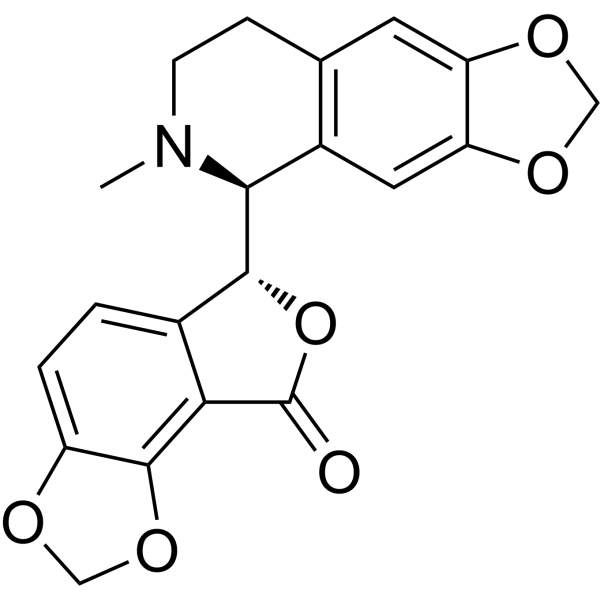
HY-N0219
BicucullineGABAA Receptor Antagonist -
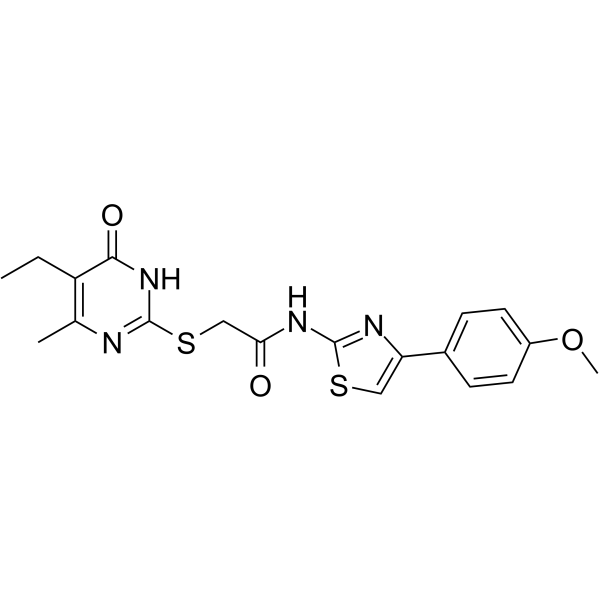
HY-100612
T16Ainh-A01TMEM16A Inhibitor -
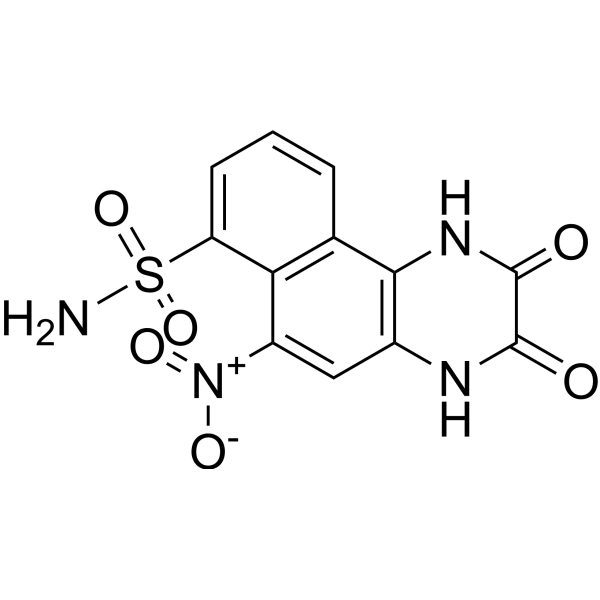
HY-15068
NBQXAMPA Receptor Antagonist -
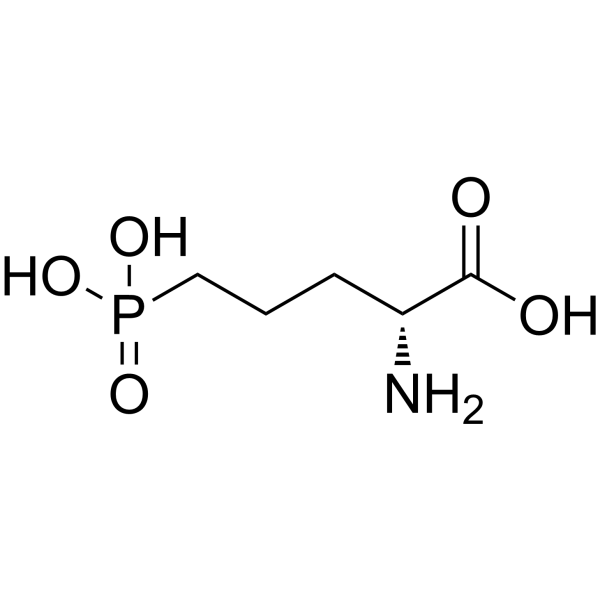
HY-100714A
D-AP5NMDA Antagonist -
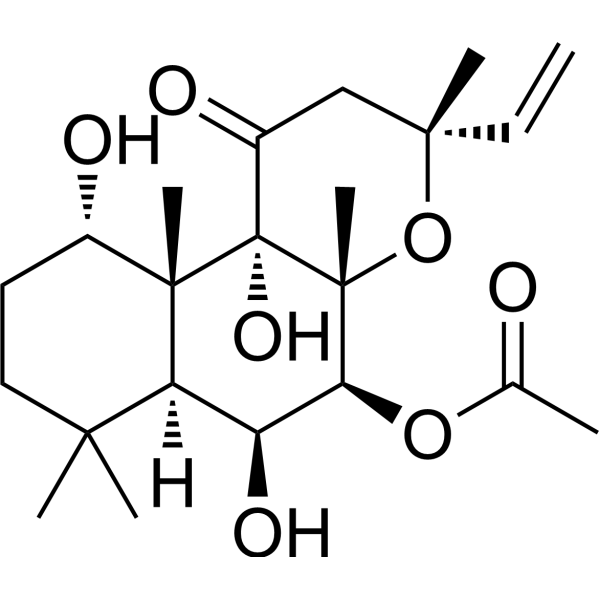
HY-15371
ForskolinAdenylate Cyclase Activator -
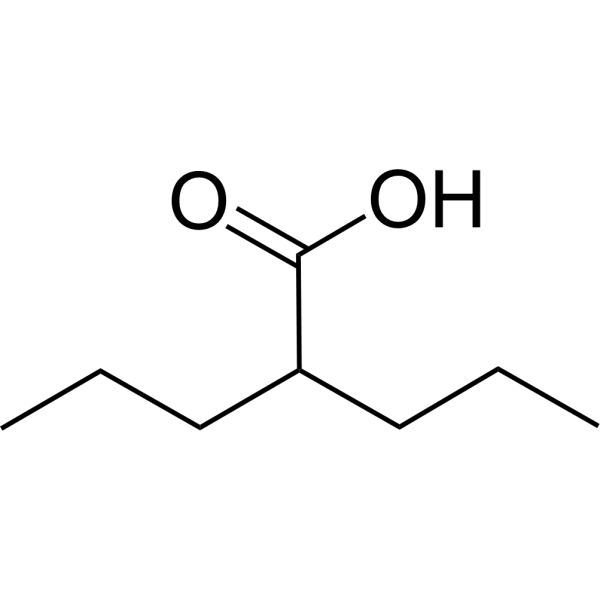
HY-10585
Valproic acidHDAC Inhibitor -
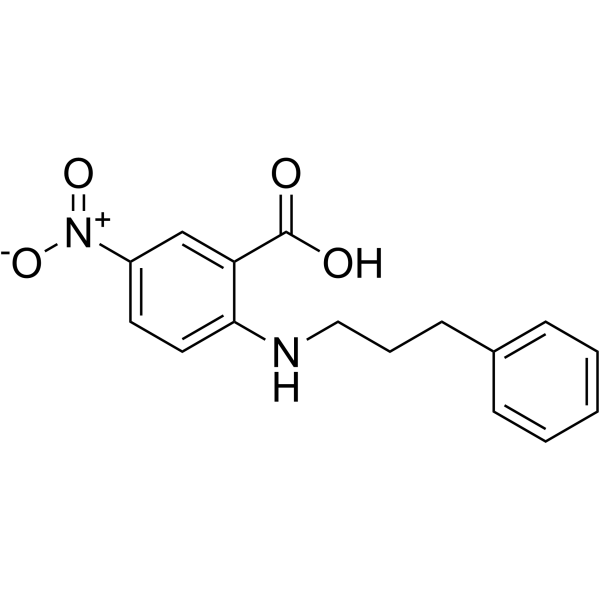
HY-101012
NPPBORCC Blocker -
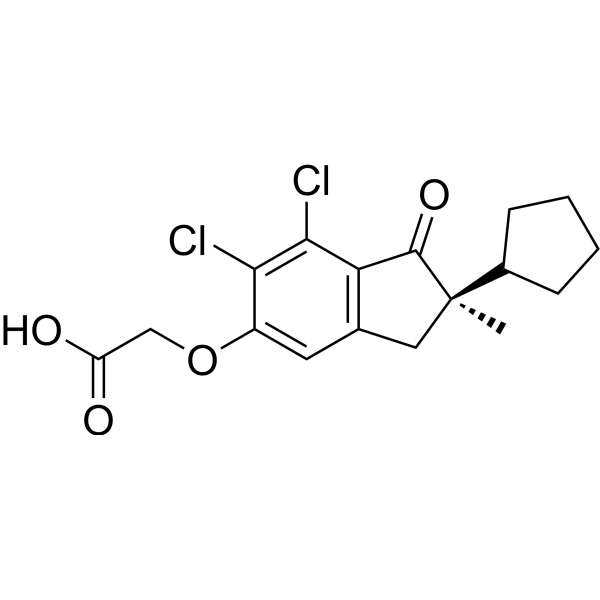
HY-12693
R(+)-MethylindazoneChloride Channel Inhibitor -
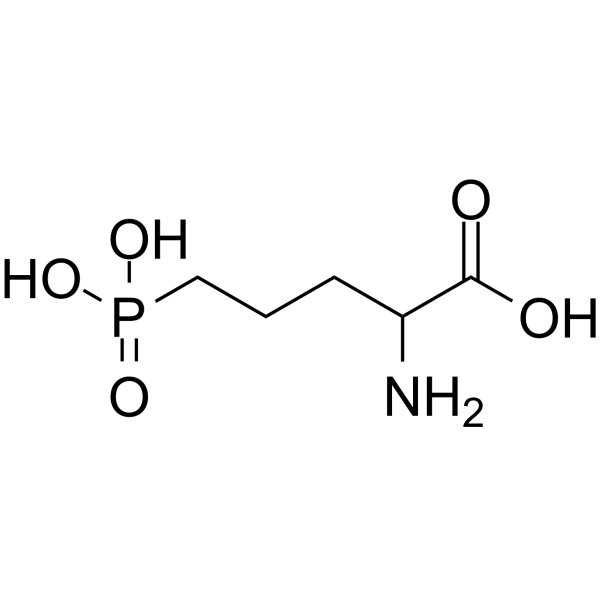
HY-100714
DL-AP5NMDA Receptor Antagonist -
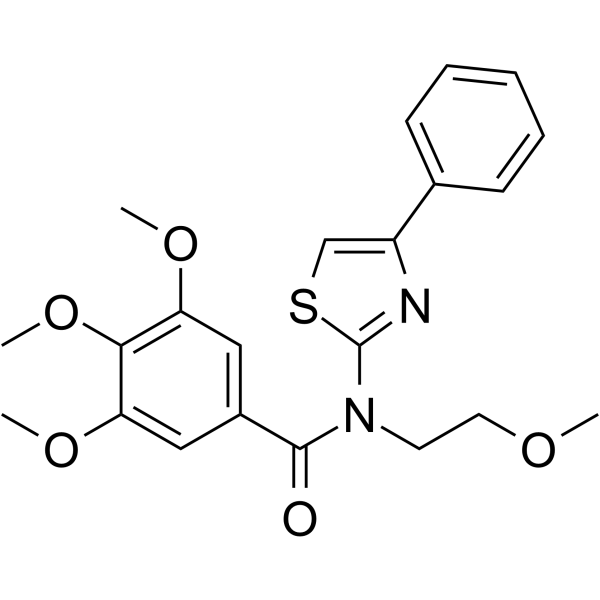
HY-103368
EactTMEM16A Activator -
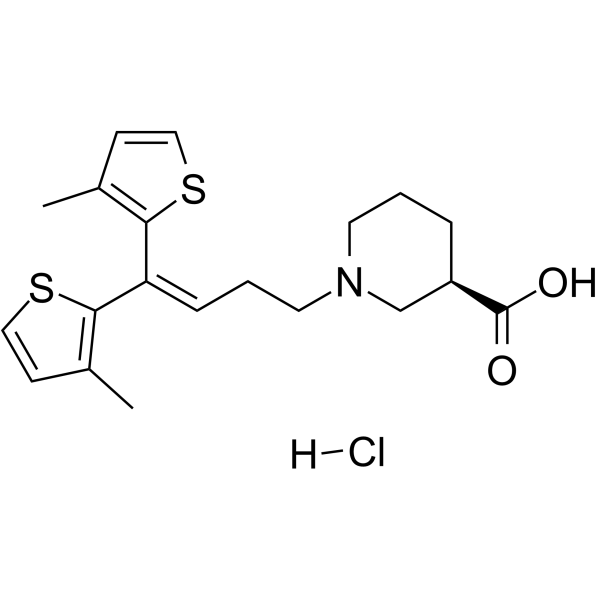
HY-B0696A
Tiagabine hydrochlorideGAT-1 Inhibitor
Publications Citing Use of MedChemExpress (MCE) Picrotoxinin
More Customer Validation & Images

-
Bio/Physico-chemical Assay

-
Bio/Physico-chemical Assay

-
Bio/Physico-chemical Assay


Actividad biológica
Descripciòn
IC50 & Target
IC50: 1.15 μM (GABAA receptor)[1]
Cellular Effect
|
Cell Line

|
Type | Value | Description | References |
|---|---|---|---|---|
| CHO | IC50 |
2.4 μM
Compound: PXN, picrotoxinin
|
Inhibition of rat alpha2 homomeric glycine receptor expressed in CHO cells assessed as inhibition of 300 uM glycine-elicited current by outside patch clamp technique
Inhibition of rat alpha2 homomeric glycine receptor expressed in CHO cells assessed as inhibition of 300 uM glycine-elicited current by outside patch clamp technique
|
[PMID: 17405877] |
In Vitro
Picrotoxinin (0.001 μM-1 mM; 60-90 s) inhibits the action of GABAA receptor and regulates GABAA modulators in the presence of EC5 GABA at α1β2γ2L GABAA receptors[1].
MedChemExpress (MCE) has not independently confirmed the accuracy of these methods. They are for reference only.
-
Cell Line:Xenopus oocytes
-
Concentration:0.001 µM-1 mM
-
Incubation Time:60 and 90 s
-
Result:Dose-dependently inhibited the action of GABAA receptor with an IC50 of 1.15 µM and exhibited the most potent activity compared with bilobalide and ginkgolide B. Inhibited etomidate, propofol, diazepam, thiopentone sodium, loreclezole and allopregnanoloner in the presence of EC5 GABA at α1β2γ2L GABAA receptors with IC50s of 0.55, 0.49, 0.35-0.36, 0.50, 0.14 and 0.44 μM, respectively.


Chemical Information
-
No. CAS 17617-45-7
-
Appearance Solid
-
Peso molecular 292.28
-
Fòrmula C15H16O6
-
Color White to off-white
-
SMILES
O=C1[C@]([C@@H]2C(C)=C)([H])[C@]3(O)C[C@]4([H])[C@](O4)(C(O5)=O)[C@]3(C)[C@@]5([H])[C@]2([H])O1
-
Structure Classification
-
Initial Source
-
Envío
Room temperature in continental US; may vary elsewhere.
-
Almacenamiento
Powder -20°C 3 years 4°C 2 years In solvent -80°C 6 months -20°C 1 month


Publications (4)
-
Journal Impact Factor
-
Most Recent
-
Cell Death Discov
2020 Sep 17;6(1):87. PMID: 33014431 -
Drug Deliv Transl Res
Leveraging quantum chemical properties in transfer learning for predicting blood-brain barrier permeability of drugs. [Abstract]2025 Oct 29. PMID: 41160380 -
Neuropharmacology
Molecular mechanisms of action determine inhibition of paroxysmal depolarizing shifts by NMDA receptor antagonists in rat cortical neurons. [Abstract]2021 Feb 15:184:108443. PMID: 33345828
Picrotoxinin purchased from MedChemExpress. Usage Cited in: Neuropharmacology. 2021 Feb 15:184:108443. [Abstract]
Picrotoxin (100 μM; 15 min of perfusion with ACSF) demonstrated a regular-spiking firing pattern for the pyramidal cells in mPFC slices.
-
J Neurochem
Somatostatin interneurons inhibit excitatory transmission mediated by astrocytic GABAB and presynaptic GABAB and adenosine A1 receptors in the hippocampus. [Abstract]2022 Nov;163(4):310-326. PMID: 35775994
Picrotoxinin purchased from MedChemExpress. Usage Cited in: J Neurochem. 2022 Nov;163(4):310-326. [Abstract]
Picrotoxin (100 μM) could completely block light-induced outward current in the CA1 pyramidal neuron.
Picrotoxinin purchased from MedChemExpress. Usage Cited in: J Neurochem. 2022 Nov;163(4):310-326. [Abstract]
Picrotoxin (100 μM) observed that photo-stimulation of SOM-INS at 1 Hz of 5 pulses (5 ms duration) transiently depressed the eEPSC amplitude in CA1 pyramidal neurons.


Solvente y solubilidad
In Vitro:
DMSO : 100 mg/mL (342.14 mM; Need ultrasonic; Hygroscopic DMSO has a significant impact on the solubility of product, please use newly opened DMSO)
Please refer to the solubility information to select the appropriate solvent. Once prepared, please aliquot and store the solution to prevent product inactivation from repeated freeze-thaw cycles.
Storage method and period of stock solution: -80°C, 6 months; -20°C, 1 month. When stored at -80°C, please use it within 6 months. When stored at -20°C, please use it within 1 month.
Please refer to the solubility information to select the appropriate solvent. Once prepared, please aliquot and store the solution to prevent product inactivation from repeated freeze-thaw cycles.
Storage method and period of stock solution: -80°C, 6 months; -20°C, 1 month. When stored at -80°C, please use it within 6 months. When stored at -20°C, please use it within 1 month.
Concentration (start) × Volume (start) = Concentration (final) × Volume (final)
In Vivo:
Select the appropriate dissolution method based on your experimental animal and administration route.
- For the following dissolution methods, please ensure to first prepare a clear stock solution using an In Vitro approach and then sequentially add co-solvents:
- To ensure reliable experimental results, the clarified stock solution can be appropriately stored based on storage conditions. As for the working solution for In Vivo experiments, it is recommended to prepare freshly and use it on the same day.
- The percentages shown for the solvents indicate their volumetric ratio in the final prepared solution. If precipitation or phase separation occurs during preparation, heat and/or sonication can be used to aid dissolution.
Add each solvent one by one: 10% DMSO 40% PEG300 5% Tween-80 45% Saline
Solubility: ≥ 2.5 mg/mL (8.55 mM); Clear solution
This protocol yields a clear solution of ≥ 2.5 mg/mL (saturation unknown).
Taking 1 mL working solution as an example, add 100 μL DMSO stock solution (25.0 mg/mL) to 400 μL PEG300, and mix evenly; then add 50 μL Tween-80 and mix evenly; then add 450 μL Saline to adjust the volume to 1 mL.
Preparation of Saline: Dissolve 0.9 g sodium chloride in ddH₂O and dilute to 100 mL to obtain a clear Saline solution.
Add each solvent one by one: 10% DMSO 90% (20% SBE-β-CD in Saline)
Solubility: ≥ 2.5 mg/mL (8.55 mM); Clear solution
This protocol yields a clear solution of ≥ 2.5 mg/mL (saturation unknown).
Taking 1 mL working solution as an example, add 100 μL DMSO stock solution (25.0 mg/mL) to 900 μL 20% SBE-β-CD in Saline, and mix evenly.
Preparation of 20% SBE-β-CD in Saline (4°C, storage for one week): 2 g SBE-β-CD powder is dissolved in 10 mL Saline, completely dissolve until clear.
In Vivo Dissolution Calculator
Please enter the basic information of animal experiments:
-
-
-
-
Recommended: Prepare an additional quantity of animals to account for potential losses during experiments.
Please enter your animal formula composition:
-
%DMSO +
Recommended: Keep the proportion of DMSO in working solution below 2% if your animal is weak.
-
%+
-
+%Tween-80 + +
-
%Saline +
The co-solvents required include: DMSO, . All of co-solvents are available by MedChemExpress (MCE). , Tween 80. All of co-solvents are available by MedChemExpress (MCE).
Working solution concentration: 0.22 mg/mL
Method for preparing stock solution: mg drug dissolved in μL DMSO. Stock solution concentration: mg/mL.
1. Take μL DMSO stock solution;
2. Add μL .
μL , mix evenly;
3. Then add μL Tween 80, mix evenly;
4. Then add μL
Please ensure that the stock solution in the first step is dissolved to a clear state, and add co-solvents in sequence. You can use ultrasonic heating (ultrasonic cleaner, recommended frequency 20-40 kHz), vortexing, etc. to assist dissolution.


Pureza y Documentación
-
Ficha de datos (285 KB)
-
SDS (480 KB)
- English - EN (480 KB)
- Français - FR (480 KB)
- Deutsch - DE (480 KB)
- Norwegian - NO (480 KB)
- Español - ES (480 KB)
- Swedish - SV (480 KB)
- Italian - IT (480 KB)
- Korean - KR (480 KB)
- Portuguese - PT (480 KB)
-
Instrucciones de manejo (2659 KB)
Referencias


Complete Stock Solution Preparation Table
Please refer to the solubility information to select the appropriate solvent. Once prepared, please aliquot and store the solution to prevent product inactivation from repeated freeze-thaw cycles.
Storage method and period of stock solution: -80°C, 6 months; -20°C, 1 month. When stored at -80°C, please use it within 6 months. When stored at -20°C, please use it within 1 month.
| Optional Solvent | Concentration Solvent Mass | 1 mg | 5 mg | 10 mg | 25 mg |
|---|---|---|---|---|---|
| DMSO | 1 mM | 3.4214 mL | 17.1069 mL | 34.2138 mL | 85.5344 mL |
| 5 mM | 0.6843 mL | 3.4214 mL | 6.8428 mL | 17.1069 mL | |
| 10 mM | 0.3421 mL | 1.7107 mL | 3.4214 mL | 8.5534 mL | |
| 15 mM | 0.2281 mL | 1.1405 mL | 2.2809 mL | 5.7023 mL | |
| 20 mM | 0.1711 mL | 0.8553 mL | 1.7107 mL | 4.2767 mL | |
| 25 mM | 0.1369 mL | 0.6843 mL | 1.3686 mL | 3.4214 mL | |
| 30 mM | 0.1140 mL | 0.5702 mL | 1.1405 mL | 2.8511 mL | |
| 40 mM | 0.0855 mL | 0.4277 mL | 0.8553 mL | 2.1384 mL | |
| 50 mM | 0.0684 mL | 0.3421 mL | 0.6843 mL | 1.7107 mL | |
| 60 mM | 0.0570 mL | 0.2851 mL | 0.5702 mL | 1.4256 mL | |
| 80 mM | 0.0428 mL | 0.2138 mL | 0.4277 mL | 1.0692 mL | |
| 100 mM | 0.0342 mL | 0.1711 mL | 0.3421 mL | 0.8553 mL |


Picrotoxinin Related Classifications
HY-B1494 Related Classifications
 Powered by Bioz