1. Search Result
Search Result
Results for "

Glucagon+Receptor

" in MedChemExpress (MCE) Product Catalog:

44

Inhibitors & Agonists

1

Screening Libraries

13

Peptides

3

Inhibitory Antibodies

8

Recombinant Proteins

Cat. No. Product Name Target Research Areas Chemical Structure
  • HY-P3506
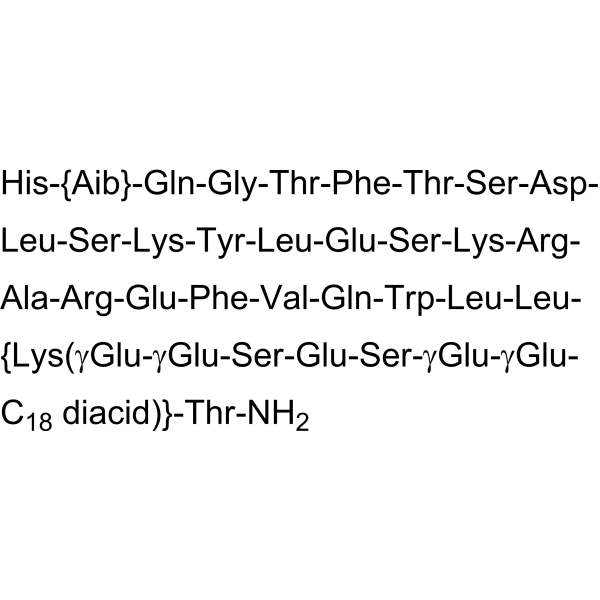
    Retatrutide
    3 Publications Verification

    LY3437943

    GCGR GLP Receptor Metabolic Disease
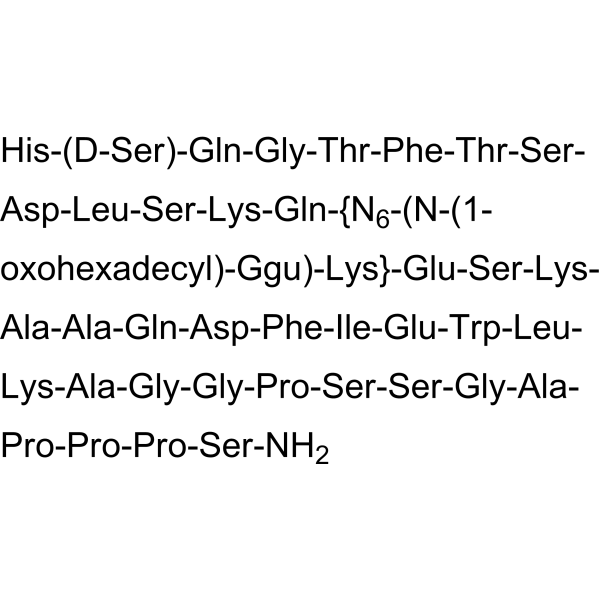
    Retatrutide (LY3437943) is a triple agonist peptide of the glucagon receptor (GCGR), glucosedependent insulinotropic polypeptide receptor (GIPR), and glucagon-like peptide-1 receptor (GLP-1R). Retatrutide binds human GCGR, GIPR, and GLP-1R with EC50 values of 5.79, 0.0643 and 0.775 nM, respectively. Retatrutide can be used for the research of obesity .
    Retatrutide
  • HY-P3375

    IBI-362; LY-3305677; OXM-3

    GCGR GLP Receptor Metabolic Disease
    Mazdutide (IBI-362; LY-3305677) is a long-acting synthetic oxyntomodulin analog. Mazdutide is also a co-agonist of glucagon-like peptide (GLP-1R) and glucagon receptor (GCGR). Mazdutide binds human and mouse GCGR (Ki: 17.7 nM and 15.9 nM, respectively) and GLP-1R (Ki: 28.6 nM and 25.1 nM, respectively) and stimulates insulin secretion from mouse islets (EC50: 5.2 nM). Mazdutide is used in studies of obesity and type 2 diabetes (T2D) .
    Mazdutide
  • HY-50663
    MK 0893
    Maximum Cited Publications
    6 Publications Verification

    GCGR Metabolic Disease
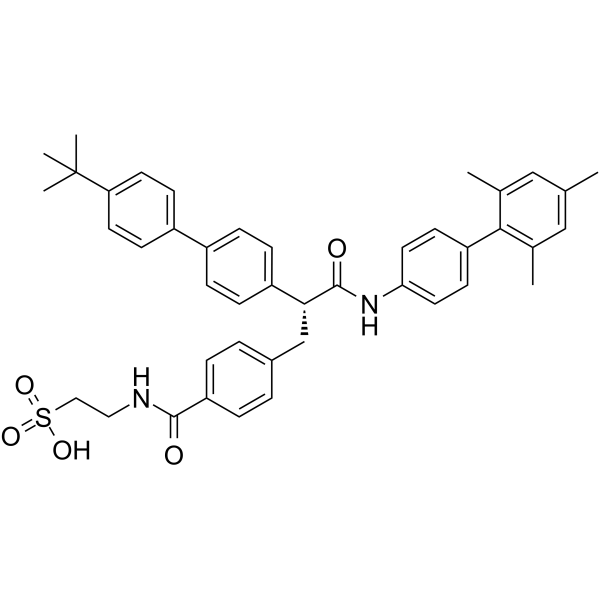
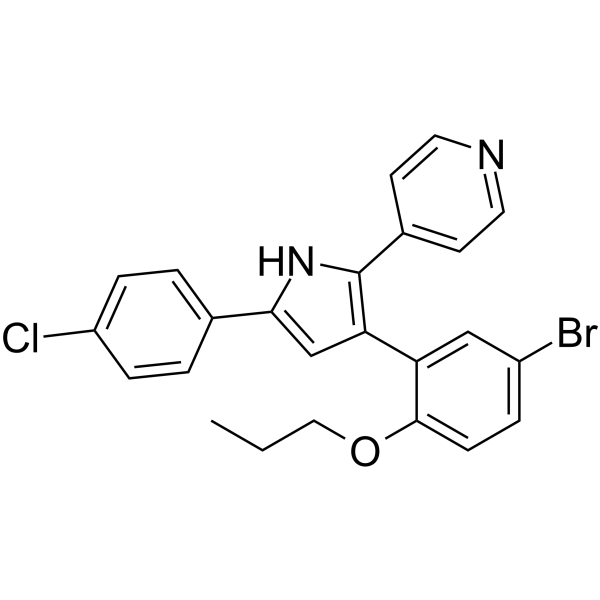
    MK 0893 is a potent and selective glucagon receptor antagonist with an IC50 of 6.6 nM.
    MK 0893
  • HY-19904
    Adomeglivant
    4 Publications Verification

    LY2409021

    GCGR Metabolic Disease
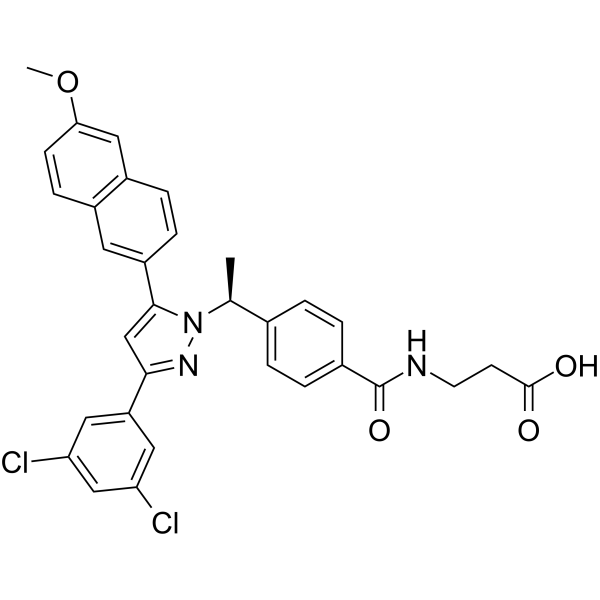
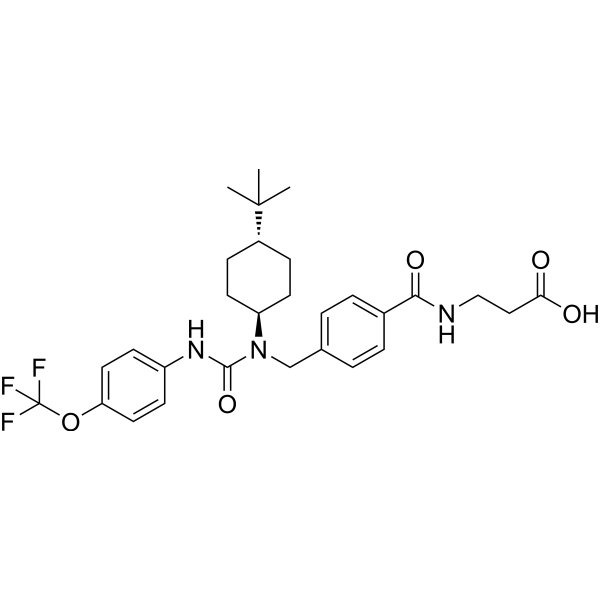
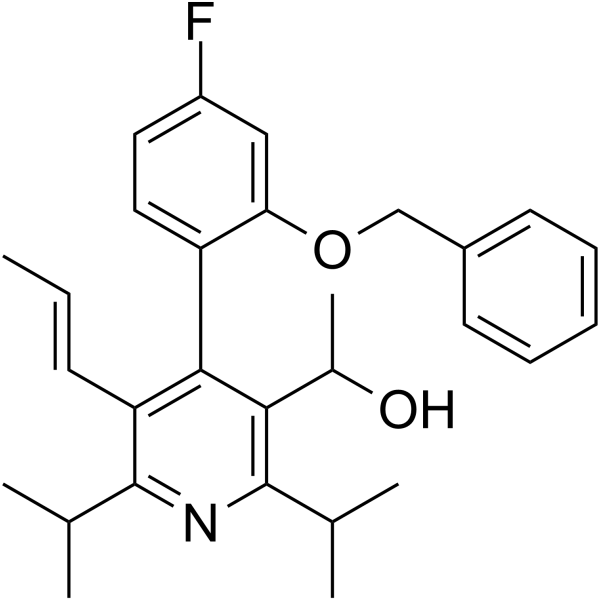
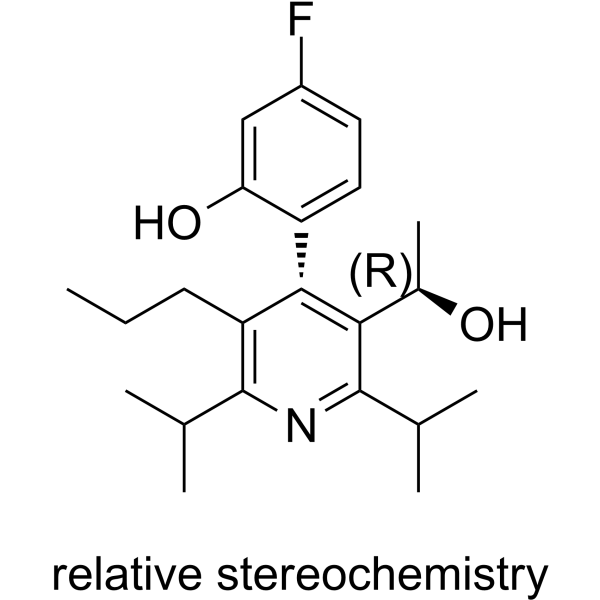
    Adomeglivant (LY2409021) is a potent, selective glucagon receptor (GluR) allosteric antagonist. Adomeglivant is widely used in the research for type 2 diabetes mellitus .
    Adomeglivant
  • HY-P3506A
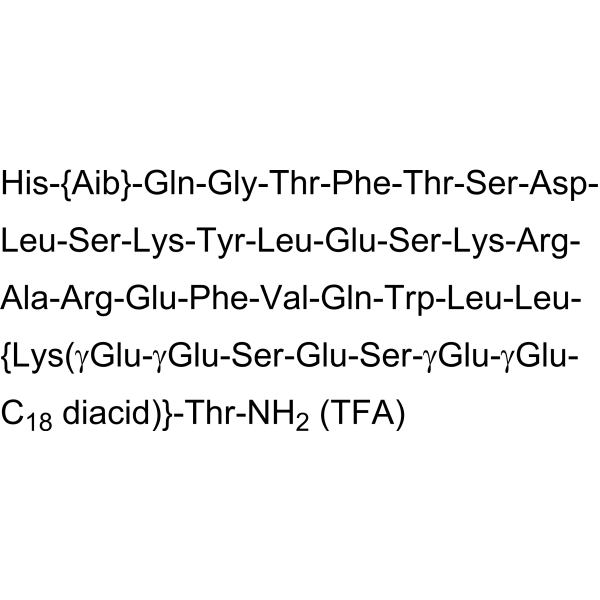
    Retatrutide TFA
    3 Publications Verification

    LY3437943 TFA

    GLP Receptor GCGR Metabolic Disease
    Retatrutide (LY3437943) TFA is a triple agonist peptide of the glucagon receptor (GCGR), glucosedependent insulinotropic polypeptide receptor (GIPR), and glucagon-like peptide-1 receptor (GLP-1R). Retatrutide TFA binds human GCGR, GIPR, and GLP-1R with EC50 values of 5.79, 0.0643 and 0.775 nM, respectively. Retatrutide TFA can be used for the research of obesity .
    Retatrutide TFA
  • HY-19947
    PF-06291874
    1 Publications Verification

    Glucagon receptor antagonists-4

    GCGR Metabolic Disease
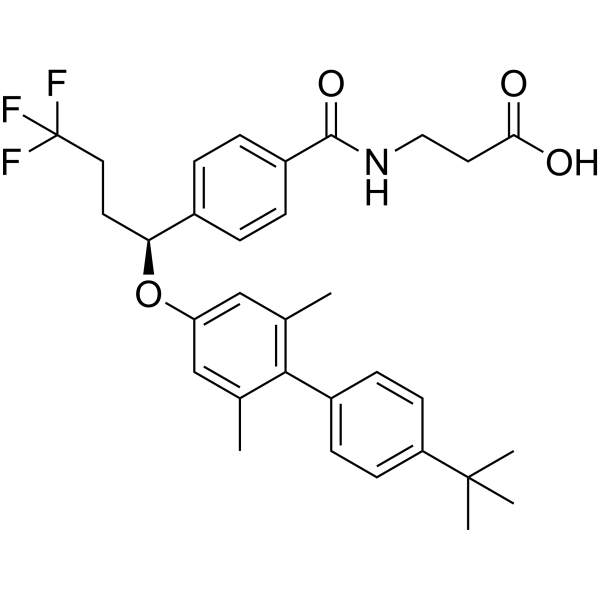
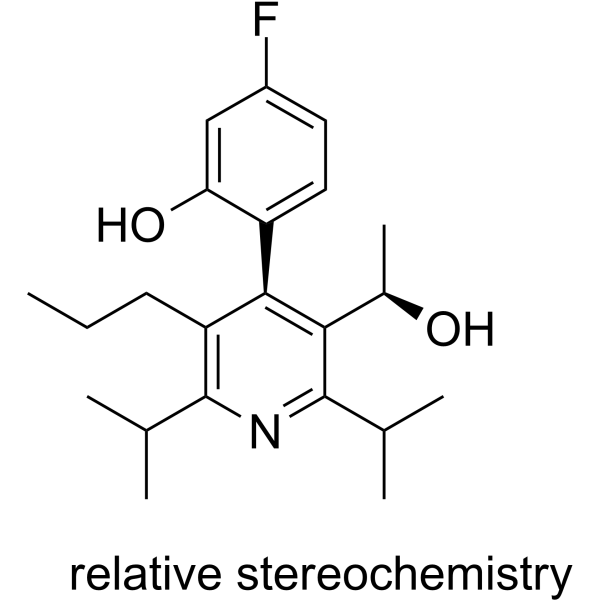
    PF-06291874 is a highly potent, non-peptide and orally active glucagon receptor antagonist. PF-06291874 is under the study for type 2 diabetes mellitus (T2DM) .
    PF-06291874
  • HY-12525

    GCGR Metabolic Disease
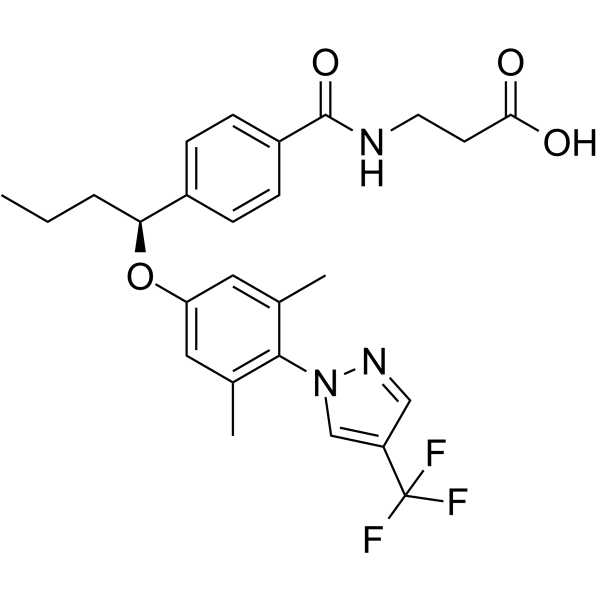
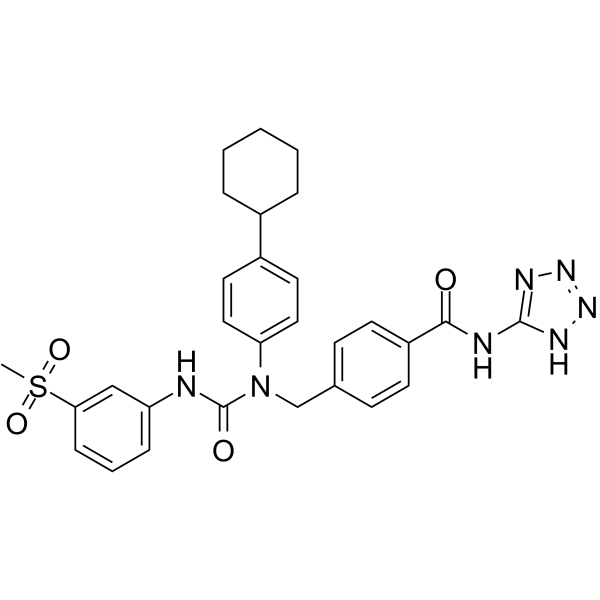
    LGD-6972 is a selective and orally active glucagon receptor antagonist. LGD-6972 has the potential for type 2 diabetes research .
    LGD-6972
  • HY-P99357

    REGN1193; Anti-GCGR Reference Antibody (crotedumab)

    GCGR Metabolic Disease
    Crotedumab (REGN1193) is a fully human IgG4 monoclonal antibody that binds and inhibits glucagon receptor (GCGR), with a KD of 0.1 nM. Crotedumab can be used for the research of diabetes .
    Crotedumab
  • HY-124622

    GCGR Metabolic Disease
    NNC-0640 is an effective negative allosteric modulator (NAM) of the human glucagon receptor (GCGR), with an IC50 value of 69.2 nM. NNC-0640 holds potential for research in the field of diabetes .
    NNC-0640
  • HY-P3375A

    IBI-362 TFA; LY-3305677 TFA; OXM-3 TFA

    GCGR GLP Receptor Metabolic Disease
    Mazdutide (IBI-362; LY-3305677) TFA is a long-acting synthetic oxyntomodulin analog. Mazdutide is also a co-agonist of glucagon-like peptide (GLP-1R) and glucagon receptor (GCGR). Mazdutide TFA binds human and mouse GCGR (Ki: 17.7 nM and 15.9 nM, respectively) and GLP-1R (Ki: 28.6 nM and 25.1 nM, respectively) and stimulates insulin secretion from mouse islets (EC50: 5.2 nM). Mazdutide TFA is used in studies of obesity and type 2 diabetes (T2D) .
    Mazdutide TFA
  • HY-103547
    L-168049
    1 Publications Verification

    GCGR Metabolic Disease
    L-168049 is a potent, selective, orally active and non-competitive glucagon receptor antagonist with IC50s of 3.7 nM, 63 nM, and 60 nM for human, murine, and canine glucagon receptors, respectively .
    L-168049
  • HY-50675

    GCGR Metabolic Disease
    GRA Ex-25 is an inhibitor of glucagon receptor, with IC50 of 56 and 55 nM for rat and human glucagon receptors, respectively.
    GRA Ex-25
  • HY-P99383

    REMD-477; AMG-477

    GCGR Metabolic Disease
    Volagidemab is an antagonistic glucagon receptor (GCGR) monoclonal antibody (mAb). Volagidemab can be used in the research of type 1 diabetes (T1D) .
    Volagidemab
  • HY-50159

    GCGR Metabolic Disease
    Glucagon receptor antagonist-3 is a highly potent glucagon receptor antagonist.
    Glucagon receptor antagonist-3
  • HY-148844

    GCGR Metabolic Disease
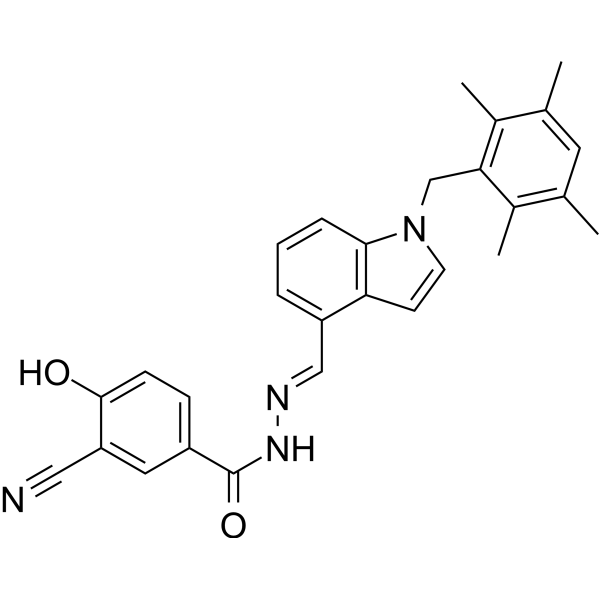
    GCGR antagonist 2, a Furan-2-carbohydrazide, is an orally active glucagon receptor antagonist. GCGR antagonist 2 binds to hGluR with an Kd value of 2.3 nM, and inhibits rat receptor with an IC50 value of 0.43 nM. GCGR antagonist 2 inhibits glucagon-stimulated glycogenolysis .
    GCGR antagonist 2
  • HY-P10018

    SAR425899

    GLP Receptor GCGR Metabolic Disease
    Bamadutide (SAR425899) is a potent dual glucagon-like peptide-1 receptor/glucagon receptor (GLP-1R/GCGR) agonist. Bamadutide improves post-meal blood glucose control by significantly enhancing β-cell function and slowing down the rate of glucose absorption in the body. Bamadutide can be used for the research of metabolic diseases such as type 2 diabetes .
    Bamadutide
  • HY-10036

    GCGR Metabolic Disease
    Glucagon receptor antagonist-1 is a highly potent glucagon receptor antagonist.
    Glucagon receptor antagonist-1
  • HY-50158

    GCGR Metabolic Disease
    Glucagon receptor antagonist-2 is a highly potent glucagon receptor antagonist.
    Glucagon receptor antagonist-2
  • HY-P10032

    NNC9204-1177

    GCGR GLP Receptor Cytochrome P450 Metabolic Disease
    NN1177 is a long-acting GLP-1/glucagon receptor co-agonist. NN1177 can induce a dose-dependent body weight loss in diet-induced obese (DIO) mice .
    NN1177
  • HY-P1143A

    GCGR Metabolic Disease
    [Des-His1,Glu9]-Glucagon amide TFA is a potent and peptide antagonist of the glucagon receptor, with a pA2 of 7.2. [Des-His1,Glu9]-Glucagon amide TFA is potentially useful in the study of the pathogenesis of diabetes .
    [Des-His1,Glu9]-Glucagon amide TFA
  • HY-128781

    GCGR Metabolic Disease
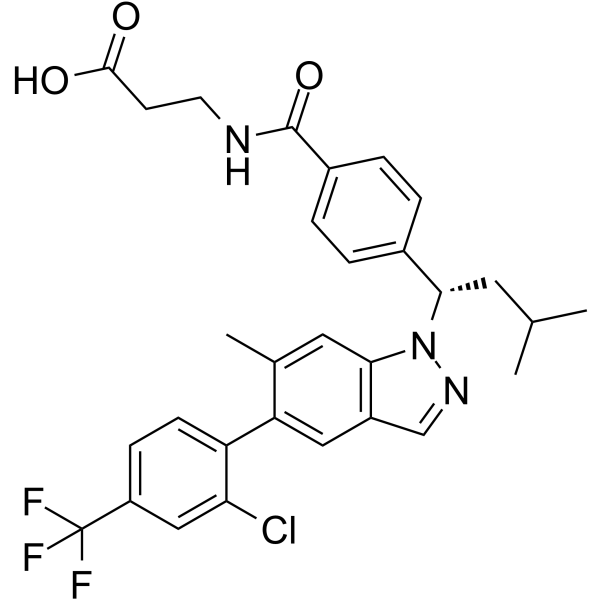
    Glucagon receptor antagonist-5 (compound 13K) is a potent and orally bioavailable indazole-based glucagon receptor antagonist (Ki=32 nM). Glucagon receptor antagonist-5 has potential for the treatment of type 2 diabetes mellitus (T2DM) .
    Glucagon receptor antagonist-5
  • HY-P1143

    GCGR Metabolic Disease
    [Des-His1,Glu9]-Glucagon amide is a potent and peptide antagonist of the glucagon receptor, with a pA2 of 7.2. [Des-His1,Glu9]-Glucagon amide is potentially useful in the study of the pathogenesis of diabetes .
    [Des-His1,Glu9]-Glucagon amide
  • HY-P3506B

    LY3437943 acetate

    GCGR GLP Receptor Metabolic Disease
    Retatrutide (LY3437943) acetate is a triple agonist peptide of the glucagon receptor (GCGR), glucosedependent insulinotropic polypeptide receptor (GIPR), and glucagon-like peptide-1 receptor (GLP-1R). Retatrutide acetate inhibits human GCGR, GIPR, and GLP-1R with EC50 values of 5.79, 0.0643 and 0.775 nM, respectively. Retatrutide acetate can be used for the research of obesity .
    Retatrutide acetate
  • HY-19374

    GCGR Metabolic Disease
    BAY-27-9955 is an orally active non-peptide glucagon receptor antagonist. Bay 27-9955 competitively blocks the interaction of glucagon with the human glucagonreceptor at an IC50 value of 110 nM. BAY-27-9955 can be used for the study of type 2 diabetes .
    BAY-27-9955
  • HY-P10965

    ZT002

    GLP Receptor Metabolic Disease
    Zovaglutide (ZT002) is a long-acting, selective GLP-1 receptor agonist. Zovaglutide enhances albumin binding capacity via dual fatty acid chain modification. Zovaglutide exerts metabolic effects through central and peripheral GLP-1 pathways, thereby promoting satiety, reducing caloric intake and enhancing glucose-dependent insulin secretion, with no activity against GIP or glucagon receptors. Zovaglutide can be used in research on type 2 diabetes or obesity .
    Zovaglutide
  • HY-107129

    GCGR Metabolic Disease
    MK-3577 is an orally effective glucagon receptor (GCGR) antagonist that reduces hepatic glucose production and lowers blood glucose levels by blocking glucagon receptors on target organs, primarily the liver. Pharmacokinetic analysis in domestic cats indicates that MK-3577 reaches peak levels 3 to 4 hours after oral administration, with a half-life of approximately 15 hours. MK-3577 can be used in diabetes research .
    MK-3577
  • HY-118914

    GCGR
    Glucagon receptor antagonist inactive control (Compound 2) is a compound structurally similar to the glucagon receptor (GCGR) antagonist Glucagon receptor antagonist (Compound 1) but lacks antagonistic activity against glucagon receptor (GCGR). Glucagon receptor antagonist inactive control can be used as a negative control to study mechanisms related to glucagon receptor-mediated signaling pathways .
    Glucagon receptor antagonist inactive control
  • HY-116854

    GCGR Metabolic Disease
    NNC 92-1687 is a non-peptide competitive human glucagon receptor antagonist (IC50=20 μM; Ki=9.1 μM). NNC 92-1687 can be used in the research of type 2 diabetes .
    NNC 92-1687
  • HY-128103

    GCGR Adenylate Cyclase Metabolic Disease
    Glucagon receptor antagonist-7 (Compound 1) is an antagonist for hGCGR, that inhibits the binding of 125I-labeled glucagon to the human glucagon receptor (hGCGR) with IC50 of 181 nM. Glucagon receptor antagonist-7 activates glucagon-stimulated adenylyl cyclase with a KDB of 81 nM in CHO cell. Glucagon receptor antagonist-7 inhibits glucagon-mediated glycogenolysis in human hepatocytes, and lowers blood glucose levels .
    Glucagon receptor antagonist-7
  • HY-169707

    GCGR Metabolic Disease
    GCGR antagonist 3 (example 1) is an antagonist of the glucagon receptor (GCGR) and can be used in diabetes research .
    GCGR antagonist 3
  • HY-12525A

    GCGR Metabolic Disease
    LGD-6972 sodium is a selective and orally active glucagon receptor antagonist. LGD-6972 sodium has the potential for type 2 diabetes research .
    LGD-6972 sodium
  • HY-P10327

    GLP Receptor Metabolic Disease
    PP18 is a novel OXM-based dual GLP-1 and glucagon receptor agonist with EC50 values of 0.487 nM target hGLP-1R and 0.188 nM target hGcgR .
    PP18
  • HY-180446

    GCGR Metabolic Disease
    Glucagon receptor antagonist-11 (Compound 14) is a glucagon receptor antagonist with a pIC50 of 6.677. Glucagon receptor antagonist-10 can be used in studies of glucose homeostasis .
    Glucagon receptor antagonist-11
  • HY-180445

    GCGR Metabolic Disease
    Glucagon receptor antagonist-10 (Compound 11) is a glucagon receptor antagonist with a pIC50 of 7.154. Glucagon receptor antagonist-10 can be used in studies of glucose homeostasis .
    Glucagon receptor antagonist-10
  • HY-19904R

    LY2409021 (Standard)

    GCGR Reference Standards Metabolic Disease
    Adomeglivant (Standard) is the analytical standard of Adomeglivant. This product is intended for research and analytical applications. Adomeglivant (LY2409021) is a potent, selective glucagon receptor (GluR) allosteric antagonist. Adomeglivant is widely used in the research for type 2 diabetes mellitus .
    Adomeglivant (Standard)
  • HY-12735

    GCGR Metabolic Disease Endocrinology
    SCH 900822 is a potent and selective glucagon receptor (hGCGR) antagonist that blocks the binding of glucagon to its receptor, thereby reducing hepatic glycogenolysis and gluconeogenesis, thereby lowering blood glucose production. SCH 900822 can be used in the study of type 2 diabetes .
    SCH 900822
  • HY-180444

    GCGR Metabolic Disease
    Glucagon receptor antagonist-9 (compound 13) is a potent glucagon receptor antagonist with a pIC50 of 7.000 .
    Glucagon receptor antagonist-9
  • HY-P10032A

    NNC9204-1177 TFA

    GCGR Cytochrome P450 GLP Receptor Metabolic Disease
    NN1177 (NNC9204-1177) TFA is a long-acting GLP-1/glucagon receptor co-agonist. NN1177 TFA can induce a dose-dependent body weight loss in diet-induced obese (DIO) mice .
    NN1177 TFA
  • HY-P3608

    GCGR Metabolic Disease
    [Des-His1,Glu9] Glucagon is a potent glucagon receptor system peptide antagonist. [Des-His1,Glu9] Glucagon enhances the glucose-stimulated release of insulin from pancreatic islet cells. [Des-His1,Glu9] Glucagon can be used to research diabetes .
    [Des-His1,Glu9] Glucagon
  • HY-177156

    GCGR p38 MAPK Metabolic Disease
    Glucagon receptor antagonist-8 (Compound 1) is a human glucagon receptor and p38 mitogen-activated protein (MAP) kinase antagonist, with IC50s of 0.27 μM and 0.16 μM, respectively .
    Glucagon receptor antagonist-8
  • HY-19904A

    (+/-)-LY2409021

    Endogenous Metabolite Metabolic Disease
    (+/-)-Adomeglivant ((+/-)-LY2409021) is a potent and selective glucagon receptor antagonist with hypoglycemic activity. (+/-)-Adomeglivant is effective in lowering blood sugar levels in both healthy people and people with type 2 diabetes. (+/-)-Adomeglivant is well tolerated by glucagon signaling blockade in patients with type 2 diabetes and significantly reduces fasting and postprandial blood glucose with a concomitant reversible elevation of aminotransferases. Glucagon signaling inhibition by (+/-)-Adomeglivant is a promising potential inhibitory approach for patients with type 2 diabetes and warrants further evaluation of its benefits and risks in longer clinical trials .
    (+/-)-Adomeglivant
  • HY-103547R

    Reference Standards GCGR Metabolic Disease
    L-168049 (Standard) is the analytical standard of L-168049 (HY-103547). This product is intended for research and analytical applications. L-168049 is a potent, selective, orally active and non-competitive glucagon receptor antagonist with IC50s of 3.7 nM, 63 nM, and 60 nM for human, murine, and canine glucagon receptors, respectively .
    L-168049 (Standard)
  • HY-12525B

    GCGR Metabolic Disease
    LGD-6972 ammonium is a selective and orally active glucagon receptor antagonist. LGD-6972 ammonium has the potential for type 2 diabetes research .
    LGD 6972 ammonium
  • HY-P992007

    RN909

    GCGR Metabolic Disease
    PF-06293620 (RN909) is a monoclonal antibody antagonist of the glucagon receptor. PF-06293620 produces dose-dependent, durable lowering of fasting plasma glucose and reduces HbA1c levels. PF-06293620 can be used for the research of type 2 diabetes mellitus .
    PF-06293620

Inquiry Online

Your information is safe with us. * Required Fields.

Salutation


Country or Region *

Applicant Name *


Organization Name *

Department *


Email Address *


Product Name *

Cat. No.


Requested quantity *

Phone Number *


Remarks

Inquiry Online

Inquiry Information

Product Name:
Cat. No.:
Quantity:
MCE Japan Authorized Agent: