Search Result
Results for "
LASPAR
" in MedChemExpress (MCE) Product Catalog:
1
Biochemical Assay Reagents
24
Isotope-Labeled Compounds
| Cat. No. |
Product Name |
Target |
Research Areas |
Chemical Structure |
-
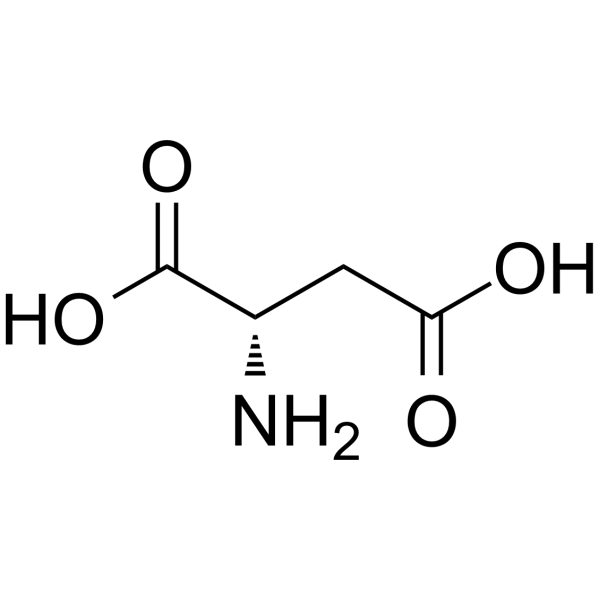
- HY-N0666
-
-
-
- HY-P1923
-
L-Asparaginase
Maximum Cited Publications
15 Publications Verification
L-ASNase
|
Apoptosis
DNA/RNA Synthesis
|
Cancer
|
|
L-Asparaginase (L-ASNase) is a deamidating enzyme that catalyses the hydrolysis of L-asparagine and L-glutamine, and can be used for the research of acute lymphoblastic leukemia. L-Asparaginase depletes L-asparagine from plasma resulting in inhibition of RNA and DNA synthesis with the subsequent blastic cell apoptosis .
|
-
-
- HY-N0667
-
|
(-)-Asparagine; Asn; Asparamide
|
Endogenous Metabolite
Apoptosis
DNA/RNA Synthesis
|
Inflammation/Immunology
|
|
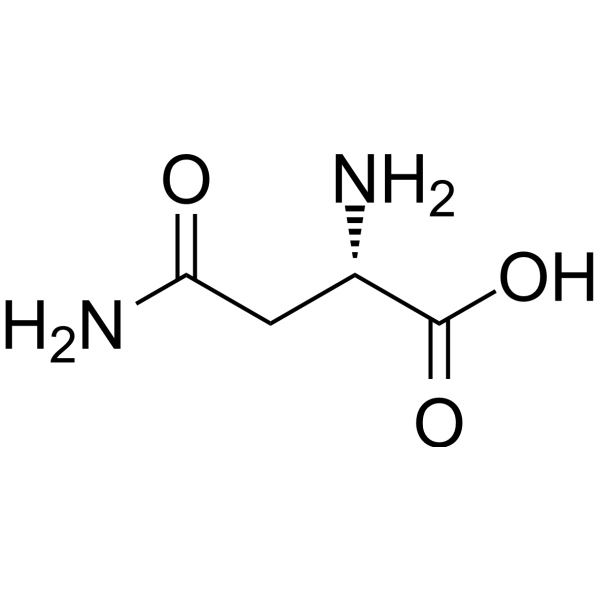
L-Asparagine is an essential amino acid for leukemic cells and a substrate for L-Asparaginase. L-Asparaginase is a potent anti-leukemic enzyme that promotes asparagine (Asn) and glutamine (Gln) depletion and inhibits protein biosynthesis in lymphoblasts. Removal of L-asparagine from plasma by L-Asparaginase results in inhibition of RNA and DNA synthesis and subsequent apoptosis. L-Asparaginase has cell-killing ability in vitro and in vivo, and selectively inhibits the growth of cancer cells with low asparagine synthetase (AASNS) expression. L-Asparagine can be used as a biomarker and sensor for the study of childhood acute lymphoblastic leukemia .
|
-
-
- HY-134450
-
-
-
- HY-N0667S2
-
|
(-)-Asparagine-15N2 monohydrate; Asn-15N2 monohydrate; Asparamide-15N2 monohydrate
|
Isotope-Labeled Compounds
Endogenous Metabolite
Apoptosis
DNA/RNA Synthesis
|
Inflammation/Immunology
|
|
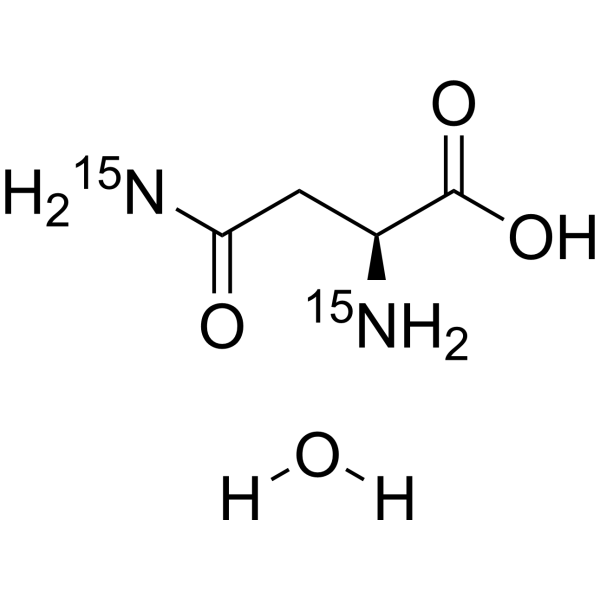
L-Asparagine- 15N2 monohydrate is the 15N-labeled L-Asparagine monohydrate (HY-W017443). L-Asparagine monohydrate is an essential amino acid for leukemic cells and a substrate for L-Asparaginase. L-Asparaginase is a potent anti-leukemic enzyme that promotes asparagine (Asn) and glutamine (Gln) depletion and inhibits protein biosynthesis in lymphoblasts. Removal of L-asparagine from plasma by L-Asparaginase results in inhibition of RNA and DNA synthesis and subsequent apoptosis. L-Asparaginase has cell-killing ability in vitro and in vivo, and selectively inhibits the growth of cancer cells with low asparagine synthetase (AASNS) expression. L-Asparagine monohydrate can be used as a biomarker and sensor for the study of childhood acute lymphoblastic leukemia .
|
-
-
- HY-W017443
-
|
|
Endogenous Metabolite
Apoptosis
DNA/RNA Synthesis
|
Neurological Disease
Metabolic Disease
Inflammation/Immunology
Cancer
|
|
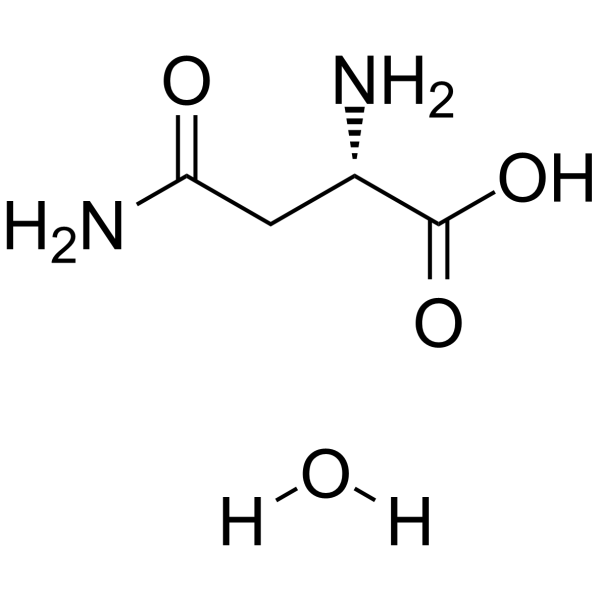
L-Asparagine monohydrate is an essential amino acid for leukemic cells and a substrate for L-Asparaginase. L-Asparaginase is a potent anti-leukemic enzyme that promotes asparagine (Asn) and glutamine (Gln) depletion and inhibits protein biosynthesis in lymphoblasts. Removal of L-asparagine from plasma by L-Asparaginase results in inhibition of RNA and DNA synthesis and subsequent apoptosis. L-Asparaginase has cell-killing ability in vitro and in vivo, and selectively inhibits the growth of cancer cells with low asparagine synthetase (AASNS) expression. L-Asparagine monohydrate can be used as a biomarker and sensor for the study of childhood acute lymphoblastic leukemia .
|
-
-
- HY-N0666S8
-
|
|
Endogenous Metabolite
|
Inflammation/Immunology
|
|
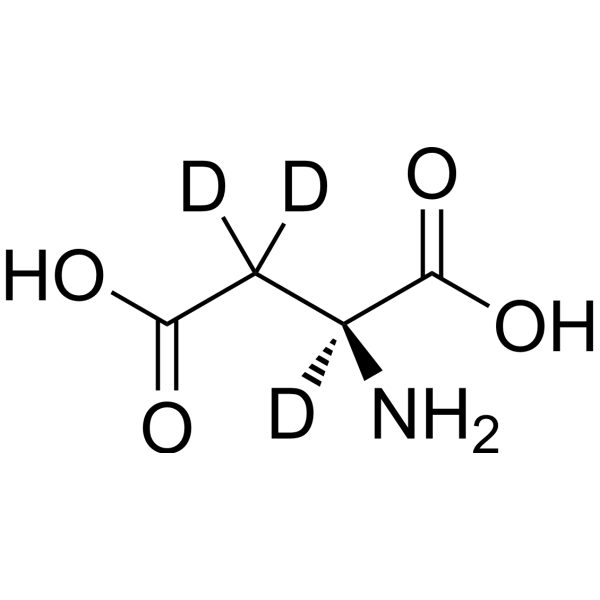
L-Aspartic acid-d3 is the deuterium labeled L-Aspartic acid. L-Aspartic aicd is an amino acid that can penetrate the blood-brain barrier. L-Aspartic aicd is commonly used for preparing prodrugs to target colon and cecal tissues. L-Aspartic aicd commonly used in the study of inflammatory conditions .
|
-
-
- HY-A0282
-
|
|
Amino Acid Derivatives
|
Metabolic Disease
Inflammation/Immunology
|
|
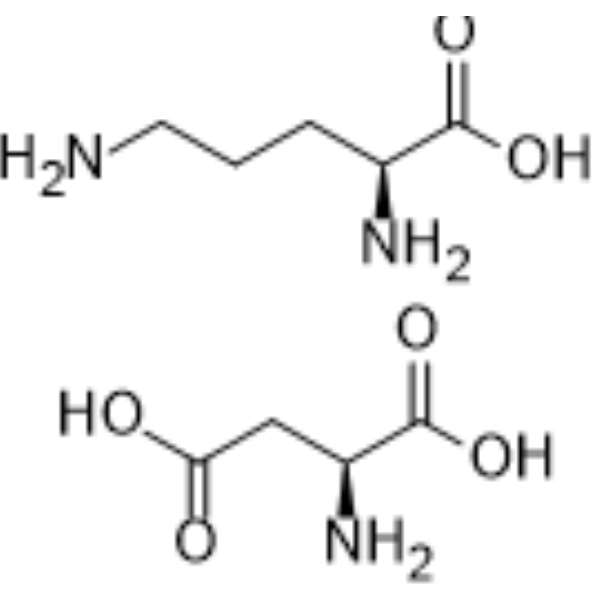
L-Ornithine L-aspartate is a stable salt of two natural nonessential L-amino acids with oral activity: ornithine and aspartic acid. L-Ornithine L-aspartate lowers blood ammonia concentration and to eliminate symptoms of hepatic encephalopathy associated with liver cirrhosis. L-Ornithine L-aspartate also improves mitochondrial functions .
|
-
-
- HY-N0666S4
-
|
|
Endogenous Metabolite
|
Inflammation/Immunology
|
|
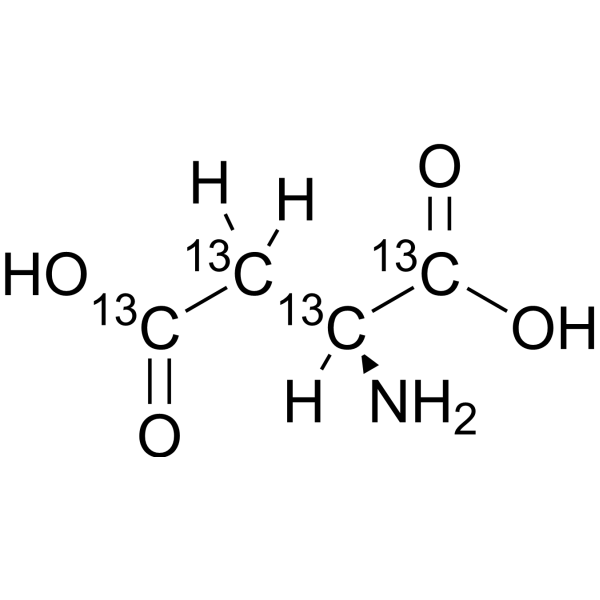
L-Aspartic acid- 13C4 is the 13C-labeled L-Aspartic acid. L-Aspartic aicd is an amino acid that can penetrate the blood-brain barrier. L-Aspartic aicd is commonly used for preparing prodrugs to target colon and cecal tissues. L-Aspartic aicd commonly used in the study of inflammatory conditions .
|
-
-
- HY-Y0533
-
|
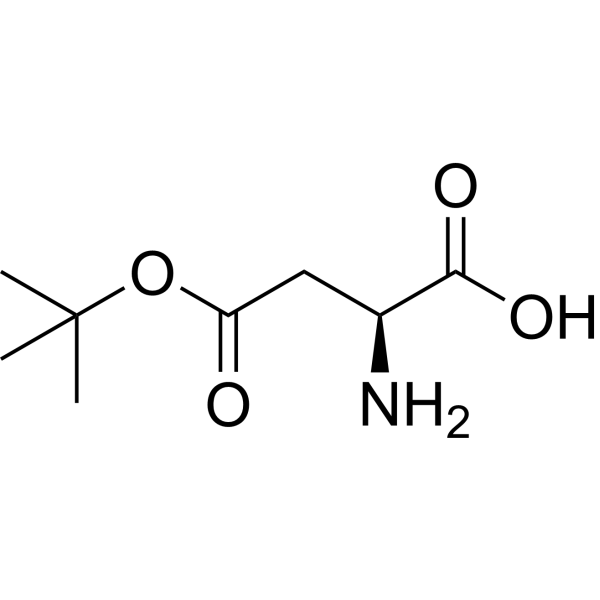
L-Aspartic acid β-tert-butyl ester; β-tert-Butyl L-aspartate
|
Amino Acid Derivatives
|
Others
|
|
L-Aspartic acid 4-tert-butyl ester is an aspartic acid derivative .
|
-
-
- HY-Y1801
-
|
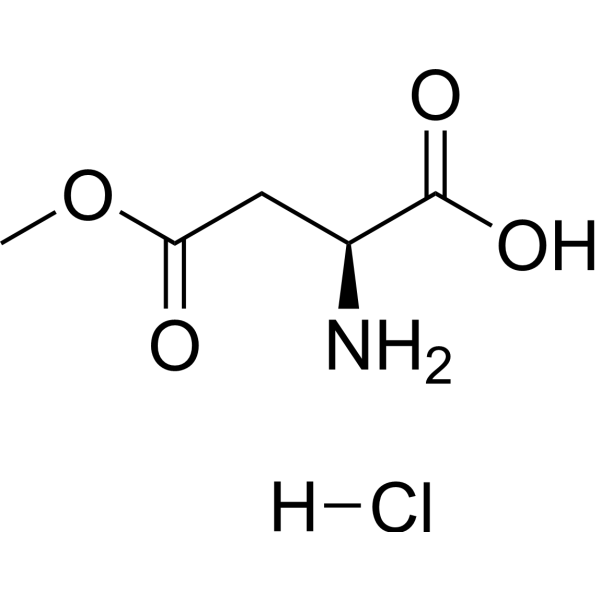
L-Aspartic acid β-methyl ester hydrochloride
|
Amino Acid Derivatives
|
Others
|
|
β-Methyl L-aspartate hydrochloride is an aspartic acid derivative .
|
-
-
- HY-N0666A
-
-
-
- HY-N0666B
-
|
Calcium L-aspartate
|
Endogenous Metabolite
|
Inflammation/Immunology
|
|
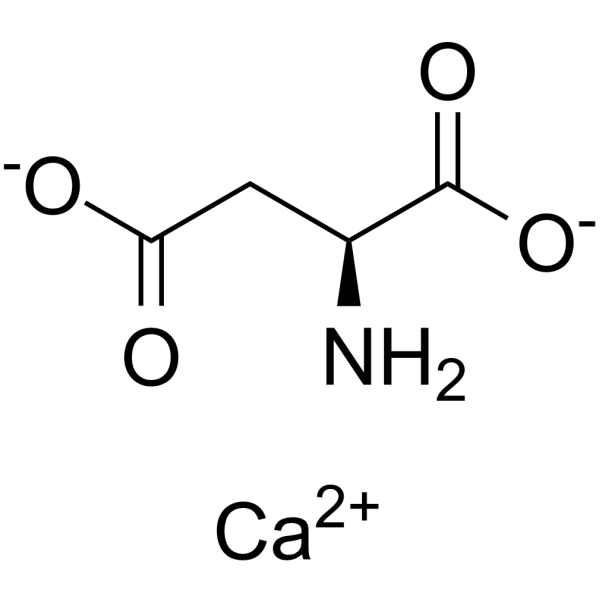
Aspartic acid calcium (Calcium L-aspartate) is a chelate where calcium is attached to an amino acid naming L-Aspartic acid. L-Aspartic aicd calcium is an amino acid that can penetrate the blood-brain barrier. L-Aspartic aicd calcium is commonly used for preparing prodrugs to target colon and cecal tissues. L-Aspartic aicd calcium commonly used in the study of inflammatory conditions .
|
-
-
- HY-N0666C
-
-
-
- HY-79136
-
|
SOM230 L-aspartate
|
Somatostatin Receptor
|
Endocrinology
Cancer
|
|
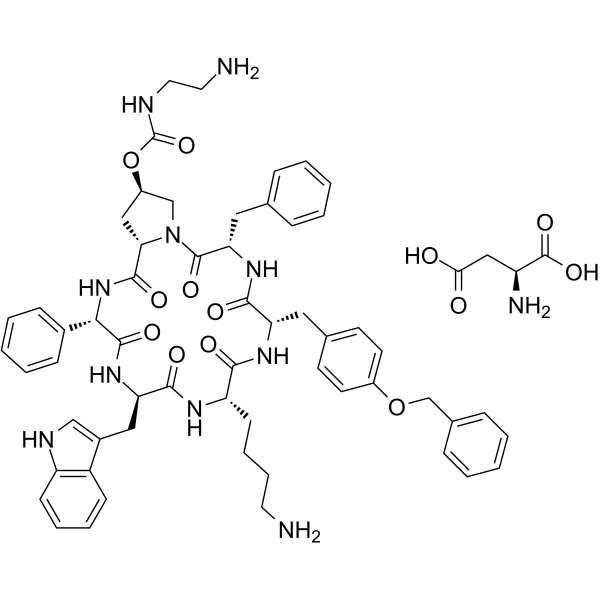
Pasireotide (SOM230) L-aspartate salt, a long-acting cyclohexapeptide somatostatin analogue, can improve agonist activity at somatostatin receptors (subtypes sst1/2/3/4/5, pKi=8.2/9.0/9.1/<7.0/9.9, respectively). Pasireotide L-aspartate salt exhibits antisecretory, antiproliferative, and proapoptotic activity .
|
-
-
- HY-N0667S5
-
|
|
Isotope-Labeled Compounds
Endogenous Metabolite
Apoptosis
DNA/RNA Synthesis
|
Inflammation/Immunology
|
|
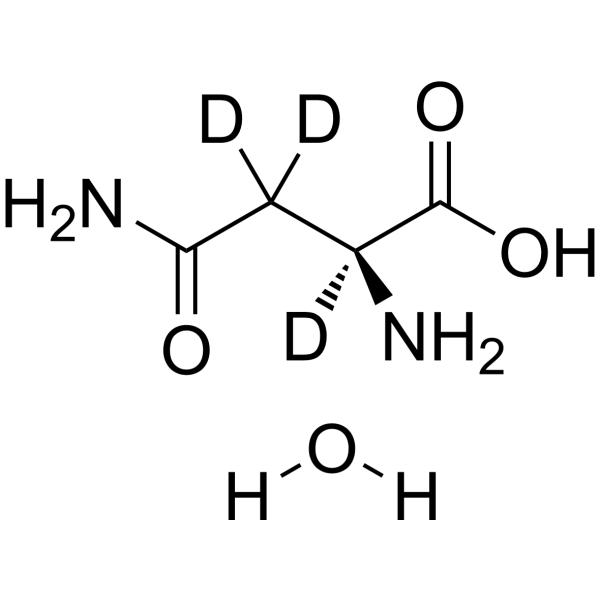
L-Asparagine-d3 hydrate is the deuterium labeled L-Asparagine (HY-N0667). L-Asparagine is an essential amino acid for leukemic cells and a substrate for L-Asparaginase. L-Asparaginase is a potent anti-leukemic enzyme that promotes asparagine (Asn) and glutamine (Gln) depletion and inhibits protein biosynthesis in lymphoblasts. Removal of L-asparagine from plasma by L-Asparaginase results in inhibition of RNA and DNA synthesis and subsequent apoptosis. L-Asparaginase has cell-killing ability in vitro and in vivo, and selectively inhibits the growth of cancer cells with low asparagine synthetase (AASNS) expression. L-Asparagine can be used as a biomarker and sensor for the study of childhood acute lymphoblastic leukemia .
|
-
-
- HY-N0666S
-
|
|
Endogenous Metabolite
|
Inflammation/Immunology
|
|
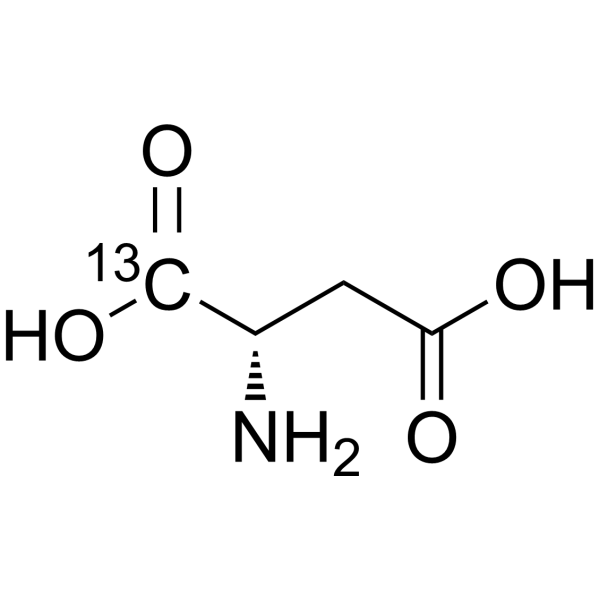
L-Aspartic acid- 13C is a 13C labeled L-Aspartic acid. L-Aspartic aicd is an amino acid that can penetrate the blood-brain barrier. L-Aspartic aicd is commonly used for preparing prodrugs to target colon and cecal tissues. L-Aspartic aicd commonly used in the study of inflammatory conditions .
|
-
-
- HY-23093
-
-

-
- HY-N0666R
-
|
|
Reference Standards
Endogenous Metabolite
|
Inflammation/Immunology
|
|
L-Aspartic acid (Standard) is the analytical standard of L-Aspartic acid. This product is intended for research and analytical applications. L-Aspartic aicd is an amino acid. L-Aspartic aicd is commonly used for preparing prodrugs to target colon and cecal tissues. L-Aspartic aicd commonly used in the study of inflammatory conditions .
|
-

-
- HY-N0666D
-
-
-
- HY-W017443S
-
|
|
Isotope-Labeled Compounds
Endogenous Metabolite
Apoptosis
DNA/RNA Synthesis
|
Neurological Disease
Metabolic Disease
Inflammation/Immunology
Cancer
|
|
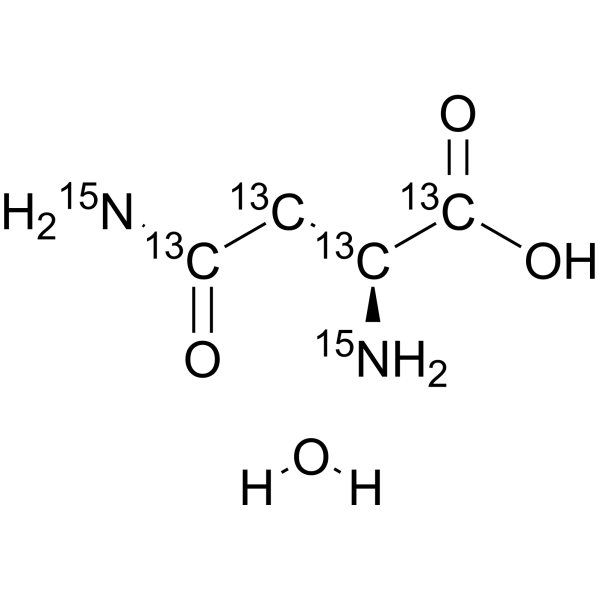
L-Asparagine- 13C4, 15N2 monohydrateis the 13C-labeled and 15N-labeled L-Asparagine monohydrate (HY-W017443). L-Asparagine monohydrate is an essential amino acid for leukemic cells and a substrate for L-Asparaginase. L-Asparaginase is a potent anti-leukemic enzyme that promotes asparagine (Asn) and glutamine (Gln) depletion and inhibits protein biosynthesis in lymphoblasts. Removal of L-asparagine from plasma by L-Asparaginase results in inhibition of RNA and DNA synthesis and subsequent apoptosis. L-Asparaginase has cell-killing ability in vitro and in vivo, and selectively inhibits the growth of cancer cells with low asparagine synthetase (AASNS) expression. L-Asparagine monohydrate can be used as a biomarker and sensor for the study of childhood acute lymphoblastic leukemia .
|
-
-
- HY-N0666S3
-
|
|
Endogenous Metabolite
|
Inflammation/Immunology
|
|
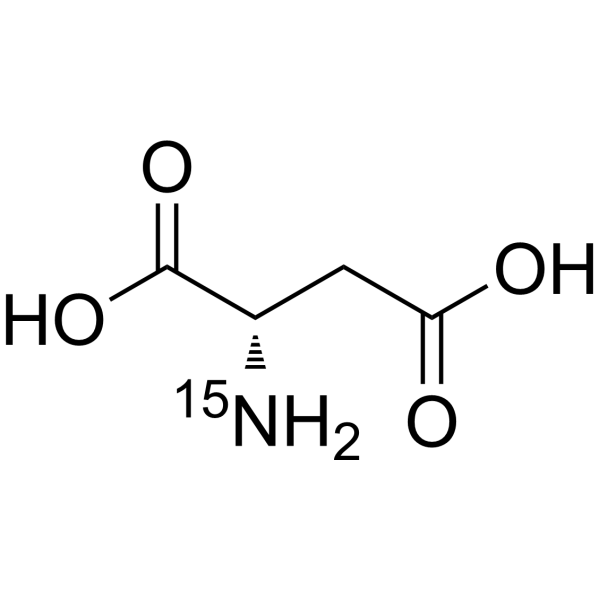
L-Aspartic acid- 15N is the 15N-labeled L-Aspartic acid. L-Aspartic aicd is an amino acid that can penetrate the blood-brain barrier. L-Aspartic aicd is commonly used for preparing prodrugs to target colon and cecal tissues. L-Aspartic aicd commonly used in the study of inflammatory conditions .
|
-
-
- HY-N0666S1
-
|
|
Endogenous Metabolite
|
Cardiovascular Disease
|
|
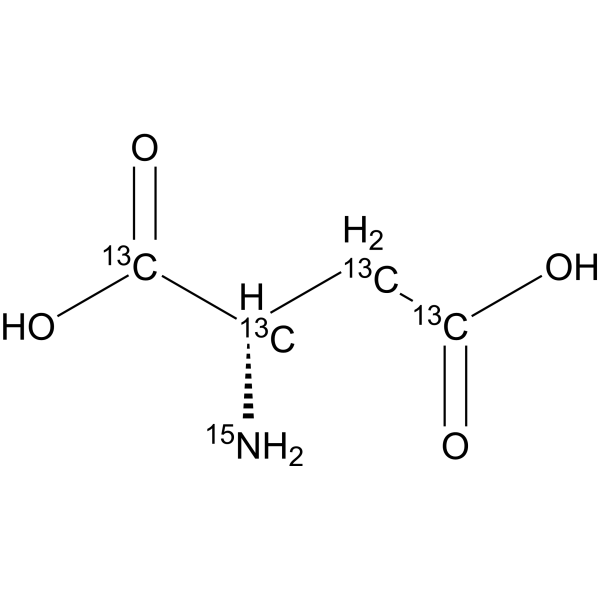
L-Aspartic acid- 13C4, 15N is the 13C-labeled and 15N-labeled L-Aspartic acid. L-Aspartic aicd is an amino acid that can penetrate the blood-brain barrier. L-Aspartic aicd is commonly used for preparing prodrugs to target colon and cecal tissues. L-Aspartic aicd commonly used in the study of inflammatory conditions .
|
-
-
- HY-42066
-
|
S)-3-Amino-4-(benzyloxy)-4-oxobutanoic acid; 1-Benzyl L-aspartate; Aspartic acid 1-benzyl ester; Aspartic acid α-benzyl ester
|
Amino Acid Derivatives
|
Others
|
|
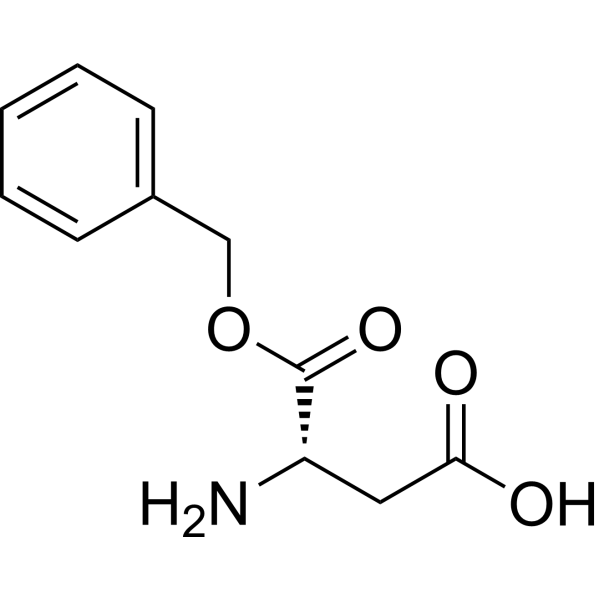
L-Aspartic acid 1-benzyl ester is an aspartic acid derivative .
|
-
-
- HY-30230
-
-
-
- HY-N0667R
-
|
(-)-Asparagine (Standard); Asn (Standard); Asparamide (Standard)
|
Reference Standards
Endogenous Metabolite
Apoptosis
DNA/RNA Synthesis
|
Inflammation/Immunology
|
|
L-Asparagine (Standard) is the analytical standard of L-Asparagine (HY-N0667). This product is intended for research and analytical applications. L-Asparagine is an essential amino acid for leukemic cells and a substrate for L-Asparaginase. L-Asparaginase is a potent anti-leukemic enzyme that promotes asparagine (Asn) and glutamine (Gln) depletion and inhibits protein biosynthesis in lymphoblasts. Removal of L-asparagine from plasma by L-Asparaginase results in inhibition of RNA and DNA synthesis and subsequent apoptosis. L-Asparaginase has cell-killing ability in vitro and in vivo, and selectively inhibits the growth of cancer cells with low asparagine synthetase (AASNS) expression. L-Asparagine can be used as a biomarker and sensor for the study of childhood acute lymphoblastic leukemia .
|
-

-
- HY-W105809R
-
|
(S)-2-Amino-5-((diaminomethylene)amino)pentanoic acid compound with L-aspartic acid (1:1) (Standard)
|
Reference Standards
|
|
|
L-Arginine L-aspartate (Standard) is the analytical standard of L-Arginine L-aspartate. This product is intended for research and analytical applications.
|
-

-
- HY-N0667S3
-
|
(-)-Asparagine-13C4 monohydrate; Asn-13C4 monohydrate; Asparamide-13C4 monohydrate
|
Isotope-Labeled Compounds
Endogenous Metabolite
Apoptosis
DNA/RNA Synthesis
|
Inflammation/Immunology
|
|
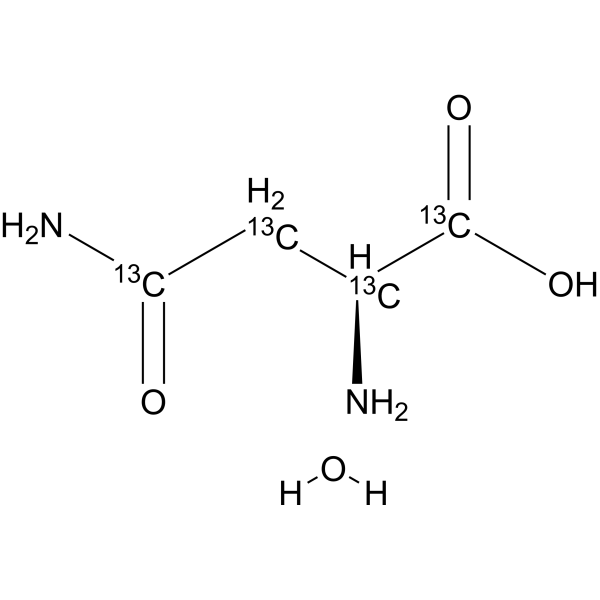
L-Asparagine- 13C4 monohydrate is the 13C-labeled L-Asparagine monohydrate (HY-W017443). L-Asparagine monohydrate is an essential amino acid for leukemic cells and a substrate for L-Asparaginase. L-Asparaginase is a potent anti-leukemic enzyme that promotes asparagine (Asn) and glutamine (Gln) depletion and inhibits protein biosynthesis in lymphoblasts. Removal of L-asparagine from plasma by L-Asparaginase results in inhibition of RNA and DNA synthesis and subsequent apoptosis. L-Asparaginase has cell-killing ability in vitro and in vivo, and selectively inhibits the growth of cancer cells with low asparagine synthetase (AASNS) expression. L-Asparagine monohydrate can be used as a biomarker and sensor for the study of childhood acute lymphoblastic leukemia .
|
-
-
- HY-N0666S6
-
|
|
Endogenous Metabolite
|
Inflammation/Immunology
|
|
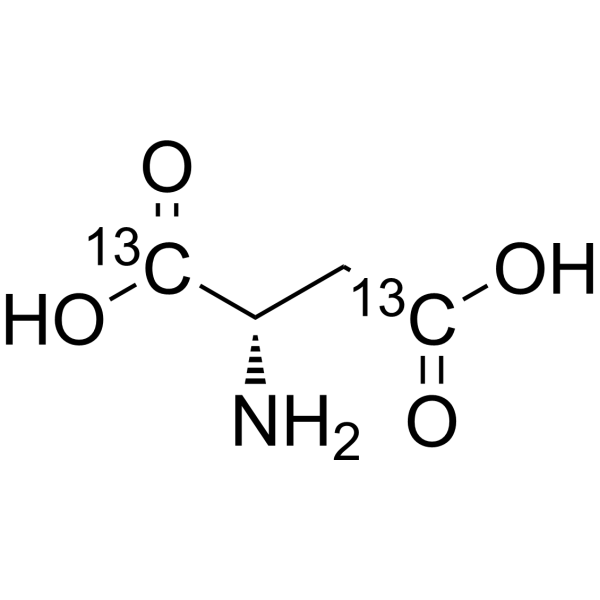
L-Aspartic acid-1,4- 13C2 is the 13C-labeled L-Aspartic acid. L-Aspartic aicd is an amino acid that can penetrate the blood-brain barrier. L-Aspartic aicd is commonly used for preparing prodrugs to target colon and cecal tissues. L-Aspartic aicd commonly used in the study of inflammatory conditions .
|
-
-
- HY-W015824S6
-
|
|
Isotope-Labeled Compounds
Endogenous Metabolite
|
Inflammation/Immunology
|
|
L-Aspartic acid- 13C-2 is the 13C-labeled L-Aspartic acid (HY-N0666). L-Aspartic aicd is an amino acid that can penetrate the blood-brain barrier. L-Aspartic aicd is commonly used for preparing prodrugs to target colon and cecal tissues. L-Aspartic aicd commonly used in the study of inflammatory conditions .
|
-

-
- HY-W017443S1
-
|
|
Isotope-Labeled Compounds
Endogenous Metabolite
Apoptosis
DNA/RNA Synthesis
|
Neurological Disease
Metabolic Disease
Inflammation/Immunology
Cancer
|
|
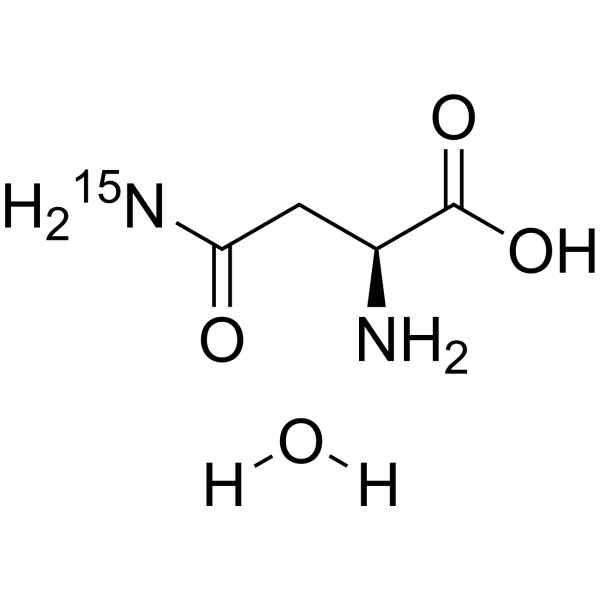
L-Asparagine-amide- 15N monohydrate is the 15N-labeled L-Asparagine monohydrate (HY-W017443). L-Asparagine monohydrate is an essential amino acid for leukemic cells and a substrate for L-Asparaginase. L-Asparaginase is a potent anti-leukemic enzyme that promotes asparagine (Asn) and glutamine (Gln) depletion and inhibits protein biosynthesis in lymphoblasts. Removal of L-asparagine from plasma by L-Asparaginase results in inhibition of RNA and DNA synthesis and subsequent apoptosis. L-Asparaginase has cell-killing ability in vitro and in vivo, and selectively inhibits the growth of cancer cells with low asparagine synthetase (AASNS) expression. L-Asparagine monohydrate can be used as a biomarker and sensor for the study of childhood acute lymphoblastic leukemia .
|
-
-
- HY-W017443R
-
|
|
Reference Standards
Endogenous Metabolite
Apoptosis
DNA/RNA Synthesis
|
Neurological Disease
Metabolic Disease
Inflammation/Immunology
Cancer
|
|
L-Asparagine monohydrate (Standard) is the analytical standard of L-Asparagine monohydrate (HY-W017443). This product is intended for research and analytical applications. L-Asparagine monohydrate is an essential amino acid for leukemic cells and a substrate for L-Asparaginase. L-Asparaginase is a potent anti-leukemic enzyme that promotes asparagine (Asn) and glutamine (Gln) depletion and inhibits protein biosynthesis in lymphoblasts. Removal of L-asparagine from plasma by L-Asparaginase results in inhibition of RNA and DNA synthesis and subsequent apoptosis. L-Asparaginase has cell-killing ability in vitro and in vivo, and selectively inhibits the growth of cancer cells with low asparagine synthetase (AASNS) expression. L-Asparagine monohydrate can be used as a biomarker and sensor for the study of childhood acute lymphoblastic leukemia .
|
-

-
- HY-N0667S7
-
|
(-)-Asparagine-13C4,15N2; Asn-13C4,15N2; Asparamide-13C4,15N2
|
Isotope-Labeled Compounds
Endogenous Metabolite
Apoptosis
DNA/RNA Synthesis
|
Inflammation/Immunology
|
|
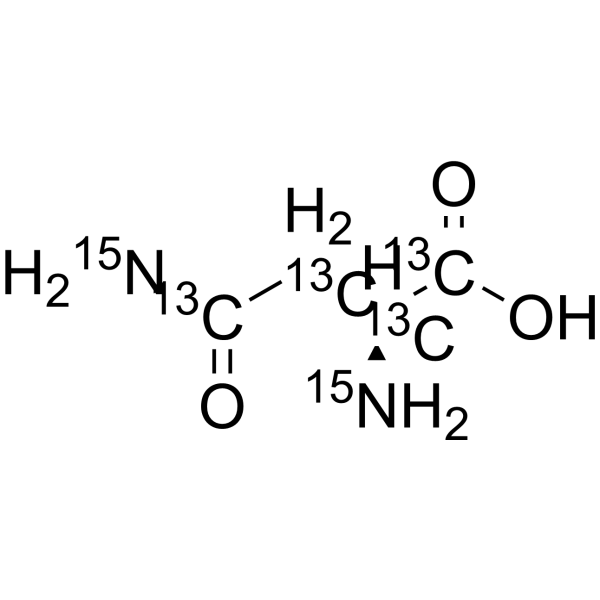
L-Asparagine- 13C4, 15N2 ((-)-Asparagine- 13C4, 15N2) is the 13C and 15N-labeled L-Asparagine (HY-N0667). L-Asparagine is an essential amino acid for leukemic cells and a substrate for L-Asparaginase. L-Asparaginase is a potent anti-leukemic enzyme that promotes asparagine (Asn) and glutamine (Gln) depletion and inhibits protein biosynthesis in lymphoblasts. Removal of L-asparagine from plasma by L-Asparaginase results in inhibition of RNA and DNA synthesis and subsequent apoptosis. L-Asparaginase has cell-killing ability in vitro and in vivo, and selectively inhibits the growth of cancer cells with low asparagine synthetase (AASNS) expression. L-Asparagine can be used as a biomarker and sensor for the study of childhood acute lymphoblastic leukemia .
|
-
-
- HY-W140900
-
-

-
- HY-109125A
-
|
SPA-S-753; SPA-S-752 L-aspartate
|
Antibiotic
Fungal
|
Infection
|
|
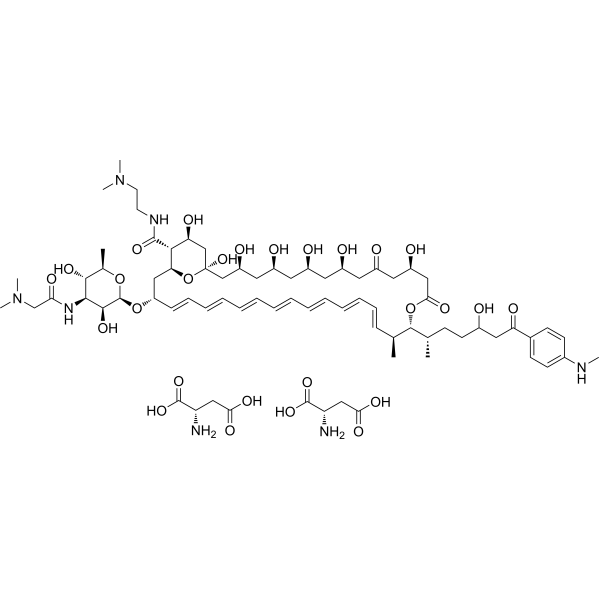
Amcipatricin diaspartate (SPA-S-753) is a semi-synthetic polyene antibiotic, with potent broad-spectrum antifungal activity .
|
-
-
- HY-N0666CR
-
-

-
- HY-N0666DR
-
|
Disodium L-aspartate (Standard)
|
Reference Standards
Endogenous Metabolite
|
Inflammation/Immunology
|
|
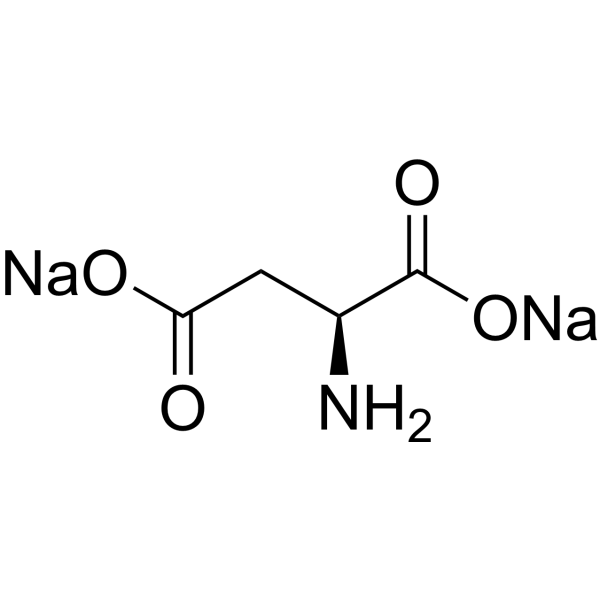
L-Aspartic acid disodium is an amino acid. L-Aspartic acid disodium is commonly used for preparing prodrugs to target colon and cecal tissues. L-Aspartic acid disodium commonly used in the study of inflammatory conditions .
|
-

-
- HY-N0667S
-
|
|
Isotope-Labeled Compounds
Endogenous Metabolite
Apoptosis
DNA/RNA Synthesis
|
Inflammation/Immunology
|
|
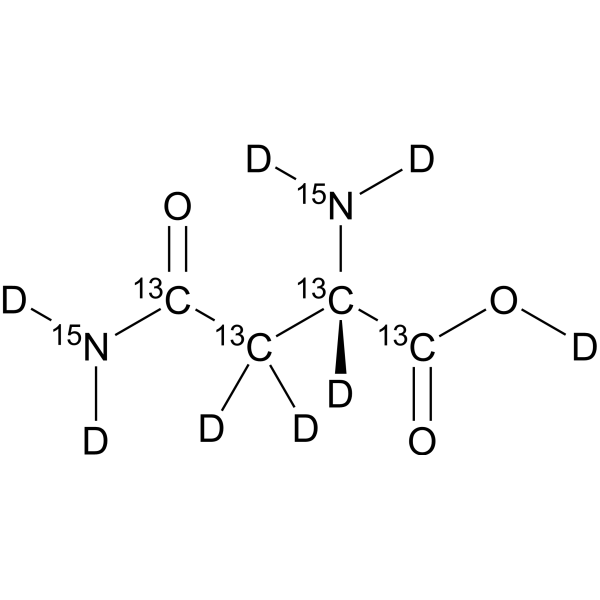
L-Asparagine- 13C4, 15N2,d8 is the 13C-labeled and 15N-labeled L-Asparagine (HY-N0667). L-Asparagine is an essential amino acid for leukemic cells and a substrate for L-Asparaginase. L-Asparaginase is a potent anti-leukemic enzyme that promotes asparagine (Asn) and glutamine (Gln) depletion and inhibits protein biosynthesis in lymphoblasts. Removal of L-asparagine from plasma by L-Asparaginase results in inhibition of RNA and DNA synthesis and subsequent apoptosis. L-Asparaginase has cell-killing ability in vitro and in vivo, and selectively inhibits the growth of cancer cells with low asparagine synthetase (AASNS) expression. L-Asparagine can be used as a biomarker and sensor for the study of childhood acute lymphoblastic leukemia .
|
-
-
- HY-N0667S1
-
|
|
Isotope-Labeled Compounds
Endogenous Metabolite
Apoptosis
DNA/RNA Synthesis
|
Inflammation/Immunology
|
|
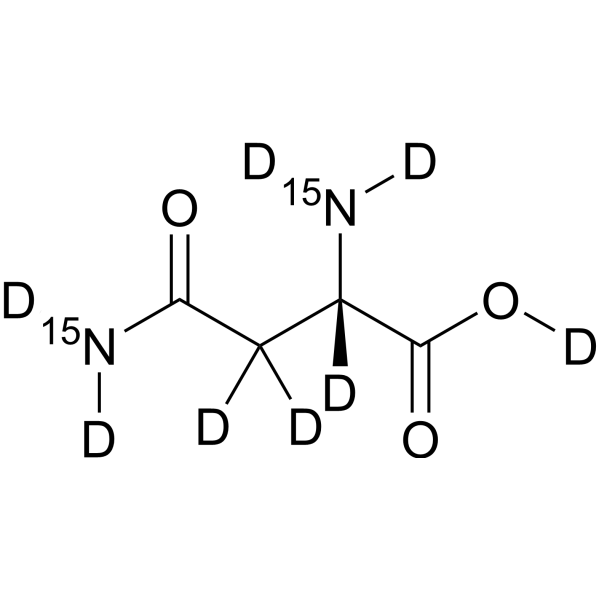
L-Asparagine- 15N2,d8 is the 15N- and deuterium labeled L-Asparagine (HY-N0667). L-Asparagine is an essential amino acid for leukemic cells and a substrate for L-Asparaginase. L-Asparaginase is a potent anti-leukemic enzyme that promotes asparagine (Asn) and glutamine (Gln) depletion and inhibits protein biosynthesis in lymphoblasts. Removal of L-asparagine from plasma by L-Asparaginase results in inhibition of RNA and DNA synthesis and subsequent apoptosis. L-Asparaginase has cell-killing ability in vitro and in vivo, and selectively inhibits the growth of cancer cells with low asparagine synthetase (AASNS) expression. L-Asparagine can be used as a biomarker and sensor for the study of childhood acute lymphoblastic leukemia .
|
-
-
- HY-W017443S2
-
|
|
Isotope-Labeled Compounds
Endogenous Metabolite
Apoptosis
DNA/RNA Synthesis
|
Neurological Disease
Metabolic Disease
Inflammation/Immunology
Cancer
|
|
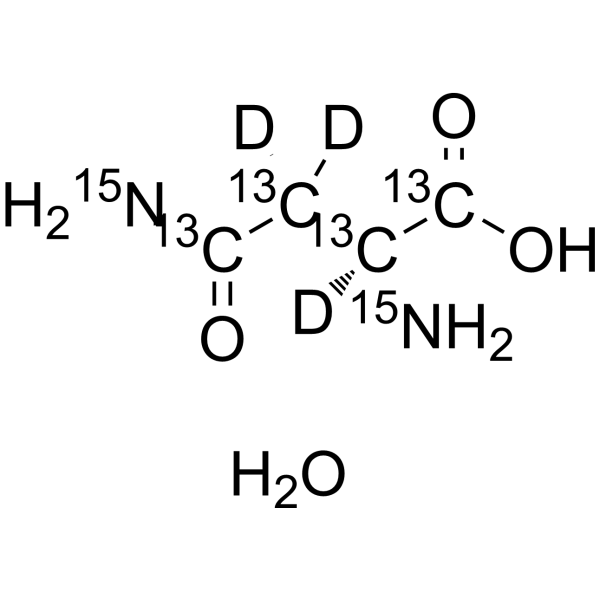
L-Asparagine- 13C4, 15N2,d3 monohydrate is the deuterium, 13C-, and 15N-labeled L-Asparagine monohydrate (HY-W017443). L-Asparagine monohydrate is an essential amino acid for leukemic cells and a substrate for L-Asparaginase. L-Asparaginase is a potent anti-leukemic enzyme that promotes asparagine (Asn) and glutamine (Gln) depletion and inhibits protein biosynthesis in lymphoblasts. Removal of L-asparagine from plasma by L-Asparaginase results in inhibition of RNA and DNA synthesis and subsequent apoptosis. L-Asparaginase has cell-killing ability in vitro and in vivo, and selectively inhibits the growth of cancer cells with low asparagine synthetase (AASNS) expression. L-Asparagine monohydrate can be used as a biomarker and sensor for the study of childhood acute lymphoblastic leukemia .
|
-
-
- HY-N0666S9
-
|
|
Isotope-Labeled Compounds
Endogenous Metabolite
|
Cardiovascular Disease
|
|
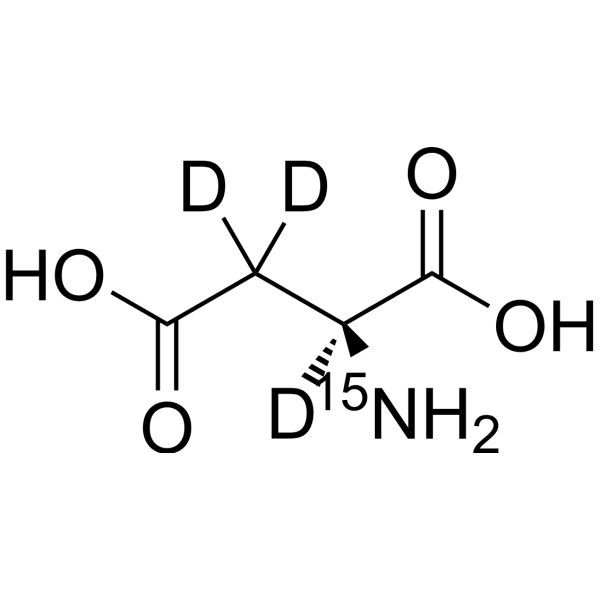
L-Aspartic acid- 15N,d3 is the deuterium and 15N-labeled L-Aspartic acid. L-Aspartic aicd is an amino acid that can penetrate the blood-brain barrier. L-Aspartic aicd is commonly used for preparing prodrugs to target colon and cecal tissues. L-Aspartic aicd commonly used in the study of inflammatory conditions .
|
-
-
- HY-W017443S3
-
|
|
Isotope-Labeled Compounds
Endogenous Metabolite
Apoptosis
DNA/RNA Synthesis
|
Neurological Disease
Metabolic Disease
Inflammation/Immunology
Cancer
|
|
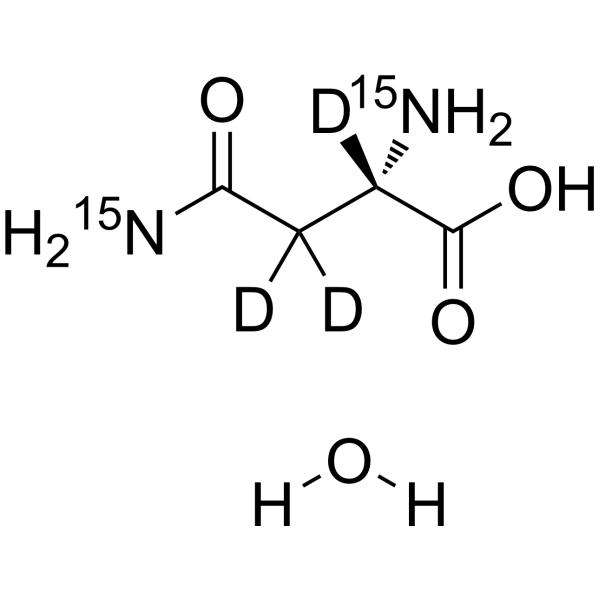
L-Asparagine- 15N2,d3 monohydrate is the deuterium and 15N-labeled L-Asparagine monohydrate (HY-W017443). L-Asparagine monohydrate is an essential amino acid for leukemic cells and a substrate for L-Asparaginase. L-Asparaginase is a potent anti-leukemic enzyme that promotes asparagine (Asn) and glutamine (Gln) depletion and inhibits protein biosynthesis in lymphoblasts. Removal of L-asparagine from plasma by L-Asparaginase results in inhibition of RNA and DNA synthesis and subsequent apoptosis. L-Asparaginase has cell-killing ability in vitro and in vivo, and selectively inhibits the growth of cancer cells with low asparagine synthetase (AASNS) expression. L-Asparagine monohydrate can be used as a biomarker and sensor for the study of childhood acute lymphoblastic leukemia .
|
-
-
- HY-N0666S7
-
|
|
Isotope-Labeled Compounds
Endogenous Metabolite
|
Cardiovascular Disease
|
|
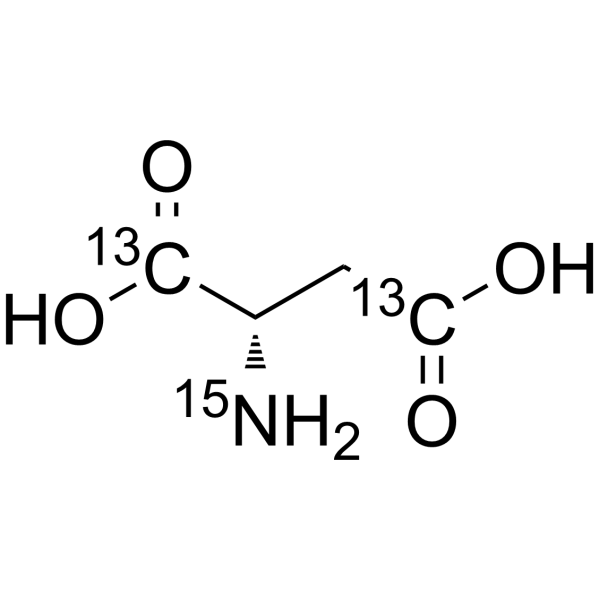
L-Aspartic acid-1,4- 13C2, 15N is the 13C- and 15N-labeled L-Aspartic acid. L-Aspartic aicd is an amino acid that can penetrate the blood-brain barrier. L-Aspartic aicd is commonly used for preparing prodrugs to target colon and cecal tissues. L-Aspartic aicd commonly used in the study of inflammatory conditions .
|
-
-
- HY-W017443S4
-
|
|
Isotope-Labeled Compounds
Endogenous Metabolite
Apoptosis
DNA/RNA Synthesis
|
Neurological Disease
Metabolic Disease
Inflammation/Immunology
Cancer
|
|
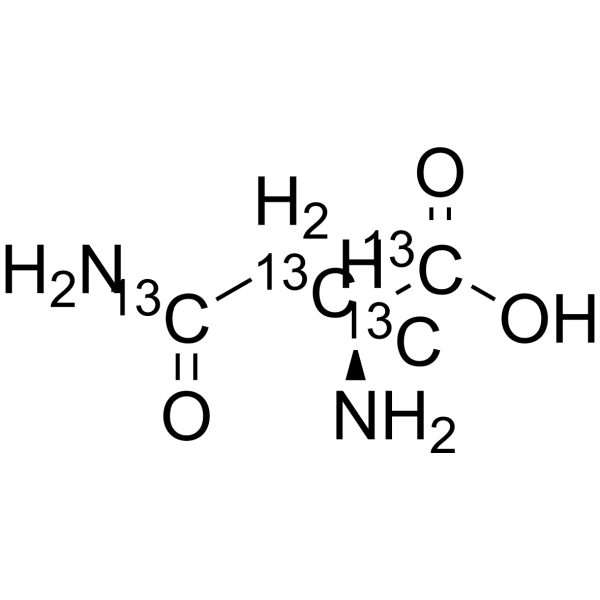
L-Asparagine-1,2,3,4- 13C4 monohydrate is the 13C labeled labeled L-Asparagine monohydrate (HY-W017443). L-Asparagine monohydrate is an essential amino acid for leukemic cells and a substrate for L-Asparaginase. L-Asparaginase is a potent anti-leukemic enzyme that promotes asparagine (Asn) and glutamine (Gln) depletion and inhibits protein biosynthesis in lymphoblasts. Removal of L-asparagine from plasma by L-Asparaginase results in inhibition of RNA and DNA synthesis and subsequent apoptosis. L-Asparaginase has cell-killing ability in vitro and in vivo, and selectively inhibits the growth of cancer cells with low asparagine synthetase (AASNS) expression. L-Asparagine monohydrate can be used as a biomarker and sensor for the study of childhood acute lymphoblastic leukemia .
|
-
-
- HY-N0666S5
-
|
|
Isotope-Labeled Compounds
Endogenous Metabolite
|
Inflammation/Immunology
|
|
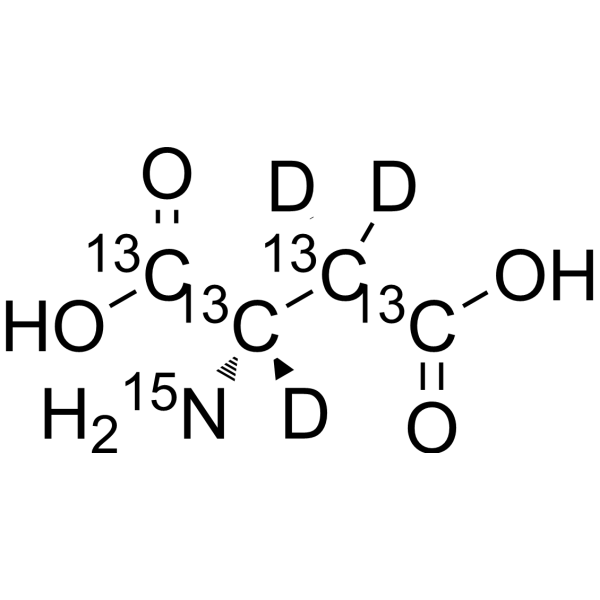
L-Aspartic acid- 13C4, 15N,d3 is the deuterium, 13C-, and 15-labeled L-Aspartic acid. L-Aspartic aicd is an amino acid that can penetrate the blood-brain barrier. L-Aspartic aicd is commonly used for preparing prodrugs to target colon and cecal tissues. L-Aspartic aicd commonly used in the study of inflammatory conditions .
|
-
-
- HY-N0666E
-
|
|
Endogenous Metabolite
|
Inflammation/Immunology
|
|
L-Aspartic acid monocesium is the monocesium salt form of L-Aspartic acid (HY-N0666). L-Aspartic aicd monocesium is an amino acid that can penetrate the blood-brain barrier. L-Aspartic aicd monocesium is commonly used for preparing prodrugs to target colon and cecal tissues. L-Aspartic aicd monocesium commonly used in the study of inflammatory conditions .
|
-

-
- HY-23093R
-
-

-
- HY-N0666AR
-
|
|
Reference Standards
Endogenous Metabolite
|
Inflammation/Immunology
|
|
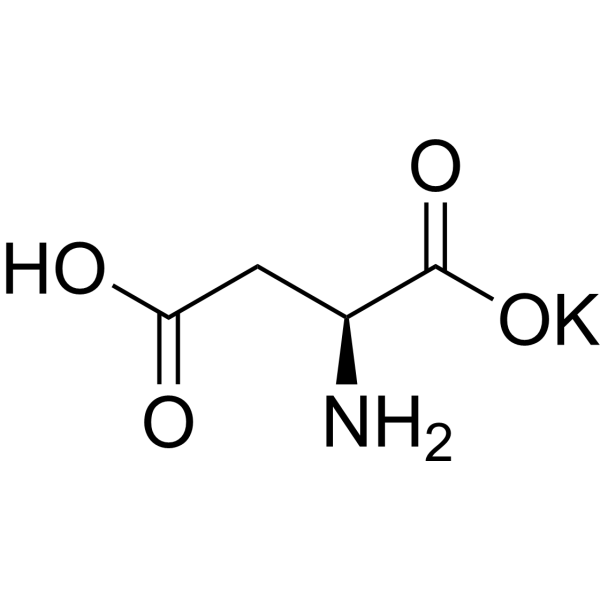
L-Aspartic acid (potassium) (Standard) is the analytical standard of L-Aspartic acid (potassium). This product is intended for research and analytical applications. L-Aspartic aicd is an amino acid that. L-Aspartic aicd is commonly used for preparing prodrugs to target colon and cecal tissues. L-Aspartic aicd commonly used in the study of inflammatory conditions .
|
-

-
- HY-W002327S1
-
-
-
- HY-N0666S10
-
|
[3-13C]Aspartic acid
|
Isotope-Labeled Compounds
Endogenous Metabolite
|
Inflammation/Immunology
|
|
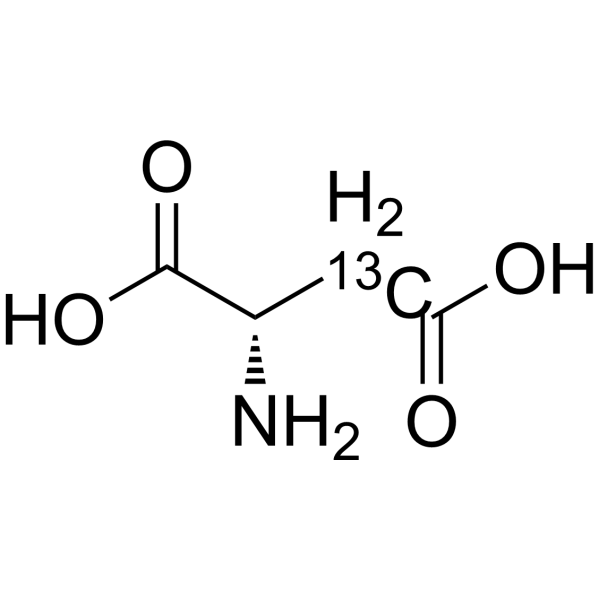
L-Aspartic acid- 13C-1 is the 13C-labeled L-Aspartic acid (HY-N0666). L-Aspartic aicd is an amino acid that can penetrate the blood-brain barrier. L-Aspartic aicd is commonly used for preparing prodrugs to target colon and cecal tissues. L-Aspartic aicd commonly used in the study of inflammatory conditions .
|
-
- HY-N0667S4
-
|
(-)-Asparagine-4-13C monohydrate; Asn-4-13C monohydrate; Asparamide-4-13C monohydrate
|
Isotope-Labeled Compounds
Endogenous Metabolite
Apoptosis
DNA/RNA Synthesis
|
Inflammation/Immunology
|
|
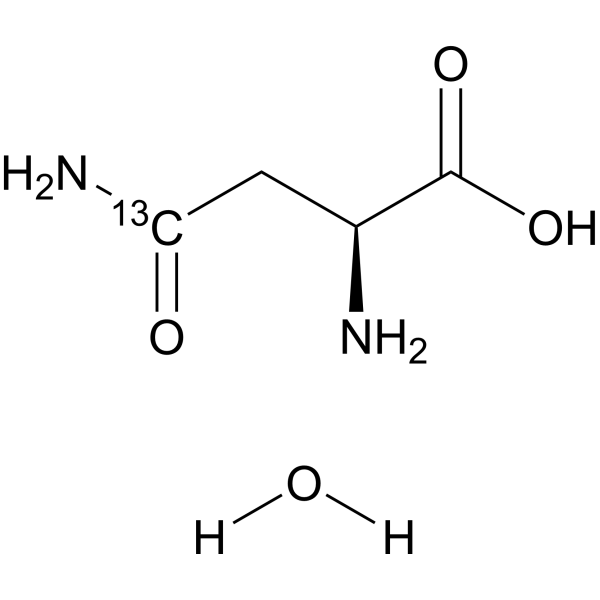
L-Asparagine-4- 13C monohydrate is the 13C-labeled L-Asparagine monohydrate (HY-W017443).L-Asparagine monohydrate is an essential amino acid for leukemic cells and a substrate for L-Asparaginase. L-Asparaginase is a potent anti-leukemic enzyme that promotes asparagine (Asn) and glutamine (Gln) depletion and inhibits protein biosynthesis in lymphoblasts. Removal of L-asparagine from plasma by L-Asparaginase results in inhibition of RNA and DNA synthesis and subsequent apoptosis. L-Asparaginase has cell-killing ability in vitro and in vivo, and selectively inhibits the growth of cancer cells with low asparagine synthetase (AASNS) expression. L-Asparagine monohydrate can be used as a biomarker and sensor for the study of childhood acute lymphoblastic leukemia .
|
-
- HY-N0666BR
-
|
Calcium L-aspartate (Standard)
|
Reference Standards
Endogenous Metabolite
|
Cardiovascular Disease
|
|
4-epi-Chlortetracycline (hydrochloride) (Standard) is the analytical standard of 4-epi-Chlortetracycline (hydrochloride). This product is intended for research and analytical applications. 4-epi-Chlortetracycline hydrochloride is an epimetabolite of Chlortetracycline hydrochloride. Chlortetracycline hydrochloride is an orally active, potent and selective inhibitor of methanogenic bacteria with bactericidal effect .
|
-

- HY-CE01656
-
-

| Cat. No. |
Product Name |
Type |
-
- HY-W140900
-
|
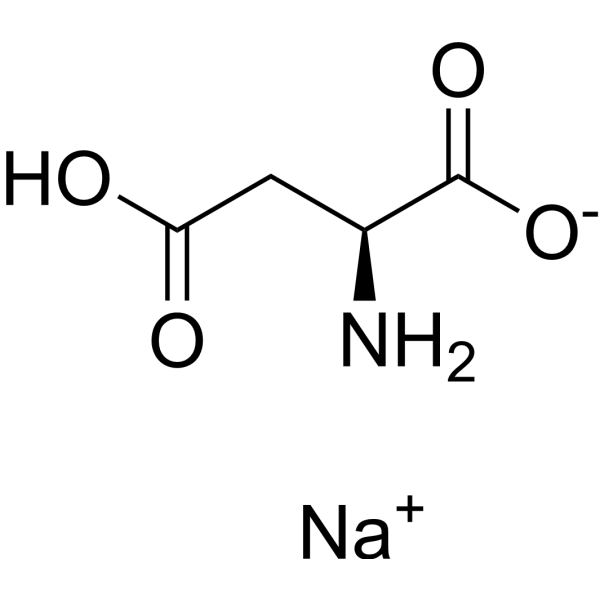
Sodium L-aspartate monohydrate
|
Biochemical Assay Reagents
|
|
Sodium (S)-3-amino-3-carboxypropanoate hydrate is a biochemical assay reagent, which is utilized in bypass surgery as part of the cardioplegia solution .
|
| Cat. No. |
Product Name |
Target |
Research Area |
-
- HY-134450
-
-
- HY-Y0533
-
|
L-Aspartic acid β-tert-butyl ester; β-tert-Butyl L-aspartate
|
Amino Acid Derivatives
|
Others
|
|
L-Aspartic acid 4-tert-butyl ester is an aspartic acid derivative .
|
-
- HY-Y1801
-
|
L-Aspartic acid β-methyl ester hydrochloride
|
Amino Acid Derivatives
|
Others
|
|
β-Methyl L-aspartate hydrochloride is an aspartic acid derivative .
|
-
- HY-79136
-
|
SOM230 L-aspartate
|
Somatostatin Receptor
|
Endocrinology
Cancer
|
|
Pasireotide (SOM230) L-aspartate salt, a long-acting cyclohexapeptide somatostatin analogue, can improve agonist activity at somatostatin receptors (subtypes sst1/2/3/4/5, pKi=8.2/9.0/9.1/<7.0/9.9, respectively). Pasireotide L-aspartate salt exhibits antisecretory, antiproliferative, and proapoptotic activity .
|
-
- HY-42066
-
|
S)-3-Amino-4-(benzyloxy)-4-oxobutanoic acid; 1-Benzyl L-aspartate; Aspartic acid 1-benzyl ester; Aspartic acid α-benzyl ester
|
Amino Acid Derivatives
|
Others
|
|
L-Aspartic acid 1-benzyl ester is an aspartic acid derivative .
|
-
- HY-30230
-
| Cat. No. |
Product Name |
Category |
Target |
Chemical Structure |
| Cat. No. |
Product Name |
Chemical Structure |
-
- HY-N0667S2
-
1 Publications Verification
|
|
L-Asparagine- 15N2 monohydrate is the 15N-labeled L-Asparagine monohydrate (HY-W017443). L-Asparagine monohydrate is an essential amino acid for leukemic cells and a substrate for L-Asparaginase. L-Asparaginase is a potent anti-leukemic enzyme that promotes asparagine (Asn) and glutamine (Gln) depletion and inhibits protein biosynthesis in lymphoblasts. Removal of L-asparagine from plasma by L-Asparaginase results in inhibition of RNA and DNA synthesis and subsequent apoptosis. L-Asparaginase has cell-killing ability in vitro and in vivo, and selectively inhibits the growth of cancer cells with low asparagine synthetase (AASNS) expression. L-Asparagine monohydrate can be used as a biomarker and sensor for the study of childhood acute lymphoblastic leukemia .
|
-
-
- HY-N0666S8
-
|
|
|
L-Aspartic acid-d3 is the deuterium labeled L-Aspartic acid. L-Aspartic aicd is an amino acid that can penetrate the blood-brain barrier. L-Aspartic aicd is commonly used for preparing prodrugs to target colon and cecal tissues. L-Aspartic aicd commonly used in the study of inflammatory conditions .
|
-
-
- HY-N0666S4
-
|
|
|
L-Aspartic acid- 13C4 is the 13C-labeled L-Aspartic acid. L-Aspartic aicd is an amino acid that can penetrate the blood-brain barrier. L-Aspartic aicd is commonly used for preparing prodrugs to target colon and cecal tissues. L-Aspartic aicd commonly used in the study of inflammatory conditions .
|
-
-
- HY-N0667S5
-
1 Publications Verification
|
|
L-Asparagine-d3 hydrate is the deuterium labeled L-Asparagine (HY-N0667). L-Asparagine is an essential amino acid for leukemic cells and a substrate for L-Asparaginase. L-Asparaginase is a potent anti-leukemic enzyme that promotes asparagine (Asn) and glutamine (Gln) depletion and inhibits protein biosynthesis in lymphoblasts. Removal of L-asparagine from plasma by L-Asparaginase results in inhibition of RNA and DNA synthesis and subsequent apoptosis. L-Asparaginase has cell-killing ability in vitro and in vivo, and selectively inhibits the growth of cancer cells with low asparagine synthetase (AASNS) expression. L-Asparagine can be used as a biomarker and sensor for the study of childhood acute lymphoblastic leukemia .
|
-
-
- HY-N0666S
-
|
|
|
L-Aspartic acid- 13C is a 13C labeled L-Aspartic acid. L-Aspartic aicd is an amino acid that can penetrate the blood-brain barrier. L-Aspartic aicd is commonly used for preparing prodrugs to target colon and cecal tissues. L-Aspartic aicd commonly used in the study of inflammatory conditions .
|
-
-
- HY-W017443S
-
|
|
|
L-Asparagine- 13C4, 15N2 monohydrateis the 13C-labeled and 15N-labeled L-Asparagine monohydrate (HY-W017443). L-Asparagine monohydrate is an essential amino acid for leukemic cells and a substrate for L-Asparaginase. L-Asparaginase is a potent anti-leukemic enzyme that promotes asparagine (Asn) and glutamine (Gln) depletion and inhibits protein biosynthesis in lymphoblasts. Removal of L-asparagine from plasma by L-Asparaginase results in inhibition of RNA and DNA synthesis and subsequent apoptosis. L-Asparaginase has cell-killing ability in vitro and in vivo, and selectively inhibits the growth of cancer cells with low asparagine synthetase (AASNS) expression. L-Asparagine monohydrate can be used as a biomarker and sensor for the study of childhood acute lymphoblastic leukemia .
|
-
-
- HY-N0666S3
-
|
|
|
L-Aspartic acid- 15N is the 15N-labeled L-Aspartic acid. L-Aspartic aicd is an amino acid that can penetrate the blood-brain barrier. L-Aspartic aicd is commonly used for preparing prodrugs to target colon and cecal tissues. L-Aspartic aicd commonly used in the study of inflammatory conditions .
|
-
-
- HY-N0666S1
-
|
|
|
L-Aspartic acid- 13C4, 15N is the 13C-labeled and 15N-labeled L-Aspartic acid. L-Aspartic aicd is an amino acid that can penetrate the blood-brain barrier. L-Aspartic aicd is commonly used for preparing prodrugs to target colon and cecal tissues. L-Aspartic aicd commonly used in the study of inflammatory conditions .
|
-
-
- HY-N0667S3
-
|
|
|
L-Asparagine- 13C4 monohydrate is the 13C-labeled L-Asparagine monohydrate (HY-W017443). L-Asparagine monohydrate is an essential amino acid for leukemic cells and a substrate for L-Asparaginase. L-Asparaginase is a potent anti-leukemic enzyme that promotes asparagine (Asn) and glutamine (Gln) depletion and inhibits protein biosynthesis in lymphoblasts. Removal of L-asparagine from plasma by L-Asparaginase results in inhibition of RNA and DNA synthesis and subsequent apoptosis. L-Asparaginase has cell-killing ability in vitro and in vivo, and selectively inhibits the growth of cancer cells with low asparagine synthetase (AASNS) expression. L-Asparagine monohydrate can be used as a biomarker and sensor for the study of childhood acute lymphoblastic leukemia .
|
-
-
- HY-N0666S6
-
|
|
|
L-Aspartic acid-1,4- 13C2 is the 13C-labeled L-Aspartic acid. L-Aspartic aicd is an amino acid that can penetrate the blood-brain barrier. L-Aspartic aicd is commonly used for preparing prodrugs to target colon and cecal tissues. L-Aspartic aicd commonly used in the study of inflammatory conditions .
|
-
-
- HY-W015824S6
-
|
|
|
L-Aspartic acid- 13C-2 is the 13C-labeled L-Aspartic acid (HY-N0666). L-Aspartic aicd is an amino acid that can penetrate the blood-brain barrier. L-Aspartic aicd is commonly used for preparing prodrugs to target colon and cecal tissues. L-Aspartic aicd commonly used in the study of inflammatory conditions .
|
-
-
- HY-W017443S1
-
|
|
|
L-Asparagine-amide- 15N monohydrate is the 15N-labeled L-Asparagine monohydrate (HY-W017443). L-Asparagine monohydrate is an essential amino acid for leukemic cells and a substrate for L-Asparaginase. L-Asparaginase is a potent anti-leukemic enzyme that promotes asparagine (Asn) and glutamine (Gln) depletion and inhibits protein biosynthesis in lymphoblasts. Removal of L-asparagine from plasma by L-Asparaginase results in inhibition of RNA and DNA synthesis and subsequent apoptosis. L-Asparaginase has cell-killing ability in vitro and in vivo, and selectively inhibits the growth of cancer cells with low asparagine synthetase (AASNS) expression. L-Asparagine monohydrate can be used as a biomarker and sensor for the study of childhood acute lymphoblastic leukemia .
|
-
-
- HY-N0667S7
-
|
|
|
L-Asparagine- 13C4, 15N2 ((-)-Asparagine- 13C4, 15N2) is the 13C and 15N-labeled L-Asparagine (HY-N0667). L-Asparagine is an essential amino acid for leukemic cells and a substrate for L-Asparaginase. L-Asparaginase is a potent anti-leukemic enzyme that promotes asparagine (Asn) and glutamine (Gln) depletion and inhibits protein biosynthesis in lymphoblasts. Removal of L-asparagine from plasma by L-Asparaginase results in inhibition of RNA and DNA synthesis and subsequent apoptosis. L-Asparaginase has cell-killing ability in vitro and in vivo, and selectively inhibits the growth of cancer cells with low asparagine synthetase (AASNS) expression. L-Asparagine can be used as a biomarker and sensor for the study of childhood acute lymphoblastic leukemia .
|
-
-
- HY-N0667S
-
|
|
|
L-Asparagine- 13C4, 15N2,d8 is the 13C-labeled and 15N-labeled L-Asparagine (HY-N0667). L-Asparagine is an essential amino acid for leukemic cells and a substrate for L-Asparaginase. L-Asparaginase is a potent anti-leukemic enzyme that promotes asparagine (Asn) and glutamine (Gln) depletion and inhibits protein biosynthesis in lymphoblasts. Removal of L-asparagine from plasma by L-Asparaginase results in inhibition of RNA and DNA synthesis and subsequent apoptosis. L-Asparaginase has cell-killing ability in vitro and in vivo, and selectively inhibits the growth of cancer cells with low asparagine synthetase (AASNS) expression. L-Asparagine can be used as a biomarker and sensor for the study of childhood acute lymphoblastic leukemia .
|
-
-
- HY-N0667S1
-
|
|
|
L-Asparagine- 15N2,d8 is the 15N- and deuterium labeled L-Asparagine (HY-N0667). L-Asparagine is an essential amino acid for leukemic cells and a substrate for L-Asparaginase. L-Asparaginase is a potent anti-leukemic enzyme that promotes asparagine (Asn) and glutamine (Gln) depletion and inhibits protein biosynthesis in lymphoblasts. Removal of L-asparagine from plasma by L-Asparaginase results in inhibition of RNA and DNA synthesis and subsequent apoptosis. L-Asparaginase has cell-killing ability in vitro and in vivo, and selectively inhibits the growth of cancer cells with low asparagine synthetase (AASNS) expression. L-Asparagine can be used as a biomarker and sensor for the study of childhood acute lymphoblastic leukemia .
|
-
-
- HY-W017443S2
-
|
|
|
L-Asparagine- 13C4, 15N2,d3 monohydrate is the deuterium, 13C-, and 15N-labeled L-Asparagine monohydrate (HY-W017443). L-Asparagine monohydrate is an essential amino acid for leukemic cells and a substrate for L-Asparaginase. L-Asparaginase is a potent anti-leukemic enzyme that promotes asparagine (Asn) and glutamine (Gln) depletion and inhibits protein biosynthesis in lymphoblasts. Removal of L-asparagine from plasma by L-Asparaginase results in inhibition of RNA and DNA synthesis and subsequent apoptosis. L-Asparaginase has cell-killing ability in vitro and in vivo, and selectively inhibits the growth of cancer cells with low asparagine synthetase (AASNS) expression. L-Asparagine monohydrate can be used as a biomarker and sensor for the study of childhood acute lymphoblastic leukemia .
|
-
-
- HY-N0666S9
-
|
|
|
L-Aspartic acid- 15N,d3 is the deuterium and 15N-labeled L-Aspartic acid. L-Aspartic aicd is an amino acid that can penetrate the blood-brain barrier. L-Aspartic aicd is commonly used for preparing prodrugs to target colon and cecal tissues. L-Aspartic aicd commonly used in the study of inflammatory conditions .
|
-
-
- HY-W017443S3
-
|
|
|
L-Asparagine- 15N2,d3 monohydrate is the deuterium and 15N-labeled L-Asparagine monohydrate (HY-W017443). L-Asparagine monohydrate is an essential amino acid for leukemic cells and a substrate for L-Asparaginase. L-Asparaginase is a potent anti-leukemic enzyme that promotes asparagine (Asn) and glutamine (Gln) depletion and inhibits protein biosynthesis in lymphoblasts. Removal of L-asparagine from plasma by L-Asparaginase results in inhibition of RNA and DNA synthesis and subsequent apoptosis. L-Asparaginase has cell-killing ability in vitro and in vivo, and selectively inhibits the growth of cancer cells with low asparagine synthetase (AASNS) expression. L-Asparagine monohydrate can be used as a biomarker and sensor for the study of childhood acute lymphoblastic leukemia .
|
-
-
- HY-N0666S7
-
|
|
|
L-Aspartic acid-1,4- 13C2, 15N is the 13C- and 15N-labeled L-Aspartic acid. L-Aspartic aicd is an amino acid that can penetrate the blood-brain barrier. L-Aspartic aicd is commonly used for preparing prodrugs to target colon and cecal tissues. L-Aspartic aicd commonly used in the study of inflammatory conditions .
|
-
-
- HY-W017443S4
-
|
|
|
L-Asparagine-1,2,3,4- 13C4 monohydrate is the 13C labeled labeled L-Asparagine monohydrate (HY-W017443). L-Asparagine monohydrate is an essential amino acid for leukemic cells and a substrate for L-Asparaginase. L-Asparaginase is a potent anti-leukemic enzyme that promotes asparagine (Asn) and glutamine (Gln) depletion and inhibits protein biosynthesis in lymphoblasts. Removal of L-asparagine from plasma by L-Asparaginase results in inhibition of RNA and DNA synthesis and subsequent apoptosis. L-Asparaginase has cell-killing ability in vitro and in vivo, and selectively inhibits the growth of cancer cells with low asparagine synthetase (AASNS) expression. L-Asparagine monohydrate can be used as a biomarker and sensor for the study of childhood acute lymphoblastic leukemia .
|
-
-
- HY-N0666S5
-
|
|
|
L-Aspartic acid- 13C4, 15N,d3 is the deuterium, 13C-, and 15-labeled L-Aspartic acid. L-Aspartic aicd is an amino acid that can penetrate the blood-brain barrier. L-Aspartic aicd is commonly used for preparing prodrugs to target colon and cecal tissues. L-Aspartic aicd commonly used in the study of inflammatory conditions .
|
-
-
- HY-W002327S1
-
|
|
|
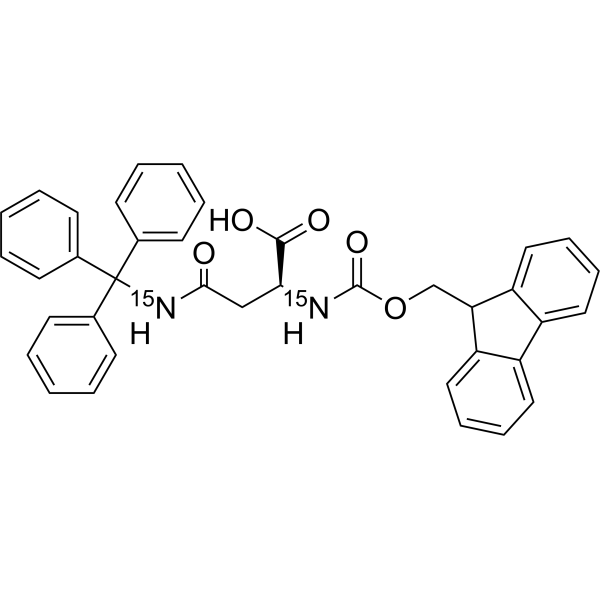
L-Asparagine-N-Fmoc,N-beta-trityl- 15N2 is a 15N-labeled L-Asparagine-N-Fmoc,N-beta-trityl .
|
-
-
- HY-N0666S10
-
|
|
|
L-Aspartic acid- 13C-1 is the 13C-labeled L-Aspartic acid (HY-N0666). L-Aspartic aicd is an amino acid that can penetrate the blood-brain barrier. L-Aspartic aicd is commonly used for preparing prodrugs to target colon and cecal tissues. L-Aspartic aicd commonly used in the study of inflammatory conditions .
|
-
-
- HY-N0667S4
-
|
|
|
L-Asparagine-4- 13C monohydrate is the 13C-labeled L-Asparagine monohydrate (HY-W017443).L-Asparagine monohydrate is an essential amino acid for leukemic cells and a substrate for L-Asparaginase. L-Asparaginase is a potent anti-leukemic enzyme that promotes asparagine (Asn) and glutamine (Gln) depletion and inhibits protein biosynthesis in lymphoblasts. Removal of L-asparagine from plasma by L-Asparaginase results in inhibition of RNA and DNA synthesis and subsequent apoptosis. L-Asparaginase has cell-killing ability in vitro and in vivo, and selectively inhibits the growth of cancer cells with low asparagine synthetase (AASNS) expression. L-Asparagine monohydrate can be used as a biomarker and sensor for the study of childhood acute lymphoblastic leukemia .
|
-
| Cat. No. |
Product Name |
|
Classification |
-
- HY-N0666
-
-
- HY-N0667
-
|
(-)-Asparagine; Asn; Asparamide
|
|
Freeze-drying Protective Agents
Solubilizing Agents
|
|
L-Asparagine is an essential amino acid for leukemic cells and a substrate for L-Asparaginase. L-Asparaginase is a potent anti-leukemic enzyme that promotes asparagine (Asn) and glutamine (Gln) depletion and inhibits protein biosynthesis in lymphoblasts. Removal of L-asparagine from plasma by L-Asparaginase results in inhibition of RNA and DNA synthesis and subsequent apoptosis. L-Asparaginase has cell-killing ability in vitro and in vivo, and selectively inhibits the growth of cancer cells with low asparagine synthetase (AASNS) expression. L-Asparagine can be used as a biomarker and sensor for the study of childhood acute lymphoblastic leukemia .
|
Your information is safe with us. * Required Fields.
Inquiry Information
- Product Name:
- Cat. No.:
- Quantity:
- MCE Japan Authorized Agent:








