



L-Aspartic acid potassium
Based on 6 publication(s) in Google Scholar
L-Aspartic acid potassium (potassium L-aspartate) is a NMDA receptor agonist and acidic amino acid. L-Aspartic acid potassium has no independent analgesic activity. L-Aspartic acid potassium can antagonize the analgesic effects of D-Aspartic acid and Morphine. L-Aspartic acid potassium regulates polymorph transformation, crystal growth/aggregation and nucleation processes of calcium carbonate, and can serve as a biomineralization template. L-Aspartic acid potassium promotes burst firing of central neurons. L-Aspartic acid potassium can be used in studies related to cerebral ischemia and epilepsy.
For research use only. We do not sell to patients.
- Purity : 98.0%
- CAS No.: 1115-63-5
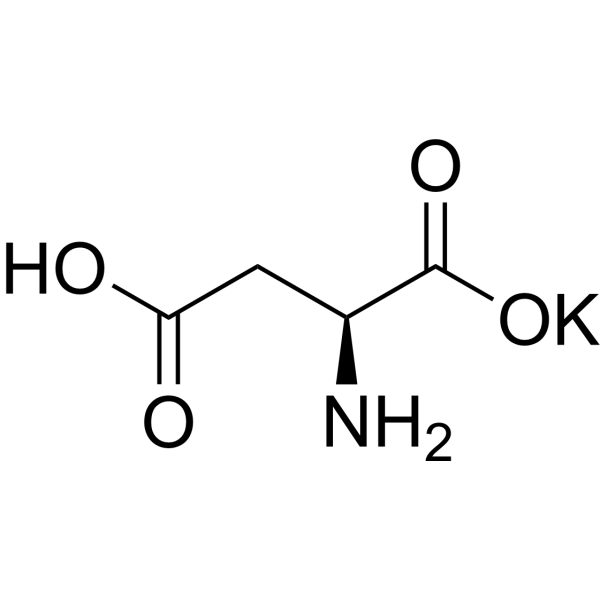
- Formula: C4H6KNO4
- Molecular Weight:171.19
-
Storage:
RT, sealed storage, away from moisture and light.
In solvent -80°C, 1 year , -20°C, 6 months

To place orders, for customer services and technical support, please contact: MedChemExpress USA
Tel: 609-228-6898 E-mail: [email protected] [email protected]


-
 Biological Activity
-
Chemical Information
-
Solvent & Solubility
- Purity & Documentation
- References
-
 Help & FAQs




Publications Citing Use of MedChemExpress (MCE) L-Aspartic acid potassium
More Customer Validation & Images

-
Others
All iGluR Isoforms
More

Biological Activity
Description
IC50 & Target
|
NMDA Receptor |
In Vitro
L-Aspartic acid (L-[3H]Asp; 0.05 μCi/mL; 1-120 min) potassium is taken up by rat brain slices, with a slice-to-medium ratio of 2.53 mL/g brain tissue at 120 minutes and an initial uptake rate of 1.22 mL/min/g brain tissue[2].
MedChemExpress (MCE) has not independently confirmed the accuracy of these methods. They are for reference only. .
In Vivo
MedChemExpress (MCE) has not independently confirmed the accuracy of these methods. They are for reference only.
-
Animal Model:BALB/C (both sexes, 25-40 g)[1]
-
Dosage:55 mg/kg; 115 mg/kg; 230 mg/kg
-
Administration:i.p.
-
Result:Did not cause any antinociceptive effect at doses of 55, 115, and 230 mg/kg.
Significantly inhibited the antinociceptive effect of 115 mg/kg D-aspartic acid at 230 mg/kg.
Shortened the duration of the antinociceptive effect of 5 mg/kg morphine at 230 mg/kg.


Chemical Information
-
CAS No. 1115-63-5
-
Appearance Solid
-
Molecular Weight 171.19
-
Formula C4H6KNO4
-
Color White to off-white
-
SMILES
N[C@@H](CC(O)=O)C(O[K])=O
-
Structure Classification
-
Initial Source
-
Shipping
Room temperature in continental US; may vary elsewhere.
-
Storage
RT, sealed storage, away from moisture and light
In solvent -80°C 1 year -20°C 6 months


Publications (6)
-
Journal Impact Factor
-
Most Recent
-
Nature
2025 Jul;643(8070):192-200. PMID: 39695227 -
Nat Protoc
2021 Jan;16(1):431-457. PMID: 33349703 -
Redox Biol
Enteric coronavirus PDCoV evokes a non-Warburg effect by hijacking pyruvic acid as a metabolic hub. [Abstract]2024 May:71:103112. PMID: 38461791
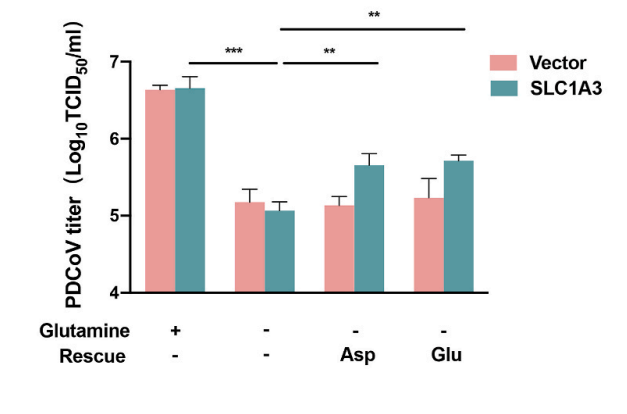
L-Aspartic acid potassium purchased from MedChemExpress. Usage Cited in: Redox Biol. 2024 May:71:103112. [Abstract]
IPI-2I cells were transfected with an empty vector or the eukaryotic expression plasmid pCAGGS-Flag-SLC1A3, and then infected with PDCoV (MOI = 0.5) in glutamine-containing medium, glutamine-free medium, or glutamine-free medium supplemented with L-Aspartic acid (Asp: 4 mM) or Glu (4 mM).
-
FASEB J
Maternal LDHB Safeguards Redox Balance and Developmental Competence During Preimplantation Embryo Cleavage. [Abstract]2026 May 31;40(10):e71888. PMID: 42117986 -
-
Amino Acids
Identification of amino acids metabolomic profiling in human plasma distinguishes lupus nephritis from systemic lupus erythematosus. [Abstract]2024 Sep 18;56(1):56. PMID: 39292313


Solvent & Solubility
In Vitro:
H2O : 100 mg/mL (584.15 mM; Need ultrasonic)
Please refer to the solubility information to select the appropriate solvent. Once prepared, please aliquot and store the solution to prevent product inactivation from repeated freeze-thaw cycles.
Storage method and period of stock solution: -80°C, 1 year; -20°C, 6 months. When stored at -80°C, please use it within 1 year. When stored at -20°C, please use it within 6 months.
* Note: If you choose water as the stock solution, please dilute it to the working solution, then filter and sterilize it with a 0.22 μm filter before use.
Please refer to the solubility information to select the appropriate solvent. Once prepared, please aliquot and store the solution to prevent product inactivation from repeated freeze-thaw cycles.
Storage method and period of stock solution: -80°C, 1 year; -20°C, 6 months. When stored at -80°C, please use it within 1 year. When stored at -20°C, please use it within 6 months.
* Note: If you choose water as the stock solution, please dilute it to the working solution, then filter and sterilize it with a 0.22 μm filter before use.
Concentration (start) × Volume (start) = Concentration (final) × Volume (final)


Purity & Documentation
-
Data Sheet (274 KB)
-
SDS (394 KB)
- English - EN (394 KB)
- Français - FR (394 KB)
- Deutsch - DE (394 KB)
- Norwegian - NO (394 KB)
- Español - ES (394 KB)
- Swedish - SV (394 KB)
- Italian - IT (394 KB)
- Korean - KR (394 KB)
- Portuguese - PT (394 KB)
-
Handling Instructions (2659 KB)
References
[1]. Onat F, et al. Antinociceptive effect of D-aspartic acid in mice. Pharmacology, biochemistry, and behavior. 1995 Aug;51(4):715-9. [Content Brief]
[2]. Hosoya K, et al. Blood-brain barrier produces significant efflux of L-aspartic acid but not D-aspartic acid: in vivo evidence using the brain efflux index method. Journal of neurochemistry. 1999 Sep;73(3):1206-11. [Content Brief]
[3]. Tong H, et al. Control over the crystal phase, shape, size and aggregation of calcium carbonate via a L-aspartic acid inducing process. Biomaterials. 2004 Aug;25(17):3923-9. [Content Brief]
[4]. MacDonald JF, et al. L-Aspartic acid induces a region of negative slope conductance in the current-voltage relationship of cultured spinal cord neurons. Brain research. 1982 Apr 08;237(1):248-53. [Content Brief]


Complete Stock Solution Preparation Table
Please refer to the solubility information to select the appropriate solvent. Once prepared, please aliquot and store the solution to prevent product inactivation from repeated freeze-thaw cycles.
Storage method and period of stock solution: -80°C, 1 year; -20°C, 6 months. When stored at -80°C, please use it within 1 year. When stored at -20°C, please use it within 6 months.
| Optional Solvent | Concentration Solvent Mass | 1 mg | 5 mg | 10 mg | 25 mg |
|---|---|---|---|---|---|
| H2O | 1 mM | 5.8415 mL | 29.2073 mL | 58.4146 mL | 146.0366 mL |
| 5 mM | 1.1683 mL | 5.8415 mL | 11.6829 mL | 29.2073 mL | |
| 10 mM | 0.5841 mL | 2.9207 mL | 5.8415 mL | 14.6037 mL | |
| 15 mM | 0.3894 mL | 1.9472 mL | 3.8943 mL | 9.7358 mL | |
| 20 mM | 0.2921 mL | 1.4604 mL | 2.9207 mL | 7.3018 mL | |
| 25 mM | 0.2337 mL | 1.1683 mL | 2.3366 mL | 5.8415 mL | |
| 30 mM | 0.1947 mL | 0.9736 mL | 1.9472 mL | 4.8679 mL | |
| 40 mM | 0.1460 mL | 0.7302 mL | 1.4604 mL | 3.6509 mL | |
| 50 mM | 0.1168 mL | 0.5841 mL | 1.1683 mL | 2.9207 mL | |
| 60 mM | 0.0974 mL | 0.4868 mL | 0.9736 mL | 2.4339 mL | |
| 80 mM | 0.0730 mL | 0.3651 mL | 0.7302 mL | 1.8255 mL | |
| 100 mM | 0.0584 mL | 0.2921 mL | 0.5841 mL | 1.4604 mL |
* Note: If you choose water as the stock solution, please dilute it to the working solution, then filter and sterilize it with a 0.22 μm filter before use.


L-Aspartic acid potassium Related Classifications
HY-N0666A Related Classifications
 Powered by Bioz