



L-Aspartic acid
Based on 6 publication(s) in Google Scholar
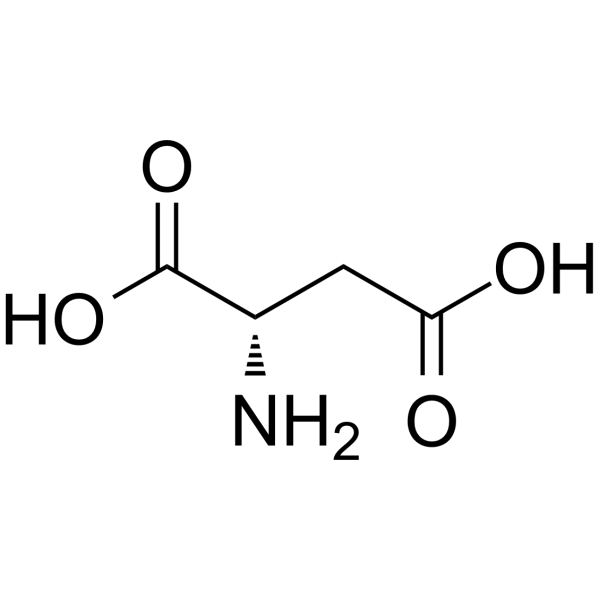
L-Aspartic acid is a NMDA receptor agonist and acidic amino acid. L-Aspartic acid has no independent analgesic activity. L-Aspartic acid can antagonize the analgesic effects of D-Aspartic acid and Morphine. L-Aspartic acid regulates polymorph transformation, crystal growth/aggregation and nucleation processes of calcium carbonate, and can serve as a biomineralization template. L-Aspartic acid promotes burst firing of central neurons. L-Aspartic acid can be used in studies related to cerebral ischemia and epilepsy.
Para uso exclusivo en investigación. No vendemos a pacientes.
- Pureza : 99.88%
- No. CAS: 56-84-8
- Fòrmula: C4H7NO4
- Peso molecular:133.10
-
Almacenamiento:
Store at room temperature 3 years.
In solvent -80°C, 2 years , -20°C, 1 year

To place orders, for customer services and technical support, please contact: MedChemExpress USA
Tel: 609-228-6898 E-mail: [email protected] [email protected]


-
 Actividad biológica
-
Chemical Information
-
Solvente y solubilidad
- Pureza y Documentación
- Referencias
-
 Help & FAQs


-
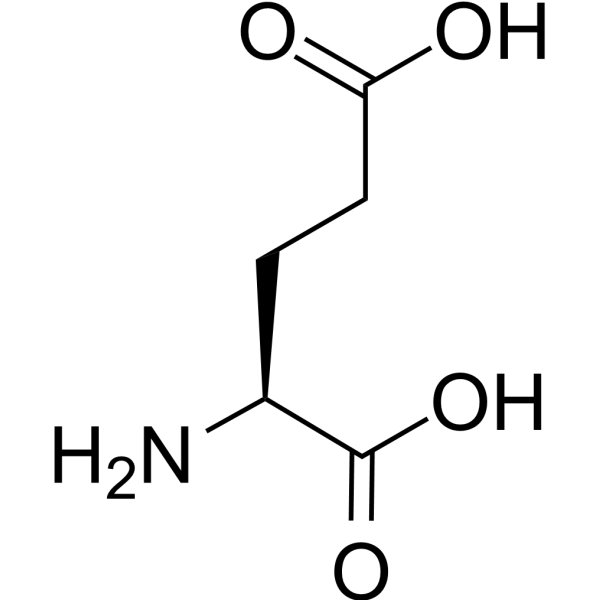
HY-14608
L-Glutamic acidGlutamate Receptors Agonist -
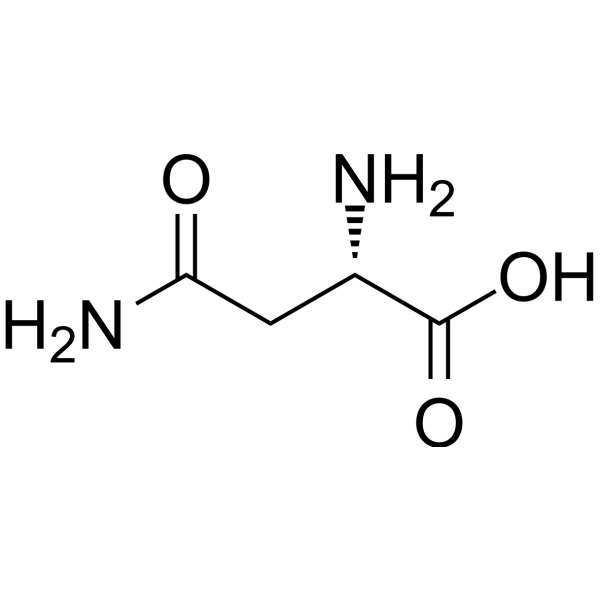
HY-N0667
L-AsparagineEndogenous Metabolite -
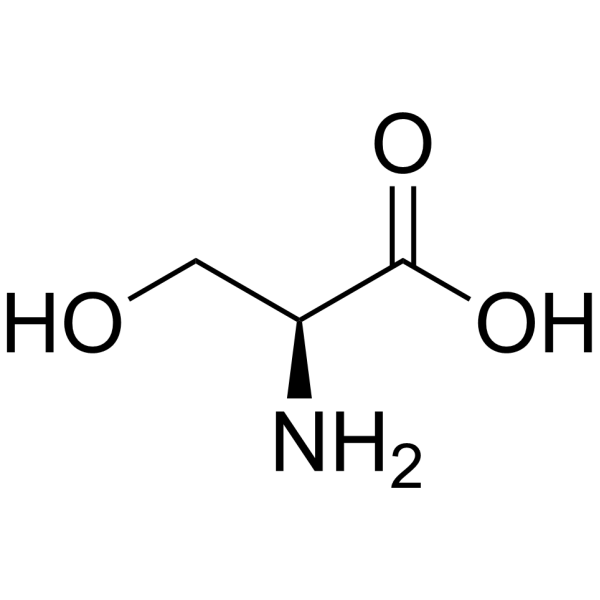
HY-N0650
L-SerineAmino Acid -
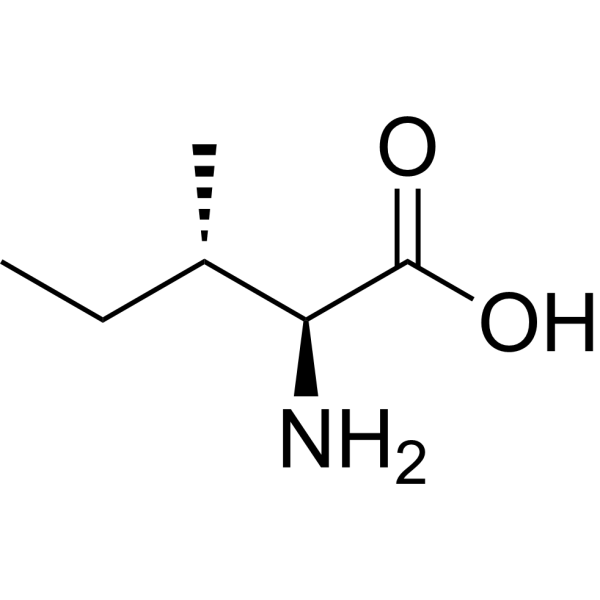
HY-N0771
L-IsoleucineEndogenous Metabolite, L-enantiomer of Isoleucine -
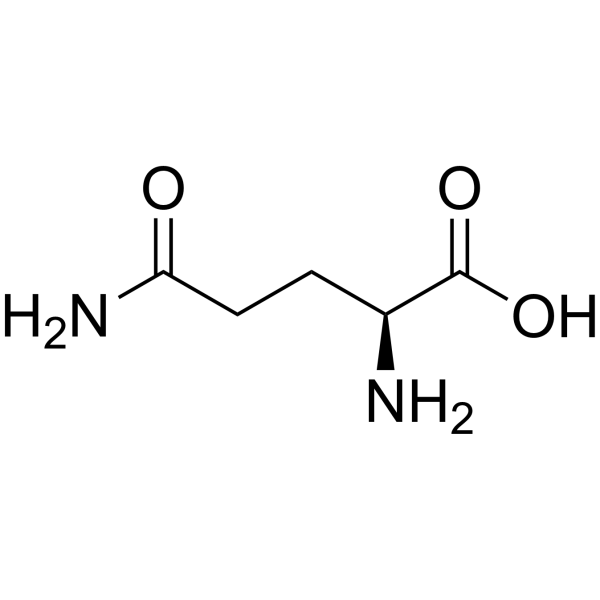
HY-N0390
L-GlutamineEndogenous Metabolite -
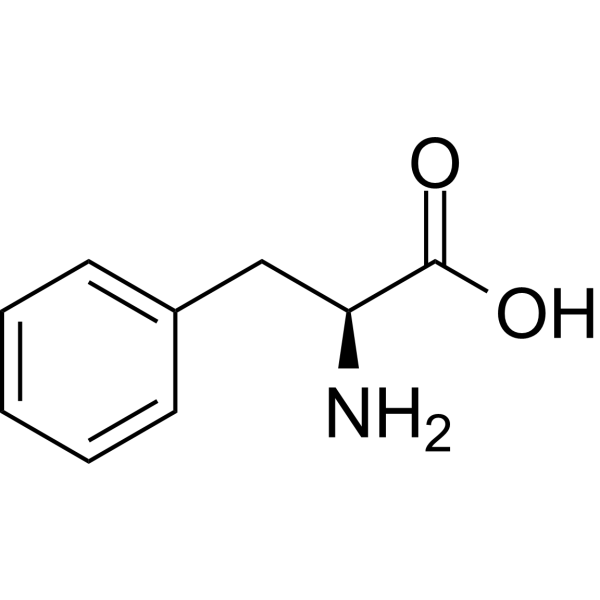
HY-N0215
L-PhenylalanineCalcium Channels Antagonist -
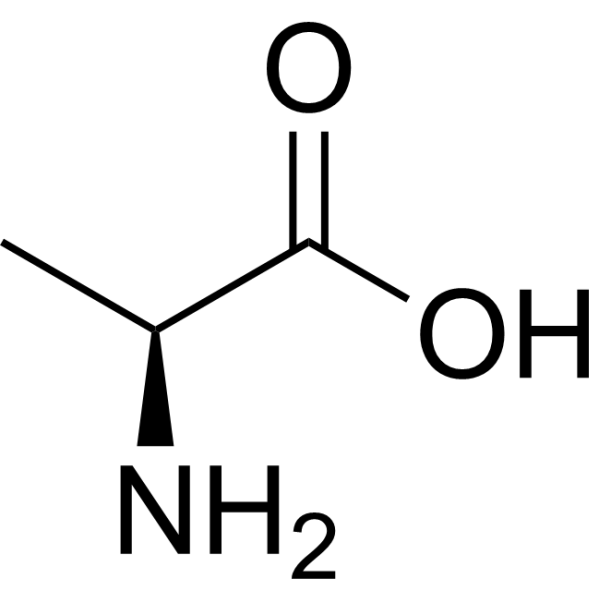
HY-N0229
L-AlanineEndogenous Metabolite -
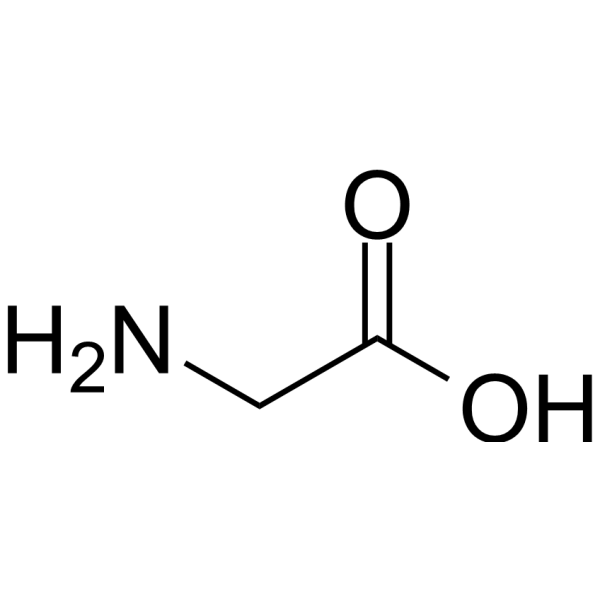
HY-Y0966
GlycineNMDAR Agonist -
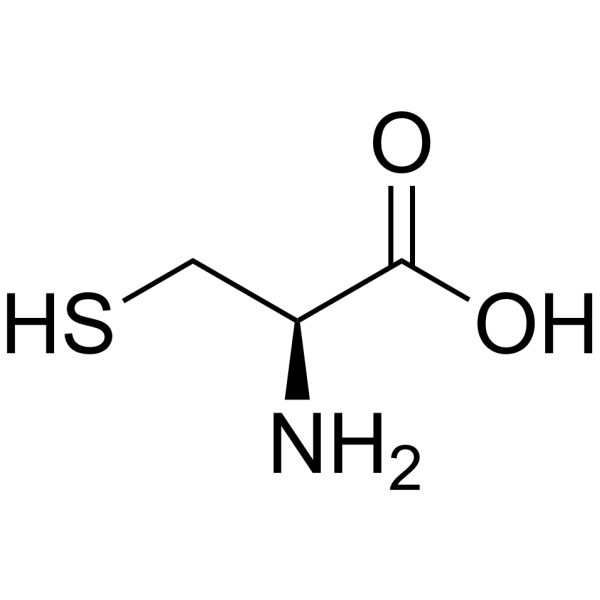
HY-Y0337
L-CysteineAnorectic Agent -
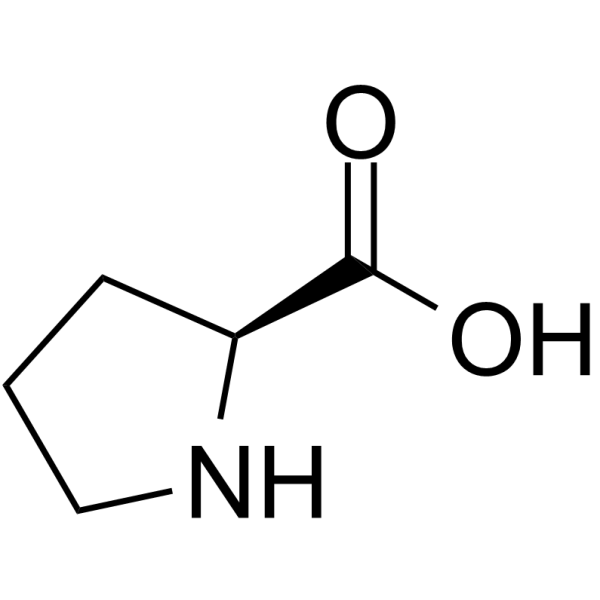
HY-Y0252
L-Proline -
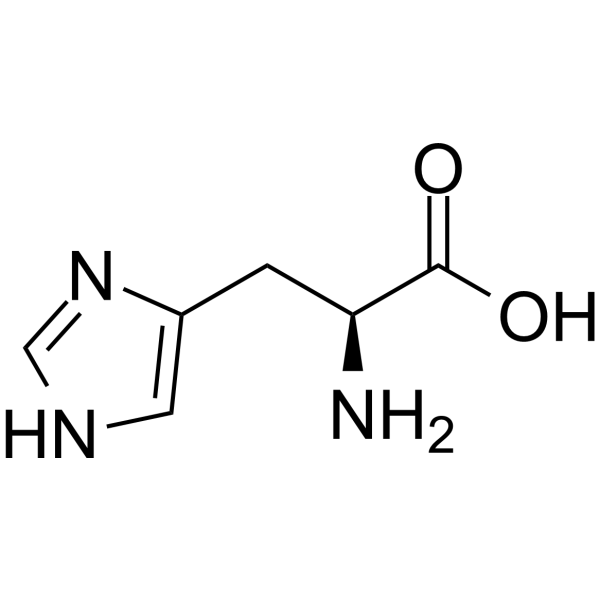
HY-N0832
L-HistidineEndogenous Metabolite -
HY-N0326
L-MethionineEndogenous Metabolite
Publications Citing Use of MedChemExpress (MCE) L-Aspartic acid
More Customer Validation & Images

-
Others
Ver todos los productos específicos de isoformas iGluR
More

Actividad biológica
Descripciòn
IC50 & Target
|
NMDA Receptor |
Cellular Effect
|
Cell Line

|
Type | Value | Description | References |
|---|---|---|---|---|
| CHO | EC50 |
>1000 μM
Compound: (S)-1
|
Agonistic activity at mGlu2 receptor expressed in CHO cells
Agonistic activity at mGlu2 receptor expressed in CHO cells
|
[PMID: 8759641] |
| CHO | EC50 |
>1000 μM
Compound: (S)-1
|
Agonistic activity at mGlu6 receptor expressed in CHO cells
Agonistic activity at mGlu6 receptor expressed in CHO cells
|
[PMID: 8759641] |
| CHO | EC50 |
>1000 μM
Compound: (S)-1
|
Agonistic activity at mGlu1-alpha receptor expressed in CHO cells
Agonistic activity at mGlu1-alpha receptor expressed in CHO cells
|
[PMID: 8759641] |
| HEK293 | EC50 |
398 μM
Compound: L-asp
|
Inhibition of the Excitatory Amino Acid Transporter 1 (EAAT1, SLC1A3) as assessed by a phenotypic impedance-based assay detecting changes in cell morphology by L-glutamate uptake in HEK-293 JumpIN-SLC1A3 cells (PubChem AID: 1745862)
Inhibition of the Excitatory Amino Acid Transporter 1 (EAAT1, SLC1A3) as assessed by a phenotypic impedance-based assay detecting changes in cell morphology by L-glutamate uptake in HEK-293 JumpIN-SLC1A3 cells (PubChem AID: 1745862)
|
[PMID: 35677430] |
| HEK293 | EC50 |
15 μM
Compound: 5960
|
Substrate uptake by the Excitatory Amino Acid Transporter 1 (EAAT1, SLC1A3) as assessed by the fluorescent FLIPR membrane potential dye in HEK-293 JumpIN-SLC1A3 cells (PubChem AID: 1745864)
Substrate uptake by the Excitatory Amino Acid Transporter 1 (EAAT1, SLC1A3) as assessed by the fluorescent FLIPR membrane potential dye in HEK-293 JumpIN-SLC1A3 cells (PubChem AID: 1745864)
|
10.5281/zenodo.6782621 |
In Vitro
MedChemExpress (MCE) has not independently confirmed the accuracy of these methods. They are for reference only.
In Vivo
MedChemExpress (MCE) has not independently confirmed the accuracy of these methods. They are for reference only.
-
Animal Model:BALB/C (both sexes, 25-40 g)[1]
-
Dosage:55 mg/kg; 115 mg/kg; 230 mg/kg
-
Administration:i.p.
-
Result:Did not cause any antinociceptive effect at doses of 55, 115, and 230 mg/kg.
Significantly inhibited the antinociceptive effect of 115 mg/kg D-aspartic acid at 230 mg/kg.
Shortened the duration of the antinociceptive effect of 5 mg/kg morphine at 230 mg/kg.


Chemical Information
-
No. CAS 56-84-8
-
Appearance Solid
-
Peso molecular 133.10
-
Fòrmula C4H7NO4
-
Color White to off-white
-
SMILES
N[C@H](C(O)=O)CC(O)=O
-
Structure Classification
-
Initial Source
-
Envío
Room temperature in continental US; may vary elsewhere.
-
Almacenamiento
Store at room temperature 3 years
In solvent -80°C 2 years -20°C 1 year


Publications (6)
-
Journal Impact Factor
-
Most Recent
-
Nature
2025 Jul;643(8070):192-200. PMID: 39695227 -
Nat Protoc
2021 Jan;16(1):431-457. PMID: 33349703 -
Redox Biol
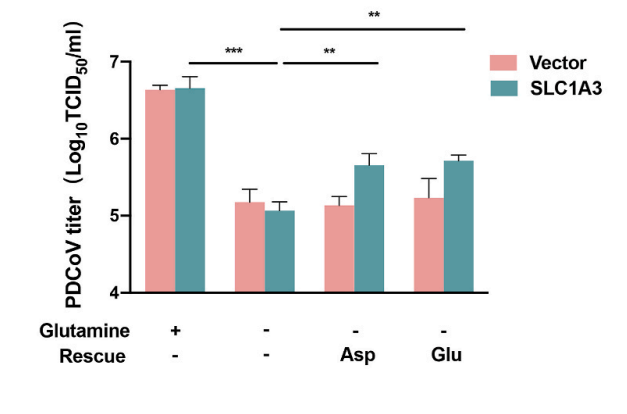
Enteric coronavirus PDCoV evokes a non-Warburg effect by hijacking pyruvic acid as a metabolic hub. [Abstract]2024 May:71:103112. PMID: 38461791
L-Aspartic acid purchased from MedChemExpress. Usage Cited in: Redox Biol. 2024 May:71:103112. [Abstract]
IPI-2I cells were transfected with an empty vector or the eukaryotic expression plasmid pCAGGS-Flag-SLC1A3, and then infected with PDCoV (MOI = 0.5) in glutamine-containing medium, glutamine-free medium, or glutamine-free medium supplemented with L-Aspartic acid (Asp: 4 mM) or Glu (4 mM).
-
FASEB J
Maternal LDHB Safeguards Redox Balance and Developmental Competence During Preimplantation Embryo Cleavage. [Abstract]2026 May 31;40(10):e71888. PMID: 42117986 -
-
Amino Acids
Identification of amino acids metabolomic profiling in human plasma distinguishes lupus nephritis from systemic lupus erythematosus. [Abstract]2024 Sep 18;56(1):56. PMID: 39292313


Solvente y solubilidad
In Vitro:
1M NaOH : 100 mg/mL (751.31 mM; ultrasonic and adjust pH to 12 with NaOH)
H2O : 2 mg/mL (15.03 mM; ultrasonic and warming and heat to 60°C)
DMSO : < 1 mg/mL (insoluble or slightly soluble)
Please refer to the solubility information to select the appropriate solvent. Once prepared, please aliquot and store the solution to prevent product inactivation from repeated freeze-thaw cycles.
Storage method and period of stock solution: -80°C, 2 years; -20°C, 1 year. When stored at -80°C, please use it within 2 years. When stored at -20°C, please use it within 1 year.
* Note: If you choose water as the stock solution, please dilute it to the working solution, then filter and sterilize it with a 0.22 μm filter before use.
Please refer to the solubility information to select the appropriate solvent. Once prepared, please aliquot and store the solution to prevent product inactivation from repeated freeze-thaw cycles.
Storage method and period of stock solution: -80°C, 2 years; -20°C, 1 year. When stored at -80°C, please use it within 2 years. When stored at -20°C, please use it within 1 year.
* Note: If you choose water as the stock solution, please dilute it to the working solution, then filter and sterilize it with a 0.22 μm filter before use.
Concentration (start) × Volume (start) = Concentration (final) × Volume (final)
In Vivo:
For the following dissolution methods, please prepare the working solution directly:
It is recommended to prepare fresh solutions and use them promptly within a short period of time.
The percentages shown for the solvents indicate their volumetric ratio in the final prepared solution. If precipitation or phase separation occurs during preparation, heat and/or sonication can be used to aid dissolution.
Add each solvent one by one: PBS
Solubility: 1 mg/mL (7.51 mM); Clear solution; Need ultrasonic and warming and heat to 60°C


Pureza y Documentación
-
Ficha de datos (294 KB)
-
SDS (393 KB)
- English - EN (393 KB)
- Français - FR (393 KB)
- Deutsch - DE (393 KB)
- Norwegian - NO (393 KB)
- Español - ES (393 KB)
- Swedish - SV (393 KB)
- Italian - IT (393 KB)
- Korean - KR (393 KB)
- Portuguese - PT (393 KB)
-
Instrucciones de manejo (2659 KB)
Referencias
[1]. Onat F, et al. Antinociceptive effect of D-aspartic acid in mice. Pharmacology, biochemistry, and behavior. 1995 Aug;51(4):715-9. [Content Brief]
[2]. Hosoya K, et al. Blood-brain barrier produces significant efflux of L-aspartic acid but not D-aspartic acid: in vivo evidence using the brain efflux index method. Journal of neurochemistry. 1999 Sep;73(3):1206-11. [Content Brief]
[3]. Tong H, et al. Control over the crystal phase, shape, size and aggregation of calcium carbonate via a L-aspartic acid inducing process. Biomaterials. 2004 Aug;25(17):3923-9. [Content Brief]
[4]. MacDonald JF, et al. L-Aspartic acid induces a region of negative slope conductance in the current-voltage relationship of cultured spinal cord neurons. Brain research. 1982 Apr 08;237(1):248-53. [Content Brief]


Complete Stock Solution Preparation Table
Please refer to the solubility information to select the appropriate solvent. Once prepared, please aliquot and store the solution to prevent product inactivation from repeated freeze-thaw cycles.
Storage method and period of stock solution: -80°C, 2 years; -20°C, 1 year. When stored at -80°C, please use it within 2 years. When stored at -20°C, please use it within 1 year.
| Optional Solvent | Concentration Solvent Mass | 1 mg | 5 mg | 10 mg | 25 mg |
|---|---|---|---|---|---|
| H2O / 1M NaOH | 1 mM | 7.5131 mL | 37.5657 mL | 75.1315 mL | 187.8287 mL |
| 5 mM | 1.5026 mL | 7.5131 mL | 15.0263 mL | 37.5657 mL | |
| 10 mM | 0.7513 mL | 3.7566 mL | 7.5131 mL | 18.7829 mL | |
| 15 mM | 0.5009 mL | 2.5044 mL | 5.0088 mL | 12.5219 mL | |
| 1M NaOH | 20 mM | 0.3757 mL | 1.8783 mL | 3.7566 mL | 9.3914 mL |
| 25 mM | 0.3005 mL | 1.5026 mL | 3.0053 mL | 7.5131 mL | |
| 30 mM | 0.2504 mL | 1.2522 mL | 2.5044 mL | 6.2610 mL | |
| 40 mM | 0.1878 mL | 0.9391 mL | 1.8783 mL | 4.6957 mL | |
| 50 mM | 0.1503 mL | 0.7513 mL | 1.5026 mL | 3.7566 mL | |
| 60 mM | 0.1252 mL | 0.6261 mL | 1.2522 mL | 3.1305 mL | |
| 80 mM | 0.0939 mL | 0.4696 mL | 0.9391 mL | 2.3479 mL | |
| 100 mM | 0.0751 mL | 0.3757 mL | 0.7513 mL | 1.8783 mL |
* Note: If you choose water as the stock solution, please dilute it to the working solution, then filter and sterilize it with a 0.22 μm filter before use.


L-Aspartic acid Related Classifications
HY-N0666 Related Classifications
 Powered by Bioz