



L-Aspartic acid monocesium
Based on 5 publication(s) in Google Scholar
L-Aspartic acid monocesium (monocesium L-aspartate) is a NMDA receptor agonist and acidic amino acid. L-Aspartic acid monocesium has no independent analgesic activity. L-Aspartic acid monocesium can antagonize the analgesic effects of D-Aspartic acid and Morphine. L-Aspartic acid monocesium regulates polymorph transformation, crystal growth/aggregation and nucleation processes of calcium carbonate, and can serve as a biomineralization template. L-Aspartic acid monocesium promotes burst firing of central neurons. L-Aspartic acid monocesium can be used in studies related to cerebral ischemia and epilepsy.
Nos produits utilisent uniquement pour la recherche. Nous ne vendons pas aux patients.
- CAS No.: 845744-47-0
- Formule: C4H6CsNO4
- Masse moléculaire:265.00
-
Stockage:Powder -20°C, 3 years , 4°C, 2 years ; In solvent -80°C, 6 months , -20°C, 1 month


To place orders, for customer services and technical support, please contact: MedChemExpress USA
Tel: 609-228-6898 E-mail: [email protected] [email protected]


-
 Activité biologique
-
Chemical Information
- Pureté et documentation
- Références
-
 Help & FAQs


Publications Citing Use of MedChemExpress (MCE) L-Aspartic acid monocesium
More Customer Validation & Images

-
Others
Voir tous les produits spécifiques à Isoform iGluR
More

Activité biologique
Description
IC50 & Target
|
NMDA Receptor |
In Vitro
L-Aspartic acid (L-[3H]Asp; 0.05 μCi/mL; 1-120 min) monocesium is taken up by rat brain slices, with a slice-to-medium ratio of 2.53 mL/g brain tissue at 120 minutes and an initial uptake rate of 1.22 mL/min/g brain tissue[2].
MedChemExpress (MCE) has not independently confirmed the accuracy of these methods. They are for reference only. .
In Vivo
MedChemExpress (MCE) has not independently confirmed the accuracy of these methods. They are for reference only.
-
Animal Model:BALB/C (both sexes, 25-40 g)[1]
-
Dosage:55 mg/kg; 115 mg/kg; 230 mg/kg
-
Administration:i.p.
-
Result:Did not cause any antinociceptive effect at doses of 55, 115, and 230 mg/kg.
Significantly inhibited the antinociceptive effect of 115 mg/kg D-aspartic acid at 230 mg/kg.
Shortened the duration of the antinociceptive effect of 5 mg/kg morphine at 230 mg/kg.


Chemical Information
-
CAS No. 845744-47-0
-
Appearance Solid
-
Masse moléculaire 265.00
-
Formule C4H6CsNO4
-
Color White to off-white
-
SMILES
O=C(O[Cs])C[C@H](N)C(O)=O
-
Livraison
Room temperature in continental US; may vary elsewhere.
-
Stockage
Powder -20°C 3 years 4°C 2 years In solvent -80°C 6 months -20°C 1 month


Publications (5)
-
Journal Impact Factor
-
Most Recent
-
Nature
2025 Jul;643(8070):192-200. PMID: 39695227 -
Nat Protoc
2021 Jan;16(1):431-457. PMID: 33349703 -
Redox Biol
Enteric coronavirus PDCoV evokes a non-Warburg effect by hijacking pyruvic acid as a metabolic hub. [Abstract]2024 May:71:103112. PMID: 38461791
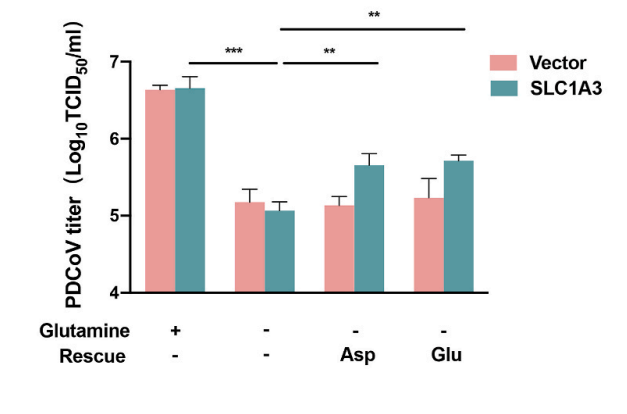
L-Aspartic acid monocesium purchased from MedChemExpress. Usage Cited in: Redox Biol. 2024 May:71:103112. [Abstract]
IPI-2I cells were transfected with an empty vector or the eukaryotic expression plasmid pCAGGS-Flag-SLC1A3, and then infected with PDCoV (MOI = 0.5) in glutamine-containing medium, glutamine-free medium, or glutamine-free medium supplemented with L-Aspartic acid (Asp: 4 mM) or Glu (4 mM).
-
FASEB J
Maternal LDHB Safeguards Redox Balance and Developmental Competence During Preimplantation Embryo Cleavage. [Abstract]2026 May 31;40(10):e71888. PMID: 42117986 -
Amino Acids
Identification of amino acids metabolomic profiling in human plasma distinguishes lupus nephritis from systemic lupus erythematosus. [Abstract]2024 Sep 18;56(1):56. PMID: 39292313


Pureté et documentation
-
Fiche technique (272 KB)
-
SDS (254 KB)
- English - EN (254 KB)
- Français - FR (254 KB)
- Deutsch - DE (254 KB)
- Norwegian - NO (254 KB)
- Español - ES (254 KB)
- Swedish - SV (254 KB)
- Italian - IT (254 KB)
- Korean - KR (254 KB)
- Portuguese - PT (254 KB)
-
Instruction de manipulation (2659 KB)
Références
[1]. Onat F, et al. Antinociceptive effect of D-aspartic acid in mice. Pharmacology, biochemistry, and behavior. 1995 Aug;51(4):715-9. [Content Brief]
[2]. Hosoya K, et al. Blood-brain barrier produces significant efflux of L-aspartic acid but not D-aspartic acid: in vivo evidence using the brain efflux index method. Journal of neurochemistry. 1999 Sep;73(3):1206-11. [Content Brief]
[3]. Tong H, et al. Control over the crystal phase, shape, size and aggregation of calcium carbonate via a L-aspartic acid inducing process. Biomaterials. 2004 Aug;25(17):3923-9. [Content Brief]
[4]. MacDonald JF, et al. L-Aspartic acid induces a region of negative slope conductance in the current-voltage relationship of cultured spinal cord neurons. Brain research. 1982 Apr 08;237(1):248-53. [Content Brief]

Calculators
Concentration (start) × Volume (start) = Concentration (final) × Volume (final)


L-Aspartic acid monocesium Related Classifications
HY-N0666E Related Classifications
 Powered by Bioz