








1. Search Result
Search Result
Results for "

Leu-Leu-Leu

" in MedChemExpress (MCE) Product Catalog:

47

Inhibitors & Agonists

1

Fluorescent Dyes

1

Biochemical Assay Reagents

52

Peptides

2

Isotope-Labeled Compounds

1

GMP Molecules

Cat. No. Product Name Target Research Areas Chemical Structure
  • HY-13259
    MG-132
    Maximum Cited Publications
    1998 Publications Verification

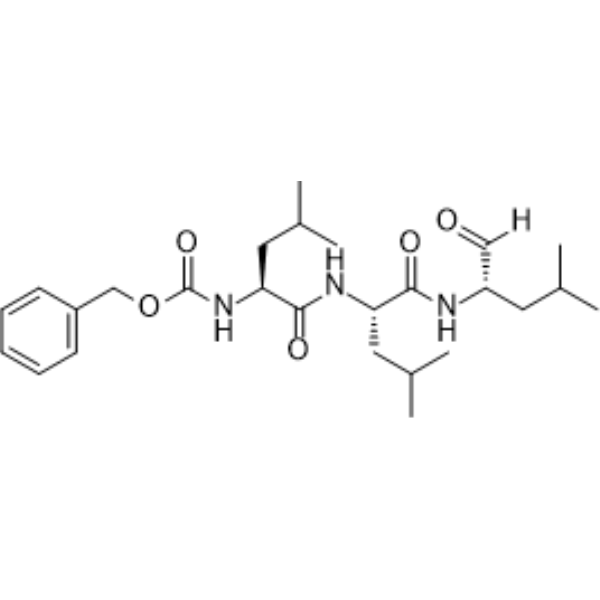
    Z-Leu-Leu-Leu-al; MG132

    Proteasome Autophagy Apoptosis Cancer
    MG-132 (Z-Leu-Leu-Leu-al) is a potent proteasome and calpain inhibitor with IC50s of 100 nM and 1.2 μM, respectively. MG-132 effectively blocks the proteolytic activity of the 26S proteasome complex. MG-132, a peptide aldehyde, also is an autophagy activator. MG-132 also induces apoptosis .
    MG-132
  • HY-P1061
    Colivelin
    Maximum Cited Publications
    92 Publications Verification

    STAT Amyloid-β Neurological Disease
    Colivelin is a brain penetrant neuroprotective peptide and a potent activator of STAT3, suppresses neuronal death by activating STAT3 in vitro . Colivelin exhibits long-term beneficial effects against neurotoxicity, Aβ deposition, neuronal apoptosis, and synaptic plasticity deficits in neurodegenerative disease . Colivelin has the potential for the treatment of alzheimer's disease and ischemic brain injury
    Colivelin
  • HY-P1928

    Bcl-2 Family Neurological Disease Endocrinology
    Humanin, an anti-apoptotic peptide of 24 amino acids, is a Bax inhibitor. Humanin prevents the translocation of Bax from cytosol to mitochondria, blocks Bax from the inactive to active conformation. Humanin is a mitochondria-associated peptide with a neuroprotective effect against AD-related neurotoxicity. Humanin also improves overall insulin sensitivity in animal. Humanin are related to aging .
    Humanin analogue, in which the serine at position 14 is replaced by glycine, names HNG .
    Humanin
  • HY-P1061A
    Colivelin TFA
    Maximum Cited Publications
    92 Publications Verification

    STAT Amyloid-β Apoptosis Neurological Disease
    Colivelin TFA is a brain penetrant neuroprotective peptide and a potent activator of STAT3, suppresses neuronal death by activating STAT3 in vitro . Colivelin TFA exhibits long-term beneficial effects against neurotoxicity, Aβ deposition, neuronal apoptosis, and synaptic plasticity deficits in neurodegenerative disease . Colivelin TFA has the potential for the treatment of alzheimer's disease and ischemic brain injury .
    Colivelin TFA
  • HY-P1108A
    Astressin 2B TFA
    1 Publications Verification

    CRFR Neurological Disease Inflammation/Immunology
    Astressin 2B TFA is a blood-brain barrier-impermeable, highly selective CRFR2 antagonist (rCRFR2, IC50=0.57 nM). Astressin 2B TFA blocks the protective effects mediated by CRFR2, thereby exacerbating indomethacin (HY-14397)-induced hemorrhagic intestinal injury in rats. Astressin 2B TFA reverses the protective effects of Urocortin 1 against intestinal hypermotility, bacterial invasion and upregulation of inflammatory mediators. Astressin 2B TFA also blocks the anxiogenic effect of Urocortin 2 and attenuates stress-induced anxiety-related behaviors. In the Clostridioides difficile toxin A (C. difficile toxin A)-mediated enteritis model, Astressin 2B TFA mimics the phenotype of CRFR2-deficient mice, significantly exacerbating intestinal epithelial damage, edema, neutrophil migration and the expression of multiple proinflammatory cytokines. Astressin 2B TFA is an important tool molecule for investigating the intestinal protective mechanisms of CRFR2 .
    Astressin 2B TFA
  • HY-P1108
    Astressin 2B
    1 Publications Verification

    CRFR Neurological Disease Inflammation/Immunology
    Astressin 2B is a blood-brain barrier-impermeable, highly selective CRFR2 antagonist (rCRFR2, IC50=0.57 nM). Astressin 2B blocks the protective effects mediated by CRFR2, thereby exacerbating indomethacin (HY-14397)-induced hemorrhagic intestinal injury in rats. Astressin 2B reverses the protective effects of Urocortin 1 against intestinal hypermotility, bacterial invasion and upregulation of inflammatory mediators. Astressin 2B also blocks the anxiogenic effect of Urocortin 2 and attenuates stress-induced anxiety-related behaviors. In the Clostridioides difficile toxin A (C. difficile toxin A)-mediated enteritis model, Astressin 2B mimics the phenotype of CRFR2-deficient mice, significantly exacerbating intestinal epithelial damage, edema, neutrophil migration and the expression of multiple proinflammatory cytokines. Astressin 2B is an important tool molecule for investigating the intestinal protective mechanisms of CRFR2 .
    Astressin 2B
  • HY-129867

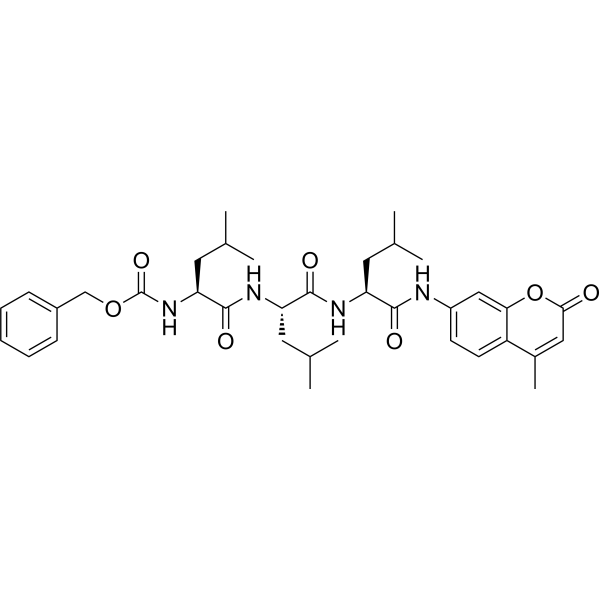
    Z-LLL-AMC

    Proteasome Others
    Z-Leu-Leu-Leu-AMC is a fluorogenic substrate for measuring the chymotrypsin-like protease activity of the 20S proteasome .
    Z-Leu-Leu-Leu-AMC
  • HY-W011116

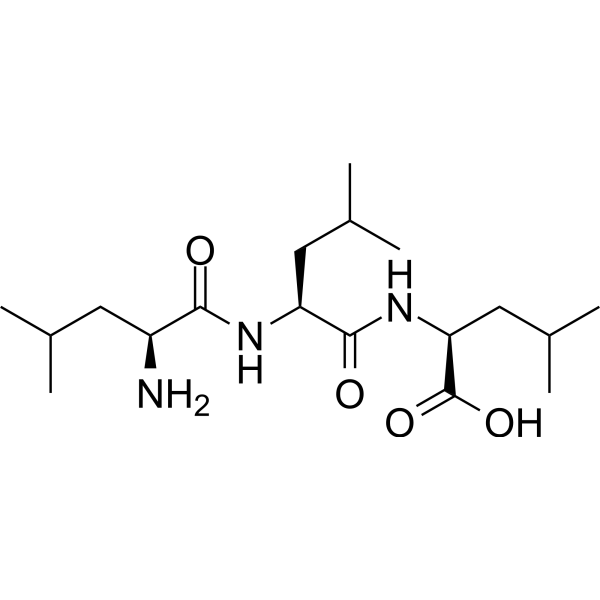
    H-Leu-Leu-Leu-OH; TriLeucine

    Amino Acid Derivatives Others
    (S)-2-((S)-2-((S)-2-Amino-4-methylpentanamido)-4-methylpentanamido)-4-methylpentanoic acid is a leucine derivative .
    Leu-Leu-Leu
  • HY-P4371

    Biochemical Assay Reagents Inflammation/Immunology
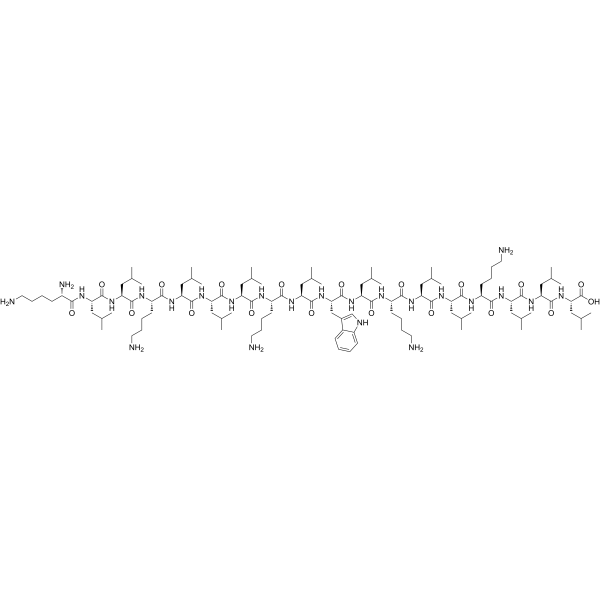
    Hel 13-5 is a monomeric, lipophilic, basic amphipathic α-helical synthetic peptide composed of 18 amino acid residues. Hel 13-5 is designed as a substitute for proteins in artificial pulmonary surfactants, and it mimics the interaction between the N-terminal fragment of human pulmonary surfactant protein B and lipids. Hel 13-5 can bind to phospholipids for the development of pulmonary surfactant model systems. Hel 13-5 can be used in studies related to respiratory distress syndrome .
    Hel 13-5
  • HY-P3993A

    14-Glycine-Humanin (human) acetate

    Apoptosis Neurological Disease
    (Gly14)-Humanin (human) (14-Glycine-Humanin (human)) acetate is an analog of Humanin in which the 14th amino acid serine was replaced with glycine (Gly). (Gly14)-Humanin (human) acetate has anti-apoptotic and neuroprotective functions .
    (Gly14)-Humanin (human) acetate
  • HY-P10816

    Ac-(DLeu)LLLRVK-Amba

    Bacterial Infection Cancer
    PACE4 Inhibitory peptide C23 (Compound C23; Ac-(DLeu)LLLRVK-Amba)), a potent peptidomimetic inhibitor, is a PACE4 inhibitor. PACE4 Inhibitory peptide C23e shows antiproliferative effects against PCa cell lines (Ki = 5 nM; IC50 = 25 and 40 μM for DU145 and LNCaP, respectively). PACE4 Inhibitory peptide C23 also blocks tumor growth in vivo in LNCaP xenograft-bearing mice .
    PACE4 Inhibitory peptide C23
  • HY-P10238

    Apoptosis Cancer
    MYBMIM is an inhibitor for assembly of the molecular MYB:CBP/P300 complex. MYBMIM inhibits growth of leukemia cells .
    MYBMIM
  • HY-P2287
    Cortagine
    3 Publications Verification

    CRFR Neurological Disease
    Cortagine is a specific corticotropin-releasing factor receptor subtype 1 (CRF1) agonist with an EC50 of 2.6 nM for rCRF1. Cortagine is an anxiolytic and antidepressive agent in the mouse model .
    Cortagine
  • HY-P5975

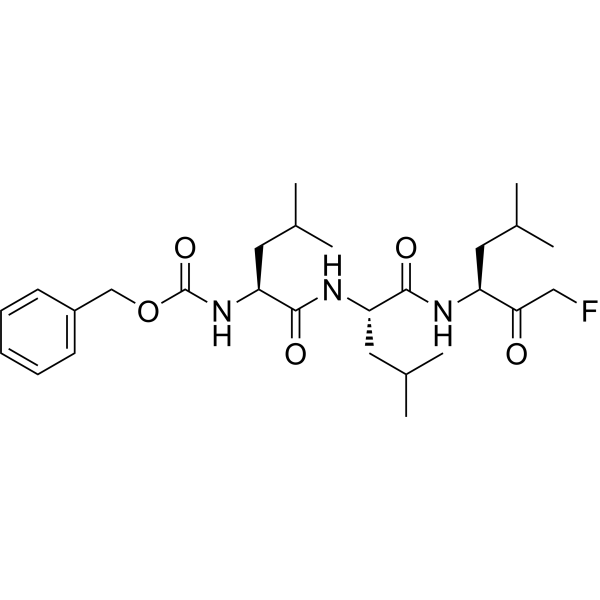
    Z-LLL-FMK

    Cathepsin SARS-CoV Infection
    Z-Leu-Leu-Leu-fluoromethyl ketone (Z-LLL-FMK) is a cysteine protease inhibitor. Z-Leu-Leu-Leu-fluoromethyl ketone inhibits SARS infection. Z-Leu-Leu-Leu-fluoromethyl ketone also protects mice against a T. crassiceps challenge .
    Z-Leu-Leu-Leu-fluoromethyl ketone
  • HY-P10422A

    ML-peptide, Multi-Leucine (ML)-peptide triacetate

    Autophagy Cancer
    Multi-Leu peptide (ML-peptide) triacetate is a potent inhibitor of PACE4 (Ki=22 nM). Multi-Leu peptide triacetate can competitively bind to the active site of PACE4 by simulating the substrate sequence of PACE4, thereby inhibiting its catalytic activity. Multi-Leu peptide triacetate can be used to study the specific mechanism of PACE4 in the development of prostate cancer .
    Multi-Leu peptide triacetate
  • HY-P1107
    Antisauvagine-30
    4 Publications Verification

    aSvg-30

    CRFR Neurological Disease
    Antisauvagine-30 (aSvg-30) is a potent, competitive and selective CRF2 receptor antagonist with Kd values of 1.4 nM and 153.6 nM for mouse CRF and rat CRF1 receptors, respectively .
    Antisauvagine-30
  • HY-P1106A

    CFTR Cardiovascular Disease
    K41498 TFA is a highly selective CRF 2 receptor antagonist, with a Ki of 0.66 nM for human CRF2α receptor and a Ki of 0.62 nM for human CRF2β receptor. K41498 TFA inhibits cAMP accumulation in cells expressing CRF2. K41498 TFA antagonizes the hypotensive response induced by systemic administration of urocortin in conscious rats. K41498 TFA undergoes radioiodination without loss of activity and serves for autoradiographic studies of native CRF2 receptors in rat brain and peripheral tissues .
    K41498 TFA
  • HY-P1294A

    CRFR Neurological Disease
    α-Helical CRF(9-41) TFA is a competitive CRF2 receptor antagonist with KB of ~100 nM. α-Helical CRF(9-41) TFA is also a partial agonist of CRF1 receptor with an EC50 of 140 nM .
    α-Helical CRF(9-41) TFA
  • HY-P1298A

    CRFR Cardiovascular Disease Neurological Disease
    Sauvagine TFA is a corticotropin-releasing factor receptor (CRFR) agonist. Sauvagine TFA activates HM-CRF receptors to stimulate intracellular cAMP accumulation, activates PC-CRF receptors to trigger associated signaling pathways, and stimulates the hypothalamic-pituitary-adrenal axis. Sauvagine TFA can be used for research on central nervous system and blood diseases .
    Sauvagine TFA
  • HY-13259G

    Z-Leu-Leu-Leu-al

    Proteasome Autophagy Apoptosis Cancer
    MG-132 (GMP) (Z-Leu-Leu-Leu-al (GMP)) is MG-132 (HY-13259) produced by using GMP guidelines. GMP small molecules works appropriately as an auxiliary reagent for cell therapy manufacture. MG-132 (Z-Leu-Leu-Leu-al) is a potent proteasome and calpain inhibitor with IC50s of 100 nM and 1.2 μM, respectively. MG-132 effectively blocks the proteolytic activity of the 26S proteasome complex. MG-132, a peptide aldehyde, also is an autophagy activator. MG-132 also induces apoptosis .
    MG-132
  • HY-P1106

    CRFR Cardiovascular Disease
    K41498 is a highly selective CRF 2 receptor antagonist, with a Ki of 0.66 nM for human CRF2α receptor and a Ki of 0.62 nM for human CRF2β receptor. K41498 inhibits cAMP accumulation in cells expressing CRF2. K41498 antagonizes the hypotensive response induced by systemic administration of urocortin in conscious rats. K41498 undergoes radioiodination without loss of activity and serves for autoradiographic studies of native CRF2 receptors in rat brain and peripheral tissues .
    K41498
  • HY-P1298

    CRFR Cardiovascular Disease Neurological Disease
    Sauvagine is a corticotropin-releasing factor receptor (CRFR) agonist. Sauvagine activates HM-CRF receptors to stimulate intracellular cAMP accumulation, activates PC-CRF receptors to trigger associated signaling pathways, and stimulates the hypothalamic-pituitary-adrenal axis. Sauvagine can be used for research on central nervous system and blood diseases .
    Sauvagine
  • HY-P4114

    HIV Others
    TAT-NSF700scr consists the intact TAT domain and glycine linker, followed by the NSF amino acids in a random order. TAT-NSF700scr is used as a control peptide that does not inhibit SNAREmediated exocytosis .
    TAT-NSF700scr
  • HY-P10422

    ML-peptide, Multi-Leucine (ML)-peptide

    Autophagy Cancer
    Multi-Leu peptide (ML-peptide) is a potent inhibitor of PACE4 (Ki=22 nM). Multi-Leu peptide can competitively bind to the active site of PACE4 by simulating the substrate sequence of PACE4, thereby inhibiting its catalytic activity. Multi-Leu peptide can be used to study the specific mechanism of PACE4 in the development of prostate cancer .
    Multi-Leu peptide
  • HY-158104

    ATF6 Others
    LPPM-8 is a ligand of Med25 and an inhibitor of Med25 protein-protein interactions (PPIs). LPPM-8 engages Med25 through interaction with the H2 face of its Activator Interaction Domain and stabilizes full-length protein in the cellular proteome. LPPM-8 is an orthosteric inhibitor of H2-binding transcriptional activators (such as ATF6a). LPPM-8 can be used for studying Med25 and Mediator complex biology .
    LPPM-8
  • HY-P1184

    Reactive Oxygen Species (ROS) Cardiovascular Disease Neurological Disease Metabolic Disease
    HNGF6A is a humanin analogue. HNGF6A increases glucose-stimulated insulin secretion and glucose metabolism, and has the potential for diabetes research. HNGF6A inhibits of ROS production during oxidative stress. HNGF6A can prevent endothelial dysfunction and atherosclerosis in vivo .
    HNGF6A
  • HY-P10541A

    HSP Others
    HSP70/DnaK substrate peptide TFA is a short peptide that the HSP70/DnaK molecular chaperone can bind and act on. HSP70/DnaK substrate peptide TFA can be used to study the mechanism of action of HSP70/DnaK in molecular chaperone function .
    HSP70/DnaK substrate peptide TFA
  • HY-P10541

    HSP Others
    HSP70/DnaK substrate peptide is a short peptide that the HSP70/DnaK molecular chaperone can bind and act on. HSP70/DnaK substrate peptide can be used to study the mechanism of action of HSP70/DnaK in molecular chaperone function .
    HSP70/DnaK substrate peptide
  • HY-P5706

    Bacterial Infection Inflammation/Immunology
    HG2 is a fast-acting antimicrobial peptide. HG2 shows anti-biofilm and anti-inflammatory activities. HG2 is active against Gram-positive pathogens, especially against MRSA strains (MIC: 16-32 μg/mL). HG2 can bind to bacterial lipids and reduces ATP concentration in S. aureus MRSA USA300 cells .
    HG2
  • HY-P1851A

    Amino Acid Derivatives Neurological Disease
    AGA-(C8R) HNG17, humanin derivative TFA is a potent humanin (HN) derivative. AGA-(C8R) HNG17, humanin derivative completely suppresses neuronal cell death by Alzheimer's disease-relevant insults .
    AGA-(C8R) HNG17, humanin derivative TFA
  • HY-P1184A

    Reactive Oxygen Species (ROS) Cardiovascular Disease Neurological Disease Metabolic Disease
    HNGF6A TFA is a humanin analogue. HNGF6A TFA increases glucose-stimulated insulin secretion and glucose metabolism, and has the potential for diabetes research. HNGF6A TFA inhibits of ROS production during oxidative stress. HNGF6A TFA can prevent endothelial dysfunction and atherosclerosis in vivo .
    HNGF6A TFA
  • HY-P5646

    Bacterial Infection
    Gageotetrin C is an antimicrobial peptide derived from the marine bacterium Bacillus subtilis. Gageotetrin C is more active against fungi (MIC value is 0.02-0.04 μM) .
    Gageotetrin C
  • HY-P5705

    Fungal Bacterial Infection
    Gageotetrin B has antimicrobial activities. Gageotetrin B is more active against fungi compared to bacteria with MIC values of 0.01-0.04 μM .
    Gageotetrin B
  • HY-P1887

    HSP Infection
    p5 Ligand for Dnak and DnaJ is a nonapeptide, which corresponds to the main binding site for the 23-residue part of the presequence of mitochondrial aspartate aminotransferase. p5 Ligand for Dnak and DnaJ is a high-affinity ligand for DnaK and DnaJ .
    p5 Ligand for Dnak and DnaJ
  • HY-P11135

    Bacterial Infection
    LDKA is a helical membrane-active antibacterial peptide. LDKA forms an ensemble of pores of different sizes. LDKA has antibacterial activity against both Gram-positive (S. aureus) and Gram-negative (E. coli and P. aeruginosa) bacteria in a nutrient-rich medium, with MICs in the 10-70 μM range .
    LDKA
  • HY-P5930

    MDM2 32-46

    Ligands for E3 Ligase Cancer
    HOXB7 8–25 (MDM2 32-46) is an MDM2-derived peptide epitope and can elicit antigen-specifc and tumor-reactive CD4 + T cell responses .
    HOXB7 8–25
  • HY-P5566

    Bacterial Infection
    GLK-19 is an antimicrobial peptide, and is active against E. coli (MIC: 10 μM) .
    GLK-19
  • HY-P5567

    HIV HSV Infection
    GLR-19 is an anti-HIV peptide. GLR-19 also has antiviral activity against HSV-2 .
    GLR-19
  • HY-P10249

    HIV Inflammation/Immunology
    HIV gp120 254-274 is a conserved fragment in envelope glycoprotein gp120 of human immunodeficiency virus (HIV), and exhibits immunosilent activity .
    HIV gp120 (254-274)
  • HY-P5007

    Biochemical Assay Reagents Cardiovascular Disease
    Copeptin (human) is a diagnostic and prognostic biomarker for cardiovascular disease (CVD). Copeptin (human) is also the carboxyl terminus of the arginine vasopressin (AVP) precursor peptide. Copeptin (human) can be used in the study of cardiovascular disease .
    Copeptin (human)
  • HY-P2289A

    pBD-1 TFA

    Bacterial Infection
    β-defesin 1 (pig) (pBD-1) TFA is an endogenous and constitutively expressed antimicrobial peptide (AMP) from porcine tissues, particularly expresses in pig mucosal epithelial sites. β-defesin 1 (pig) TFA has antimicrobial activities and contributes to mucosal and systemic host defenses in pigs .
    β-defesin 1 (pig) TFA
  • HY-P11535S

    Isotope-Labeled Compounds Others
    VLLLLNTIPLEGL-(Arg- 13C6, 15N4) TFA is the 13C- and 15N-labeled VLLLLNTIPLEGL.
    VLLLLNTIPLEGL-(Arg-13C6,15N4) TFA
  • HY-P10611

    Amyloid-β Neurological Disease
    [D-Ser14]-Humanin is a bioactive peptide in which the Ser14 residue of Humanin (HY-P1928) is changed from L-form to D-form. [D-Ser14]-Humanin has potent inhibitory activity against the fibrillation of amyloid-β. Humanin (HY-P1928) inhibits the aging-related death of various cells caused by amyloid fibrils and oxidative stress, and [D-Ser14]-Humanin has better cell protection activity than Humanin (HY-P1928). [D-Ser14]-Humanin can be used in the study of Alzheimer's disease .
    [D-Ser14]-Humanin
  • HY-P11516S

    Isotope-Labeled Compounds Others
    LLFAPNLLLD-(Arg- 13C6, 15N4) TFA is the 13C- and 15N-labeled LLFAPNLLLD.
    LLFAPNLLLD-(Arg-13C6,15N4) TFA
  • HY-P3833A

    Anti-estrogen TFA

    Estrogen Receptor/ERR Endocrinology
    Yp537 TFA is an estrogen receptor (ER) inhibitor that blocks dimerization of the human estrogen receptor .
    Yp537 TFA
  • HY-P11639

    Biochemical Assay Reagents Others
    ppTG21 is an endosomolytic agent and inducer. ppTG21 can facilitate endosomal escape of Cas9-2lig-1NLS and Cas9-ASGPrL ribonucleoproteins (RNPs) to enable receptor-facilitated, cell-type specific gene editing in cancer cells without electroporation or transfection reagents. ppTG21 can be used for the research of gene editing .
    ppTG21
  • HY-P11812

    Mitochondrial Metabolism Cytochrome P450 Metabolic Disease
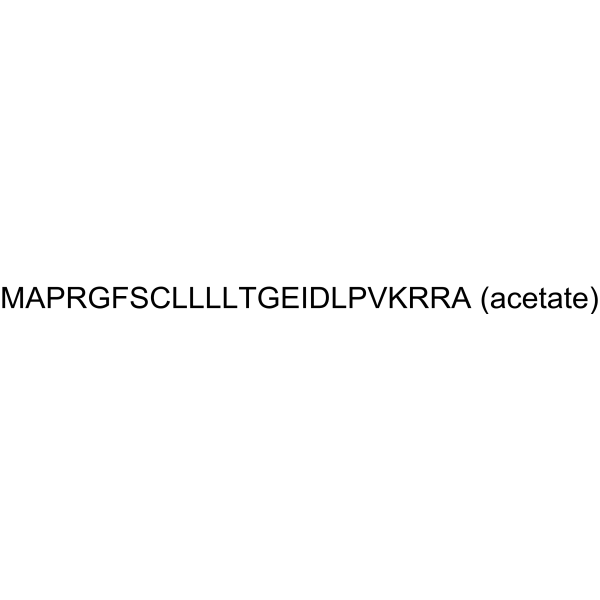
    MLS peptide is a Mitochondria-targeting peptide. MLS peptide participates in respiratory chain function via encoding Cytochrome C oxidase .
    MLS peptide

Inquiry Online

Your information is safe with us. * Required Fields.

Salutation


Country or Region *

Applicant Name *


Organization Name *

Department *


Email Address *


Product Name *

Cat. No.


Requested quantity *

Phone Number *


Remarks

Inquiry Online

Inquiry Information

Product Name:
Cat. No.:
Quantity:
MCE Japan Authorized Agent:

