
Search Result
Results for "
MRSA cell membrane
" in MedChemExpress (MCE) Product Catalog:
| Cat. No. |
Product Name |
Target |
Research Areas |
Chemical Structure |
-
- HY-112959
-
|
TD-6424
|
Antibiotic
Bacterial
|
Infection
|
|
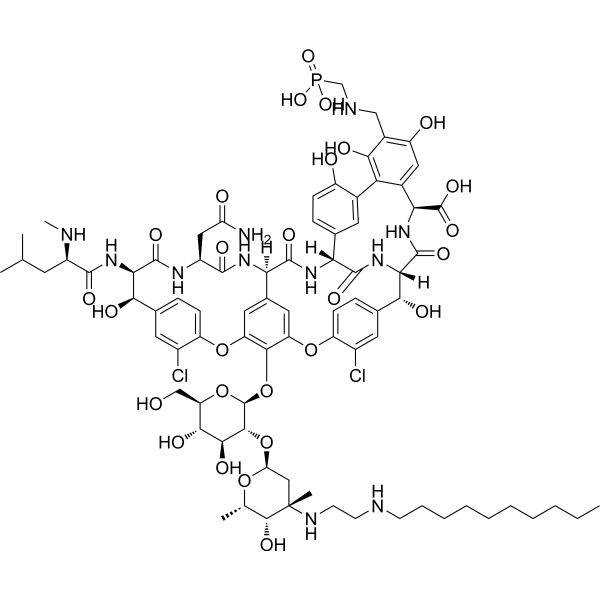
Telavancin (TD-6424) is a semisynthetic lipoglycopeptide vancomycin-derivative, is a novel antimicrobial agent developed by Theravance for overcoming resistant Gram-positive bacterial infections, specifically methicillin-resistant Staphylococcus aureus (MRSA). Telavancin disrupts cell membrane integrity, can be used for research of complicated skin and skin structure infections (cSSSIs) caused by Gram-positive bacteria .
|
-
-
- HY-16485
-
|
TD-6424 hydrochloride
|
Antibiotic
Bacterial
|
Infection
|
|
Telavancin hydrochloride is the hydrochloride form of Telavancin (HY-112959). Telavancin hydrochloride is a semisynthetic derivative of vancomycin, and exhibits antibacterial efficacy through inhibition of cell wall synthesis and disruption of cell membrane barrier function. Telavancin hydrochloride is efficient against antibiotic resistant S. aureus strains MRSA, VISA, and hVISA. Telavancin hydrochloride attenuates gram positive bacteria induced complicated skin and skin structure infections (cSSSI) .
|
-
-
- HY-P5557
-
|
|
Bacterial
Necroptosis
|
Infection
Inflammation/Immunology
|
|
TP4 (Nile tilapia piscidin) is an orally active amphipathic α-helical cationic antimicrobial peptide. TP4 (Nile tilapia piscidin) exerts broad-spectrum bactericidal activity against Gram-positive and Gram-negative bacteria by disrupting cell membrane structures, and also exhibits certain hemolytic activity. TP4 (Nile tilapia piscidin) regulates the innate immune system and enhances the expression of lysozymes, cytokines and antioxidant enzymes to resist bacterial infection. TP4 (Nile tilapia piscidin) also stimulates the proliferation of keratinocytes and fibroblasts, and significantly promotes the healing of wounds infected with MRSA. TP4 (Nile tilapia piscidin) can be used in research related to bacterial infection, peritonitis, wound healing and other fields .
|
-
-
- HY-N0853A
-
|
Alisol A 24-monoacetate; Alisol A monoacetate
|
AMPK
Carnitine Palmitoyltransferase (CPT)
Acyltransferase
Fatty Acid Synthase (FASN)
Acetyl-CoA Carboxylase
Bcl-2 Family
PPAR
Nuclear Factor of activated T Cells (NFAT)
PI3K
Akt
PKA
ERK
Apoptosis
Autophagy
|
Cardiovascular Disease
Infection
Neurological Disease
Metabolic Disease
Endocrinology
|
|
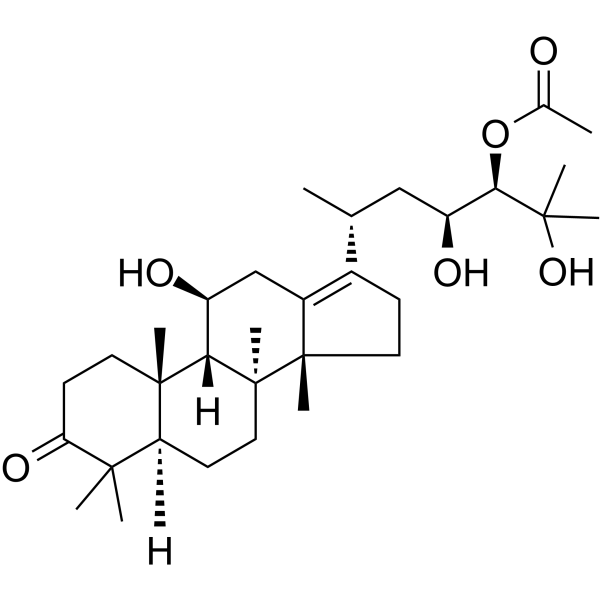
Alisol A 24-acetate (Alisol A monoacetate) is an orally active derivative of protostane-type tetracyclic triterpenoid. Alisol A 24-acetate upregulates the expression of adiponectin, AMPKα, CPT1, and ACOX1; downregulates the expression of SREBP-1c, ACC, FAS, Bcl-2, Bcl-xl, PPAR-γ, perilipin A, and NFATc1; inhibits the activity of PI3K/Akt/mTOR and HMGR; and activates the PKA and ERK signaling pathways. Alisol A 24-acetate regulates cell apoptosis (apoptosis), autophagy (Autophagy, hepatic lipid accumulation, inflammatory response, neuroprotection, MRSA membrane integrity, and osteoclast differentiation. Alisol A 24-acetate can be used in research related to non-alcoholic fatty liver disease, nephrotoxicity, obesity, global cerebral ischemia-reperfusion injury, bacterial infection, and osteoporosis .
|
-
-
- HY-144823
-
|
|
Bacterial
|
Infection
|
|
Anti-MRSA agent 3 (compound 18) has highly inhibitory activity against Methicillin-resistant Staphylococcus aureus (MRSA) with MIC of 0.098 μg/ml, and low cytotoxicity in normal cells. Anti-MRSA agent 3 has relatively strong ability to destroy bacterial cell wall and membrane, high binding affinity to bacterial genomic DNA .
|
-
-
- HY-169160
-
|
|
Bacterial
|
Infection
|
|
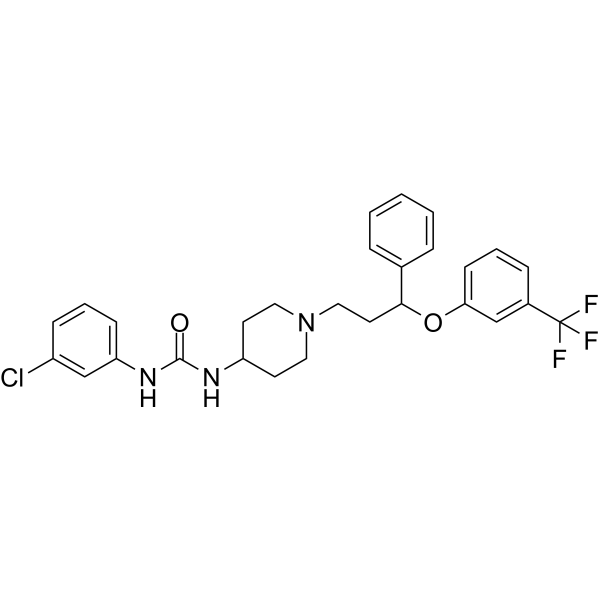
Anti-MRSA agent 18 (E17) is an inhibitor of MRSA with MIC values of 2 μg/mL for S. aureus and 4 μg/mL for MRSA, respectively. Anti-MRSA agent 18 interacts with bacterial cell membrane phosphatidylglycerol and cardiolipin, causing changes in cell membrane permeability and polarization, increased intracellular ROS, and DNA and protein leakage, thereby accelerating bacterial death .
|
-
-
- HY-179059
-
|
|
Bacterial
Reactive Oxygen Species (ROS)
|
Infection
|
|
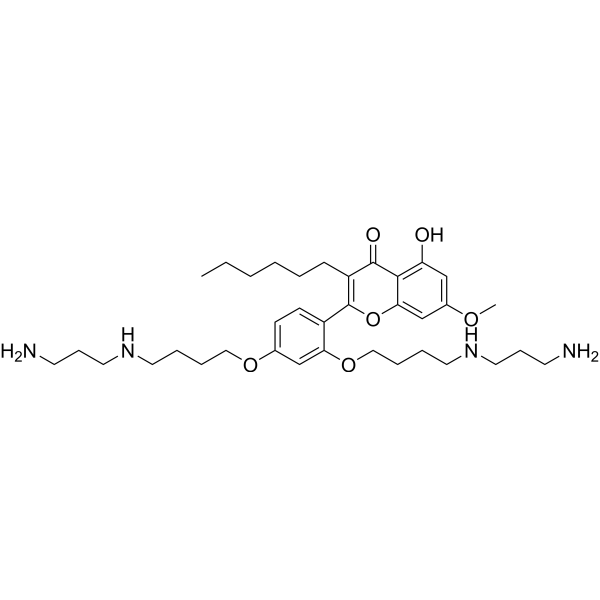
Anti-MRSA agent 40 (Compound 7-8) is a potent agent against Methicillin-resistant Staphylococcus aureus (MRSA). Anti-MRSA agent 40 exhibits significant antibacterial activity against MRSA2 and S. aureus ATCC 29213, with its MIC values being 1 μg/mL. Anti-MRSA agent 40 causes depolarization of the cell membrane, damages membrane integrity, and simultaneously increases the level of ROS within MRSA2, ultimately leading to cell lysis and death. Anti-MRSA agent 40 shows significant efficacy in the MRSA2 skin abscess model. Anti-MRSA agent 40 can be used for research on anti-MRSA infections .
|
-
-
- HY-169416
-
|
|
Bacterial
Reactive Oxygen Species (ROS)
|
Infection
|
|
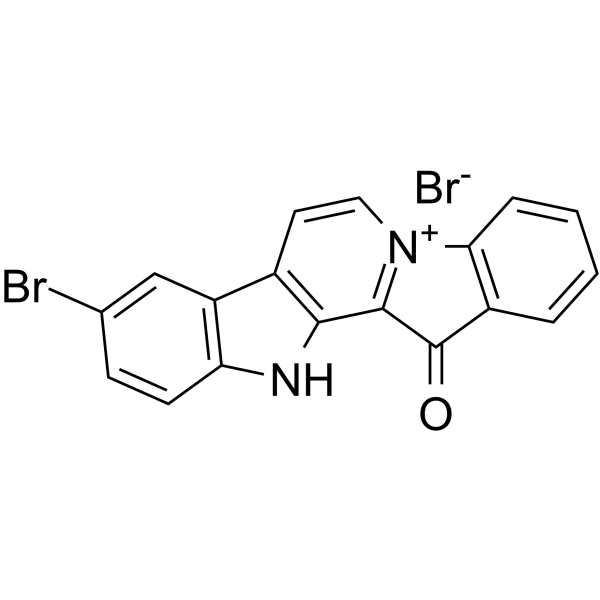
Anti-MRSA agent 21 (Compound 27) has antibacterial activity against MRSA, with an MIC of 1 μM. Anti-MRSA agent 21 can damage bacterial cell membranes and increase reactive oxygen species .
|
-
-
- HY-156289
-
|
|
Bacterial
|
Infection
|
|
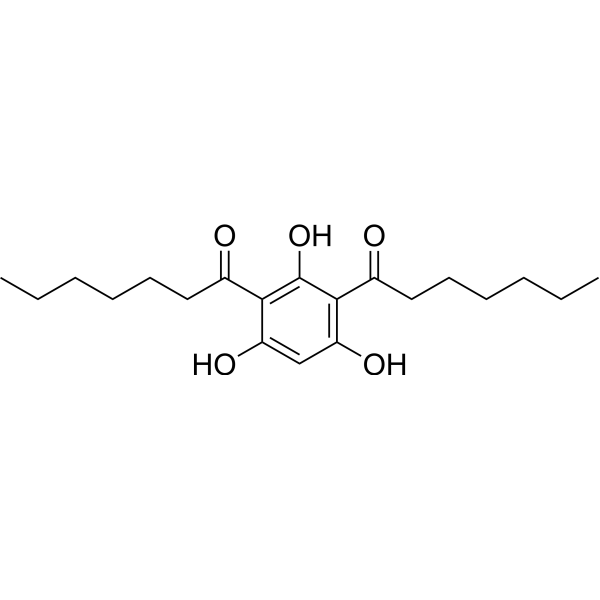
Anti-MRSA agent 8 (Compound 7g) is a DAPG derivative with strong antibacterial activity. Anti-MRSA agent 8 assertes its activity by targeting bacterial cell membranes. Anti-MRSA agent 8 can be used for the research of methicillin-resistant Staphylococcus aureus (MRSA) .
|
-
-
- HY-178493
-
|
|
Bacterial
|
Infection
|
|
Anti-MRSA agent 37 (Compound 5B) is an antibacterial agent against methicillin-resistant Staphylococcus aureus (MRSA) (MIC=0.25-0.5 μg/mL). Anti-MRSA agent 37 inhibits biofilm formation, disrupts cell wall integrit, attacks cell membrane and induces oxidative stress. Anti-MRSA agent 37 is promising for research of MRSA-related diseases such as skin infections .
|
-
-
- HY-175295A
-
|
|
Bacterial
Reactive Oxygen Species (ROS)
|
Infection
|
|
Anti-MRSA agent 33 iodide is an anti-Methicillin (HY-121544)-resistant Staphylococcus aureus (MRSA) agent, with MIC values of 2-4 μg/mL. Anti-MRSA agent 33 iodide demonstrates effective biofilm eradication and minimal cytotoxicity toward mammalian cells. Anti-MRSA agent 33 iodide specifically binds to phosphatidylglycerol (PG) on bacterial membranes, leading to membrane disruption, excessive production of ROS, and metabolic collapse, ultimately resulting in bacterial cell death. Anti-MRSA agent 33 iodide reduces bacterial load in a murine skin infection model .
|
-
-
- HY-144822
-
|
|
Bacterial
|
Infection
|
|
Anti-MRSA agent 2 (compound 14) has highly inhibitory activity against Methicillin-resistant Staphylococcus aureus (MRSA) with MIC of 0.098 μg/ml, and relatively low cytotoxicity in normal cells. Anti-MRSA agent 2 has strong ability to destroy bacterial membrane and bind to genomic DNA .
|
-
-
- HY-161827
-
|
|
Bacterial
|
Infection
|
|
Anti-MRSA agent 14 (Compound C17) has antibacterial agent against MRSA and MRSA-infected skin murine model. Anti-MRSA agent 14 is more potential than Norfloxacin (HY-B0132) against MRSA. Anti-MRSA agent 14 disrupts cell membrane and restrains metabolism. Anti-MRSA agent 14 shows antibacterial effects against S. aureus ATCC 6538, S. aureus ATCC 29213, S. epidermidis ATCC 12228, and MRSA with MIC values of 1, 2, 2, 1 μM respectively .
|
-
-
- HY-161823
-
|
|
Bacterial
|
Infection
|
|
Anti-MRSA agent 13 (Compound 9b) is an agent against methicillin-resistant Staphylococcus aureus (MRSA), exhibiting a minimum inhibitory concentration (MIC) of 0.5–2 μg/mL against clinically isolated MRSA strains. Anti-MRSA agent 13 possesses favorable biosafety, plasma tolerance stability, and a low tendency to develop resistance. Anti-MRSA agent 13 disrupts cell walls and membranes, reduces metabolic activity, causes oxidative damage, affects DNA function, and ultimately leads to MRSA death through multi-target synergies .
|
-
-
- HY-173318
-
|
|
Bacterial
|
Infection
|
|
Anti-MRSA agent 25 (Compound 10c) is an antibacterial agent with a MIC of 0.25 μg/mL against methicillin-resistant Staphylococcus aureus (MRSA). Anti-MRSA agent 25 exerts its antibacterial activity by inhibiting biofilm formation, disrupting the cell wall (interacting with peptidoglycan and lipoteichoic acids), acting on the cell membrane (causing depolarization, increasing permeability, and disrupting integrity), reducing metabolic activity, interfering with cellular redox homeostasis, and binding to DNA. Anti-MRSA agent 25 is expected to be used in the research of the anti-infection field .
|
-
-
- HY-178513
-
|
|
Bacterial
Reactive Oxygen Species (ROS)
|
Infection
|
|
Anti-MRSA agent 38 is a broad-spectrum antibacterial agent (MIC = 0.0625-2 µg/mL). Anti-MRSA agent 38 can inhibit ribosomal protein synthesis. Anti-MRSA agent 38 exerts multiple bactericidal effects by disrupting bacterial membrane structure and inducing ROS accumulation. Anti-MRSA agent 38 can selectively kill tumor cells, such as HGC-27 (IC50 = 0.86 µM), MRC-5 (IC50 = 5.52 µM), and RPC (IC50 = 6.09 µM) cells. Anti-MRSA agent 38 can be used to study infectious diseases such as bacterial infection .
|
-
-
- HY-149095
-
|
|
Bacterial
|
Infection
|
|
Antibacterial agent 139 has antibacterial activity against Gram-positive bacteria. Antibacterial agent 139 has anti-MRSA, anti-VISA, and anti-LRSE activities. Antibacterial agent 139 depolarizes the bacterial cell membrane .
|
-
-
- HY-163517
-
|
|
Bacterial
|
Infection
|
|
Antibacterial agent 211 (compound k15) has bactericidal activity against clinically isolated MRSA and VRE (MICs = 0.25–1.00 μg/mL). Antibacterial agent 211 avoids resistance by damaging biofilm and targeting cell membranes .
|
-
-
- HY-161935
-
|
|
Bacterial
|
Infection
Inflammation/Immunology
|
|
6-(12-Tridecene-1-yl)-2,4-Dihydroxy benzoic acid (Compound 2) exhibits antibacterial activity against methicillin-resistant Staphylococcus aureus (MRSA) and Vancomycin enterococci (VRE). 6-(12-Tridecene-1-yl)-2,4-Dihydroxy benzoic acid interfers with the integrity and function of the bacterial cell membrane, and affects metabolism in MRSA. 6-(12-Tridecene-1-yl)-2,4-Dihydroxy benzoic acid exhibits anti-inflammatory and anti-infective efficacy, and promotes angiogenesis in mice .
|
-
-
- HY-173240
-
|
|
Bacterial
|
Infection
|
|
IPMCL-28b is an antibacterial agent targeting the bacterial cell membrane. Its minimum inhibitory concentration (MIC) against Staphylococcus aureus ATCC 25923 is 1.56 μg/mL, and the MIC against methicillin-resistant Staphylococcus aureus (MRSA) is 6.25 μg/mL. IPMCL-28b is expected to be used in the research of the anti-infection field .
|
-
-
- HY-179038
-
|
|
Bacterial
|
Infection
|
|
PYO12 is a 3-phenyl-4-phenoxypyrazole type antibacterial compound. PYO12 exhibits selective activity against Gram-positive bacteria with MIC for S. aureus, B. subtilis, S. pneumoniae, and MRSA of 1, 1, 1, and 4 μg/mL respectively. PYO12 has no activity against Gram-negative bacteria. PYO12 can significantly increase bacterial membrane permeability and significantly upregulate cell wall stress-related genes, possibly by binding to the C55-PP part of lipid II. PYO12 shows a concentration-dependent bactericidal effect, has low toxicity to mammalian cells, and does not cause hemolysis. PYO12 can be used to develop new antibiotics targeting bacterial cell wall synthesis .
|
-
-
- HY-168204
-
|
|
Bacterial
Fungal
|
Infection
|
|
3-Acetyl-28-N–(3–guanidinobutoxy)-oleanolic acid (compound J1) is a potent antimicrobial agent. 3-Acetyl-28-N–(3–guanidinobutoxy)-oleanolic acid shows anti-gram-positive bacteria and fungi activity. 3-Acetyl-28-N–(3–guanidinobutoxy)-oleanolic acid can be used as antibiotic adjuvants. 3-Acetyl-28-N–(3–guanidinobutoxy)-oleanolic disrupts the bacterial cell membrane, inserts into the DNA, and binds to DNA gyrase. 3-Acetyl-28-N–(3–guanidinobutoxy)-oleanolic reduces microbial count in a mouse MRSA skin infection model and accelerates wound healing .
|
-
-
- HY-182816
-
|
|
Topoisomerase
DNA/RNA Synthesis
Bacterial
|
Infection
|
|
Topoisomerase I-IN-22 is an inhibitor of MRSA DNA Topoisomerase I with an IC50 of 0.85 μg/mL. Topoisomerase I-IN-22 can specifically disrupt the cell membrane structure of MRSA, enter the interior of bacteria and inhibit the activity of DNA Topoisomerase I, thereby interfering with the processes of DNA replication and transcription. Topoisomerase I-IN-22 can be used for the research of MRSA infection .
|
-
-
- HY-180191
-
|
|
Bacterial
Reactive Oxygen Species (ROS)
DNA/RNA Synthesis
|
Infection
|
|
Anti-MRSA agent 42 (Compound 6d) is an anti-methicillin-resistant Staphylococcus aureus (MRSA) agent. Anti-MRSA agent 42 shows strong inhibitory effects on MRSA standard strains and 11 clinical isolates with MIC values of 0.25-0.5 μg/mL. Anti-MRSA agent 42 has low hemolytic activity and minimal cytotoxicity toward mammalian cells. Anti-MRSA agent 42 can suppress biofilm formation, compromise the cell wall, and disrupt the cytoplasmic membrane, which are accompanied by membrane depolarization, enhanced permeability, and loss of membrane integrity. Anti-MRSA agent 42 can induce ROS production and bind to DNA grooves, interfering with nucleic acid function. Anti-MRSA agent 42 can be used for the research of MRSA infection .
|
-
-
- HY-183291
-
|
|
Bacterial
DNA/RNA Synthesis
DNA Alkylator/Crosslinker
Reactive Oxygen Species (ROS)
Penicillin-binding protein (PBP)
|
Infection
|
|
Antibacterial agent 343 (Compound 47) is an Antibacterial agent. Antibacterial agent 343 binds to the allosteric site of PBP2a to open its active site. Antibacterial agent 343 disrupts bacterial cell membranes, leading to protein leakage. Antibacterial agent 343 interacts with DNA and inhibits replication and transcription. Antibacterial agent 343 induces ROS accumulation. Antibacterial agent 343 exhibits antibacterial activity against MRSA, Staphylococcus aureus, and Enterococcus faecalis. Antibacterial agent 343 can be used for the research of methicillin-resistant Staphylococcus aureus infections .
|
-
-
- HY-179611
-
|
|
Bacterial
|
Infection
|
|
LP-03 is an antibacterial agent with selective activity against Methicillin-resistant Staphylococcus aureus (MRSA). Its minimum inhibitory concentration (MIC) is 6.2 μM. LP-03 has an inhibitory effect on biofilm formation, but it is unable to effectively remove the formed biofilms. LP-03 can enhance membrane permeability, disrupt the membrane structure of MRSA cells, and does not cause significant membrane depolarization. LP-03 has no hemolytic toxicity and shows low mammalian cell toxicity. It can be used for research on MRSA infections .
|
-
-
- HY-P11582
-
|
|
Bacterial
|
Infection
|
|
CyLip-20 is a cyclic lipopeptide antimicrobial peptide that targets Gram-positive and Gram-negative bacteria. CyLip-20 exhibits low hemolytic activity and mild in vivo toxicity. CyLip-20 disrupts the integrity of bacterial outer membrane, inner membrane and cytoplasmic membrane by binding to bacterial lipopolysaccharide (LPS), triggering membrane permeabilization, depolarization and leakage of intracellular contents, and inhibits bacterial biofilm formation. In animal models, CyLip-20 reduces the bacterial load in skin wounds of mice infected with MRSA, promotes wound healing, decreases the levels of inflammatory cytokines and reduces inflammatory cell infiltration. CyLip-20 can be used in research related to MRSA skin wound infections .
|
-
-
- HY-P11615
-
|
|
Bacterial
|
Infection
|
|
FuK is a WK2-analog antimicrobial peptide modified with fluorinated unnatural amino acids. FuK has an LD50 of 72.34 mg/kg in mice, shows no hemolytic activity, with high stability against trypsin, chymotrypsin, and saline environments. FuK exerts bactericidal effects by enhancing the permeability of bacterial outer membranes, inducing depolarization of cytoplasmic membranes, and disrupting membrane potential balance against bacterias such as Staphylococcus aureus, Escherichia coli, Klebsiella pneumoniae, and MRSA. FuK exhibits synergistic antimicrobial activity with polymyxin B (HY-149179), vancomycin (HY-B0671), and ciprofloxacin (HY-B0356), and also inhibits Ciprofloxacin-induced bacterial drug resistance. FuK has in vivo safety, effectively reduces bacterial load and inflammatory cell infiltration in a mouse MRSA model, and promotes collagen fiber formation in skin wounds .
|
-
-
- HY-179405
-
|
|
Bacterial
|
Infection
|
|
Antibacterial agent 301 (compound 14c) is a pyridine-amide pleuromutilin derivative with broad-spectrum antibacterial and pronounced antimycoplasmal activity. Antibacterial agent 301 inhibits peptidyl transferase center (PTC), breaks down biofilms, and disrupts cell membranes in multidrug-resistant (MDR) bacteria. Antibacterial agent 301 exhibits activity in a systemic methicillin-resistant Staphylococcus aureus (MRSA) infection mouse model. Antibacterial agent 301 can be used for MDR bacterial infection research .
|
-
-
- HY-P11622
-
|
|
Drug Derivative
|
Infection
|
|
Gramicidin S analogue 9 is a bactericidal agent that can be found as a cyclic peptide analogue. Gramicidin S analogue 9 disrupts bacterial cell membranes. Gramicidin S analogue 9 can be used for the research of methicillin-resistant staphylococcus aureus infection .
|
-
-
- HY-183751
-
|
|
Bacterial
Reactive Oxygen Species (ROS)
|
Infection
|
|
Antibacterial agent 346 (Compound H14d) is a broad-spectrum Antibacterial agent and BsFtsZ inhibitor, with an IC50 of 69.67 μg/mL against BsFtsZ. Antibacterial agent 346 selectively binds to phosphatidylglycerol, disrupts membrane integrity, increases permeability, triggers depolarization and causes intracellular protein leakage. Antibacterial agent 346 induces intracellular ROS accumulation, which in turn triggers oxidative stress and cell death. Antibacterial agent 346 eradicates mature biofilms formed by Gram-positive and Gram-negative bacteria. Antibacterial agent 346 exhibits antibacterial activity against methicillin-resistant Staphylococcus aureus and Acinetobacter baumannii. Antibacterial agent 346 can be used in the research of bacterial infections .
|
-
-
- HY-183275
-
|
|
DNA/RNA Synthesis
Bacterial
Reactive Oxygen Species (ROS)
|
Infection
|
|
Antibacterial agent 340 is a DNA gyrase inhibitor. Antibacterial agent 340 exhibits broad-spectrum bactericidal activity against Gram-positive and Gram-negative bacteria. Antibacterial agent 340 disrupts bacterial cell membrane integrity, induces reactive oxygen species (ROS) accumulation, and inhibits and eradicates bacterial biofilms. Antibacterial agent 340 can be used for the research of bacterial infections .
|
-
-
- HY-182022
-
|
|
Bacterial
Reactive Oxygen Species (ROS)
Drug Derivative
DNA/RNA Synthesis
|
Infection
|
|
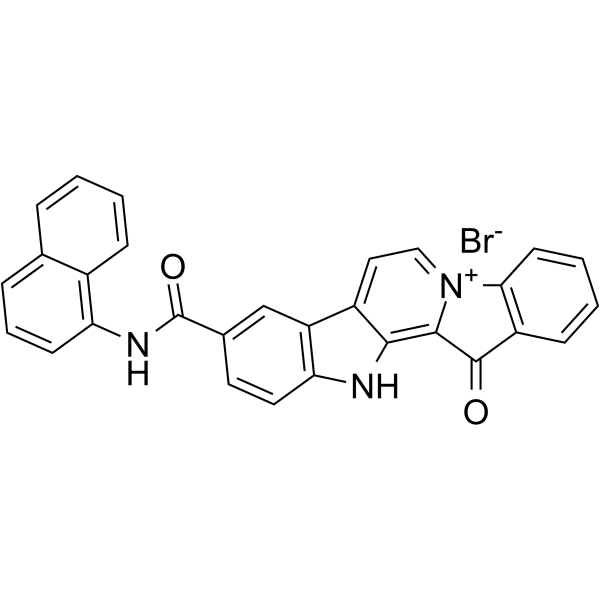
ZLWH-67 is a β-Carboline derivative and Antibacterial agent. ZLWH-67 inhibits DNA synthesis, suppresses biofilm formation, and increases reactive oxygen species (ROS) levels. ZLWH-67 exhibits potent in vitro antibacterial activity against MRSA (MIC = 0.5-4 μg/mL), S. epidermidis (MIC = 4 μg/mL), E. faecalis (MIC = 4-8 μg/mL), and S. pneumoniae (MIC = 16 μg/mL). ZLWH-67 displays anti-MRSA effects in murine skin and pneumonia infection models .
|
-
| Cat. No. |
Product Name |
Target |
Research Area |
-
- HY-P5557
-
|
|
Bacterial
Necroptosis
|
Infection
Inflammation/Immunology
|
|
TP4 (Nile tilapia piscidin) is an orally active amphipathic α-helical cationic antimicrobial peptide. TP4 (Nile tilapia piscidin) exerts broad-spectrum bactericidal activity against Gram-positive and Gram-negative bacteria by disrupting cell membrane structures, and also exhibits certain hemolytic activity. TP4 (Nile tilapia piscidin) regulates the innate immune system and enhances the expression of lysozymes, cytokines and antioxidant enzymes to resist bacterial infection. TP4 (Nile tilapia piscidin) also stimulates the proliferation of keratinocytes and fibroblasts, and significantly promotes the healing of wounds infected with MRSA. TP4 (Nile tilapia piscidin) can be used in research related to bacterial infection, peritonitis, wound healing and other fields .
|
-
- HY-P11582
-
|
|
Bacterial
|
Infection
|
|
CyLip-20 is a cyclic lipopeptide antimicrobial peptide that targets Gram-positive and Gram-negative bacteria. CyLip-20 exhibits low hemolytic activity and mild in vivo toxicity. CyLip-20 disrupts the integrity of bacterial outer membrane, inner membrane and cytoplasmic membrane by binding to bacterial lipopolysaccharide (LPS), triggering membrane permeabilization, depolarization and leakage of intracellular contents, and inhibits bacterial biofilm formation. In animal models, CyLip-20 reduces the bacterial load in skin wounds of mice infected with MRSA, promotes wound healing, decreases the levels of inflammatory cytokines and reduces inflammatory cell infiltration. CyLip-20 can be used in research related to MRSA skin wound infections .
|
-
- HY-P11615
-
|
|
Bacterial
|
Infection
|
|
FuK is a WK2-analog antimicrobial peptide modified with fluorinated unnatural amino acids. FuK has an LD50 of 72.34 mg/kg in mice, shows no hemolytic activity, with high stability against trypsin, chymotrypsin, and saline environments. FuK exerts bactericidal effects by enhancing the permeability of bacterial outer membranes, inducing depolarization of cytoplasmic membranes, and disrupting membrane potential balance against bacterias such as Staphylococcus aureus, Escherichia coli, Klebsiella pneumoniae, and MRSA. FuK exhibits synergistic antimicrobial activity with polymyxin B (HY-149179), vancomycin (HY-B0671), and ciprofloxacin (HY-B0356), and also inhibits Ciprofloxacin-induced bacterial drug resistance. FuK has in vivo safety, effectively reduces bacterial load and inflammatory cell infiltration in a mouse MRSA model, and promotes collagen fiber formation in skin wounds .
|
-
- HY-P11622
-
|
|
Drug Derivative
|
Infection
|
|
Gramicidin S analogue 9 is a bactericidal agent that can be found as a cyclic peptide analogue. Gramicidin S analogue 9 disrupts bacterial cell membranes. Gramicidin S analogue 9 can be used for the research of methicillin-resistant staphylococcus aureus infection .
|
| Cat. No. |
Product Name |
Category |
Target |
Chemical Structure |
-
- HY-N0853A
-
|
Alisol A 24-monoacetate; Alisol A monoacetate
|
Triterpenes
Structural Classification
Alisma plantago-aquatica Linn.
Classification of Application Fields
Terpenoids
Other Diseases
Alismataceae
Plants
Disease Research Fields
Source Classification
|
AMPK
Carnitine Palmitoyltransferase (CPT)
Acyltransferase
Fatty Acid Synthase (FASN)
Acetyl-CoA Carboxylase
Bcl-2 Family
PPAR
Nuclear Factor of activated T Cells (NFAT)
PI3K
Akt
PKA
ERK
Apoptosis
Autophagy
|
|
Alisol A 24-acetate (Alisol A monoacetate) is an orally active derivative of protostane-type tetracyclic triterpenoid. Alisol A 24-acetate upregulates the expression of adiponectin, AMPKα, CPT1, and ACOX1; downregulates the expression of SREBP-1c, ACC, FAS, Bcl-2, Bcl-xl, PPAR-γ, perilipin A, and NFATc1; inhibits the activity of PI3K/Akt/mTOR and HMGR; and activates the PKA and ERK signaling pathways. Alisol A 24-acetate regulates cell apoptosis (apoptosis), autophagy (Autophagy, hepatic lipid accumulation, inflammatory response, neuroprotection, MRSA membrane integrity, and osteoclast differentiation. Alisol A 24-acetate can be used in research related to non-alcoholic fatty liver disease, nephrotoxicity, obesity, global cerebral ischemia-reperfusion injury, bacterial infection, and osteoporosis .
|
-
-
- HY-161935
-
|
|
Lysimachia tengyuehensis Hand.-Mazz.
Antibiotics
Plants
Primulaceae
Other Antibiotics
Source Classification
|
Bacterial
|
|
6-(12-Tridecene-1-yl)-2,4-Dihydroxy benzoic acid (Compound 2) exhibits antibacterial activity against methicillin-resistant Staphylococcus aureus (MRSA) and Vancomycin enterococci (VRE). 6-(12-Tridecene-1-yl)-2,4-Dihydroxy benzoic acid interfers with the integrity and function of the bacterial cell membrane, and affects metabolism in MRSA. 6-(12-Tridecene-1-yl)-2,4-Dihydroxy benzoic acid exhibits anti-inflammatory and anti-infective efficacy, and promotes angiogenesis in mice .
|
-
Your information is safe with us. * Required Fields.
Inquiry Information
- Product Name:
- Cat. No.:
- Quantity:
- MCE Japan Authorized Agent:

