



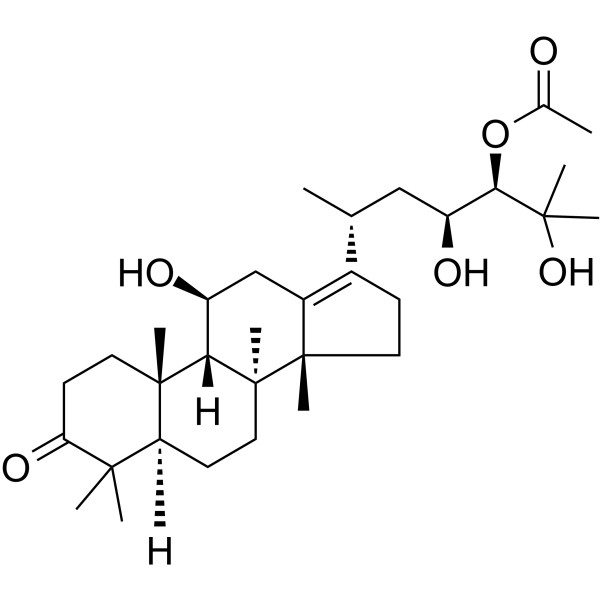
Alisol A 24-acetate
Based on 1 publication(s) in Google Scholar
Alisol A 24-acetate (Alisol A monoacetate) is an orally active derivative of protostane-type tetracyclic triterpenoid. Alisol A 24-acetate upregulates the expression of adiponectin, AMPKα, CPT1, and ACOX1; downregulates the expression of SREBP-1c, ACC, FAS, Bcl-2, Bcl-xl, PPAR-γ, perilipin A, and NFATc1; inhibits the activity of PI3K/Akt/mTOR and HMGR; and activates the PKA and ERK signaling pathways. Alisol A 24-acetate regulates cell apoptosis (apoptosis), autophagy (Autophagy, hepatic lipid accumulation, inflammatory response, neuroprotection, MRSA membrane integrity, and osteoclast differentiation. Alisol A 24-acetate can be used in research related to non-alcoholic fatty liver disease, nephrotoxicity, obesity, global cerebral ischemia-reperfusion injury, bacterial infection, and osteoporosis.
For research use only. We do not sell to patients.
- Purity : 98.0%
- CAS No.: 18674-16-3
- Formula: C32H52O6
- Molecular Weight:532.75
-
Storage:Powder -20°C, 3 years , 4°C, 2 years ; In solvent -80°C, 2 years , -20°C, 1 year

To place orders, for customer services and technical support, please contact: MedChemExpress USA
Tel: 609-228-6898 E-mail: [email protected] [email protected]


-
 Biological Activity
-
Chemical Information
-
Solvent & Solubility
- Protocols
- Purity & Documentation
- References
-
 Help & FAQs


Publications Citing Use of MedChemExpress (MCE) Alisol A 24-acetate
MoreAll AMPK Isoforms
More

Biological Activity
Description
|
PKA |
ERK |
AMPK |
PPARα |
CPT-1 |
PI3K |
Bcl-xL |
Bcl-2 |
PPAR-γ |
Cellular Effect
|
Cell Line

|
Type | Value | Description | References |
|---|---|---|---|---|
| HepG2 | EC50 |
34.19 μM
Compound: 63
|
Transactivation of FXR (unknown origin) transfected in HepG2 cells co-expressing pBSEP/pGL4.74 incubated for 24 hrs by luciferase reporter gene assay
Transactivation of FXR (unknown origin) transfected in HepG2 cells co-expressing pBSEP/pGL4.74 incubated for 24 hrs by luciferase reporter gene assay
|
[PMID: 31494470] |
| HepG2 2.2.15 | IC50 |
0.6 μM
Compound: 22
|
Antiviral activity against Hepatitis B virus infected in human HepG2.2.15 cells assessed as decrease in HBV surface antigen secretion
Antiviral activity against Hepatitis B virus infected in human HepG2.2.15 cells assessed as decrease in HBV surface antigen secretion
|
[PMID: 24549242] |
In Vitro
Alisol A 24-acetate (2.5-100 μM; 24 h) reduces HepG2 cell viability in a dose-dependent manner, with significant cytotoxicity observed at concentrations above 10 μM after 24 h of incubation[1].
Alisol A 24-acetate (10 μM; 24 h) improved free fatty acid-induced lipid accumulation and inflammatory response in HepG2 cells, reduced lipid droplet formation, positive lipids, and intracellular triglyceride levels, decreased TNF-α and IL-6 levels in cell supernatant, and upregulated adiponectin protein and mRNA expression. This substance activated AMPKα phosphorylation and increased AMPK mRNA expression, downregulated SREBP-1c, ACC, and FAS at the transcriptional and protein levels, and upregulated CPT1 and ACOX1, without significantly affecting PPARα expression[1].
Alisol A 24-acetate (compound 24A) (3-768 μM; 24 h) reduces HK-2 cell viability in a concentration-dependent manner, with 6 μM yielding a cell viability of 96.20% for use in follow-up assays[2].
Alisol A 24-acetate (6 μM; 24 h) downregulated the protein and mRNA expression of Bcl-2 and Bcl-xl to induce apoptosis in HK-2 cells, and upregulated the protein and mRNA expression of Kim-1, Clusterin, and TFF-3 to induce nephrotoxicity. Simultaneously, it induced autophagy in HK-2 cells by increasing the LC3II/LC3I ratio, upregulating the protein and mRNA levels of Beclin-1 and LC3, and inhibiting the PI3K/Akt/mTOR pathway[2].
Alisol A 24-acetate (6 μM; 48 h)-induced autophagy mediates apoptosis and nephrotoxicity in HK-2 cells, as co-incubation with autophagy inhibitor 3-MA reverses cell viability loss, reduces LC3II/LC3I ratio, increases anti-apoptotic Bcl-2, and decreases nephrotoxicity biomarker Kim-1[2].
Alisol A 24-acetate (AA-24-a) (10-50 μM; 24-72 h) can improve the survival rate of fully differentiated 3T3-L1 adipocytes and significantly stimulate basal lipolysis in fully differentiated 3T3-L1 adipocytes[3].
Alisol A 24-acetate (50 μM; 12 h) alters lipolysis-related gene expression in fully differentiated 3T3-L1 adipocytes, increasing ATGL mRNA levels and decreasing HSL, PPARγ, and perilipin A mRNA levels[3].
Alisol A 24-acetate (30-50 μM; 24-36 h) increases ATGL protein expression and HSL phosphorylation at Ser660 in fully differentiated 3T3-L1 adipocytes, while also activating ERK and reducing PPARγ and perilipin A protein levels[3].
Alisol A 24-acetate-induced lipolysis in fully differentiated 3T3-L1 adipocytes is partly mediated by PKA-induced phosphorylation of HSL at Ser660[3].
Alisol A 24-acetate (30-50 μM; 20 h) can induce lipolysis in fully differentiated 3T3-L1 adipocytes. This effect is mediated by ERK pathway activation, which further downregulates PPARγ and perilipin A expression. Pretreatment with PD98059 (HY-12028) can reduce glycerol release and reverse the above molecular changes[3].
Alisol A 24-acetate (24A) can reduce the levels of inflammatory factors TNF−α, IL-1β, IL-6, and IL-8 in HepG2 cells; it has a protective effect on tight junctions of brain microvascular endothelial cells damaged by oxygen and glucose deprivation; and it strongly inhibits MRSA HMG[4].
Alisol A 24-acetate (AA) acts as a high-affinity ligand for MRSA HMGR, with a Kd of 30 μM[5].
Alisol A 24-acetate (20-40 μM; 24 h) is non-cytotoxic to RAW 264.7 macrophages and HAEC primary aortic endothelial cells[5].
Alisol A 24-acetate (10-40 μM; 2 h) increased the membrane fluidity of Staphylococcus aureus ATCC 43300 in a dose-dependent manner[5].
Alisol A 24-acetate (20-50 μM) can dose-dependently disrupt the membrane potential and membrane integrity of Staphylococcus aureus ATCC 43300[5].
Alisol A 24-acetate (10-40 μM; 1-1.5 h) dose-dependently increases intracellular ATP and ROS levels in Staphylococcus aureus ATCC 43300[5].
Alisol A 24-acetate causes morphological damage (irregular depressions, surface collapse) to Staphylococcus aureus ATCC 43300[5].
Alisol A 24-acetate (1-30 μM; 4 days) dose-dependently inhibits RANKL- and M-CSF-induced osteoclast differentiation of mouse bone marrow-derived macrophages[6].
Alisol A 24-acetate (10 μM; 30 min pre-incubation, 1-3 days RANKL stimulation) significantly inhibits RANKL-induced mRNA expression of NFATc1, TRAP, DC-STAMP, and cathepsin K in mouse bone marrow-derived macrophages over 3 days of stimulation[6].
Alisol A 24-acetate (10 μM; 1 h pre-incubation, 1-3 days RANKL stimulation) significantly inhibits RANKL-induced NFATc1 protein expression in mouse bone marrow-derived macrophages over 3 days of stimulation[6].
MedChemExpress (MCE) has not independently confirmed the accuracy of these methods. They are for reference only.
-
Cell Line:HepG2 cells
-
Concentration:2.5 μM, 5 μM, 10 μM, 20 μM, 50 μM, 100 μM
-
Incubation Time:24 h
-
Result:Reduced HepG2 cell viability in a dose-dependent manner.
Reduced viability at concentrations from 2.5 μM to 100 μM.
Caused significant inhibition of cell proliferation at concentrations above 10 μM.
Induced 23.85% cytotoxicity at 20 μM.
-
Cell Line:FFA-induced HepG2 cellular steatosis model
-
Concentration:10 μM
-
Incubation Time:24 h
-
Result:Significantly reduced TNF-α, IL-6 levels in HepG2 cell supernatants.
-
Cell Line:FFA-induced HepG2 cellular steatosis model
-
Concentration:10 μM
-
Incubation Time:24 h
-
Result:Upregulated the expression of CPT1 and ACOX1; downregulated SREBP-1c, ACC, and FAS.
-
Cell Line:human renal proximal tubular (HK-2) cells
-
Concentration:3, 6, 12, 24, 48, 96, 192, 384, 768 μM
-
Incubation Time:24 h
-
Result:Reduced HK-2 cell viability in a concentration-dependent manner.
Yielded a cell viability of 96.20% at 6 μM for 24 h.
-
Cell Line:human renal proximal tubular (HK-2) cells
-
Concentration:6 μM
-
Incubation Time:24 h
-
Result:Significantly increased HK-2 cell apoptosis
Significantly decreased protein expression of anti-apoptotic Bcl-2 and Bcl-xl.
Significantly reduced mRNA levels of Bcl-2 and Bcl-xl.
-
Cell Line:human renal proximal tubular (HK-2) cells
-
Concentration:6 μM
-
Incubation Time:24 h
-
Result:Induced formation of numerous double-membrane autophagosomes and autophagic vacuoles containing degraded organelles.
Significantly increased green fluorescence (LC3II accumulation).
Significantly increased LC3II/LC3I ratio and Beclin-1 protein expression.
Significantly elevated mRNA levels of LC3 and Beclin-1.
-
Cell Line:human renal proximal tubular (HK-2) cells
-
Concentration:6 μM; 6 μM plus 3-MA
-
Incubation Time:48 h
-
Result:Resulted in a cell viability of 50.71% when used alone for 48 h.
Increased cell viability to 89.06% when co-incubated with 3-MA.
-
Cell Line:fully differentiated 3T3-L1 adipocytes
-
Concentration:10, 20, 30, 40, 50 μM
-
Incubation Time:24 h; 48 h; 72 h
-
Result:Increased cell viability relative to untreated control cells by 10.3%, 12.0%, and 10.8% at 30, 40, and 50 μM for 24 h, respectively.
-
Cell Line:fully differentiated 3T3-L1 adipocytes
-
Concentration:50 μM
-
Incubation Time:12 h
-
Result:Significantly decreased mRNA expression of HSL, PPARγ, and perilipin A.
Significantly increased ATGL mRNA expression.
-
Cell Line:fully differentiated 3T3-L1 adipocytes
-
Concentration:30, 50 μM (ATGL and HSL phosphorylation analysis); 30, 50 μM (ERK phosphorylation, PPARγ, and perilipin A analysis)
-
Incubation Time:36 h (ATGL and HSL phosphorylation analysis); 24 h (ERK phosphorylation, PPARγ, and perilipin A analysis)
-
Result:Elevated ATGL protein expression at 30 μM after 36 h treatment.
Raised HSL phosphorylation at Ser660 by 54.2% relative to controls at 50 μM after 36 h treatment, while exerting no influence on HSL phosphorylation at Ser563 and Ser565.
Increased ERK phosphorylation by 55.6% relative to controls at 50 μM after 24 h treatment.
Downregulated PPARγ and perilipin A protein levels relative to controls at 50 μM after 24 h treatment.
-
Cell Line:RAW 264.7 macrophages, HAEC primary aortic endothelial cells
-
Concentration:20, 25, 30 μM (RAW 264.7); 30, 35, 40 μM (HAEC)
-
Incubation Time:24 h
-
Result:Showed no cytotoxicity to HAEC cells at 30, 35, or 40 μM, with cell viability remaining above 70%.
Maintained RAW 264.7 cell viability near 100% at 20 and 25 μM, and above 75% at 30 μM.
Confirmed no significant cell death in RAW 264.7 cells via Live/Dead staining at 20, 25, or 30 μM.
-
Cell Line:mouse bone marrow
-
Concentration:1, 3, 10, 30 μM
-
Incubation Time:4 days
-
Result:Inhibited RANKL- and M-CSF-induced osteoclast differentiation of mouse bone marrow-derived macrophages
-
Cell Line:mouse bone marrow
-
Concentration:10 μM
-
Incubation Time:30 min pre-incubation, 1, 2, 3 days RANKL stimulation
-
Result:Inhibited RANKL-induced mRNA expression of NFATc1, TRAP, DC-STAMP, and cathepsin K in mouse bone marrow-derived macrophages over 3 days of stimulation.
-
Cell Line:mouse bone marrow
-
Concentration:10 μM
-
Incubation Time:1 h pre-incubation, 1, 2, 3 days RANKL stimulation
-
Result:Inhibited RANKL-induced NFATc1 protein expression in mouse bone marrow-derived macrophages over 3 days of stimulation.
In Vivo
Alisol A 24-acetate (24A) (30 mg/kg; p.o.; once daily; 7 consecutive days) alleviates global cerebral ischaemia-reperfusion injury in male C57BL/6J mice by inhibiting neuroinflammation and apoptosis, improving neurological and cognitive function, and normalizing brain metabolism, via activation of the PI3K/AKT pathway[4].
Alisol A 24-acetate (AA) (20-30 μM; injection into left posterior gastropoda; single dose) improves the survival rate of MRSA-infected Galleria mellonella larvae[5].
Alisol A 24-acetate (100 μM; smear route; once daily; 8 days) reduces MRSA bacterial load, promotes wound healing, and decreases IL-1β expression in a mouse MRSA skin wound infection model[5].
MedChemExpress (MCE) has not independently confirmed the accuracy of these methods. They are for reference only.
-
Animal Model:C57BL/6J (male, 12 weeks old, 25-30 g, global cerebral ischaemia-reperfusion injury induced by two-vessel occlusion)[4]
-
Dosage:30 mg/kg
-
Administration:p.o.; once daily; 7 consecutive days (initiated 24 hours after reperfusion)
-
Result:Ameliorated neurological deficit scores at days 1, 3, 5 and 7.
Improved learning and memory abilities, with shorter escape latency and travel distance, and longer residence time in the target quadrant.
Enhanced novel object recognition by raising discrimination index and time ratio.
Regulated brain metabolite levels by lowering Glx/Cr, MI/Cr, CHO/Cr and Taurine/Cr, and elevating GABA/Cr and NAA/Cr.
Suppressed activation of microglia and astrocytes in hippocampus and cortex.
Alleviated neuroinflammation and apoptosis, and decreased levels of IL-1β, TNF-α, iNOS, Bax/Bcl-2 and cleaved Caspase-3.
Protected neuronal morphology, increased neuronal quantity and dendritic spine density.
Activated PI3K/AKT pathway and elevated p-PI3K/PI3K and p-AKT/AKT ratios.
-
Animal Model:ICR (female, 6 weeks old)[5]
-
Dosage:100 μM
-
Administration:smear route; once daily; 8 days
-
Result:Reduced bacterial load in infected skin tissue.
Promoted wound healing with significant reduction in wound size over 8 days.
Increased epidermal thickness and collagen deposition in infected skin.
Decreased relative expression of the inflammatory cytokine IL-1β in infected tissue compared to the infected control group.
- RNA extraction experimental
- Research Protocol for Infectious Diseases
- Nephrotoxicity Study
- Annexin V plus membrane-impermeant dye apoptosis staining
- Research Protocol for Inflammation-related Diseases
- Research Protocol for Metabolic Diseases
- 3T3-L1 preadipocyte-to-adipocyte differentiation
- Detection of Apoptosis
- TUNEL staining for apoptotic DNA fragmentation
- Autophagy
- Apoptosis Solutions
- Lysosome and acidic-vesicle live-cell staining
- Macroautophagy Solutions
- Lipid Droplets: Oil Red O/Sudan Dye Lipid Staining
- Osteoclast differentiation from monocyte/macrophage precursors


Chemical Information
-
CAS No. 18674-16-3
-
Appearance Solid
-
Molecular Weight 532.75
-
Formula C32H52O6
-
Color White to off-white
-
SMILES
C[C@]([C@@]1(C2=C([C@H](C)C[C@H](O)[C@H](C(C)(O)C)OC(C)=O)CC1)C)(CC[C@@]3([H])C4(C)C)[C@]([C@H](C2)O)([H])[C@]3(CCC4=O)C
-
Synonyms
Alisol A 24-monoacetate; Alisol A monoacetate
-
Structure Classification
-
Initial Source
-
Shipping
Room temperature in continental US; may vary elsewhere.
-
Storage
Powder -20°C 3 years 4°C 2 years In solvent -80°C 2 years -20°C 1 year


Publications (1)
-
Journal Impact Factor
-
Most Recent
-
Biomed Pharmacother
A novel Alisma orientale extract alleviates non-alcoholic steatohepatitis in mice via modulation of PPARα signaling pathway. [Abstract]2024 Jul:176:116908. PMID: 38850668


Solvent & Solubility
In Vitro:
DMSO : ≥ 50 mg/mL (93.85 mM; Hygroscopic DMSO has a significant impact on the solubility of product, please use newly opened DMSO)
* "≥" means soluble, but saturation unknown.
Please refer to the solubility information to select the appropriate solvent. Once prepared, please aliquot and store the solution to prevent product inactivation from repeated freeze-thaw cycles.
Storage method and period of stock solution: -80°C, 2 years; -20°C, 1 year. When stored at -80°C, please use it within 2 years. When stored at -20°C, please use it within 1 year.
Please refer to the solubility information to select the appropriate solvent. Once prepared, please aliquot and store the solution to prevent product inactivation from repeated freeze-thaw cycles.
Storage method and period of stock solution: -80°C, 2 years; -20°C, 1 year. When stored at -80°C, please use it within 2 years. When stored at -20°C, please use it within 1 year.
Concentration (start) × Volume (start) = Concentration (final) × Volume (final)
In Vivo:
Select the appropriate dissolution method based on your experimental animal and administration route.
- For the following dissolution methods, please ensure to first prepare a clear stock solution using an In Vitro approach and then sequentially add co-solvents:
- To ensure reliable experimental results, the clarified stock solution can be appropriately stored based on storage conditions. As for the working solution for In Vivo experiments, it is recommended to prepare freshly and use it on the same day.
- The percentages shown for the solvents indicate their volumetric ratio in the final prepared solution. If precipitation or phase separation occurs during preparation, heat and/or sonication can be used to aid dissolution.
Add each solvent one by one: 10% DMSO 90% (20% SBE-β-CD in Saline)
Solubility: ≥ 3 mg/mL (5.63 mM); Clear solution
This protocol yields a clear solution of ≥ 3 mg/mL (saturation unknown).
Taking 1 mL working solution as an example, add 100 μL DMSO stock solution (30.0 mg/mL) to 900 μL 20% SBE-β-CD in Saline, and mix evenly.
Preparation of 20% SBE-β-CD in Saline (4°C, storage for one week): 2 g SBE-β-CD powder is dissolved in 10 mL Saline, completely dissolve until clear.
In Vivo Dissolution Calculator
Please enter the basic information of animal experiments:
-
-
-
-
Recommended: Prepare an additional quantity of animals to account for potential losses during experiments.
Please enter your animal formula composition:
-
%DMSO +
Recommended: Keep the proportion of DMSO in working solution below 2% if your animal is weak.
-
%+
-
+%Tween-80 + +
-
%Saline +
The co-solvents required include: DMSO, . All of co-solvents are available by MedChemExpress (MCE). , Tween 80. All of co-solvents are available by MedChemExpress (MCE).
Working solution concentration: 0.22 mg/mL
Method for preparing stock solution: mg drug dissolved in μL DMSO. Stock solution concentration: mg/mL.
1. Take μL DMSO stock solution;
2. Add μL .
μL , mix evenly;
3. Then add μL Tween 80, mix evenly;
4. Then add μL
Please ensure that the stock solution in the first step is dissolved to a clear state, and add co-solvents in sequence. You can use ultrasonic heating (ultrasonic cleaner, recommended frequency 20-40 kHz), vortexing, etc. to assist dissolution.


Purity & Documentation
-
Data Sheet (304 KB)
-
SDS (393 KB)
- English - EN (393 KB)
- Français - FR (393 KB)
- Deutsch - DE (393 KB)
- Norwegian - NO (393 KB)
- Español - ES (393 KB)
- Swedish - SV (393 KB)
- Italian - IT (393 KB)
- Korean - KR (393 KB)
- Portuguese - PT (393 KB)
-
Handling Instructions (2659 KB)
References
[1]. Zeng L, et al. Alisol A 24-Acetate Prevents Hepatic Steatosis and Metabolic Disorders in HepG2 Cells. Cell Physiol Biochem. 2016;40(3-4):453-464. [Content Brief]
[2]. Wang C, et al. Alisol A 24-Acetate and Alisol B 23-Acetate Induced Autophagy Mediates Apoptosis and Nephrotoxicity in Human Renal Proximal Tubular Cells. Front Pharmacol. 2017;8:172. Published 2017 Mar 31. [Content Brief]
[3]. Lou HX, et al. Alisol A 24-acetate stimulates lipolysis in 3 T3-L1 adipocytes. BMC Complement Med Ther. 2021;21(1):128. Published 2021 Apr 22. [Content Brief]
[4]. Lu T, et al. Neuroprotective effects of alisol A 24-acetate on cerebral ischaemia-reperfusion injury are mediated by regulating the PI3K/AKT pathway. J Neuroinflammation. 2022;19(1):37. Published 2022 Feb 7. [Content Brief]
[5]. Liang LJ, et al. Alisol A 24-Acetate combats Methicillin-Resistant Staphylococcus aureus infection by targeting the mevalonate biosynthesis. Biochem Pharmacol. 2025;233:116766. [Content Brief]
[6]. Kim KJ, et al. The Inhibitory Effect of Alisol A 24-Acetate from Alisma canaliculatum on Osteoclastogenesis. Int J Endocrinol. 2015;2015:132436. [Content Brief]


Complete Stock Solution Preparation Table
Please refer to the solubility information to select the appropriate solvent. Once prepared, please aliquot and store the solution to prevent product inactivation from repeated freeze-thaw cycles.
Storage method and period of stock solution: -80°C, 2 years; -20°C, 1 year. When stored at -80°C, please use it within 2 years. When stored at -20°C, please use it within 1 year.
| Optional Solvent | Concentration Solvent Mass | 1 mg | 5 mg | 10 mg | 25 mg |
|---|---|---|---|---|---|
| DMSO | 1 mM | 1.8771 mL | 9.3853 mL | 18.7705 mL | 46.9263 mL |
| 5 mM | 0.3754 mL | 1.8771 mL | 3.7541 mL | 9.3853 mL | |
| 10 mM | 0.1877 mL | 0.9385 mL | 1.8771 mL | 4.6926 mL | |
| 15 mM | 0.1251 mL | 0.6257 mL | 1.2514 mL | 3.1284 mL | |
| 20 mM | 0.0939 mL | 0.4693 mL | 0.9385 mL | 2.3463 mL | |
| 25 mM | 0.0751 mL | 0.3754 mL | 0.7508 mL | 1.8771 mL | |
| 30 mM | 0.0626 mL | 0.3128 mL | 0.6257 mL | 1.5642 mL | |
| 40 mM | 0.0469 mL | 0.2346 mL | 0.4693 mL | 1.1732 mL | |
| 50 mM | 0.0375 mL | 0.1877 mL | 0.3754 mL | 0.9385 mL | |
| 60 mM | 0.0313 mL | 0.1564 mL | 0.3128 mL | 0.7821 mL | |
| 80 mM | 0.0235 mL | 0.1173 mL | 0.2346 mL | 0.5866 mL |


Alisol A 24-acetate Related Classifications
HY-N0853A Related Classifications
 Powered by Bioz
Keywords
- Alisol A 24-acetate
- 18674-16-3
- Alisol A 24-monoacetate
- Alisol A monoacetate
- AMPK
- Carnitine Palmitoyltransferase (CPT)
- Acyltransferase
- Fatty Acid Synthase (FASN)
- Acetyl-CoA Carboxylase
- Bcl-2 Family
- PPAR
- Nuclear Factor of activated T Cells (NFAT)
- PI3K
- Akt
- PKA
- ERK
- Apoptosis
- Autophagy
- mouse bone marrow-derived macrophages
- Staphylococcus aureus
- 3T3-L1 adipocytes
- HK-2 cells
- Sprague Dawley rats
- HepG2 cells
- RAW 264.7 macrophages
- C57BL/6J mice
- Galleria mellonella larvae
- HMGR
- Inhibitor
- inhibitor
- inhibit