Search Result
Results for "
SDS
" in MedChemExpress (MCE) Product Catalog:
6
Biochemical Assay Reagents
1
Isotope-Labeled Compounds
| Cat. No. |
상품명 |
Target |
연구분야 |
Chemical Structure |
-
- HY-108717
-
Proteinase K
Maximum Cited Publications
23 Publications Verification
Protease K
|
Ser/Thr Protease
|
Others
|
|
Proteinase K (Protease K) is a nonspecific serine protease that is useful for general digestion of proteins. Proteinase K is active in the presence of SDS or urea and over a wide range of pH (4-12), salt concentrations, and temperatures. Proteinase K can be use for promoting methods of viral nucleic acid extraction, and detection .
|
-
-
- HY-Y0316B
-
|
Sodium lauryl sulfate for electrophoresis; Laurylsulfuric acid sodium salt for electrophoresis
|
Environmental Pollutants
Biochemical Assay Reagents
|
Others
|
|
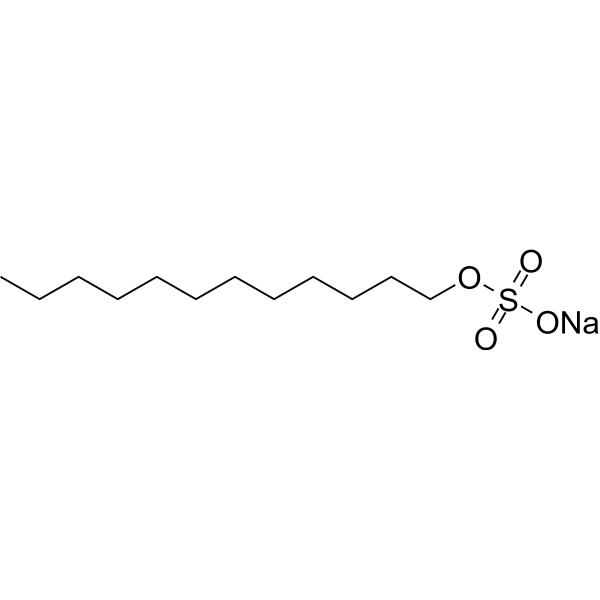
Sodium dodecyl sulfate for electrophoresis is a high purity sodium dodecyl sulfate (SDS) with a minimum purity of 98.5%. It is an anionic detergent commonly used in electrophoretic procedures to denature and impart a negative charge to proteins, allowing separation based on size and charge. Sodium dodecyl sulfate for electrophoresis has unique chemical properties that make it an effective ingredient in many laboratory applications, helping to improve the resolution and sensitivity of protein analysis.
|
-
-
- HY-D0232
-
-
-
- HY-108717B
-
|
Protease K (NGS grade)
|
Ser/Thr Protease
|
Others
|
|
Proteinase K (Protease K) (NGS grade) is a nonspecific serine protease that is useful for general digestion of proteins. Proteinase K (NGS grade) is active in the presence of SDS or urea and over a wide range of pH (4-12), salt concentrations, and temperatures. Proteinase K (NGS grade) can be use for promoting methods of viral nucleic acid extraction, and detection. This product is NGS grade, no Nickase residue, and nucleic acid residue ≤5 pg/mg .
|
-

-
- HY-NP002
-
|
|
Biochemical Assay Reagents
|
Others
|
|
BSA Standard Solution (5 mg/mL) is a bovine serum albumin solution commonly used as a standard for total serum protein detection. BSA Standard Solution (5 mg/mL) can be used for drawing standard curves and calibrating experiments in total protein assays. BSA Standard Solution (5 mg/mL) is also suitable for various biological experiments, including PCR detection inhibition, antibody desalting, chromatography control, SDS-PAGE electrophoresis, and calibration of UV spectrophotometers .
|
-
-
- HY-108717A
-
|
Recombinant Protease K (DNase & RNase free, animal free)
|
Ser/Thr Protease
|
Others
|
|
Recombinant Proteinase K (Protease K) (DNase & RNase free, animal free) is a nonspecific serine protease that is useful for general digestion of proteins. Proteinase K (DNase & RNase free, animal free) is active in the presence of SDS or urea and over a wide range of pH (4-12), salt concentrations, and temperatures. Proteinase K (DNase & RNase free, animal free) can be use for promoting methods of viral nucleic acid extraction, and detection. This product is of molecular biology grade, free of animal-derived ingredients, and is recombinantly purified from yeast .
|
-

-
- HY-D0006
-
|
|
Fluorescent Dye
|
Others
|
|
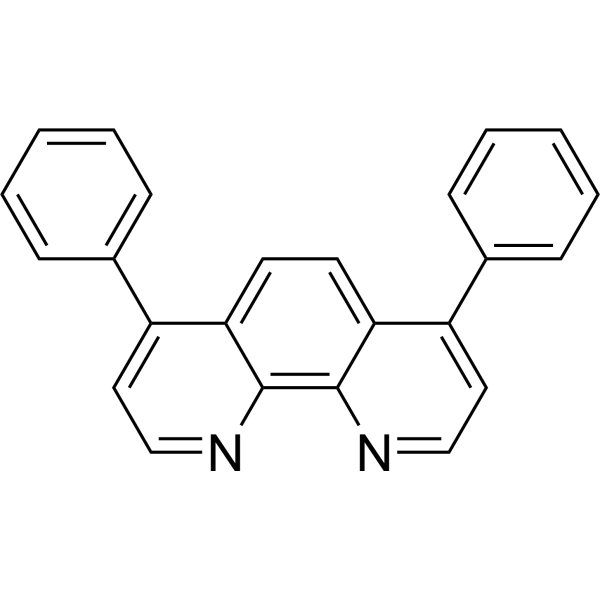
Bathophenanthroline is a nitrogen-containing organic ligand that can form stable complexes with transition metal ions such as Ru 2+. In proteomics, Bathophenanthroline is often used for in-gel protein staining. The negatively charged sulfonic acid groups of Bathophenanthroline interact electrostatically with the positively charged amino acid residues of proteins, thereby achieving specific binding to proteins and enhancing the fluorescent signal of detection. Bathophenanthroline can be used for protein separation and detection in SDS-PAGE gels in the field of proteomics, as well as other fluorescence studies[1]. Ex/Em=532 nm/610 nm[1].
|
-
-
- HY-119271
-
|
SDS-1-021
|
c-Myc
Apoptosis
|
Cancer
|
|
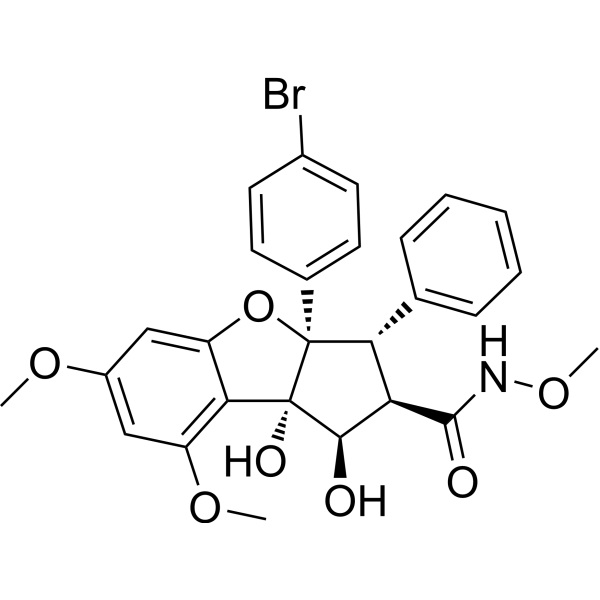
CMLD010509 (SDS-1-021) is a highly specific inhibitor of the oncogenic translation program supporting multiple myeloma (MM)-including key oncoproteins such as MYC, MDM2, CCND1, MAF, and MCL-1. CMLD010509 (SDS-1-021) shows an IC50 below 10 nM for most MM cell lines and induces apoptosis. CMLD010509 (SDS-1-021) is a potent and selective translation inhibitor through an eIF4E phosphorylation-independent mechanism .
|
-
-
- HY-D1590
-
|
|
Fluorescent Dye
|
Others
|
|
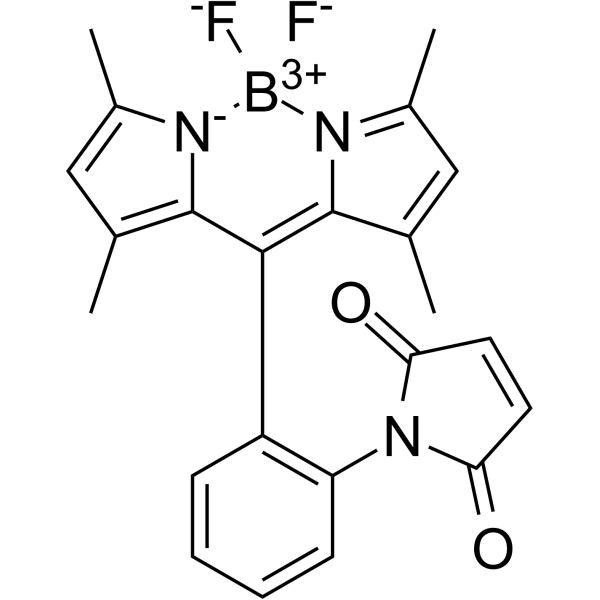
ODIPY Green 8-P2M is a novel thiol-reactive fluorescence probe based on the BODIPY fluorophore, the fluorescence is strongly quenched by d-PeT and then can be restored after reaction with thiol, resulting in an extremely high signal-to-noise ratio. ODIPY Green 8-P2M can be useful for detecting extremely low concentrations of protein in the gel after SDS-PAGE .
|
-
-
- HY-D0014
-
|
|
Environmental Pollutants
Biochemical Assay Reagents
|
Others
|
|
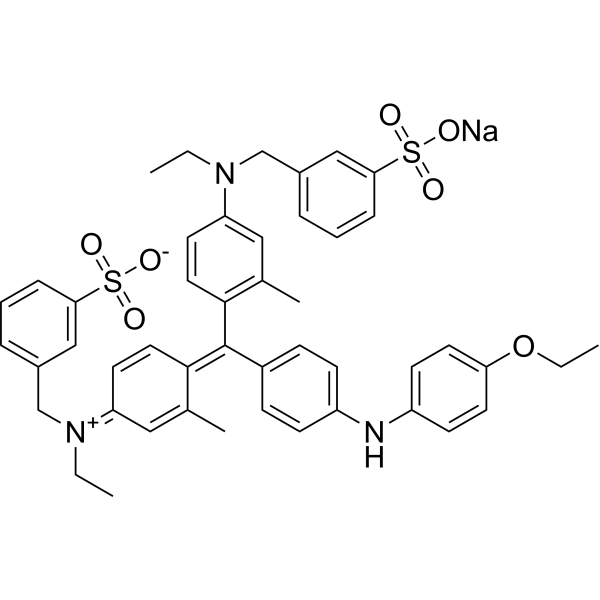
Brilliant Blue G-250 is a dye commonly used for the visualization of proteins separated by SDS-PAGE, offering a simple staining procedure and high quantitation. In the Bradford protein assay, protein concentrations are determined by the absorbance at 595 nm due to the binding of Brilliant Blue G-250 to proteins. Brilliant Blue G-250 is a safe highly selective P2×7R antagonist with promising consequent inactivation of NLRP3 inflammasome .
|
-
-
- HY-W284558
-
|
|
Biochemical Assay Reagents
|
Others
|
|
Sodium hexadecyl sulfate is a long-chain anionic surfactant. Sodium hexadecyl sulfate can act as an interface-regulating substance to form a soft layer on the surface of carbon nanotubes, guide proteins to adsorb in the correct orientation with active sites facing outward through electrostatic interactions, and significantly enhance the activity of immobilized enzymes. Sodium hexadecyl sulfate can replace or supplement SDS (HY-Y0316) in capillary gel electrophoresis (CGE) .
|
-

-
- HY-Y0700
-
|
|
Fluorescent Dye
|
Others
|
|
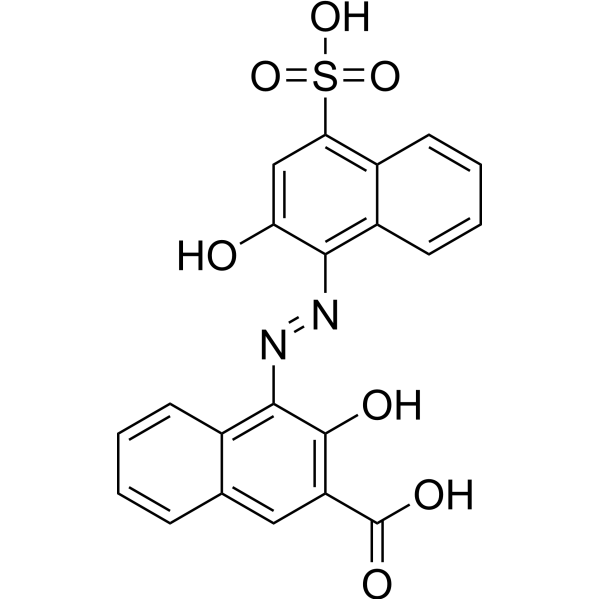
Calconcarboxylic acid, an azo dye, acts as a silver-ion sensitizer to stain protein in SDS-PAGE gels. Calconcarboxylic acid increases silver binding on protein bands or spots by the formation of a silver-dye complex and also increases the reducing power o
|
-
-
- HY-106969A
-
|
|
Glycine Receptor (GlyR)
iGluR
|
Cardiovascular Disease
Neurological Disease
|
|
ZD 9379 sodium is a competitive glycine/NMDA receptor antagonist, with an IC50 value of 75 nM (glutamate site). ZD 9379 sodium selectively antagonizes the glycine binding site (GlyB site) on the NMDA receptor, inhibiting the binding of glycine to the NMDA receptor and alleviating excitotoxicity. ZD 9379 sodium reduces the frequency of cortical spreading depression (SDs), alleviates energy depletion in the ischemic penumbra, and delays the expansion of infarction. ZD 9379 sodium reduces the infarct volume and improves neurological function in mouse models. ZD 9379 sodium can be used in studies of acute ischemic stroke, etc .
|
-

-
- HY-119271A
-
|
(-)-SDS-1-021
|
c-Myc
Apoptosis
|
Cancer
|
|
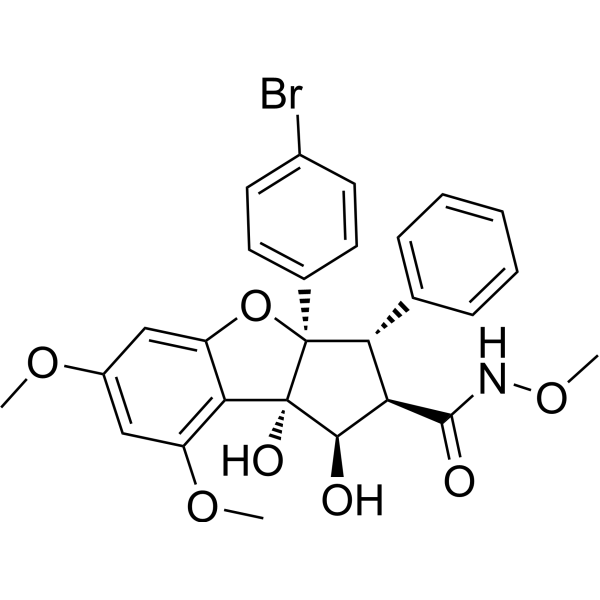
(-)-CMLD010509 ((-)-SDS-1-021) is an isomer of CMLD010509 (SDS-1-021) (HY-119271). CMLD010509 (SDS-1-021) is a highly specific inhibitor of the oncogenic translation program supporting multiple myeloma (MM)-including key oncoproteins such as MYC, MDM2, CCND1, MAF, and MCL-1. CMLD010509 (SDS-1-021) shows an IC50 below 10 nM for most MM cell lines and induces apoptosis. CMLD010509 (SDS-1-021) is a potent and selective translation inhibitor through an eIF4E phosphorylation-independent mechanism .
|
-
-
- HY-RS22929
-
|
|
Small Interfering RNA (siRNA)
|
Others
|
|
Sds Rat Pre-designed siRNA Set A contains three designed siRNAs for Sds gene (Rat), as well as a negative control, a positive control, and a FAM-labeled negative control.
|
-
Sds Rat Pre-designed siRNA Set A
Sds Rat Pre-designed siRNA Set A
-
- HY-RS16499
-
|
|
Small Interfering RNA (siRNA)
|
Others
|
|
Sds Mouse Pre-designed siRNA Set A contains three designed siRNAs for Sds gene (Mouse), as well as a negative control, a positive control, and a FAM-labeled negative control.
|
-
Sds Mouse Pre-designed siRNA Set A
Sds Mouse Pre-designed siRNA Set A
-
- HY-RS12599
-
|
|
Small Interfering RNA (siRNA)
|
Others
|
|
SDS Human Pre-designed siRNA Set A contains three designed siRNAs for SDS gene (Human), as well as a negative control, a positive control, and a FAM-labeled negative control.
|
-
SDS Human Pre-designed siRNA Set A
SDS Human Pre-designed siRNA Set A
-
- HY-RS18499
-
|
|
Small Interfering RNA (siRNA)
|
Others
|
|
Sbds Mouse Pre-designed siRNA Set A contains three designed siRNAs for Sbds gene (Mouse), as well as a negative control, a positive control, and a FAM-labeled negative control.
|
-
Sbds Mouse Pre-designed siRNA Set A
Sbds Mouse Pre-designed siRNA Set A
-
- HY-RS12463
-
|
|
Small Interfering RNA (siRNA)
|
Others
|
|
SBDS Human Pre-designed siRNA Set A contains three designed siRNAs for SBDS gene (Human), as well as a negative control, a positive control, and a FAM-labeled negative control.
|
-
SBDS Human Pre-designed siRNA Set A
SBDS Human Pre-designed siRNA Set A
-
- HY-Y0316BR
-
|
Sodium lauryl sulfate (Standard); Laurylsulfuric acid sodium (Standard)
|
Biochemical Assay Reagents
Reference Standards
|
Others
|
|
Sodium dodecyl sulfate (Standard) is the analytical standard of Sodium dodecyl sulfate. This product is intended for research and analytical applications. Sodium dodecyl sulfate is a high purity sodium dodecyl sulfate (SDS) with a minimum purity of 98.5%. It is an anionic detergent commonly used in electrophoretic procedures to denature and impart a negative charge to proteins, allowing separation based on size and charge. Sodium dodecyl sulfate has unique chemical properties that make it an effective ingredient in many laboratory applications, helping to improve the resolution and sensitivity of protein analysis.
|
-

-
- HY-W284558S
-
|
|
Isotope-Labeled Compounds
Biochemical Assay Reagents
|
Others
|
|
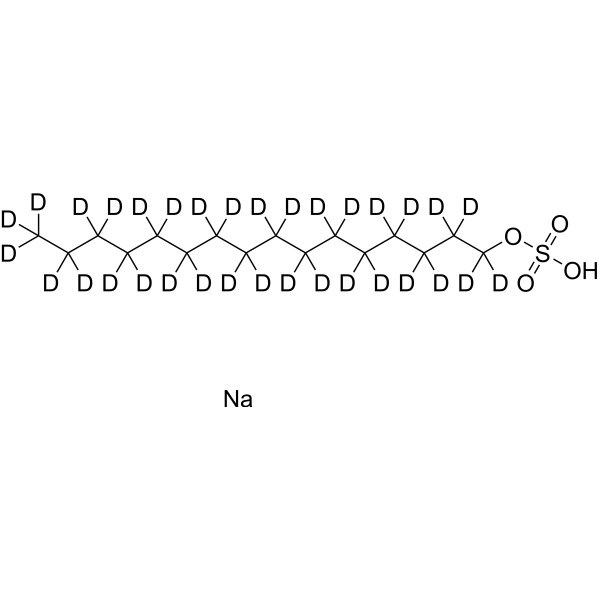
Sodium hexadecyl sulfate-d33 is the deuterium labeled Sodium hexadecyl sulfate. Sodium hexadecyl sulfate is a long-chain anionic surfactant. Sodium hexadecyl sulfate can act as an interface-regulating substance to form a soft layer on the surface of carbon nanotubes, guide proteins to adsorb in the correct orientation with active sites facing outward through electrostatic interactions, and significantly enhance the activity of immobilized enzymes. Sodium hexadecyl sulfate can replace or supplement SDS (HY-Y0316) in capillary gel electrophoresis (CGE) .
|
-
-
- HY-D0232
-
|
Brilliant Blue R
|
Fluorescent Dyes
|
|
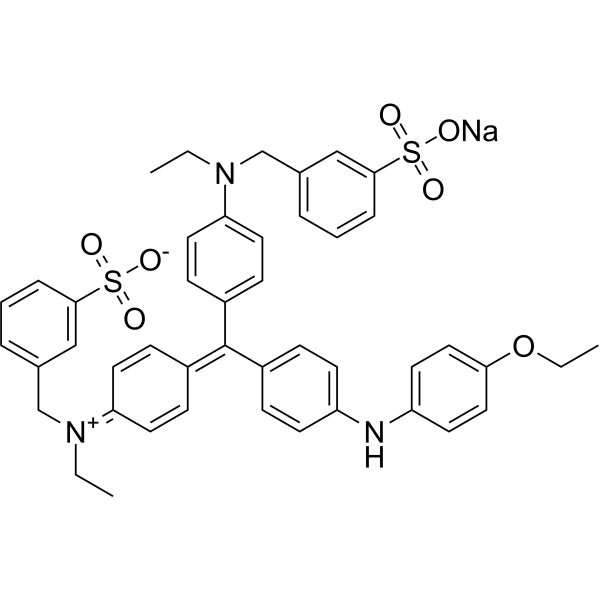
Brilliant blue R250 (Brilliant Blue R), an anionic dye, is the most popular stain to detect proteins resolved in SDS-PAGE gels .
|
-
- HY-D0006
-
|
|
Fluorescent Dyes
|
|
Bathophenanthroline is a nitrogen-containing organic ligand that can form stable complexes with transition metal ions such as Ru 2+. In proteomics, Bathophenanthroline is often used for in-gel protein staining. The negatively charged sulfonic acid groups of Bathophenanthroline interact electrostatically with the positively charged amino acid residues of proteins, thereby achieving specific binding to proteins and enhancing the fluorescent signal of detection. Bathophenanthroline can be used for protein separation and detection in SDS-PAGE gels in the field of proteomics, as well as other fluorescence studies[1]. Ex/Em=532 nm/610 nm[1].
|
-
- HY-D0014
-
|
|
Fluorescent Dyes
|
|
Brilliant Blue G-250 is a dye commonly used for the visualization of proteins separated by SDS-PAGE, offering a simple staining procedure and high quantitation. In the Bradford protein assay, protein concentrations are determined by the absorbance at 595 nm due to the binding of Brilliant Blue G-250 to proteins. Brilliant Blue G-250 is a safe highly selective P2×7R antagonist with promising consequent inactivation of NLRP3 inflammasome .
|
-
- HY-Y0700
-
|
|
Fluorescent Dyes
|
|
Calconcarboxylic acid, an azo dye, acts as a silver-ion sensitizer to stain protein in SDS-PAGE gels. Calconcarboxylic acid increases silver binding on protein bands or spots by the formation of a silver-dye complex and also increases the reducing power o
|
-
- HY-Y0316B
-
|
Sodium lauryl sulfate for electrophoresis; Laurylsulfuric acid sodium salt for electrophoresis
|
Biochemical Assay Reagents
|
|
Sodium dodecyl sulfate for electrophoresis is a high purity sodium dodecyl sulfate (SDS) with a minimum purity of 98.5%. It is an anionic detergent commonly used in electrophoretic procedures to denature and impart a negative charge to proteins, allowing separation based on size and charge. Sodium dodecyl sulfate for electrophoresis has unique chemical properties that make it an effective ingredient in many laboratory applications, helping to improve the resolution and sensitivity of protein analysis.
|
-
- HY-D0232
-
|
Brilliant Blue R
|
Biochemical Assay Reagents
|
|
Brilliant blue R250 (Brilliant Blue R), an anionic dye, is the most popular stain to detect proteins resolved in SDS-PAGE gels .
|
-
- HY-NP002
-
|
|
Biochemical Assay Reagents
|
|
BSA Standard Solution (5 mg/mL) is a bovine serum albumin solution commonly used as a standard for total serum protein detection. BSA Standard Solution (5 mg/mL) can be used for drawing standard curves and calibrating experiments in total protein assays. BSA Standard Solution (5 mg/mL) is also suitable for various biological experiments, including PCR detection inhibition, antibody desalting, chromatography control, SDS-PAGE electrophoresis, and calibration of UV spectrophotometers .
|
-
- HY-D0014
-
|
|
Biochemical Assay Reagents
|
|
Brilliant Blue G-250 is a dye commonly used for the visualization of proteins separated by SDS-PAGE, offering a simple staining procedure and high quantitation. In the Bradford protein assay, protein concentrations are determined by the absorbance at 595 nm due to the binding of Brilliant Blue G-250 to proteins. Brilliant Blue G-250 is a safe highly selective P2×7R antagonist with promising consequent inactivation of NLRP3 inflammasome .
|
-
- HY-W284558
-
|
|
Biochemical Assay Reagents
|
|
Sodium hexadecyl sulfate is a long-chain anionic surfactant. Sodium hexadecyl sulfate can act as an interface-regulating substance to form a soft layer on the surface of carbon nanotubes, guide proteins to adsorb in the correct orientation with active sites facing outward through electrostatic interactions, and significantly enhance the activity of immobilized enzymes. Sodium hexadecyl sulfate can replace or supplement SDS (HY-Y0316) in capillary gel electrophoresis (CGE) .
|
-
- HY-Y0316BR
-
|
Sodium lauryl sulfate (Standard); Laurylsulfuric acid sodium (Standard)
|
Biochemical Assay Reagents
|
|
Sodium dodecyl sulfate (Standard) is the analytical standard of Sodium dodecyl sulfate. This product is intended for research and analytical applications. Sodium dodecyl sulfate is a high purity sodium dodecyl sulfate (SDS) with a minimum purity of 98.5%. It is an anionic detergent commonly used in electrophoretic procedures to denature and impart a negative charge to proteins, allowing separation based on size and charge. Sodium dodecyl sulfate has unique chemical properties that make it an effective ingredient in many laboratory applications, helping to improve the resolution and sensitivity of protein analysis.
|
| Cat. No. |
상품명 |
Target |
Research Area |
-
- HY-P4727
-
|
DSIP-isoD
|
Peptides
|
Others
|
|
(β-Asp5)-Delta-Sleep Inducing Peptide (DSIP-isoD) is a synthetic polypeptide that can be partially hydrolyzed by NaOH or SDS. (β-Asp5)-Delta-Sleep Inducing Peptide can be used to study the catalytic activity of mitochondrial protein L-isoaspartyl (D-aspartyl) methyltransferase (PIMT) .
|
-
- HY-K1030
-
1 Publications Verification
|
|
MCE SDS dust-free Powder can be directly prepared into 10% SDS solution, and is widely used for protein denaturation.
|
-
- HY-K1020
-
|
|
|
MCE Tris-Glycine-SDS Powder (1 L of 1×) consists of Tris, Glycine and SDS, and is widely used as an electrophoresis buffer for SDS-PAGE and Western Blot. The 10 pouches are defined as the base specification. All larger sizes correspond to incremental volumes of this base.
|
-
- HY-K1100
-
3 Publications Verification
|
|
SDS-PAGE Sample Loading Buffer (4×) is appropriate for loading protein samples on SDS-PAGE. The 1 mL is defined as the base specification. All larger sizes correspond to incremental volumes of this base.
|
-
- HY-K1108
-
|
|
|
MCE SDS-PAGE Protein Loading Buffer (non-Reducing, 5×) is appropriate for loading protein samples on SDS-PAGE. The 1 mL is defined as the base specification. All larger sizes correspond to incremental volumes of this base.
|
-
- HY-K1034
-
|
|
|
MCE Tris-HEPES-SDS Powder (500 mL of 1×) consists of Tris, HEPES, EDTA and SDS, and is widely used in protein electrophoresis. The 20 pouches are defined as the base specification. All larger sizes correspond to incremental volumes of this base.
|
-
- HY-K1018
-
|
|
|
MCE Tris-MES-SDS Powder (1 L of 1×) consists of Tris, MES, EDTA and SDS, and is mainly used for separation of small- to medium-sized proteins. The 10 pouches are defined as the base specification. All larger sizes correspond to incremental volumes of this base.
|
-
- HY-K1019
-
|
|
|
MCE Tris-MOPS-SDS Powder (1 L of 1×) consists of Tris, MOPS, EDTA and SDS, and is mainly used for separation of medium- to large-sized proteins. The 10 pouches are defined as the base specification. All larger sizes correspond to incremental volumes of this base.
|
-
- HY-K1032
-
|
|
|
MCE 6× DNA Loading Buffer with SDS is a modified 6-fold buffer and mainly consists of glycerin, EDTA, SDS, Orange G and Xylene Cyanol FF. The 1 mL is defined as the base specification. All larger sizes correspond to incremental volumes of this base.
|
-
- HY-K1028
-
|
|
|
MCE Transfer Buffer (Semi Dry) Powder (1 L of 1×) consists of Tris, Glycine and SDS, and is suitable for Western Blot semi-dry electrophoresis. The 20 pouches are defined as the base specification. All larger sizes correspond to incremental volumes of this base.
|
-
- HY-K1103
-
1 Publications Verification
|
|
MCE Coomassie Blue Fast Staining Solution (No Heating, 10×) uses Coomassie Brilliant Blue G250 as the dye. It can be used for rapid, sensitive staining of protein gels in SDS-PAGE or Native-PAGE without contamination, or for detecting residual proteins on PAGE gels after Western Blot transfer. The 25 mL is defined as the base specification. All larger sizes correspond to incremental volumes of this base.
|
| Cat. No. |
상품명 |
Chemical Structure |
-
- HY-W284558S
-
|
|
|
Sodium hexadecyl sulfate-d33 is the deuterium labeled Sodium hexadecyl sulfate. Sodium hexadecyl sulfate is a long-chain anionic surfactant. Sodium hexadecyl sulfate can act as an interface-regulating substance to form a soft layer on the surface of carbon nanotubes, guide proteins to adsorb in the correct orientation with active sites facing outward through electrostatic interactions, and significantly enhance the activity of immobilized enzymes. Sodium hexadecyl sulfate can replace or supplement SDS (HY-Y0316) in capillary gel electrophoresis (CGE) .
|
-
| Cat. No. |
상품명 |
|
Classification |
-
- HY-RS22929
-
|
|
|
siRNAs
Rat Pre-designed siRNA Sets
|
|
Sds Rat Pre-designed siRNA Set A contains three designed siRNAs for Sds gene (Rat), as well as a negative control, a positive control, and a FAM-labeled negative control.
|
-
- HY-RS16499
-
|
|
|
siRNAs
Mouse Pre-designed siRNA Sets
|
|
Sds Mouse Pre-designed siRNA Set A contains three designed siRNAs for Sds gene (Mouse), as well as a negative control, a positive control, and a FAM-labeled negative control.
|
-
- HY-RS12599
-
|
|
|
siRNAs
Human Pre-designed siRNA Sets
|
|
SDS Human Pre-designed siRNA Set A contains three designed siRNAs for SDS gene (Human), as well as a negative control, a positive control, and a FAM-labeled negative control.
|
-
- HY-RS18499
-
|
|
|
siRNAs
Mouse Pre-designed siRNA Sets
|
|
Sbds Mouse Pre-designed siRNA Set A contains three designed siRNAs for Sbds gene (Mouse), as well as a negative control, a positive control, and a FAM-labeled negative control.
|
-
- HY-RS12463
-
|
|
|
siRNAs
Human Pre-designed siRNA Sets
|
|
SBDS Human Pre-designed siRNA Set A contains three designed siRNAs for SBDS gene (Human), as well as a negative control, a positive control, and a FAM-labeled negative control.
|
Your information is safe with us. * Required Fields.
Inquiry Information
- 상품명:
- Cat. No.:
- 수량:
- MCE Japan Authorized Agent:











