1. Search Result
Search Result
Results for "

atherosclerotic lesion

" in MedChemExpress (MCE) Product Catalog:

34

Inhibitors & Agonists

1

Inhibitory Antibodies

7

Natural
Products

9

Isotope-Labeled Compounds

Cat. No. 상품명 Target 연구분야 Chemical Structure
  • HY-19900
    ITX5061
    3 Publications Verification

    p38 MAPK Scavenger Receptor Class B type I (SR-BI) Inflammation/Immunology
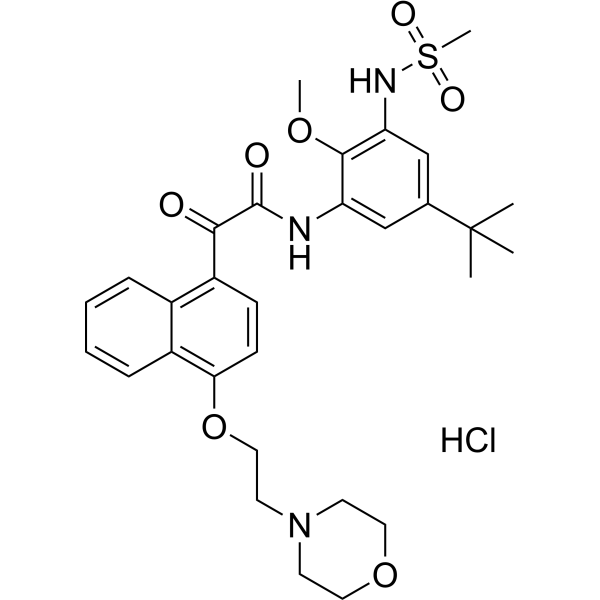
    ITX5061 is an orally active type II non-competitive p38 MAPK inhibitor. ITX5061 increases HDL-C levels by inhibiting SR-BI activity. ITX5061 also moderately elevates ApoA-I levels. ITX5061 reduces early atherosclerotic lesions in the aortic arch of mice fed an atherogenic diet. ITX5061 can be used in the research of atherosclerosis .
    ITX5061
  • HY-129440

    NF-κB Toll-like Receptor (TLR) p38 MAPK NO Synthase COX ERK Caspase PDGFR MyD88 Reactive Oxygen Species (ROS) Apoptosis Neurological Disease Metabolic Disease Inflammation/Immunology Cancer
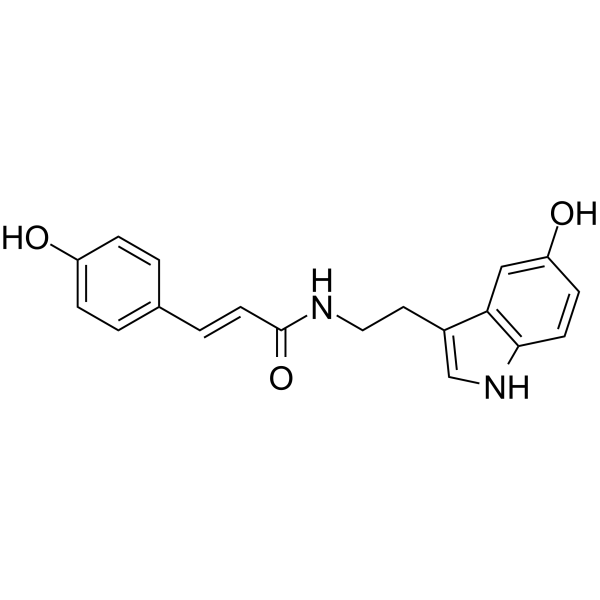
    N-(p-Coumaroyl) Serotonin is an orally active polyphenol found in safflower seeds with potent anti-inflammatory, antioxidant, and antitumor activities. N-(p-Coumaroyl) Serotonin suppresses NF‑κB, TLR4/MyD88 and MAPK signaling, activates NQO1/HO‑1 pathways, and inhibits pro‑inflammatory cytokines, iNOS and COX‑2 and ROS production. N-(p-Coumaroyl) Serotonin induces S‑phase arrest and apoptosis in glioblastoma cells, reduces atherosclerotic lesions, and alleviates renal and vascular injuries. N-(p-Coumaroyl) Serotonin acts as a vasodilator, regulates calcium dynamics. N-(p-Coumaroyl) Serotonin can be used for the research of neurodegenerative diseases, atherosclerosis, glioblastoma, and acute renal failure .
    N-(p-Coumaroyl) Serotonin
  • HY-B0374

    BDF5895

    Imidazoline Receptor Adrenergic Receptor LDLR Cardiovascular Disease Neurological Disease
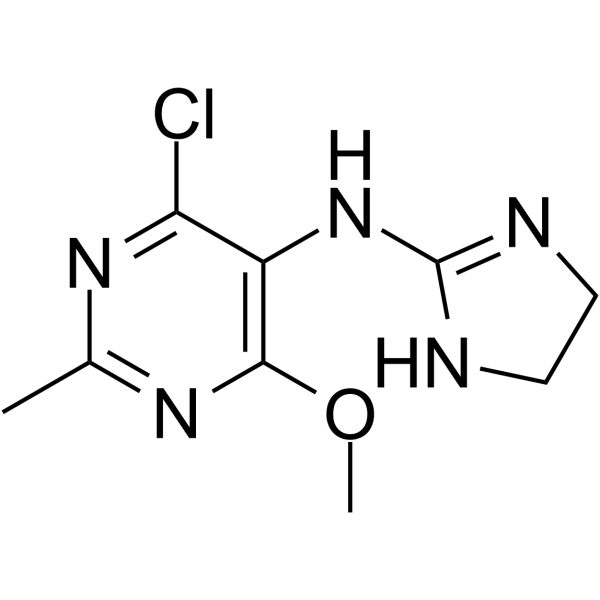
    Moxonidine (BDF5895) is an orally active imidazoline type 1 receptor (I1-R) agonist. Moxonidine activates imidazoline I1 receptors and α2 adrenoceptors, affecting oxidized low-density lipoprotein uptake. Moxonidine reduces atherosclerotic lesions and lowers blood pressure. Moxonidine can be used in the study of hypertension, heart failure, and atherosclerosis .
    Moxonidine
  • HY-W010697

    Endogenous Metabolite Metabolic Disease
    Cholesteryl linoleate is shown to be the major cholesteryl ester contained in LDL and atherosclerotic lesions.
    Cholesteryl linoleate
  • HY-B0374A

    BDF5895 hydrochloride

    Imidazoline Receptor Adrenergic Receptor LDLR Cardiovascular Disease Neurological Disease
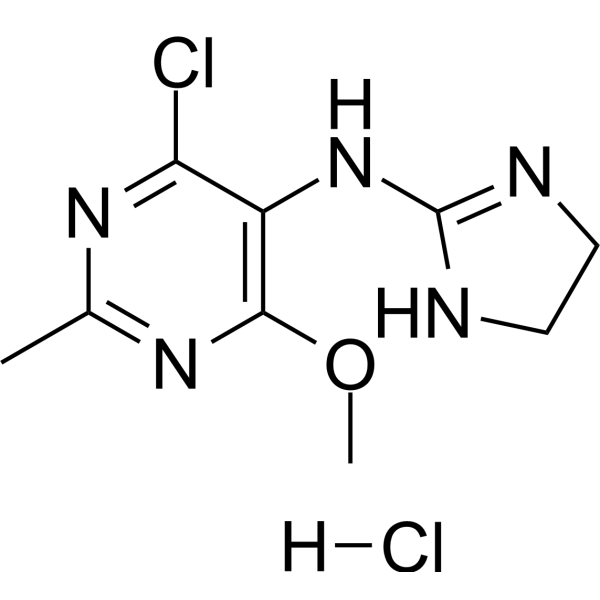
    Moxonidine (BDF5895) hydrochloride is an orally active imidazoline type 1 receptor (I1-R) agonist. Moxonidine hydrochloride activates imidazoline I1 receptors and α2 adrenoceptors, affecting oxidized low-density lipoprotein uptake. Moxonidine hydrochloride reduces atherosclerotic lesions and lowers blood pressure. Moxonidine hydrochloride can be used in the study of hypertension, heart failure, and atherosclerosis .
    Moxonidine hydrochloride
  • HY-129056

    Thrombin NF-κB AP-1 Cardiovascular Disease Neurological Disease
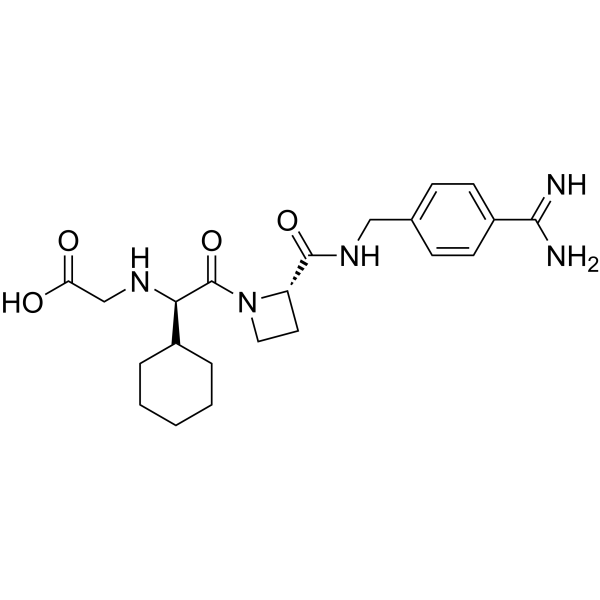
    Melagatran is a reversible, selective, orally active direct inhibitor of thrombin with a Ki of 2 nM. Melagatran binds directly to the active site of thrombin, inhibiting thrombin-mediated conversion of fibrinogen to fibrin. Melagatran reduces the DNA binding activity of NF-κB and AP-1. Melagatran reduces fibrin deposition in organs, alleviates ischemic brain damage, and reduces the size of advanced atherosclerotic lesions. Melagatran can be used in the study of cardiovascular disease (coronary thrombosis, atherosclerosis) and ischemic brain damage .
    Melagatran
  • HY-162562

    PCSK9 Metabolic Disease Inflammation/Immunology
    E28362 is an orally active lipid-lowering agent and a selective PCSK9 antagonist. E28362 blocks the interaction between PCSK9 and LDLR, and induces PCSK9 degradation via the ubiquitin-proteasome pathway. E28362 significantly increases the levels of cell surface and total LDLR proteins, enhances low-density lipoprotein uptake, thereby effectively reducing plasma lipids, hepatic cholesterol and triglyceride levels. E28362 shows no obvious cytotoxicity at high concentrations, and significantly attenuates atherosclerotic lesions in animal models. E28362 is an important molecule in research of hyperlipidemia and atherosclerosis .
    E28362
  • HY-N13250

    Apoptosis AMPK Elastase Bcl-2 Family Interleukin Related Caspase PI3K Akt SOD Cardiovascular Disease
    Hawthorn Extract is an orally active hawthorn extract. Hawthorn Extract decreases Bax expression and increases Bcl-2 expression in the aorta. Hawthorn Extract regulates the AMPK signaling pathway, induces apoptosis, enhances the hepatic antioxidant system, and ameliorates symptoms of liver injury, inflammation and cancer. Hawthorn Extract reduces plasma levels of pro-inflammatory factors, increases plasma levels of anti-inflammatory adiponectin, and alleviates atherosclerotic plaque lesions in the aorta. Hawthorn Extract improves symptoms associated with chronic heart failure . Hawthorn Extract inhibits FMLP-induced superoxide anion production, Elastase release, ILB4 generation and calcium signaling in neutrophils, and also reduces LPS-induced cytokine production in neutrophils. Hawthorn Extract induces autophagy and inhibits the proliferation of intestinal stem cells. Hawthorn Extract can be used in research related to atherosclerosis, hepatitis, alcoholic liver disease, non-alcoholic fatty liver disease, hepatocellular carcinoma, chronic heart failure and hypotension .
    Hawthorn Extract
  • HY-W996116

    Glutathione Peroxidase Cardiovascular Disease Neurological Disease Inflammation/Immunology
    AZM198 is an orally active myeloperoxidase (MPO) inhibitor. AZM198 irreversibly inactivates MPO (IC50=0.015 μM) via covalent binding to the heme prosthetic group, preferentially targets extracellular MPO activity, and reduces neutrophil extracellular trap formation, reactive oxygen species production and degranulation. AZM198 increases the fibrous cap thickness of atherosclerotic plaques, reduces lesion area, ameliorates hepatic steatosis and fibrosis in non-alcoholic steatohepatitis, and alleviates proteinuria and inflammatory infiltration associated with glomerulonephritis. AZM198 also decreases circulating levels of high-sensitivity Cardiac Troponin I and IL-1β, and mitigates endothelial cell injury. Therefore, AZM198 is suitable for research on various MPO-related diseases, including atherosclerotic cardiovascular disease, myocardial infarction, ischemic stroke, non-alcoholic steatohepatitis and crescentic glomerulonephritis .
    AZM198
  • HY-N15285

    Others Metabolic Disease
    Protocatechuic acid 4-glucoside is a glycosylated phenolic acid. Protocatechuic acid 4-glucoside exhibits antioxidant activity and can alleviate atherosclerotic lesions in rats fed a high-fat diet. Protocatechuic acid 4-glucoside can be used for the study of metabolism-related diseases .
    Protocatechuic acid 4-glucoside
  • HY-129440R

    Reference Standards PDGFR ERK Caspase NF-κB Toll-like Receptor (TLR) p38 MAPK NO Synthase COX MyD88 Reactive Oxygen Species (ROS) Apoptosis Neurological Disease Metabolic Disease Inflammation/Immunology Cancer
    N-(p-Coumaroyl) Serotonin (Standard) is the analytical standard of N-(p-Coumaroyl) Serotonin (HY-129440). This product is intended for research and analytical applications. N-(p-Coumaroyl) Serotonin is an orally active polyphenol found in safflower seeds with potent anti-inflammatory, antioxidant, and antitumor activities. N-(p-Coumaroyl) Serotonin suppresses NF‑κB, TLR4/MyD88 and MAPK signaling, activates NQO1/HO‑1 pathways, and inhibits pro‑inflammatory cytokines, iNOS and COX‑2 and ROS production. N-(p-Coumaroyl) Serotonin induces S‑phase arrest and apoptosis in glioblastoma cells, reduces atherosclerotic lesions, and alleviates renal and vascular injuries. N-(p-Coumaroyl) Serotonin acts as a vasodilator, regulates calcium dynamics. N-(p-Coumaroyl) Serotonin can be used for the research of neurodegenerative diseases, atherosclerosis, glioblastoma, and acute renal failure .
    N-(p-Coumaroyl) Serotonin (Standard)
  • HY-W013812R

    Linoleic Acid ethyl ester (Standard); Mandenol (Standard)

    Reference Standards Others Cardiovascular Disease
    Ethyl linoleate (Standard) is the analytical standard of Ethyl linoleate. This product is intended for research and analytical applications. Ethyl linoleate (Linoleic Acid ethyl ester) inhibit the development of atherosclerotic lesions and the expression of inflammatory mediators .
    Ethyl linoleate (Standard)
  • HY-B0374S

    Isotope-Labeled Compounds Imidazoline Receptor Adrenergic Receptor LDLR Cardiovascular Disease Neurological Disease
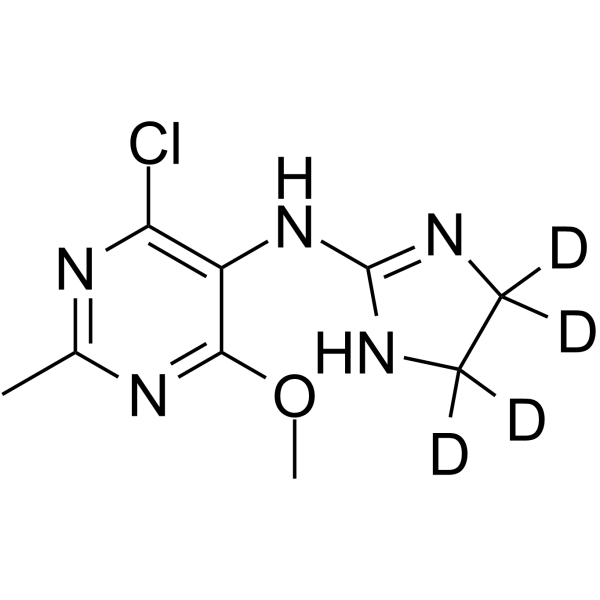
    Moxonidine-d4 (BDF5895-d4) is the deuterium labeled Moxonidine (HY-B0374). Moxonidine (BDF5895) is an orally active imidazoline type 1 receptor (I1-R) agonist. Moxonidine activates imidazoline I1 receptors and α2 adrenoceptors, affecting oxidized low-density lipoprotein uptake. Moxonidine reduces atherosclerotic lesions and lowers blood pressure. Moxonidine can be used in the study of hypertension, heart failure, and atherosclerosis .
    Moxonidine-d4
  • HY-W010697S

    Isotope-Labeled Compounds Endogenous Metabolite Metabolic Disease
    Cholesteryl linoleate-d11 is deuterium labeled Cholesteryl linoleate. Cholesteryl linoleate is shown to be the major cholesteryl ester contained in LDL and atherosclerotic lesions .
    Cholesteryl linoleate-d11
  • HY-W013812S

    Linoleic Acid-13C18 ethyl ester; Mandenol-13C18

    Isotope-Labeled Compounds Cardiovascular Disease
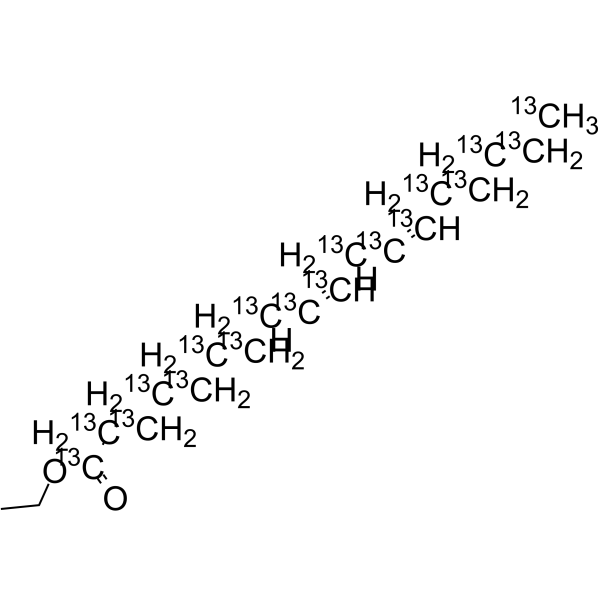
    Ethyl linoleate- 13C18 is the 13C labeled Ethyl linoleate. Ethyl linoleate inhibit the development of atherosclerotic lesions and the expression of inflammatory mediators .
    Ethyl linoleate-13C18
  • HY-130587

    Piperazine sultosylate; A-585

    LDLR Apolipoprotein Metabolic Disease
    Sultosilic acid piperazine salt (Piperazine sultosylate; A-585) is a lipid-lowering agent. Sultosilic acid piperazine salt modifies the blood lipids levels, reduces platelet adhesiveness without promoting peroxisomal activity of hepatocytes or producing other adverse side-effects .
    Sultosilic acid piperazine salt
  • HY-W013812S1

    Linoleic Acid ethyl ester-d5; Ethyl linoleate, pure-d5; Mandenol-d5

    Isotope-Labeled Compounds Others Cardiovascular Disease
    Ethyl linoleate-d5 (Linoleic Acid ethyl ester-d5) is deuterium labeled Ethyl linoleate. Ethyl linoleate (Linoleic Acid ethyl ester) inhibit the development of atherosclerotic lesions and the expression of inflammatory mediators .
    .
    Ethyl linoleate-d5
  • HY-123016

    Endogenous Metabolite Cardiovascular Disease
    9(S)-HODE cholesteryl ester is originally extracted from atherosclerotic lesions. It remains uncertain whether the oxidized fatty acid portion of the molecule results from enzymatic lipoxygenation or from random lipid peroxidation.2 9(S)-HODE cholesteryl ester can be used as a standard for analysis of chiral HODE cholesteryl esters.
    9(S)-HODE cholesteryl ester
  • HY-125394

    Endogenous Metabolite Cardiovascular Disease
    9(R)-HODE cholesteryl ester is originally extracted from atherosclerotic lesions. It remains uncertain whether the oxidized fatty acid portion of the molecule results from enzymatic lipoxygenation or from random lipid peroxidation.2 9(R)-HODE cholesteryl ester can be used as a standard for analysis of chiral HODE cholesteryl esters.
    9(R)-HODE cholesteryl ester
  • HY-19013

    Drug Derivative Cardiovascular Disease
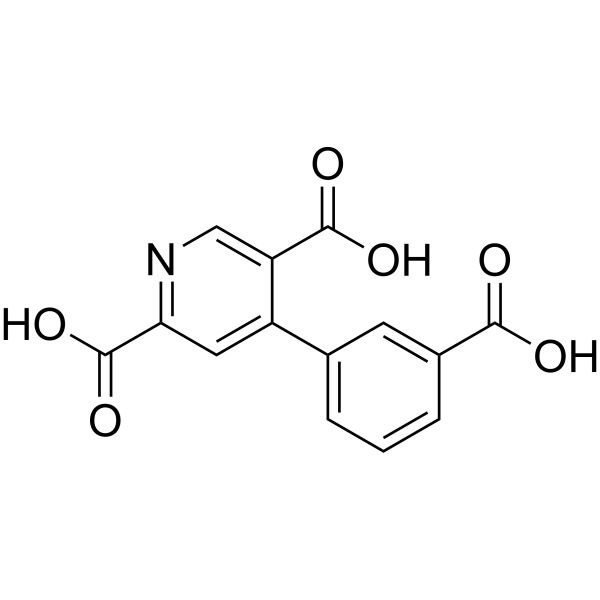
    L44-0 is a nicotinic acid derivative. L44-0 reduces atherosclerotic lesions and decreases vascular norepinephrine levels in the renal arteries, femoral arteries, and veins in a New Zealand white rabbit model of atherosclerosis. L44-0 can be used in research on cardiovascular and cerebrovascular diseases such as atherosclerosis .
    L 44-0
  • HY-W747575

    Endogenous Metabolite Metabolic Disease
    (±)13-HODE cholesteryl ester is originally extracted from atherosclerotic lesions1 and shown to be produced by Cu2+-catalyzed oxidation of LDL. Later studies determined that 15-LO from rabbit reticulocytes and human monocytes were able to metabolize cholesteryl linoleate, a major component of LDL, to 13-HODE cholesteryl ester.
    (+/-)13-HODE cholesteryl ester
  • HY-W424839

    DTBP

    Heme Oxygenase (HO) Cardiovascular Disease
    Probucol dithiobisphenol (DTBP) is the derivative of Probucol (HY-B0388). Probucol dithiobisphenol induces the production of heme oxygenase 1 (HO-1), and exhibits antioxidant activity. Probucol dithiobisphenol inhibits atherosclerotic lesions in Apoe −/− mice aorta, promotes re-endothelialization of aorta and inhibits restenosis in rabbit arterial injury models. Probucol dithiobisphenol is orally active .
    Probucol dithiobisphenol
  • HY-123016A

    Endogenous Metabolite Metabolic Disease
    (±)9-HODE cholesteryl ester is originally extracted from atherosclerotic lesions1 and shown to be produced by Cu2+-catalyzed oxidation of LDL.2 Later studies determined that 15-LO from rabbit reticulocytes and human monocytes were able to metabolize cholesteryl linoleate, a major component of LDL, to 9-HODE cholesteryl ester.
    (±)9-HODE cholesteryl ester
  • HY-117555

    Apolipoprotein PPAR ATP-binding cassette (ABC) transporters Cardiovascular Disease
    4010B-30 is a upregulator of apolipoprotein A-I (ApoA-I). 4010B-30 regulates ApoA-I gene expression through activation of PPARγ. 4010B-30 promotes cholesterol efflux and ABCA1 expression. 4010B-30 protects against atherosclerotic lesion development in ApoE -/- mice .
    4010B-30
  • HY-B0374R

    BDF5895 (Standard)

    Reference Standards Imidazoline Receptor Adrenergic Receptor LDLR Cardiovascular Disease Neurological Disease
    Moxonidine (Standard) is the analytical standard of Moxonidine (HY-B0374). This product is intended for research and analytical applications. Moxonidine (BDF5895) is an orally active imidazoline type 1 receptor (I1-R) agonist. Moxonidine activates imidazoline I1 receptors and α2 adrenoceptors, affecting oxidized low-density lipoprotein uptake. Moxonidine reduces atherosclerotic lesions and lowers blood pressure. Moxonidine can be used in the study of hypertension, heart failure, and atherosclerosis .
    Moxonidine (Standard)
  • HY-B0374S1

    BDF5895-d7

    Imidazoline Receptor Isotope-Labeled Compounds Adrenergic Receptor LDLR Cardiovascular Disease Neurological Disease
    Moxonidine-d7 is deuterated labeled Moxonidine (HY-B0374). Moxonidine (BDF5895) is an orally active imidazoline type 1 receptor (I1-R) agonist. Moxonidine activates imidazoline I1 receptors and α2 adrenoceptors, affecting oxidized low-density lipoprotein uptake. Moxonidine reduces atherosclerotic lesions and lowers blood pressure. Moxonidine can be used in the study of hypertension, heart failure, and atherosclerosis .
    Moxonidine-d7
  • HY-B0374AR

    BDF5895 hydrochloride (Standard)

    Imidazoline Receptor Adrenergic Receptor LDLR Reference Standards Cardiovascular Disease Neurological Disease
    Moxonidine hydrochloride (Standard) is the analytical standard of Moxonidine hydrochloride (HY-B0374A). This product is intended for research and analytical applications. Moxonidine (BDF5895) is an orally active imidazoline type 1 receptor (I1-R) agonist. Moxonidine activates imidazoline I1 receptors and α2 adrenoceptors, affecting oxidized low-density lipoprotein uptake. Moxonidine reduces atherosclerotic lesions and lowers blood pressure. Moxonidine can be used in the study of hypertension, heart failure, and atherosclerosis .
    Moxonidine hydrochloride (Standard)
  • HY-B0374AS

    BDF5895-13C,d3 hydrochloride

    Imidazoline Receptor Isotope-Labeled Compounds Adrenergic Receptor LDLR Cardiovascular Disease Neurological Disease
    Moxonidine- 13C,d3 hydrochloride is 13C and deuterated labeled Moxonidine hydrochloride (HY-B0374A). Moxonidine (BDF5895) is an orally active imidazoline type 1 receptor (I1-R) agonist. Moxonidine activates imidazoline I1 receptors and α2 adrenoceptors, affecting oxidized low-density lipoprotein uptake. Moxonidine reduces atherosclerotic lesions and lowers blood pressure. Moxonidine can be used in the study of hypertension, heart failure, and atherosclerosis .
    Moxonidine-13C,d3 hydrochloride
  • HY-B0374S2

    BDF5895-d3

    Isotope-Labeled Compounds Imidazoline Receptor Adrenergic Receptor LDLR Cardiovascular Disease Neurological Disease
    Moxonidine-d3 (BDF5895-d3) is deuterium labeled Moxonidine (HY-B0374). Moxonidine (BDF5895) is an orally active imidazoline type 1 receptor (I1-R) agonist. Moxonidine activates imidazoline I1 receptors and α2 adrenoceptors, affecting oxidized low-density lipoprotein uptake. Moxonidine reduces atherosclerotic lesions and lowers blood pressure. Moxonidine can be used in the study of hypertension, heart failure, and atherosclerosis .
    Moxonidine-d3
  • HY-W013812S3

    Linoleic Acid ethyl ester-d11; Mandeno-d11

    Isotope-Labeled Compounds Others Cardiovascular Disease
    Ethyl linoleate-d11 (Linoleic Acid ethyl ester-d11) is deuterium labeled Ethyl linoleate. Ethyl linoleate (Linoleic Acid ethyl ester) inhibit the development of atherosclerotic lesions and the expression of inflammatory mediators .
    Ethyl linoleate-d11
  • HY-W013812S2

    Linoleic Acid ethyl ester-d2; Mandenol-d2

    Isotope-Labeled Compounds Cardiovascular Disease
    Ethyl linoleate-d2 (Linoleic Acid ethyl ester-d2; Mandenol-d2) is the deuterium labeled Ethyl linoleate (HY-W013812). Ethyl linoleate (Linoleic Acid ethyl ester) inhibit the development of atherosclerotic lesions and the expression of inflammatory mediators .
    Ethyl linoleate-d2
  • HY-122068

    p38 MAPK Scavenger Receptor Class B type I (SR-BI) Inflammation/Immunology
    ITX5061 free base is an orally active type II non-competitive p38 MAPK inhibitor. ITX5061 free base increases HDL-C levels by inhibiting SR-BI activity. ITX5061 free base also moderately elevates ApoA-I levels. ITX5061 free base reduces early atherosclerotic lesions in the aortic arch of mice fed an atherogenic diet. ITX5061 free base can be used in the research of atherosclerosis .
    ITX5061 free base
  • HY-P991947

    AFS98; TG3003

    c-Fms Inflammation/Immunology
    ELB041 (AFS98) is a rat monoclonal anti-murine c-fms antibody (IgG2a). AFS98 inhibits M-CSF–dependent colony formation and cell growth by blocking the binding of M-CSF to its receptor. AFS98 prevents development of fatty streaks in ApoE-deficient mice. ELB041 can be used for the research of atherosclerosis .
    ELB041
  • HY-N18066

    Drug Derivative Acyltransferase NF-κB PPAR Fatty Acid Synthase (FASN) Keap1-Nrf2 Cardiovascular Disease Metabolic Disease Inflammation/Immunology
    Esculeogenin A is the sapogenol of tomato saponin Esculeoside A (HY-N18067). Esculeogenin A is an orally active hepatoprotective, hypolipidemic, and antioxidant agent. Esculeogenin A regulates molecular targets like PPARα, SREBP1, Nrf2, NF-κB, ACAT1/ACAT2 to promote hepatic fatty acid oxidation, suppress de novo lipogenesis, enhance antioxidant defense, and inhibit inflammation. Esculeogenin A improves liver function, alleviates hyperlipidemia, and inhibits hepatic steatosis and foam cell formation, preventing nonalcoholic fatty liver disease in high-fat-diet-fed rats and reducing atherosclerotic lesions in apoE-deficient mice. Esculeogenin A can be used for the research of nonalcoholic fatty liver disease, atherosclerosis, and hyperlipidemia .
    Esculeogenin A

온라인 문의

Your information is safe with us. * Required Fields.

호칭


Country or Region *

고객명 *


회사명 *

Department *


메일주소 *


상품명 *

Cat. No.


Requested quantity *

전화번호 *


비고

온라인 문의

Inquiry Information

상품명:
Cat. No.:
수량:
MCE Japan Authorized Agent:

