1. Search Result
Search Result
Results for "

bioorthogonal

" in MedChemExpress (MCE) Product Catalog:

47

Inhibitors & Agonists

15

Fluorescent Dye

3

Biochemical Assay Reagents

1

Natural
Products

23

Click Chemistry

2

Oligonucleotides

Cat. No. Product Name Target Research Areas Chemical Structure
  • HY-164745

    Fluorescent Dye Others
    L-β-ethynylserine (βES) is a threonine analog. L-β-ethynylserine is efficiently incorporated into newly synthesized proteins, and allows their selective visualization or enrichment through bioorthogonal ligation to fluorescent dyes or affinity tags, respectively .
    L-β-Ethynylserine
  • HY-100138

    Radionuclide-Drug Conjugates (RDCs) ADC Linker Cancer
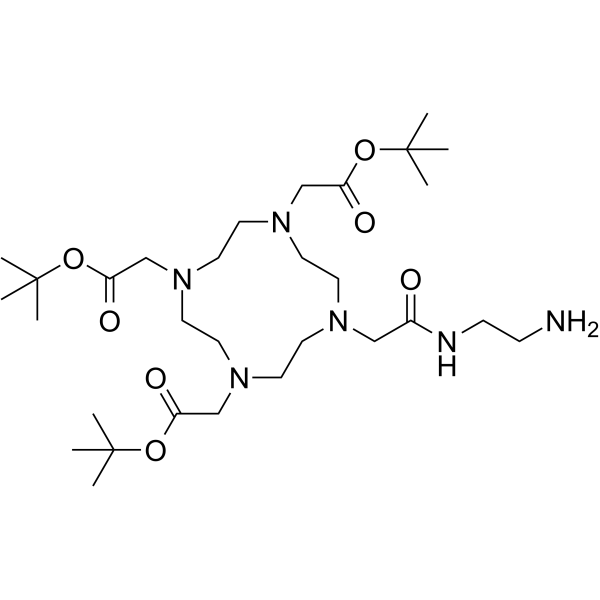
    2-Aminoethyl-mono-amide-DOTA-tris(tBu ester) is a metal chelator precursor containing a DOTA macrocyclic structure. DOTA can form highly stable complexes with metal ions (such as 68Ga, 177Lu) through four nitrogen atoms and four carboxylic acid groups to mediate targeted delivery of radionuclides. The tert-butyl ester group (tBu ester) of 2-Aminoethyl-mono-amide-DOTA-tris(tBu ester) also protects the carboxylic acid group during synthesis, and forms a free carboxyl group after deprotection reaction for coupling with targeting molecules (such as antibodies, peptides). 2-Aminoethyl-mono-amide-DOTA-tris(tBu ester) may be combined with tumor pre-targeting systems through bioorthogonal reactions (such as reverse electron demand Diels-Alder reaction) to study radioactive imaging or therapy of tumor tissues, and is mainly used in tumor pre-targeting research in the field of nuclear medicine .
    2-Aminoethyl-mono-amide-DOTA-tris(tBu ester)
  • HY-133870
    Itaconate-alkyne
    3 Publications Verification

    ITalk

    Fluorescent Dye Inflammation/Immunology
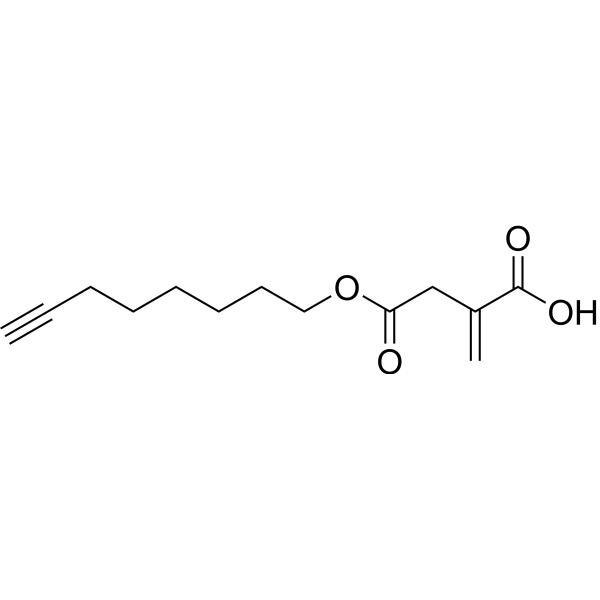
    Itaconate-alkyne (ITalk) is a specific bioorthogonal probe for quantitative and site-specific chemoproteomic profiling of Itaconation in living cells. Itaconate-alkyne, a functional analogue of Itaconate, exhibits comparable antiinflammatory effect with Itaconate and enables the labeling of bona fide targets of Itaconate . Itaconate-alkyne is a click chemistry reagent, it contains an Alkyne group and can undergo copper-catalyzed azide-alkyne cycloaddition (CuAAc) with molecules containing Azide groups.
    Itaconate-alkyne
  • HY-134669

    N-Cyclopropene-L-Lysine

    Amino Acid Derivatives Cancer
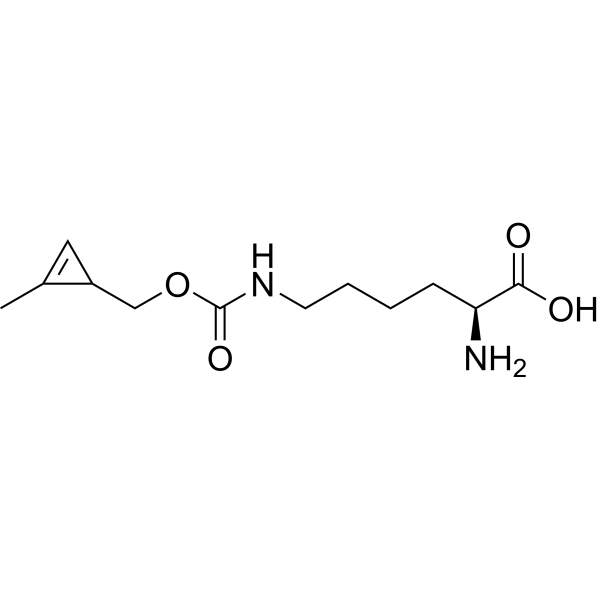
    CypK (N-Cyclopropene-L-Lysine), a cyclopropene derivative of lysine, is efficiently incorporated into antibodies through genetic-code expansion. CypK is a minimal bioorthogonal handle for the creation of stable therapeutic protein conjugates .
    CypK
  • HY-D2171A
    AF488 DBCO ditriethylamine
    1 Publications Verification

    Fluorescent Dye Others
    AF488 DBCO ditriethylamineis a fluorescent dye and also a click chemistry reagent that can label azide-containing biomolecules. AF488 DBCO ditriethylaminemediates the coupling reaction with azide-modified 2'-OMe RNA oligonucleotides. DBCO is a bioorthogonal partner of azides and enables covalent coupling without copper (Ex/Em = 470/520 nm) .
    AF488 DBCO ditriethylamine
  • HY-134599

    Biochemical Assay Reagents Cancer
    (2E)-TCO-PNB ester is an active reaction substrate with the properties of trans-cyclooctene derivatives. The core chemical property of (2E)-TCO-PNB ester is its ability to undergo efficient inverse electron-demand Diels-Alder (IEDDA) cycloaddition with tetrazine groups. (2E)-TCO-PNB ester can be used in ligation reactions to verify the integrity of tetrazine groups, and also serves as a key synthetic raw material for the preparation of the prodrug TCO-DOX. (2E)-TCO-PNB ester is applied in research related to drug synthesis and bioorthogonal chemistry .
    (2E)-TCO-PNB ester
  • HY-W784030

    Amino Acid Derivatives Biochemical Assay Reagents Fluorescent Dye Others
    N-TCO-L-lysine is a non-canonical amino acid. N-TCO-L-lysine contains a trans-cyclooctene (TCO) bioorthogonal reactive linker. N-TCO-L-lysine undergoes a bioorthogonal click reaction with SiR-Tz to enable fluorescent labeling of endogenously expressed proteins with site-specific incorporation. When used in combination with SiR-Tz, N-TCO-L-lysine allows super-resolution and live-cell imaging of endogenous proteins .
    N-TCO-L-lysine
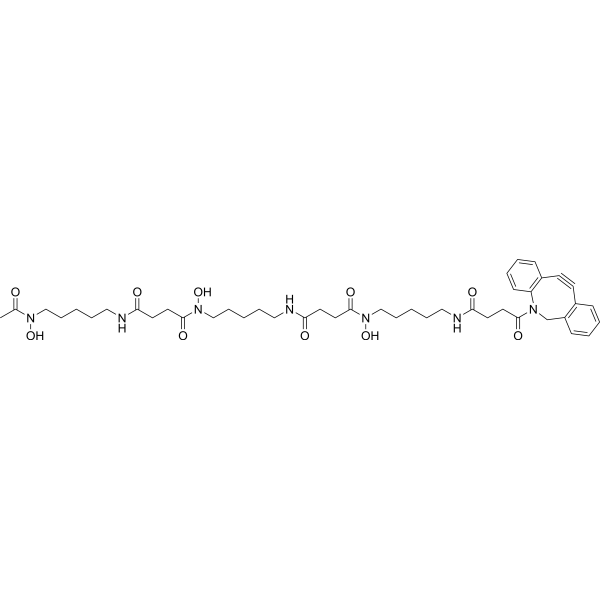
  • HY-158067

    DFO-DBCO

    Biochemical Assay Reagents Radionuclide-Drug Conjugates (RDCs) Cancer
    Deferoxamine-DBCO is a bifunctional chelating agent. Deferoxamine-DBCO efficiently chelates with radioactive metals (such as 89Zr) through the DFO structure to achieve radiolabeling. Deferoxamine-DBCO undergoes a metal-free Huisgen cycloaddition reaction with azide-containing biomolecules (such as siRNA, monoclonal antibodies) under bioorthogonal conditions through the DBCO structure to achieve targeted coupling. Deferoxamine-DBCO has efficient metal chelating ability and specific bioorthogonal reaction activity. Deferoxamine-DBCO can be used for targeted radioactive imaging studies of tumors .
    Deferoxamine-DBCO
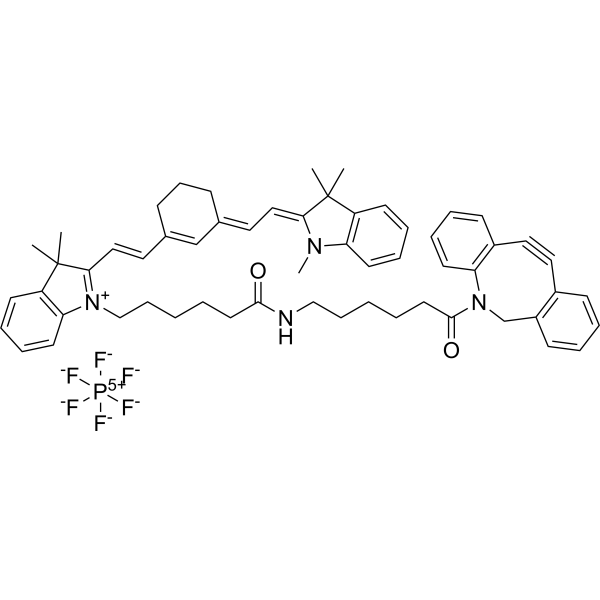
  • HY-D1555

    Cy7 DBCO

    Fluorescent Dye Others
    Cyanine7 DBCO (Cy7 DBCO) is a near-infrared fluorescent dye and an efficient bio-orthogonal quencher. Cyanine7 DBCO is formed by covalent connection of the near-infrared fluorescent dye Cy7 and the dibenzocyclooctyne (DBCO) functional group. After reacting with N3-Cy5-COOH, the fluorescence of Cy5 decreases by 90% within 90 minutes, and rapid signal attenuation can be observed within 2-5 minutes. Cyanine7 DBCO can be used for the study of deep tissue imaging and receptor-targeted therapeutic strategies .
    Cyanine7 DBCO
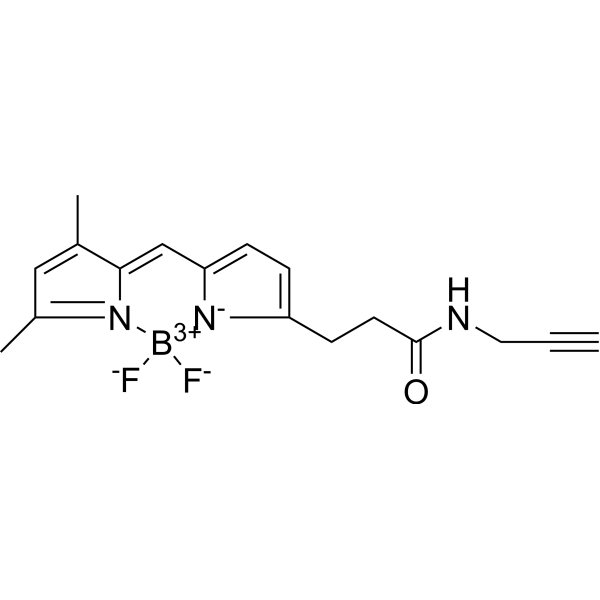
  • HY-114354

    BOD FL alkyne

    Fluorescent Dye Inflammation/Immunology
    BODIPY (BOD) FL alkyne is an alkyne-containing BODIPY fluorophore derivative. BODIPY FL alkyne is a bioorthogonal labeling reagent with low toxicity and extremely low non-specific reactivity, and it is widely used in fluorescent bioimaging. BODIPY FL alkyne specifically labels azide groups on intracellular glycoconjugates mainly via strain-promoted azide-alkyne cycloaddition (SPAAC), or mediates site-specific conjugation with proteins such as IL-33, and supports positive cross-linking with other probes (e.g., DBCO-SCy5) for dual labeling. With the advantages of high specificity and low background interference, BODIPY FL alkyne can be used in the research of related diseases such as asthma, atopic dermatitis and inflammatory bowel disease .
    BODIPY FL alkyne
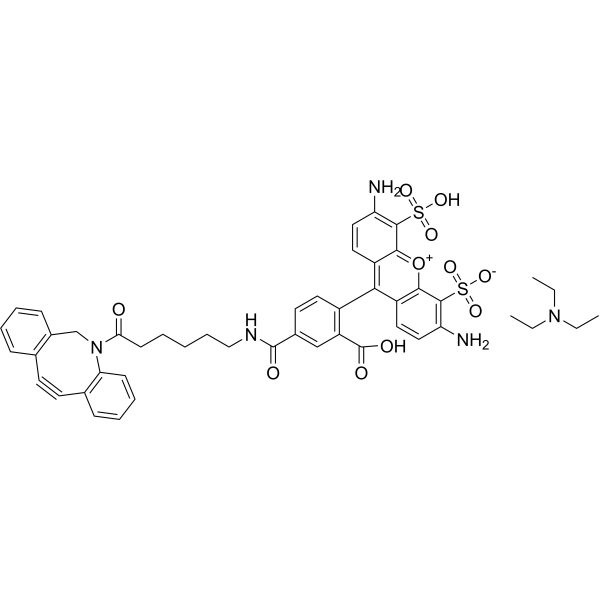
  • HY-D2171

    Fluorescent Dye Others
    AF488 DBCO is a fluorescent dye and also a click chemistry reagent that can label azide-containing biomolecules. AF488 DBCO mediates the coupling reaction with azide-modified 2'-OMe RNA oligonucleotides. DBCO is a bioorthogonal partner of azides and enables covalent coupling without copper (Ex/Em = 470/520 nm) .
    AF488 DBCO
  • HY-W048513

    DNA/RNA Synthesis Cancer
    7-Deaza-2'-deoxyadenosine is an isosteric dATP analog of 2'-deoxyadenosine. 7-Deaza-2'-deoxyadenosine is recognized by various DNA polymerases and incorporated into DNA strands as a substrate. 7-Deaza-2'-deoxyadenosine undergoes a bioorthogonal inverse electron demand Diels-Alder reaction with tetrazine-modified molecules, enabling site-specific labeling of DNA, surface antibody immobilization and intracellular fluorescent labeling. 7-Deaza-2'-deoxyadenosine reduces the DNA curvature of d(A6)·d(T6) fragments and the stability of DNA/RNA double helices, and leads to decreased antisense activity against SV40 T Antigen. 7-Deaza-2'-deoxyadenosine finds application in the research field of SV40 T Antigen-related cancers .
    7-Deaza-2'-deoxyadenosine
  • HY-177764

    Amino Acid Derivatives Others
    Tet-v2.0-ethyl is a tetrazine non-canonical amino acid. Tet-v2.0-ethyl can stably exist within living cells without being degraded, enabling in situ labeling of intracellular biomolecules. Tet-v2.0-ethyl is mainly used as a bioorthogonal labeling tool compound .
    Tet-v2.0-ethyl
  • HY-151761

    ADC Linker Others
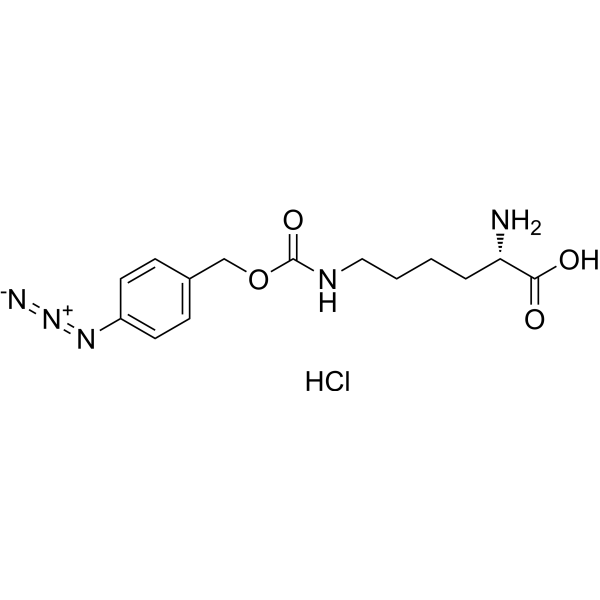
    H-L-Lys(4-N3-Z)-OH hydrochloride is a click chemistry reagent containing an azide group. H-L-Lys(4-N3-Z)-OH hydrochloride contains a lysine-modified azide moiety and as a bioorthogonal ligation handle. H-L-Lys(4-N3-Z)-OH hydrochloride is an infrared probe and a photo-affinity reagent . It contains an azide group and can undergo copper-catalyzed azide-alkyne cycloaddition (CuAAc) with molecules containing alkyne groups. It can also undergo ring strain-promoted alkyne-azide cycloaddition (SPAAC) with molecules containing DBCO or BCN groups.
    H-L-Lys(4-N3-Z)-OH hydrochloride
  • HY-W588706

    Biochemical Assay Reagents Others
    Tetrazine-PEG5-SS-NHS ester is a heterobifunctional crosslinking agent, a PEG derivative composed of NHS ester. NHS ester can bind to amino acids or other amino-containing molecules. Tetrazine-PEG5-SS-NHS ester is used in bioconjugation, bioorthogonal chemistry, and delivery.
    Tetrazine-PEG5-SS-NHS ester
  • HY-151745

    ADC Linker Others
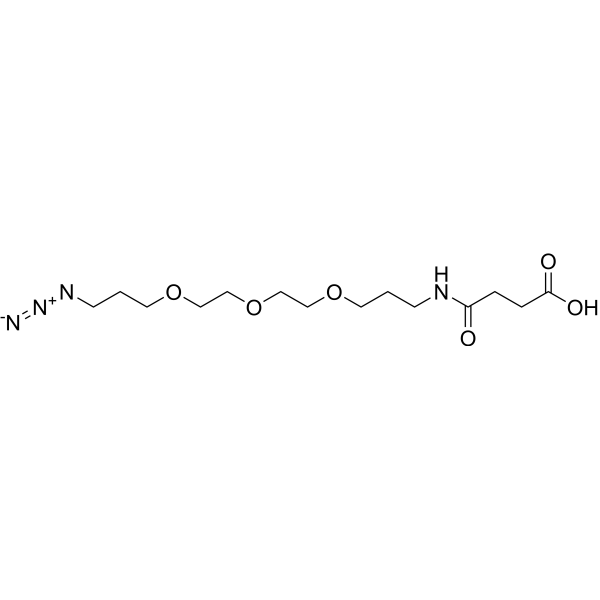
    N3-TOTA-Suc is a click chemistry reagent containing an azide group. Click chemistry is a powerful chemical reaction with excellent bioorthogonality features: biocompatible, rapid and highly specific in biological environments . N3-TOTA-Suc is a click chemistry reagent, it contains an Azide group and can undergo copper-catalyzed azide-alkyne cycloaddition reaction (CuAAc) with molecules containing Alkyne groups. It can also undergo strain-promoted alkyne-azide cycloaddition (SPAAC) reactions with molecules containing DBCO or BCN groups.
    N3-TOTA-Suc
  • HY-151679

    ADC Linker Others
    Fmoc-L-Lys(4-N3-Z)-OH is a click chemistry reagent containing an azide group. Fmoc-L-Lys(4-N3-Z)-OH acts as Lysine building-block for SPPS containing an Azide moiety as a bioorthogonal ligation handle, an infrared probe and a photo-affinity reagent. It can be decaged by trans-cyclooctenols via a strain-promoted 1,3-dipolar cycloaddition . Fmoc-L-Lys(4-N3-Z)-OH is a click chemistry reagent, it contains an Azide group and can undergo copper-catalyzed azide-alkyne cycloaddition reaction (CuAAc) with molecules containing Alkyne groups. It can also undergo strain-promoted alkyne-azide cycloaddition (SPAAC) reactions with molecules containing DBCO or BCN groups.
    Fmoc-L-Lys(4-N3-Z)-OH
  • HY-W415798

    Endogenous Metabolite Others
    Ac4GalNAlk is a weakly alkyne-labeled reagent for metabolic oligosaccharide engineering (MOE) that can be used to detect protein glycosylation. MOE reagents can be activated by cellular biosynthetic machinery into nucleotide sugars, which can be further traced through the introduction of glycoproteins in bioorthogonal chemistry. Ac4GalNAlk promotes nucleotide-sugar biosynthesis and increases bioorthogonal cell surface markers .
    Ac4GalNAlk
  • HY-D2744

    Fluorescent Dye Others
    BP Fluor 488 TCO reacts with tetrazines to produce a stable, covalent linkage, also referred to as the inverse-electron demand Diels-Alder cycloaddition reaction. This reaction is extremely fast (k > 800 M-1 s-1), selective, biocompatible, and does not require Cu-catalyst or elevated temperatures. Such excellent reaction rate constants are unparalleled by any other bioorthogonal reaction pair described to date.
    BP Fluor 488 TCO
  • HY-152901

    Fluorescent Dye Others
    Chol-N3 is a bioorthogonal-based chol probe. Chol-N3 can combine with super-resolution fluorescence microscopy (SRM), providing direct visualization of nanoscale lipid heterogeneity in the cell surface of resting living cells . Chol-N3 is a click chemistry reagent, it contains an Azide group and can undergo copper-catalyzed azide-alkyne cycloaddition reaction (CuAAc) with molecules containing Alkyne groups. It can also undergo strain-promoted alkyne-azide cycloaddition (SPAAC) reactions with molecules containing DBCO or BCN groups.
    Chol-N3
  • HY-151749

    ADC Linker Others
    N3-D-Lys(Fmoc)-OH is a click chemistry reagent containing an azide group. Click chemistry is a powerful chemical reaction with excellent bioorthogonality features: biocompatible, rapid and highly specific in biological environments . N3-D-Lys(Fmoc)-OH is a click chemistry reagent, it contains an Azide group and can undergo copper-catalyzed azide-alkyne cycloaddition reaction (CuAAc) with molecules containing Alkyne groups. It can also undergo strain-promoted alkyne-azide cycloaddition (SPAAC) reactions with molecules containing DBCO or BCN groups.
    N3-D-Lys(Fmoc)-OH
  • HY-151736

    ADC Linker Others
    N3-L-Dap(Boc)-OH is a click chemistry reagent containing an azide group. Click chemistry is a powerful chemical reaction with excellent bioorthogonality features: biocompatible, rapid and highly specific in biological environments . N3-L-Dap(Boc)-OH is a click chemistry reagent, it contains an Azide group and can undergo copper-catalyzed azide-alkyne cycloaddition reaction (CuAAc) with molecules containing Alkyne groups. It can also undergo strain-promoted alkyne-azide cycloaddition (SPAAC) reactions with molecules containing DBCO or BCN groups.
    N3-L-Dap(Boc)-OH
  • HY-148958

    Biochemical Assay Reagents Others
    SNAP-Biotin is a biotin-labeled SNAP tag probe. SNAP-Biotin can be used for protein biotinylation .
    SNAP-Biotin
  • HY-151686

    Biochemical Assay Reagents Others
    Bz-(Me)Tz-NHS is a methyltetrazine carboxylic acid NHS ester that enables conjugation of the tetrazine moiety to the 5' end of oligonucleotides via amide coupling reaction, and it is used in oligonucleotide template-mediated fluorescent bioorthogonal cycloaddition reactions. Bz-(Me) Tz-NHS is applicable to click chemistry-related studies .
    Bz-(Me)Tz-NHS
  • HY-W714969A

    Phosphoramidites Others
    BCN-CE-phosphoramidite is an oligonucleotide modifier containing a BCN strained cyclooctyne structure. BCN-CE-phosphoramidite possesses bioorthogonal reactivity and bioconjugation capability .
    BCN-CE-phosphoramidite
  • HY-D2926

    BG-Tz; SNAP-Tetrazine

    Biochemical Assay Reagents Others
    BG-Tetrazine (BG-Tz; SNAP-Tetrazine) is a SNAP tag substrate that contains a methyl tetrazine group. BG-Tetrazine can specifically covalently label the target protein of the intracellular SNAP-tag fusion. The tetrazine group it carries can rapidly and efficiently undergo a bioorthogonal reaction with functional groups such as trans cyclooctene (TCO), thereby enabling multiple labeling, functionalization or enrichment of proteins. BG-Tetrazine can be applied in click chemistry .
    BG-Tetrazine
  • HY-112944A

    CMP-NeuNAz sodium

    Sialyltransferase Infection
    CMP-SiaNAz (CMP-NeuNAz) sodium is a sialic acid nucleotide sugar derivative. CMP-SiaNAz sodium is integrated into the glycosidic chain through the action of STs in the Golgi apparatus, forming SiaNAz substances. CMP-SiaNAz sodium can serve as a substrate for bacterial-derived sialic acid transferases and is used for chemical enzymatic labeling and imaging of cell surface glycosides .
    CMP-SiaNAz sodium
  • HY-155371

    PROTACs Others
    BT-PROTAC is a bioorthogonally activatable prodrug. BT-PROTAC can accurately control the activity of PROTAC .
    BT-PROTAC
  • HY-160077

    E3 Ligase Ligand-Linker Conjugates Cancer
    Pomalidomide-CO-C5-azide (Compound PA) is a ligand for E3 ligase bearing a bioorthogonal group azide. Pomalidomide-CO-C5-azide can be used to synthesize PROTACs with anticancer activity .
    Pomalidomide-CO-C5-azide
  • HY-W800838

    Fluorescent Dye Cancer
    BP Fluor 488 Tetrazine is a bright, green-fluorescent probe used for detection TCO-tagged biopolymers. BP Fluor 488 Tetrazine demonstrates exceptionally fast cycloaddition kinetics (up to 30 000 M-1 s-1) with trans-cyclooctenes (TCO) as the dienophile, the fastest kinetics ever reported for any bioorthogonal reaction. In applications such as in vivo cancer imaging or pre?targeted cell labeling studies where rapid reaction kinetics is a must BP Fluor 488 Tetrazine probe would of great value.
    BP Fluor 488 Tetrazine
  • HY-D2989

    SNAP-NH2-Ac-N3

    Biochemical Assay Reagents Others
    BG-NH2-Ac-N3 (SNAP-NH2-Ac-N3) is a nitrogen-containing SNAP tag with a nitro group. BG-NH2-Ac-N3 can be used for click chemistry labeling .
    BG-NH2-Ac-N3
  • HY-151833

    ADC Linker Others
    Methyltetrazine-amido-N-bis(PEG4-acid) is a click chemistry reagent containing an azide group. Methyltetrazine-amido-N-bis(PEG4-acid) is a PEG derivative that contains a methyltetrazine group and two acid groups. This reagent can react with TCO-containing compounds to form a stable covalent bond without the catalysis of Cu or elevated temperatures. The inverse-electron demand Diels-Alder cycloaddition reaction of TCO with tetrazines is the fastest bioorthogonal reaction with exceptional selectivity. The terminal carboxylic acid can react with primary amine groups in the presence of activators (e.g. EDC, or HATU) to form a stable amide bond. PEG linker increases the water solubility of the compound. Reagent grade, for research use only . Methyltetrazine-amido-N-bis(PEG4-acid) is a click chemistry reagent, it contains a Tetrazine group that can undergo an inverse electron demand Diels-Alder reaction (iEDDA) with molecules containing TCO groups.
    Methyltetrazine-amido-N-bis(PEG4-acid)
  • HY-177764A

    Amino Acid Derivatives Others
    Tet-v2.0-ethyl hydrochloride is a tetrazine non-canonical amino acid. Tet-v2.0-ethyl hydrochloride can stably exist within living cells without being degraded, enabling in situ labeling of intracellular biomolecules. Tet-v2.0-ethyl hydrochloride is mainly used as a bioorthogonal labeling tool compound .
    Tet-v2.0-ethyl hydrochloride
  • HY-D2955

    CLIP-AZIDE

    Biochemical Assay Reagents Others
    BC-AZIDE (CLIP-AZIDE) is a nitrogen-functionalized protein labeling probe based on the CLIP-tag system. BC-AZIDE can be used for bioorthogonal click chemistry and intracellular orthogonal labeling .
    BC‐AZIDE
  • HY-186088

    Drug Intermediate Others
    DOTA-tris (t-Bu) ester-PEG3-C2-amine (Compound 9) is a conjugate of DOTA-based chelator and linker, bearing tris (t-Bu) ester and PEG3-C2-amine functional groups. DOTA-tris (t-Bu) ester-PEG3-C2-amine can be conjugated to payloads via bioorthogonal click chemistry for targeted delivery .
    DOTA-tris(t-Bu)ester-PEG3-C2-amine
  • HY-173578

    Biochemical Assay Reagents Others
    N-(2-Poc-ethyl)betulin amide is a triterpenoid with antiviral and antitumor activities. N-(2-Poc-ethyl)betulin amide contains a Poc (prop-2-yn-1-yloxycarbonyl) alkynyl protecting group, which allows for bioorthogonal reactions (such as click chemistry) and is used for targeted delivery and fluorescent labeling .
    N-(2-Poc-ethyl)betulin amide
  • HY-W800708

    Biochemical Assay Reagents Others
    N-(TCO)-N-bis(PEG4-acid) is a branched click chemistry reagent with a terminal TCO group and two terminal carboxylic acids. This reagent can react with tetrazine-containing molecule to form a stable covalent bond . The inverse-electron demand Diels-Alder cycloaddition reaction of TCO with tetrazines is the fastest bioorthogonal reaction with exceptional selectivity. The terminal carboxylic acids can react with primary amino groups in the presence of activators (e.g. EDC, HATU ).
    N-(TCO)-N-bis(PEG4-acid)
  • HY-183964

    Biochemical Assay Reagents Others
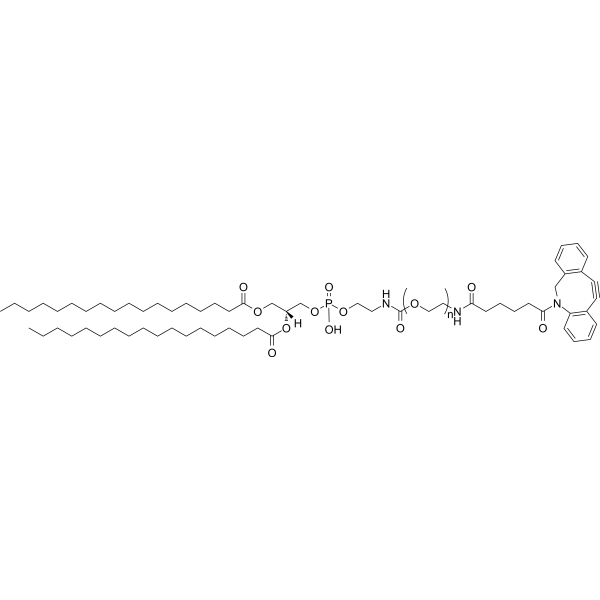
    DSPE-PEG2000-tetrazine is a synthetic phospholipid modified with PEG2000 and tetrazine moieties. DSPE-PEG2000-tetrazine gains improved steric stability via PEGylation. DSPE-PEG2000-tetrazine enables bioorthogonal click chemistry through its tetrazine segment, which selectively reacts with trans-cyclooctene (TCO) under complex biological environments. DSPE-PEG2000-tetrazine can be applied for researches related to click chemistry .
    DSPE-PEG2000-tetrazine
  • HY-W800721

    Biochemical Assay Reagents Others
    Methyltetrazine-amido-bis-(carboxyethoxymethyl)-methane is a click chemistry PEG reagent which contains three carboxylic acid groups and a methyltetrazine group. This reagent can react with TCO-containing compounds to form a stable covalent bond without the catalysis of Cu or elevated temperatures. The inverse-electron demand Diels-Alder cycloaddition reaction of TCO with tetrazines is the fastest bioorthogonal reaction with exceptional selectivity. The terminal carboxylic acid can react with primary amine groups in the presence of activators (e.g. EDC, or HATU) to form a stable amide bond.
    Methyltetrazine-amido-bis-(carboxyethoxymethyl)-methane
  • HY-W422109

    Drug Derivative Others
    4-(6-Methyl-1,2,4,5-tetrazin-3-yl) benzoic acid is an asymmetric tetrazine derivative and a bioorthogonal reaction partner. 4-(6-Methyl-1,2,4,5-tetrazin-3-yl) benzoic acid can be conjugated with Bevacizumab (HY-P9906) via EDC/NHS activation while retaining the VEGF-binding affinity of the antibody, thus constructing a targeting agent for pretargeted immuno-PET/NIRF imaging .
    4-(6-Methyl-1,2,4,5-tetrazin-3-yl)benzoic acid
  • HY-W800718

    Biochemical Assay Reagents Others
    Methyltetrazine-amido-Tri-(acid-PEG1-ethoxymethyl)-methane is a click chemistry PEG reagent which contains three carboxylic acid groups and a methyltetrazine group. This reagent can react with TCO-containing compounds to form a stable covalent bond without the catalysis of Cu or elevated temperatures. The inverse-electron demand Diels-Alder cycloaddition reaction of TCO with tetrazines is the fastest bioorthogonal reaction with exceptional selectivity. The terminal carboxylic acid can react with primary amine groups in the presence of activators (e.g. EDC, or HATU) to form a stable amide bond.
    Methyltetrazine-amido-Tri-(acid-PEG1-ethoxymethyl)-methane
  • HY-D2925

    dTCO-SNAP

    Biochemical Assay Reagents Others
    dTCOBG (dTCO-SNAP) is a SNAP-tag reactive benzylguanine (BG) analogue specifically designed for the specific labeling of immune cells. dTCOBG forms a stable thioether bond through the cysteine at the active site of SNAP-tag and O6-benzylguanine, resulting in a covalent linkage. dTCOBG demonstrates unique advantages in the labeling of macrophages derived from ER-HoxB8: it only labels SNAP-tag + macrophages, with no background signal in the control group. dTCOBG can be used for click chemistry labeling .
    dTCOBG
  • HY-D2935

    Biochemical Assay Reagents Others
    CoDi3 is a covalent dimerization inducer. CoDi3 can specifically, covalently and irreversibly induce the dimerization of two proteins that have been fused with O6-alkylguanine-DNA alkyltransferase (AGT, also known as SNAP-tag) in living cells. CoDi3 can act as a "sensor" for protein-protein interactions .
    CoDi2
  • HY-D3229

    Fluorescent Dye Others
    SiR-BCN is a Fluorophore-labeled bicyclononyne. SiR-BCN can be used for protein modification and labeling studies .
    SiR-BCN
  • HY-D2941

    SNAP-AF

    Fluorescent Dye Others
    BGAF (SNAP-AF) is a fluorescent diacetyl fluorescein-labeled SNAP tag fluorescent probe, specifically designed for the covalent labeling of SNAP-tag fusion proteins in living cells. BGAF utilizes the specific reaction of the human DNA repair protein hAGT to achieve specific fluorescent labeling of the target protein in the living cell environment .
    BGAF
  • HY-D2930

    SNAP-SS-SulfoCy5

    Fluorescent Dye Others
    BG-SS-SulfoCy5 (SNAP-SS-SulfoCy5) is a SulfoCy5-labeled SNAP tag fluorescent probe, linked by a disulfide bond. BG-SS-SulfoCy5 combines the specific recognition of SNAP-tag, the cleavability of disulfide bond, and the excellent optical properties of SulfoCy5. BG-SS-SulfoCy5 can be used for tracking the internalization of cell surface proteins and multiple labeling experiments .
    BG-SS-SulfoCy5
  • HY-100138R

    Radionuclide-Drug Conjugates (RDCs) ADC Linker Reference Standards Cancer
    2-Aminoethyl-mono-amide-DOTA-tris(tBu ester) (Standard) is the analytical standard of 2-Aminoethyl-mono-amide-DOTA-tris(tBu ester) (HY-100138). This product is intended for research and analytical applications. 2-Aminoethyl-mono-amide-DOTA-tris(tBu ester) is a metal chelator precursor containing a DOTA macrocyclic structure. DOTA can form highly stable complexes with metal ions (such as 68Ga, 177Lu) through four nitrogen atoms and four carboxylic acid groups to mediate targeted delivery of radionuclides. The tert-butyl ester group (tBu ester) of 2-Aminoethyl-mono-amide-DOTA-tris(tBu ester) also protects the carboxylic acid group during synthesis, and forms a free carboxyl group after deprotection reaction for coupling with targeting molecules (such as antibodies, peptides). 2-Aminoethyl-mono-amide-DOTA-tris(tBu ester) may be combined with tumor pre-targeting systems through bioorthogonal reactions (such as reverse electron demand Diels-Alder reaction) to study radioactive imaging or therapy of tumor tissues, and is mainly used in tumor pre-targeting research in the field of nuclear medicine .
    2-Aminoethyl-mono-amide-DOTA-tris(tBu ester) (Standard)

Inquiry Online

Your information is safe with us. * Required Fields.

Salutation


Country or Region *

Applicant Name *


Organization Name *

Department *


Email Address *


Product Name *

Cat. No.


Requested quantity *

Phone Number *


Remarks

Inquiry Online

Inquiry Information

Product Name:
Cat. No.:
Quantity:
MCE Japan Authorized Agent:

