1. Search Result
Search Result
Results for "

bovine brain

" in MedChemExpress (MCE) Product Catalog:

34

Inhibitors & Agonists

3

Biochemical Assay Reagents

6

Peptides

1

Natural
Products

1

Oligonucleotides

Cat. No. Product Name Target Research Areas Chemical Structure
  • HY-W250118
    Cephalin form bovine brain
    2 Publications Verification

    Liposome Autophagy Neurological Disease Metabolic Disease
    Cephalin form bovine brain is an orally active phospholipid widely present in organisms.Cephalin form bovine brain participates in the formation of autophagosome membrane as a lipid anchor of autophagy-related protein Atg8/LC3. Cephalin form bovine brain enhances Autophagic flux, promotes cell differentiation, regulates lipid droplet fusion, delays aging, and also affects lipid metabolism and membrane integrity .
    Cephalin form bovine brain
  • HY-106301
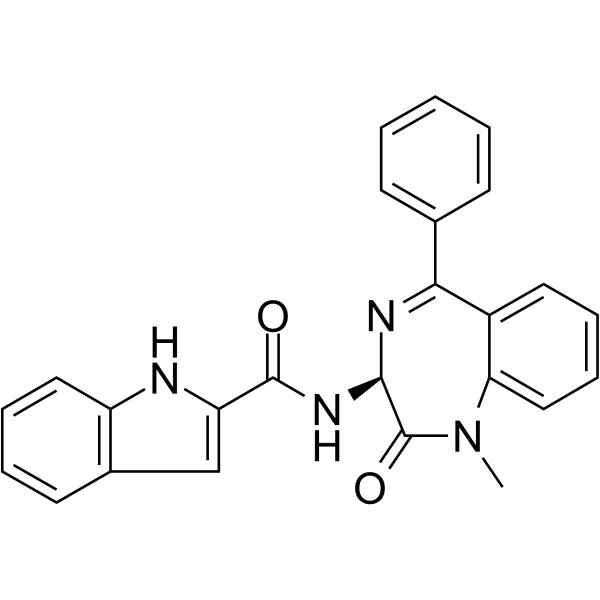
    Devazepide
    Maximum Cited Publications
    6 Publications Verification

    L-364,718; MK-329

    Cholecystokinin Receptor Metabolic Disease
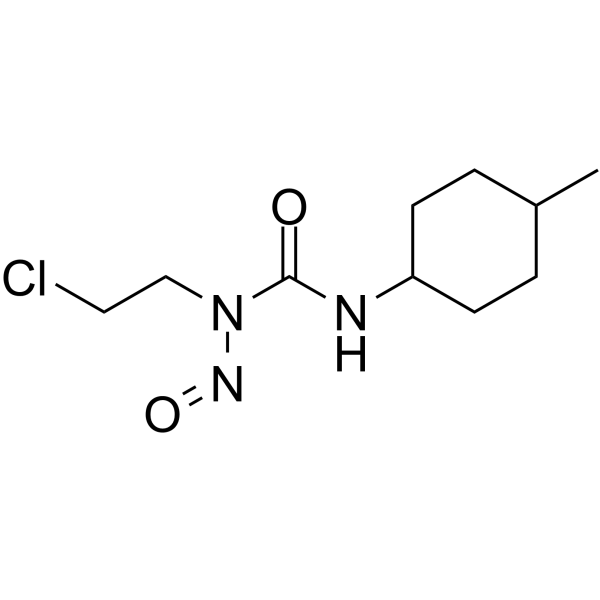
    Devazepide (L-364,718) is a potent, competitive, selective and orally active nonpeptide antagonist of cholecystokinin (CCK) receptor, with IC50s of 81 pM, 45 pM and 245 nM for rat pancreatic, bovine gallbladder and guinea pig brain CCK receptors, respectively. Devazepide (L-364,718) is effective for gastrointestinal disorders .
    Devazepide
  • HY-13289A
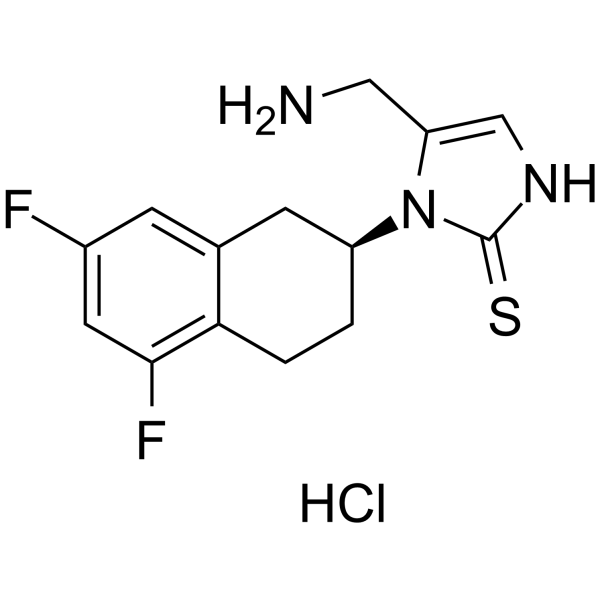
    Nepicastat hydrochloride
    3 Publications Verification

    SYN-117 hydrochloride; RS-25560-197 hydrochloride

    Dopamine β-hydroxylase Cardiovascular Disease
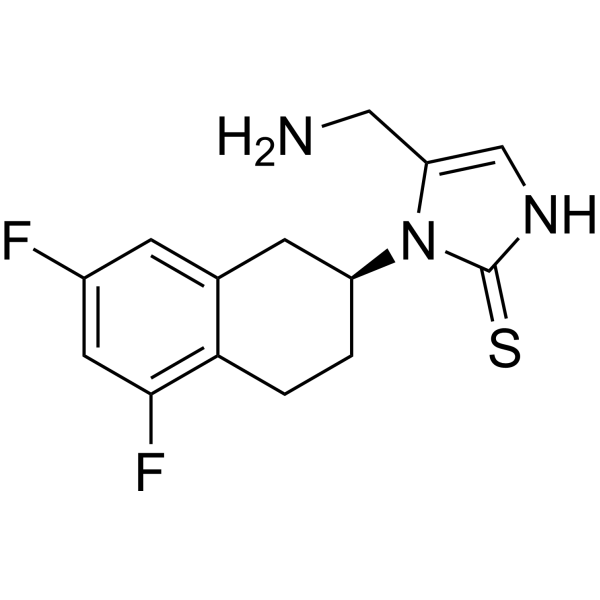
    Nepicastat hydrochloride (SYN-117 hydrochloride) is a selective, potent, and orally active inhibitor of dopamine-beta-hydroxylase. Nepicastat hydrochloride produces concentration-dependent inhibition of bovine (IC50=8.5 nM) and human (IC50=9 nM) dopamine-beta-hydroxylase. Nepicastat hydrochloride can cross the blood-brain barrier (BBB) .
    Nepicastat hydrochloride
  • HY-P1290
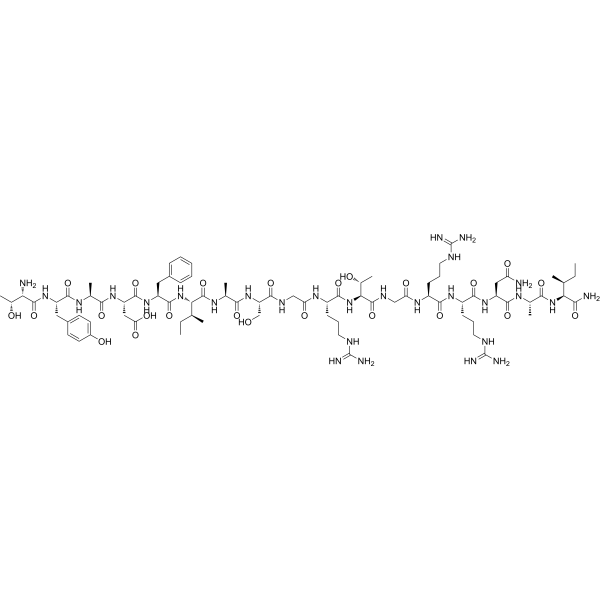
    PKA Inhibitor Fragment (6-22) amide
    5 Publications Verification

    PKI-(6-22)-amide

    PKA Neurological Disease
    PKA Inhibitor Fragment (6-22) amide is a highly potent and specific competitive inhibitor of PKA, with Ki values of 1.7 nM and 1.6 nM against human and bovine PKA catalytic subunits, respectively. The IC50 of PKA Inhibitor Fragment (6-22) amide targeting bovine PKA is 8.6 nM. PKA Inhibitor Fragment (6-22) amide effectively abolishes PKA activity in mouse brain and spinal cord, and exerts in vivo efficacy via intracerebroventricular administration. PKA Inhibitor Fragment (6-22) amide significantly reverses low-dose morphine analgesic tolerance in mice and blocks photoaffinity labeling of cAMP-dependent protein kinase. PKA Inhibitor Fragment (6-22) amide can be applied to research in fields related to the mechanism of morphine analgesic tolerance and skin wound healing .
    PKA Inhibitor Fragment (6-22) amide
  • HY-W747597

    Disialoganglioside GD1b; Ganglioside C1; Ganglioside G2

    Endogenous Metabolite Cancer
    Ganglioside GD1b Disodium Salt (Bovine Brain) (Disialoganglioside GD1b; Ganglioside C1) is an acidic glycosphingolipid containing two sialic acid residues linked to an internal galactose unit. Ganglioside GD1b Disodium Salt tightly packs with cholesterol to form lipid microdomains that modulate intracellular and intercellular signaling events. Concentrations of Ganglioside GD1b Disodium Salt (Bovine Brain) in the human brain increase with age and are positively correlated with pilocytic astrocytoma tumor grade. Ganglioside GD1b Disodium Salt has been detected in various other gliomas, including primitive neuroectodermal tumors, glioblastomas, and anaplastic astrocytomas.
    Ganglioside GD1b Disodium Salt (Bovine Brain)
  • HY-NP180

    Calcium Channel Metabolic Disease
    Progesterone/BSA is a conjugate of Progesterone (HY-N0437) and bovine serum albumin (BSA). Progesterone/BSA cannot penetrate the plasma membrane of human sperm, but still rapidly elevates intracellular free calcium and induces the acrosome reaction. Progesterone/BSA can also act as a probe to specifically bind to progesterone-binding proteins on the membrane of rat brain synaptosomes .
    Progesterone/BSA
  • HY-120963

    Endogenous Metabolite Metabolic Disease
    Several different arachidonoyl amino acids, including N-arachidonoyl dopamine and N-arachidonoyl serine, have been isolated and characterized from bovine brain.1 During mass spectral lipidomics analysis of rat brain, a series of fatty acyl amides of a third amino acid, taurine, were discovered.2 This novel class of compounds is present in kidney and activates members of the transient receptor potential (TRP) family of calcium channels.3 N-Oleoyl taurine is an amino-acyl endocannabinoid isolated from rat brain that may activate TRPV1 and TRPV4.
    N-Oleoyl Taurine
  • HY-N10546A

    iGluR Trk Receptor ERK Apoptosis Autophagy Neurological Disease
    Ganglioside GM1 (bovine) ammonium is a type of glycosphingolipid, mainly found on the cell membranes of the central nervous system of vertebrates. Ganglioside GM1 (bovine) ammonium exerts neuroprotective effects by reducing excessive activation of NMDAR, activating TrkA and ERK1/2, and inhibiting oxidative stress and cell apoptosis and autophagy. Ganglioside GM1 (bovine) ammonium can be used in the research of diseases such as traumatic brain injury, Parkinson's disease, Alzheimer's disease, and Huntington's disease .
    Ganglioside GM1 (bovine) ammonium
  • HY-120965

    Endogenous Metabolite Metabolic Disease
    Several different arachidonoyl amino acids, including N-arachidonoyl dopamine (NADA) and N-arachidonoyl serine (ARA-S), have been isolated and characterized from bovine brain.1 During mass spectral lipidomic analysis of rat brain, a series of fatty acyl amides of a third amino acid, taurine, is discovered. N-Palmitoyl taurine is a prominent amino-acyl endocannabinoid isolated from rat brain during lipidomics profiling. Its function is currently under investigation.
    N-Palmitoyl Taurine
  • HY-W795960

    Biochemical Assay Reagents Calcium Channel Phospholipase Neurological Disease Metabolic Disease
    D-myo-inositol 1,4,5-trisphosphate sodium salt is a widely distributed intracellular second messenger. D-myo-inositol 1,4,5-trisphosphate sodium salt acts as a potent agonist of the Ins (1,4,5) P3 receptor with an EC50 of 0.12 μM and inhibits bovine PLC-δ1, with an IC50 of 5.4 μM for binding and an IC50 of 12.4 μM for hydrolysis. D-myo-inositol 1,4,5-trisphosphate sodium saltis metabolized into Ins (1,4) P2 and Ins (1,3,4,5) P4. D-myo-inositol 1,4,5-trisphosphate sodium salt mediates various cellular processes, including growth, development, fertilization, secretion, contraction and neuromodulation. D-myo-inositol 1,4,5-trisphosphate sodium salt inhibits PIP2 hydrolysis and Ca 2+-ATPase activity. D-myo-inositol 1,4,5-trisphosphate sodium salt is used for cardiac preconditioning, exerts cardioprotective effects and mimics ischemic preconditioning. D-myo-inositol 1,4,5-trisphosphate sodium salt is applied in studies related to intracellular calcium and phosphoinositol signaling pathways .
    D-myo-Inositol 1,4,5-trisphosphate sodium salt
  • HY-148332

    Prolyl Endopeptidase (PREP) Neurological Disease
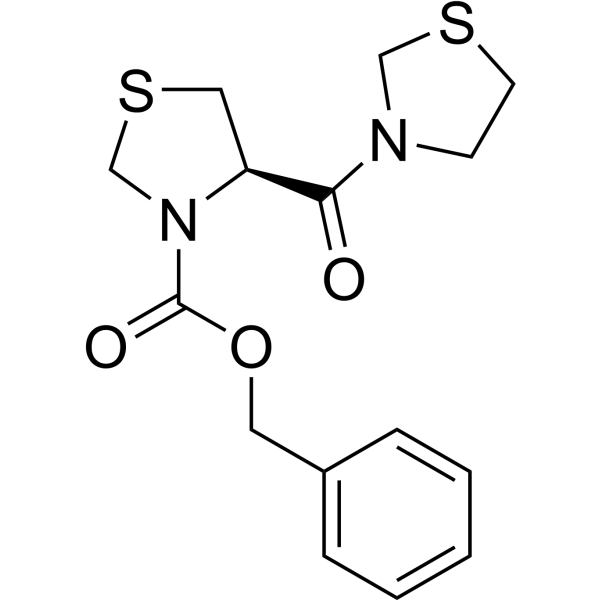
    Z-Thioprolyl-Thiazolidine is a potent and specific prolyl endopeptidase inhibitor with an Ki value of 0.36 nM for bovine brain prolyl endopeptidase
    Z-Thioprolyl-Thiazolidine
  • HY-103507

    GABA Receptor Neurological Disease
    N-Arachidonoyl-GABA is one member of a new class of lipoamino acids related to anandamide identified in bovine brain. N-Arachidonoyl-GABA displays analgesic activity .
    N-Arachidonyl-GABA
  • HY-148331

    Prolyl Endopeptidase (PREP) Neurological Disease
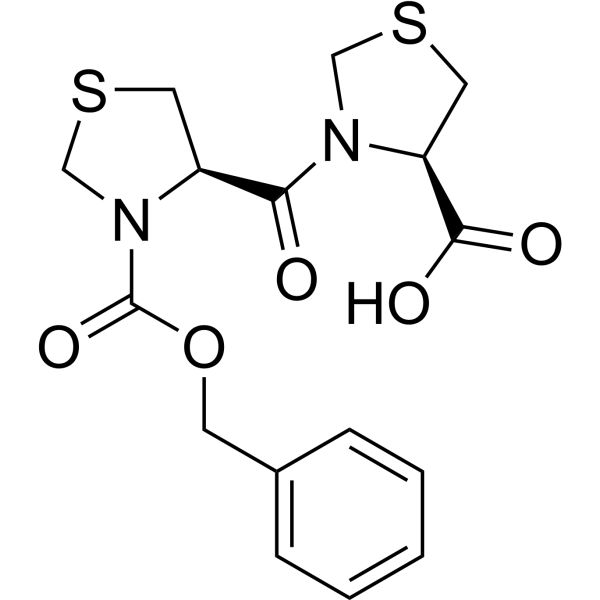
    Z-Thioprolyl-Thioproline is a bovine brain prolyl endopeptidase (PEP) inhibitor (IC50=16 µM; Ki=37 µM). Z-Thioprolyl-Thioproline is used in the study of neurological disorders such as memory disorders and cognitive disorders .
    Z-Thioprolyl-Thioproline
  • HY-120964

    Endogenous Metabolite Metabolic Disease
    Several different arachidonoyl amino acids, including N-arachidonoyl dopamine (NADA) and N-arachidonoyl serine (ARA-S), have been isolated and characterized from bovine brain.1 During mass spectral lipidomic analysis of rat brain, a series of fatty acyl amides of a third amino acid, taurine, is discovered.2 This novel class of compounds is present in kidney and activates members of the transient receptor potential (TRP) family of calcium channels.3 N-Stearoyl taurine is a prominent amino-acyl endocannabinoid isolated from rat brain during lipidomics profiling.
    N-Stearoyl Taurine
  • HY-13289

    SYN117; RS-25560-197

    Dopamine β-hydroxylase Cardiovascular Disease
    Nepicastat (SYN117) is a selective, potent, and orally active inhibitor of dopamine-beta-hydroxylase. Nepicastat (SYN117) produces concentration-dependent inhibition of bovine (IC50=8.5 nM) and human (IC50=9 nM) dopamine-beta-hydroxylase. Nepicastat (SYN117) can cross the blood-brain barrier (BBB) .
    Nepicastat
  • HY-126720

    Endogenous Metabolite Metabolic Disease
    N-Lignoceroyl Taurine is an arachidonoyl amino acid and taurine conjugate with a fatty acid that can be isolated from bovine brain. N-Lignoceroyl Taurine is one of several novel taurine-conjugated fatty acids discovered during mass spectrometry lipidomic analysis of the brain and spinal cord of wild-type and fatty acid amide hydrolase (FAAH) knockout mice. N-Lignoceroyl Taurine levels were 23-26-fold higher in FAAH -/- mice compared to wild-type mice, suggesting that FAAH utilizes N-Lignoceroyl Taurine as a substrate. However, in vitro experiments with purified FAAH showed that N-Lignoceroyl Taurine was hydrolyzed 2,000-fold slower in FAAH compared to oleoylethanolamide. N-Acyl Taurines with polyunsaturated acyl chains can activate members of the transient receptor potential (TRP) calcium channel family, including TRPV1 and TRPV4.
    N-Lignoceroyl Taurine
  • HY-P2722

    Calcium Channel Neurological Disease
    Bovine brain Calcineurin is a serine/threonine protein phosphatase that participates in many cellular processes and Ca 2+ dependent signal transduction pathways .
    Bovine brain Calcineurin
  • HY-P5903

    aFGF (102-111)

    FGFR Neurological Disease
    FGF acidic I (102-111) (bovine brain) (aFGF (102-111)) is the 102-111 fragment of acidic FGF that can be used as a potential neurotrophic agent .
    FGF acidic I (102-111) (bovine brain)
  • HY-P0193

    Biochemical Assay Reagents Neurological Disease Endocrinology
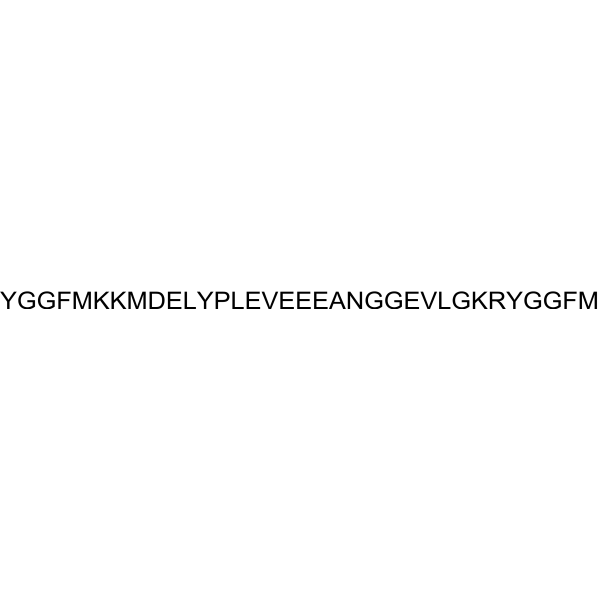
    Nocistatin (Bovine) is a nociceptin precursor contains another biologically active peptide. Nocistatin (Bovine) blocks nociception-induced allodynia and hyperalgesia. Nocistatin (Bovine) also attenuates pain evoked by prostaglandin E2. Nocistatin (Bovine) can bind to the membrane of mouse brain and spinal cord with high affinity. Nocistatin (Bovine) can be studied in research on pain transmission .
    Nocistatin (Bovine)
  • HY-P3945

    Neuropeptide FF Receptor Neurological Disease
    Prolactin-Releasing Peptide (12-31), bovine is a peptide fragment of prolactin-releasing peptide (PrRP). PrRP is RF-amide peptides expressed in brain areas involved in pain modulation. Prolactin-Releasing Peptide (12-31), bovine can be used for the research of nervous system disease .
    Prolactin-Releasing Peptide (12-31), bovine
  • HY-P1086

    Transmembrane Glycoprotein Others
    Cadherin Peptide, avian is a calcium-dependent glycoprotein. Cadherin Peptide, avian takes part in homophilic cell-cell adhesion and dose-dependently inhibits bovine brain microvessel endothelial cells (BBMECs) adhesion .
    Cadherin Peptide, avian
  • HY-128349

    Phosphodiesterase (PDE) Neurological Disease
    MT-3014 is a potent, highly selective and brain-penetrated phosphodiesterase 10A (PDE 10A) inhibitor, with IC50s of 0.062 nM and 0.09 nM for human PDE 10A and bovine PDE 10A, respectively .
    MT-3014
  • HY-121434

    Drug Derivative Microtubule/Tubulin Arf Family GTPase Cancer
    N-Deacetylcolchicine is a microtubule polymerization inhibitor with an IC50 of 3 μM against bovine brain microtubules. N-Deacetylcolchicine is a derivative of Colchicine (HY-16569). N-Deacetylcolchicine can activate the GTPase activity of microtubules and can be used for the research of cancer .
    N-Deacetylcolchicine
  • HY-130748

    PKC Phosphodiesterase (PDE) Infection
    K-252d is an indolocarbazole alkaloid found in Nocardiopsis. It is a PKC inhibitor that inhibits PKC isolated from rat brain (IC50=350 nM). It also inhibits calcium- and calmodulin-dependent phosphodiesterase isolated from bovine heart (IC50=46.2 μM).
    K-252d
  • HY-115750

    NO Synthase Neurological Disease
    Nω-allyl-L-arginine is a competitive and reversible inhibitor of bovine brain nitric oxide synthase (nNOS). Nω-allyl-L-arginine can inactivate nNOS in a time-dependent manner. Nω-allyl-L-arginine also is a substrate, producing L-arginine, acrolein, and H2O .
    Nω-allyl-L-arginine
  • HY-13289B

    (R)-SYN117 hydrochloride; (R)-RS-25560-197 hydrochloride; RS-25560-198 hydrochloride

    Dopamine β-hydroxylase Cardiovascular Disease
    (R)-Nepicastat hydrochloride is the isomer of Nepicastat (HY-13289). Nepicastat (SYN117) is a selective,potent,and orally active inhibitor of dopamine-beta-hydroxylase. Nepicastat (SYN117) produces concentration-dependent inhibition of bovine (IC50=8.5 nM) and human (IC50=9 nM) dopamine-beta-hydroxylase. Nepicastat (SYN117) can cross the blood-brain barrier (BBB) .
    (R)-Nepicastat hydrochloride
  • HY-106301R

    L-364,718 (Standard); MK-329 (Standard)

    Reference Standards Cholecystokinin Receptor Metabolic Disease
    Devazepide (Standard) is the analytical standard of Devazepide. This product is intended for research and analytical applications. Devazepide (L-364,718) is a potent, competitive, selective and orally active nonpeptide antagonist of cholecystokinin (CCK) receptor, with IC50s of 81 pM, 45 pM and 245 nM for rat pancreatic, bovine gallbladder and guinea pig brain CCK receptors, respectively. Devazepide (L-364,718) is effective for gastrointestinal disorders .
    Devazepide (Standard)
  • HY-103521

    GABA Receptor Neurological Disease
    Anxiolytic/nonsedative agent-1 (compound 2b) is a potent and selective GABAA agonist. Anxiolytic/nonsedative agent-1 shows appreciable affinity for the BzR in bovine brain membranes with Kis of 14, 121, 239 nM for α1β2γ2, α2β2γ2, α5β3γ2, respectively. Anxiolytic/nonsedative agent-1 shows α2 selective efficacy in vitro and anxioselective effects in vivo .
    Anxiolytic/nonsedative agent-1
  • HY-101304

    S-isopropyl ITU; IPTU

    NO Synthase Cardiovascular Disease Neurological Disease
    S-Isopropylisothiourea hydrobromide (S-isopropyl ITU; IPTU) is a blood-brain barrier (BBB) penetrant NOS inhibitor with IC50 values of 0.66, 0.75 and 0.29 μM against mouse spinal cord, cerebellar, bovine aortic and porcine endothelial cell NOS. S-Isopropylisothiourea exhibits a significant blood pressure-raising effect without damaging the perfusion of vital organs and can also inhibit the late-phase pain response induced by formalin. S-Isopropylisothiourea hydrobromide is used in the researchs for hemorrhagic shock and pain response based on NOS .
    S-Isopropylisothiourea hydrobromide
  • HY-120267

    Casein Kinase Cardiovascular Disease
    TID43 is a CK2 inhibitor, with an IC50 of 0.3 μM. TID43 can be used for anti-angiogenic research .
    TID43
  • HY-114554

    Phosphodiesterase (PDE) PKC Bacterial Infection
    KS 619-1 is a Ca 2+/calmodulin-dependent cyclic nucleotide phosphodiesterase inhibitor. KS 619-1 exhibits strong inhibitory activity against this enzyme derived from bovine brain and heart, but shows weak inhibitory effects on calmodulin-independent phosphodiesterase and protein kinase C. KS 619-1 displays weak antibacterial activity against Staphylococcus aureus .
    KS 619-1
  • HY-121434A

    Drug Derivative Microtubule/Tubulin Arf Family GTPase Cancer
    N-Deacetylcolchicine tartrate is a microtubule polymerization inhibitor with an IC50 of 3 μM against bovine brain microtubules. N-Deacetylcolchicine tartrate is a derivative of Colchicine (HY-16569). N-Deacetylcolchicine tartrate can activate the GTPase activity of microtubules and can be used for the research of cancer .
    N-Deacetylcolchicine tartrate
  • HY-117759

    KAR-2

    Microtubule/Tubulin Cancer
    Deacetoxyvinzolidine (KAR-2) is a bis-indol derivative with high anti-microtubular and anti-tumour activities. Deacetoxyvinzolidine exhibits high affinity for bovine purified brain tubulin (Kd of 3 μM) and inhibits microtubule assembly at a concentration of 10 nM. Deacetoxyvinzolidine does not possess anti-calmodulin activity. Deacetoxyvinzolidine can be used for the study of leukaemia .
    Deacetoxyvinzolidine
  • HY-113203A

    Endogenous Metabolite Neurological Disease
    Putreanine dihydrochloride is an alkaline diamino monocarboxylic acid amino acid that exists exclusively in the central nervous system of mammals and birds. Putreanine dihydrochloride reaches its highest concentration in the caudal region of the brain. Putreanine dihydrochloride appears in the brain tissue of rats 2 weeks after birth, and its concentration gradually increases to adult levels over several months .
    Putreanine dihydrochloride

Inquiry Online

Your information is safe with us. * Required Fields.

Salutation


Country or Region *

Applicant Name *


Organization Name *

Department *


Email Address *


Product Name *

Cat. No.


Requested quantity *

Phone Number *


Remarks

Inquiry Online

Inquiry Information

Product Name:
Cat. No.:
Quantity:
MCE Japan Authorized Agent:

