



Ganglioside GM1 (bovine) ammonium

Based on 1 Customer Validation
Ganglioside GM1 (bovine) ammonium is a type of glycosphingolipid, mainly found on the cell membranes of the central nervous system of vertebrates. Ganglioside GM1 (bovine) ammonium exerts neuroprotective effects by reducing excessive activation of NMDAR, activating TrkA and ERK1/2, and inhibiting oxidative stress and cell apoptosis and autophagy. Ganglioside GM1 (bovine) ammonium can be used in the research of diseases such as traumatic brain injury, Parkinson's disease, Alzheimer's disease, and Huntington's disease.
For research use only. We do not sell to patients.
- Purity : 98%
- CAS No.: 1007119-81-4
-
Storage:
-20°C, sealed storage, away from moisture
* In solvent : -80°C, 6 months; -20°C, 1 month (sealed storage, away from moisture)


To place orders, for customer services and technical support, please contact: MedChemExpress USA
Tel: 609-228-6898 E-mail: [email protected] [email protected]


-
 Biological Activity
-
Chemical Information
- Purity & Documentation
- References
-
 Help & FAQs


-
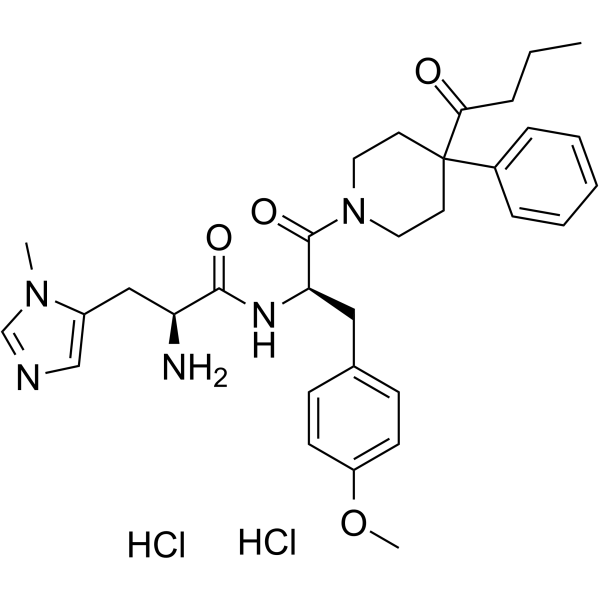
HY-115644
BMS-470539 dihydrochloride -

HY-131686
Ganglioside GT1b (bovine) ammonium -

HY-131686A
Ganglioside GT1b (porcine) ammonium -
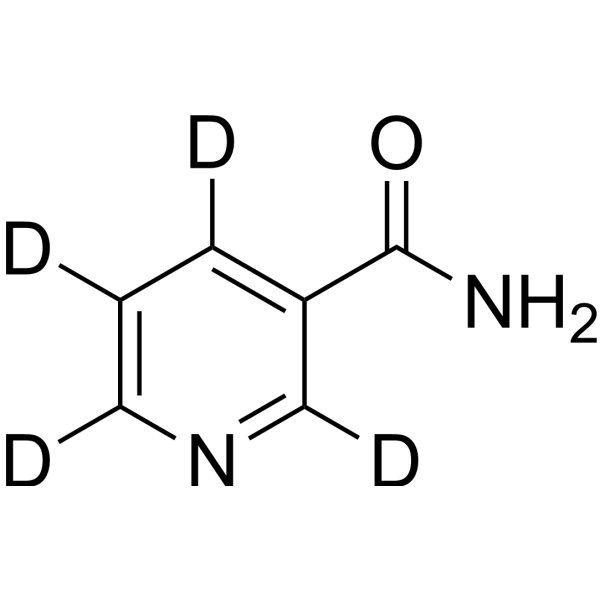
HY-B0150S
Nicotinamide-d4 -
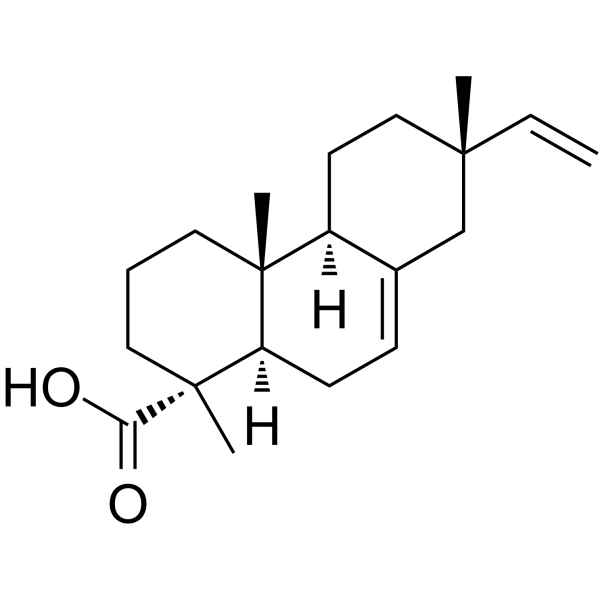
HY-N3463
Isopimaric acid -
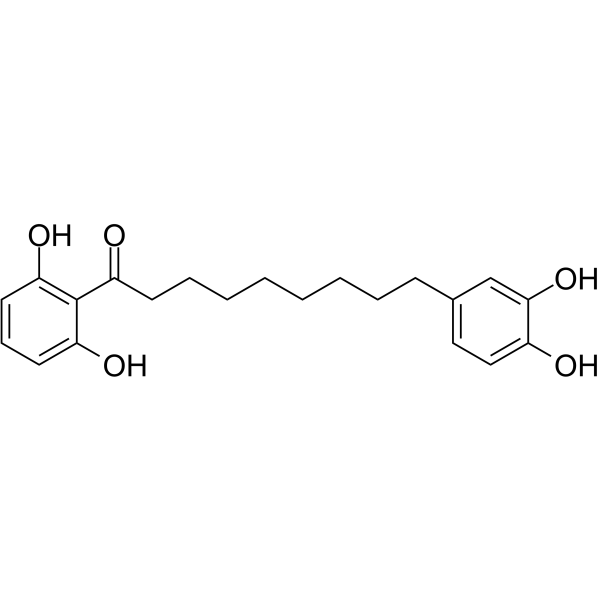
HY-N8518
Malabaricone C -
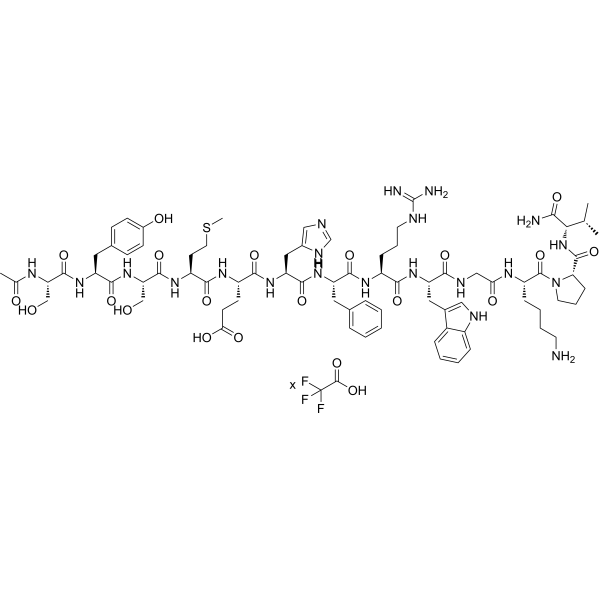
HY-P0252A
α-MSH TFA -
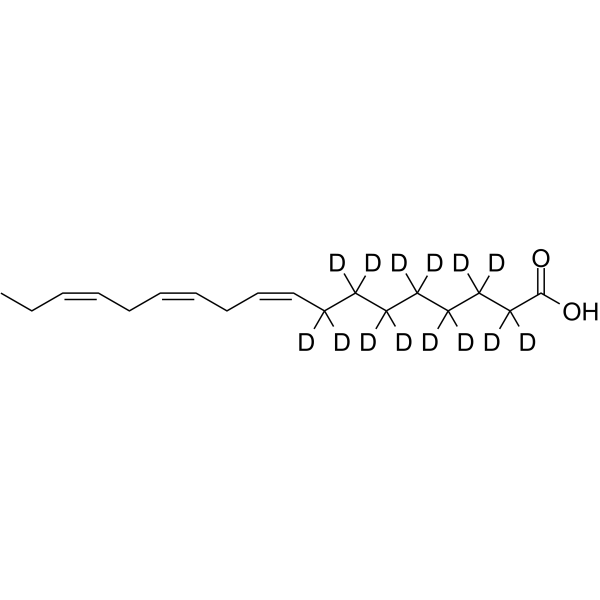
HY-N0728S2
α-Linolenic acid-d14 -
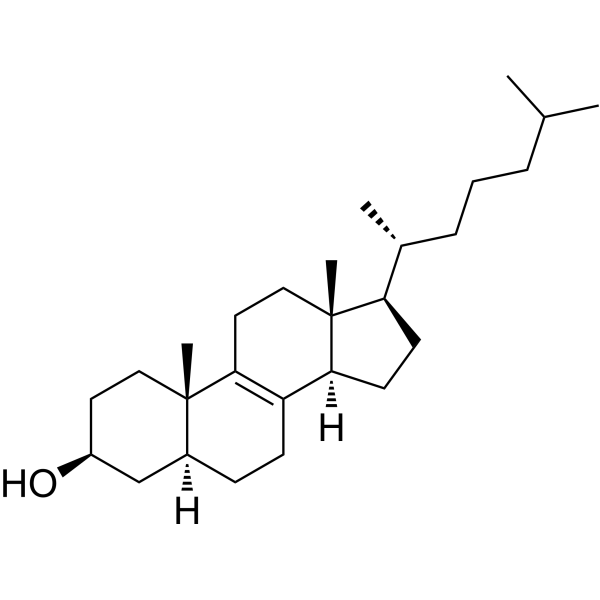
HY-113345
Zymostenol -

HY-157343
GD3 Ganglioside -
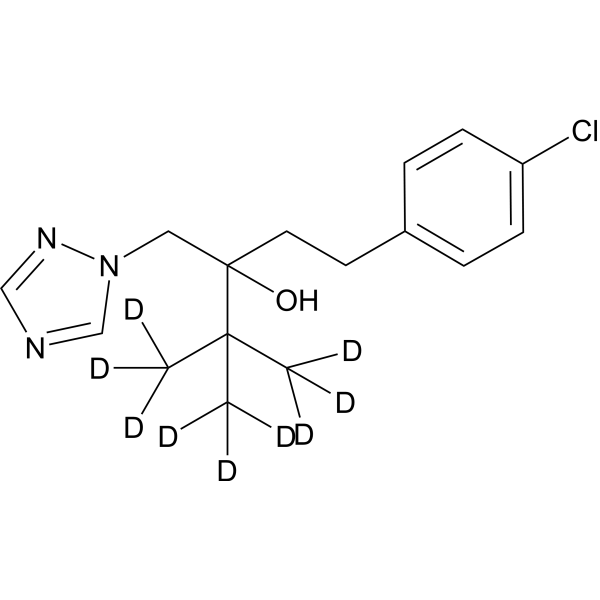
HY-B0852S
Tebuconazole-d9 -

HY-N8518R
Malabaricone C (Standard)
All iGluR Isoforms
More

Biological Activity
Description


Chemical Information
-
CAS No. 1007119-81-4
-
Appearance Solid
-
Color White to off-white
-
SMILES
[Ganglioside GM1 (bovine) (ammonium)]
-
Shipping
Room temperature in continental US; may vary elsewhere.
-
Storage
-20°C, sealed storage, away from moisture
* In solvent : -80°C, 6 months; -20°C, 1 month (sealed storage, away from moisture)


Purity & Documentation
-
Data Sheet (264 KB)
-
SDS (251 KB)
- English - EN (251 KB)
- Français - FR (251 KB)
- Deutsch - DE (251 KB)
- Norwegian - NO (251 KB)
- Español - ES (251 KB)
- Swedish - SV (251 KB)
- Italian - IT (251 KB)
- Korean - KR (251 KB)
- Portuguese - PT (251 KB)
-
Handling Instructions (2659 KB)
References
[1]. Wenchao Zhang, et al. Pathophysiology of Ganglioside GM1 in Ischemic Stroke: Ganglioside GM1: A Critical Review. Cell Transplant. 2019 Jun;28(6):657-661. [Content Brief]
[2]. Chiricozzi E, et al. GM1 Ganglioside Is A Key Factor in Maintaining the Mammalian Neuronal Functions Avoiding Neurodegeneration. Int J Mol Sci. 2020 Jan 29;21(3):868. [Content Brief]
[3]. Guo Z. Ganglioside GM1 and the Central Nervous System. Int J Mol Sci. 2023 May 31;24(11):9558. [Content Brief]

Calculators
Concentration (start) × Volume (start) = Concentration (final) × Volume (final)


Ganglioside GM1 (bovine) ammonium Related Classifications
HY-N10546A Related Classifications
 Powered by Bioz