



S-Isopropylisothiourea hydrobromide

Based on 1 Customer Validation
S-Isopropylisothiourea hydrobromide (S-isopropyl ITU; IPTU) is a blood-brain barrier (BBB) penetrant NOS inhibitor with IC50 values of 0.66, 0.75 and 0.29 μM against mouse spinal cord, cerebellar, bovine aortic and porcine endothelial cell NOS. S-Isopropylisothiourea exhibits a significant blood pressure-raising effect without damaging the perfusion of vital organs and can also inhibit the late-phase pain response induced by formalin. S-Isopropylisothiourea hydrobromide is used in the researchs for hemorrhagic shock and pain response based on NOS.
For research use only. We do not sell to patients.
- Purity : 98.0%
- CAS No.: 4269-97-0
- Formula: C4H11BrN2S
- Molecular Weight:199.11
-
Storage:Powder -20°C, 3 years ; In solvent -80°C, 6 months , -20°C, 1 month


To place orders, for customer services and technical support, please contact: MedChemExpress USA
Tel: 609-228-6898 E-mail: [email protected] [email protected]


-
 Biological Activity
-
Chemical Information
-
Solvent & Solubility
- Protocols
- Purity & Documentation
- References
-
 Help & FAQs


-
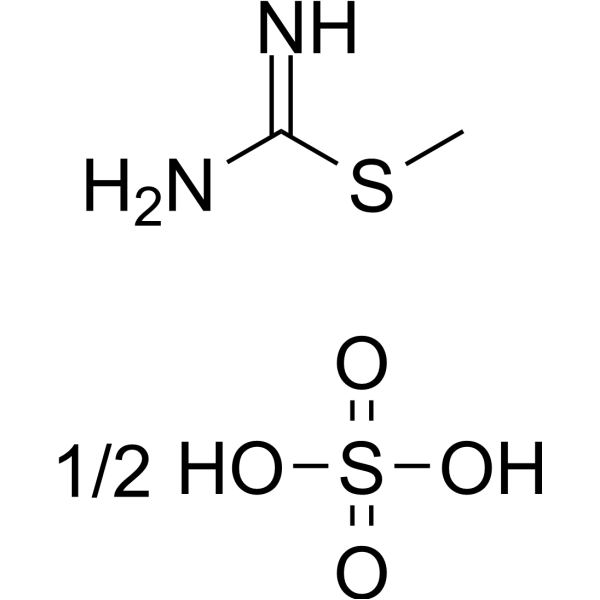
HY-79457
S-Methylisothiourea sulfateiNOS Inhibitor -
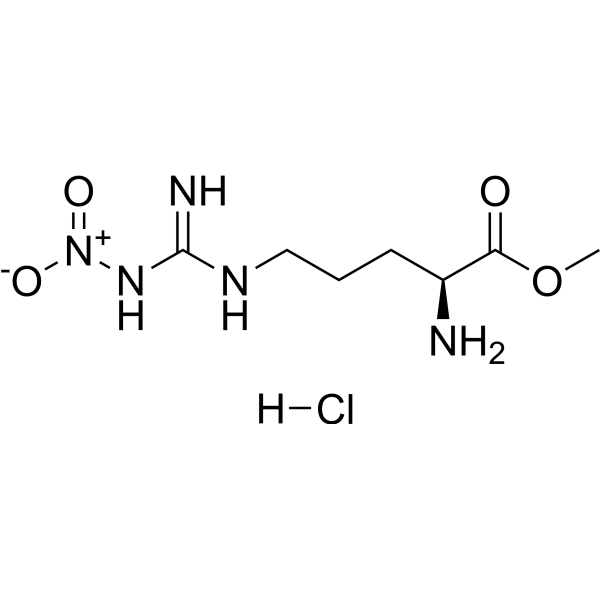
HY-18729A
L-NAME hydrochlorideNO Synthase Inhibitor -
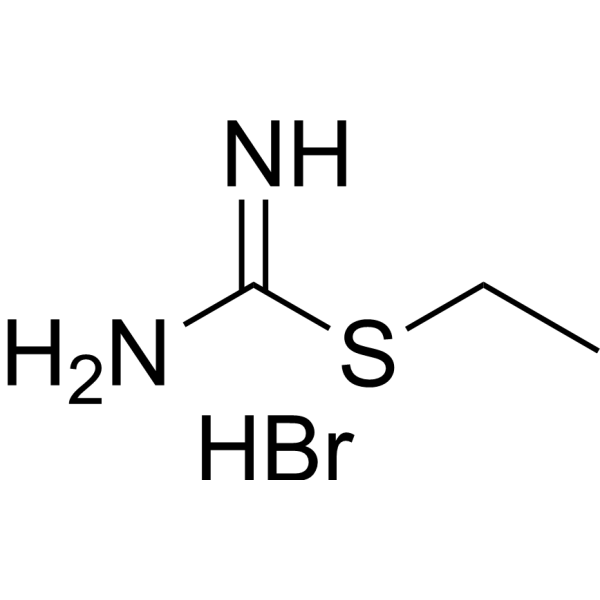
HY-101252
S-EIT hydrobromideBiochemical Reagent -
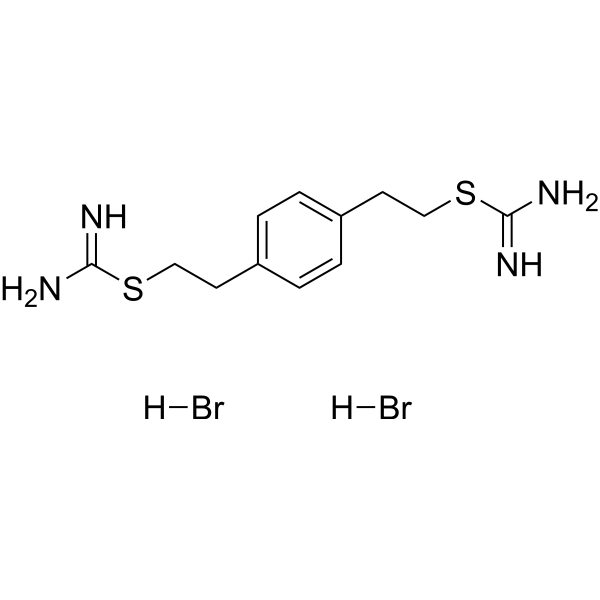
HY-135224
1,4-PBIT dihydrobromideNOS Inhibitor -
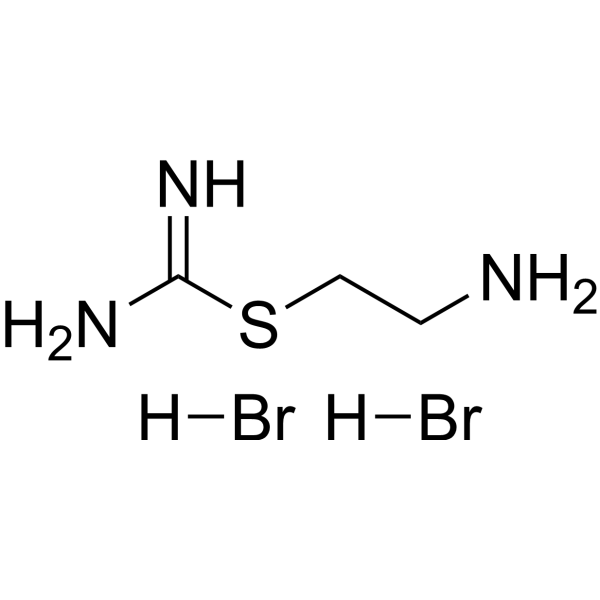
HY-131929
AE-ITU dihydrobromideiNOS Inhibitor -
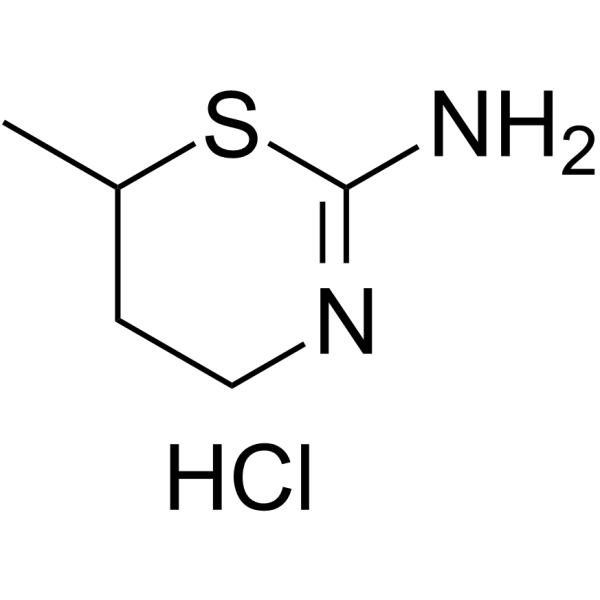
HY-101251
AMT hydrochlorideiNOS Inhibitor -

HY-120865
1,3-PBIT dihydrobromide -
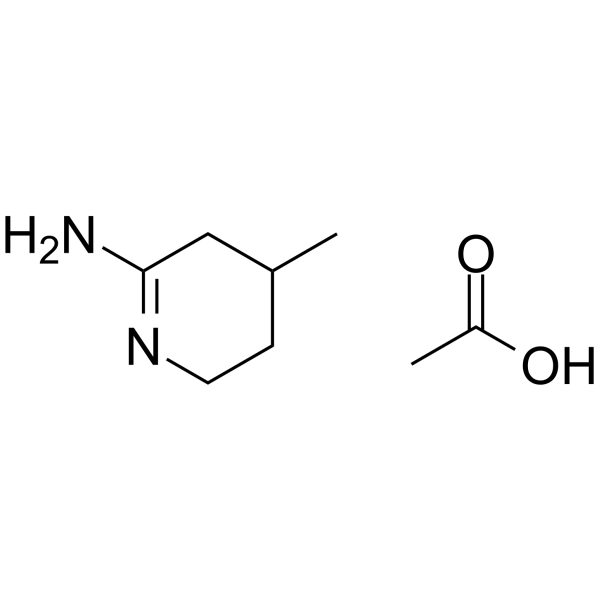
HY-138564
NOS-IN-1NO Synthase Inhibitor -
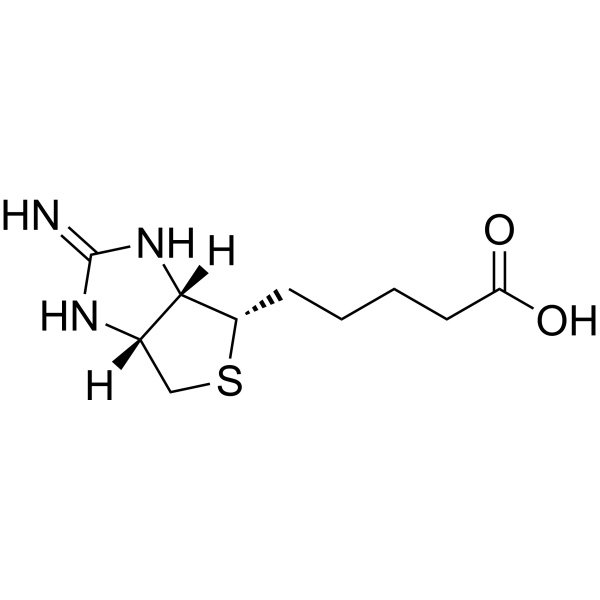
HY-118700
2-IminobiotinNitric Oxide Synthases Inhibitor -

HY-12115
NG-nitro-L-arginineNitric Oxide Synthase Inhibitor -
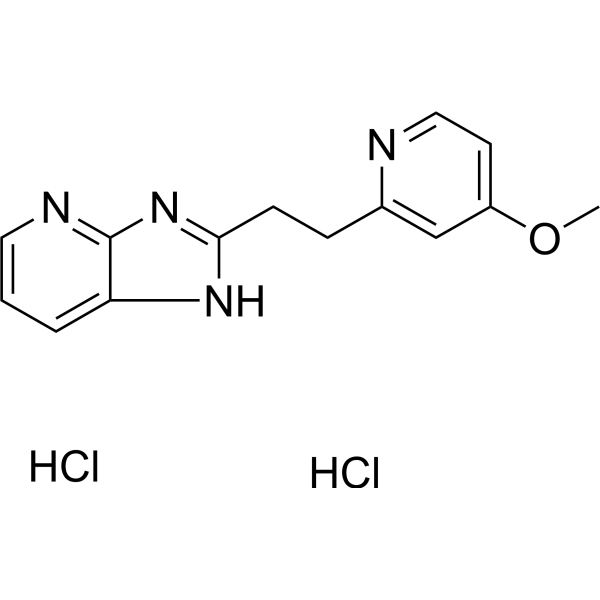
HY-107584
BYK 191023 dihydrochlorideInducible Nitric-Oxide Synthase (iNOS) Inhibitor -
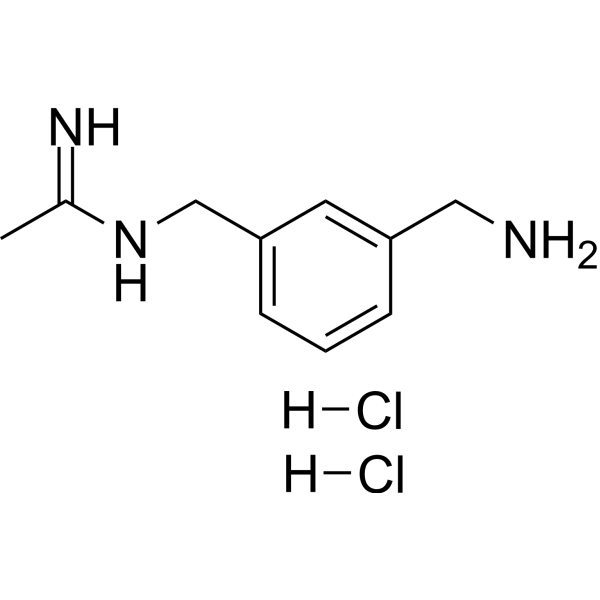
HY-18731
1400W DihydrochlorideNO Synthase Inhibitor


Biological Activity
Description
|
eNOS 0.5 μM (IC50) |
nNOS 0.66 μM (IC50) |
nNOS 0.75 μM (IC50) |
eNOS 0.29 μM (IC50) |
In Vivo
S-Isopropylisothiourea hydrobromide (10-50 mg/kg, i.p., single dose) exhibits selective analgesic effects at a dose of 50 mg/kg, specifically inhibiting pain in the late phase (15-30 min)[1].
S-Isopropylisothiourea hydrobromide (0.1 mg/kg, i.v., 3 doses) significantly increases mean arterial pressure (MAP) and achieve a 100% survival rate in a rat model of severe hemorrhagic shock[2].
S-Isopropylisothiourea hydrobromide (0.3 mg/kg plus 1 mg/kg·h, i.v., maintain infusion for 120 min) significantly increases MAP to a normal level, without reducing cardiac output, and maintain perfusion of vital organs[2].
MedChemExpress (MCE) has not independently confirmed the accuracy of these methods. They are for reference only.
-
Animal Model:Formalin-induced hindpaw licking behaviour established in mice (male, LACA, 25-35 g)[1]
-
Dosage:10, 20 and 30 mg/kg
-
Administration:Intraperitoneal injection (i.p.), single dose
-
Result:Reduced the movement and grooming behaviors of mice.
Did not affect the paw edema induced by formalin.
-
Animal Model:Pylorus-ligated model established in male Wistar rats[2]
-
Dosage:0.1 mg/kg
-
Administration:Intravenous injection (i.v.), 10 min, 20 min, and 40 min, administered in three doses
-
Result:Increased MAP to 65-70 mmHg, and the survival rate was 100%.
-
Animal Model:Porcine hemorrhagic shock model established in York shire pigs (6-10 weeks, 10-15.5 kg)[2]
-
Dosage:0.3 mg/kg plus 1 mg/kg·h
-
Administration:Intravenous injection (i.v.), maintain infusion for 120 min
-
Result:Increased MAP to 90 mmHg. Maintained a stable heart rate and do not affect the cardiac output.
Increased the vascular resistance of the system.


Chemical Information
-
CAS No. 4269-97-0
-
Appearance Solid
-
Molecular Weight 199.11
-
Formula C4H11BrN2S
-
Color White to off-white
-
SMILES
NC(SC(C)C)=N.Br
-
Synonyms
S-isopropyl ITU; IPTU
-
Shipping
Room temperature in continental US; may vary elsewhere.
-
Storage
Powder -20°C 3 years In solvent -80°C 6 months -20°C 1 month


Solvent & Solubility
In Vitro:
DMSO : 50 mg/mL (251.12 mM; Need ultrasonic; Hygroscopic DMSO has a significant impact on the solubility of product, please use newly opened DMSO)
Please refer to the solubility information to select the appropriate solvent. Once prepared, please aliquot and store the solution to prevent product inactivation from repeated freeze-thaw cycles.
Storage method and period of stock solution: -80°C, 6 months; -20°C, 1 month. When stored at -80°C, please use it within 6 months. When stored at -20°C, please use it within 1 month.
Please refer to the solubility information to select the appropriate solvent. Once prepared, please aliquot and store the solution to prevent product inactivation from repeated freeze-thaw cycles.
Storage method and period of stock solution: -80°C, 6 months; -20°C, 1 month. When stored at -80°C, please use it within 6 months. When stored at -20°C, please use it within 1 month.
Concentration (start) × Volume (start) = Concentration (final) × Volume (final)
In Vivo:
Select the appropriate dissolution method based on your experimental animal and administration route.
- For the following dissolution methods, please ensure to first prepare a clear stock solution using an In Vitro approach and then sequentially add co-solvents:
- To ensure reliable experimental results, the clarified stock solution can be appropriately stored based on storage conditions. As for the working solution for In Vivo experiments, it is recommended to prepare freshly and use it on the same day.
- The percentages shown for the solvents indicate their volumetric ratio in the final prepared solution. If precipitation or phase separation occurs during preparation, heat and/or sonication can be used to aid dissolution.
Add each solvent one by one: 10% DMSO 40% PEG300 5% Tween-80 45% Saline
Solubility: ≥ 2.5 mg/mL (12.56 mM); Clear solution
This protocol yields a clear solution of ≥ 2.5 mg/mL (saturation unknown).
Taking 1 mL working solution as an example, add 100 μL DMSO stock solution (25.0 mg/mL) to 400 μL PEG300, and mix evenly; then add 50 μL Tween-80 and mix evenly; then add 450 μL Saline to adjust the volume to 1 mL.
Preparation of Saline: Dissolve 0.9 g sodium chloride in ddH₂O and dilute to 100 mL to obtain a clear Saline solution.
Add each solvent one by one: 10% DMSO 90% (20% SBE-β-CD in Saline)
Solubility: ≥ 2.5 mg/mL (12.56 mM); Clear solution
This protocol yields a clear solution of ≥ 2.5 mg/mL (saturation unknown).
Taking 1 mL working solution as an example, add 100 μL DMSO stock solution (25.0 mg/mL) to 900 μL 20% SBE-β-CD in Saline, and mix evenly.
Preparation of 20% SBE-β-CD in Saline (4°C, storage for one week): 2 g SBE-β-CD powder is dissolved in 10 mL Saline, completely dissolve until clear.
In Vivo Dissolution Calculator
Please enter the basic information of animal experiments:
-
-
-
-
Recommended: Prepare an additional quantity of animals to account for potential losses during experiments.
Please enter your animal formula composition:
-
%DMSO +
Recommended: Keep the proportion of DMSO in working solution below 2% if your animal is weak.
-
%+
-
+%Tween-80 + +
-
%Saline +
The co-solvents required include: DMSO, . All of co-solvents are available by MedChemExpress (MCE). , Tween 80. All of co-solvents are available by MedChemExpress (MCE).
Working solution concentration: 0.22 mg/mL
Method for preparing stock solution: mg drug dissolved in μL DMSO. Stock solution concentration: mg/mL.
1. Take μL DMSO stock solution;
2. Add μL .
μL , mix evenly;
3. Then add μL Tween 80, mix evenly;
4. Then add μL
Please ensure that the stock solution in the first step is dissolved to a clear state, and add co-solvents in sequence. You can use ultrasonic heating (ultrasonic cleaner, recommended frequency 20-40 kHz), vortexing, etc. to assist dissolution.

Protocols
-
Cell Cytotoxicity Assay
Cytotoxicity assays are usually based on the assessment of cell membrane damage, which can also be indirectly detected by measuring cell viability. Detection methods include MTT assay, CKK-8 assay, LDH assay and ATP assay, etc.


Purity & Documentation
-
Data Sheet (274 KB)
-
SDS (393 KB)
- English - EN (393 KB)
- Français - FR (393 KB)
- Deutsch - DE (393 KB)
- Norwegian - NO (393 KB)
- Español - ES (393 KB)
- Swedish - SV (393 KB)
- Italian - IT (393 KB)
- Korean - KR (393 KB)
- Portuguese - PT (393 KB)
-
Handling Instructions (2659 KB)
References
[1]. Handy RL, Wallace P, Moore PK. Inhibition of nitric oxide synthase by isothioureas: cardiovascular and antinociceptive effects. Pharmacol Biochem Behav. 1996 Oct;55(2):179-84. [Content Brief]
[2]. A Vromen, et al. Effects of S-isopropyl isothiourea, a potent inhibitor of nitric oxide synthase, in severe hemorrhagic shock. J Appl Physiol (1985). 1996 Aug;81(2):707-15. [Content Brief]


Complete Stock Solution Preparation Table
Please refer to the solubility information to select the appropriate solvent. Once prepared, please aliquot and store the solution to prevent product inactivation from repeated freeze-thaw cycles.
Storage method and period of stock solution: -80°C, 6 months; -20°C, 1 month. When stored at -80°C, please use it within 6 months. When stored at -20°C, please use it within 1 month.
| Optional Solvent | Concentration Solvent Mass | 1 mg | 5 mg | 10 mg | 25 mg |
|---|---|---|---|---|---|
| DMSO | 1 mM | 5.0223 mL | 25.1117 mL | 50.2235 mL | 125.5587 mL |
| 5 mM | 1.0045 mL | 5.0223 mL | 10.0447 mL | 25.1117 mL | |
| 10 mM | 0.5022 mL | 2.5112 mL | 5.0223 mL | 12.5559 mL | |
| 15 mM | 0.3348 mL | 1.6741 mL | 3.3482 mL | 8.3706 mL | |
| 20 mM | 0.2511 mL | 1.2556 mL | 2.5112 mL | 6.2779 mL | |
| 25 mM | 0.2009 mL | 1.0045 mL | 2.0089 mL | 5.0223 mL | |
| 30 mM | 0.1674 mL | 0.8371 mL | 1.6741 mL | 4.1853 mL | |
| 40 mM | 0.1256 mL | 0.6278 mL | 1.2556 mL | 3.1390 mL | |
| 50 mM | 0.1004 mL | 0.5022 mL | 1.0045 mL | 2.5112 mL | |
| 60 mM | 0.0837 mL | 0.4185 mL | 0.8371 mL | 2.0926 mL | |
| 80 mM | 0.0628 mL | 0.3139 mL | 0.6278 mL | 1.5695 mL | |
| 100 mM | 0.0502 mL | 0.2511 mL | 0.5022 mL | 1.2556 mL |


S-Isopropylisothiourea hydrobromide Related Classifications
HY-101304 Related Classifications
 Powered by Bioz