1. Search Result
Search Result
Results for "

bronchial smooth muscle

" in MedChemExpress (MCE) Product Catalog:

38

Inhibitors & Agonists

5

Peptides

1

Inhibitory Antibodies

2

Natural
Products

5

Isotope-Labeled Compounds

Cat. No. Product Name Target Research Areas Chemical Structure
  • HY-B1037
    Salbutamol
    5+ Cited Publications

    Albuterol; AH-3365

    Adrenergic Receptor ERK Inflammation/Immunology Cancer
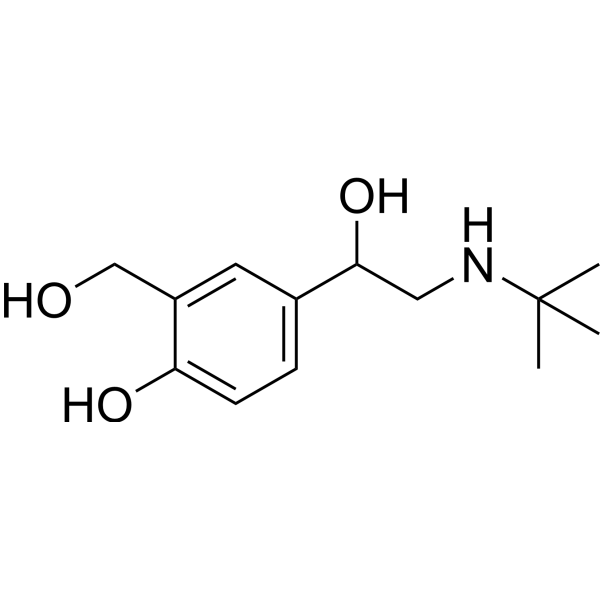
    Salbutamol (Albuterol) is an orally active short-acting β2-adrenergic receptor agonist. Salbutamol promotes tumorigenesis in gastric cancer cells through the β2-AR/ERK/EMT pathway. Salbutamol can relax bronchial smooth muscle and is used to study bronchospasm induced by asthma and chronic obstructive pulmonary disease .
    Salbutamol
  • HY-A0083
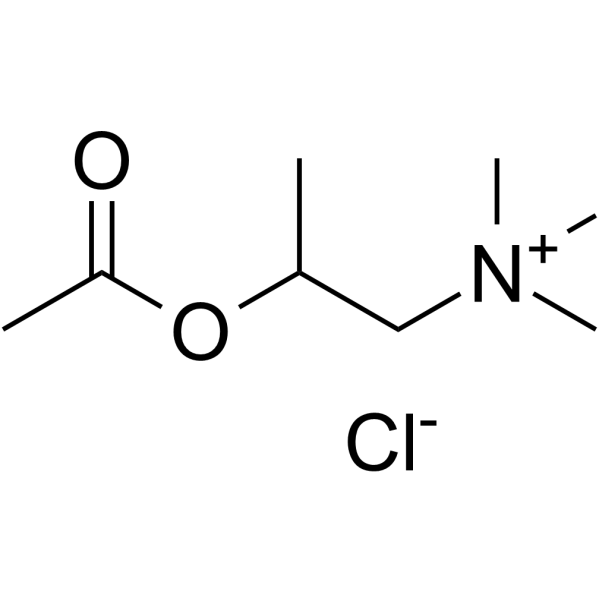
    Methacholine chloride
    5+ Cited Publications

    Acetyl-β-methylcholine chloride

    mAChR Others
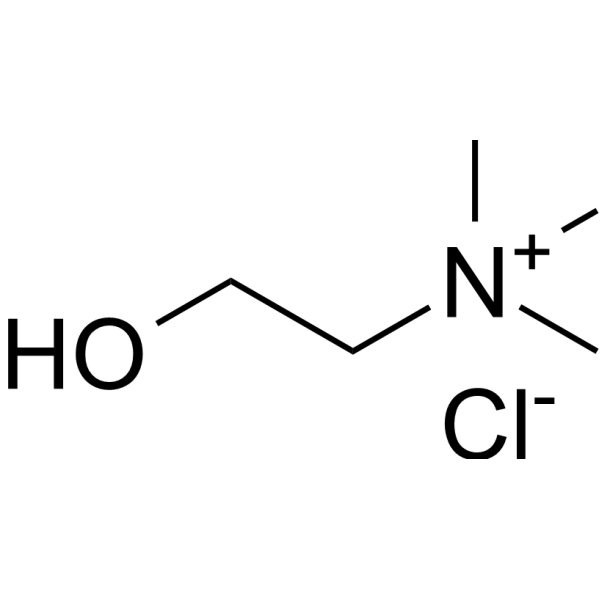
    Methacholine (Acetyl-β-methylcholine) choride is a potent muscarinic-3 (M3) agonist. Methacholine choride acts directly on acetylcholine receptors on smooth muscle causing bronchoconstriction and airway narrowing. Methacholine choride shows a high sensitivity to identify bronchial hyperresponsiveness (BHR). Methacholine choride can be used to measure airway hyperresponsiveness (AHR) as a diagnostic aid in the assessment of individuals with asthma-like symptoms and normal resting expiratory flow rates .
    Methacholine chloride
  • HY-P0206
    Bradykinin
    15+ Cited Publications

    Bradykinin Receptor Endogenous Metabolite Ser/Thr Protease Cardiovascular Disease Endocrinology
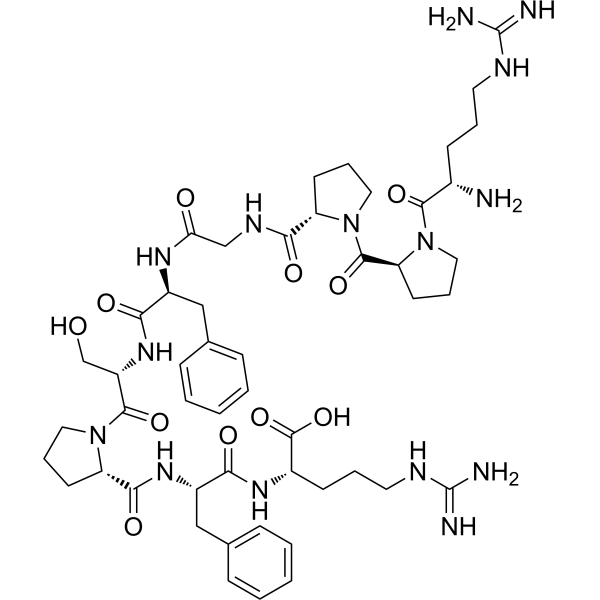
    Bradykinin is an effective endothelium-dependent vasodilator that can lower blood pressure. Bradykinin can induce contraction of bronchial and intestinal non-vascular smooth muscle, increase vascular permeability, and participate in the mechanism of pain .
    Bradykinin
  • HY-P990688

    AMG-509

    CD3 Cancer
    Xaluritamig (AMG-509) is a bispecific T cell engager and cytolytic agent with a Kd of 27.6 nM for human CD3ε. Xaluritamig binds to CD3ε via an anti-CD3 single-chain variable fragment (scFv) domain, and to STEAP1 via a bispecific anti-STEAP1 antigen-binding fragment (Fab) domain, thereby recruiting and activating T cells and forming a bridge between T cells and STEAP1-expressing cancer cells. Xaluritamig induces T cell-mediated redirected cytotoxicity, tumor cell lysis, cytokine release, CD8 + T cell activation and expansion, as well as tumor stasis or regression. Xaluritamig contains an Fc domain with no effector function, which prolongs serum half-life, exhibits only minimal activity against cells with low STEAP1 expression and normal cells, and shows extremely low target-related off-tumor toxicity in cynomolgus monkeys. Xaluritamig is used in STEAP1×CD3 XmAb 2+1 immunotherapy and in research on metastatic castration-resistant prostate cancer and Ewing sarcoma .
    Xaluritamig
  • HY-B0436
    Salbutamol hemisulfate
    5+ Cited Publications

    Albuterol hemisulfate; AH-3365 hemisulfate

    Adrenergic Receptor ERK Inflammation/Immunology Cancer
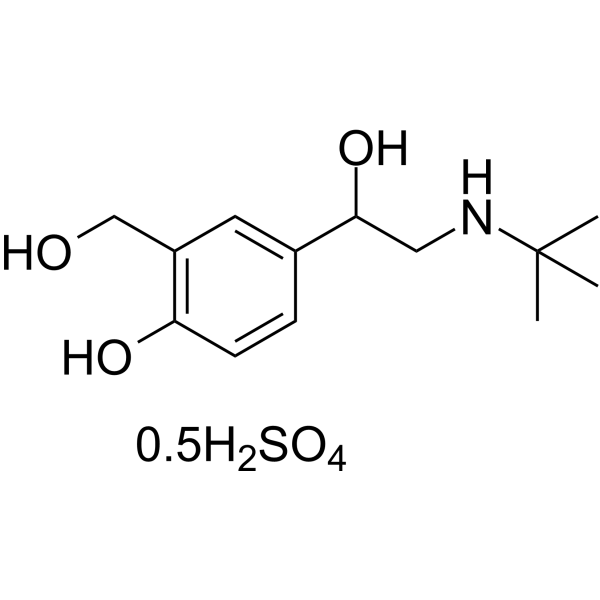
    Salbutamol (Albuterol) hemisulfate is an orally active short-acting β2-adrenergic receptor agonist. Salbutamol hemisulfate promotes tumorigenesis in gastric cancer cells through the β2-AR/ERK/EMT pathway. Salbutamol hemisulfate can relax bronchial smooth muscle and is used to study bronchospasm induced by asthma and chronic obstructive pulmonary disease .
    Salbutamol hemisulfate
  • HY-B0010
    Formoterol fumarate
    5+ Cited Publications

    (±)Formoterol fumarate

    Adrenergic Receptor Inflammation/Immunology
    Formoterol fumarate ((±)Formoterol fumarate) is a selective β2-adrenoceptor agonist. Formoterol fumarate is at least as β2-adrenoceptor selective as Salbutamol (HY-B1037) and Terbutaline (HY-B0802A). Formoterol fumarate abolishs the contraction induced by Acetylcholine in bronchioles. Formoterol fumarate can be used for the research of chronic obstructive pulmonary disease and bronchial asthma .
    Formoterol fumarate
  • HY-14300A
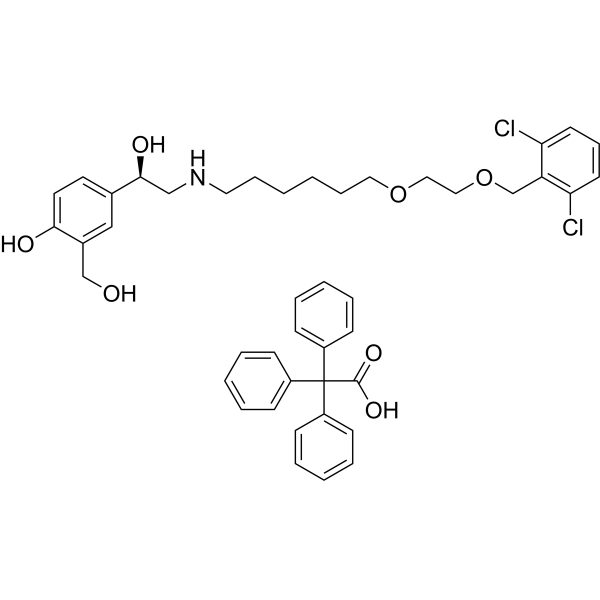
    Vilanterol trifenatate
    5+ Cited Publications

    GW642444 trifenatate

    Adrenergic Receptor Inflammation/Immunology Endocrinology Cancer
    Vilanterol (GW642444) trifenatate is a long-acting β2 adrenergic receptor agonist. Vilanterol trifenatate has pEC50 values for β2-AR, β1-AR, and β3-AR of 9.4, 6.4, and 6.1, respectively. Vilanterol trifenatate selectively activates airway β2 adrenergic receptors, increases cAMP and thus relaxes bronchial smooth muscle. Vilanterol trifenatate can be used in asthma research [2][4].
    Vilanterol trifenatate
  • HY-134004

    Carbetapentane

    Sigma Receptor mAChR Neurological Disease Inflammation/Immunology
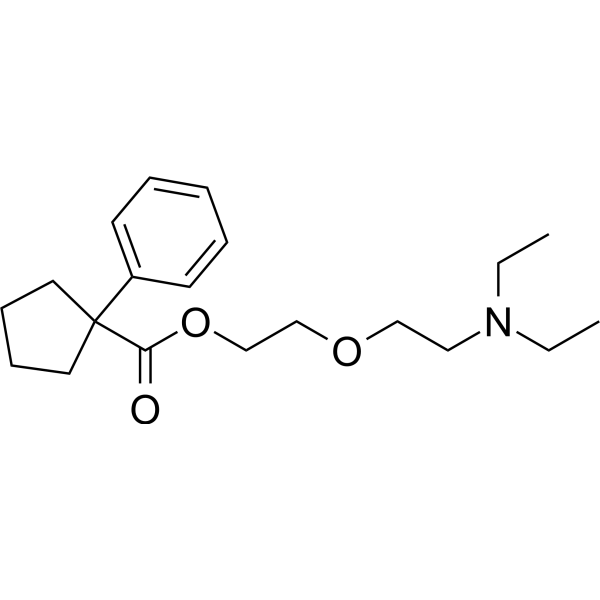
    Pentoxyverine (Carbetapentane) is an orally active sigma-1 receptor agonist, with Kis of 41 nM, 894 nM and 75 nM for σ1, σ2 and guinea-pig brain membran σ1, respectively. Pentoxyverine is a muscarinic antagonist. Pentoxyverine is a potent antitussive, anticonvulsant, and spasmolytic agent. Pentoxyverine can be used for inhibiting bronchial interceptor, weakening of cough reflex, bronchial smooth muscle relaxation and reduction of airway resistance .
    Pentoxyverine
  • HY-B1055

    Carbetapentane citrate

    Sigma Receptor mAChR Neurological Disease Inflammation/Immunology
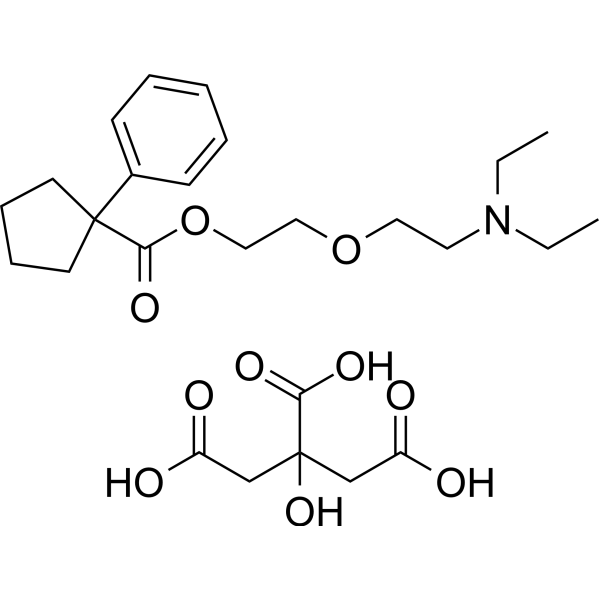
    Pentoxyverine (Carbetapentane) citrate is an orally active and blood-brain barrier permeability sigma-1 receptor agonist, with Kis of 41 nM, 894 nM and 75 nM for σ1, σ2 and guinea-pig brain membrane σ1, respectively. Pentoxyverine citrate is a muscarinic antagonist. Pentoxyverine citrate is a potent antitussive, anticonvulsant, and spasmolytic agent. Pentoxyverine citrate can be used for inhibiting bronchial interceptor, weakening of cough reflex, bronchial smooth muscle relaxation and reduction of airway resistance .
    Pentoxyverine citrate
  • HY-14300
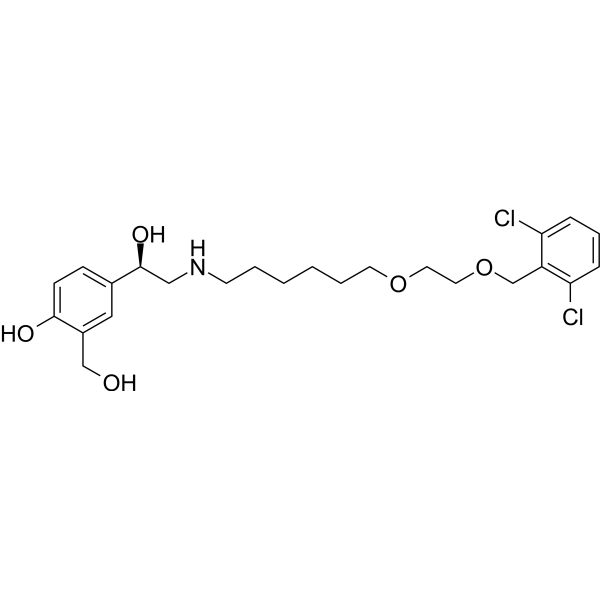
    Vilanterol
    5+ Cited Publications

    GW642444

    Adrenergic Receptor Inflammation/Immunology Endocrinology Cancer
    Vilanterol (GW642444) is a long-acting β2 adrenergic receptor agonist. Vilanterol has pEC50 values for β2-AR, β1-AR, and β3-AR of 9.4, 6.4, and 6.1, respectively. Vilanterol selectively activates airway β2 adrenergic receptors, increases cAMP and thus relaxes bronchial smooth muscle. Vilanterol can be used in asthma research [3][5].
    Vilanterol
  • HY-P0206A
    Bradykinin acetate
    15+ Cited Publications

    Bradykinin Receptor Endogenous Metabolite Ser/Thr Protease Cardiovascular Disease Endocrinology
    Bradykinin acetate is an effective endothelium-dependent vasodilator that can lower blood pressure. Bradykinin acetate can induce contraction of bronchial and intestinal non-vascular smooth muscle, increase vascular permeability, and participate in the mechanism of pain .
    Bradykinin acetate
  • HY-150270A

    P2X Receptor Prostaglandin Receptor NOD-like Receptor (NLR) Caspase Interleukin Related Inflammation/Immunology
    NP-1815-PX sodium is an orally active dual inhibitor of P2X4 and prostaglandin TP receptors, with an IC50 of 0.26 μM against human P2X4 receptors. NP-1815-PX sodium specifically inhibits ATP-mediated prostaglandin production, TP receptor-induced calcium elevation, and the canonical/non-canonical NLRP3 inflammasome signaling pathway. NP-1815-PX sodium selectively blocks smooth muscle contractions induced by ATP, U46619 (HY-108566) and prostaglandin F2α. NP-1815-PX sodium not only produces anti-allodynic effects in vivo, but also significantly alleviates symptoms of DNBS (HY-W324435)-induced colitis (such as weight loss and tissue damage). NP-1815-PX sodium exerts anti-inflammatory effects by downregulating IL-1β levels and Caspase-1 activity. NP-1815-PX sodium is used in studies related to asthma and inflammatory bowel disease (colitis) .
    NP-1815-PX sodium
  • HY-B1037S2

    Albuterol-d9; AH-3365-d9

    Isotope-Labeled Compounds ERK Adrenergic Receptor Inflammation/Immunology Cancer
    Salbutamol-d9 (Albuterol-d9) is the deuterium labeled Salbutamol (HY-B1037). Salbutamol (Albuterol) is an orally active short-acting β2-adrenergic receptor agonist. Salbutamol promotes tumorigenesis in gastric cancer cells through the β2-AR/ERK/EMT pathway. Salbutamol can relax bronchial smooth muscle and is used to study bronchospasm induced by asthma and chronic obstructive pulmonary disease .
    Salbutamol-d9
  • HY-B1037S

    Albuterol-d3; AH-3365-d3

    Isotope-Labeled Compounds ERK Adrenergic Receptor Inflammation/Immunology Cancer
    Salbutamol-d3 (Albuterol-d3) is the deuterium labeled Salbutamol (HY-B1037). Salbutamol (Albuterol) is an orally active short-acting β2-adrenergic receptor agonist. Salbutamol promotes tumorigenesis in gastric cancer cells through the β2-AR/ERK/EMT pathway. Salbutamol can relax bronchial smooth muscle and is used to study bronchospasm induced by asthma and chronic obstructive pulmonary disease .
    Salbutamol-d3
  • HY-103281

    Bombesin Receptor Metabolic Disease
    Litorin, an amphibian bombesin peptide derivative, is an bombesin receptor agonist. Litorin stimulates the contraction of smooth muscle, stimulates gastrin, gastric acid, and pancreatic secretion, and suppresses the nutriment in vivo .
    Litorin
  • HY-17457

    Levosalbutamol hemitartrate

    Adrenergic Receptor PI3K Inflammation/Immunology
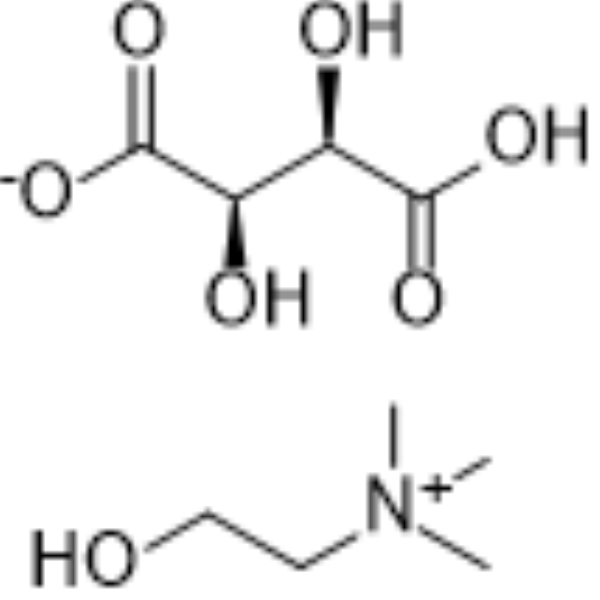
    Levalbuterol (Levosalbutamol) hemitartrate is a β2-adrenergic receptor agonist and PI3K inhibitor. Levalbuterol hemitartrate inhibits PI3K activity, reduces NF-κB and Rb protein expression, activates the cAMP/PKA pathway, and stimulates cAMP release. Levalbuterol hemitartrate relaxes airway smooth muscle, reduces intracellular calcium levels, and inhibits spasmogen-induced contractions. Levalbuterol hemitartrate can be used for the research of moderate-to-severe asthma .
    Levalbuterol hemitartrate
  • HY-150270

    Prostaglandin Receptor P2X Receptor NOD-like Receptor (NLR) Caspase Interleukin Related Neurological Disease Inflammation/Immunology
    NP-1815-PX is an orally active dual inhibitor of P2X4 and prostaglandin TP receptors, with an IC50 of 0.26 μM against human P2X4 receptors. NP-1815-PX specifically inhibits ATP-mediated prostaglandin production, TP receptor-induced calcium elevation, and the canonical/non-canonical NLRP3 inflammasome signaling pathway. NP-1815-PX selectively blocks smooth muscle contractions induced by ATP, U46619 (HY-108566) and prostaglandin F2α. NP-1815-PX not only produces anti-allodynic effects in vivo, but also significantly alleviates symptoms of DNBS (HY-W324435)-induced colitis (such as weight loss and tissue damage). NP-1815-PX exerts anti-inflammatory effects by downregulating IL-1β levels and Caspase-1 activity. NP-1815-PX is used in studies related to asthma and inflammatory bowel disease (colitis) .
    NP-1815-PX
  • HY-B0436R

    Albuterol hemisulfate (Standard); AH-3365 hemisulfate (Standard)

    Reference Standards Adrenergic Receptor ERK Inflammation/Immunology Cancer
    Salbutamol (Albuterol) hemisulfate (Standard) is the analytical standard of Salbutamol hemisulfate (HY-B0436). This product is intended for research and analytical applications. Salbutamol (Albuterol) hemisulfate is an orally active short-acting β2-adrenergic receptor agonist. Salbutamol hemisulfate promotes tumorigenesis in gastric cancer cells through the β2-AR/ERK/EMT pathway. Salbutamol hemisulfate can relax bronchial smooth muscle and is used to study bronchospasm induced by asthma and chronic obstructive pulmonary disease.
    Salbutamol hemisulfate (Standard)
  • HY-B1037S3

    Albuterol-d9 acetate; AH-3365-d9 acetate

    Isotope-Labeled Compounds ERK Adrenergic Receptor Inflammation/Immunology Cancer
    Salbutamol-d9 (Albuterol-d9) acetate is the deuterium labeled Salbutamol (HY-B1037). Salbutamol (Albuterol) is an orally active short-acting β2-adrenergic receptor agonist. Salbutamol promotes tumorigenesis in gastric cancer cells through the β2-AR/ERK/EMT pathway. Salbutamol can relax bronchial smooth muscle and is used to study bronchospasm induced by asthma and chronic obstructive pulmonary disease .
    Salbutamol-d9 acetate
  • HY-W173257

    6-Amino-5-1,3-dimethyl-5-(formamido)uracil

    Others
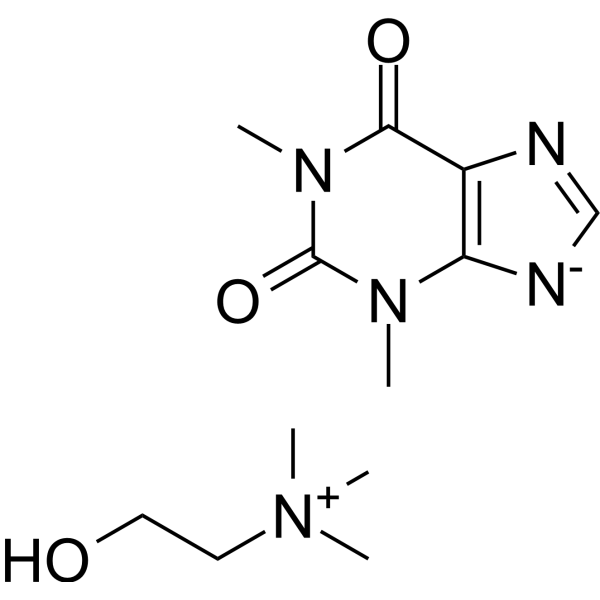
    Theophylline EP impurity C is an alkaloid with anti-bronchial smooth muscle spasm activity. Theophylline EP impurity C can be used to assess the purity and quality of compounds. Theophylline EP impurity C has potential clinical value in the suppression of asthma and chronic obstructive pulmonary disease.
    Theophylline EP impurity C
  • HY-A0083B

    Acetyl-β-methylcholine bromide

    mAChR Cardiovascular Disease
    Methacholine (Acetyl-β-methylcholine) bromide is a potent muscarinic-3 (M3) agonist. Methacholine bromide acts directly on acetylcholine receptors on smooth muscle causing bronchoconstriction and airway narrowing. Methacholine bromide shows a high sensitivity to identify bronchial hyperresponsiveness (BHR). Methacholine bromide can be used to measure airway hyperresponsiveness (AHR) as a diagnostic aid in the assessment of individuals with asthma-like symptoms and normal resting expiratory flow rates .
    Methacholine bromide
  • HY-A0083R

    Acetyl-β-methylcholine chloride (Standard)

    Reference Standards mAChR Others
    Methacholine (chloride) (Standard) is the analytical standard of Methacholine (chloride). This product is intended for research and analytical applications. Methacholine (Acetyl-β-methylcholine) choride is a potent muscarinic-3 (M3) agonist. Methacholine choride acts directly on acetylcholine receptors on smooth muscle causing bronchoconstriction and airway narrowing. Methacholine choride shows a high sensitivity to identify bronchial hyperresponsiveness (BHR). Methacholine choride can be used to measure airway hyperresponsiveness (AHR) as a diagnostic aid in the assessment of individuals with asthma-like symptoms and normal resting expiratory flow rates .
    Methacholine chloride (Standard)
  • HY-14300AS

    GW642444-d4 trifenatate

    Isotope-Labeled Compounds Adrenergic Receptor Inflammation/Immunology Endocrinology
    Vilanterol-d4 (trifenatate) is deuterium labeled Vilanterol (trifenatate).Vilanterol (GW642444) acetate is a long-acting β2 adrenergic receptor agonist. Vilanterol acetate has pEC50 values for β2-AR, β1-AR, and β3-AR of 9.4, 6.4, and 6.1, respectively. Vilanterol acetate selectively activates airway β2 adrenergic receptors, increases cAMP and thus relaxes bronchial smooth muscle. Vilanterol acetate can be used in asthma research.
    Vilanterol-d4 trifenatate
  • HY-134004R

    Carbetapentane (Standard)

    Reference Standards Sigma Receptor mAChR Neurological Disease Inflammation/Immunology
    Pentoxyverine (Standard) is the analytical standard of Pentoxyverine. This product is intended for research and analytical applications. Pentoxyverine (Carbetapentane) is an orally active sigma-1 receptor agonist, with Kis of 41 nM, 894 nM and 75 nM for σ1, σ2 and guinea-pig brain membran σ1, respectively. Pentoxyverine is a muscarinic antagonist. Pentoxyverine is a potent antitussive, anticonvulsant, and spasmolytic agent. Pentoxyverine can be used for inhibiting bronchial interceptor, weakening of cough reflex, bronchial smooth muscle relaxation and reduction of airway resistance .
    Pentoxyverine (Standard)
  • HY-B1055R

    Carbetapentane citrate (Standard)

    Reference Standards Sigma Receptor mAChR Neurological Disease Inflammation/Immunology
    Pentoxyverine (citrate) (Standard) is the analytical standard of Pentoxyverine (citrate). This product is intended for research and analytical applications. Pentoxyverine (Carbetapentane) citrate is an orally active sigma-1 receptor agonist, with Kis of 41 nM, 894 nM and 75 nM for σ1, σ2 and guinea-pig brain membrane σ1, respectively. Pentoxyverine citrate is a muscarinic antagonist. Pentoxyverine citrate is a potent antitussive, anticonvulsant, and spasmolytic agent. Pentoxyverine citrate can be used for inhibiting bronchial interceptor, weakening of cough reflex, bronchial smooth muscle relaxation and reduction of airway resistance [4].
    Pentoxyverine citrate (Standard)
  • HY-122409

    Others Others
    Cularine is a compound that relaxes guinea pig tracheal and human bronchial smooth muscle, inhibits contraction induced by a variety of contractile agents, and has nonspecific antispasmodic activity, and its activity is structure-related.
    Cularine
  • HY-P0206B

    Endogenous Metabolite Bradykinin Receptor Ser/Thr Protease Cardiovascular Disease Endocrinology
    Bradykinin triacetate is an effective endothelium-dependent vasodilator that can lower blood pressure. Bradykinin triacetate can induce contraction of bronchial and intestinal non-vascular smooth muscle, increase vascular permeability, and participate in the mechanism of pain .
    Bradykinin triacetate
  • HY-112333

    p38 MAPK Inflammation/Immunology
    SC-68376 is a potent, reversible, ATP-competitive, and selective inhibitor of p38 MAP kinase inhibitor .
    SC-68376
  • HY-B1037B

    Albuterol adipate; AH-3365 adipate

    Adrenergic Receptor ERK Inflammation/Immunology Cancer
    Salbutamol (Albuterol) adipate is an orally active short-acting β2-adrenergic receptor agonist. Salbutamol adipate promotes tumorigenesis in gastric cancer cells through the β2-AR/ERK/EMT pathway. Salbutamol adipate can relax bronchial smooth muscle and is used to study bronchospasm induced by asthma and chronic obstructive pulmonary disease .
    Salbutamol adipate
  • HY-P0206S1

    Isotope-Labeled Compounds Bradykinin Receptor Endogenous Metabolite Ser/Thr Protease Cardiovascular Disease Endocrinology
    RPP-(Gly-1 13C2, 15N)-FSPFR TFA is 13C- and 15N-labeled Bradykinin (HY-P0206). Bradykinin is an effective endothelium-dependent vasodilator that can lower blood pressure. Bradykinin can induce contraction of bronchial and intestinal non-vascular smooth muscle, increase vascular permeability, and participate in the mechanism of pain .
    RPP-(Gly-13C2,15N)-FSPFR TFA
  • HY-A0083C

    Acetyl-β-methylcholine iodide

    mAChR Cardiovascular Disease
    Methacholine iodide is a potent muscarinic-3 (M3) agonist. Methacholine iodide acts directly on acetylcholine receptors on smooth muscle causing bronchoconstriction and airway narrowing. Methacholine iodide shows a high sensitivity to identify bronchial hyperresponsiveness (BHR). Methacholine iodide can be used to measure airway hyperresponsiveness (AHR) as a diagnostic aid in the assessment of individuals with asthma-like symptoms and normal resting expiratory flow rates .
    Methacholine iodide
  • HY-14300D

    GW642444 acetate

    Adrenergic Receptor Inflammation/Immunology
    Vilanterol (GW642444) acetate is a long-acting β2 adrenergic receptor agonist. Vilanterol acetate has pEC50 values for β2-AR, β1-AR, and β3-AR of 9.4, 6.4, and 6.1, respectively. Vilanterol acetate selectively activates airway β2 adrenergic receptors, increases cAMP and thus relaxes bronchial smooth muscle. Vilanterol acetate can be used in asthma research [1][2].
    Vilanterol acetate
  • HY-137312

    SKF 40383-A

    Adrenergic Receptor Inflammation/Immunology
    Carbuterol (SKF 40383-A) is a selective β2-adrenergic receptor agonist that primarily targets bronchial smooth muscle, exhibiting significant bronchodilatory and anti-allergic activity. Carbuterol can directly inhibit the immunologically induced release of histamine and slow-reacting substance of anaphylaxis (SRS-A), thereby alleviating allergic responses. Carbuterol exerts mild β1-mediated cardiac stimulation and is applicable to studies related to respiratory and immune-related diseases such as asthma and allergic disorders .
    Carbuterol
  • HY-137312A

    SKF 40383-A hydrochloride

    Adrenergic Receptor Inflammation/Immunology
    Carbuterol (SKF 40383-A) hydrochloride is a selective β2-adrenergic receptor agonist that primarily targets bronchial smooth muscle, exhibiting significant bronchodilatory and anti-allergic activity. Carbuterol hydrochloride can directly inhibit the immunologically induced release of histamine and slow-reacting substance of anaphylaxis (SRS-A), thereby alleviating allergic responses. In addition, it exerts mild β1-mediated cardiac stimulation and is applicable to studies related to respiratory and immune-related diseases such as asthma and allergic disorders .
    Carbuterol hydrochloride
  • HY-19108

    Reactive Oxygen Species (ROS) Histamine Receptor Inflammation/Immunology Endocrinology
    CI-959 is an inhibitor of inflammatory cell activation. CI-959 exhibits anti-inflammatory and anti-allergic activities. CI-959 can inhibit the production of reactive oxygen species by neutrophils, as well as neutrophil adhesion, respiratory burst, and histamine release from mast cells. CI-959 can also inhibit the release of inflammatory mediators such as histamine, leukotrienes, and thromboxane from guinea-pig and human lung tissues, and effectively suppress anti-IgE-induced contractions of human bronchial smooth muscle. CI-959 can be used in the research of inflammatory and allergic diseases, such as asthma .
    CI-959
  • HY-183932

    mAChR Neurological Disease Inflammation/Immunology
    NPC-14695 is a competitive and selective M3 muscarinic receptor antagonist, with a Kd value of 15 nM for guinea pig M3, 60 nM for guinea pig M2, and 25 nM for rabbit M1. NPC-14695 exhibits higher activity towards M3 receptors in bronchial smooth muscle than towards those regulating salivary secretion. NPC-14695 inhibits Carbachol (HY-B1208)-induced contraction of isolated rabbit iris smooth muscle .
    NPC-14695
  • HY-W982613

    Phosphodiesterase (PDE) Inflammation/Immunology
    SCA-40 is a vasodilator for bronchial smooth muscle. SCA-40 produces biphasic relaxation on bronchi with spontaneous tension, and the relaxation effect is not inhibited by various potassium channel blockers. SCA-40 can be used for research on bronchial conditions .
    SCA-40
  • HY-135446

    Endothelin Receptor Cardiovascular Disease Endocrinology
    BQ-610 is a selective antagonist of the endothelin A receptor (ETA receptor). BQ-610 specifically blocks the ETA receptor, competitively inhibiting the binding of endothelin-1 (ET-1) (a vasoconstrictive peptide) to the receptor, thereby blocking the effects of ET-1 such as vascular smooth muscle contraction, cell mitosis, and inhibition of hormone secretion. BQ-610 significantly alleviates cerebral vasospasm in rabbits. BQ-610 blocks the bronchial epithelial and pulmonary vascular cell proliferation caused by cigarette smoke in rat models. BQ-610 can delay the natural luteal regression in the cow's uterus. BQ-610 can be used for research on vasospasm, abnormal cell proliferation, and reproductive endocrine disorders .
    BQ-610

Inquiry Online

Your information is safe with us. * Required Fields.

Salutation


Country or Region *

Applicant Name *


Organization Name *

Department *


Email Address *


Product Name *

Cat. No.


Requested quantity *

Phone Number *


Remarks

Inquiry Online

Inquiry Information

Product Name:
Cat. No.:
Quantity:
MCE Japan Authorized Agent:

