



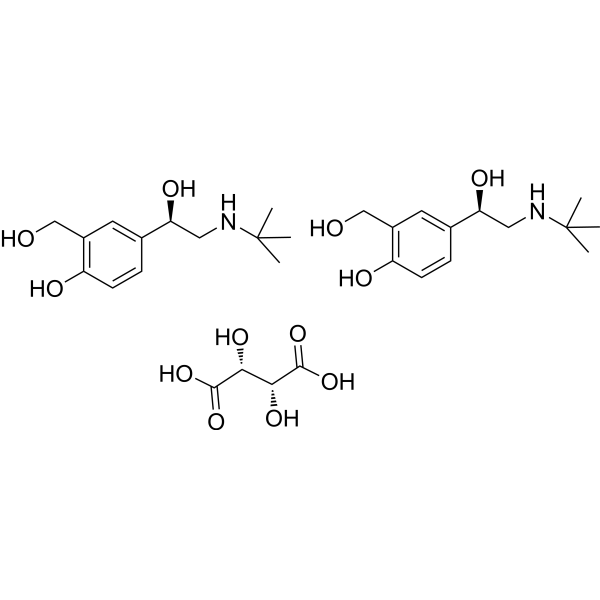
Levalbuterol hemitartrate

Based on 1 Customer Validation
Levalbuterol (Levosalbutamol) hemitartrate is a β2-adrenergic receptor agonist and PI3K inhibitor. Levalbuterol hemitartrate inhibits PI3K activity, reduces NF-κB and Rb protein expression, activates the cAMP/PKA pathway, and stimulates cAMP release. Levalbuterol hemitartrate relaxes airway smooth muscle, reduces intracellular calcium levels, and inhibits spasmogen-induced contractions. Levalbuterol hemitartrate can be used for the research of moderate-to-severe asthma.
Nos produits utilisent uniquement pour la recherche. Nous ne vendons pas aux patients.
- Pureté : 98.71%
- CAS No.: 661464-94-4
- Formule: C13H21NO3·1/2C2H6O6
- Masse moléculaire:314.37
-
Stockage:
4°C, sealed storage, away from moisture
* In solvent : -80°C, 6 months; -20°C, 1 month (sealed storage, away from moisture)

To place orders, for customer services and technical support, please contact: MedChemExpress USA
Tel: 609-228-6898 E-mail: [email protected] [email protected]


-
 Activité biologique
-
Chemical Information
-
Solvant et solubilité
- Protocole
- Pureté et documentation
- Références
-
 Help & FAQs


Voir tous les produits spécifiques à Isoform Adrenergic Receptor
More

Activité biologique
Description
IC50 & Target
[1]|
β adrenergic receptor |
PI3K |
In Vitro
Levalbuterol (0.001-100 μM; 24 h) inhibits human bronchial smooth muscle cell proliferation in a biphasic manner, with maximum 80% inhibition at 0.1 μM, via β2-adrenergic receptor and cAMP/PKA pathway activation[1].
Levalbuterol (1 μM; 24 h) hemitartrate has an inhibitory effect on human bronchial smooth muscle cell proliferation that is completely abrogated by preincubation with 1 μM β2-adrenergic receptor antagonist ICI-118551 (HY-100543) (2 h preincubation)[1].
Levalbuterol (1 μM; 2 h) hemitartrate has an inhibitory effect on human bronchial smooth muscle cell proliferation that is attenuated or abrogated, respectively, by co-treatment with 1 μM or 10 μM (S)-Albuterol (HY-137311A) (24 h)[1].
Levalbuterol (1 μM; 24 h) hemitartrate has an inhibitory effect on human bronchial smooth muscle cell proliferation that is enhanced by co-treatment with 10 μM 8-Br-cAMP (HY-12306A) (2 h preincubation) and completely abrogated by co-treatment with 10 μM Rp-cAMPS (HY-100530A) (2 h preincubation), confirming involvement of the cAMP/PKA pathway[1].
Levalbuterol (0.1-1.0 μM; 15 min) hemitartrate stimulates cAMP release in human bronchial smooth muscle cells, an effect that is attenuated by 65% with co-treatment of 1.0 μM (S)-Albuterol (15 min)[1].
Levalbuterol (1.0 μM; 20 min) hemitartrate inhibits inositol phosphate release by 50% in human bronchial smooth muscle cells, indicating inhibition of PI-3 kinase activity[1].
Levalbuterol (1.0 μM; 24 h) hemitartrate inhibits NF-κB protein expression by 50% and Rb protein expression by 40% in human bronchial smooth muscle cells[1].
Levalbuterol hemitartrate induces airway smooth muscle relaxation and reduces spasmogen-induced contractions in in vitro ASM cells/tissues from horse, cow, guinea pig, mouse, and human sources via β2-adrenoreceptor ligation-dependent mechanisms[3].
Levalbuterol hemitartrate exerts anti-inflammatory effects in human eosinophils and T lymphocytes by inhibiting proinflammatory mediator release and T-cell proliferation via β2-adrenoreceptor ligation[3].
Levalbuterol hemitartrate reduces proinflammatory GM-CSF release from human ASM cells, enhances corticosteroid-mediated suppression of cytokine release, and modulates intracellular cAMP and NF-κB signaling pathways via β2-adrenoreceptors[3].
MedChemExpress (MCE) has not independently confirmed the accuracy of these methods. They are for reference only. Further protocols information, click here.
-
Cell Line:human bronchial smooth muscle cells (HBSMCs)
-
Concentration:0.001 μM; 0.01 μM; 0.1 μM; 10 μM; 100 μM
-
Incubation Time:24 h
-
Result:Showed a biphasic inhibitory effect on HBSMC proliferation.
Produced 5% inhibition relative to 5% FBS control at 0.001 μM.
Increased inhibition to 40% at 0.01 μM.
Reached a maximum of 80% inhibition at 0.1 μM.
Decreased inhibition to 55% at 1.0 μM.
Further decreased inhibition at 10 μM.
Showed no inhibitory effect at 100 μM.
Maintained cell viability >95% across all doses.
-
Cell Line:human bronchial smooth muscle cells (HBSMCs)
-
Concentration:1 μM; 1 μM plus 1 μM ICI-118551
-
Incubation Time:24 h
-
Result:Produced 57% inhibition of HBSMC proliferation relative to 5% FBS control with 1 μM levalbuterol alone.
Completely abrogated this inhibitory effect when co-incubated with 1 μM ICI-118551, restoring cell proliferation to the 5% FBS control level.
-
Cell Line:human bronchial smooth muscle cells (HBSMCs)
-
Concentration:1 μM; 1 μM plus 1 μM (S)-Albuterol; 1 μM plus 10 μM (S)-Albuterol)
-
Incubation Time:2 h
-
Result:Produced 80% inhibition of HBSMC proliferation relative to 5% FBS control with 1 μM levalbuterol alone.
Reduced this inhibition to 20% when co-treated with 1 μM (S)-Albuterol.
Completely abrogated the inhibitory effect of levalbuterol when co-treated with 10 μM (S)-Albuterol.
-
Cell Line:human bronchial smooth muscle cells (HBSMCs)
-
Concentration:1 μM; 1 μM plus 10 μM 8-Br-cAMP; 1 μM plus 10 μM Rp-cAMPS
-
Incubation Time:24 h
-
Result:Produced 65% inhibition of HBSMC proliferation with 10 μM 8-Br-cAMP alone.
Resulted in an additive inhibitory effect (75% total inhibition) when co-treated with 1 μM levalbuterol.
Increased proliferation by 30% relative to 5% FBS with 10 μM Rp-cAMPS alone.
Caused a 2-fold increase in proliferation and completely abrogated levalbuterol's inhibitory effect when co-treated with 1 μM levalbuterol.
-
Cell Line:human bronchial smooth muscle cells (HBSMCs)
-
Concentration:1 μM (levalbuterol); 30 μM (LY294002, preincubation); 30 μM (wortmannin, preincubation)
-
Incubation Time:24 h
-
Result:Produced 90% inhibition of HBSMC proliferation with 30 μM LY294002 alone.
Produced 85% inhibition of HBSMC proliferation with 30 μM wortmannin alone.
Did not restore proliferation to levels seen with levalbuterol alone when co-treated with 1 μM levalbuterol.
-
Cell Line:human bronchial smooth muscle cells (HBSMCs)
-
Concentration:1.0 μM
-
Incubation Time:24 h
-
Result:Caused a 50% decrease in NF-κB protein expression relative to 5% FBS control.
Caused a 40% decrease in Rb protein expression relative to 5% FBS control.
Essai clinique
| NCT Number | Sponsor | Condition | Start Date |
Phase

|
|---|---|---|---|---|
| NCT01329991 | Plexxikon| | 2011-05 | PHASE1 |


Chemical Information
-
CAS No. 661464-94-4
-
Appearance Solid
-
Masse moléculaire 314.37
-
Formule C13H21NO3·1/2C2H6O6
-
Color White to off-white
-
SMILES
OC([C@H](O)[C@@H](O)C(O)=O)=O.CC(C)(C)NC[C@@H](C1=CC(CO)=C(C=C1)O)O.[1/2]
-
Synonyms
Levosalbutamol hemitartrate
-
Livraison
Room temperature in continental US; may vary elsewhere.
-
Stockage
4°C, sealed storage, away from moisture
* In solvent : -80°C, 6 months; -20°C, 1 month (sealed storage, away from moisture)


Solvant et solubilité
In Vitro:
H2O : 100 mg/mL (318.10 mM; Need ultrasonic)
DMSO : 17.5 mg/mL (55.67 mM; ultrasonic and warming and heat to 60°C; Hygroscopic DMSO has a significant impact on the solubility of product, please use newly opened DMSO)
Please refer to the solubility information to select the appropriate solvent. Once prepared, please aliquot and store the solution to prevent product inactivation from repeated freeze-thaw cycles.
Storage method and period of stock solution: -80°C, 6 months; -20°C, 1 month (sealed storage, away from moisture). When stored at -80°C, please use it within 6 months. When stored at -20°C, please use it within 1 month.
* Note: If you choose water as the stock solution, please dilute it to the working solution, then filter and sterilize it with a 0.22 μm filter before use.
Please refer to the solubility information to select the appropriate solvent. Once prepared, please aliquot and store the solution to prevent product inactivation from repeated freeze-thaw cycles.
Storage method and period of stock solution: -80°C, 6 months; -20°C, 1 month (sealed storage, away from moisture). When stored at -80°C, please use it within 6 months. When stored at -20°C, please use it within 1 month.
* Note: If you choose water as the stock solution, please dilute it to the working solution, then filter and sterilize it with a 0.22 μm filter before use.
Concentration (start) × Volume (start) = Concentration (final) × Volume (final)

Protocole
-
RNA extraction experimental
By lysing cells, releasing RNA, and removing impurities such as proteins and DNA, high-purity RNA products are finally obtained. The commonly used traditional method is the guanidine isothiocyanate/phenol/chloroform method (Trizol), which is suitable for a variety of animal materials including animal tissues, microorganisms, cultured cells, etc., and most plant materials.
-
Western Blot
Western blotting (WB) is a commonly used experimental method in molecular biology, biochemistry, and immunogenetics for identifying and quantifying target proteins. It combines gel electrophoresis with immunoassay, enabling researchers to analyze protein expression, post-translational modifications, and molecular weight.
-
Calcium Spark Assay
Calcium sparks are localized, transient increases in intracellular calcium concentration ([Ca2+]i) that occur in cardiac myocytes and represent elementary events underlying excitation-contraction coupling. These events are generated by the coordinated opening of clusters of ryanodine receptors (RyRs) on the sarcoplasmic reticulum membrane, leading to a brief release of Ca2+ into the cytosol. The detection and analysis of calcium sparks provide insights into the mechanisms of calcium handling and signaling in cardiac cells. Imaging techniques using fluorescent calcium indicators such as Fluo-3 are employed to visualize these subcellular calcium transients with high spatial and temporal resolution. The protocol is based on established methodologies described in primary literature for both experimental measurement and automated analysis of calcium sparks.
-
Research Protocol for Inflammation-related Diseases
The NLRP3 inflammasome is a cytosolic innate immune signaling platform that integrates priming signals and danger-signal activation to promote caspase-1 activation, maturation of IL-1β and IL-18, and gasdermin D-mediated pyroptotic cell death. The core experimental logic is to determine whether inflammatory disease phenotypes are driven by increased NLRP3 expression, ASC-containing inflammasome assembly, caspase-1 cleavage, GSDMD cleavage, and extracellular release of IL-1β/IL-18 rather than by nonspecific cell injury alone. The pathway is strongly linked to inflammation-related disease phenotypes because monosodium urate crystals activate NALP3/NLRP3 inflammasome signaling in gout-like crystal inflammation, cholesterol crystals activate NLRP3 inflammasomes in atherogenesis models, and DSS-induced intestinal inflammation has been reported to involve NLRP3 inflammasome activity. However, experimental colitis studies also show context-dependent protective effects of NLRP3 inflammasome co
-
Ca2+ Staining Technique
Ca2+ staining is an experimental technique that utilizes specific fluorescent probes (such as Fluo-4 AM, Fura-2, etc.) to qualitatively or quantitatively detect dynamic changes in intracellular Ca2+ concentrations; this is achieved by monitoring the changes in fluorescent signals generated when these probes bind to free intracellular calcium ions. The underlying principle relies primarily on the presence of chelating groups within the probe's molecular structure that possess high affinity for calcium ions.
-
Protocol For Protein Expression And Purification
Recombinant protein expression in Escherichia coli followed by purification of a His-tagged soluble protein by immobilized metal affinity chromatography (IMAC), with optional MBP fusion and TEV tag removal when the construct includes these elements. The biological readout is production of the encoded target protein, detected as an inducible band at the expected molecular mass by SDS-PAGE and quantified by total protein assay or chromatographic absorbance; the purification readout is enrichment of the target protein in elution fractions after selective binding of polyhistidine residues to immobilized Ni2+/metal-chelate resin and elution by imidazole-containing buffer. Expression is driven by an inducible bacterial expression system, commonly T7/lac-based, in which IPTG or lactose/auto-induction activates transcription and translation of the cloned gene; lower induction temperature, lower inducer concentration, induction timing, and solubility-enhancing fusion tags can influence the frac


Pureté et documentation
-
Fiche technique (288 KB)
-
SDS (393 KB)
- English - EN (393 KB)
- Français - FR (393 KB)
- Deutsch - DE (393 KB)
- Norwegian - NO (393 KB)
- Español - ES (393 KB)
- Swedish - SV (393 KB)
- Italian - IT (393 KB)
- Korean - KR (393 KB)
- Portuguese - PT (393 KB)
-
Instruction de manipulation (2659 KB)
Références
[1]. Ibe BO, et al. Levalbuterol inhibits human airway smooth muscle cell proliferation: therapeutic implications in the management of asthma. Int Arch Allergy Immunol. 2006;139(3):225-236. [Content Brief]
[2]. Nelson HS, et al. Improved bronchodilation with levalbuterol compared with racemic albuterol in patients with asthma. J Allergy Clin Immunol. 1998;102(6 Pt 1):943-952. [Content Brief]
[3]. Ameredes BT, Calhoun WJ. Levalbuterol versus albuterol. Curr Allergy Asthma Rep. 2009 Sep;9(5):401-9. [Content Brief]


Complete Stock Solution Preparation Table
Please refer to the solubility information to select the appropriate solvent. Once prepared, please aliquot and store the solution to prevent product inactivation from repeated freeze-thaw cycles.
Storage method and period of stock solution: -80°C, 6 months; -20°C, 1 month (sealed storage, away from moisture). When stored at -80°C, please use it within 6 months. When stored at -20°C, please use it within 1 month.
| Optional Solvent | Concentration Solvent Mass | 1 mg | 5 mg | 10 mg | 25 mg |
|---|---|---|---|---|---|
| DMSO / H2O | 1 mM | 3.1810 mL | 15.9048 mL | 31.8097 mL | 79.5241 mL |
| 5 mM | 0.6362 mL | 3.1810 mL | 6.3619 mL | 15.9048 mL | |
| 10 mM | 0.3181 mL | 1.5905 mL | 3.1810 mL | 7.9524 mL | |
| 15 mM | 0.2121 mL | 1.0603 mL | 2.1206 mL | 5.3016 mL | |
| 20 mM | 0.1590 mL | 0.7952 mL | 1.5905 mL | 3.9762 mL | |
| 25 mM | 0.1272 mL | 0.6362 mL | 1.2724 mL | 3.1810 mL | |
| 30 mM | 0.1060 mL | 0.5302 mL | 1.0603 mL | 2.6508 mL | |
| 40 mM | 0.0795 mL | 0.3976 mL | 0.7952 mL | 1.9881 mL | |
| 50 mM | 0.0636 mL | 0.3181 mL | 0.6362 mL | 1.5905 mL | |
| H2O | 60 mM | 0.0530 mL | 0.2651 mL | 0.5302 mL | 1.3254 mL |
| 80 mM | 0.0398 mL | 0.1988 mL | 0.3976 mL | 0.9941 mL | |
| 100 mM | 0.0318 mL | 0.1590 mL | 0.3181 mL | 0.7952 mL |
* Note: If you choose water as the stock solution, please dilute it to the working solution, then filter and sterilize it with a 0.22 μm filter before use.


Levalbuterol hemitartrate Related Classifications
HY-17457 Related Classifications
 Powered by Bioz