
1. Search Result
Search Result
Results for "

calcium metabolism

" in MedChemExpress (MCE) Product Catalog:

30

Inhibitors & Agonists

1

Screening Libraries

1

Fluorescent Dyes

2

Biochemical Assay Reagents

4

Peptides

10

Natural
Products

3

Oligonucleotides

Cat. No. Product Name Target Research Areas Chemical Structure
  • HY-N0469
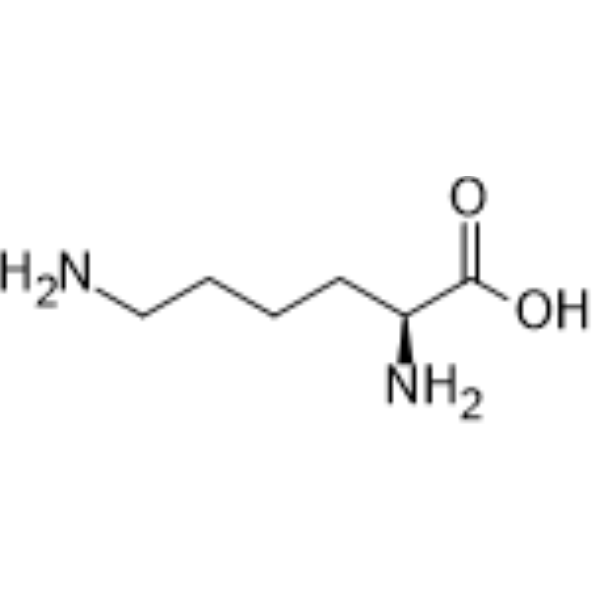
    L-Lysine
    5+ Cited Publications

    Endogenous Metabolite Virus Protease HSV Infection Metabolic Disease Inflammation/Immunology
    L-lysine is an essential amino acid for humans with orally activity. L-lysine can inhibit the occurrence of HSV infections and is used in herpes research. L-lysine increases calcium absorption, reduces diabetes-related diseases, improves gut health, and alleviates pancreatic inflammation. L-lysine can be used in research on metabolism, infection, and inflammation .
    L-Lysine
  • HY-Y0095

    2-Hydroxyethanesulfonic acid

    Environmental Pollutants Mitochondrial Metabolism Parasite Metabolic Disease
    Isethionic acid is a calcium binder and anionic detergent that enhances mitochondrial calcium binding capacity by competitively binding to calcium binding sites on the outer mitochondrial membrane. Isethionic acid can inhibit calcium-activated mitochondrial respiration. Isethionic acid inhibits barnacle (Balanus amphitrite) larvae with LC50s of 23 μg/mL (24 h) and 17 μg/mL (48 h), respectively. Isethionic acid can inhibit the attachment of barnacle larvae (complete inhibition at 10 μg/mL) and regulate mitochondrial calcium transport, and can enhance ATP-dependent calcium uptake at high calcium concentrations. Isethionic acid can be used to study the mechanism of mitochondrial calcium metabolism.
    Isethionic acid (80% in water)
  • HY-W015954

    Endogenous Metabolite Calcium Channel Bacterial Infection Metabolic Disease
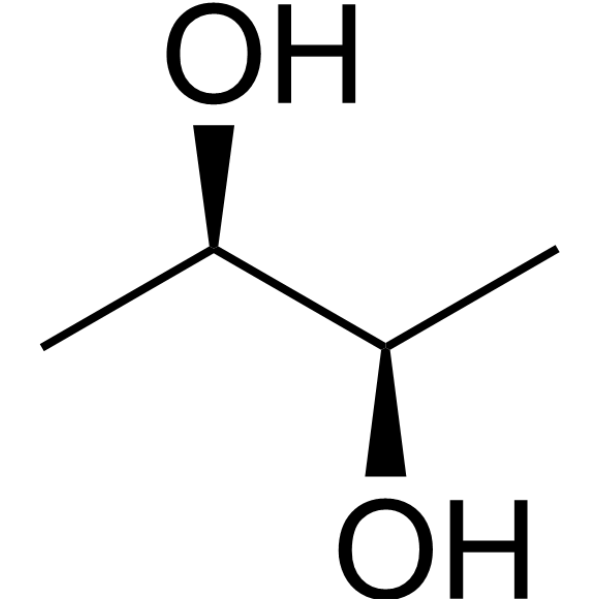
    (2R,3R)-Butane-2,3-diol is a non-covalent, reversible agonist targeting lanthanum (La 3+)-sensitive calcium channels in bacteria (e.g., Escherichia coli) with an EC50 of approximately 25 mM. (2R,3R)-Butane-2,3-diol binds to calcium channel proteins or related complexes, induces channel opening, promotes extracellular calcium influx, and triggers intracellular calcium transients, which may regulate bacterial physiological activities such as growth, metabolism, and signal transduction. (2R,3R)-Butane-2,3-diol mediates bacterial-host cell signaling interactions and affects the metabolic balance of intestinal microorganisms, and can be used to study lactose intolerance and other related diseases .
    (2R,3R)-Butane-2,3-diol
  • HY-14401

    CLTX-305; JTT-305; MK-5442

    CaSR Thyroid Hormone Receptor Metabolic Disease Inflammation/Immunology
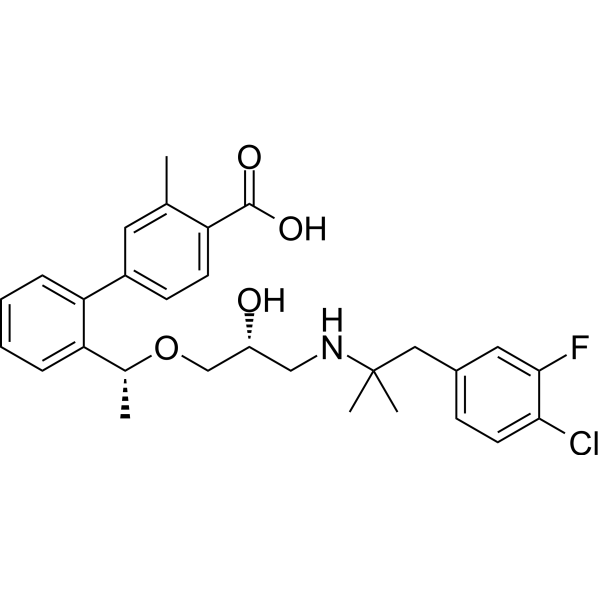
    Encaleret (CLTX-305) is an orally active antagonist of the calcium-sensing receptor (CaSR), with an IC50 of 12 nM. Encaleret exerts its effect by inhibiting the excessive activity of functional gain-of-function CaSR variants, and can restore blood calcium levels, promote the secretion of parathyroid hormone, improve magnesium and phosphorus metabolism, and increase urinary calcium excretion. Encaleret can be used in the research of diseases such as osteoporosis and autosomal dominant hypocalcemia type 1 .
    Encaleret
  • HY-N0546
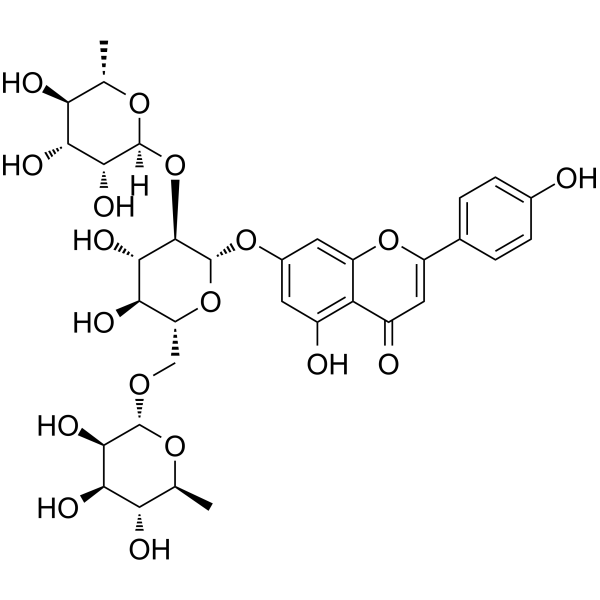
    Ligustroflavone
    2 Publications Verification

    Nuezhenoside

    CaSR RIP kinase Mixed Lineage Kinase TGF-beta/Smad Cardiovascular Disease Neurological Disease Metabolic Disease Endocrinology
    Ligustroflavone is an orally active flavonoid compound. Ligustroflavone can be extracted from Ligustrum lucidum. Ligustroflavone antagonizes the calcium-sensing receptor (CaSR), inhibits the RIPK1/RIPK3/MLKL pathway, and downregulates TGF-β/Smad signaling. Ligustroflavone regulates calcium metabolism, protects bone tissue, reduces cerebral ischemic injury, and inhibits liver fibrosis. Ligustroflavone can be used in the study of diabetic osteoporosis, ischemic stroke, and liver fibrosis .
    Ligustroflavone
  • HY-W110927

    Biochemical Assay Reagents Fluorescent Dye Others
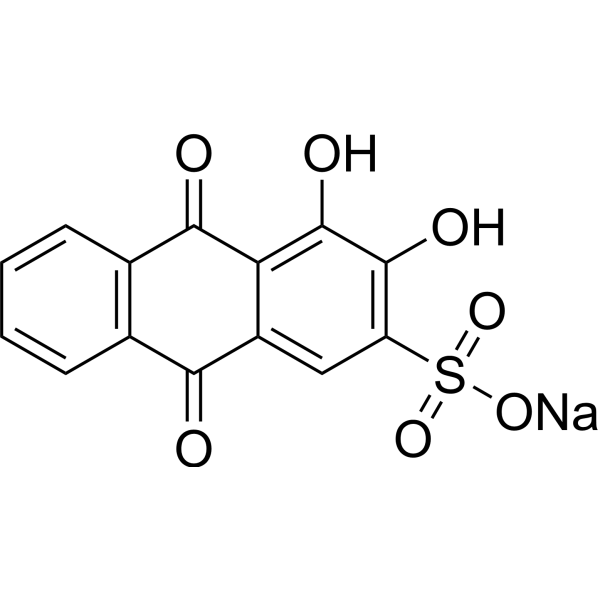
    Alizarin red S indicator (C.I. 58005) is a reductively active (quinone-based) anthraquinone dye that forms complexes with metal ions (such as zirconium, calcium) or boric acid to label calcium deposition and perform electrochemical sensing functions. Alizarin Red S undergoes reversible redox reactions (for electrochemical detection) and irreversible chelation (for bone staining). Alizarin Red S is mainly used in bone metabolism research (labeling mineralized tissue), sugar detection (boric acid-sugar competition system) and metal ion sensing (such as zirconium ion detection), and can be used in osteoporosis and metabolic disease research .
    Alizarin Red S Indicator (4.3-6.3), IND
  • HY-113355

    Endogenous Metabolite Apoptosis Neurological Disease Inflammation/Immunology Endocrinology
    NADH is an orally active dehydrogenase coenzyme that acts as a crucial electron carrier in cellular respiration and participates in ATP production. NADH promotes metabolism, supports brain function, and counteracts oxidative stress by transferring electrons to the electron transport chain. As a signaling molecule, NADH regulates multiple biological processes, including anti-apoptosis, synaptic plasticity, gene expression, and calcium homeostasis. Redox imbalance of NADH/NAD⁺ is one of the key pathological mechanisms of various diseases, such as diabetic nephropathy, neurodegenerative diseases, and ischemia-reperfusion injury.
    NADH
  • HY-113285

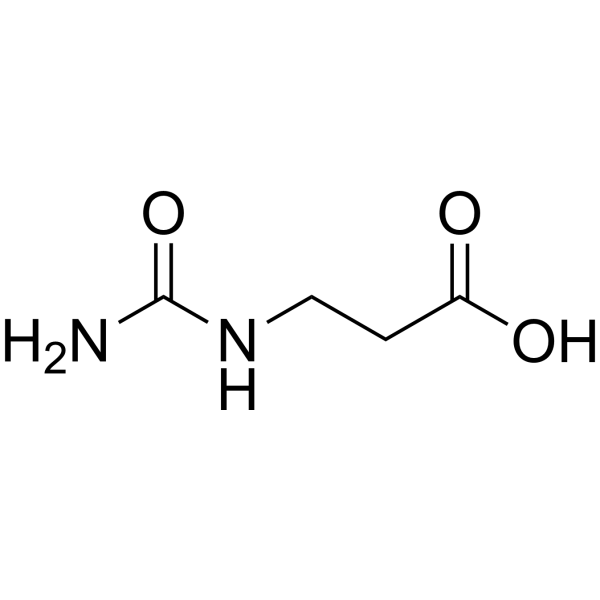
    3-Ureidopropionic acid

    Oxidative Phosphorylation Reactive Oxygen Species (ROS) Metabolic Disease
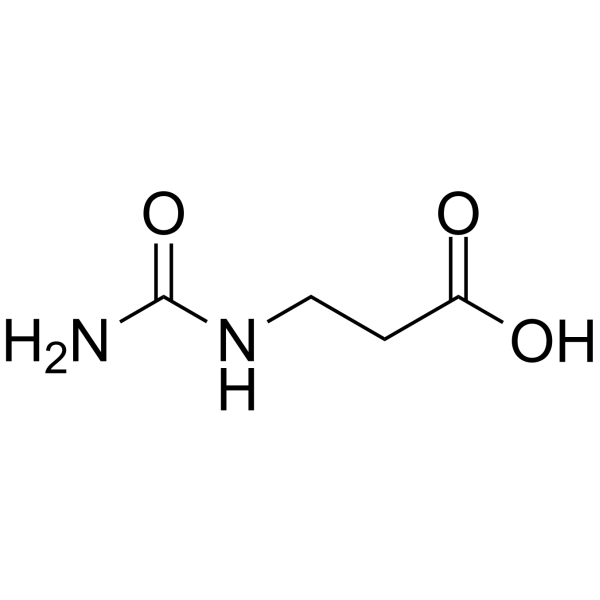
    Ureidopropionic acid (3-Ureidopropionic acid) is a selective mitochondrial respiratory chain complex V inhibitor. Ureidopropionic acid induces the production of reactive oxygen species, delayed elevation of intracellular calcium concentration, secondary energy-dependent excitotoxicity and neurodegeneration in neurons. Ureidopropionic acid promotes neuropathological changes by impairing mitochondrial energy metabolism, oxidative stress and excitotoxicity pathways. Ureidopropionic acid can be used in studies related to 3-ureidopropionase deficiency and severe propionic aciduria .
    Ureidopropionic acid
  • HY-D1249

    Fluorescent Dye Others
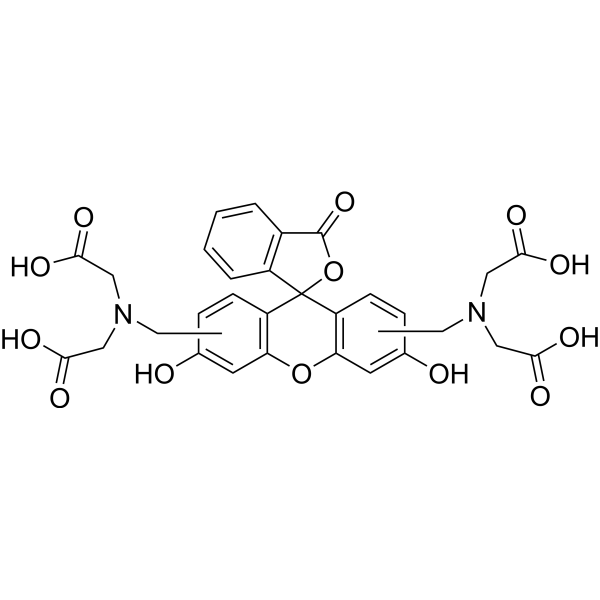
    Calcein (mixture of isomers), Calcein (HY-D0040) Derivative, is a fluorescent dye (Ex/Em = 495/515 nm). Calcein (mixture of isomers) can be used for the researches for live cell staining, calcium ion detection, bone fluorescence labeling and membrane permeability leakage detection.
    Calcein (mixture of isomers)
  • HY-Y0708

    calcium phosphate dihydrate

    Biochemical Assay Reagents Others
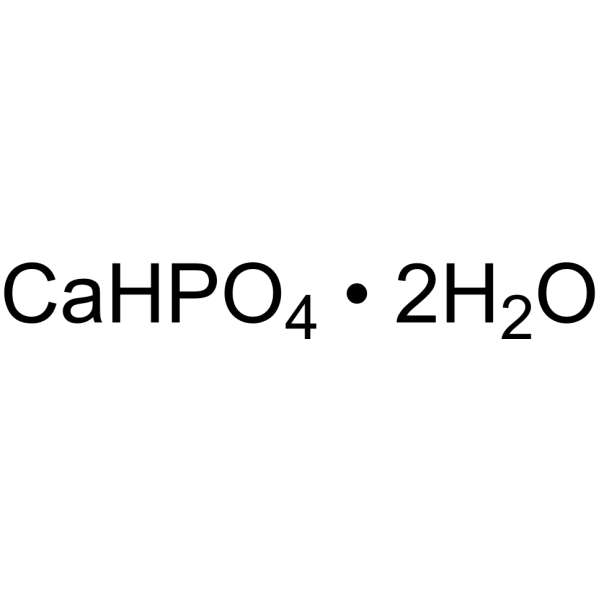
    Calcium hydrogen phosphate dihydrate (Calcium phosphate dihydrate) can be found quite frequently in urinary calculi stones. Calcium hydrogen phosphate dihydrate can be used as an excipient, such as diluent, adsorbent. Pharmaceutical excipients, or pharmaceutical auxiliaries, refer to other chemical substances used in the pharmaceutical process other than pharmaceutical ingredients. Pharmaceutical excipients generally refer to inactive ingredients in pharmaceutical preparations, which can improve the stability, solubility and processability of pharmaceutical preparations. Pharmaceutical excipients also affect the absorption, distribution, metabolism, and elimination (ADME) processes of co-administered drugs .
    Calcium hydrogen phosphate dihydrate
  • HY-B1647

    Insecticide Others
    Ferric phosphate is used as food and feed supplement, particularly in bread enrichment. Ferric phosphate is also used as a fertilizer and as a molluscicide for a variety of slugs and snails including Deroceras reticulatum, D.laeve, Arion subfuscus .
    Ferric phosphate
  • HY-21191

    PFBS

    Biochemical Assay Reagents PPAR Reactive Oxygen Species (ROS) Metabolic Disease
    Perfluorobutanesulfonic acid (PFBS) is a short-chain perfluoroalkyl substance and the main replacement for perfluorooctanesulfonic acid. Perfluorobutanesulfonic acid induces fat accumulation in human HepG2 hepatoma cells. Perfluorobutanesulfonic acid promotes lipid accumulation by activating PPARγ pathway and triggering oxidative stress, endoplasmic reticulum stress and calcium dyshomeostasis. Perfluorobutanesulfonic acid impairs reproduction and causes developmental disorders in offspring of Caenorhabditis elegans. Perfluorobutanesulfonic acid disrupts pancreatic organogenesis and lipid homeostasis in zebrafish embryos. Perfluorobutanesulfonic acid can be used in environmental toxicology, lipid metabolism and developmental toxicity studies .
    Perfluorobutanesulfonic acid
  • HY-P4821

    PTHR Adenylate Cyclase Phospholipase Metabolic Disease Cancer
    PTH (1-34) amide human is a type 1 PTH/PTHrP receptor agonist. PTH (1-34) amide human activates adenylate cyclase and phospholipase C pathways, thereby mediating mineral ion homeostasis and bone metabolism regulation. PTH (1-34) amide human increases serum calcium, decreases serum phosphorus, regulates renal excretion, while inducing the inhibition of endogenous PTH (1-84) and the increase of 1,25-dihydroxyvitamin D2 and bone resorption. PTH (1-34) amide human stimulates phosphatidylcholine hydrolysis via phospholipase D mediation, and its hypercalcemic effect is inhibited by human PTH-(7-84). PTH (1-34) amide human can be used in the research of diseases related to humoral hypercalcemia of malignancy .
    pTH (1-34) amide (human)
  • HY-N0469R

    Reference Standards Endogenous Metabolite Virus Protease HSV Infection Metabolic Disease Inflammation/Immunology
    L-Lysine (Standard) is the analytical standard of L-Lysine. This product is intended for research and analytical applications. L-lysine is an essential amino acid for humans with orally activity. L-lysine can inhibit the occurrence of HSV infections and is used in herpes research. L-lysine increases calcium absorption, reduces diabetes-related diseases, improves gut health, and alleviates pancreatic inflammation. L-lysine can be used in research on metabolism, infection, and inflammation . IC50 & Target:L-lysine (150 mg/kg) promotes, but not initiates, bladder cancer. The administration of L-lysine to rats submitted to colovesical cystoplasty accelerates the development of transitional metaplasia of the intestinal epithelium .
    L-lysine (10 mg/kg) treatment attenuates pancreatic tissue injury induced by L-arginine by inhibiting the release of the inflammatory cytokine IL-6 and enhance antioxidant activity . In Vivo:L-lysine (10?mg/kg, p.o., pre-treated or post-treated, administration duration 15 days) treatment attenuates pancreatic tissue injury induced by L-arginine by inhibiting the release of the inflammatory cytokine IL-6 and enhance antioxidant activity in acute pancreatitis mice model . L-lysine (5 or 10?mg/kg, p.o., 45 days) ameliorates sepsis-induced acute lung injury in a lipopolysaccharide (HY-D1056)-induced mouse model .
    L-Lysine (Standard)
  • HY-128696

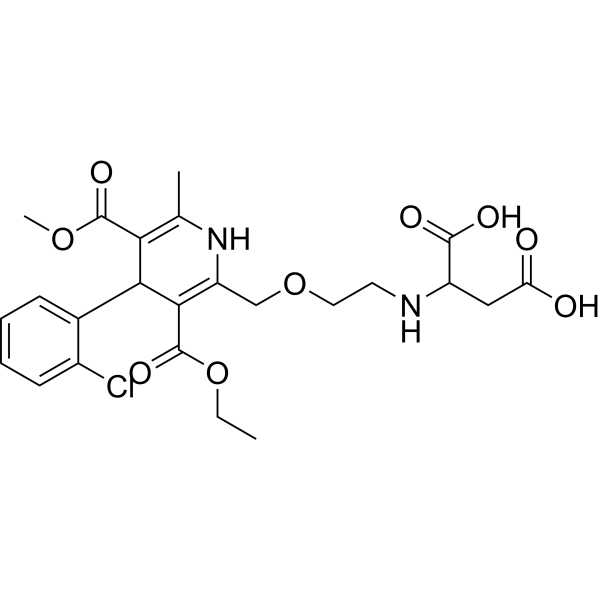
    Amlodipine aspartate

    Drug Metabolite Calcium Channel Cardiovascular Disease
    Amlodipine aspartic acid impurity (Amlodipine aspartate) is the impurity of Amlodipine aspartic acid. Amlodipine aspartic acid is a calcium channel blocker with antihypertensive and antianginal properties. Amlodipine aspartic acid impurity can control blood pressure. Amlodipine aspartic acid impurity corrects gut dysbiosis and enhances taurine and hypotaurine metabolism. Amlodipine aspartic acid impurity can be studied in research for NAFLD and hypertension .
    Amlodipine aspartic acid impurity
  • HY-109051A

    Endogenous Metabolite Others
    Arfolitixorin calcium is a bioactive compound that acts as an enzyme substrate. Arfolitixorin calcium is used as a substrate for methylenetetrahydrofolate reductase to generate 5-methyltetrahydrofolate. Arfolitixorin calcium may have potential applications in neurobiological research, particularly in studies related to gene expression and metabolism. Research on arfolitixorin calcium helps reveal the functional genetics of bird genes .
    Arfolitixorin calcium
  • HY-154635

    Biochemical Assay Reagents Others
    Oxidized paraffin (calcium) can be used as an excipient, such as ointment base, hardening agent. Pharmaceutical excipients, or pharmaceutical auxiliaries, refer to other chemical substances used in the pharmaceutical process other than pharmaceutical ingredients. Pharmaceutical excipients generally refer to inactive ingredients in pharmaceutical preparations, which can improve the stability, solubility and processability of pharmaceutical preparations. Pharmaceutical excipients also affect the absorption, distribution, metabolism, and elimination (ADME) processes of co-administered drugs .
    Oxidized paraffin calcium
  • HY-W015954R

    Reference Standards Endogenous Metabolite Calcium Channel Bacterial Infection Metabolic Disease
    (2R,3R)-Butane-2,3-diol (Standard) is the analytical standard of (2R,3R)-Butane-2,3-diol (HY-W015954). This product is intended for research and analytical applications. (2R,3R)-Butane-2,3-diol is a non-covalent, reversible agonist targeting lanthanum (La 3+)-sensitive calcium channels in bacteria (e.g., Escherichia coli) with an EC50 of approximately 25 mM. (2R,3R)-Butane-2,3-diol binds to calcium channel proteins or related complexes, induces channel opening, promotes extracellular calcium influx, and triggers intracellular calcium transients, which may regulate bacterial physiological activities such as growth, metabolism, and signal transduction. (2R,3R)-Butane-2,3-diol mediates bacterial-host cell signaling interactions and affects the metabolic balance of intestinal microorganisms, and can be used to study lactose intolerance and other related diseases .
    (2R,3R)-Butane-2,3-diol (Standard)
  • HY-113285R

    3-Ureidopropionic acid (Standard)

    Reference Standards Oxidative Phosphorylation Reactive Oxygen Species (ROS) Others
    Ureidopropionic acid (Standard) is the analytical standard of Ureidopropionic acid. This product is intended for research and analytical applications. Ureidopropionic acid (3-Ureidopropionic acid) is a selective mitochondrial respiratory chain complex V inhibitor. Ureidopropionic acid induces the production of reactive oxygen species, delayed elevation of intracellular calcium concentration, secondary energy-dependent excitotoxicity and neurodegeneration in neurons. Ureidopropionic acid promotes neuropathological changes by impairing mitochondrial energy metabolism, oxidative stress and excitotoxicity pathways. Ureidopropionic acid can be used in studies related to 3-ureidopropionase deficiency and severe propionic aciduria .
    Ureidopropionic acid (Standard)
  • HY-N5034A

    Monoaminoethyl phosphate calcium; NSC 254167 calcium; O-Phosphoethanolamine calcium

    Liposome Others
    Phosphoethanolamine (calcium) (Monoaminoethyl phosphate (calcium); NSC 254167 (calcium); O-Phosphoethanolamine (calcium)) is a precursor to phosphatidylethanolamine and can be used in the synthesis of phosphatidylcholine. Phosphoethanolamine (calcium) is used in the study of phospholipid metabolism and cell membrane structure .
    Phosphoethanolamine calcium
  • HY-N0546R

    Nuezhenoside (Standard)

    Reference Standards CaSR RIP kinase Mixed Lineage Kinase TGF-beta/Smad Cardiovascular Disease Neurological Disease Metabolic Disease Endocrinology
    Ligustroflavone (Standard) is the analytical standard of Ligustroflavone (HY-N0546). This product is intended for research and analytical applications. Ligustroflavone is an orally active flavonoid compound. Ligustroflavone can be extracted from Ligustrum lucidum. Ligustroflavone antagonizes the calcium-sensing receptor (CaSR), inhibits the RIPK1/RIPK3/MLKL pathway, and downregulates TGF-β/Smad signaling. Ligustroflavone regulates calcium metabolism, protects bone tissue, reduces cerebral ischemic injury, and inhibits liver fibrosis. Ligustroflavone can be used in the study of diabetic osteoporosis, ischemic stroke, and liver fibrosis .
    Ligustroflavone (Standard)
  • HY-154704

    Biochemical Assay Reagents Others
    Calcium carboxymethyl cellulose can be used as an excipient. Pharmaceutical excipients, or pharmaceutical auxiliaries, refer to other chemical substances used in the pharmaceutical process other than pharmaceutical ingredients. Pharmaceutical excipients generally refer to inactive ingredients in pharmaceutical preparations, which can improve the stability, solubility and processability of pharmaceutical preparations. Pharmaceutical excipients also affect the absorption, distribution, metabolism, and elimination (ADME) processes of co-administered drugs .
    Calcium carboxymethyl cellulose
  • HY-174377

    Androgen Receptor p38 MAPK Caspase Cytochrome P450 Calcium Channel Reactive Oxygen Species (ROS) Apoptosis Mitochondrial Metabolism GLUT Cancer

    PeS-9 is an Androgen Receptor (AR) degrader that induces androgen receptor degradation PeS-9 induces mitochondrial and ER stress by promoting cytotoxic ROS production, leading to the release of mitochondrial cytochrome C and AIF. PeS-9 subsequently activates caspases-9 and -3, causing DNA fragmentation and apoptotic cell death. PeS-9 has anticancer activity against prostate cancer and exerts in vivo antitumor and antimetastatic activity with minor side effects. PeS-9 can be used for the study of targeting monotherapy against GLUT-1-overexpressing tumors .

    PeS-9
  • HY-P10237

    Calcium Channel Others
    Calcitonin chicken is a hormone, that regulates calcium metabolism. Calcitonin chicken suppresses the cell motility and bone resorption in neonatal rat osteoclasts .
    Calcitonin (chicken)
  • HY-130497

    12-Oxo-LTB4

    Endogenous Metabolite Inflammation/Immunology
    12-Oxo-leukotriene B4 (12-Oxo-LTB4) is an intermediate in the lipoxygenase-catalyzed path of Arachidonic acid (HY-109590) metabolism. 12-Oxo-leukotriene B4 is crucial in Leukotriene B4 metabolism and is involved in inflammation reactions . 12-Oxo-leukotriene B4 stimulates calcium levels in human neutrophils with an EC50 of 33 nM. 12-Oxo-leukotriene B4 induces migration of neutrophils with EC50 of 170 nM .
    12-Oxo-leukotriene B4
  • HY-101390B

    Calcium Channel Cardiovascular Disease
    Niguldipine is a calcium channel blocker with activity in regulating cardiovascular function. Niguldipine can reduce systolic and diastolic blood pressure, thereby increasing heart rate and cardiac output. Niguldipine exhibits dose-dependent and sustained increases in coronary blood flow. Niguldipine also increases perfusion in the kidneys and femoral arteries, but the effect is temporary and to a lesser extent. The effect of Niguldipine on myocardial metabolism is not significant .
    Niguldipine
  • HY-128696R

    Amlodipine aspartate (Standard)

    Drug Metabolite Reference Standards Calcium Channel Cardiovascular Disease
    Amlodipine aspartic acid impurity (Amlodipine aspartate) (Standard) is the analytical standard of amlodipine aspartic acid impurity. This product is intended for research and analytical applications. Amlodipine aspartic acid impurity is the impurity of Amlodipine aspartic acid. Amlodipine aspartic acid is a calcium channel blocker with antihypertensive and antianginal properties. Amlodipine aspartic acid impurity can control blood pressure. Amlodipine aspartic acid impurity corrects gut dysbiosis and enhances taurine and hypotaurine metabolism. Amlodipine aspartic acid impurity can be studied in research for NAFLD and hypertension .
    Amlodipine aspartic acid impurity (Standard)
  • HY-186200

    PTHR Metabolic Disease
    PTHR1 antagonist 1 is a PTHR1 antagonist with an IC50 of 0.090 µM. PTHR1 antagonist 1 is applicable to the research of calcium metabolism disorders .
    PTHR1 antagonist 1
  • HY-14401B

    CLTX-305 sodium; JTT-305 sodium; MK-5442 sodium

    CaSR Thyroid Hormone Receptor Metabolic Disease
    Encaleret (CLTX-305) sodium is an orally active antagonist of the calcium-sensing receptor (CaSR), with an IC50 of 12 nM. Encaleret sodium exerts its effect by inhibiting the excessive activity of functional gain-of-function CaSR variants, and can restore blood calcium levels, promote the secretion of parathyroid hormone, improve magnesium and phosphorus metabolism, and increase urinary calcium excretion. Encaleret sodium can be used in the research of diseases such as osteoporosis and autosomal dominant hypocalcemia type 1 .
    Encaleret sodium
  • HY-P2992A

    Biochemical Assay Reagents Metabolic Disease
    Inorganic Pyrophosphatase, Bacillus stearothermophilus (EC 3.6.1.1) catalyzes the conversion of one molecule of pyrophosphate to two phosphate ions. The functionality of Inorganic Pyrophosphatase, Bacillus stearothermophilus (EC 3.6.1.1) plays a critical role in lipid metabolism (including lipid synthesis and degradation), calcium absorption and bone formation, and DNA synthesis,as well as other biochemical transformations.
    Inorganic Pyrophosphatase, Bacillus stearothermophilus

Inquiry Online

Your information is safe with us. * Required Fields.

Salutation


Country or Region *

Applicant Name *


Organization Name *

Department *


Email Address *


Product Name *

Cat. No.


Requested quantity *

Phone Number *


Remarks

Inquiry Online

Inquiry Information

Product Name:
Cat. No.:
Quantity:
MCE Japan Authorized Agent:

