1. Search Result
Search Result
Results for "

calcium solution

" in MedChemExpress (MCE) Product Catalog:

54

Inhibitors & Agonists

5

Fluorescent Dyes

40

Biochemical Assay Reagents

4

Peptides

7

MCE Kits

5

Recombinant Proteins

1

Isotope-Labeled Compounds

1

Oligonucleotides

Cat. No. Product Name Target Research Areas Chemical Structure
  • HY-P1363
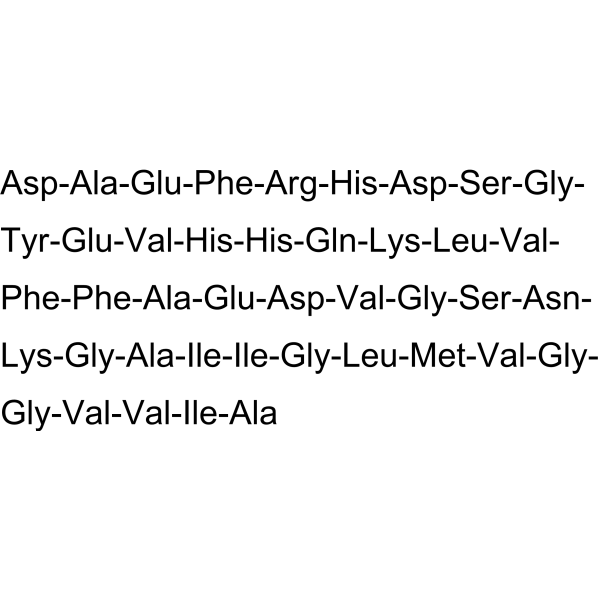
    β-Amyloid (1-42), human TFA
    Maximum Cited Publications
    24 Publications Verification

    Amyloid β-peptide (1-42) (human) TFA

    Amyloid-β Neurological Disease
    β-Amyloid (1-42) (Amyloid β-peptide (1-42), human TFA, a 42-amino acid peptide that has not been treated with HFIP, is a brain-penetrant amyloid protein fragment, which can be used in research on Alzheimer's disease and Down’s syndrome. β-Amyloid (1-42), human TFA remaining as a monomer exhibits antioxidant and neuroprotective effects. β-Amyloid (1-42), human TFA, after being monomericized by HFIP and dissolved in DMSO to form the stock solution, on the one hand, can form soluble oligomers (AβOs) when incubated at 4 °C, which have synaptic toxicity and neurotoxicity; on the other hand, it can be incubated at 37 °C to form insoluble fibrils, with lower neurotoxicity, and participating in the oxidative damage process. Aβ42 oligomers bind to various neuronal surface receptors (such as PrPc, mGluR5, NMDA receptors, etc.), triggering oxidative stress, calcium homeostasis imbalance, and synaptic toxicity via activating downstream signaling pathways, leading to neuronal dysfunction and death .
    β-Amyloid (1-42), human TFA
  • HY-P1363A
    β-Amyloid (1-42), human
    Maximum Cited Publications
    24 Publications Verification

    Amyloid β-peptide (1-42) (human)

    Amyloid-β Neurological Disease
    β-Amyloid (1-42) (Amyloid β-peptide (1-42)), human, a 42-amino acid peptide that has not been treated with HFIP, is a brain-penetrant amyloid protein fragment, which can be used in research on Alzheimer's disease and Down’s syndrome. β-Amyloid (1-42), human remaining as a monomer exhibits antioxidant and neuroprotective effects. β-Amyloid (1-42), human, after being monomericized by HFIP and dissolved in DMSO to form the stock solution, on the one hand, can form soluble oligomers (AβOs) when incubated at 4 °C, which have synaptic toxicity and neurotoxicity; on the other hand, it can be incubated at 37 °C to form insoluble fibrils, with lower neurotoxicity, and participating in the oxidative damage process. Aβ42 oligomers bind to various neuronal surface receptors (such as PrPc, mGluR5, NMDA receptors, etc.), triggering oxidative stress, calcium homeostasis imbalance, and synaptic toxicity via activating downstream signaling pathways, leading to neuronal dysfunction and death .
    β-Amyloid (1-42), human
  • HY-P1363B
    β-Amyloid (1-42), human, HFIP-treated
    Maximum Cited Publications
    24 Publications Verification

    Amyloid-β Neurological Disease
    β-Amyloid (1-42), human, HFIP-treated, a 42-amino acid peptide that has been treated with HFIP from β-Amyloid (1-42), human (HY-P1363A), is a brain-penetrant amyloid protein fragment, which can be used in research on Alzheimer's disease and Down’s syndrome. β-Amyloid (1-42), human, HFIP-treated remaining as a monomer exhibits antioxidant and neuroprotective effects. β-Amyloid (1-42), human, HFIP-treated, after being dissolved in DMSO to form the stock solution, on the one hand, can form soluble oligomers (AβOs) when incubated at 4°C, which have synaptic toxicity and neurotoxicity; on the other hand, it can be incubated at 37°C to form insoluble fibrils, with lower neurotoxicity, and participating in the oxidative damage process. Aβ42 oligomers bind to various neuronal surface receptors (such as PrPc, mGluR5, NMDA receptors, etc.), triggering oxidative stress, calcium homeostasis imbalance, and synaptic toxicity via activating downstream signaling pathways, leading to neuronal dysfunction and death .
    β-Amyloid (1-42), human, HFIP-treated
  • HY-107921

    EDTA calcium disodium salt,98%; Adsorbonac,98%

    Environmental Pollutants Biochemical Assay Reagents Others
    EDTA Calcium disodium, 98% (EDTA calcium disodium salt, 98%; Adsorbonac, 98%) is a chelating agent for calcium and other metal ions, preventing them from participating in chemical reactions. It can effectively remove metal ions from solutions, preventing them from interfering with experimental processes.
    EDTA Calcium disodium,98%
  • HY-DY1028

    Fluorescent Dye Others
    Fluo-4 AM (solution) is a cell-permeable Ca 2+ (calcium ion) indicator (Ex/Em = 485/526 nm) .
    Solvent and concentration: DMSO: 1 mM
    Fluo-4 AM (solution)
  • HY-132184

    5,6-EET; (±)5,6-EpETrE

    Adrenergic Receptor Calcium Channel Endocrinology
    5,6-Epoxyeicosatrienoic acid (5,6-EET; (±)5,6-EpETrE) is a fully racemic version of the enantiomeric forms biosynthesized from arachidonic acid by cytochrome P450 enzymes. In solution, 5,6-Epoxyeicosatrienoic acid degrades into 5,6-DiHET and 5,6-δ-lactone, which can be converted to 5,6-DiHET and quantified by GC-MS. In neuroendocrine cells, such as the anterior pituitary and pancreatic islets, 5,6-Epoxyeicosatrienoic acid has been implicated in the mobilization of calcium and hormone secretion. 5,6-Epoxyeicosatrienoic acid is an inhibitor of T-type voltage-gated calcium channels (Cav3) that inhibits isoforms Cav3.1, Cav3.2 (IC50=0.54 μM), and Cav3. and decreases nifedipine-resistant phenylephrine-induced vasoconstriction in isolated mouse mesenteric arteries via Cav3.2 blockade when used at a concentration of 3 μM. In addition, it is a substrate of COX-1 and COX-2.
    5,6-Epoxyeicosatrienoic acid
  • HY-158976

    Lactated ringer's solution (LRS)

    Biochemical Assay Reagents Collagen HSP Inflammation/Immunology
    Sodium lactate ringer's solution (Lactated ringer's solution (LRS)) is an isotonic crystal intravenous injection and arthroscopic irrigation solution containing racemic sodium lactate and electrolytes such as sodium, potassium, calcium and chloride (130 mEq sodium/L, 274 mOsm/L), which can be used as a cell integrity protectant. Sodium lactate ringer's solution maintains the integrity of human meniscus cells, ensures that they retain normal cell morphology, membrane regularity, size and density, and does not alter the mRNA expression levels of α1 (I) procollagen, α1 (II) procollagen, aggrecan or HSP70. Sodium lactate ringer's solution can be applied to studies related to extracellular fluid deficiency and meniscus tears .
    Sodium lactate ringer's solution
  • HY-W111692

    Biochemical Assay Reagents Others
    Sodium polyphosphate, crystal,+200 mesh, 96% is an inorganic polyphosphate that also serves as a stabilizer, dispersant, chelating agent, and coacervate-forming agent. Sodium polyphosphate provides electrostatic stabilization for mineral and material suspensions, but its dispersing efficacy decreases under acidic pH, high temperature, high calcium concentration, or a combination of these conditions. Sodium polyphosphate can chelate alkaline earth metals, reduce solution pH, and alter the rate of pH decline at a divalent cation/phosphorus molar ratio of 0.18. Sodium polyphosphate forms coacervates with smaller divalent cations and precipitates with larger divalent cations, where the functional requirements of cations depend on polyphosphate concentration, average degree of polymerization, and cation type .
    Sodium polyphosphate, crystal,+200 mesh, 96%
  • HY-W151206

    Fluorescent Dye Others
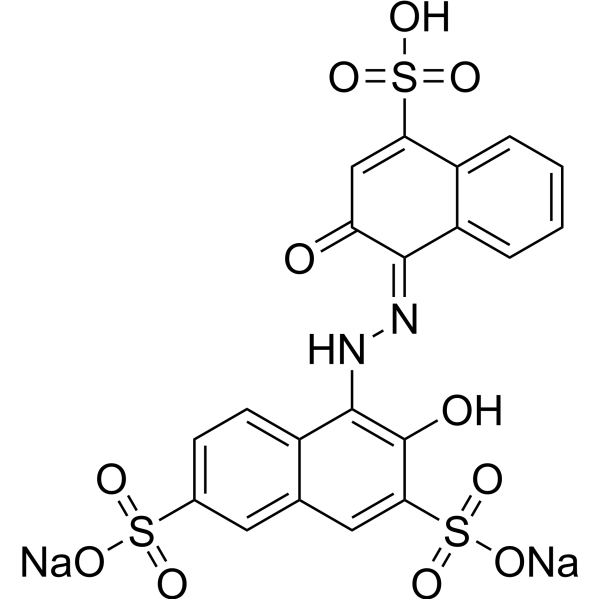
    Hydroxy naphthol blue disodium is an azo dye compound commonly used as an acid-base indicator (λmax = 650 nm). Within the pH range of 12 to 13, the indicator solution of Hydroxy naphthol blue disodium appears pale red in the presence of calcium ions and dark blue in the presence of disodium EDTA .
    Hydroxy naphthol blue disodium
  • HY-B2203

    Phosphatase Metabolic Disease
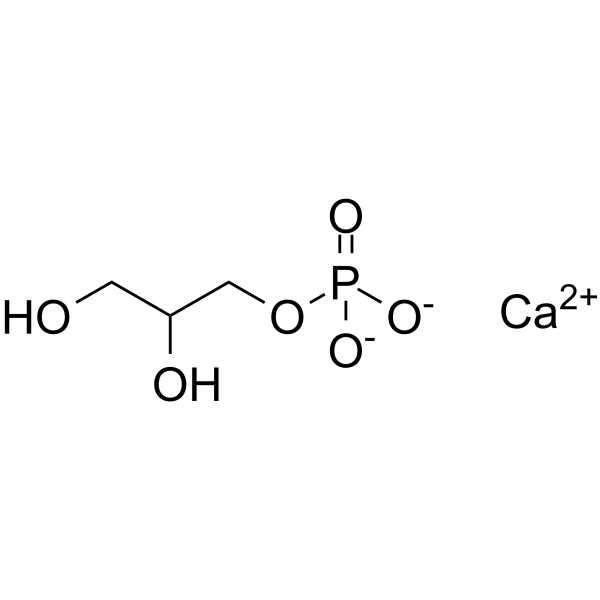
    Monocalcium glycerophosphate is an inhibitor of intestinal alkaline phosphatase F3, and it has anti-cavity properties. Monocalcium glycerophosphate is a source of calcium and phosphorus in total parenteral nutrition solutions, helps prevent the mineralization and development of bones from intravenous nutrition, and maintains the integrity of the intestinal epithelium .
    Monocalcium glycerophosphate
  • HY-W133934A

    Biochemical Assay Reagents Others
    EDTA magnesium disodium, 99% is a chelating agent with the ability to effectively bind metal ions (including calcium, magnesium, and iron) and remove them from solution.
    EDTA magnesium disodium,99%
  • HY-157657

    Diphosphatidylglycerol sodium salt; 16:1 Cardiolipin sodium salt; 64:4-CL sodium salt

    Liposome Others
    Cardiolipin (16:1/16:1/16:1/16:1) sodium salt is an anionic phospholipid that promote hydroxyapatite crystallization and supersaturation in a calcium solution .
    Cardiolipin (16:1/16:1/16:1/16:1) sodium salt
  • HY-Y1175A

    Biochemical Assay Reagents Others
    Calcium acetate monohydrate, ACS, 99% is a monohydrate form of calcium acetate used to precipitate oxalates in solution; it also serves as a stabilizer, buffer, and chelating agent.
    Calcium acetate monohydrate,ACS, 99%
  • HY-179182

    Biochemical Assay Reagents Others
    Hoagland Nutrient Solution (Calcium nitrate-Free) is a nutrient solution for hydroponics of plants .
    Hoagland Nutrient Solution Calcium nitrate-Free
  • HY-179182A

    Biochemical Assay Reagents Others
    Hoagland Nutrient Solution (Phosphorus-Free, Calcium nitrate-Free) is a nutrient solution for hydroponics of plants .
    Hoagland Nutrient Solution Phosphorus-Free, Calcium nitrate-Free
  • HY-P1363S1

    Isotope-Labeled Compounds Amyloid-β Neurological Disease
    β-Amyloid (1-42), human, Ala( 13C3, 15N) TFA is the 13C and 15N-labeled β-Amyloid (1-42), human (HY-P1363A). β-Amyloid (1-42) (Amyloid β-peptide (1-42)), human, a 42-amino acid peptide that has not been treated with HFIP, is a brain-penetrant amyloid protein fragment, which can be used in research on Alzheimer's disease and Down’s syndrome. β-Amyloid (1-42), human remaining as a monomer exhibits antioxidant and neuroprotective effects. β-Amyloid (1-42), human, after being monomericized by HFIP and dissolved in DMSO to form the stock solution, on the one hand, can form soluble oligomers (AβOs) when incubated at 4 °C, which have synaptic toxicity and neurotoxicity; on the other hand, it can be incubated at 37 °C to form insoluble fibrils, with lower neurotoxicity, and participating in the oxidative damage process. Aβ42 oligomers bind to various neuronal surface receptors (such as PrPc, mGluR5, NMDA receptors, etc.), triggering oxidative stress, calcium homeostasis imbalance, and synaptic toxicity via activating downstream signaling pathways, leading to neuronal dysfunction and death .
    β-Amyloid (1-42), human, Ala(13C3,15N) TFA
  • HY-136677

    Calcium Channel Cardiovascular Disease
    LND 796 is an aminosteroidal derivative with positive inotropic effects similar to those of digitalis. It exhibits electrophysiological, toxic, and inotropic effects in normal and partially potassium-depolarized ventricular muscles. LND 796 requires higher concentrations than digoxin to induce the same toxic symptoms. It exhibits a concentration-dependent positive inotropic effect on guinea pig papillary muscles in normal potassium solution. In partially potassium-depolarized papillary muscles, LND 796 enhances both components of contraction and increases the amplitude of slow action potentials. The mechanism of positive inotropic action of LND 796 involves enhanced calcium entry in calcium channels and inhibition of sodium-potassium ATPase. Due to its expanded positive inotropic range, LND 796 may have potential application in the treatment of congestive heart failure.
    Lnd 796
  • HY-179182B

    Biochemical Assay Reagents Others
    Hoagland Nutrient Solution (Phosphorus deficiency, Calcium nitrate-Free) is a nutrient solution for hydroponics of plants .
    Hoagland Nutrient Solution Phosphorus deficiency, Calcium nitrate-Free
  • HY-130229

    (±)5,6-DiHETrE lactone

    Drug Derivative Cardiovascular Disease
    5,6-DiHET lactone ((±)5,6-DiHETrE lactone) is a lactonized form of 5,6-EET and 5,6-DiHET. In solution, 5(6)-EET degrades into 5(6)-DiHET and 5(6)-δ-lactone, which can be converted to 5(6)-DiHET and quantified by GC-MS.1 5,6-DiHET potently induces vasodilation of isolated canine coronary arterioles, with 41 and 100% inhibition occurring at 0.01 and 100 pM, respectively. It also induces vasodilation in isolated human microvessels and increases intracellular calcium levels in a dose-dependent manner, an effect that can be blocked by the nitric oxide scavenger L-NAME.
    (±)5,6-DHET lactone
  • HY-182733D

    Biochemical Assay Reagents Others
    Wheat Nutrient Solution is a nutrient solution specifically designed for hydroponics of wheat, composed of calcium salts, potassium salts, phosphates, magnesium sulfate, etc.
    Wheat Nutrient Solution
  • HY-182733J

    Biochemical Assay Reagents Others
    Strawberry Nutrient Solution is a nutrient solution specifically designed for hydroponics of strawberries, composed of calcium salts, ammonium salts, potassium salts, phosphates, magnesium sulfate, etc.
    Strawberry Nutrient Solution
  • HY-182733B

    Biochemical Assay Reagents Others
    Camellia Nutrient Solution is a nutrient solution specifically designed for hydroponically grown camellias, composed of calcium salts, ammonium salts, potassium salts, phosphates, magnesium sulfate, etc.
    Camellia Nutrient Solution
  • HY-182733I

    Biochemical Assay Reagents Others
    Tomato Nutrient Solution is a nutrient solution specifically designed for hydroponics of tomatoes, composed of calcium salts, ammonium salts, potassium salts, phosphates, magnesium sulfate, and other nutrients.
    Tomato Nutrient Solution
  • HY-182733H

    Biochemical Assay Reagents Others
    Rapeseed Nutrient Solution is a nutrient solution specifically designed for hydroponics of rapeseed, composed of calcium salts, ammonium salts, potassium salts, phosphates, magnesium sulfate, and other minerals.
    Rapeseed Nutrient Solution
  • HY-182733C

    Biochemical Assay Reagents Others
    Arabidopsis Thaliana Nutrient Solution is a nutrient solution specifically designed for the hydroponic cultivation of Arabidopsis thaliana. It is composed of calcium salts, ammonium salts, potassium salts, phosphates, magnesium sulfate, and other nutrients.
    Arabidopsis Thaliana Nutrient Solution
  • HY-182652B

    Biochemical Assay Reagents Others
    ER Medium (With Sucrose) is mainly composed of potassium salts, calcium chloride, magnesium sulfate, phosphates, etc., and is a sterile solution.
    ER Medium (With Sucrose)
  • HY-182651A

    Biochemical Assay Reagents Others
    SH Medium (With Sucrose) is mainly composed of potassium salts, calcium chloride, magnesium sulfate, phosphates, etc., and is a sterile solution.
    SH Medium (With Sucrose)
  • HY-182651B

    Biochemical Assay Reagents Others
    SH Medium (With Sucrose, Agar) is mainly composed of potassium salts, calcium chloride, magnesium sulfate, phosphates, etc., and is a sterile solution.
    SH Medium (With Sucrose, Agar)
  • HY-182733E

    Biochemical Assay Reagents Others
    Cannabis Nutrient Solution is composed of calcium salts, potassium salts, phosphates, magnesium sulfate, etc., and can be used for hydroponics.
    Cannabis Nutrient Solution
  • HY-182652A

    Biochemical Assay Reagents Others
    ER Medium (With Sucrose, Agar) is mainly composed of potassium salts, calcium chloride, magnesium sulfate, phosphates, etc., and is a sterile solution.
    ER Medium (With Sucrose, Agar)
  • HY-182651

    Biochemical Assay Reagents Others
    SH Medium (Agar-Free, Sucrose-Free) is mainly composed of potassium salts, calcium chloride, magnesium sulfate, phosphates, etc., and is a sterile solution.
    SH Medium (Agar-Free, Sucrose-Free)
  • HY-182652

    Biochemical Assay Reagents Others
    ER Medium (Agar-Free, Sucrose-Free) is mainly composed of potassium salts, calcium chloride, magnesium sulfate, phosphates, etc., and is a sterile solution.
    ER Medium (Agar-Free, Sucrose-Free)
  • HY-182655

    Biochemical Assay Reagents Others
    HE Medium (With Sucrose) is mainly composed of potassium salts, calcium chloride, magnesium sulfate, phosphates, etc. It is a sterile solution that can be used for plant culture.
    HE Medium (With Sucrose)
  • HY-172190C

    Biochemical Assay Reagents Others
    MS Medium (Calcium-Free) is a culture medium with a high concentration of inorganic salts and ions, making it a relatively stable balanced solution. The quantity and ratio of nutrients in MS Medium (Calcium-Free) are suitable to meet the nutritional and physiological needs of plants.
    MS Medium Calcium-Free
  • HY-182655A

    Biochemical Assay Reagents Others
    HE Medium (With Sucrose, Agar) is mainly composed of potassium salts, calcium chloride, magnesium sulfate, phosphates, etc. It is a sterile solution that can be used for plant culture.
    HE Medium (With Sucrose, Agar)
  • HY-Y0287B

    calcium carbonate Buffer solution, 0.1 M, pH 9.2

    Biochemical Assay Reagents Others
    Carbonate Buffer Solution, 0.1 M, pH 9.2, is mainly composed of sodium carbonate and sodium bicarbonate. Its carbonate content is 0.1 M and its pH value is 9.2. It is mainly used as a buffer for enzyme-antibody coupling or other routine applications.
    Carbonate Buffer Solution, 0.1 M, pH 9.2
  • HY-DY1101

    Fura-2 Acetoxymethyl ester (solution)

    Fluorescent Dye Others
    Fura-2 AM (solution) (Fura-2 Acetoxymethyl ester (solution)) is a membrane permeable, intracellular, UV light-excitable and ratiometric fluorescent Ca 2+ (calcium ion) indicator. Fura-2 AM crosses cell membranes and is converted to Fura-2 (HY-D0110A) via cellular esterases. Fura-2 AM can be used to detect calcium in cells.
    Solvent and concentration: DMSO: 1 mM
    Fura-2 AM (solution)
  • HY-182655B

    Biochemical Assay Reagents Others
    HE Medium (Agar-Free, Sucrose-Free) is mainly composed of potassium salts, calcium chloride, magnesium sulfate, phosphates, etc. It is a sterile solution that can be used for plant culture.
    HE Medium (Agar-Free, Sucrose-Free)
  • HY-179187B

    Biochemical Assay Reagents Others
    NT Medium (Agar-Free, Sucrose-Free) is mainly composed of potassium salts, calcium chloride, magnesium sulfate, phosphates, etc., and is a sterile solution after autoclaving. This product contains sucrose.
    NT Medium (With Sucrose)
  • HY-179187C

    Biochemical Assay Reagents Others
    NT Medium (Agar-Free, Sucrose-Free) is mainly composed of potassium salts, calcium chloride, magnesium sulfate, phosphates, etc., and is a sterile solution after autoclaving. This product contains agar and sucrose.
    NT Medium (With Sucrose, Agar)
  • HY-179187A

    Biochemical Assay Reagents Others
    NT Medium (Agar-Free, Sucrose-Free) is mainly composed of potassium salts, calcium chloride, magnesium sulfate, phosphates, etc., and is a sterile solution sterilized by autoclaving. This product does not contain agar or sucrose.
    NT Medium (Agar-Free, Sucrose-Free)
  • HY-182665

    Biochemical Assay Reagents Others
    Sterile Sodium Citrate Anticoagulant (4%) is a ready-to-use solution that prevents blood clotting by chelating with calcium ions. It is mainly used in experiments such as coagulation tests and erythrocyte sedimentation rate (ESR) measurements.
    Sterile Sodium Citrate Anticoagulant (4%)
  • HY-DY1095

    Fluo-3-pentaacetoxymethyl ester (solution)

    Fluorescent Dye Others
    Fluo-3AM (solution) is a fluorecent Ca 2+ chelator, with high affinity for calcium. Fluo-3 AM can specifically identify intracellular calcium ions, with high sensitivity, low cytotoxicity, increased AM acetylmethyl ester can enter the cell well, after being sheared by the intracellular esterase stay in the cell to bind to calcium ions, produce strong fluorescence .
    Solvent and concentration: DMSO: 5 mM
    Fluo-3AM (solution)
  • HY-182653B

    Biochemical Assay Reagents Others
    Miller Medium (With Sucrose) is mainly composed of potassium salts, calcium salts, magnesium sulfate, and phosphates, with a potassium salt concentration of 1000 mg/L and an ammonium salt concentration of 1000 mg/L. Miller Medium (With Sucrose) has a high nitrate content and is a sterile solution.
    Miller Medium (With Sucrose)
  • HY-DY1091

    Fluorexon (solution)

    Fluorescent Dye Others
    Calcein (solution) (Fluorexon (solution)) is a fluorescent dye and self-quenching probe, used as an indicator of lipid vesicle leakage, and also as a complexometric indicator for titration of calcium ions with EDTA, and for fluorometric determination of calcium. Calcein cannot directly cross the intact cell membrane of a living cell, unlike Calcein-AM (HY-D0041) which is cell-permeable. Calcein can also be used as a model drug for evaluating efficiency and bioavailability of drug delivery systems .
    Solvent and concentration: DMSO: 2 mM
    The 1 mL volume is defined as the base specification. All larger sizes correspond to incremental volumes of this base.
    Calcein (solution)
  • HY-182653A

    Biochemical Assay Reagents Others
    Miller Medium (With Sucrose, Agar) is mainly composed of potassium salts, calcium salts, magnesium sulfate, and phosphates, with a potassium salt concentration of 1000 mg/L and an ammonium salt concentration of 1000 mg/L. Miller Medium (With Sucrose, Agar) has a high nitrate content and is a sterile solution.
    Miller Medium (With Sucrose, Agar)
  • HY-182650

    Biochemical Assay Reagents Others
    Nitsch Medium (With Sucrose) is composed of potassium salts, calcium chloride, magnesium sulfate, phosphates, etc., with a potassium salt concentration of 2575.5 mg/L, a magnesium sulfate concentration of 246.5 mg/L, and an ammonium salt concentration of 720 mg/L. Nitsch Medium (With Sucrose) has a high vitamin content and is a sterile solution.
    Nitsch Medium (With Sucrose)
  • HY-182653

    Biochemical Assay Reagents Others
    Miller Medium (Agar-Free, Sucrose-Free) is mainly composed of potassium nitrate, calcium nitrate, magnesium sulfate, and phosphate, with a potassium nitrate concentration of 1000 mg/L and an ammonium nitrate concentration of 1000 mg/L. Miller Medium (Agar-Free, Sucrose-Free) has a high nitrate content and is a sterile solution.
    Miller Medium (Agar-Free, Sucrose-Free)
  • HY-182650B

    Biochemical Assay Reagents Others
    Nitsch Medium (With Sucrose, Agar) is mainly composed of potassium salts, calcium chloride, magnesium sulfate, and phosphates. The potassium salt concentration is 2575.5 mg/L, the magnesium sulfate concentration is 246.5 mg/L, and the ammonium salt concentration is 720 mg/L. Nitsch Medium (With Sucrose, Agar) has a high vitamin content and is a sterile solution.
    Nitsch Medium (With Sucrose, Agar)
  • HY-182738B

    Biochemical Assay Reagents Others
    White Medium (With Sucrose) is mainly composed of potassium nitrate, calcium chloride, magnesium sulfate, and phosphate, with potassium nitrate concentration of 80 mg/L and magnesium sulfate concentration of 720 mg/L. White Medium (With Sucrose) has a low concentration of inorganic salts and is primarily used for culturing plant roots, embryos, and general tissues; it is a sterile solution.
    White Medium (With Sucrose, Agar)

Inquiry Online

Your information is safe with us. * Required Fields.

Salutation


Country or Region *

Applicant Name *


Organization Name *

Department *


Email Address *


Product Name *

Cat. No.


Requested quantity *

Phone Number *


Remarks

Inquiry Online

Inquiry Information

Product Name:
Cat. No.:
Quantity:
MCE Japan Authorized Agent: