1. Search Result
Search Result
Results for "

diabetes and diabetes complications

" in MedChemExpress (MCE) Product Catalog:

27

Inhibitors & Agonists

1

Screening Libraries

1

Peptides

9

Natural
Products

1

Isotope-Labeled Compounds

Cat. No. Product Name Target Research Areas Chemical Structure
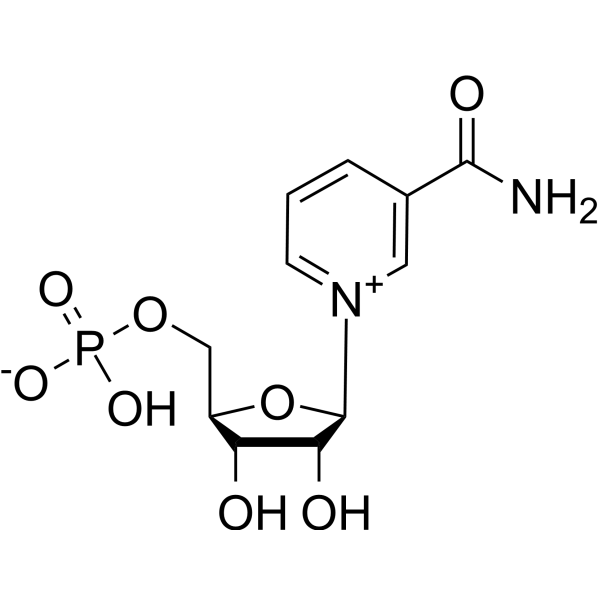
  • HY-F0004
    Fosribnicotinamide
    Maximum Cited Publications
    27 Publications Verification

    β-Nicotinamide mononucleotide; β-NM; NMN

    Endogenous Metabolite Neurological Disease Cancer
    Fosribnicotinamide (β-nicotinamide mononucleotide) is a product of the nicotinamide phosphoribosyltransferase (NAMPT) reaction and a key NAD + intermediate. The pharmacological activities of Fosribnicotinamide include its role in cellular biochemical functions, cardioprotection, diabetes, Alzheimer's disease, and complications associated with obesity .
    Fosribnicotinamide
  • HY-112233
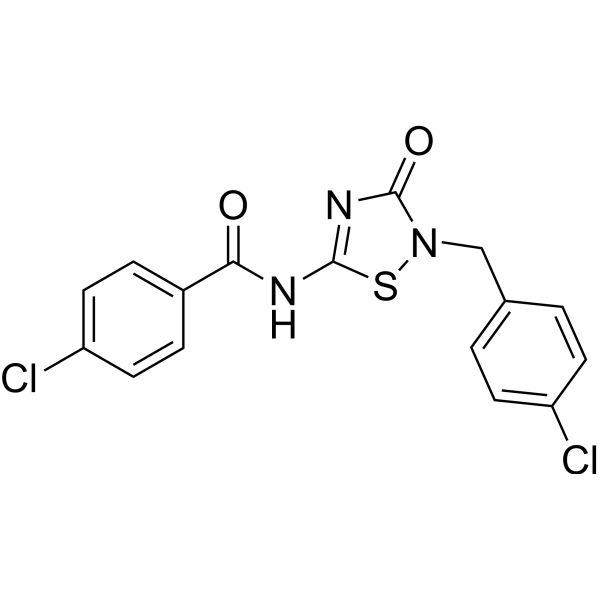
    O-304
    5 Publications Verification

    AMPK Cardiovascular Disease Metabolic Disease
    O-304 is a first-in-class, orally available pan-AMPK activator, which increases AMPK activity by suppressing the dephosphorylation of pAMPK. O-304 exhibits a great potential as a agent to treat type 2 diabetes (T2D) and associated cardiovascular complications .
    O-304
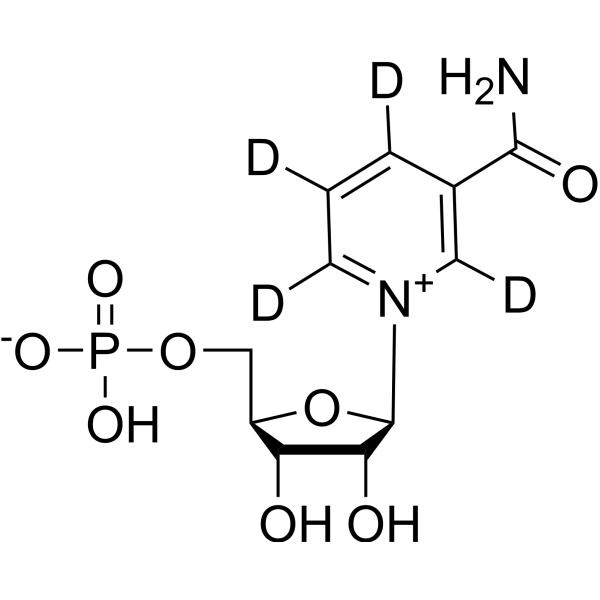
  • HY-F0004S

    β-Nicotinamide mononucleotide-d4; β-NM-d4; NMN-d4

    Isotope-Labeled Compounds Endogenous Metabolite Neurological Disease Cancer
    Fosribnicotinamide-d4 (β-Nicotinamide mononucleotide-d4) is the deuterium labeled Fosribnicotinamide. Fosribnicotinamide is a product of the nicotinamide phosphoribosyltransferase (NAMPT) reaction and a key NAD+ intermediate. The pharmacological activities of Fosribnicotinamide include its role in cellular biochemical functions, cardioprotection, diabetes, Alzheimer's disease, and complications associated with obesity .
    Fosribnicotinamide-d4
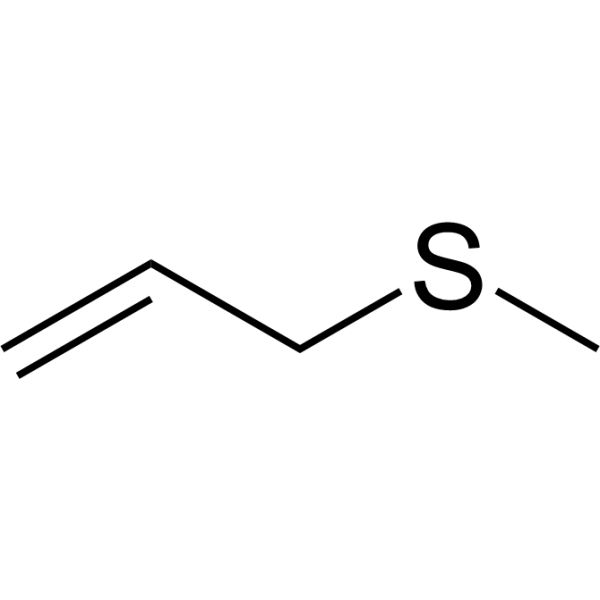
  • HY-128447
    Allyl methyl sulfide
    1 Publications Verification

    Endogenous Metabolite SOD NF-κB GLUT Metabolic Disease Inflammation/Immunology
    Allyl methyl sulfide is an orally active organic sulfide. Allyl methyl sulfide is one of the main active ingredients in garlic volatile metabolites. Allyl methyl sulfide can be extracted from garlic. Allyl methyl sulfide enhances SOD activity, inhibits NF-κB signaling pathway, and upregulates pancreatic GLUT2 expression. Allyl methyl sulfide has significant antioxidant, anti-inflammatory and hypoglycemic activities. Allyl methyl sulfide can be used in the research of diabetes and its complications .
    Allyl methyl sulfide
  • HY-107207
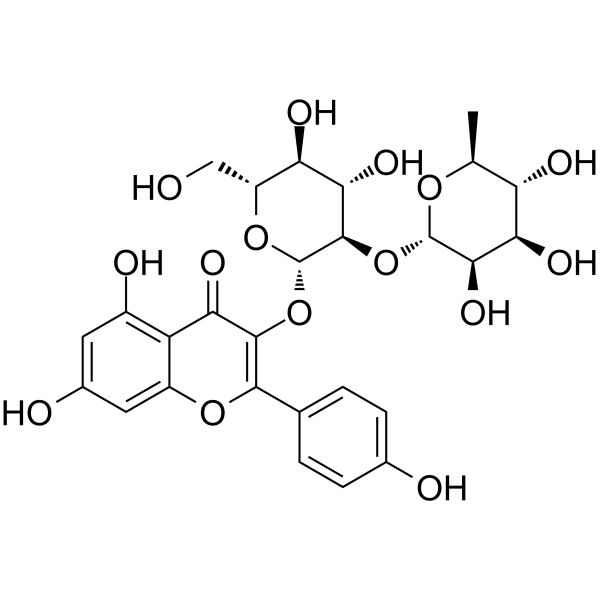
    Kaempferol 3-neohesperidoside
    3 Publications Verification

    Kaempferol 3-O-neohesperidoside

    Insulin Receptor PI3K PKC Metabolic Disease
    Kaempferol 3-neohesperidoside (Kaempferol 3-O-neohesperidoside) is a flavonoid. Kaempferol 3-neohesperidoside mimics insulin action via the PI3K/PKC pathway, significantly promoting glucose uptake and increasing muscle glycogen content in rat soleus muscles. Kaempferol 3-neohesperidoside also exhibits anti-glycation activity. Kaempferol 3-neohesperidoside binds to albumin through hydrogen bonding and hydrophobic interactions, and inhibits the formation of advanced glycation end products. Kaempferol 3-neohesperidoside can be used in studies of diabetes and its related complications .
    Kaempferol 3-neohesperidoside
  • HY-50289
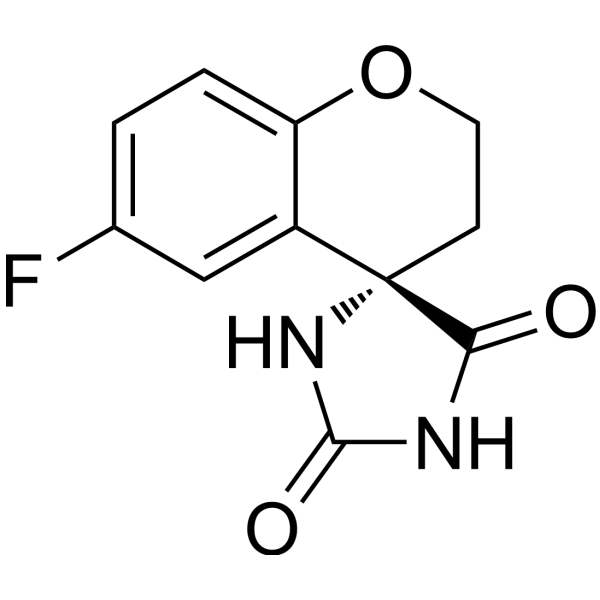
    Sorbinil
    2 Publications Verification

    Aldose Reductase Metabolic Disease
    Sorbinil is an aldose reductase inhibitor (ARI) that prevents the accumulation of sorbitol in cells or animals. Sorbinil is useful in studying diabetes and diabetic complications, reducing AR activity and inhibiting the polyol pathway.
    Sorbinil
  • HY-153530

    IPK Superfamily Neurological Disease Metabolic Disease
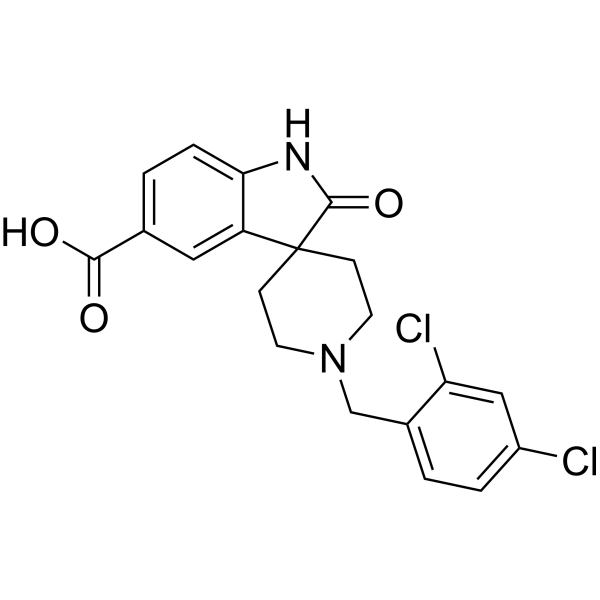
    LI-2242 is an inositol hexakisphosphate kinase (IP6K) inhibitor. LI-2242 has inhibition effect for IP6K1, IP6K2, IP6K3 and IPMK with IC50 values of 31 nM, 42 nM, 8.7 nM and 1944 nM, respectively. LI-2242 can be used for thew research of type II diabetes, obesity, metabolic complications, venous thrombosis, and psychiatric disorders .
    LI-2242
  • HY-E70398

    L-Iditol dehydrogenase; Polyol dehydrogenase; SDH

    Biochemical Assay Reagents Metabolic Disease
    Sorbitol dehydrogenase (L-Iditol dehydrogenase) is an oxidoreductasea and catalyses the conversion of sorbitol to fructose with NAD + as the coenzyme. Sorbitol dehydrogenase catalyses pH-dependent redox reactions between NAD +/NADH and sorbitol/fructose. Sorbitol dehydrogenase is implicated in diabetic complications and is a biomarker of drug-induced liver injury. Sorbitol dehydrogenase can be used for the research of diabetes and liver injury .
    Sorbitol dehydrogenase
  • HY-F0004R

    β-Nicotinamide mononucleotide (Standard); β-NM (Standard); NMN (Standard)

    Reference Standards Endogenous Metabolite Neurological Disease Cancer
    Fosribnicotinamide (Standard) (β-Nicotinamide mononucleotide (Standard)) is the analytical standard of Fosribnicotinamide (HY-F0004 ). This product is intended for research and analytical applications. Fosribnicotinamide is a product of the nicotinamide phosphoribosyltransferase (NAMPT) reaction and a key NAD + intermediate. The pharmacological activities of Fosribnicotinamide include its role in cellular biochemical functions, cardioprotection, diabetes, Alzheimer's disease, and complications associated with obesity .
    Fosribnicotinamide (Standard)
  • HY-143723

    Monoamine Oxidase Cardiovascular Disease Metabolic Disease Inflammation/Immunology
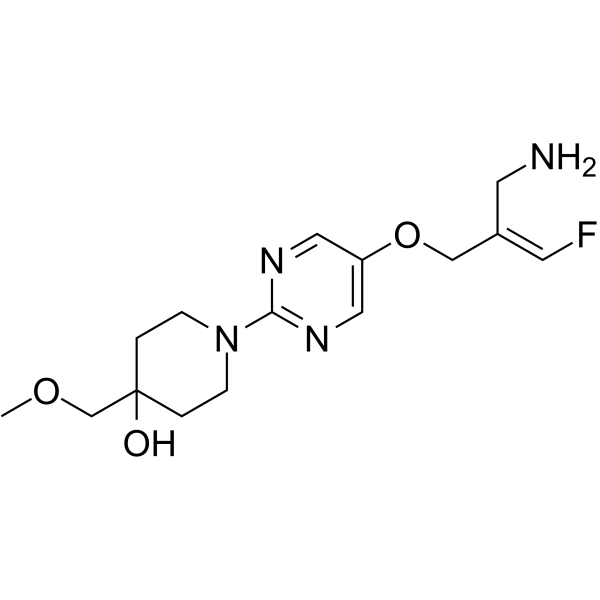
    SSAO inhibitor-3 (Compound 2) is a semicarbazide-sensitive amine oxidase (SSAO) inhibitor with IC50s of <10 nM, and 0.1-10 μM for human SSAO and AOC1, respectively. SSAO inhibitor-3 can be used for the research of atherosclerosis, diabetes and its complications, obesity, stroke, chronic kidney disease, retinopathy, chronic obstructive pulmonary disease (COPD), autoimmune diseases, multiple sclerosis, etc .
    SSAO inhibitor-3
  • HY-P3491

    Polyethylene glycol loxenatide; PEX 168

    GCGR PI3K Akt Reactive Oxygen Species (ROS) Autophagy Interleukin Related Sirtuin AMPK Apoptosis Cardiovascular Disease Metabolic Disease Inflammation/Immunology
    Pegloxenatide (Polyethylene glycol loxenatide) is a long-acting glucagon-like peptide-1 receptor (GLP-1RA) agonist. Pegloxenatide has various activities such as lowering blood glucose, lowering blood lipids, improving body weight, anti-inflammation, promoting wound healing, protecting the liver, and protecting the heart. Pegloxenatide can be used in the research of type 2 diabetes and its multiple complications .
    Pegloxenatide
  • HY-106915

    SPR 210

    Aldose Reductase Neurological Disease Metabolic Disease
    SG-210 (SPR 210) is an orally active and selective aldose reductase (AR) inhibitor. SG-210 has IC50 values of 9.5 nM and 10 nM for AR from porcine lens and human placenta, respectively. SG-210 can inhibit sorbitol accumulation and ameliorate diabetic neuropathy and retinopathy in Streptozotocin (HY-13753)-induced diabetic rats. SG-210 can be used in the research of diseases such as diabetes-related complications .
    SG-210
  • HY-148475

    NF-κB Infection Cardiovascular Disease Metabolic Disease Inflammation/Immunology Cancer
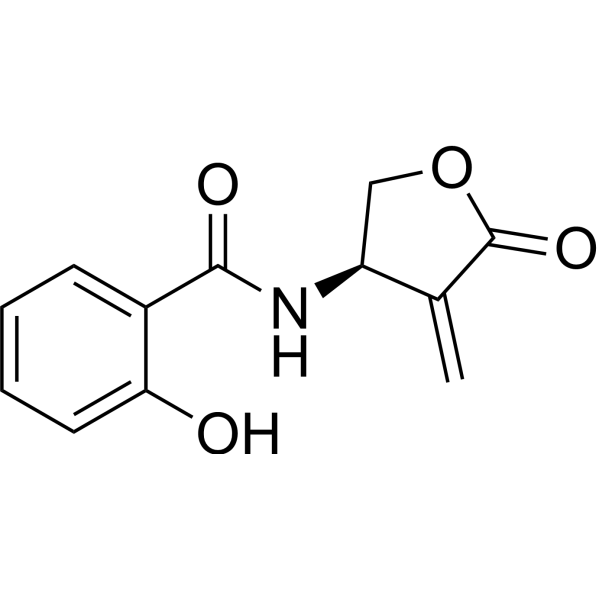
    (R)-SEMBL (compound 1B) is a potent NF-κB inhibitor. (R)-SEMBL can be used for the research of cancer, inflammation, autoimmune diseases, diabetes and diabetes complications, infections, cardiovascular disease and defective reperfusion injury .
    (R)-SEMBL
  • HY-164698

    Aldehyde Dehydrogenase (ALDH) Neurological Disease Metabolic Disease
    CP-470711 is an orally active and potent and selective sorbitol dehydrogenase (SDH) inhibitor with an IC50=10 nM for human SDH and IC50=17 nM for rat SDH. CP-470711 is promising for research of chronic complications related to type 2 diabetes mellitus, such as neuropathy and nephropathy .
    CP-470711
  • HY-W011786

    Aldose Reductase Metabolic Disease
    2-Chloro-1-(4-fluorobenzyl)-1H-benzo[d]imidazole is an inhibitor of larval settlement in marine organisms, demonstrating low toxicity while effectively inhibiting the metamorphosis of species such as barnacles, bryozoans, and polychaetes. 2-Chloro-1-(4-fluorobenzyl)-1H-benzo[d]imidazole also exhibits activity as an aldose reductase (ALR2) inhibitor, indicating potential therapeutic applications in diabetes-related complications.
    2-Chloro-1-(4-fluorobenzyl)-1H-benzo[d]imidazole
  • HY-N16527

    TNF Receptor Interleukin Related NADPH Oxidase Reactive Oxygen Species (ROS) NF-κB COX NO Synthase JNK AP-1 TGF-β Receptor Metabolic Disease
    7-O-Galloyl-D-sedoheptulose is an orally effective polyphenolic compound. 7-O-Galloyl-D-sedoheptulose lowers the serum levels of glucose, leptin, insulin, C-peptide, resistin, TNF-α, IL-6, and increases the serum level of adiponectin. 7-O-Galloyl-D-sedoheptulose significantly reduces the levels of ROS and lipid peroxidation products (TBARS) by down-regulating the protein expression of NADPH oxidase subunit Nox-4 and p22phox. 7-O-Galloyl-D-sedoheptulose down-regulates NF-κB and related pro-inflammatory factors (COX-2, iNOS), inhibits the phosphorylation of JNK and the activity of its downstream AP-1. 7-O-Galloyl-D-sedoheptulose reduces the expression of TGF-β1 and fibronectin, indicating its potential in anti-tissue fibrosis. 7-O-Galloyl-D-sedoheptulose can be used for the study of type 2 diabetes and its hepatic and pancreatic complications .
    7-O-Galloyl-D-sedoheptulose
  • HY-146129

    Aldose Reductase Metabolic Disease
    As an aldose reductase (ALR2) inhibitor, the compound is used to enhance the combination of inhibitory excitability and antioxidant capacity to delay the progress of diabetes complications.
    Aldose reductase-IN-5
  • HY-171336

    Interleukin Related Metabolic Disease
    TRC4186 is a potent advanced glycation end-product (AGE) inhibitor. TRC4186 demonstrates AGE-breaking activities in vitro and improvement in the endothelial and myocardial function in animal models of diabetes mellitus. TRC4186 can be used for complications associated with diabetes research .
    TRC4186
  • HY-N13759

    Aldose Reductase Metabolic Disease
    Mumeose K is the inhibitor for aldose reductase with an IC50 of 27 μM. Mumeose K exhibits potential anti-diabetic activity, and can be used in research about diabetes-related complication .
    Mumeose K
  • HY-106198

    IDD-676

    Aldose Reductase Metabolic Disease
    Lidorestat (IDD-676) is a potent, selective and orally active aldose reductase inhibitor with an IC50 of 5 nM. Lidorestat can be used for chronic diabetes complications. Lidorestat also improves nerve conduction and reduces cataract formation .
    Lidorestat
  • HY-50289R

    Aldose Reductase Metabolic Disease
    Sorbinil (Standard) is the analytical standard of Sorbinil. This product is intended for research and analytical applications. Sorbinil is an aldose reductase inhibitor (ARI) that prevents the accumulation of sorbitol in cells or animals. Sorbinil is useful in studying diabetes and diabetic complications, reducing AR activity and inhibiting the polyol pathway .
    Sorbinil (Standard)
  • HY-N0469A

    Endogenous Metabolite Virus Protease Inflammation/Immunology Cancer
    L-lysine sulfite is an essential amino acid for humans , offers numerous benefits and can be used in herpes research. Additionally, L-lysine sulfite enhances calcium absorption, reduces diabetes-related complications, improves gut health, and alleviates pancreatitis inflammation .
    L-Lysine sulfite
  • HY-128447R

    Reference Standards Endogenous Metabolite SOD NF-κB GLUT Metabolic Disease Inflammation/Immunology
    Allyl methyl sulfide (Standard) is the analytical standard of Allyl methyl sulfide (HY-128447). This product is intended for research and analytical applications. Allyl methyl sulfide is an orally active organic sulfide. Allyl methyl sulfide is one of the main active ingredients in garlic volatile metabolites. Allyl methyl sulfide can be extracted from garlic. Allyl methyl sulfide enhances SOD activity, inhibits NF-κB signaling pathway, and upregulates pancreatic GLUT2 expression. Allyl methyl sulfide has significant antioxidant, anti-inflammatory and hypoglycemic activities. Allyl methyl sulfide can be used in the research of diabetes and its complications .
    Allyl methyl sulfide (Standard)
  • HY-107207R

    Kaempferol 3-O-neohesperidoside (Standard)

    Reference Standards Others Metabolic Disease
    Kaempferol 3-neohesperidoside (Kaempferol 3-O-neohesperidoside) Standard is the analytical standard of Kaempferol 3-neohesperidoside (HY-107207). This product is intended for research and analytical applications. Kaempferol 3-neohesperidoside (Kaempferol 3-O-neohesperidoside) is a flavonoid. Kaempferol 3-neohesperidoside mimics insulin action via the PI3K/PKC pathway, significantly promoting glucose uptake and increasing muscle glycogen content in rat soleus muscles. Kaempferol 3-neohesperidoside also exhibits anti-glycation activity. Kaempferol 3-neohesperidoside binds to albumin through hydrogen bonding and hydrophobic interactions, and inhibits the formation of advanced glycation end products. Kaempferol 3-neohesperidoside can be used in studies of diabetes and its related complications .
    Kaempferol 3-neohesperidoside (Standard)
  • HY-106198R

    IDD-676 (Standard)

    Reference Standards Aldose Reductase Metabolic Disease
    Lidorestat (Standard) is the analytical standard of Lidorestat (HY-106198). This product is intended for research and analytical applications. Lidorestat (IDD-676) is a potent, selective and orally active aldose reductase inhibitor with an IC50 of 5 nM. Lidorestat can be used for chronic diabetes complications. Lidorestat also improves nerve conduction and reduces cataract formation .
    Lidorestat (Standard)
  • HY-181519

    DNA Alkylator/Crosslinker Aldose Reductase Glycosidase Metabolic Disease Inflammation/Immunology
    ALR2/α-GLY-IN-1 is a potent dual-target inhibitor that targets aldose reductase ALR2 and α-glucosidase (IC50 values are 0.72 μM and 0.82 μM, respectively; Ki values are 1.67 μM and 1.37 μM, respectively). ALR2/α-GLY-IN-1 also acts as a DNA binder, which stably interacts with calf thymus double-stranded DNA through non-covalent interactions such as groove-binding mode and water-bridged hydrogen bonds. ALR2/α-GLY-IN-1 can be used in studies related to diabetes and its complications .
    ALR2/α-GLY-IN-1
  • HY-179572

    EGFR Akt Mitochondrial Metabolism Metabolic Disease
    STA-013 is a EphB tyrosine kinase inhibitor. STA-013 shows promising potency against EphB1 (IC50 = 0.69 µM), EphB2 (IC50 = 1.73 µM), and EphB4 (IC50 = 1.02 µM) tyrosine kinases. STA-013 results a inhibition of the EphB phosphorylated signal, coupled with increased p-AKT/AKT signaling, to suggest insulin signaling activation. STA-013 inhibits EphB tyrosine kinase by enhancing insulin receptor beta (IRβ) signaling, and decreasing TGF-β levels in the heart. STA-013 can be used for the study of type 2 diabetes and cardiac complications (diabetic cardiomyopathy) .
    STA-013

Inquiry Online

Your information is safe with us. * Required Fields.

Salutation


Country or Region *

Applicant Name *


Organization Name *

Department *


Email Address *


Product Name *

Cat. No.


Requested quantity *

Phone Number *


Remarks

Inquiry Online

Inquiry Information

Product Name:
Cat. No.:
Quantity:
MCE Japan Authorized Agent: