



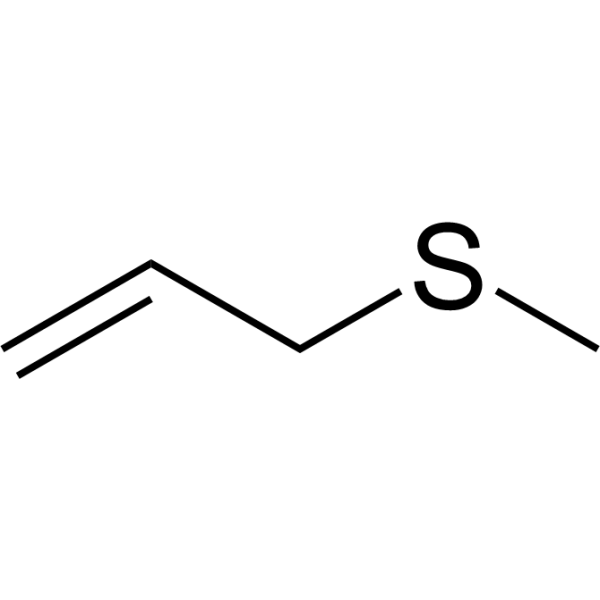
Allyl methyl sulfide
Based on 1 publication(s) in Google Scholar
Allyl methyl sulfide is an orally active organic sulfide. Allyl methyl sulfide is one of the main active ingredients in garlic volatile metabolites. Allyl methyl sulfide can be extracted from garlic. Allyl methyl sulfide enhances SOD activity, inhibits NF-κB signaling pathway, and upregulates pancreatic GLUT2 expression. Allyl methyl sulfide has significant antioxidant, anti-inflammatory and hypoglycemic activities. Allyl methyl sulfide can be used in the research of diabetes and its complications.
For research use only. We do not sell to patients.
- Purity : 98.0%
- CAS No.: 10152-76-8
- Formula: C4H8S
- Molecular Weight:88.17
-
Storage:
4°C, protect from light
* In solvent : -80°C, 6 months; -20°C, 1 month (protect from light)

To place orders, for customer services and technical support, please contact: MedChemExpress USA
Tel: 609-228-6898 E-mail: [email protected] [email protected]


-
 Biological Activity
-
Chemical Information
-
Solvent & Solubility
- Protocols
- Purity & Documentation
- References
-
 Help & FAQs


-
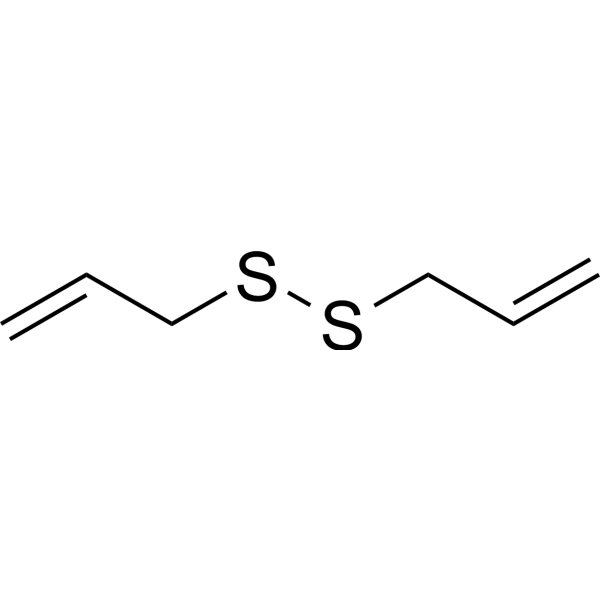
HY-W015635
Diallyl disulfideAnti-inflammatory/Anti-cancer Agent -

HY-128447R
Allyl methyl sulfide (Standard)Standard Of Allyl Methyl Sulfide -
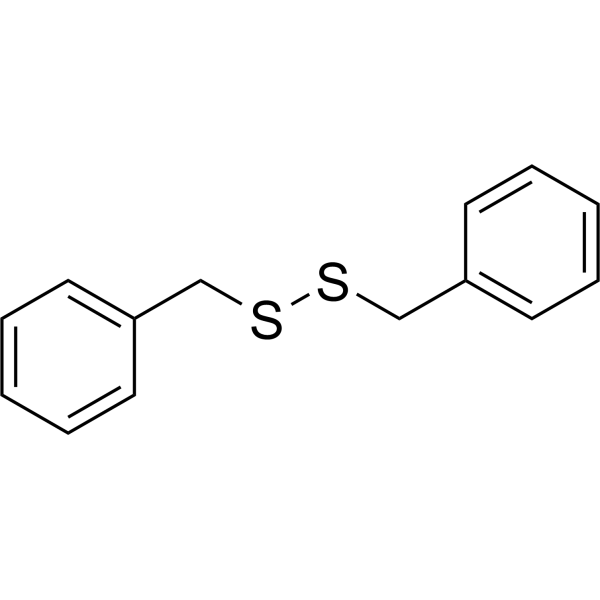
HY-W009516
Dibenzyl disulfide -

HY-W199190
2-CEESMustard Gas Analog -

HY-W157144
Diethyl disulfideOrganosulfur Compound -
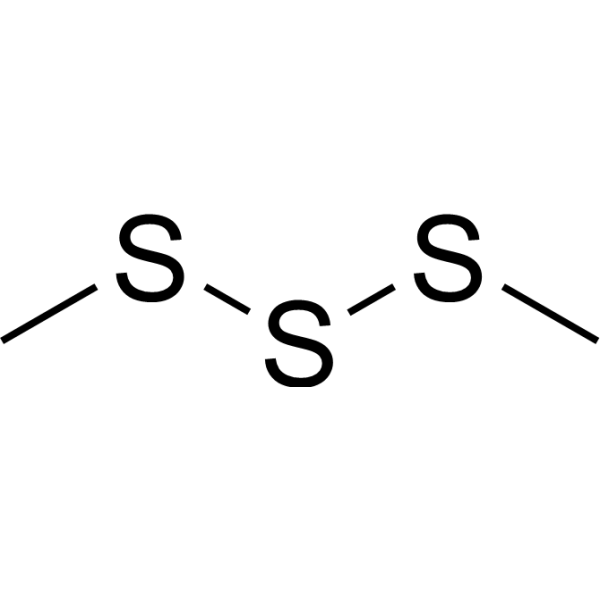
HY-128454
Dimethyl trisulfideCyanide Scavenger -

HY-W196803
Dipropyl disulfideEndogenous Metabolites -
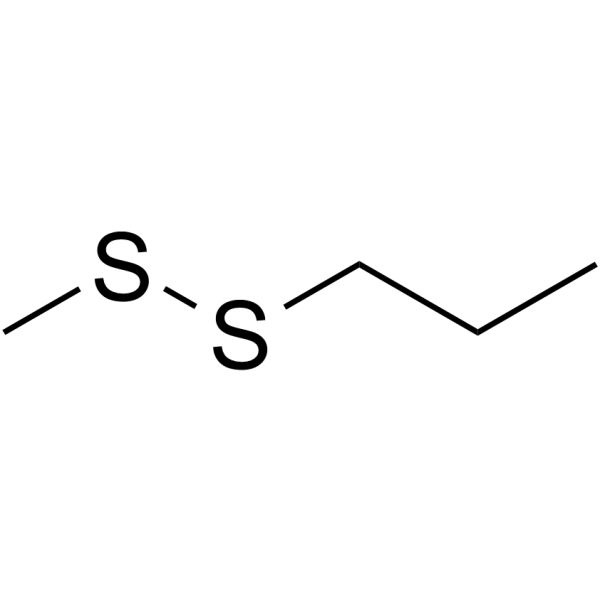
HY-N7436
Methyl propyl disulfideSulfide -

HY-W009516R
Dibenzyl disulfide (Standard) -

HY-W016174
Diphenyl sulfideAdditive for Organic Photovoltaic Devices -
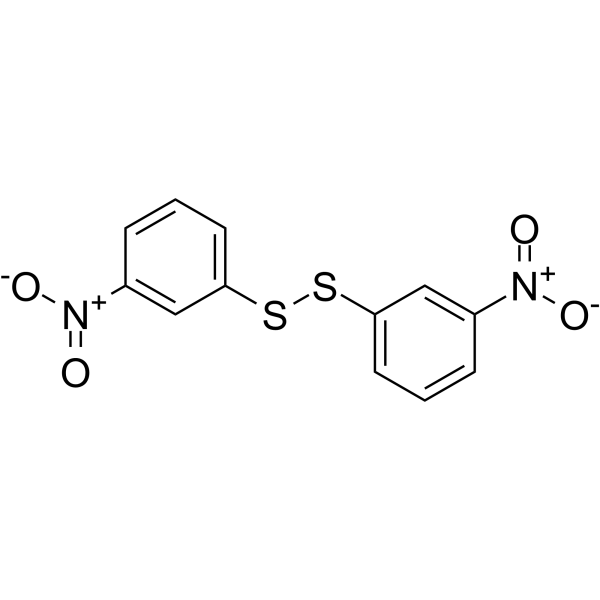
HY-W009213
3-Nitrophenyl disulfideM1PDH Inhibitor -

HY-W015620
Ranitidine impurity 14Drug Impurity
Publications Citing Use of MedChemExpress (MCE) Allyl methyl sulfide
MoreAll Endogenous Metabolite Isoforms
More

Biological Activity
Description
|
GLUT2 |
In Vivo
Allyl methyl sulfide (100 mg/kg; p.o.; 30 days) reduces glycoprotein components (hexose, hexosamine, fucose) in plasma and hepatic/renal tissues, and upregulates pancreatic GLUT2 expression in Streptozotocin (HY-13753)-induced diabetic rats[2].
MedChemExpress (MCE) has not independently confirmed the accuracy of these methods. They are for reference only.
-
Animal Model:Adult male Wistar rats (170-190 g, 12 weeks old); Streptozotocin-induced diabetes model[1].
-
Dosage:50, 100, 200 mg/kg
-
Administration:Intragastric administration (i.g.); 30 days
-
Result:Significantly reduced plasma glucose and hepatic lipid peroxidation.
Increased plasma insulin and hepatic antioxidant enzyme activities.
Attenuated pro-inflammatory cytokine expression and hepatic pathological changes.


Chemical Information
-
CAS No. 10152-76-8
-
Appearance Liquid (Density: 0.803 g/cm3)
-
Molecular Weight 88.17
-
Formula C4H8S
-
Color Colorless to light yellow
-
SMILES
C=CCSC
-
Structure Classification
-
Shipping
Room temperature in continental US; may vary elsewhere.
-
Storage
4°C, protect from light
* In solvent : -80°C, 6 months; -20°C, 1 month (protect from light)


Publications (1)
-
Journal Impact Factor
-
Most Recent
-
Toxicol In Vitro
Inhibitory potential of phytochemicals on species-specific breast cancer resistance protein transport activity. [Abstract]2025 Dec:109:106128. PMID: 40796067


Solvent & Solubility
In Vitro:
DMSO : 200 mg/mL (2268.35 mM; Need ultrasonic; Hygroscopic DMSO has a significant impact on the solubility of product, please use newly opened DMSO)
Please refer to the solubility information to select the appropriate solvent. Once prepared, please aliquot and store the solution to prevent product inactivation from repeated freeze-thaw cycles.
Storage method and period of stock solution: -80°C, 6 months; -20°C, 1 month (protect from light). When stored at -80°C, please use it within 6 months. When stored at -20°C, please use it within 1 month.
Please refer to the solubility information to select the appropriate solvent. Once prepared, please aliquot and store the solution to prevent product inactivation from repeated freeze-thaw cycles.
Storage method and period of stock solution: -80°C, 6 months; -20°C, 1 month (protect from light). When stored at -80°C, please use it within 6 months. When stored at -20°C, please use it within 1 month.
Concentration (start) × Volume (start) = Concentration (final) × Volume (final)
In Vivo:
Select the appropriate dissolution method based on your experimental animal and administration route.
- For the following dissolution methods, please ensure to first prepare a clear stock solution using an In Vitro approach and then sequentially add co-solvents:
- To ensure reliable experimental results, the clarified stock solution can be appropriately stored based on storage conditions. As for the working solution for In Vivo experiments, it is recommended to prepare freshly and use it on the same day.
- The percentages shown for the solvents indicate their volumetric ratio in the final prepared solution. If precipitation or phase separation occurs during preparation, heat and/or sonication can be used to aid dissolution.
Add each solvent one by one: 10% DMSO 40% PEG300 5% Tween-80 45% Saline
Solubility: ≥ 2.08 mg/mL (23.59 mM); Clear solution
This protocol yields a clear solution of ≥ 2.08 mg/mL (saturation unknown).
Taking 1 mL working solution as an example, add 100 μL DMSO stock solution (20.8 mg/mL) to 400 μL PEG300, and mix evenly; then add 50 μL Tween-80 and mix evenly; then add 450 μL Saline to adjust the volume to 1 mL.
Preparation of Saline: Dissolve 0.9 g sodium chloride in ddH₂O and dilute to 100 mL to obtain a clear Saline solution.
Add each solvent one by one: 10% DMSO 90% (20% SBE-β-CD in Saline)
Solubility: ≥ 2.08 mg/mL (23.59 mM); Clear solution
This protocol yields a clear solution of ≥ 2.08 mg/mL (saturation unknown).
Taking 1 mL working solution as an example, add 100 μL DMSO stock solution (20.8 mg/mL) to 900 μL 20% SBE-β-CD in Saline, and mix evenly.
Preparation of 20% SBE-β-CD in Saline (4°C, storage for one week): 2 g SBE-β-CD powder is dissolved in 10 mL Saline, completely dissolve until clear.
In Vivo Dissolution Calculator
Please enter the basic information of animal experiments:
-
-
-
-
Recommended: Prepare an additional quantity of animals to account for potential losses during experiments.
Please enter your animal formula composition:
-
%DMSO +
Recommended: Keep the proportion of DMSO in working solution below 2% if your animal is weak.
-
%+
-
+%Tween-80 + +
-
%Saline +
The co-solvents required include: DMSO, . All of co-solvents are available by MedChemExpress (MCE). , Tween 80. All of co-solvents are available by MedChemExpress (MCE).
Working solution concentration: 0.22 mg/mL
Method for preparing stock solution: mg drug dissolved in μL DMSO. Stock solution concentration: mg/mL. * In solvent : -80°C, 6 months; -20°C, 1 month (protect from light)
1. Take μL DMSO stock solution;
2. Add μL .
μL , mix evenly;
3. Then add μL Tween 80, mix evenly;
4. Then add μL
Please ensure that the stock solution in the first step is dissolved to a clear state, and add co-solvents in sequence. You can use ultrasonic heating (ultrasonic cleaner, recommended frequency 20-40 kHz), vortexing, etc. to assist dissolution.


Purity & Documentation
-
Data Sheet (272 KB)
-
SDS (466 KB)
- English - EN (466 KB)
- Français - FR (466 KB)
- Deutsch - DE (466 KB)
- Norwegian - NO (466 KB)
- Español - ES (466 KB)
- Swedish - SV (466 KB)
- Italian - IT (466 KB)
- Korean - KR (466 KB)
- Portuguese - PT (466 KB)
-
Handling Instructions (2659 KB)
References
[1]. Sujithra K, et al. Allyl methyl sulfide, an organosulfur compound alleviates hyperglycemia mediated hepatic oxidativestress and inflammation in streptozotocin - induced experimental rats. Biomed Pharmacother. 2018 Nov;107:292-302. [Content Brief]
[2]. Sujithra K, et al. Allyl methyl sulfide, a garlic active component mitigates hyperglycemia by restoration of circulatory antioxidant status and attenuating glycoprotein components in streptozotocin-induced experimental rats. Toxicol Mech Methods. 2019 Mar;29(3):165-176. [Content Brief]
[3]. Qin W, et al. Quantification of Allyl Methyl Sulfide, Allyl Methyl Sulfoxide, and Allyl Methyl Sulfone in Human Milk and Urine After Ingestion of Cooked and Roasted Garlic. Front Nutr. 2020 Sep 18;7:565496. [Content Brief]


Complete Stock Solution Preparation Table
Please refer to the solubility information to select the appropriate solvent. Once prepared, please aliquot and store the solution to prevent product inactivation from repeated freeze-thaw cycles.
Storage method and period of stock solution: -80°C, 6 months; -20°C, 1 month (protect from light). When stored at -80°C, please use it within 6 months. When stored at -20°C, please use it within 1 month.
| Optional Solvent | Concentration Solvent Mass | 1 mg | 5 mg | 10 mg | 25 mg |
|---|---|---|---|---|---|
| DMSO | 1 mM | 11.3417 mL | 56.7086 mL | 113.4173 mL | 283.5432 mL |
| 5 mM | 2.2683 mL | 11.3417 mL | 22.6835 mL | 56.7086 mL | |
| 10 mM | 1.1342 mL | 5.6709 mL | 11.3417 mL | 28.3543 mL | |
| 15 mM | 0.7561 mL | 3.7806 mL | 7.5612 mL | 18.9029 mL | |
| 20 mM | 0.5671 mL | 2.8354 mL | 5.6709 mL | 14.1772 mL | |
| 25 mM | 0.4537 mL | 2.2683 mL | 4.5367 mL | 11.3417 mL | |
| 30 mM | 0.3781 mL | 1.8903 mL | 3.7806 mL | 9.4514 mL | |
| 40 mM | 0.2835 mL | 1.4177 mL | 2.8354 mL | 7.0886 mL | |
| 50 mM | 0.2268 mL | 1.1342 mL | 2.2683 mL | 5.6709 mL | |
| 60 mM | 0.1890 mL | 0.9451 mL | 1.8903 mL | 4.7257 mL | |
| 80 mM | 0.1418 mL | 0.7089 mL | 1.4177 mL | 3.5443 mL | |
| 100 mM | 0.1134 mL | 0.5671 mL | 1.1342 mL | 2.8354 mL |


Allyl methyl sulfide Related Classifications
HY-128447 Related Classifications
 Powered by Bioz